

Tên gọi và vị trí địa lý
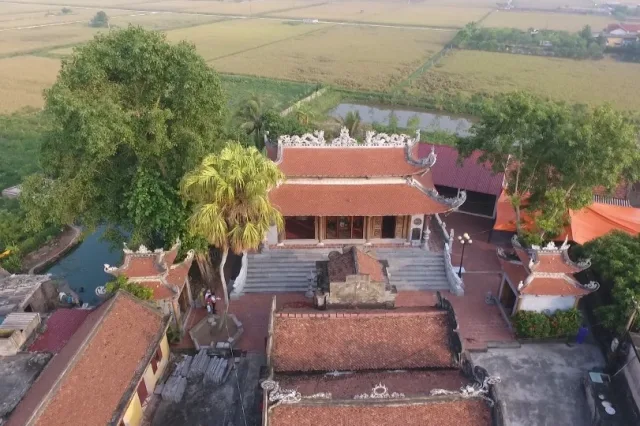
Quần thể di tích Đền Hạ Đồng trước đây có tên là Động Ngọc Từ. Di tích Đền Hạ Đồng thuộc địa phận thôn Hạ Đồng, xã Thụy Sơn, huyện Thái Thụy, tỉnh Thái Bình nay là thôn Hạ Đồng xã Thụy Anh tỉnh Hưng Yên.
Lịch sử và nhân vật
Theo truyền thuyết cư dân làng xã, các thần tích, sắc phong, các bài văn tế cùng tài liệu của Ban liên lạc họ Nguyễn toàn quốc, quần thể đền Hạ Đồng thờ 5 vị thần linh đó là: Thần Mai Công Phúc, Nam Hải đại vương- Thục Phán An Dương Vương, Hoàng Phi Cống Nương, Hoàng tử Công Uy và Công thần hộ quốc Đặng Công Kỳ.
Để ghi nhớ công lao các vị nhân thần có công với làng nước, nhân dân Hạ Đồng đã lập nhiều đền thờ phụng. Đây là nơi thể hiện lòng tôn kính và truyền thống uống nước nhớ nguồn của dân làng qua nhiều thế hệ.
Theo truyền thuyết kể rằng, Đền Hạ Đồng – tức Ngọc Động Từ được nhân dân xây dựng ngay sau khi Cống Nương Phu nhân qua đời (năm Đinh Mùi). Khi đó đền được xây dựng bằng tre lá đơn sơ, đến thời Lê Trung Hưng đền được tôn tạo khang trang, tường được xây gạch, mái lợp ngói mũi, xung quanh trồng cây cối xum xuê. Cuối thời Hậu Lê, năm 1788 cuộc tấn công phá chiến lũy Hạ Động của Hoàng Viết Tuyển và Nguyễn Như Thái khiến cho hệ thống đền, đình, chùa ở Hạ Động chìm trong biển lửa. Sang đầu triều Nguyễn (1802) hương chức trong làng đốn cau, tre dựng lại ngôi đình, cột bằng gỗ xoan vừa là nơi thờ 5 vị linh thần vừa là nơi để làm việc của lý dịch, chức sắc, hương lão trong làng. Nhân dân các làng Hạ Động, Trà Động, Quân Động gom góp dựng ngôi chùa lá, bày tượng phật, làm cửa Tam Bảo cho dân đến tế lễ. Năm 1889, lý trưởng bá hộ Ngô Các- một người có tâm huyết họp hội đồng kì mục, các vị vương lão hội chúng xuống tận người dân, quyết tâm trả lại đất đai xưa thuộc khuôn viên thuộc thần điền phật tự, mỗi năm cố làm một việc, vài năm khánh thành một công trình. Tiếp đó chánh tổng Ngô Tú sau trúng Nghị viên dân cử Bắc Kì cùng ông Đội Công (Nguyễn Đức Công), Phó Hài (Trần Văn Hài), Đội Đủ (Nguyễn Văn Đủ), Chi Chữ (Lê Văn Chữ) cùng các vị kì lão dân xã tìm mọi quyết sách vừa bỏ tiền túi vừa kêu gọi quyên góp vận động nhân dân khắp chốn, thảo luận dân đồng thuận cho bán 15 mẫu công điền cho làng bên lấy tiền xây dựng đền, đình, chùa. Ngọc Động Từ khi đó được xây dựng trên mảnh đất cao thoáng, rộng 3600 m2. Từ Đông Linh Từ, Trung Từ, Hạ Động Từ, Linh Quang Từ đến các làng xã đều sừng sững các tòa Tam Quan, Thất môn, Nghi môn, Hành mã. Tất cả các công trình tiền tế, trung tế, cung cấm, tả hữu đều được làm bằng gỗ lim, đầu dư chạm rồng, rường cốn chạm đấu sen, long- ly- quy- phụng, ngoài sân nghi môn có tường hoa, phong thư, trụ biểu. Trong kháng chiến chống Pháp toàn bộ Nghi môn tường hoa, trụ biểu đều bị phá hủy, sau đó nhân dân khôi phục dần. Đến năm 1988 đền đã được phục hồi và tu sửa xây dựng lại 2 tòa đại bái, cung thờ Mai tướng công, dựng lăng đền hoàng tử Công Uy.
Kiến trúc cảnh quan
Quần thể di tích đền Hạ Đồng hiện nay gồm 5 công trình thờ tự chính, phân bố tại các khu vực khác nhau trong làng nhưng có mối liên hệ chặt chẽ về lịch sử và tín ngưỡng. Mỗi công trình gắn với một nhân vật được nhân dân Hạ Đồng tôn thờ qua nhiều thế hệ, tạo thành một hệ thống di tích phản ánh lịch sử khai lập làng, quá trình chống giặc và truyền thống trung nghĩa của cư dân địa phương.
Trong đó, Đền Đông thuộc thôn Ngọc Thanh là nơi thờ Hoàng tử Công Uy – người con của An Dương Vương và Cống Nương Hoàng Phi. Đây cũng là nơi gắn với truyền thuyết về sự tuẫn tiết của hoàng tử sau khi nước Âu Lạc thất thủ. Đền Trung nằm tại xóm 6 thôn Hạ Đồng, thờ Công thần hộ quốc Đặng Công Kỳ – vị võ quan nổi tiếng trung liệt thời Lê mạt. Đền (từ) Rộc ở xóm 7 thôn Hạ Đồng thờ Mai Công Phúc, người có công khai khẩn vùng đất Hạ Động xưa và được suy tôn làm thành hoàng làng. Đình Hạ Đồng, cũng thuộc xóm 7, là nơi thờ vọng Nam Hải Đại Vương – Thục Phán An Dương Vương, vị vua gắn với sự hình thành nước Âu Lạc trong tâm thức dân gian địa phương. Trung tâm của toàn bộ quần thể là Đền Mẫu ở xóm 8 thôn Hạ Đồng, nơi thờ Cống Nương phu nhân – nhân vật được xem là biểu tượng của đức hạnh, lòng trung trinh và tình mẫu tử.
Trong các công trình trên, Đền Mẫu có quy mô lớn và được đầu tư xây dựng khang trang nhất. Khu đền hiện tọa lạc trên diện tích khoảng 2.830 m², bố cục tương đối hoàn chỉnh theo kiểu kiến trúc truyền thống Bắc Bộ. Nghi môn được xây theo dạng ba tầng chồng diêm cổ các, tạo dáng cao ráo và bề thế; hai bên là tả môn và hữu môn hai tầng chồng diêm cân xứng. Từ cổng vào là đường dẫn rộng, lát gạch và trải nhựa sạch sẽ, hai bên có hệ thống đèn chiếu sáng tạo không gian trang nghiêm vào buổi tối.
Các hạng mục chính của đền gồm tòa tiền tế, trung tế và thượng điện, được bài trí công phu với nhiều đồ thờ truyền thống như cửa võng, cuốn thư, hoành phi, câu đối và lục bình. Nội thất sử dụng nhiều chi tiết chạm khắc rồng, phượng, tứ quý và bát bửu theo phong cách mỹ thuật truyền thống. Nhiều hiện vật thờ tự như long đình, bình lư, chân nến, đỉnh đồng được chế tác bằng đồng, sơn son thếp vàng khá tinh xảo. Hệ thống đồ sứ, song bình và lọ hoa trang trí cũng có số lượng lớn, góp phần tạo nên diện mạo trang trọng cho không gian thờ tự.
Năm 2005, tòa thượng điện được xây dựng mới hoàn toàn với kinh phí lên tới hàng tỉ đồng, đánh dấu một giai đoạn trùng tu quy mô lớn của di tích. Đến năm 2014, khuôn viên Đền Mẫu tiếp tục được mở rộng lên khoảng 17.000 m² nhằm đáp ứng nhu cầu sinh hoạt tín ngưỡng và tổ chức lễ hội của nhân dân địa phương. Năm 2020, Bộ Văn hóa, Thể thao và Du lịch phối hợp cùng ngành văn hóa tỉnh Thái Bình đầu tư gần 7 tỉ đồng để trùng tu các hạng mục quan trọng như tòa đại bái, trung tế và khu lăng mộ Cống Nương Hoàng Phi. Những lần tu bổ này không chỉ góp phần bảo tồn kiến trúc di tích mà còn cho thấy vai trò của đền Hạ Đồng trong đời sống văn hóa – tín ngưỡng của cộng đồng địa phương hiện nay.
Lễ hội
Lễ hội Đền Hạ Đồng được diễn ra từ ngày 10-12/9 âm lịch hàng năm để tưởng nhớ ngày Đệ Tam Hoàng Phi Cống Nương hóa thánh. Điểm nổi bật của Lễ hội truyền thống đền Hạ Đồng được tổ chức với quy mô lớn và vô cùng long trọng gồm phần lễ và phần hội. Phần lễ sẽ thực hiện các nghi lễ như: rước hội tụ kiệu thánh, dâng hương, tế lễ. Phần hội có nhiều trò chơi dân gian (kéo co, đánh đu, múa rối nước, chơi cờ, chọi gà, đua thuyền, bơi chải…) và hoạt động văn hóa, thể thao thu hút được sự chú ý của đông đảo nhân dân, khách thập phương.
Bên cạnh dịp lễ trọng, cứ vào mồng 1 hôm rằm, ngày Tết nhân dân lại đến đền thắp hương cầu các chân thánh ban cho quốc thái dân an, mưa thuận gió hòa, mùa màng bội thu, đắc tài đắc lộc.
Xếp hạng
Cụm di tích Đền Hạ Đồng được Bộ Văn hóa thể thao và du lịch xếp hạng Di tích lịch sử cấp Quốc gia năm 1991.
Tài liệu tham khảo
- Ban quản lí di tích Đền Hạ Đồng, 2007, Lịch sử cụm di tích Đền Hạ Đồng.
- UBND Xã Thụy Sơn, 2015, Lịch sử Đảng bộ xã Thụy Sơn, Nxb Thông tin.
Ngôn ngữ khác
Tiếng Anh
The Ha Dong Temple Complex (Thuy Anh, Hung Yen)
Name and Geographic Location
The Ha Dong Temple Complex was formerly known as Ngoc Dong Tu. The site is located in Ha Dong village, Thuy Son commune, Thai Thuy district, Thai Binh province, now belonging to Ha Dong village, Thuy Anh commune, Hung Yen province.
History and Historical Figures
According to local legends, historical records, royal decrees, funeral orations, and documents from the National Nguyen Family Association, the Ha Dong temple complex worships five deities: Mai Cong Phuc, Nam Hai Dai Vuong – Thuc Phan An Duong Vuong, Hoang Phi Cong Nuong, Prince Cong Uy, and the national hero Dang Cong Ky.
Mai Cong Phuc was from Duong Hao hamlet (now in Hung Yen province), a descendant of Mai An Tiem, who lived during the reign of Hung Due Vuong. He was renowned for his literary and martial skills, and was invited by Thuc Phan An Duong Vuong to assist him and was appointed Lac Tuong. While passing through the Tra Linh estuary, he recognized the potential for land reclamation and requested permission from the king to establish Ha Dong hamlet (now Ha Dong). Thanks to his efforts in reclaiming and transforming the barren land into a prosperous area, he was revered by the people as the village’s guardian deity and a temple was erected in his honor.
Nam Hai Dai Vuong, also known as Thuc Phan An Duong Vuong, was the person who unified Au Viet and Van Lang to establish the Au Lac kingdom. After losing the country to Trieu Da, he committed suicide in the South China Sea and was later deified by subsequent dynasties, worshipped by the people of Ha Dong.
Cong Nuong Hoang Phi was the daughter of the Nguyen family in Ha Dong, renowned for her beauty. She was chosen by An Duong Vuong to enter the palace and was given the title of Third Imperial Consort. She gave birth to Prince Cong Uy – intelligent, skilled in martial arts, and utterly loyal. When Trieu Da invaded, Cong Uy advised the king against allowing Trong Thuy to marry into the family. After the fall of Co Loa and An Duong Vuong’s suicide, Prince Cong Uy took his mother back to her hometown and continued fighting the invaders. Finally, he committed suicide in Ha Dong to preserve his integrity. Cong Nuong Hoang Phi, saddened by the loss of her country and home, passed away and was commemorated by the villagers who erected a temple in her honor.
Dang Cong Ky was from Ha Dong. He passed the imperial examination during the reign of Canh Hung and served as a military officer under the Le dynasty. During the chaotic period at the end of the Le-Trinh period, he fought to defend the city and remained loyal to the court. When called upon to surrender, he resolutely declared, “I am loyal and will not serve two masters,” and then charged into battle to the death. During the Nguyen Dynasty, he was bestowed the title of “Protector of the Nation and Savior of the People,” and the people erected a temple to worship him.
To commemorate the merits of these benevolent figures who served the village and the nation, the people of Ha Dong have built many temples to worship them. This is a place that reflects the villagers’ respect and tradition of remembering their roots through many generations.
According to legend, the Ha Dong Temple – also known as Ngoc Dong Tu – was built by the people shortly after the death of Lady Cong Nuong (in the year Dinh Mui). At that time, the temple was simply constructed of bamboo and leaves. During the Le Trung Hung period, it was renovated into a more magnificent structure, with brick walls, tiled roofs, and lush trees surrounding it. At the end of the Later Le Dynasty, in 1788, the attack on the Ha Dong fortifications by Hoang Viet Tuyen and Nguyen Nhu Thai caused the entire system of temples, pagodas, and shrines in Ha Dong to be engulfed in flames. At the beginning of the Nguyen Dynasty (1802), the village officials cut down betel trees and bamboo to rebuild the communal house, with pillars made of mahogany wood. This served both as a place of worship for five deities and as a workplace for the village headman, officials, and elders. The people of Ha Dong, Tra Dong, and Quan Dong villages pooled their resources to build a thatched pagoda, displaying Buddha statues and creating a Three Treasures Gate for people to come and worship. In 1889, the village headman Ngo Cac, a man of great dedication, convened a council of elders and the community, going down to the people, determined to return the land that had once belonged to the sacred Buddhist temple grounds. Each year, they would strive to complete one project, and every few years, a new structure would be inaugurated. Subsequently, Chief Ngo Tu, after being elected as a member of the People’s Assembly of Northern Vietnam, along with Doi Cong (Nguyen Duc Cong), Pho Hai (Tran Van Hai), Doi Du (Nguyen Van Du), Chi Chu (Le Van Chu), and other village elders, sought every possible solution, using their own money and appealing for donations from people everywhere. Through discussions and consensus, the people agreed to sell 15 acres of communal land to a neighboring village to raise funds for the construction of temples, communal houses, and pagodas. Ngoc Dong Tu was then built on a high, airy plot of land, 3600 m2 in size. From Dong Linh Tu, Trung Tu, Ha Dong Tu, Linh Quang Tu to the surrounding villages, the Tam Quan, That Mon, Nghi Mon, and Hanh Ma structures stood majestically. All the structures—front hall, middle hall, inner sanctuary, left and right—were made of ironwood, with dragon carvings on the eaves, and beams carved with lotus motifs, dragons, lions, turtles, and phoenixes. Outside the Nghi Mon courtyard were flower walls, ornate scrolls, and pillars. During the resistance war against the French, the entire ceremonial gate, flower walls, and pillars were destroyed, but the people gradually restored them. By 1988, the temple had been restored and renovated, including the reconstruction of the two main halls, the shrine dedicated to General Mai, and the mausoleum of Prince Cong Uy. On October 30, 1990, Ha Dong Temple was classified as a National Historical Monument by the Ministry of Culture, Sports and Tourism. In 1991, Thuy Son commune established a management board for the Ha Dong Temple relic. In 2001, Ha Dong completed the management board, consisting of 11 members.
Architecture and Landscape
Today, the Ha Dong Temple Complex consists of five principal religious structures located in different areas of the village yet closely connected through shared history and belief. Each structure is dedicated to a figure venerated by the people of Ha Dong for generations, forming a network of monuments that reflects the village’s founding history, struggles against foreign invasion, and long-standing tradition of loyalty and righteousness.
Dong Temple, located in Ngoc Thanh hamlet, worships Prince Cong Uy, son of An Duong Vuong and Cong Nuong Hoang Phi. It is also associated with the legend of the prince’s martyrdom following the fall of Au Lac. Trung Temple, situated in Hamlet 6 of Ha Dong village, worships Dang Cong Ky, the loyal military official of the late Le period. Roc Temple in Hamlet 7 worships Mai Cong Phuc, who pioneered the reclamation of ancient Ha Dong land and was later honored as the village tutelary deity. Ha Dong Communal House, also in Hamlet 7, venerates Nam Hai Dai Vuong – Thuc Phan An Duong Vuong, the king closely associated with the founding of Au Lac in local folk consciousness. At the center of the entire complex stands Mau Temple in Hamlet 8, dedicated to Cong Nuong Phu Nhan, regarded as a symbol of virtue, fidelity, and maternal devotion.
Among these structures, Mau Temple is the largest and most elaborately constructed. The temple occupies an area of approximately 2,830 square meters and follows a relatively complete traditional Northern Vietnamese architectural layout. The Nghi Mon gate is built in a three-tiered overlapping-roof style, creating an imposing and elevated appearance. On either side stand symmetrical left and right gates with two-tiered roofs. From the entrance extends a wide brick-paved and asphalted pathway, illuminated by lighting systems that create a solemn atmosphere at night.
The principal buildings include the front hall, middle hall, and main sanctuary, all richly decorated with traditional worship objects such as ornamental door screens, horizontal lacquered boards, parallel sentences, and porcelain vases. The interior features extensive carvings of dragons, phoenixes, the Four Noble Plants, and the Eight Precious Symbols in the traditional artistic style. Many ritual objects, including palanquins, censers, candlesticks, and bronze urns, are finely crafted in bronze and gilded lacquer. Large collections of ceramic ware, paired vases, and floral ornaments further enhance the sacred atmosphere of the temple.
In 2005, the main sanctuary was completely rebuilt at a cost of several billion VND, marking a major restoration phase for the site. By 2014, the grounds of Mau Temple had been expanded to approximately 17,000 square meters to accommodate local religious activities and festival celebrations. In 2020, the Ministry of Culture, Sports and Tourism, in coordination with the cultural authorities of Thai Binh province, invested nearly seven billion VND in restoring important structures such as the Dai Bai hall, middle hall, and the tomb complex of Cong Nuong Hoang Phi. These restoration efforts not only helped preserve the monument’s architecture but also demonstrated the continuing importance of Ha Dong Temple in the cultural and spiritual life of the local community.
Festival
The Ha Dong Temple Festival takes place annually from the 10th to the 12th day of the ninth lunar month to commemorate the deification day of the Third Royal Consort Cong Nuong. The traditional festival is organized on a large and solemn scale, consisting of both ceremonial and festive activities.
The ceremonial section includes sacred palanquin processions, incense offerings, and ritual worship ceremonies. The festive section features various folk games and performances such as tug of war, swinging contests, water puppetry, chess playing, cockfighting, boat racing, and traditional swimming competitions. Cultural and sporting activities during the festival attract large numbers of local residents and visitors from many regions.
In addition to major festival occasions, local people regularly visit the temple on the first day and full moon day of each lunar month, as well as during Tet holidays, to burn incense and pray for peace, favorable weather, abundant harvests, prosperity, and good fortune.
Recognition Status
Ha Dong Temple was recognized by the Ministry of Culture, Sports and Tourism as a National Historical Relic in 1991.
References
- Ban quản lí di tích Đền Hạ Đồng, 2007, Lịch sử cụm di tích Đền Hạ Đồng.
- UBND Xã Thụy Sơn, 2015, Lịch sử Đảng bộ xã Thụy Sơn, Nxb Thông tin.
Tiếng Pháp
Ensemble de monuments du Temple Ha Dong (Thuy Anh, Hung Yen)
Nom et situation geographique
L’ensemble monumental du Temple Ha Dong portait autrefois le nom de Ngoc Dong Tu. Le site est situe dans le village de Ha Dong, commune de Thuy Son, district de Thai Thuy, province de Thai Binh, aujourd’hui village de Ha Dong, commune de Thuy Anh, province de Hung Yen.
Histoire et personnages historiques
Selon la tradition orale, le Temple Ha Dong — egalement appele Ngoc Dong Tu — fut construit par les habitants peu apres le deces de Cong Nuong Phu Nhan (annee Dinh Mui). A l’origine, il s’agissait d’un sanctuaire modeste en bambou et en feuilles. Sous la periode du Le Trung Hung, le temple fut restaure et agrandi : les murs furent batis en briques, la toiture couverte de tuiles traditionnelles, et les alentours plantes d’arbres luxuriants.
A la fin de la dynastie des Le posterieurs, en 1788, l’attaque contre les fortifications de Ha Dong menee par Hoang Viet Tuyen et Nguyen Nhu Thai plongea les temples, maisons communales et pagodes de Ha Dong dans les flammes. Au debut de la dynastie Nguyen (1802), les notables du village couperent des arequiers et du bambou pour reconstruire la maison communale avec des colonnes en bois de xoan. Celle-ci servait a la fois de lieu de culte pour cinq divinites et de lieu de reunion pour les fonctionnaires locaux et les anciens du village. Les habitants des villages de Ha Dong, Tra Dong et Quan Dong reunirent egalement des fonds afin de construire une pagode en chaume, y installer des statues bouddhiques et eriger un espace Tam Bao destine aux ceremonies religieuses.
En 1889, le ly truong et riche notable Ngo Cac, anime d’une profonde devotion, convoqua le conseil des anciens et les chefs de lignage afin de restituer les terres anciennes appartenant autrefois au domaine sacre du temple et de la pagode. Chaque annee, un nouvel ouvrage etait entrepris et, apres quelques annees, un nouveau batiment etait inaugure. Par la suite, le chef de canton Ngo Tu, devenu membre elu du Conseil du Tonkin, ainsi que Doi Cong (Nguyen Duc Cong), Pho Hai (Tran Van Hai), Doi Du (Nguyen Van Du), Chi Chu (Le Van Chu) et les anciens du village prirent de nombreuses initiatives, finançant eux-memes une partie des travaux et organisant des collectes de dons aupres de la population. Avec l’accord des habitants, quinze mau de terres communales furent vendus au village voisin afin de financer la reconstruction des temples, de la maison communale et de la pagode.
Ngoc Dong Tu fut alors edifie sur un terrain eleve et degage d’environ 3 600 m². De Dong Linh Tu, Trung Tu, Ha Dong Tu et Linh Quang Tu jusqu’aux differents villages alentours, s’elevaient majestueusement des portes Tam Quan, That Mon, Nghi Mon et Hanh Ma. Les batiments du tien te, trung te, cung cam ainsi que les ailes laterales etaient construits en bois de lim, avec des sculptures de dragons, de lotus, ainsi que des motifs long-ly-quy-phung. Devant le nghi mon se trouvaient des murs decoratifs, des ecrans de pierre et des colonnes monumentales. Durant la guerre de resistance contre les Français, les nghi mon, murs fleuris et colonnes furent entierement detruits, puis progressivement restaures par la population.
Le Temple Ha Dong rend un culte a cinq divinites : Mai Cong Phuc, Nam Hai Dai Vuong – Thuc Phan An Duong Vuong, Hoang Phi Cong Nuong, le prince Cong Uy et le ministre protecteur Dang Cong Ky.
Mai Cong Phuc etait originaire du hameau de Duong Hao (aujourd’hui situe dans la province de Hung Yen), descendant de Mai An Tiem et contemporain du roi Hung Due Vuong. Celebre pour sa maitrise des lettres et des arts martiaux, il fut invite par Thuc Phan An Duong Vuong a devenir Lac tuong. Lors d’un passage dans la region de Tra Linh, il remarqua les possibilites de mise en valeur des terres et demanda au roi l’autorisation de fonder le hameau de Ha Dong (actuel Ha Dong). Grace a ses travaux de defrichement et de mise en culture, il transforma cette terre sauvage en region prospere et fut ensuite venere comme genie tutelaire du village.
Nam Hai Dai Vuong designe Thuc Phan An Duong Vuong, souverain ayant unifie Au Viet et Van Lang pour etablir le royaume d’Au Lac. Apres la perte du royaume face a Trieu Da, il se suicida dans la mer du Sud et fut plus tard divinise par les dynasties posterieures. Les habitants de Ha Dong lui rendent egalement un culte.
Cong Nuong Hoang Phi etait une jeune femme de la famille Nguyen originaire de Ha Dong, reputee pour sa beaute. Elle fut choisie par An Duong Vuong pour entrer au palais et recut le titre de Troisieme Epouse Royale. Elle donna naissance au prince Cong Uy, reconnu pour son intelligence, ses talents martiaux et sa profonde loyaute. Lorsque Trieu Da envahit le royaume, Cong Uy avait mis en garde le roi contre le fait de laisser Trong Thuy vivre au palais comme gendre. Apres la chute de Co Loa et le suicide d’An Duong Vuong, le prince ramena sa mere dans son village maternel avant de poursuivre la resistance contre l’envahisseur. Finalement, il se donna la mort a Ha Dong afin de preserver son honneur. Accablee par la perte du royaume et la mort de son fils, Cong Nuong Hoang Phi mourut peu apres et les habitants lui eleverent un temple commemoratif.
Dang Cong Ky etait originaire de Ha Dong. Laureat des examens sous l’ere Canh Hung, il occupa des fonctions militaires sous la dynastie Le. Durant les troubles de la fin des Le-Trinh, il combattit pour proteger les fortifications et demeura fidele a la cour. Lorsqu’on lui demanda de se rendre, il declara avec fermete : « Je suis loyal et ne sers pas deux souverains », avant de se lancer dans un combat a mort. Sous la dynastie Nguyen, il recut le titre honorifique de « Protecteur du royaume et sauveur du peuple » et fut venere par les habitants.
Afin de perpetuer la memoire de ces personnages meritants, les habitants de Ha Dong ont eleve de nombreux sanctuaires. Ces lieux expriment la reconnaissance et la tradition de gratitude transmises de generation en generation.
Architecture et paysage
Aujourd’hui, l’ensemble monumental du Temple Ha Dong comprend cinq principaux edifices cultuels repartis dans differents secteurs du village, mais etroitement lies par leur histoire et leurs croyances. Chaque monument est associe a une figure veneree par les habitants de Ha Dong au fil des generations, formant ainsi un systeme patrimonial reflechant l’histoire de la fondation du village, des guerres de resistance et des valeurs de fidelite des habitants.
Le Temple Dong, situe dans le village de Ngoc Thanh, est dedie au prince Cong Uy, fils d’An Duong Vuong et de Cong Nuong Hoang Phi. Il est associe a la legende de son sacrifice apres la chute du royaume d’Au Lac. Le Temple Trung, dans le hameau 6 de Ha Dong, rend hommage au ministre protecteur Dang Cong Ky, celebre pour sa loyaute a la fin de la dynastie Le. Le Temple Roc, dans le hameau 7, est consacre a Mai Cong Phuc, pionnier du defrichement des terres de Ha Dong et genie tutelaire du village. La maison communale de Ha Dong, egalement situee dans le hameau 7, honore Nam Hai Dai Vuong – Thuc Phan An Duong Vuong. Au centre de l’ensemble se trouve le Temple Mau, dans le hameau 8, dedie a Cong Nuong Phu Nhan, symbole de vertu, de fidelite et d’amour maternel.
Parmi ces edifices, le Temple Mau est le plus vaste et le plus soigneusement restaure. Le complexe s’etend actuellement sur environ 2 830 m² et presente une organisation architecturale typique du Nord du Vietnam. Le nghi mon est construit sous la forme d’une porte monumentale a trois niveaux superposes, donnant un aspect majestueux. De chaque cote se trouvent les portes laterales ta mon et huu mon, egalement a plusieurs niveaux. Depuis l’entree, une large allee pavee et goudronnee conduit vers le sanctuaire, avec un systeme d’eclairage qui renforce l’atmosphere solennelle en soiree.
Les principaux batiments comprennent le tien te, le trung te et le thuong dien, richement ornes d’elements cultuels traditionnels tels que portes sculptees, panneaux horizontaux, sentences paralleles et grands vases decoratifs. L’interieur comporte de nombreuses sculptures de dragons, phenix, motifs des quatre saisons et objets symboliques traditionnels. Plusieurs objets de culte — palanquins, brule-parfums, chandeliers et chaudrons en bronze — sont finement realises et dores a la feuille. De nombreuses pieces de porcelaine et vases decoratifs contribuent egalement a l’elegance du lieu.
En 2005, le thuong dien fut entierement reconstruit pour un cout de plusieurs milliards de dong, marquant une importante campagne de restauration. En 2014, le site du Temple Mau fut agrandi jusqu’a environ 17 000 m² afin de repondre aux besoins des activites religieuses et des festivites locales. En 2020, le Ministere de la Culture, des Sports et du Tourisme, en cooperation avec le secteur culturel de la province de Thai Binh, investit pres de 7 milliards de dong dans la restauration des batiments principaux et du mausolee de Cong Nuong Hoang Phi. Ces travaux ont permis non seulement de preserver l’architecture du site, mais aussi de confirmer le role majeur du Temple Ha Dong dans la vie culturelle et spirituelle de la communaute locale.
Festival
Le festival du Temple Ha Dong se deroule chaque annee du 10 au 12 du neuvieme mois lunaire afin de commemorer le jour de la divinisation de la Troisieme Epouse Royale Cong Nuong. Cette fete traditionnelle est organisee avec faste et comprend une partie ceremonielle et une partie festive.
Les rites comprennent la procession des palanquins sacres, les offrandes d’encens et les ceremonies rituelles. Les festivites populaires proposent de nombreux jeux traditionnels tels que le tir a la corde, les balançoires, le theatre de marionnettes sur l’eau, les jeux d’echecs, les combats de coqs, les courses de bateaux et les competitions de nage, ainsi que diverses activites culturelles et sportives attirant un grand nombre d’habitants et de visiteurs.
En dehors des grandes fetes, les habitants viennent egalement au temple les jours de nouvelle lune, de pleine lune et durant le Tet afin de bruler de l’encens et prier pour la paix du pays, des pluies favorables, de bonnes recoltes ainsi que prosperite et bonheur.
Classement
Le Temple Ha Dong a ete classe Monument historique national par le Ministere de la Culture, des Sports et du Tourisme en 1991.
Bibliographie
- Ban quản lí di tích Đền Hạ Đồng, 2007, Lịch sử cụm di tích Đền Hạ Đồng.
- UBND Xã Thụy Sơn, 2015, Lịch sử Đảng bộ xã Thụy Sơn, Nxb Thông tin.
Tiếng Trung
下洞祠遗迹群(兴安省瑞安县)
名称与地理位置
下洞祠遗迹群旧称“玉洞祠”。下洞祠遗迹位于原太平省太瑞县瑞山社下洞村,今属兴安省瑞英社下洞村。
历史与人物
据传说,下洞祠即玉洞祠,于贡娘夫人(Cong Nuong)逝世后(丁未年)由当地百姓兴建。最初仅以竹木茅草搭建,结构简陋。至后黎朝中兴时期,祠庙得以扩建修缮,砖墙瓦顶,周围树木繁茂,景观庄严。后黎朝末年,1788年黄曰选(Hoang Viet Tuyen)与阮如泰(Nguyen Nhu Thai)进攻下洞防垒,导致当地庙宇、亭舍与寺院尽毁于战火。阮朝初年(1802),乡中职役与村民砍伐槟榔树与竹木重建村亭,以楝木为柱,既作为供奉五位灵神之所,也作为乡役、乡老议事办公之地。下洞、茶洞(Tra Dong)、军洞(Quan Dong)等村村民集资修建草寺,供奉佛像,设立三宝门供百姓祭拜。
1889年,里长富户吴各(Ngo Cac)召集耆目会议及乡老深入民间,决心恢复旧日属于神田佛寺范围的土地。众人商定每年完成一项工程,数年间逐步建成庙宇建筑。其后,总长吴秀(Ngo Tu)中选北圻民选议员,与队公阮德公(Nguyen Duc Cong)、副孩陈文孩(Tran Van Hai)、队杜阮文杜(Nguyen Van Du)、支著黎文著(Le Van Chu)及乡中耆老共同筹划,不仅自掏腰包,还广泛募捐,并经乡民同意出售十五亩公田给邻村,以筹资兴建庙、亭、寺。
当时玉洞祠建于一块高敞土地上,占地约3600平方米。从东灵祠、中祠、下洞祠、灵光祠到各村社,皆建有巍峨的三关门、七门、仪门与行马。前祭、中祭、禁宫及左右配殿全部采用铁木建造,梁柱雕刻龙纹、莲斗以及龙、麟、龟、凤等传统纹饰。仪门前建有花墙、风书与表柱。抗法战争期间,仪门、花墙与表柱全部被毁,后由当地百姓逐步修复。
下洞祠供奉五位神灵,包括:梅公福(Mai Cong Phuc)、南海大王——蜀泮安阳王(Thuc Phan An Duong Vuong)、贡娘皇妃(Cong Nuong Hoang Phi)、皇子公威(Cong Uy)以及护国功臣邓公奇(Dang Cong Ky)。
梅公福为堂豪邑人(今属兴安),乃梅安添(Mai An Tiem)后裔,生活于雄睿王时期。他文武双全,受蜀泮安阳王延请辅政,并封为雒将。一次经过茶灵海口时,他发现当地土地适宜开垦,遂请求国王准许建立下洞邑(今下洞)。由于其开垦荒地、使地区繁荣富庶之功,被百姓尊为城隍并立庙祭祀。
南海大王即蜀泮安阳王,为统一瓯越与文郎、建立瓯雒国之君主。亡国于赵佗之后,于南海殉国,后世历朝敕封为神,下洞百姓长期奉祀。
贡娘皇妃为下洞阮氏之女,容貌美丽,被安阳王选入后宫,册封为第三皇妃。她生下皇子公威,公威聪慧勇武、忠孝兼备。赵佗入侵时,公威曾劝谏国王不要让仲始(Trong Thuy)入赘。古螺城失守、安阳王殉国后,公威护送母亲返回外家,随后继续抗敌,最终于下洞殉节以全忠义。贡娘皇妃因国破家亡而悲痛去世,后由村民建庙纪念。
邓公奇为下洞人,于景兴年间中举,曾任黎朝武官。在黎郑末期战乱中,他奋力守卫城垒,忠于朝廷。敌军招降时,他慷慨说道:“我忠臣不事二主”,随后冲入敌阵力战而死。阮朝敕封其为“护国救民”之神,当地百姓建庙奉祀。
为纪念这些对乡里与国家有功的人神,下洞百姓建立多处庙宇供奉。这些遗迹体现了当地居民世代相传的敬神之心与“饮水思源”的传统。
建筑与景观
现今下洞祠遗迹群包括五处主要祭祀建筑,分布于村内不同区域,但在历史与信仰上联系紧密。各建筑分别供奉下洞百姓历代崇敬的人物,共同构成反映当地建村历史、抗敌过程及忠义传统的遗迹体系。
其中,东祠位于玉清村(Ngoc Thanh),供奉安阳王与贡娘皇妃之子——皇子公威,也是传说中其殉节之地。中祠位于下洞村第六组,供奉黎末忠烈武官护国功臣邓公奇。簏祠(Roc Tu)位于第七组,供奉开垦下洞古地并被尊为城隍的梅公福。下洞亭同样位于第七组,遥祀南海大王——蜀泮安阳王。整个遗迹群的中心为位于第八组的圣母祠(Den Mau),供奉贡娘夫人,她被视为德行、忠贞与母爱的象征。
在上述建筑中,圣母祠规模最大,建筑亦最为宏伟。现今祠区占地约2830平方米,整体布局完整,具有典型北部传统建筑风格。仪门采用三层重檐古阁式结构,气势高大庄严;左右两侧分别建有对称的左门与右门。自大门入内,为宽阔整洁的砖石与柏油道路,两旁设有照明系统,夜间环境肃穆庄重。
主要建筑包括前祭殿、中祭殿与上殿,内部陈设精致,设有传统祭器如武网门、卷书、横匾、对联及六瓶等。室内广泛采用龙凤、四季花卉与八宝纹样雕刻,体现传统美术风格。龙亭、香炉、烛台与铜鼎等祭器多为铜制,并施以朱漆贴金工艺,制作精美。大量瓷器、对瓶与花瓶装饰,也进一步营造出庄严肃穆的祭祀空间。
2005年,上殿全面重建,耗资达数十亿越盾,标志着遗迹进入大规模修缮阶段。2014年,圣母祠园区继续扩建至约17000平方米,以满足当地民众信仰活动与节庆需求。2020年,越南文化体育与旅游部会同太平省文化部门投入近70亿越盾,修缮大拜殿、中祭殿及贡娘皇妃陵墓等重要建筑。这些修缮不仅保护了遗迹建筑,也显示出下洞祠在当今地方文化与信仰生活中的重要地位。
节庆
下洞祠传统节会每年农历九月初十至十二日举行,以纪念第三皇妃贡娘圣化之日。节会规模盛大,仪式庄严,分为“礼”与“会”两部分。礼仪部分包括圣轿会聚巡游、进香与祭祀等仪式;会节部分则有拔河、打秋千、水上木偶戏、棋艺、斗鸡、赛船、游泳竞渡等民间游戏与文化体育活动,吸引大量民众与四方游客参加。
除重大节庆外,每逢初一、十五及春节期间,当地百姓亦前往庙中焚香祈福,祈求国泰民安、风调雨顺、五谷丰登、财禄兴旺。
遗迹等级
下洞祠于1991年被越南文化体育与旅游部列为国家级历史遗迹。
参考资料
- Ban quản lí di tích Đền Hạ Đồng, 2007, Lịch sử cụm di tích Đền Hạ Đồng.
- UBND Xã Thụy Sơn, 2015, Lịch sử Đảng bộ xã Thụy Sơn, Nxb Thông tin.