

Tên gọi và vị trí địa lý
Đình Kim Sơn khi trước thuộc xã Tân Trào, huyện Kiến Thụy cũ (nay là xã Kiến Hưng, TP Hải Phòng) được xây dựng cuối thời Hậu Lê. Do thần tích của đình đã bị thất lạc từ lâu nên lịch sử nhân vật được thờ tại di tích hiện chỉ còn lưu truyền trong trí nhớ dân gian rằng đó là một vị thần có công giúp dân Kim Sơn khai hoang lấn biển, lập nên làng xóm từ những thế kỷ trước, dạy dân nghề làm muối. Do vậy khi mất, nhân dân địa phương lập đình thờ, suy tôn làm thành hoàng làng với tư cách là vị tổ nghề diêm (nghề làm muối).
Lịch sử và nhân vật
Đình Kim Sơn được xây dựng vào khoảng thế kỷ XIX, là trung tâm sinh hoạt tín ngưỡng và cộng đồng của cư dân vùng ven biển Kiến Thụy xưa. Theo truyền khẩu của các bậc cao niên trong làng, đình thờ Nam Hải Đại Vương – vị thần được nhân dân tôn kính như người có công khai hoang lấn biển, giúp cư dân đầu tiên lập nên xóm làng tại vùng đất Kim Sơn. Ngoài việc hướng dẫn dân khai phá bãi bồi ven biển, thần còn được xem là người truyền dạy nghề làm muối, nghề sinh kế quan trọng của cư dân địa phương trong nhiều thế hệ. Vì vậy, sau khi ông mất, dân làng lập đình thờ phụng và suy tôn làm thành hoàng làng, đồng thời coi ông là vị tổ nghề diêm của vùng Kim Sơn.
Không chỉ có giá trị về tín ngưỡng dân gian, đình Kim Sơn còn là một địa điểm lịch sử quan trọng gắn với phong trào cách mạng ở Hải Phòng trong thời kỳ tiền khởi nghĩa năm 1945. Đây được xem là một trong những nơi mở đầu cho phong trào giành chính quyền ở vùng duyên hải Bắc Bộ trong Cách mạng Tháng Tám.
Từ năm 1944, dưới sự lãnh đạo của Mặt trận Việt Minh, phong trào đấu tranh cách mạng tại Kim Sơn phát triển mạnh. Nhân dân nhiều lần tổ chức biểu tình, mít tinh và hoạt động tuyên truyền chống chính quyền thực dân – phong kiến, khiến bộ máy cai trị địa phương ngày càng lo ngại. Bước sang năm 1945, khi tình hình chính trị chuyển biến nhanh chóng, phong trào cách mạng ở phủ Kiến Thụy bắt đầu chuẩn bị cho việc giành chính quyền.
Trong giai đoạn này, đình Kim Sơn trở thành địa điểm hội họp, liên lạc và tổ chức lực lượng của phong trào cách mạng địa phương. Ngày 12/7/1945, tại đình làng Kim Sơn (khi đó thuộc xã Tân Trào, huyện Kiến Thụy), Ủy ban Cách mạng lâm thời huyện Kiến Thụy chính thức ra mắt nhân dân. Đây được coi là chính quyền cách mạng đầu tiên ở vùng Duyên hải Bắc Bộ. Sự kiện này nhận được sự hưởng ứng rộng rãi của nhân dân địa phương, tạo khí thế mạnh mẽ cho phong trào đấu tranh giành chính quyền trong toàn vùng.
Ngay sau đó, lực lượng tự vệ Kim Sơn phối hợp với Ủy ban Cách mạng tiến đến trường học xã Cổ Trai để giải tán cuộc họp của nhóm thanh niên Đại Việt thân Nhật. Viên tri phủ cùng các phần tử chống đối buộc phải đầu hàng. Lá cờ của chính quyền thân phát xít Nhật bị hạ xuống, còn cuộc họp của đối phương lại trở thành nơi tuyên truyền cách mạng và vạch trần bộ mặt của các lực lượng tay sai.
Sự ra đời của chính quyền cách mạng ở Kim Sơn khiến quân Nhật lo ngại phong trào khởi nghĩa sẽ lan rộng. Vì vậy, chúng gấp rút chuẩn bị đàn áp khu vực này. Trước tình hình đó, lực lượng tự vệ và nhân dân Kim Sơn khẩn trương xây dựng công sự, rào làng chiến đấu, tăng cường tuần tra và chuẩn bị vũ khí. Ở phía bắc làng, một tuyến phòng thủ lớn được dựng lên. Các loại vũ khí thô sơ như gạch đá, giáo mác, mã tấu, súng kíp và lao tre đều được huy động để sẵn sàng chống địch.
Ngày 4/8/1945, quân Nhật huy động khoảng 50 lính bảo an cùng hai sĩ quan Nhật tiến vào Kim Sơn nhằm đàn áp phong trào cách mạng. Khi quân địch vừa đến đầu làng, tiếng trống đình Kim Sơn nổi lên dồn dập, hòa cùng tiếng chuông chùa, chuông nhà thờ, tiếng thanh la và mõ báo động vang khắp nơi, tạo nên không khí chiến đấu sục sôi trong toàn vùng. Không chỉ nhân dân Kim Sơn mà người dân các làng lân cận như Đoan Xá, Lão Phong, Kính Trực, Sâm Linh, Cốc Liễn và Vinh Quang cũng kéo đến hỗ trợ chiến đấu bảo vệ chính quyền cách mạng non trẻ.
Cuộc chiến đấu diễn ra liên tục trong khoảng năm giờ đồng hồ. Với tinh thần quyết tâm và sự phối hợp của đông đảo quần chúng, lực lượng tự vệ Kim Sơn đã buộc quân Nhật phải rút lui. Chiến thắng này trở thành một sự kiện có ý nghĩa lớn, cổ vũ mạnh mẽ phong trào khởi nghĩa trong toàn khu vực.
Sau thắng lợi chống càn, lực lượng cách mạng Kim Sơn tiếp tục phối hợp cùng các địa phương khác tiến hành giành chính quyền ở phủ lỵ Kiến Thụy vào ngày 15/8/1945 và tại tỉnh lỵ Kiến An ngày 22/8/1945, góp phần cùng cả nước làm nên thắng lợi của Cách mạng Tháng Tám năm 1945.
Kiến trúc cảnh quan
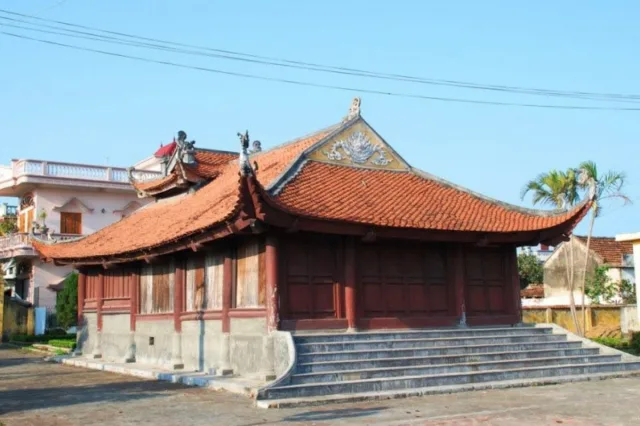
Đình Kim Sơn mang dáng dấp điển hình của kiến trúc đình làng truyền thống vùng đồng bằng duyên hải Bắc Bộ. Di tích được xây dựng theo kiểu chữ Đinh, gồm tòa đại đình phía trước nối vuông góc với hậu cung phía sau, tạo bố cục vừa trang nghiêm vừa thuận tiện cho việc tế lễ và sinh hoạt cộng đồng. Theo các bậc cao niên trong làng, đình là nơi phụng thờ Nam Hải Đại Vương – vị thần được nhân dân tôn làm thành hoàng làng và tổ nghề muối của vùng Kim Sơn.
Đình tọa lạc ở vị trí trung tâm làng, phía trước là khoảng sân rộng nhìn ra đường làng và ruộng muối, phía sau có hàng cây cổ thụ che bóng quanh năm. Không gian xung quanh khá thoáng đãng, giữ được vẻ yên bình đặc trưng của làng quê ven biển. Từ xa có thể nhìn thấy phần mái đình cao rộng với các đầu đao cong vút, tạo nên dáng vẻ mềm mại nhưng vẫn bề thế.
Kiến trúc đình làm theo kiểu chồng diêm hai tầng tám mái. Toàn bộ mái lợp ngói mũi truyền thống, các góc đao uốn cong thanh thoát theo lối kiến trúc cổ. Bộ khung công trình được dựng hoàn toàn bằng gỗ lim, liên kết bằng hệ thống mộng gỗ chắc chắn. Các hàng cột cái, cột quân có kích thước lớn, kê trên chân tảng đá xanh, tạo sự vững chãi cho toàn bộ công trình. Hệ thống xà ngang, kẻ chuyền, bẩy hiên được làm theo lối truyền thống với nhiều chi tiết chạm khắc hình long vân, lá lật và hoa dây cách điệu. Tuy không quá cầu kỳ nhưng các mảng chạm vẫn thể hiện sự tinh tế của nghệ nhân dân gian địa phương.
Trải qua chiến tranh và thời gian, nhiều hạng mục cũ của đình không còn nguyên vẹn, hiện di tích còn giữ được ba gian hậu cung là phần kiến trúc cổ quan trọng nhất. Hậu cung xây trên nền cao, không gian kín và trang nghiêm, là nơi đặt long ngai, bài vị cùng các đồ thờ của Nam Hải Đại Vương. Nội thất hậu cung sử dụng nhiều đồ gỗ sơn son thếp vàng, cửa võng và hoành phi câu đối mang phong cách truyền thống.
Năm 2005, đình được tu bổ và nâng nền cao thêm khoảng 0,7 m để chống ngập và bảo vệ công trình trước điều kiện thời tiết vùng ven biển. Sau đợt tu sửa, tổng diện tích khuôn viên di tích đạt khoảng 4.341 m², bao gồm sân đình, khu cây xanh và các công trình phụ trợ. Sân đình rộng, lát gạch đỏ, là nơi diễn ra các hoạt động tế lễ, hội họp và sinh hoạt văn hóa cộng đồng của người dân địa phương.
Hiện vật
Đình Kim Sơn hiện còn lưu giữ 17 di vật cổ có niên đại hàng trăm năm như sắc phong, bát biểu, long đình, đỉnh đồng, cửa võng và các đồ tế khí truyền thống. Đây là những hiện vật có giá trị về lịch sử, tín ngưỡng và nghệ thuật, phản ánh quá trình hình thành và phát triển của làng Kim Sơn qua nhiều thời kỳ.
Lễ hội
Tài liệu tham khảo
- Cổng thông tin điện tử Thành phố Hải Phòng, 2015, Đình Kim Sơn – Di tích cách mạng, truy cập tại: https://haiphong.gov.vn/di-tich-danh-thang/dinh-kim-son-di-tich-cach-mang-626653
- Thu Hương, 2026, Di tích cách mạng đình Kim Sơn, truy cập tại: https://www.thuvienhaiphong.org.vn/tin-tuc/di-tich-cach-mang-dinh-kim-son
Ngôn ngữ khác
Tiếng Anh
Kim Son Communal House (Kien Hung, Hai Phong)
Name and Geographic Location
Kim Son Communal House is located in Tan Trao commune, former Kien Thuy district (now Kien Hung commune, Hai Phong City). The communal house was built during the late Later Le period. Since the sacred genealogy of the communal house has long been lost, the history of the deity worshiped there survives only in local oral tradition. According to village memory, the deity was a figure who helped the people of Kim Son reclaim coastal land, establish settlements centuries ago, and teach the local population the craft of salt making. After his death, villagers established the communal house to worship him and honored him as the tutelary deity of the village as well as the founding ancestor of the salt-making profession.
History and Historical Figure
Kim Son Communal House was constructed around the nineteenth century and served as the center of religious and communal life for the coastal residents of old Kien Thuy. According to oral accounts preserved by village elders, the communal house worships Nam Hai Dai Vuong, a deity revered by local people as the pioneer who reclaimed land from the sea and helped the first settlers establish villages in the Kim Son area.
In addition to guiding villagers in reclaiming coastal alluvial land, the deity was also believed to have taught the people the craft of salt production, which remained the principal livelihood of local residents for generations. Therefore, after his death, villagers established the communal house in his honor, worshiping him as both the tutelary deity of the village and the ancestral founder of the salt-making trade in Kim Son.
Beyond its religious significance, Kim Son Communal House also holds important historical value as a site associated with the revolutionary movement in Hai Phong during the period preceding the August Revolution of 1945. It is regarded as one of the earliest places where the movement to seize political power began in the Northern coastal region.
From 1944 onward, under the leadership of the Viet Minh Front, revolutionary activities in Kim Son developed rapidly. Local people repeatedly organized demonstrations, public meetings, and propaganda campaigns against the colonial-feudal administration, causing growing concern among local authorities. By 1945, as political conditions changed rapidly, revolutionary forces in Kien Thuy district began preparing for the seizure of power.
During this period, Kim Son Communal House became a gathering place, communication center, and organizational headquarters for the local revolutionary movement. On July 12, 1945, at Kim Son village communal house, the Provisional Revolutionary Committee of Kien Thuy district officially made its public debut. This was considered the first revolutionary government established in the Northern coastal region. The event received enthusiastic support from local residents and created strong momentum for the revolutionary struggle throughout the area.
Shortly afterward, Kim Son self-defense forces cooperated with the Revolutionary Committee to move to the school in Co Trai commune in order to disperse a meeting held by a pro-Japanese Dai Viet youth group. The district governor and opposing elements were forced to surrender. The flag of the Japanese-backed administration was lowered, and the opposing meeting was transformed into an occasion for revolutionary propaganda exposing the nature of collaborationist forces.
The establishment of revolutionary authority in Kim Son alarmed the Japanese military, which feared that the uprising movement would spread further. As a result, they urgently prepared to suppress the area. In response, local self-defense units and the people of Kim Son quickly constructed fortifications, barricaded the village, strengthened patrols, and prepared weapons. A large defensive line was established on the northern side of the village. Crude weapons such as bricks, stones, spears, machetes, matchlock guns, and bamboo lances were all mobilized in preparation for battle.
On August 4, 1945, Japanese forces mobilized approximately fifty security troops along with two Japanese officers to enter Kim Son and suppress the revolutionary movement. As enemy troops approached the entrance of the village, the drums of Kim Son Communal House sounded rapidly, joined by the bells of pagodas and churches, along with gongs and wooden clappers echoing throughout the region, creating an atmosphere of intense resistance.
Not only the people of Kim Son but also residents from neighboring villages such as Doan Xa, Lao Phong, Kinh Truc, Sam Linh, Coc Lien, and Vinh Quang came to support the defense of the young revolutionary government.
The battle lasted for approximately five continuous hours. Through determination and the coordinated support of large numbers of local residents, Kim Son self-defense forces ultimately forced the Japanese troops to retreat. This victory became a highly significant event, greatly encouraging revolutionary uprisings across the region.
Following this success, revolutionary forces from Kim Son continued cooperating with neighboring localities to seize power in the district capital of Kien Thuy on August 15, 1945, and later in the provincial capital of Kien An on August 22, 1945, contributing to the nationwide victory of the August Revolution.
Architecture and Landscape
Kim Son Communal House displays the characteristic features of traditional communal-house architecture in the Northern coastal delta region. The monument follows the shape of the Chinese character “Dinh” (丁), consisting of a main ceremonial hall at the front connected perpendicularly to the rear sanctuary, creating a layout both solemn and practical for ritual ceremonies and communal activities.
According to village elders, the communal house is dedicated to Nam Hai Dai Vuong, who is worshiped as both the tutelary deity of the village and the ancestral founder of the local salt-making profession.
The communal house is located at the center of the village. In front lies a spacious courtyard overlooking village roads and salt fields, while ancient trees at the rear provide shade throughout the year. The surrounding environment remains open and peaceful, preserving the tranquil atmosphere characteristic of coastal rural villages. From a distance, the high and expansive roof with gracefully curved corners creates a structure that is both elegant and imposing.
The architecture follows a two-tiered overlapping-roof design with eight roof surfaces. The entire roof is covered with traditional pointed tiles, and the roof corners curve upward in the classical architectural style. The structural framework is made entirely of ironwood connected through a sturdy mortise-and-tenon system. The large principal and secondary columns rest on green stone bases, giving the structure stability and durability.
The system of horizontal beams, rafters, and eave supports follows traditional construction methods and includes decorative carvings of dragons among clouds, stylized leaves, and floral motifs. Although the decoration is not excessively elaborate, the carved panels still demonstrate the refinement and craftsmanship of local folk artisans.
Due to war and the passage of time, many original structures of the communal house have not survived. Today, the rear sanctuary with its three compartments remains the most important surviving historical structure. Built on a raised platform, the sanctuary maintains an enclosed and solemn atmosphere. It houses the royal throne, spirit tablets, and worship objects dedicated to Nam Hai Dai Vuong. The interior contains many lacquered and gilded wooden objects, ornamental door screens, and horizontal lacquered boards with parallel sentences in the traditional style.
In 2005, the communal house underwent restoration, and the foundation level was raised by approximately 0.7 meters to prevent flooding and protect the structure from the harsh coastal climate. Following restoration, the total site area reached approximately 4,341 square meters, including the courtyard, green spaces, and auxiliary structures. The spacious brick-paved courtyard serves as the venue for ritual ceremonies, village meetings, and local cultural activities.
Artifacts
Kim Son Communal House currently preserves seventeen ancient artifacts dating back several centuries, including royal ordination decrees, ceremonial staffs, palanquins, bronze censers, ornamental door screens, and traditional ritual objects. These artifacts possess important historical, religious, and artistic value, reflecting the formation and development of Kim Son village across different historical periods.
The Festival
Legend has it that ball wrestling was originally a sport invented by General Pham Ngu Lao (during the Tran Dynasty) to train soldiers. Later, the people of Kim Son village, Tan Trao commune, Kien Thuy district, Hai Phong city, often played this game at the beginning of the year to welcome the new spring. Over time, the game became the traditional ball wrestling festival of Kim Son village, held annually on the 6th day of the first lunar month right in the village communal house.
From the morning of the 30th day of the lunar year, the three clans and the people of the village eagerly prepared to build the welcoming gate. According to custom, on the evening of the 30th day of the lunar year, the whole village gathered at the communal house to worship the village’s tutelary deity.
The village has 24 clans and is divided into three clans. Each clan must select six people, including one person who acts as the flag bearer, wearing martial arts attire, a headscarf, leg wraps, and holding a pennant flag to command the ball wrestling competition. The remaining five wrestlers are strong, unmarried young men. Each clan must erect a symbolic archway representing their clan (red-robed clan, yellow-robed clan, blue-robed clan).
The ball is made from a mature banana tree trunk, weighing 20 kg, with a diameter of 30-40 cm, wrapped in pink paper, and adorned with images of the four mythical creatures: dragon, unicorn, tortoise, and phoenix. After decoration, the ball is placed on a tray inside a palanquin at the altar in the village temple.
The ball in the temple courtyard is shaped like a swan made of black sand. The main hole is dug at the center of the swan’s navel, about 0.7 m deep and 1 m in diameter, with three smaller holes at the three corners of the courtyard. The ball is placed in the main hole. After the rituals of worshiping the village guardian deity and offering prayers, the much-anticipated ball-throwing takes place. After the drum signal sounds, the ball throwers jump into the main hole and toss the ball up. The smooth, round, and heavy ball is difficult to grip, and with nearly a dozen arms clinging to it, sometimes the ball is lifted high, and sometimes it rolls down, pulling the young men down. The lively atmosphere, filled with shouts and cheers around the village square, made the festival joyful and vibrant. Everyone was eager to bring the ball back to their home square, so the wrestling matches were even more intense. Amidst the cool spring air, the bright spring sunshine, and a few light spring raindrops, visitors enjoyed the vigorous wrestling matches of the village men. Each round of the wrestling match lasted 3 minutes, with 3 rounds in total. The team that brought the ball back to their home square the most times won.
On the afternoon of the 5th day of the Lunar New Year, the people and the festival organizing committee held a ceremony to worship the village deity and offer prayers for the ball. On the morning of the 6th day of the Lunar New Year, starting at 7 a.m., the village elders organized a procession to carry the ball from inside the village square to the courtyard and bestowed blessings upon the wrestlers.
At the hour of the Dragon (10 a.m.), the palanquin was carried out to the village square. The procession includes: a palanquin carrying a portrait of President Ho Chi Minh, a group of flag bearers, a traditional music ensemble, a symbolic ball, a wrestling ball, a male and female ritual troupe, a flag dance group, a dragon dance group, a referee group, and finally, the ball wrestling team. The ball is placed in the hole of the main ball. After the signal drum, the wrestling begins. The wrestlers jump into the hole of the main ball and toss it up. The round, sturdy, and heavy ball is then brought back to their own yard by the participating teams. The drumming and cheering of the crowd make the competition even more exciting. Each ball wrestling match consists of 3 rounds, each lasting 3 minutes. The team that brings the ball back to their yard the most times wins. At the end of the festival, the ball is thrown into the crescent-shaped pond in front of the communal house. Festival-goers often rush down to grab a piece of the ball to receive “blessings” from the village deity.
References
- Cổng thông tin điện tử Thành phố Hải Phòng, 2015, Đình Kim Sơn – Di tích cách mạng, truy cập tại: https://haiphong.gov.vn/di-tich-danh-thang/dinh-kim-son-di-tich-cach-mang-626653
- Thu Hương, 2026, Di tích cách mạng đình Kim Sơn, truy cập tại: https://www.thuvienhaiphong.org.vn/tin-tuc/di-tich-cach-mang-dinh-kim-son
Tiếng Pháp
Maison communale de Kim Son (Kien Hung, Hai Phong)
Nom et situation geographique
La maison communale de Kim Son appartient autrefois a la commune de Tan Trao, district de Kien Thuy (aujourd’hui commune de Kien Hung, ville de Hai Phong). Elle fut construite a la fin de la dynastie des Le posterieurs. Les legendes et archives du sanctuaire ayant disparu depuis longtemps, l’histoire du personnage veneré n’est conservee que dans la memoire populaire. Selon la tradition orale, il s’agissait d’une divinite ayant aide les habitants de Kim Son a gagner des terres sur la mer, a fonder les premiers villages et a transmettre le metier de la production de sel. Apres sa mort, les habitants lui eleverent une maison communale et le venererent comme genie tutelaire du village et ancetre du metier du sel.
Histoire et personnage historique
La maison communale de Kim Son fut construite vers le XIXe siecle et constitua le centre des activites religieuses et communautaires des habitants de l’ancienne region maritime de Kien Thuy. Selon les anciens du village, le sanctuaire est dedie a Nam Hai Dai Vuong, divinite venerée comme le pionnier ayant aide les premiers habitants a gagner des terres sur la mer et a etablir les premiers hameaux dans la region de Kim Son. Outre les travaux de mise en valeur des bancs alluviaux cotiers, il est egalement considere comme celui qui transmit aux habitants le metier de la production de sel, activite essentielle a la subsistance locale pendant de nombreuses generations. C’est pourquoi, apres sa disparition, les villageois lui eleverent un sanctuaire et le reconnurent comme genie protecteur du village ainsi que patriarche du metier du sel de Kim Son.
Au-dela de sa valeur religieuse populaire, la maison communale de Kim Son constitue egalement un site historique important lie au mouvement revolutionnaire de Hai Phong durant la periode precedant l’Insurrection d’aout 1945. Elle est consideree comme l’un des premiers lieux marquant le debut du mouvement de prise du pouvoir dans la region cotiere du Nord pendant la Revolution d’aout.
A partir de 1944, sous la direction du Front Viet Minh, le mouvement revolutionnaire de Kim Son connut un fort developpement. Les habitants organiserent a plusieurs reprises des manifestations, rassemblements et activites de propagande contre l’administration coloniale et feodale, suscitant l’inquietude croissante des autorites locales. En 1945, alors que la situation politique evoluait rapidement, le mouvement revolutionnaire dans la prefecture de Kien Thuy commenca a preparer la prise du pouvoir.
Durant cette periode, la maison communale de Kim Son devint un lieu de reunion, de liaison et d’organisation des forces revolutionnaires locales. Le 12 juillet 1945, au sein de la maison communale du village de Kim Son (alors situee dans la commune de Tan Trao, district de Kien Thuy), le Comite revolutionnaire provisoire du district de Kien Thuy fut officiellement presente a la population. Cet evenement est considere comme la premiere administration revolutionnaire de la region cotiere du Nord. Il recut un large soutien populaire et insuffla un elan puissant au mouvement de prise du pouvoir dans toute la region.
Peu apres, les forces d’autodefense de Kim Son, en coordination avec le Comite revolutionnaire, se rendirent a l’ecole de la commune de Co Trai afin de disperser une reunion de jeunes du mouvement Dai Viet favorable au Japon. Le prefet et les elements hostiles furent contraints de se rendre. Le drapeau du gouvernement pro-japonais fut abaisse et la reunion adverse se transforma en tribune de propagande revolutionnaire denonçant les forces collaborateurs.
La naissance du pouvoir revolutionnaire a Kim Son inquieta fortement l’armee japonaise, qui craignait l’extension du mouvement insurrectionnel. Les Japonais preparerent alors rapidement une operation de repression contre la region. Face a cette menace, les forces d’autodefense et la population de Kim Son se mobiliserent pour construire des fortifications, barrer les entrees du village, renforcer les patrouilles et preparer les armes disponibles. Au nord du village fut erigee une importante ligne defensive. Toutes sortes d’armes rudimentaires — briques, pierres, lances, machettes, fusils artisanaux et pieux de bambou — furent rassemblees afin de resister a l’ennemi.
Le 4 aout 1945, les Japonais envoyerent environ cinquante soldats auxiliaires accompagnes de deux officiers japonais pour reprimer le mouvement revolutionnaire. Lorsque les troupes ennemies arriverent a l’entree du village, les tambours de la maison communale de Kim Son retentirent avec force, accompagnes des cloches de la pagode, des cloches de l’eglise, des cymbales et des gongs d’alerte, creant dans toute la region une atmosphere de combat intense. Non seulement les habitants de Kim Son, mais egalement ceux des villages voisins tels que Doan Xa, Lao Phong, Kinh Truc, Sam Linh, Coc Lien et Vinh Quang vinrent soutenir la defense du jeune pouvoir revolutionnaire.
Les combats durerent environ cinq heures. Grace a leur determination et au soutien massif de la population, les forces d’autodefense de Kim Son reussirent a repousser les Japonais. Cette victoire eut une grande importance morale et encouragea puissamment le mouvement insurrectionnel dans toute la region.
Apres cette victoire defensive, les forces revolutionnaires de Kim Son continuerent a cooperer avec les localites voisines afin de prendre le pouvoir au chef-lieu de la prefecture de Kien Thuy le 15 aout 1945, puis au chef-lieu provincial de Kien An le 22 aout 1945, contribuant ainsi a la victoire generale de la Revolution d’aout 1945.
Architecture et paysage
La maison communale de Kim Son presente les caracteristiques typiques des maisons communales traditionnelles des plaines cotieres du Nord du Vietnam. Le monument est construit selon un plan en forme de caractere chinois « Dinh », compose d’une grande salle ceremonielle a l’avant reliee perpendiculairement au sanctuaire arriere, formant un ensemble a la fois solennel et adapte aux ceremonies ainsi qu’aux activites communautaires. Selon les anciens du village, la maison communale est consacree a Nam Hai Dai Vuong, divinite venerée comme genie protecteur du village et ancetre du metier du sel de la region de Kim Son.
Le monument se situe au centre du village. Devant s’etend une vaste cour donnant sur la route du village et les marais salants, tandis qu’a l’arriere se trouvent des arbres centenaires offrant de l’ombre toute l’annee. L’espace environnant reste degage et preserve le calme caracteristique des villages cotiers. De loin, on aperçoit la toiture elevee aux extremites recourbees, donnant a l’ensemble une allure a la fois souple et majestueuse.
L’architecture suit le style chong diem a deux niveaux et huit pans de toiture. L’ensemble du toit est couvert de tuiles traditionnelles, avec des extremites recourbees elegamment selon l’architecture ancienne. Toute la charpente est construite en bois de lim assemble par un solide systeme d’emboitements traditionnels. Les piliers principaux et secondaires, de grande dimension, reposent sur des bases en pierre verte assurant la stabilite de l’edifice. Les poutres transversales, consoles et auvents suivent les techniques traditionnelles et sont ornes de motifs sculptes de dragons dans les nuages, de feuillages et de rinceaux stylises. Bien que relativement sobres, ces sculptures temoignent du raffinement des artisans populaires locaux.
Les guerres et le temps ont endommage plusieurs parties de l’ancienne maison communale. Aujourd’hui, les trois travées du sanctuaire arriere constituent la partie ancienne la plus importante encore conservee. Le hau cung repose sur une plateforme surelevee et presente un espace clos et solennel, ou sont conserves le trone cultuel, les tablettes commemoratives et les objets de culte de Nam Hai Dai Vuong. L’interieur utilise abondamment des boiseries laquees et dorees, ainsi que des portes sculptées et des panneaux paralleles de style traditionnel.
En 2005, la maison communale fut restauree et son niveau sureleve d’environ 0,7 metre afin de prevenir les inondations et proteger l’edifice des conditions climatiques de la zone cotiere. A la suite de cette restauration, la superficie totale du site atteignit environ 4 341 m², comprenant la cour ceremonielle, les espaces verts et les constructions annexes. La vaste cour pavee de briques rouges accueille les ceremonies, les reunions et les activites culturelles communautaires des habitants.
Objets patrimoniaux
La maison communale de Kim Son conserve actuellement dix-sept objets anciens datant de plusieurs centaines d’annees, parmi lesquels des decrets royaux, des bat bieu, des long dinh, des chaudrons en bronze, des portes sculptées et divers objets rituels traditionnels. Ces pieces possedent une grande valeur historique, religieuse et artistique et refletent le processus de formation et de developpement du village de Kim Son a travers les epoques.
Le Festival
La légende raconte que la lutte à la balle fut inventée par le général Pham Ngu Lao (sous la dynastie Tran) pour entraîner ses soldats. Plus tard, les habitants du village de Kim Son, commune de Tan Trao, district de Kien Thuy, ville de Hai Phong, pratiquaient souvent ce jeu en début d’année pour accueillir le printemps. Au fil du temps, ce jeu devint le festival traditionnel de lutte à la balle du village de Kim Son, célébré chaque année le sixième jour du premier mois lunaire dans la maison commune.
Dès le matin du trentième jour lunaire, les trois clans et les villageois s’activèrent à construire la porte de bienvenue. Selon la tradition, le soir même, tout le village se rassembla à la maison commune pour vénérer la divinité tutélaire du village.
Le village compte 24 clans, répartis en trois groupes. Chaque clan doit sélectionner six personnes, dont un porte-drapeau vêtu d’une tenue d’arts martiaux, coiffé d’un foulard et portant des jambières. Ce dernier brandit un fanion pour diriger le tournoi de lutte avec une balle. Les cinq autres lutteurs sont de jeunes hommes célibataires et robustes. Chaque clan doit ériger une arche symbolique le représentant (clan à la robe rouge, clan à la robe jaune, clan à la robe bleue).
La balle est fabriquée à partir d’un tronc de bananier adulte, pesant 20 kg et mesurant 30 à 40 cm de diamètre. Elle est enveloppée de papier rose et ornée d’images des quatre créatures mythiques : le dragon, la licorne, la tortue et le phénix. Après décoration, la balle est placée sur un plateau dans un palanquin, sur l’autel du temple du village.
La balle installée dans la cour du temple a la forme d’un cygne en sable noir. Le trou principal, d’environ 0,7 m de profondeur et 1 m de diamètre, est creusé au centre du nombril du cygne. Trois trous plus petits sont situés aux trois coins de la cour. La balle est placée dans le trou principal. Après les rituels d’hommage à la divinité protectrice du village et les prières, le lancer de balle tant attendu a lieu. Au son du tambour, les lanceurs sautent dans le trou et lancent la balle en l’air. Lisse, ronde et lourde, la balle est difficile à saisir, et avec une douzaine de bras qui s’y agrippent, elle est parfois lancée très haut, parfois elle retombe, entraînant les jeunes hommes dans sa chute. L’atmosphère joyeuse et animée, emplie de cris et d’acclamations sur la place du village, rend la fête vibrante et festive. Chacun est impatient de ramener la balle dans sa place, ce qui rend les combats de lutte encore plus intenses. Dans la fraîcheur du printemps, sous le soleil éclatant et quelques fines gouttes de pluie, les visiteurs apprécient les combats vigoureux des hommes du village. Chaque manche dure trois minutes, et il y en a trois au total. L’équipe qui ramène la balle le plus souvent remporte la victoire.
L’après-midi du cinquième jour du Nouvel An lunaire, les villageois et le comité d’organisation des festivités ont célébré une cérémonie en l’honneur de la divinité du village et ont prié pour la balle. Le matin du sixième jour, dès 7 heures, les anciens du village ont organisé une procession pour transporter la balle de la place du village à la cour et ont béni les lutteurs.
À l’heure du Dragon (10 heures), le palanquin a été porté jusqu’à la place du village. La procession comprenait : un palanquin portant un portrait du président Hô Chi Minh, un groupe de porte-drapeaux, un ensemble de musique traditionnelle, une balle symbolique, une balle de lutte, une troupe rituelle composée d’hommes et de femmes, un groupe de danse du drapeau, un groupe de danse du dragon, un groupe d’arbitres et, enfin, l’équipe de lutte avec la balle. La balle est placée dans l’orifice de la balle principale. Au signal du tambour, le combat commence. Les lutteurs sautent dans l’orifice de la balle principale et la lancent en l’air. La balle ronde, robuste et lourde est ensuite ramenée dans la cour de chaque équipe. Les tambours et les acclamations de la foule rendent la compétition encore plus palpitante. Chaque match de lutte à la balle se compose de trois manches de trois minutes chacune. L’équipe qui ramène la balle dans sa cour le plus souvent remporte la victoire. À la fin du festival, la balle est jetée dans l’étang en forme de croissant situé devant la maison communale. Les festivaliers se précipitent souvent pour attraper un morceau de la balle et recevoir ainsi la « bénédiction » de la divinité du village.
Bibliographie
- Cổng thông tin điện tử Thành phố Hải Phòng, 2015, Đình Kim Sơn – Di tích cách mạng, truy cập tại: https://haiphong.gov.vn/di-tich-danh-thang/dinh-kim-son-di-tich-cach-mang-626653
- Thu Hương, 2026, Di tích cách mạng đình Kim Sơn, truy cập tại: https://www.thuvienhaiphong.org.vn/tin-tuc/di-tich-cach-mang-dinh-kim-son
Tiếng Trung
金山亭(海防市建兴社)
名称与地理位置
金山亭位于原建瑞县新潮社(今属海防市建兴社),建于后黎朝末期。由于亭庙神迹文献早已散佚,现今关于所奉人物的历史,仅存于民间记忆之中。相传其为一位有功于金山地区百姓的神灵,曾率领居民开荒围海、建立村落,并教授百姓制盐之术。因此在其去世后,当地百姓建亭奉祀,尊为城隍,同时奉其为盐业祖师。
历史与人物
金山亭约建于十九世纪,是昔日建瑞沿海居民的重要信仰与社区活动中心。根据村中长者口述,亭内供奉“南海大王”(Nam Hai Dai Vuong)——一位被百姓尊崇为开荒围海功臣的神灵。相传他帮助最早来到金山地区的居民建立村落,不仅指导百姓开发沿海滩涂,还教授制盐技术。制盐业长期以来一直是当地居民的重要生计,因此在其逝世后,村民建亭祭祀,并奉其为金山地区盐业祖师与本境城隍。
除了民间信仰价值之外,金山亭还是与1945年革命运动密切相关的重要历史遗址,被视为北部沿海地区八月革命中最早开展夺取政权运动的重要地点之一。
自1944年起,在越盟阵线领导下,金山地区革命运动迅速发展。当地群众多次组织示威、集会及宣传活动,反对殖民与封建政权,使地方统治机构日益不安。进入1945年后,随着政治局势急剧变化,建瑞府革命力量开始积极筹备夺取政权。
这一时期,金山亭成为当地革命组织集会、联络及部署力量的重要据点。1945年7月12日,建瑞县临时革命委员会在金山亭(当时属新潮社建瑞县)正式向民众宣告成立。这被认为是北部沿海地区第一个革命政权。该事件获得当地民众广泛响应,大大鼓舞了整个地区争取政权的革命斗争。
随后,金山自卫队配合革命委员会前往古斋社学校,驱散亲日“大越青年团”的集会。当地知府及反动分子被迫投降。原先悬挂的亲日伪政权旗帜被降下,而敌方集会则转变为宣传革命、揭露傀儡势力本质的场所。
金山革命政权的建立使日军担心起义运动迅速扩散,因此加紧准备镇压该地区。面对局势变化,金山自卫力量与当地群众迅速构筑工事、设置村寨防线,加强巡逻并准备武器。在村北方向建立了大型防御工事,砖石、长矛、砍刀、火枪及竹矛等简易武器全部被动员起来,以备抗敌。
1945年8月4日,日军调动约五十名保安兵及两名日本军官进入金山,企图镇压革命运动。敌军刚抵达村口时,金山亭的鼓声骤然响起,与寺院钟声、教堂钟声、铜锣与木鱼警报声交织回荡,顿时点燃整个地区的战斗气氛。不仅金山村民投入战斗,端舍(Doan Xa)、老丰(Lao Phong)、敬直(Kinh Truc)、森灵(Sam Linh)、谷莲(Coc Lien)及荣光(Vinh Quang)等邻近村庄的百姓也纷纷赶来支援,共同保卫新生革命政权。
战斗持续约五小时。在群众广泛配合与顽强斗志下,金山自卫队最终迫使日军撤退。这场胜利成为具有重大意义的事件,极大鼓舞了整个地区的起义运动。
在取得反扫荡胜利后,金山革命力量继续与其他地区配合,于1945年8月15日夺取建瑞府政权,并于8月22日参加建安省城起义,为全国八月革命胜利作出了贡献。
建筑与景观
金山亭具有北部沿海平原传统村亭建筑的典型风貌。建筑采用“丁”字形布局,即前方大亭与后方后宫呈垂直连接,既庄严肃穆,又便于祭祀与社区活动。根据村中长者所述,亭内供奉南海大王——被当地百姓尊为城隍与盐业祖师的神灵。
亭庙位于村庄中心,前方是宽阔庭院,可远望村道与盐田;后方古树成荫,四季覆盖。周围环境开阔宁静,保留着沿海乡村特有的平和气息。远处即可望见高大的亭顶与飞翘屋脊,整体造型柔和而庄重。
建筑采用重檐两层八顶结构。屋面全部覆盖传统尖瓦,飞檐曲线优美。整体木架完全使用铁木建造,并以传统榫卯结构连接。主柱与辅柱体量巨大,立于青石柱础之上,使建筑整体十分稳固。横梁、穿枋与檐撑均沿袭传统工艺,并雕刻龙云、卷叶与缠枝花纹等图案。虽然装饰不算繁复,但雕刻仍体现出当地民间工匠的精巧技艺。
历经战争与岁月侵蚀,亭内不少旧建筑已不完整,目前仅后宫三间仍保存较为完整,是最重要的古建筑部分。后宫建于高台之上,空间封闭肃穆,内置南海大王的龙椅、神位及祭祀器物。后宫内部广泛使用朱漆贴金木制祭器,并设有门罩、横匾与楹联等传统装饰。
2005年,金山亭曾进行大规模修缮,并将地基整体抬高约0.7米,以防止沿海地区水患侵蚀。修缮后,遗迹总面积约4341平方米,包括亭院、绿化区及附属建筑。宽阔的红砖庭院不仅用于祭祀,也承担当地居民集会与文化活动功能。
遗物
金山亭现仍保存十七件古代遗物,年代多达数百年,包括敕封文书、八表、龙亭、铜鼎、门罩及传统祭器等。这些文物具有重要的历史、信仰与艺术价值,反映出金山村在不同时期的发展历程。
节日
相传,球摔最初是陈朝时期范五老将军为了训练士兵而发明的一种运动。后来,海防市建水县新潮乡金山村的村民们经常在新年伊始玩这种游戏来迎接春天。久而久之,这项游戏演变成了金山村传统的球摔节,每年农历正月六在村公所举行。
从农历三十日清晨开始,三个氏族和村民们便开始积极准备搭建迎宾门。按照习俗,农历三十日晚上,全村人聚集在村公所祭拜村神。
该村共有24个氏族,分为三个氏族。每个氏族必须选出六人,其中一人担任旗手,身着武术服,头戴头巾,腿缠绷带,手持三角旗,指挥摔球比赛。其余五名摔球者均为身强力壮的未婚青年。每个氏族必须搭建一座象征性的拱门,代表各自的氏族(红袍氏族、黄袍氏族、蓝袍氏族)。
球体由一根重达20公斤的成熟香蕉树干制成,直径30-40厘米,用粉色纸包裹,并饰以龙、麒麟、龟、凤四种神兽的图案。装饰完成后,球体被放置在村庄寺庙祭坛上的轿子内的托盘上。
寺庙庭院中的球体则被塑造成天鹅的形状,由黑沙制成。主洞位于天鹅肚脐的中心,深约0.7米,直径约1米,庭院的三个角落各有一个小洞。球被放置在主洞中。在祭拜村庄守护神和祈祷的仪式结束后,万众期待的掷球比赛正式开始。随着鼓声响起,掷球者们跃入主洞,将球抛向空中。光滑圆润、沉甸甸的球难以抓握,近十几个人争相抓住它,有时球会被高高抛起,有时又会滚落下来,将年轻人拉倒在地。村广场上欢呼雀跃,热闹非凡,节日气氛浓厚。每个人都渴望将球带回各自的广场,因此争球比赛更加激烈。在凉爽的春风、明媚的春日阳光和几滴淅沥的春雨中,游客们欣赏着村民们激烈的争球比赛。摔跤比赛每轮持续3分钟,共进行3轮。将球带回本方广场次数最多的队伍获胜。
农历正月初五下午,村民和节庆组委会举行祭祀村神、祈福的仪式。农历正月初六上午7点,村里的长者们组织了抬球队伍,将球从村广场抬到院子里,并为摔跤选手们祈福。
龙时(上午10点),轿子被抬到村广场。游行队伍包括:一顶轿子,上面放着胡志明主席的画像;一群旗手;一支传统乐队;一个象征性的球;一个摔跤球;一个男女仪仗队;一支旗舞队;一支舞龙队;一个裁判组;以及最后的摔跤队。球被放置在主球的洞里。随着信号鼓的响起,摔跤比赛开始。摔跤手们跳入主球的洞中,将球抛向空中。这个圆润、结实而沉重的球随后被参赛队伍带回各自的院子。鼓声和人群的欢呼声使比赛更加激动人心。每场摔跤比赛分为三轮,每轮三分钟。将球带回本方院子次数最多的队伍获胜。节日结束时,球被扔进公社房屋前的月牙形池塘中。节日期间,人们常常争先恐后地抢夺球的一部分,以获得村神的“祝福”。
参考资料
- Cổng thông tin điện tử Thành phố Hải Phòng, 2015, Đình Kim Sơn – Di tích cách mạng, truy cập tại: https://haiphong.gov.vn/di-tich-danh-thang/dinh-kim-son-di-tich-cach-mang-626653
- Thu Hương, 2026, Di tích cách mạng đình Kim Sơn, truy cập tại: https://www.thuvienhaiphong.org.vn/tin-tuc/di-tich-cach-mang-dinh-kim-son