

Đối tượng suy tôn
Hội Đổ giàn An Thái là một lễ hội dân gian đặc sắc của vùng đất võ Bình Định, kết hợp giữa tín ngưỡng Phật giáo, tín ngưỡng dân gian và truyền thống võ cổ truyền địa phương. Lễ hội hướng tới việc cầu quốc thái dân an, cầu cho mưa thuận gió hòa, mùa màng bội thu, nhân dân an cư lạc nghiệp và siêu độ các cô hồn, vong linh không nơi nương tựa. Trong tín ngưỡng dân gian địa phương, lễ hội còn gắn với việc thờ Tiêu Diện Đại Sĩ – vị thần hộ pháp được xem là hóa thân của Bồ Tát Quán Thế Âm, có nhiệm vụ quản lĩnh cô hồn và bảo vệ chúng sinh khỏi tai ương, dịch bệnh.
Qua nhiều thế kỷ phát triển, yếu tố tín ngưỡng ấy hòa quyện với tinh thần thượng võ của cư dân An Thái, biến lễ hội trở thành một ngày hội lớn vừa mang ý nghĩa tâm linh, vừa là dịp biểu dương sức mạnh, võ nghệ và danh dự của các võ đường nổi tiếng trong vùng.
Địa điểm
Lễ hội được tổ chức tại chùa Bà (Ngũ bang Hội quán) thuộc làng An Thái, xã Nhơn Phúc, thị xã An Nhơn, tỉnh Bình Định.
Không gian lễ hội không chỉ giới hạn trong khuôn viên chùa mà còn mở rộng ra toàn bộ khu vực thị tứ An Thái xưa, bao gồm các tuyến đường rước, sân chùa, đàn tràng, khu vực dựng giàn tranh heo và những nơi diễn ra các hoạt động văn hóa cộng đồng.
Ngũ bang Hội quán được cộng đồng người Hoa xây dựng năm 1873 để thờ Thiên Hậu Thánh Mẫu. Trước đó, nơi đây vốn là một cơ sở tín ngưỡng liên quan đến tục thờ Tiêu Diện. Chính vì vậy, chùa Bà trở thành trung tâm của các hoạt động nghi lễ trong lễ hội Đổ giàn.
Thời gian
Theo truyền thống, lễ hội được tổ chức vào các năm Tỵ, Dậu và Sửu, tức chu kỳ bốn năm một lần.
Thời gian diễn ra kéo dài trong ba ngày, từ ngày 14 đến ngày 16 tháng Bảy âm lịch. Một số năm có thể tổ chức từ ngày 15 đến ngày 17 tháng Bảy.
Ngày 14 là ngày chuẩn bị và khai lễ.
Ngày 15 là ngày chính hội với các nghi thức cúng tế và đổ giàn.
Ngày 16 là ngày hoàn tất các nghi lễ cầu siêu, phát lộc và kết thúc lễ hội.
Nguồn gốc lễ hội
An Thái từ lâu là vùng đất nổi tiếng với truyền thống võ thuật và giao thương. Tại đây từng tồn tại một cộng đồng người Hoa đông đảo sinh sống cùng người Việt. Sự giao lưu văn hóa giữa hai cộng đồng đã hình thành nên nhiều sinh hoạt tín ngưỡng độc đáo.
Theo các nhà nghiên cứu, tiền thân của hội Đổ giàn bắt nguồn từ các nghi lễ làm chay, cầu siêu cô hồn được tổ chức tại các hội quán người Hoa. Đến thời Tây Sơn, khi tinh thần võ học được đề cao mạnh mẽ, các hoạt động tranh tài võ thuật được đưa vào lễ hội để khuyến khích người dân luyện võ và tôn vinh những người có tài nghệ xuất sắc.
Dần dần, phần thi tranh heo trên giàn cao trở thành điểm nhấn nổi bật nhất, khiến lễ hội được gọi phổ biến bằng tên “Hội Đổ giàn”.
Phần lễ
Chuẩn bị lễ hội
Nhiều ngày trước lễ hội, Ban trị sự chùa, các vị chức sắc địa phương và đại diện các võ đường họp bàn phân công công việc. Người dân trong vùng tự nguyện đóng góp tiền bạc, lễ vật và nhân lực. Các gia đình đem heo, bò, gà, vịt, hoa quả, bánh trái đến chùa làm lễ vật dâng cúng. Tên người dâng cúng được ghi vào thẻ để lưu niệm và tri ân. Khuôn viên chùa được quét dọn sạch sẽ, cờ phướn được treo dọc các lối đi. Đàn tràng được dựng công phu với hương án, đèn nến, bát hương và các vật phẩm thờ tự. Các võ đường cũng tranh thủ luyện tập, chuẩn bị lực lượng tham gia tranh tài trong ngày chính hội.
Lễ rước bài vị
Một trong những nghi lễ mở đầu quan trọng là lễ rước bài vị. Đoàn rước xuất phát từ chùa Quan Thánh Đế Quân và Xuân Quang Trang. Đi đầu đoàn là đội cờ ngũ hành, tiếp đến là đội chiêng trống, ban nhạc lễ, đội khiêng kiệu và các vị chức sắc. Những người khiêng kiệu mặc trang phục học trò gia lễ truyền thống với áo dài, khăn đóng chỉnh tề. Bài vị các vị thần được đặt trang trọng trên kiệu và rước về chùa Bà trong tiếng chiêng trống rộn ràng. Nghi thức này thể hiện sự cung thỉnh thần linh về chứng giám cho lễ hội.
Lễ rước nước thánh
Cùng với lễ rước bài vị là nghi thức rước nước thánh từ sông Kôn. Nước được lấy từ đoạn sông được xem là trong sạch và linh thiêng nhất. Sau khi thực hiện các nghi thức khấn vái, nước được đựng trong các chum hoặc bình sứ trang trọng rồi rước về chùa. Theo quan niệm dân gian, nước thánh tượng trưng cho sự thanh khiết, có khả năng tẩy uế và đem lại phúc lành cho cộng đồng.
Lễ khai kinh và làm chay
Sau khi bài vị và nước thánh được cung nghinh về chùa, lễ khai kinh bắt đầu. Các vị tăng ni tiến hành tụng kinh cầu quốc thái dân an và cầu siêu cho các cô hồn, vong linh. Lễ làm chay kéo dài liên tục suốt ba ngày ba đêm. Khắp không gian chùa luôn vang lên tiếng chuông mõ, tiếng tụng kinh trầm bổng. Người dân trong vùng thay phiên nhau đến thắp hương, dâng lễ và tham gia cầu nguyện.
Múa lục cúng và múa bông
Vào các buổi tối, trong khuôn viên lễ hội diễn ra những tiết mục múa lục cúng và múa bông. Múa lục cúng là loại hình diễn xướng dân gian mang ý nghĩa dâng hoa, dâng hương và kính lễ thần Phật. Các động tác múa được thực hiện trang nghiêm, mềm mại theo tiếng nhạc lễ cổ truyền. Đây vừa là nghi thức tín ngưỡng vừa là một hình thức nghệ thuật dân gian đặc sắc.
Lễ chẩn bần
Sau ba ngày làm chay là nghi thức chẩn bần. Nhà chùa và dân làng chuẩn bị gạo, muối, thực phẩm cùng các nhu yếu phẩm để phát cho người nghèo. Nghi lễ này thể hiện tinh thần từ bi của Phật giáo và truyền thống tương thân tương ái của cộng đồng. Treo phướn cầu phúc Một lá phướn lớn nhiều màu sắc được chuẩn bị từ trước. Trên phướn viết bốn chữ: “Phúc – Đức – Thần – Tài”.
Sau lễ cúng, lá phướn được treo lên vị trí cao nhất trên giàn hoặc trên mái chùa. Người dân tin rằng việc xin được một mảnh phướn sẽ mang lại may mắn, bình an và tài lộc.
Nghi thức khai đàn và chẩn tế
Khi các lễ chay kết thúc, toàn bộ lễ vật được chuyển về trai đàn trước sân chùa. Các vị chủ lễ tiến hành nghi thức khai đàn. Đèn nến được thắp sáng. Chuông mõ và nhạc lễ nổi lên. Những bài văn tế cầu quốc thái dân an được đọc trang trọng. Tiếp đó là nghi thức chẩn tế cô hồn nhằm bố thí cho các vong linh lang thang không nơi nương tựa. Đây được xem là phần lễ quan trọng nhất trước khi bước sang phần hội.
Phần hội
Hát bội
Suốt thời gian lễ hội diễn ra, các gánh hát bội biểu diễn nhiều tích tuồng cổ. Hàng nghìn người dân từ khắp nơi đổ về xem hát. Không khí ấy đã được dân gian ghi lại:
Đồn rằng An Thái, chùa Bà,
Làm chay, hát bội đông đà quá đông.
Đàn bà cho chí đàn ông,
Xem xong ba Ngọ, lại trông Đổ giàn.
Chưng cộ
Chưng cộ là một hình thức trình diễn nghệ thuật dân gian đặc sắc. Các xe cộ được trang trí thành những sân khấu di động mô phỏng các tích truyện nổi tiếng như: Thiên Hậu Thánh Mẫu cứu nạn, Thầy trò Đường Tăng thỉnh kinh, Ngưu, Ma Vương, Hồng Hài Nhi, Bà La Sát. Những cỗ xe này diễu hành quanh khu vực lễ hội và thu hút rất đông người xem.
Nghi thức Đổ giàn
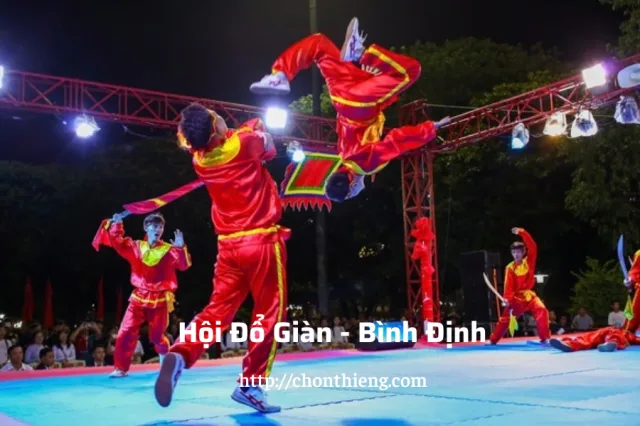
Đây là phần hấp dẫn nhất của lễ hội. Một giàn cao khoảng mười mét được dựng bằng tre và gỗ. Trên giàn đặt bàn thờ với hương hoa, lễ vật và nhiều con heo quay nguyên con. Sau khi hoàn tất nghi lễ cúng tế, tiếng chiêng trống nổi lên báo hiệu thời khắc quan trọng. Các võ sĩ của các võ đường nổi tiếng như An Thái, An Vinh, Thuận Truyền, Trường Định tập trung dưới chân giàn. Theo lệnh chủ xướng, những con heo quay lần lượt được ném từ trên cao xuống. Ngay lập tức hàng trăm võ sĩ lao vào tranh tài.
Tranh heo
Mỗi võ đường thường bố trí ba lực lượng: Tiên phong – Tiếp ứng – Cản hậu. Người giành được heo phải nhanh chóng tìm đường thoát khỏi vòng vây. Những đồng đội còn lại có nhiệm vụ mở đường và bảo vệ. Các thế võ cổ truyền Bình Định được vận dụng linh hoạt trong suốt cuộc tranh tài. Tuy rất quyết liệt nhưng người tham gia tuyệt đối tránh gây thương tích cho nhau. Mục tiêu cao nhất là thể hiện tinh thần thượng võ chứ không phải thắng thua bằng mọi giá.
Xin lộc và phát lộc
Sau khi cuộc tranh tài kết thúc, người dân tranh nhau xin những mảnh phướn, lộc thánh hoặc một phần nhỏ lễ vật. Họ tin rằng đó là lộc thần mang lại bình an và may mắn cho gia đình.
Các hoạt động vui chơi khác
Sau hội Đổ giàn còn diễn ra nhiều hoạt động như:
- Múa lân.
- Đánh cờ người.
- Đá gà.
- Đốt pháo bông.
- Biểu diễn võ thuật, giao lưu giữa các võ đường.
Những hoạt động này kéo dài đến tận đêm khuya, tạo nên bầu không khí hội hè sôi động trên vùng đất võ An Thái.
Giá trị văn hóa
Hội Đổ giàn là sự kết tinh độc đáo giữa tín ngưỡng Phật giáo, tín ngưỡng dân gian, văn hóa cộng đồng người Hoa và truyền thống võ cổ truyền Bình Định. Không chỉ là lễ cầu an, cầu siêu hay cầu phúc lộc, lễ hội còn là dịp tôn vinh tinh thần thượng võ, lòng dũng cảm, ý thức cộng đồng và bản sắc văn hóa của vùng đất Tây Sơn – An Nhơn. Chính những giá trị đặc sắc ấy đã khiến Hội Đổ giàn An Thái được nhiều nhà nghiên cứu đánh giá là một trong những lễ hội dân gian độc đáo nhất Việt Nam.
Tài liệu tham khảo
- Thạc Phương – Lê Trung Vũ (2015), 60 lễ hội truyền thống Việt Nam, Nxb Tổng hợp Thành phố Hồ Chí Minh.
- Đổ giàn – Lễ hội văn hoá đặc sắc “Miền Đất Võ”, Cục Du lịch quốc gia Việt Nam, ngày 04/08/2014.
- Hoàng Trọng, Đổ Giàn, lễ hội tôn vinh tinh thần thượng võ, Báo Thanh niên, ngày 02/02/2025.
Ngôn ngữ khác
Tiếng Anh (English)
Honoree
The An Thai Do Gian Festival is a distinctive folk festival of the martial arts land of Binh Dinh, combining Buddhist beliefs, folk religious practices, and the tradition of Binh Dinh traditional martial arts. The festival is dedicated to praying for national peace and prosperity, favorable weather, abundant harvests, social stability, and the salvation of wandering souls and spirits without descendants to worship them.
In local folk belief, the festival is also associated with the worship of Tieu Dien Dai Si, a Dharma protector deity regarded as an incarnation of Avalokitesvara Bodhisattva (Guanyin). Tieu Dien Dai Si is believed to oversee wandering spirits and protect people from calamities, epidemics, and misfortune.
Over centuries of development, these spiritual elements became intertwined with the martial spirit of the people of An Thai, transforming the festival into a major communal celebration that carries both religious significance and serves as an occasion to demonstrate martial strength, combat skills, and the prestige of the region’s renowned martial arts schools.
Location
The festival is held at Ba Pagoda (Ngu Bang Assembly Hall) in An Thai Village, Nhon Phuc Commune, An Nhon Town, Binh Dinh Province.
The festival grounds extend beyond the pagoda itself and encompass the entire historic An Thai market area, including the procession routes, temple courtyards, ritual altars, the elevated platform used for the pig-grabbing contest, and other locations where community cultural activities take place.
Ngu Bang Assembly Hall was built by the Chinese community in 1873 to worship Thien Hau Thanh Mau (Mazu). Prior to its construction, the site had already been associated with the worship of Tieu Dien. Consequently, Ba Pagoda became the focal point of the ritual activities conducted during the Do Gian Festival.
Time
Traditionally, the festival is held in the years of the Snake, Rooster, and Ox, following a cycle of once every four years.
The celebration lasts for three days, from the 14th to the 16th day of the Seventh Lunar Month, although in some years it may be held from the 15th to the 17th day.
Day 14: Preparations and opening ceremonies.
Day 15: Main festival day featuring major rituals and the Do Gian ceremony.
Day 16: Completion of memorial rites, distribution of blessings, and closing ceremonies.
Origins of the Festival
An Thai has long been renowned as a center of martial arts and commerce. Historically, a large Chinese community lived alongside Vietnamese residents in the area. Cultural exchanges between these communities gave rise to many unique religious and cultural traditions.
According to researchers, the precursor of the Do Gian Festival originated from vegetarian rituals and ceremonies dedicated to wandering spirits conducted at Chinese assembly halls. During the Tay Son period, when martial training was highly valued, martial arts competitions were incorporated into the festival to encourage physical training and honor outstanding practitioners.
Over time, the competition to seize roasted pigs placed atop a high platform became the festival’s most distinctive feature, leading to its popular name: “Do Gian Festival” (The Platform-Collapse Festival).
Rituals
Festival Preparations
Many days before the festival begins, the pagoda management board, local dignitaries, and representatives of martial arts schools meet to assign responsibilities and organize activities.
Residents voluntarily contribute money, offerings, and labor. Families bring pigs, cattle, chickens, ducks, fruits, cakes, and other offerings to the pagoda. The names of donors are recorded as a form of recognition and gratitude.
The pagoda grounds are carefully cleaned, and colorful banners are hung along pathways. Ritual altars are elaborately arranged with incense tables, candles, incense burners, and ceremonial objects.
Meanwhile, local martial arts schools intensify their training in preparation for the competitions on the main festival day.
Procession of Spirit Tablets
One of the most important opening ceremonies is the Procession of Spirit Tablets.
The procession departs from Quan Thanh De Quan Temple and Xuan Quang Trang. Leading the procession is the Five-Element Flag Team, followed by drummers, ceremonial musicians, palanquin bearers, and local dignitaries.
The palanquin bearers wear traditional ceremonial scholar attire, consisting of long robes and formal headgear.
The spirit tablets of the deities are respectfully placed on palanquins and carried to Ba Pagoda amid the sounds of drums and gongs. This ritual symbolizes inviting the deities to preside over and bless the festival.
Procession of Sacred Water
Alongside the spirit-tablet procession is the Sacred Water Procession from the Kon River.
The water is collected from a section of the river considered especially pure and sacred. After prayers and invocations are performed, the water is placed in decorated jars or porcelain vessels and carried back to the pagoda.
According to folk belief, sacred water symbolizes purity, removes spiritual impurities, and brings blessings to the community.
Sutra Chanting and Vegetarian Rituals
Once the spirit tablets and sacred water have been brought to the pagoda, the scripture-chanting ceremonies commence.
Monks and nuns recite sutras to pray for national peace, prosperity, and the salvation of wandering souls. These vegetarian rituals continue uninterrupted for three days and three nights.
Throughout the pagoda grounds, the sounds of bells, wooden fish drums, and chanting resonate continuously. Local residents take turns offering incense, presenting offerings, and participating in prayers.
Luc Cung Dance and Flower Dance
During the evenings, performances of Luc Cung Dance and Flower Dance take place within the festival grounds.
Luc Cung Dance is a traditional ritual performance symbolizing the offering of flowers, incense, and reverence to deities and Buddhas. The movements are solemn and graceful, performed to the accompaniment of traditional ceremonial music.
The dances serve both as religious rites and as valuable forms of folk artistic expression.
Charity Distribution Ceremony
Following the three days of vegetarian rituals comes the Charity Distribution Ceremony.
The pagoda and villagers prepare rice, salt, food, and essential goods for distribution to the poor.
This ceremony reflects the Buddhist spirit of compassion and the community’s long-standing tradition of mutual assistance and solidarity.
Raising the Blessing Banner
A large, colorful banner is prepared in advance.
Written upon it are four Chinese-Vietnamese characters:
“Phuc – Duc – Than – Tai”
(Blessing – Virtue – Divine Protection – Prosperity)
After the offering ceremony, the banner is raised to the highest point of the platform or pagoda roof.
People believe that obtaining even a small piece of the banner will bring luck, peace, and prosperity.
Opening the Ritual Altar and Offering to Wandering Souls
After the vegetarian ceremonies conclude, all offerings are transferred to the ritual altar in front of the pagoda.
The presiding ritual masters perform the Altar-Opening Ceremony. Candles are lit, while bells, drums, and ceremonial music fill the air.
Prayers for national peace and prosperity are solemnly recited. This is followed by the Spirit-Offering Ceremony, in which food and offerings are symbolically presented to wandering souls without descendants.
This is considered the most important ritual before the festival transitions into its celebratory phase.
Festive Activities
Hat Boi (Classical Opera)
Throughout the festival, traditional opera troupes perform famous classical plays.
Thousands of people gather to watch the performances. The popularity of these events is reflected in a local folk verse:
“People say that at An Thai, Ba Pagoda,
The vegetarian festival and classical opera draw enormous crowds.
Women and men alike gather there,
After watching the opera, they eagerly await the Do Gian ceremony.”
Decorated Festival Carts
Chung Co is a unique folk art procession featuring elaborately decorated carts transformed into mobile stages.
The carts depict scenes from famous legends and religious stories, including:
Mazu rescuing people in distress.
The pilgrimage of Tang Monk and his disciples.
The Bull Demon King.
Red Boy.
Princess Iron Fan.
These carts parade through the festival grounds and attract large audiences.
The Do Gian Ceremony
This is the most exciting and anticipated event of the festival.
A platform approximately 10 meters high is constructed from bamboo and timber. Atop the structure stands an altar decorated with incense, flowers, offerings, and numerous whole roasted pigs.
After the completion of the worship rituals, the beating of drums and gongs signals the beginning of the event.
Martial artists from renowned schools such as An Thai, An Vinh, Thuan Truyen, and Truong Dinh gather beneath the platform.
At the command of the master of ceremonies, roasted pigs are thrown from the top of the platform, and hundreds of martial artists immediately surge forward to compete for possession.
Pig-Seizing Competition
Each martial arts school typically organizes three groups:
Vanguard Team
Support Team
Rear Guard Team
The competitor who secures a pig must quickly find a route through the crowd. Teammates assist by clearing a path and providing protection.
Traditional Binh Dinh martial techniques are employed throughout the contest. Although the competition is intense, participants avoid causing injury to one another.
The ultimate objective is to demonstrate martial virtue and sportsmanship rather than to achieve victory at all costs.
Receiving Sacred Blessings
After the competition concludes, people eagerly seek pieces of the blessing banner, sacred tokens, or small portions of the ritual offerings.
These items are believed to carry divine blessings that bring peace, good fortune, and prosperity to households.
Other Recreational Activities
Additional festival activities include:
Lion dances.
Human chess competitions.
Cockfighting.
Fireworks displays.
Martial arts demonstrations and exchanges among martial arts schools.
These events continue late into the night, creating a vibrant and festive atmosphere throughout the martial arts region of An Thai.
Cultural Significance
The An Thai Do Gian Festival represents a unique synthesis of Buddhist beliefs, folk religion, Chinese-Vietnamese cultural traditions, and the Binh Dinh martial arts heritage.
Beyond being a ceremony for blessings, spiritual salvation, and prosperity, the festival serves as a celebration of martial spirit, courage, communal solidarity, and the distinctive cultural identity of the Tay Son–An Nhon region.
Because of these remarkable cultural values, many scholars regard the An Thai Do Gian Festival as one of the most unique and fascinating traditional folk festivals in Vietnam.
- Thạc Phương – Lê Trung Vũ (2015), 60 lễ hội truyền thống Việt Nam, Nxb Tổng hợp Thành phố Hồ Chí Minh.
- Đổ giàn – Lễ hội văn hoá đặc sắc “Miền Đất Võ”, Cục Du lịch quốc gia Việt Nam, ngày 04/08/2014.
- Hoàng Trọng, Đổ Giàn, lễ hội tôn vinh tinh thần thượng võ, Báo Thanh niên, ngày 02/02/2025.
Tiếng Trung (中文)
崇奉对象
安泰“倒棚会”(Hội Đổ Giàn An Thái)是平定省(Bình Định)武术之乡极具特色的一项民间传统节庆,融合了佛教信仰、民间信仰以及当地传统武术文化。节庆旨在祈求国泰民安、风调雨顺、五谷丰登、百姓安居乐业,并超度无依无靠的孤魂亡灵。
在当地民间信仰中,节庆还与供奉**消面大士(Tiêu Diện Đại Sĩ)**有关。消面大士被视为观世音菩萨的化身之一,肩负统领孤魂、护佑众生免受灾祸与瘟疫侵害的职责。
经过数百年的发展,这一信仰逐渐与安泰居民崇尚武艺的传统相结合,使节庆不仅具有深厚的宗教和精神意义,同时也成为展示当地各大武馆实力、武艺与荣誉的重要盛会。
地点
节庆在平定省安仁市仁福社安泰村的**婆庙(五帮会馆)**举行。
节庆活动不仅局限于庙宇范围,还扩展至整个昔日安泰市镇区域,包括迎神路线、庙前广场、法坛、搭建“争猪棚”的场地以及举行各种社区文化活动的区域。
五帮会馆由当地华人社群于1873年兴建,主要供奉天后圣母。在此之前,这里原本就是与消面信仰相关的宗教场所。因此,婆庙逐渐成为倒棚会各项宗教仪式的核心中心。
举办时间
按照传统习俗,节庆在农历巳年、酉年和丑年举行,即每四年举办一次。
节庆一般持续三天,从农历七月十四日至十六日举行,部分年份则安排在七月十五日至十七日。七月十四日:筹备及开坛仪式;七月十五日:正会日,举行祭祀与倒棚仪式;七月十六日:举行超度法会、分发福物,并为节庆画上句号。
节庆起源
安泰自古便是著名的武术与商业重镇。这里长期居住着数量众多的华人与越南人,两大族群的文化交流孕育出许多独特的信仰活动。
研究者认为,倒棚会最早源于华人会馆举行的超度孤魂、施食济幽法会。到了西山时期,武术精神受到高度推崇,武艺竞技活动逐渐被纳入节庆之中,以鼓励民众习武并表彰武艺高强者。
随着时间推移,高棚争夺烧猪的活动逐渐成为节庆最引人注目的环节,因此人们普遍将这一节庆称为“倒棚会”。
仪式部分
节庆准备
节庆开始前数日,寺庙理事会、地方长老以及各武馆代表便会召开会议,分配各项工作。
当地居民自愿捐献资金、供品和劳动力。许多家庭将猪、牛、鸡、鸭、水果和糕点送至庙中作为供品。捐献者姓名会被登记在册,以示纪念与感谢。
庙宇内外被彻底清扫,彩旗沿道路高高悬挂。法坛布置庄严,供桌、香案、灯烛及各类法器一应俱全。
与此同时,各武馆也积极训练,为正会日的武艺竞赛作准备。
迎神牌位仪式
节庆最重要的开端仪式之一是迎请神位。
迎神队伍从关圣帝君庙和春光庄出发。队伍前方为五行旗队,其后依次是锣鼓队、礼乐队、神轿队及地方长老。
抬轿者身着传统礼生服饰,长袍整齐,头戴礼巾。
诸神牌位被庄重安置于神轿之上,在锣鼓声中迎至婆庙,象征恭请神明降临并见证节庆活动。
迎圣水仪式
与迎神仪式同时举行的是迎取圣水。
圣水取自昆河(Sông Kôn)最洁净、最神圣的一段河流。经过祭拜仪式后,河水被装入瓷缸或瓷瓶中,庄严迎回庙宇。
民间相信,圣水象征纯洁,具有驱邪除秽、赐福消灾的力量。
开经与建醮法会
神位与圣水迎入庙后,开经仪式正式开始。
僧众诵经祈求国泰民安,并超度孤魂亡灵。整个建醮法会持续三天三夜。
期间寺庙内钟声、木鱼声与诵经声不断回荡。当地居民轮流前来上香、供奉和祈福。
六供舞与献花舞
夜晚时分,节庆现场会上演六供舞与献花舞。
六供舞是一种具有浓厚宗教色彩的民间表演艺术,象征向神佛敬献鲜花、香火和供品。
舞者动作庄重而柔美,配合传统礼乐进行表演,既是宗教仪式的一部分,也是极具特色的民间艺术形式。
赈贫仪式
经过三天建醮法会后,举行赈贫仪式。
寺庙与村民共同准备大米、食盐、食品及生活必需品,分发给贫困群众。
这一仪式体现了佛教慈悲济世精神以及当地社会互助互爱的传统美德。
悬挂祈福幡
节庆期间会提前制作一面大型彩幡。
幡上书写四个大字:
“福 · 德 · 神 · 财”
祭祀结束后,彩幡被悬挂于高棚顶端或庙宇最高处。
当地人相信,若能获得一小块彩幡,便能为家庭带来平安、好运与财富。
开坛与施食仪式
建醮法会结束后,所有供品被移至庙前法坛。
主祭者举行开坛仪式,点燃灯烛,钟鼓与礼乐齐鸣,庄严诵读祈求国泰民安的祭文。
随后举行施食孤魂仪式,向无依无靠的亡灵布施供养。
这是进入节庆娱乐活动前最重要的宗教仪式。
娱乐活动部分
传统戏曲演出
节庆期间,各戏班持续演出传统戏曲剧目。
数以千计的观众从四面八方赶来观赏,当地民谣对此有生动描述:
据说安泰婆庙前,
建醮唱戏万人连。
男女老少齐来看,
看罢午戏等倒棚。彩车巡游
“彩车展示”(Chưng cộ)是节庆极具特色的民间艺术活动。
花车被装饰成流动戏台,重现各种著名神话故事,例如:天后圣母救难;唐僧师徒西天取经;牛魔王;红孩儿;罗刹女等。这些花车在节庆区域巡游,吸引大量观众驻足观看。
倒棚仪式
这是整个节庆最精彩、最受瞩目的环节。
现场搭建一座约十米高的竹木高棚。
棚顶设有供桌、鲜花、祭品以及多头完整烧猪。
祭祀结束后,锣鼓齐鸣,宣告关键时刻到来。
来自安泰、安荣、顺传、长定等著名武馆的武师们聚集于棚下。
随着主持者发令,一头头烧猪从高棚上抛下,数百名武师立即冲入场中展开争夺。
争猪竞赛
各武馆通常布置三层队伍:前锋队;接应队;殿后队。抢得烧猪者必须迅速突破包围圈,而队友则负责开路与护卫。
比赛过程中,平定传统武术的各种招式被灵活运用。
虽然竞争十分激烈,但参赛者严格遵守规则,避免伤害对手。
活动的核心精神在于展现武德与尚武精神,而非单纯争夺胜负。
求福与分福
比赛结束后,群众纷纷争取彩幡碎片、圣物福品或祭品的一部分。
他们相信这些物品蕴含神灵赐予的福气,能够为家庭带来平安与好运。
其他娱乐活动
倒棚会结束后,仍会继续举行丰富多彩的活动:舞狮;人棋比赛;斗鸡;烟花表演;武术表演与各武馆交流赛。这些活动往往持续到深夜,使整个安泰武乡沉浸在热闹欢腾的节庆氛围之中。
文化价值
安泰倒棚会是佛教信仰、民间信仰、华人社区文化以及平定传统武术文化相融合的独特产物。
它不仅是一场祈福、超度和求平安的宗教盛会,更是彰显尚武精神、勇敢品格、社区凝聚力以及地方文化认同的重要节庆。
正因为兼具深厚的宗教内涵与鲜明的地方特色,安泰倒棚会被许多学者誉为越南最具特色、最具研究价值的民间传统节庆之一。
- Thạc Phương – Lê Trung Vũ (2015), 60 lễ hội truyền thống Việt Nam, Nxb Tổng hợp Thành phố Hồ Chí Minh.
- Đổ giàn – Lễ hội văn hoá đặc sắc “Miền Đất Võ”, Cục Du lịch quốc gia Việt Nam, ngày 04/08/2014.
- Hoàng Trọng, Đổ Giàn, lễ hội tôn vinh tinh thần thượng võ, Báo Thanh niên, ngày 02/02/2025.
Tiếng Pháp (Français’)
Personnage honore
La fete Do Gian d’An Thai est une fete populaire remarquable de la region martiale de Binh Dinh. Elle associe les croyances bouddhiques, les cultes populaires et la tradition des arts martiaux ancestraux locaux.
La fete vise a prier pour la paix du pays, des conditions climatiques favorables, des recoltes abondantes, la prosperite de la population ainsi que le salut des ames errantes et des esprits sans refuge. Dans les croyances populaires locales, elle est egalement liee au culte de Tieu Dien Dai Si, divinite protectrice consideree comme une manifestation du Bodhisattva Quan The Am, chargee de guider les ames errantes et de proteger les etres vivants contre les calamites et les epidemies.
Au fil des siecles, cette dimension religieuse s’est mele au profond esprit martial des habitants d’An Thai, faisant de la fete un evenement majeur alliant spiritualite, demonstration de force, maitrise martiale et prestige des ecoles de kung-fu locales.
Lieu
La fete se tient a la pagode Ba (Ngu Bang Hoi Quan), situee dans le village d’An Thai, commune de Nhon Phuc, ville d’An Nhon, province de Binh Dinh.
L’espace festif ne se limite pas a la pagode mais s’etend a l’ensemble de l’ancien bourg d’An Thai, comprenant les itineraires de procession, la cour de la pagode, les autels rituels, l’aire de construction de la plateforme de concours et les espaces consacres aux activites communautaires.
Ngu Bang Hoi Quan fut construite en 1873 par la communaute chinoise locale pour venerer Thien Hau Thanh Mau. Auparavant, le lieu etait deja associe au culte de Tieu Dien, ce qui explique pourquoi la pagode Ba est devenue le centre des activites rituelles de la fete.
Periode d’organisation
Selon la tradition, la fete est organisee les annees Ty, Dau et Suu, soit tous les quatre ans.
Elle dure trois jours, du 14 au 16 du septieme mois lunaire. Certaines annees, elle peut avoir lieu du 15 au 17.
Le 14 : preparation et ouverture des ceremonies.
Le 15 : jour principal avec les rites et le Do Gian.
Le 16 : ceremonies de salut des ames, distribution des benedictions et cloture.
Origine de la fete
An Thai est depuis longtemps celebre pour ses traditions martiales et commerciales. Une importante communaute chinoise y coexistait avec la population vietnamienne, donnant naissance a des pratiques culturelles et religieuses originales.
Selon plusieurs chercheurs, la fete trouve son origine dans les ceremonies de salut des ames organisees par les associations chinoises. A l’epoque des Tay Son, lorsque l’esprit martial etait particulierement valorise, des competitions de kung-fu furent integrees aux celebrations afin d’encourager l’entrainement et d’honorer les meilleurs pratiquants.
Avec le temps, le concours de conquete des cochons rotis installes sur une haute plateforme devint l’element le plus spectaculaire de la fete, qui prit alors le nom populaire de « Hoi Do Gian ».
Partie ceremonielle
Preparation
Plusieurs jours avant la fete, les responsables de la pagode, les notables et les representants des ecoles martiales se reunissent afin de repartir les taches.
Les habitants contribuent volontairement par des dons d’argent, d’offrandes et de travail. Cochons, boeufs, volailles, fruits et gateaux sont apportes a la pagode pour les ceremonies.
La pagode est nettoyee, les bannieres sont installees et les autels prepares avec soin.
Procession des tablettes sacrees
La procession part de la pagode Quan Thanh De Quan et de Xuan Quang Trang.
Le cortege comprend les drapeaux des cinq elements, les tambours, les musiciens rituels, les porteurs de palanquins et les dignitaires.
Les tablettes des divinites sont installees sur les palanquins et conduites jusqu’a la pagode Ba au son des gongs et des tambours.
Procession de l’eau sacree
L’eau est prelevee dans une partie du fleuve Kon consideree comme la plus pure et la plus sacree.
Apres les prieres, elle est recueillie dans des jarres ou des vases ceremoniels avant d’etre rapportee a la pagode.
Selon la croyance populaire, cette eau symbolise la purete, purifie les impuretes et apporte des benedictions a la communaute.
Ouverture des sutras et ceremonies vegetariennes
Une fois les tablettes et l’eau sacree arrivees a la pagode, les moines commencent la recitation des sutras pour la paix du pays et le salut des ames.
Les ceremonies religieuses se poursuivent pendant trois jours et trois nuits au rythme des cloches, des gongs et des prieres.
Danse Luc Cung et danse des fleurs
Les soirees sont animees par les danses Luc Cung et Mua Bong.
Ces danses traditionnelles constituent des offrandes symboliques de fleurs et d’encens aux Bouddhas et aux divinites.
Distribution aux pauvres
A l’issue des ceremonies religieuses, du riz, du sel, des aliments et divers produits de premiere necessite sont distribues aux personnes defavorisees.
Cette pratique illustre la compassion bouddhique et la solidarite communautaire.
Banniere de benediction
Une grande banniere multicolore portant les caracteres :
« Phuc – Duc – Than – Tai »
est hissee au sommet de la structure ceremonielle.
Les habitants croient qu’obtenir un fragment de cette banniere apporte chance, prosperite et protection.
Ouverture de l’autel et rite pour les ames errantes
Les offrandes sont rassemblees devant l’autel principal.
Les maitres de ceremonie allument les cierges, font resonner les instruments rituels et recitent les textes sacres pour la paix et la prosperite.
Le rite de charite destine aux ames errantes constitue la derniere grande ceremonie avant le debut des festivites populaires.
Partie festive
Hat boi
Pendant toute la fete, des troupes de theatre classique hat boi interpretent des pieces traditionnelles devant des milliers de spectateurs.
Chug Co
Des chars richement decorés representant des recits celebres tels que Thien Hau Thanh Mau, le voyage de Duong Tang ou encore Hong Hai Nhi defilent dans les rues.
Le Do Gian
Il s’agit du moment le plus attendu.
Une plateforme d’environ dix metres de hauteur est construite en bambou et en bois. Elle porte des autels, des offrandes et plusieurs cochons rotis entiers.
Une fois les rites termines, les cochons sont jetes depuis la plateforme tandis que des centaines de pratiquants d’arts martiaux se lancent dans la competition.
Conquete des cochons
Chaque ecole martiale organise ses participants en groupes d’avant-garde, de soutien et de protection.
Le participant qui s’empare du cochon doit parvenir a sortir de la melee tandis que ses coequipiers lui ouvrent le passage.
Les techniques traditionnelles des arts martiaux de Binh Dinh sont largement utilisees, mais sans intention de blesser les adversaires.
L’objectif principal demeure la demonstration de l’esprit martial et de l’honneur.
Distribution des benedictions
Apres la competition, les habitants cherchent a obtenir des fragments de bannieres ou de petites parties des offrandes sacrees, considerees comme porteuses de chance.
Autres activites
Les festivites comprennent egalement :
Danses du lion.
Jeu d’echecs humains.
Combats de coqs.
Feux d’artifice.
Demonstrations et rencontres d’arts martiaux.
Ces activites se prolongent jusqu’a tard dans la nuit et contribuent a l’ambiance exceptionnelle de la fete.
Valeur culturelle
La fete Do Gian d’An Thai constitue une synthese unique du bouddhisme, des croyances populaires, de l’heritage culturel chinois et de la tradition martiale de Binh Dinh.
Au-dela de sa dimension religieuse, elle celebre l’esprit chevaleresque, le courage, la cohesion communautaire et l’identite culturelle de la region de Tay Son – An Nhon.
Ces caracteristiques exceptionnelles amenent de nombreux chercheurs a la considerer comme l’une des fetes populaires les plus originales du Vietnam.
- Thạc Phương – Lê Trung Vũ (2015), 60 lễ hội truyền thống Việt Nam, Nxb Tổng hợp Thành phố Hồ Chí Minh.
- Đổ giàn – Lễ hội văn hoá đặc sắc “Miền Đất Võ”, Cục Du lịch quốc gia Việt Nam, ngày 04/08/2014.
- Hoàng Trọng, Đổ Giàn, lễ hội tôn vinh tinh thần thượng võ, Báo Thanh niên, ngày 02/02/2025.