

Khái quát về lễ hội
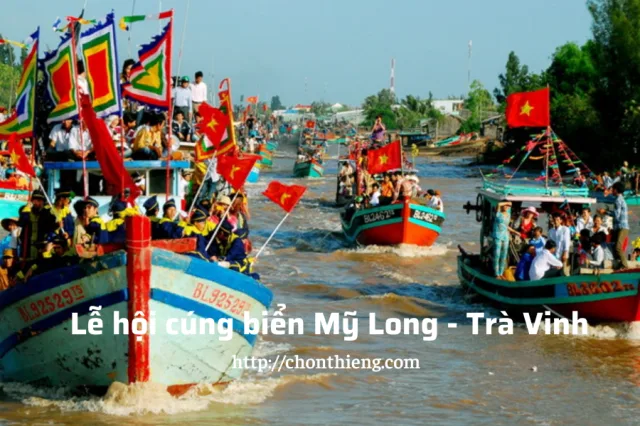
Lễ hội Cúng biển Mỹ Long, còn gọi là lễ hội Nghinh Ông, là một lễ hội dân gian truyền thống đặc trưng của cư dân vùng biển huyện Cầu Ngang, tỉnh Trà Vinh. Lễ hội diễn ra hằng năm vào các ngày 10, 11 và 12 tháng Năm âm lịch tại thị trấn Mỹ Long cùng các khu vực lân cận như Mỹ Long Bắc và Mỹ Long Nam. Đây không chỉ là lễ hội riêng của cư dân làng đáy biển Mỹ Long mà còn là một sinh hoạt văn hóa tiêu biểu góp phần hình thành bản sắc văn hóa vùng ven biển Trà Vinh.
Hằng năm, vào dịp lễ hội, hàng vạn người dân trong tỉnh và các địa phương lân cận như Bến Tre, Sóc Trăng, Vĩnh Long cùng đông đảo du khách thập phương tề tựu về Mỹ Long để tham gia các nghi lễ và hòa mình vào không khí lễ hội sôi động. Đối với cư dân vùng biển, lễ hội mang ý nghĩa tri ân biển cả, tưởng nhớ Đức Ông Nam Hải và cầu mong cho mưa thuận gió hòa, tàu thuyền ra khơi bình an, đánh bắt thuận lợi, cuộc sống ấm no hạnh phúc.
Lễ hội Cúng biển Mỹ Long được tổ chức lần đầu tiên vào khoảng năm 1920 và được duy trì liên tục cho đến ngày nay. Năm 2013, lễ hội được Bộ Văn hóa, Thể thao và Du lịch đưa vào danh mục Di sản văn hóa phi vật thể cấp quốc gia. Đây là dấu mốc quan trọng khẳng định giá trị lịch sử, văn hóa và tín ngưỡng đặc sắc của lễ hội trong đời sống cư dân ven biển Trà Vinh.
Nguồn gốc hình thành lễ hội và vùng đất Mỹ Long
Mỹ Long xưa có tên là làng Long Hậu, là một ngôi làng cổ nằm ven cửa biển Cung Hầu. Theo các tư liệu thư tịch triều Nguyễn và những truyền thuyết dân gian địa phương, vùng đất này được cư dân người Việt đến khai phá từ cuối thế kỷ XVII, đầu thế kỷ XVIII. Đến cuối thế kỷ XVIII, vùng đất Long Hậu đã trở nên khá trù phú, từng là nơi nuôi chứa lực lượng của Nguyễn Ánh trong thời gian chống Tây Sơn. Vì vậy, vào đầu thế kỷ XIX, làng được triều đình nhà Nguyễn chính thức ghi vào địa bạ và ban tên Long Hậu với ý nghĩa là vùng đất từng hậu thuẫn nhà vua trong lúc khó khăn.
Không chỉ giàu truyền thống khai phá và lao động, Mỹ Long còn là vùng đất giàu truyền thống yêu nước. Đây từng là căn cứ của cuộc khởi nghĩa Đề Triệu giai đoạn 1865 – 1868 và nhiều phong trào yêu nước khác như Thiên Địa hội, Đông Du, Truyền bá chữ quốc ngữ. Trong thời kỳ cách mạng vô sản, Mỹ Long cũng là nơi hình thành những tổ chức Công hội đỏ, Hội Thanh niên Cách mạng và chi bộ Đảng đầu tiên của tỉnh Trà Vinh.
Song song với truyền thống lịch sử, cư dân Mỹ Long còn lưu giữ nhiều giá trị văn hóa tín ngưỡng đặc sắc. Ngoài tín ngưỡng thờ tổ tiên, nơi đây còn tồn tại tín ngưỡng thờ Thành hoàng, thờ Mẫu và đặc biệt là tín ngưỡng thờ cá voi – tức Đức Ông Nam Hải. Chính sự kết hợp giữa nghề biển truyền thống với tín ngưỡng thờ cá voi đã hình thành nên lễ hội Cúng biển Mỹ Long ngày nay.
Phần lễ
Phần lễ là phần quan trọng nhất của lễ hội, bao gồm nhiều nghi thức trang trọng được tổ chức liên tục trong ba ngày lễ hội.
Sáng ngày 11 tháng Năm âm lịch diễn ra lễ Nghinh Chúa Xứ Nguyên Nhung. Trong nghi lễ này, đoàn rước đưa bài vị Bà Chúa Xứ xuống thuyền để ra khơi. Đi đầu đoàn là các nhân vật Quan Công, Châu Xương và Quan Bình do những nghệ nhân hát bội đảm nhiệm. Các thuyền hộ tống nối đuôi nhau tạo nên khung cảnh vô cùng trang nghiêm và ngoạn mục trên biển. Khi đoàn thuyền ra giữa biển, vị pháp sư đọc chú, còn ông Chánh bái tiến hành xin quẻ âm dương. Chỉ khi nhận được quẻ “một sấp một ngửa”, nghĩa là thần linh đã chứng giám, đoàn thuyền mới quay vào bờ.
Đến chiều tối cùng ngày diễn ra lễ tế Chúa Xứ Nguyên Nhung với các nghi thức đọc văn tế, xướng lễ và dâng hương. Đây là nghi lễ thể hiện lòng thành kính của cư dân đối với các vị thần bảo hộ vùng biển.
Ngày 12 tháng Năm âm lịch diễn ra lễ Nghinh ngũ phương. Đoàn kiệu đi khắp các tuyến đường trong thị trấn Mỹ Long và những khu vực lân cận nhằm cầu mong bình an cho cộng đồng. Theo tập tục, người dân hai bên đường thường đặt chum gạo và muối trước cửa nhà để cúng cô hồn, tránh điều xui rủi. Nghi thức đặc sắc nhất của phần lễ là lễ Tống tàu ra khơi vào đúng giờ Ngọ ngày 12. Ban tổ chức chuẩn bị một chiếc tàu làm bằng tre, giấy và thân chuối, bên trong có đầy đủ hình nhân thủy thủ, tài công cùng các vật dụng đi biển. Sau khi chất đầy lễ vật như heo quay, muối, gạo, vị pháp sư tiến hành “điều binh khiển tướng” mời các vị thần và cô hồn lên tàu để tiễn ra biển. Khi chiếc tàu dần trôi xa ngoài khơi trong tiếng chiêng trống vang dội, nghi lễ kết thúc với niềm tin rằng mọi điều xui rủi đã được đưa đi, mở ra một mùa biển mới bình an và thuận lợi.
Phần hội và sinh hoạt văn hóa dân gian
Bên cạnh phần lễ trang nghiêm, phần hội của lễ hội Cúng biển Mỹ Long cũng rất phong phú và hấp dẫn. Đây là dịp để cộng đồng cư dân vui chơi, giao lưu và tái hiện những nét sinh hoạt văn hóa truyền thống của vùng biển Nam Bộ.
Nổi bật nhất là nghi thức múa bóng rỗi dâng mâm lộc của các cô bóng đến từ nhiều địa phương miền Tây Nam Bộ. Các tiết mục múa hát, dâng lễ vật được trình diễn sôi động và đầy màu sắc, tạo nên không khí náo nhiệt như một ngày hội lớn của cư dân miền biển. Múa bóng rỗi hiện nay không chỉ mang yếu tố tín ngưỡng mà còn được nhìn nhận như một loại hình nghệ thuật dân gian đặc sắc cần được bảo tồn. Ngoài ra, trong thời gian diễn ra lễ hội còn có nhiều hoạt động văn hóa, ẩm thực và giao lưu cộng đồng phục vụ người dân và du khách. Các món ăn đặc sản vùng biển, sản vật địa phương và những hình thức sinh hoạt dân gian truyền thống góp phần làm cho lễ hội trở nên hấp dẫn hơn.
Ngày nay, lễ hội không chỉ đơn thuần là một hoạt động tín ngưỡng mà còn là dịp để cộng đồng gặp gỡ, gắn kết và cùng nhau gìn giữ bản sắc văn hóa quê hương.
Quá trình xếp hạng và công nhận di sản
Lễ hội Cúng biển Mỹ Long là một trong những lễ hội dân gian tiêu biểu của cư dân vùng biển Nam Bộ còn được duy trì khá nguyên vẹn cho đến ngày nay. Với những giá trị đặc sắc về lịch sử, tín ngưỡng và văn hóa cộng đồng, năm 2013 Bộ Văn hóa, Thể thao và Du lịch đã chính thức công nhận lễ hội là Di sản văn hóa phi vật thể cấp quốc gia trong đợt công bố di sản lần thứ tư.
Đây là một sự kiện có ý nghĩa đặc biệt đối với người dân huyện Cầu Ngang nói riêng và tỉnh Trà Vinh nói chung. Việc được đưa vào danh mục di sản quốc gia không chỉ khẳng định giá trị tiêu biểu của lễ hội trong kho tàng văn hóa dân gian Việt Nam mà còn mở ra cơ hội quảng bá hình ảnh vùng đất, con người và văn hóa biển Trà Vinh đến với du khách trong và ngoài nước.
Lễ đón nhận danh hiệu Di sản văn hóa phi vật thể quốc gia cho lễ hội đã được Sở Văn hóa, Thể thao và Du lịch Trà Vinh tổ chức vào ngày 7 tháng 6 năm 2014. Đây cũng là dịp để địa phương giới thiệu những nét đặc sắc của lễ hội Nghinh Ông Mỹ Long với đông đảo công chúng và các nhà nghiên cứu văn hóa.
Sau khi được công nhận là di sản văn hóa phi vật thể quốc gia, lễ hội ngày càng được tổ chức quy mô hơn, thu hút đông đảo du khách và trở thành một trong những sự kiện văn hóa tiêu biểu của tỉnh Trà Vinh. Đến năm 2019, địa phương tiếp tục tổ chức trọng thể lễ kỷ niệm 100 năm ngày hội cư dân xứ biển nhằm khẳng định vai trò và sức sống bền vững của lễ hội trong đời sống cộng đồng.
Hiện nay, Lễ hội Cúng biển Mỹ Long là một trong những di sản văn hóa phi vật thể tiêu biểu của tỉnh Trà Vinh, bên cạnh Nghệ thuật Đờn ca tài tử Nam Bộ và nghệ thuật Chầm riêng Chà pây của đồng bào Khmer. Điều này cho thấy sự phong phú và đa dạng của đời sống văn hóa các cộng đồng dân cư tại Trà Vinh.
Giá trị của lễ hội trong phát triển du lịch
Sau khi được công nhận là Di sản văn hóa phi vật thể quốc gia, lễ hội Cúng biển Mỹ Long ngày càng được chú ý trong chiến lược phát triển du lịch của tỉnh Trà Vinh. Nhiều nhà nghiên cứu và cơ quan văn hóa đánh giá đây là một trong những lễ hội có tiềm năng lớn để phát triển du lịch văn hóa – tâm linh gắn với kinh tế biển.
Tỉnh Trà Vinh đã đề xuất xây dựng nhiều không gian du lịch lấy lễ hội làm trung tâm như không gian du lịch tâm linh, không gian văn hóa “Từ sông ra biển”, du lịch sinh thái trải nghiệm đáy hàng khơi, du khảo lịch sử và du lịch ẩm thực truyền thống. Một số địa điểm có thể kết nối với lễ hội gồm miếu Bà Chúa Xứ, chùa Giác Linh, Lăng Ông Long Hòa, Cồn Nghêu, Cồn Chim, nhà thờ Vinh Kim, các di tích Đồng khởi và những địa danh gắn với thời kỳ bôn tẩu của Nguyễn Ánh.
Các nhà nghiên cứu cũng cho rằng việc phát triển du lịch phải đi đôi với bảo tồn hệ sinh thái tự nhiên ven biển và giữ gìn giá trị nguyên gốc của lễ hội. Đây là yếu tố quan trọng để lễ hội vừa phát huy được giá trị kinh tế, vừa bảo tồn được chiều sâu văn hóa truyền thống.
Ý nghĩa của lễ hội trong đời sống cộng đồng
Lễ hội Cúng biển Mỹ Long không chỉ là một nghi thức tín ngưỡng của cư dân miền biển mà còn là biểu tượng văn hóa gắn bó sâu sắc với đời sống tinh thần của người dân Trà Vinh. Qua hơn một thế kỷ tồn tại, lễ hội đã phản ánh tinh thần đoàn kết cộng đồng, lòng biết ơn biển cả và khát vọng về cuộc sống bình yên, sung túc của cư dân vùng biển Nam Bộ.
Từ một lễ thức dân gian của làng biển Mỹ Long, theo thời gian, lễ hội đã trở thành di sản văn hóa chung của cộng đồng các dân tộc tại Trà Vinh. Việc bảo tồn và phát huy giá trị của lễ hội không chỉ giúp gìn giữ bản sắc văn hóa truyền thống mà còn góp phần tạo động lực phát triển du lịch, kinh tế và quảng bá hình ảnh vùng đất Trà Vinh đến với du khách trong và ngoài nước.
Tài liệu tham khảo
- Nguyễn Thụy An (Biên soạn), 2015, Lễ hội Việt Nam, Nxb Thanh niên.
- Lễ hội Cúng biển Mỹ Long: Từ di sản đến hiện thực phát triển du lịch, trang hcmussh.edu.vn.
- Lễ hội cúng biển Mỹ Long trở thành Di sản phi vật thể quốc gia, trang hoangthanhthanglong.vn, ngày 6/9/2014.
- Hoàng Mẫn, Giá trị lễ hội cúng biển Mỹ Long, Trà Vinh trong phát triển du lịch, trang vietnamtourism.gov.vn, ngày 01/07/2020.
- Huy Hoàng, Trà Vinh: Lễ hội cúng biển Mỹ Long được công nhận di sản văn hóa phi vật thể cấp quốc gia, trang vietnamtourism.gov.vn, ngày 13/11/2013.
Ngôn ngữ khác
Tiếng Anh (English)
Overview of the Festival
The My Long Sea Worship Festival (Le Hoi Cung Bien My Long), also known as the Nghinh Ong Festival, is a distinctive traditional folk festival of the coastal communities in Cau Ngang District, Tra Vinh Province. The festival is held annually on the 10th, 11th, and 12th days of the fifth lunar month in My Long Town and neighboring areas such as My Long Bac and My Long Nam. It is not only a festival of the fishing community of My Long but also a representative cultural event that contributes significantly to the cultural identity of the coastal region of Tra Vinh.
Each year during the festival, tens of thousands of people from Tra Vinh and neighboring provinces such as Ben Tre, Soc Trang, and Vinh Long, together with numerous visitors from across the country, gather in My Long to participate in rituals and immerse themselves in the vibrant festive atmosphere. For coastal residents, the festival expresses gratitude to the sea, commemorates Lord Nam Hai (the Whale Deity), and prays for favorable weather, safe voyages, abundant catches, and a prosperous and happy life.
The My Long Sea Worship Festival was first organized around 1920 and has been maintained continuously ever since. In 2013, the festival was inscribed on the National List of Intangible Cultural Heritage by the Ministry of Culture, Sports and Tourism. This recognition affirmed the festival’s historical, cultural, and spiritual significance in the lives of Tra Vinh’s coastal communities.
Origins of the Festival and the Land of My Long
My Long was formerly known as Long Hau Village, an ancient settlement located near the Cung Hau estuary. According to Nguyen Dynasty records and local legends, Vietnamese settlers began reclaiming and inhabiting this area in the late seventeenth and early eighteenth centuries.
By the late eighteenth century, Long Hau had become a relatively prosperous settlement and served as a base supporting Nguyen Anh during his struggle against the Tay Son forces. Consequently, in the early nineteenth century, the Nguyen court officially recorded the village in its land registers and bestowed upon it the name Long Hau, meaning a land that had supported the future king during difficult times.
Besides its tradition of settlement and labor, My Long is also known for its patriotic heritage. It served as a base for the De Trieu Uprising (1865–1868) and various patriotic movements such as the Heaven and Earth Society, the Dong Du Movement, and campaigns promoting the national script. During the revolutionary period, My Long was also home to Red Labor Associations, Revolutionary Youth organizations, and the first Communist Party cell in Tra Vinh Province.
Alongside its historical traditions, My Long has preserved numerous distinctive religious practices. In addition to ancestor worship, local residents maintain beliefs associated with village tutelary deities, Mother Goddess worship, and especially the worship of whales, known as Duc Ong Nam Hai. It is this combination of maritime livelihood and whale worship that gave rise to the My Long Sea Worship Festival.
Ritual Section
The ritual section is the most important part of the festival and includes numerous solemn ceremonies conducted over three days.
On the morning of the 11th day of the fifth lunar month, the Procession of Chua Xu Nguyen Nhung takes place. During this ceremony, the spirit tablet of the Lady Goddess is carried onto a boat and taken out to sea. Leading the procession are performers portraying Guan Yu, Chau Xuong, and Guan Binh, played by traditional opera artists. Numerous escort boats follow behind, creating a majestic and solemn spectacle on the sea.
When the flotilla reaches offshore waters, a ritual master recites incantations while the chief officiant casts divination blocks. Only after receiving the auspicious result of one block face-up and one face-down, signifying divine approval, does the procession return to shore.
In the evening, the Rite of Worship for Chua Xu Nguyen Nhung is performed, including the reading of ritual texts, ceremonial announcements, and incense offerings. This ceremony expresses the community’s reverence for the deities who protect the coastal region.
On the 12th day of the fifth lunar month, the Procession of the Five Directions takes place. A ceremonial palanquin travels throughout My Long Town and neighboring areas, praying for peace and prosperity. According to local custom, households place jars of rice and salt in front of their homes as offerings to wandering spirits in order to ward off misfortune.
The most distinctive ritual is the Launching of the Spirit Boat, held at noon on the 12th day. Organizers prepare a symbolic boat made of bamboo, paper, and banana trunks, complete with effigies of sailors, captains, and maritime equipment. After being loaded with offerings such as roasted pigs, salt, and rice, a ritual master symbolically summons deities and wandering spirits onto the vessel before sending it out to sea.
As the boat gradually drifts away amid the sounds of drums and gongs, participants believe that all misfortunes have been carried away, opening the way for a safe and prosperous new fishing season.
Festive Activities and Folk Cultural Life
Alongside the solemn rituals, the festival’s celebratory activities are equally rich and attractive. This is an occasion for local residents to socialize, celebrate, and recreate traditional aspects of southern coastal culture.
One of the highlights is the Bong Roi Dance, performed by female ritual dancers from various provinces of the Mekong Delta. Their colorful dances, songs, and offering ceremonies create a lively atmosphere reminiscent of a grand community celebration. Today, Bong Roi is appreciated not only as a religious practice but also as a valuable form of folk performing art that deserves preservation.
During the festival, numerous cultural, culinary, and community activities are organized for residents and visitors. Regional seafood specialties, local products, and traditional folk customs add to the attractiveness of the event.
Today, the festival is not merely a religious activity but also an opportunity for the community to gather, strengthen social bonds, and preserve its cultural identity.
Heritage Recognition and Classification
The My Long Sea Worship Festival is one of the most representative folk festivals of southern Vietnam’s coastal communities and has been preserved in a relatively intact form until today.
Recognizing its outstanding historical, spiritual, and communal values, the Ministry of Culture, Sports and Tourism officially designated the festival as a National Intangible Cultural Heritage in 2013 during the fourth round of heritage inscriptions.
This recognition was a significant event for the people of Cau Ngang District and Tra Vinh Province. Inclusion on the national heritage list not only affirmed the festival’s importance within Vietnam’s folk cultural heritage but also created opportunities to promote the land, people, and maritime culture of Tra Vinh to domestic and international visitors.
The official ceremony celebrating the heritage designation was organized by the Tra Vinh Department of Culture, Sports and Tourism on June 7, 2014. The event also served as an opportunity to introduce the distinctive features of the My Long Nghinh Ong Festival to the public and cultural researchers.
Following its recognition, the festival has been organized on an increasingly larger scale, attracting growing numbers of visitors and becoming one of Tra Vinh Province’s most important cultural events. In 2019, local authorities commemorated the festival’s centennial anniversary, reaffirming its enduring vitality and significance within community life.
Today, the My Long Sea Worship Festival stands as one of Tra Vinh’s most important intangible cultural heritage elements, alongside Southern Amateur Music (Don Ca Tai Tu) and the Cham Rieng Chapay art of the Khmer people. This demonstrates the richness and diversity of the cultural life of Tra Vinh’s communities.
The Festival’s Role in Tourism Development
Since its recognition as a National Intangible Cultural Heritage, the My Long Sea Worship Festival has received increasing attention within Tra Vinh Province’s tourism development strategy. Researchers and cultural agencies regard it as a festival with considerable potential for cultural and spiritual tourism linked to the maritime economy.
Tra Vinh Province has proposed the development of several tourism spaces centered on the festival, including spiritual tourism zones, the cultural space “From River to Sea,” ecological experiences related to offshore fishing grounds, historical excursions, and traditional culinary tourism.
Potential attractions associated with the festival include Chua Xu Shrine, Giac Linh Pagoda, Long Hoa Whale Temple, Ngheu Islet, Chim Islet, Vinh Kim Church, revolutionary historical sites, and locations associated with Nguyen Anh’s period of exile.
Researchers emphasize that tourism development must go hand in hand with protecting the coastal ecosystem and preserving the authenticity of the festival. This balance is essential for ensuring that the festival generates economic benefits while maintaining its cultural depth and traditional values.
Significance in Community Life
The My Long Sea Worship Festival is not merely a religious practice of coastal residents but also a cultural symbol deeply connected to the spiritual life of the people of Tra Vinh.
Over more than a century of existence, the festival has reflected community solidarity, gratitude toward the sea, and the aspiration for a peaceful and prosperous life among the coastal populations of southern Vietnam.
From a local fishing-village ritual, the festival has gradually become a shared cultural heritage of the diverse ethnic communities of Tra Vinh. Preserving and promoting its values not only safeguards traditional cultural identity but also contributes to tourism development, economic growth, and the promotion of Tra Vinh’s image to visitors from Vietnam and abroad.
References
- Nguyễn Thụy An (Biên soạn), 2015, Lễ hội Việt Nam, Nxb Thanh niên.
- Lễ hội Cúng biển Mỹ Long: Từ di sản đến hiện thực phát triển du lịch, trang hcmussh.edu.vn.
- Lễ hội cúng biển Mỹ Long trở thành Di sản phi vật thể quốc gia, trang hoangthanhthanglong.vn, ngày 6/9/2014.
- Hoàng Mẫn, Giá trị lễ hội cúng biển Mỹ Long, Trà Vinh trong phát triển du lịch, trang vietnamtourism.gov.vn, ngày 01/07/2020.
- Huy Hoàng, Trà Vinh: Lễ hội cúng biển Mỹ Long được công nhận di sản văn hóa phi vật thể cấp quốc gia, trang vietnamtourism.gov.vn, ngày 13/11/2013.
Tiếng Trung (中文)
概述
涵龙寺(又称龙舰寺,Long Hạm Tự)现位于越南北宁省桂武县南山乡,是京北地区著名的古刹之一。寺庙坐落于岚山半山腰,依山势而建,形如龙椅,四周林木葱郁,环境清幽,既庄严神圣又风景秀丽。寺右侧为览寺(Dạm寺),左侧为宝光寺(Bảo Quang寺),因拥有著名的古塔群,又被称为“百塔寺”。
在京北地区的寺塔体系中,涵龙寺被视为一处独特的名胜古迹。古碑文曾赞誉道:
“涵龙寺乃我京北之一大奇观。六头江环绕,岚山拱卫,四灵之势环抱其间……”
涵龙寺会每年于农历二月十五举行,是北部平原地区规模较大的佛教节庆之一,吸引众多僧尼、佛教信众及四方游客前来参加。
形成历史
涵龙寺会与涵龙寺的发展历史密切相关。根据碑文和古籍记载,该寺历史悠久,相传始建于国师阮明空(Nguyễn Minh Không)时代。数百年来,寺庙不仅是神圣的佛教中心,也是京北地区重要的民间信仰活动场所。
十八世纪时,在郑拾和尚(Trịnh Thập)的主持下,涵龙寺进行了大规模扩建和修缮。郑拾和尚被尊为涵龙寺第一代祖师。他出身于显赫的郑氏家族,却舍弃荣华富贵出家修行,曾先后在龙洞寺、莲派寺、佛迹寺等著名寺院修学,后回到涵龙寺担任住持。
相传1728年夏天,郑拾和尚以自身鲜血书写《救生十愿》,发愿救度众生。1733年农历二月十五圆寂后,深受百姓和佛教徒敬仰。其舍利分别供奉于涵龙寺和莲派寺。从此,每年农历二月十五成为寺院的重要纪念日,以缅怀救生祖师并举行隆重佛教法会。
随着时间推移,涵龙寺会逐渐发展成为京北及北部平原地区重要的佛教节庆。届时,大量僧尼、佛教徒和游客前来进香礼佛、诵经祈福,缅怀祖师功德,同时祈求平安吉祥、消灾除病。
历经战争与历史变迁,涵龙寺曾遭受严重破坏。1976年以后,在地方政府、越南佛教教会以及广大信众的共同努力下,寺院逐步得到修复与重建。伴随着古寺的复兴,涵龙寺会也得以延续并不断发展,成为北宁省乃至整个越北地区重要的文化信仰活动。
祭祀对象
涵龙寺主要供奉佛陀以及历代对寺院有重要贡献的祖师,尤其是著名的救生祖师郑拾和尚。
在当地民间信仰和佛教传统中,郑拾和尚被视为慈悲济世、普度众生的象征。因此,每逢庙会期间,信众都会虔诚焚香,追思其功德。
此外,寺内还保存着众多珍贵的古代佛像,如摩耶夫人像、阿难尊者像、迦叶尊者像、释迦世尊像等,体现了京北地区悠久的佛教艺术与信仰传统。
祭祀部分
涵龙寺会的祭祀活动充满传统佛教色彩,仪式庄严肃穆。
农历二月十五清晨,僧众、佛教徒及当地民众便开始举行上香礼佛和纪念救生祖师的法会。
诵经、念佛、讲经等活动在三宝殿和祖师堂举行。许多信众还会绕行救生塔诵经祈福,为家人祈求平安与福报。因此,整个节庆空间始终洋溢着宁静、神圣和虔敬的氛围。
夜间,寺院及当地长者还会向后辈讲述祖师生平事迹和修行功德,教导人们弘扬道德传统、慈悲精神以及向善的人生态度。
娱乐活动部分
除了庄严的宗教仪式外,涵龙寺会的娱乐活动同样丰富多彩。
节日期间,人们举办秋千比赛、真人象棋、斗鸡、排球比赛以及各种社区交流活动。此外,还有传统嘲剧(Chèo)、民间艺术表演以及现代文艺演出,为当地群众和四方游客提供丰富的文化娱乐活动。
整个节庆既庄严神圣,又热闹欢腾,充分展现了京北地区居民丰富多彩的文化生活,同时也有助于保护和传承悠久的传统文化价值。
文化价值
涵龙寺会不仅是一项佛教节庆活动,更是京北地区极具特色的精神文化空间。
节庆活动有助于保护传统佛教仪式、维系社区文化生活,并向后代传播向善修德的价值观念。
每逢春季,游客来到涵龙寺,不仅是为了礼佛祈福、祈求平安,也为了欣赏秀美的山川景色,参观古老的寺塔建筑群,感受北宁这片历史文化名地深厚的文化底蕴与历史积淀。
参考资料
- Nguyễn Thụy An (Biên soạn), 2015, Lễ hội Việt Nam, Nxb Thanh niên.
- Lễ hội Cúng biển Mỹ Long: Từ di sản đến hiện thực phát triển du lịch, trang hcmussh.edu.vn.
- Lễ hội cúng biển Mỹ Long trở thành Di sản phi vật thể quốc gia, trang hoangthanhthanglong.vn, ngày 6/9/2014.
- Hoàng Mẫn, Giá trị lễ hội cúng biển Mỹ Long, Trà Vinh trong phát triển du lịch, trang vietnamtourism.gov.vn, ngày 01/07/2020.
- Huy Hoàng, Trà Vinh: Lễ hội cúng biển Mỹ Long được công nhận di sản văn hóa phi vật thể cấp quốc gia, trang vietnamtourism.gov.vn, ngày 13/11/2013.
Tiếng Pháp (Français’)
Aperçu de la fête
La fête de la Mer de Mỹ Long, également appelée fête de Nghinh Ông (procession du Seigneur Baleine), est une fête populaire traditionnelle caractéristique des habitants du littoral du district de Cầu Ngang, dans la province de Trà Vinh. Elle se déroule chaque année les 10, 11 et 12 du cinquième mois lunaire dans le bourg de Mỹ Long ainsi que dans les localités voisines de Mỹ Long Bắc et Mỹ Long Nam. Cette manifestation n’est pas seulement la fête propre aux habitants du village de pêche de Mỹ Long, mais aussi une activité culturelle emblématique qui contribue à façonner l’identité culturelle des régions côtières de Trà Vinh.
Chaque année, à l’occasion de la fête, des dizaines de milliers d’habitants de la province et des régions voisines telles que Bến Tre, Sóc Trăng et Vĩnh Long, ainsi que de nombreux visiteurs venus de toutes les régions, se rassemblent à Mỹ Long pour participer aux cérémonies et s’immerger dans l’atmosphère festive. Pour les communautés maritimes, cette fête est une occasion de rendre hommage à la mer, de vénérer Đức Ông Nam Hải et de prier pour des conditions météorologiques favorables, des sorties en mer sûres, des pêches abondantes et une vie prospère et heureuse.
La fête de la Mer de Mỹ Long fut organisée pour la première fois vers 1920 et s’est maintenue sans interruption jusqu’à aujourd’hui. En 2013, le ministère vietnamien de la Culture, des Sports et du Tourisme l’a inscrite sur la liste du patrimoine culturel immatériel national. Cette reconnaissance constitue une étape importante confirmant la valeur historique, culturelle et spirituelle exceptionnelle de cette fête dans la vie des habitants du littoral de Trà Vinh.
Origine de la fête et de la région de mỹ long
Autrefois, Mỹ Long portait le nom de village de Long Hậu, un ancien village situé près de l’embouchure maritime de Cung Hầu. Selon les documents historiques de la dynastie Nguyễn et les traditions orales locales, cette région fut mise en valeur par les Vietnamiens à la fin du XVIIe siècle et au début du XVIIIe siècle. À la fin du XVIIIe siècle, Long Hậu était déjà une région prospère et servit de base de soutien aux forces du prince Nguyễn Ánh durant sa lutte contre les Tây Sơn. C’est pourquoi, au début du XIXe siècle, le village fut officiellement inscrit au cadastre impérial et reçut le nom de Long Hậu, signifiant une terre ayant soutenu le souverain dans les moments difficiles.
Au-delà de son histoire de colonisation et de développement économique, Mỹ Long est également une terre riche en traditions patriotiques. Elle fut notamment un centre de l’insurrection de Đề Triệu entre 1865 et 1868, ainsi que de plusieurs mouvements patriotiques tels que Thiên Địa Hội, Đông Du et le mouvement de diffusion de l’écriture quốc ngữ. Durant la période révolutionnaire, Mỹ Long vit aussi la naissance des premiers syndicats rouges, des associations de jeunesse révolutionnaire et de la première cellule du Parti de la province de Trà Vinh.
Parallèlement à cet héritage historique, les habitants de Mỹ Long ont préservé de nombreuses croyances populaires. Outre le culte des ancêtres, on y trouve le culte du génie tutélaire du village, le culte de la Déesse-Mère et surtout le culte de la baleine, appelée Đức Ông Nam Hải. C’est précisément la combinaison entre la tradition maritime et ce culte de la baleine qui a donné naissance à la fête de la Mer de Mỹ Long.
Partie cérémonielle
La partie cérémonielle constitue l’élément central de la fête et comprend de nombreux rites solennels organisés durant les trois jours de célébration.
Le matin du 11e jour du cinquième mois lunaire se déroule la cérémonie de procession de Chúa Xứ Nguyên Nhung. À cette occasion, le cortège transporte la tablette sacrée de la Déesse Chúa Xứ jusqu’à un bateau qui prend la mer. En tête du défilé figurent les personnages de Guan Yu, Châu Xương et Quan Bình, incarnés par des artistes de théâtre classique hát bội. Les embarcations d’escorte se suivent alors en file, créant un spectacle impressionnant et majestueux sur la mer.
Une fois au large, le maître des rites récite les incantations tandis que l’officiant principal procède au tirage divinatoire à l’aide de pièces rituelles. Ce n’est qu’après avoir obtenu le résultat favorable – une pièce face et une pièce pile – indiquant l’approbation des divinités, que la flottille retourne vers le rivage.
Dans la soirée du même jour se tient la cérémonie de vénération de Chúa Xứ Nguyên Nhung, comprenant la lecture des textes rituels, les invocations et les offrandes d’encens. Cette cérémonie exprime le profond respect des habitants envers les divinités protectrices de la mer.
Le 12e jour du cinquième mois lunaire a lieu la cérémonie de procession des divinités des cinq directions. Le cortège parcourt les rues du bourg de Mỹ Long et des localités voisines afin de prier pour la paix et la prospérité de la communauté. Selon la coutume, les habitants déposent devant leur maison des récipients contenant du riz et du sel en offrande aux âmes errantes afin d’écarter les malheurs.
Le rite le plus remarquable est la cérémonie d’expédition du bateau rituel en mer, organisée à midi le 12e jour. Les organisateurs fabriquent un bateau en bambou, papier et troncs de bananier, contenant des figurines représentant des marins, des capitaines et divers équipements de navigation. Après avoir chargé le bateau d’offrandes telles que du porc rôti, du riz et du sel, le maître des rites invoque les divinités et les esprits errants afin qu’ils embarquent pour être reconduits vers le large. Lorsque le bateau s’éloigne progressivement en mer au son des tambours et des gongs, la cérémonie s’achève dans la conviction que tous les mauvais présages ont été emportés, ouvrant ainsi une nouvelle saison maritime placée sous le signe de la paix et de la prospérité.
Partie festive et activités culturelles populaires
À côté des cérémonies solennelles, la partie festive est également riche et attrayante. Elle constitue une occasion pour la communauté de se divertir, d’échanger et de faire revivre les traditions culturelles des régions côtières du Sud.
L’activité la plus remarquable est la danse bóng rỗi accompagnée de plateaux d’offrandes, exécutée par des artistes venues de différentes provinces du delta du Mékong. Les chants, les danses et les présentations d’offrandes sont interprétés avec éclat et diversité, créant une atmosphère festive digne d’une grande célébration populaire. Aujourd’hui, la danse bóng rỗi n’est plus seulement considérée comme une pratique rituelle, mais aussi comme une forme d’art populaire précieuse à préserver.
Durant la fête, de nombreuses activités culturelles, gastronomiques et communautaires sont également proposées aux habitants et aux visiteurs. Les spécialités maritimes, les produits locaux et les formes traditionnelles de sociabilité contribuent à renforcer l’attrait de la manifestation.
De nos jours, la fête n’est plus seulement une pratique religieuse, mais également un moment privilégié de rencontre, de cohésion sociale et de transmission du patrimoine culturel local.
Processus de classement et reconnaissance patrimoniale
La fête de la Mer de Mỹ Long est l’une des fêtes populaires les plus représentatives des communautés maritimes du Sud du Vietnam encore conservées dans une forme relativement authentique. En raison de ses remarquables valeurs historiques, religieuses et communautaires, elle a été officiellement reconnue en 2013 comme patrimoine culturel immatériel national par le ministère vietnamien de la Culture, des Sports et du Tourisme, lors de la quatrième vague d’inscription patrimoniale.
Cette reconnaissance revêt une importance particulière pour les habitants du district de Cầu Ngang et de la province de Trà Vinh. Elle confirme non seulement la place éminente de cette fête dans le patrimoine culturel populaire vietnamien, mais ouvre également de nouvelles perspectives pour promouvoir l’image de la région, de sa population et de sa culture maritime auprès des visiteurs vietnamiens et étrangers.
La cérémonie officielle de remise du titre de patrimoine culturel immatériel national s’est tenue le 7 juin 2014 sous l’organisation du Service de la Culture, des Sports et du Tourisme de Trà Vinh. Cet événement a permis de présenter au grand public ainsi qu’aux chercheurs les caractéristiques uniques de la fête de Nghinh Ông de Mỹ Long.
Depuis son inscription au patrimoine national, la fête est organisée à une échelle toujours plus importante, attire un nombre croissant de visiteurs et s’est imposée comme l’un des principaux événements culturels de la province. En 2019, les autorités locales ont célébré avec solennité le centenaire de cette fête maritime afin de souligner sa vitalité et son rôle durable dans la vie communautaire.
Aujourd’hui, la fête de la Mer de Mỹ Long figure parmi les patrimoines culturels immatériels les plus représentatifs de la province de Trà Vinh, aux côtés de l’art du Đờn ca tài tử du Sud et de l’art du Chầm riêng Chà pây de la communauté khmère. Cela témoigne de la richesse et de la diversité culturelle des populations de Trà Vinh.
Valeur de la fête dans le développement touristique
Depuis sa reconnaissance en tant que patrimoine culturel immatériel national, la fête de la Mer de Mỹ Long occupe une place croissante dans la stratégie de développement touristique de la province de Trà Vinh. De nombreux chercheurs et institutions culturelles la considèrent comme l’une des manifestations les plus prometteuses pour le développement du tourisme culturel et spirituel lié à l’économie maritime.
La province a proposé la création de plusieurs espaces touristiques articulés autour de la fête, notamment des circuits de tourisme spirituel, des parcours culturels intitulés « Du fleuve à la mer », des expériences écotouristiques liées aux pêcheries côtières, des circuits historiques et des découvertes gastronomiques traditionnelles.
Parmi les sites pouvant être associés à la fête figurent le sanctuaire de Bà Chúa Xứ, la pagode Giác Linh, le mausolée de Ông Long Hòa, Cồn Nghêu, Cồn Chim, l’église de Vinh Kim, ainsi que plusieurs sites historiques liés à l’insurrection du Đồng Khởi et à la période d’errance du prince Nguyễn Ánh.
Les chercheurs soulignent également que le développement touristique doit impérativement s’accompagner de la préservation des écosystèmes côtiers et du maintien de l’authenticité de la fête. Cette exigence est essentielle pour garantir à la fois sa valeur économique et sa profondeur culturelle.
Signification de la fête dans la vie communautaire
La fête de la Mer de Mỹ Long n’est pas seulement un rituel religieux des populations côtières ; elle constitue également un symbole culturel profondément enraciné dans la vie spirituelle des habitants de Trà Vinh. Depuis plus d’un siècle, elle reflète la solidarité communautaire, la gratitude envers la mer et l’aspiration à une vie paisible et prospère des habitants des côtes du Sud vietnamien.
D’une simple cérémonie populaire propre au village de pêcheurs de Mỹ Long, la fête est progressivement devenue un patrimoine culturel partagé par l’ensemble des communautés ethniques de Trà Vinh. Sa préservation et sa valorisation contribuent non seulement à sauvegarder l’identité culturelle traditionnelle, mais également à stimuler le développement touristique et économique tout en faisant rayonner l’image de Trà Vinh auprès des visiteurs nationaux et internationaux.
Références bibliographiques
- Nguyễn Thụy An (Biên soạn), 2015, Lễ hội Việt Nam, Nxb Thanh niên.
- Lễ hội Cúng biển Mỹ Long: Từ di sẩn đến hiện thực phát triển du lịch, trang hcmussh.edu.vn.
- Lễ hội cúng biển Mỹ Long trở thành Di sản phi vật thể quốc gia, trang hoangthanhthanglong.vn, ngày 6/9/2014.
- Hoàng Mẫn, Giá trị lễ hội cúng biển Mỹ Long, Trà Vnh trong phát triển du lịch, trang vietnamtourism.gov.vn, ngày 01/07/2020.
- Huy Hoàng, Trà Vinh: Lễ hội cúng biển Mỹ Long được công nhận di sản văn hóa phi vật thể cấp quốc gia, trang vietnamtourism.gov.vn, ngày 13/11/2013.