

Khái quát về nhân vật
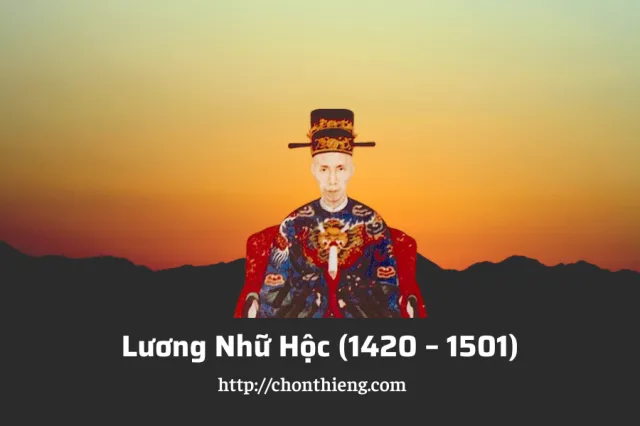
Lương Nhữ Hộc (chữ Hán: 梁如鵠, khoảng 1420 – 1501), tự Tường Phủ, hiệu Hồng Châu, là một danh sĩ và quan lại thời Lê sơ. Ông được biết đến rộng rãi là người có công lớn trong việc truyền bá nghề khắc ván in (mộc bản) tại Việt Nam, nên được nhân dân nhiều nơi tôn xưng là ông tổ nghề khắc bản in. Quê ông ở làng Hồng Liễu, huyện Trường Tân, phủ Hạ Hồng (nay thuộc phường Tân Hưng, thành phố Hải Dương). Đây cũng chính là vùng đất về sau trở thành trung tâm nghề in nổi tiếng của cả nước.
Tuổi thơ và chí học
Ngay từ nhỏ, Lương Nhữ Hộc đã bộc lộ tư chất thông minh và đặc biệt ham học. Hình ảnh cậu bé leo lên cây đọc sách giữa trưa nắng hay bắt đom đóm làm đèn học vào ban đêm đã trở thành một chi tiết quen thuộc trong các giai thoại về ông. Nhờ sự kiên trì và chăm chỉ, ông sớm thuộc làu kinh sử. Đến năm 18 tuổi, ông thi đỗ Hương cống (tương đương cử nhân ngày nay). Tuy đã có danh vị bước đầu, ông vẫn giữ thói quen đọc sách không ngừng.
Trong bối cảnh lúc bấy giờ, sách vở phần lớn phải nhập từ Trung Quốc với giá rất cao. Học trò trong nước thường phải góp tiền mua chung rồi chép tay lại. Chính thực tế này đã khiến Lương Nhữ Hộc suy nghĩ về việc tự in sách để phục vụ việc học trong nước, từ đó nảy sinh ý chí học nghề in.
Con đường khoa cử và quan lộ
Năm 1442, dưới triều vua Lê Thái Tông, Lương Nhữ Hộc tham gia khoa thi Nhâm Tuất và đỗ Thám hoa – một trong ba vị trí cao nhất. Đây cũng là khoa thi nổi tiếng với nhiều danh nhân như Nguyễn Trực, Nguyễn Như Đổ, Ngô Sĩ Liên.
Sau khi đỗ đạt, ông bước vào con đường quan lộ và giữ nhiều chức vụ quan trọng như An phủ phó sứ, Hàn lâm trực học sĩ, Thị lang, Gia trung thư lệnh và Đô ngự sử.
Trong quá trình làm quan, ông nhiều lần được sử sách ghi lại qua các sự kiện triều chính. Có lúc ông được đánh giá cao về học vấn và đạo lý, nhưng cũng có khi bị vua phê bình về thi ca. Những ghi chép này cho thấy ông là một nhân vật thực tế, có đóng góp nhưng cũng không nằm ngoài những tranh luận và va chạm nơi triều đình.
Hai lần đi sứ và hành trình học nghề in
Lương Nhữ Hộc từng hai lần được cử đi sứ sang nhà Minh vào các năm 1443 và 1459. Đây không chỉ là nhiệm vụ ngoại giao quan trọng mà còn là cơ hội để ông thực hiện mong muốn học nghề in. Do bị quản thúc tại Lý phiên viện – một dạng công quán nhưng thực chất kiểm soát chặt chẽ sứ thần, ông phải tìm cách linh hoạt để ra ngoài. Ông dùng tiền bạc và sự khéo léo để tạo quan hệ với lính canh, từ đó tranh thủ đi quan sát các cơ sở in ấn.
Ông thường lui tới các ngôi chùa, nơi có thợ khắc mộc bản làm việc. Trong một lần như vậy, ông đứng ngắm cảnh rồi ngâm thơ:
Giữa đám hoa tàn giữ vẻ tươi
Vườn con một mảnh đẹp mười mươi
Cành thưa ngả bóng ngang lòng nước
Hương thoảng vườn trăng lóe góc trời[1]
Nhờ phong thái ung dung và lời nói khéo léo, ông dần tạo được thiện cảm với những người thợ. Từ đó, ông có cơ hội tiếp cận sâu hơn vào công việc của họ. Ông nhận ra rằng người Trung Quốc sử dụng loại gỗ thị để khắc bản vì thớ gỗ mịn, dẻo, ít nứt, rất phù hợp cho việc khắc chữ nhỏ. Không chỉ quan sát, ông còn ghi chép lại tỉ mỉ từng công đoạn.
Theo những gì ông học được, để tạo một bản khắc, người thợ phải chọn gỗ tốt, bào nhẵn hai mặt, sau đó dán bản chữ lên, làm mỏng giấy để chữ hiện rõ rồi mới dùng dao khắc theo nét chữ. Khi in, họ quét mực lên bản khắc, đặt giấy lên và dùng dụng cụ xoa đều để mực thấm vào giấy. Một người thợ giỏi có thể in được hàng nghìn bản mỗi ngày.
Có thể nói, trong suốt thời gian đi sứ, Lương Nhữ Hộc đã âm thầm học hỏi và nắm vững toàn bộ kỹ thuật khắc in mộc bản.
Truyền nghề và hình thành trung tâm in ấn
Sau khi trở về nước, Lương Nhữ Hộc bắt đầu truyền dạy nghề khắc in cho người dân làng mình là Hồng Lục. Không lâu sau, người làng Liễu Tràng cũng sang học nghề, từ đó hình thành nên hai làng nghề in nổi tiếng.
Dần dần, từ hai làng này, nghề in phát triển mạnh mẽ, lan rộng ra nhiều nơi. Nhiều phường in được lập ra với quy mô lớn, chuyên khắc và in sách. Đặc biệt, các thợ lành nghề của Hồng Lục – Liễu Tràng còn tham gia khắc in những bộ sách quan trọng của triều đình, trong đó có bộ Đại Việt sử ký toàn thư – một công trình sử học lớn của nước ta.
Trong lời tựa sách có ghi rõ công lao của họ:
Thợ khắc ván in của làng Hồng Lục và Liễu Tràng vâng chỉ khắc in[2].
Bối cảnh nghề in trước thời Lương Nhữ Hộc
Thực tế, nghề in mộc bản ở Việt Nam đã xuất hiện từ trước, ít nhất là từ thời Lý. Một số tài liệu ghi rằng các nhà sư đã khắc in kinh Phật từ rất sớm. Đến thời Trần và Hồ, kỹ thuật in đã đạt trình độ cao hơn, thậm chí được dùng để in tiền giấy. Điều này cho thấy người Việt không xa lạ với kỹ thuật in. Tuy nhiên, hoạt động in ấn lúc đó chủ yếu giới hạn trong phạm vi tôn giáo và triều đình. Chính Lương Nhữ Hộc là người đã đưa kỹ thuật này ra khỏi phạm vi đó, truyền dạy rộng rãi trong dân gian, biến nó thành một nghề phổ biến và có tổ chức.
Di tích, lễ giỗ và tín ngưỡng nghề
Sau khi Lương Nhữ Hộc qua đời, nhân dân hai làng Hồng Lục và Liễu Tràng đã lập đền thờ, tôn ông làm Thành hoàng và tổ nghề.
Lễ giỗ tổ được tổ chức vào trung tuần tháng 8 âm lịch hàng năm, với sự phân công cụ thể giữa các làng, thể hiện qua câu:
Liễu Tràng cúng cơm, Đình Sinh làm giỗ, Quán Sếu đốt vàng[3]
Ngoài ra, còn có những câu ca phản ánh sự thịnh vượng của nghề:
Đình Sinh, quán Sếu, chùa Tràng
Trong ba làng ấy không làm cũng có ăn[4]
Trong Hải Dương phong vật khúc cũng có câu:
Phường Hồng Lục, Liễu Tràng khắc chữ
Bản bộ kinh, bộ sử rành rành
Những câu ca này cho thấy nghề in không chỉ phát triển mạnh mà còn mang lại đời sống sung túc cho người dân.
Tác phẩm và đóng góp văn học
Ngoài vai trò là người truyền nghề, Lương Nhữ Hộc còn là một tác giả văn học. Ông từng biên soạn các tác phẩm như Cổ kim chế từ tập và Hồng Châu quốc ngữ thi tập.
Dù phần lớn đã thất truyền, nhưng một số tác phẩm của ông vẫn còn được lưu lại trong các tuyển tập thơ văn cổ.
Thứ Triều Tiên quốc Từ tể tướng thi vận 次朝鮮國徐宰相詩韻[5]
萬里皇華使,
來觀上國光。
衣冠同一制,
萍水各他鄕。
東海波濤闊,
南天日月長。
何時重再會,
極目永相望。
Phiên âm:
Vạn lý hoàng hoa sứ,
Lai quan thượng quốc quang.
Y quan đồng nhất chế,
Bình thuỷ các tha hương.
Đông hải ba đào khoát,
Nam thiên nhật nguyệt trường.
Hà thì trọng tái hội,
Cực mục vĩnh tương vọng.
Dịch nghĩa:
Đi sứ hoàng hoa đường muôn vạn dặm,
Đến đây ngắm xem phong cảnh thượng quốc.
Thấy y quan áo mũ cùng một chế độ,
Duyên bèo nước mỗi người cùng làm khách tha hương.
Cảnh biển đông sóng rộng mênh mông,
Cõi trời Nam vẫn ngày tháng trường.
Bao giờ lại được hội ngộ đây,
Tận cùng ngong ngóng trông theo.
Túc Tứ kỳ cảng khẩu 宿四岐港口 [6]
天寒子夜玉繩低,
月色朦朧照淺溪。
潮退水痕初出石,
枕邊時聽水禽啼。
Phiên âm:
Thiên hàn tý dạ Ngọc Thằng đê,
Nguyệt sắc mông lung chiếu thiển khê.
Triều thoái thuỷ ngân sơ xuất thạch,
Chẩm biên thời thính thuỷ cầm đề.
Dịch:
Trời lạnh nửa đêm, sao Ngọc Thằng xế thấp
Bóng trăng tờ mờ rọi xuống dòng khe cạn
Nước thuỷ triều lui, ngấn nước vừa lòi đá
Bên tai thường nghe tiếng chim nước kêu
Kết luận
Lương Nhữ Hộc không phải là người đầu tiên biết đến kỹ thuật in mộc bản, nhưng ông là người có công lớn trong việc cải tiến, hệ thống hóa và truyền bá nghề này ra cộng đồng. Nhờ ông, nghề in từ chỗ giới hạn trong tôn giáo và triều đình đã trở thành một ngành nghề phổ biến, góp phần quan trọng vào việc lưu truyền tri thức và phát triển văn hóa dân tộc. Việc nhân dân tôn ông làm tổ nghề không chỉ để ghi nhớ công lao, mà còn phản ánh rõ nét truyền thống “uống nước nhớ nguồn” và sự trân trọng đối với những người mang lại lợi ích thiết thực cho cộng đồng.
Chú thích
[1] Lê Minh Quốc, Kể chuyện danh nhân Việt Nam, Tập 1 – Các vị tổ ngành nghề, Nxb Trẻ, 121.
[2] Ánh Phượng, Lương Như Hộc – Ông tổ nghề khắc in ván Việt Nam, Trung tâm Lưu trữ Quốc gia IV.
[3] Lê Minh Quốc, Kể chuyện danh nhân Việt Nam, Tập 1 – Các vị tổ ngành nghề, Nxb Trẻ, 154.
[4] Bảo tồn nghề khắc in mộc bản ở Hải Dương, ANTV, ngày 04/03/2024
[5] Lương Như Hộc, Thi viện
[6] Lương Như Hộc, Thi viện
Tài liệu tham khảo
- Lê Văn Hưu, Phan Phu Tiên, Ngô Sĩ Liên,… (1993) Đại Việt sử ký toàn thư, Nxb Khoa học xã hội.
- Lê Minh Quốc, Kể chuyện danh nhân Việt Nam, Tập 1 – Các vị tổ ngành nghề, Nxb Trẻ.
- Lương Như Hộc, Wikipedia.
- Quốc sử quán triều Nguyễn, Khâm định Việt sử thông giám cương mục, Nxb Giáo dục – Hà Nội 1998.
- Ánh Phượng, Lương Như Hộc – Ông tổ nghề khắc in ván Việt Nam, Trung tâm Lưu trữ Quốc gia IV.
- Lương Như Hộc, Thi viện.
- Trần Siêu, Vị Thám hoa trở thành ông tổ nghề in, Tạp chí Giáo dục và Thời đại, ngày 22/02/2023.
Ngôn ngữ khác
Tiếng Anh (English)
Overview of the Figure
Luong Nhu Hoc (Chinese characters: 梁如鵠, c. 1420–1501), courtesy name Tuong Phu and literary name Hong Chau, was a renowned scholar and official of the Early Le Dynasty. He is widely recognized for his significant contribution to the dissemination of woodblock printing techniques in Vietnam and is therefore revered in many localities as the Patriarch of Woodblock Printing. He was born in Hong Lieu Village, Truong Tan District, Ha Hong Prefecture (now Tan Hung Ward, Hai Duong City). This area would later develop into one of the country’s most important printing centers.
Childhood and Passion for Learning
From an early age, Luong Nhu Hoc displayed remarkable intelligence and an exceptional love of learning. Stories of the young boy climbing trees to read books under the midday sun or catching fireflies to use as lamps at night became familiar episodes in the many anecdotes about his life. Through perseverance and diligence, he quickly mastered the Confucian classics and historical texts. At the age of eighteen, he passed the Huong Cong examination, roughly equivalent to the bachelor’s degree level in the traditional examination system. Despite this early academic success, he maintained an unwavering habit of reading and studying.
At that time, books were largely imported from China and sold at very high prices. Students often pooled their money to purchase a single copy and then manually transcribed it. This reality led Luong Nhu Hoc to contemplate the possibility of producing books domestically, inspiring his determination to learn the craft of printing.
Success in the Civil Service Examinations and Official Career
In 1442, during the reign of King Le Thai Tong, Luong Nhu Hoc participated in the Nham Tuat imperial examination and attained the rank of Tham Hoa, one of the three highest academic honors in the examination system. This examination session was particularly distinguished for producing many eminent scholars, including Nguyen Truc, Nguyen Nhu Do, and Ngo Si Lien.
Following his success, he entered government service and held numerous important positions, including Deputy Pacification Commissioner (An Phu Pho Su), Academician of the Han Lam Academy (Han Lam Truc Hoc Si), Vice Minister (Thi Lang), Gia Trung Thu Lenh, and Chief Censor (Do Ngu Su).
Historical records mention him on several occasions in connection with court affairs. At times, he was highly praised for his scholarship and moral character; at other times, he was criticized by the king for his poetry. These accounts portray him as a realistic historical figure whose contributions were accompanied by the debates and challenges typical of court life.
Two Diplomatic Missions and the Quest to Learn Printing
Luong Nhu Hoc was twice appointed as an envoy to the Ming Dynasty, in 1443 and 1459. These diplomatic missions were not only important political assignments but also opportunities for him to pursue his ambition of learning the printing trade.
Because foreign envoys were confined to the Ly Phien Vien, a type of official guesthouse that also functioned as a means of strict supervision, he had to devise creative ways to leave the premises. Through gifts and diplomatic skill, he established friendly relations with the guards, enabling him to visit printing establishments and observe their operations.
He frequently visited Buddhist temples where woodblock carvers were at work. On one such occasion, while admiring the scenery, he composed the following poem:
Amid fading blossoms, freshness still remains,
A small garden appears tenfold more beautiful.
Sparse branches cast shadows across the water’s heart,
Fragrance drifts beneath the moonlit corner of the sky.[1]
Through his refined demeanor and eloquent speech, he gradually earned the goodwill of the craftsmen and gained access to their techniques. He learned that Chinese printers preferred persimmon wood for printing blocks because its fine grain, flexibility, and resistance to cracking made it ideal for carving small characters. He not only observed the process but also carefully recorded every stage.
According to what he learned, the production of a woodblock began with the selection of suitable timber, which was then planed smooth on both sides. A manuscript page was pasted onto the block, and the paper was thinned so that the characters could be clearly seen. Craftsmen then carved the characters according to the visible outlines. During printing, ink was applied to the block, paper was placed on top, and a rubbing tool was used to transfer the ink evenly onto the sheet. A skilled craftsman could produce thousands of impressions in a single day.
It may be said that throughout his diplomatic missions, Luong Nhu Hoc quietly mastered the entire process of woodblock printing.
Transmission of the Craft and the Emergence of Printing Centers
Upon returning to Dai Viet, Luong Nhu Hoc began teaching the printing craft to the inhabitants of his native village of Hong Luc. Soon afterward, residents of Lieu Trang Village came to learn the trade as well, leading to the emergence of two renowned printing villages.
From these two centers, the craft expanded rapidly and spread to many other regions. Numerous printing guilds were established on a large scale, specializing in the carving and printing of books. In particular, skilled craftsmen from Hong Luc and Lieu Trang participated in the production of important state publications, including Dai Viet Su Ky Toan Thu, one of the most significant historical works in Vietnamese historiography.
The preface of the work explicitly acknowledges their contribution:
“The woodblock carvers of Hong Luc and Lieu Trang Villages carried out the engraving and printing under royal command.”[2]
Printing Before the Time of Luong Nhu Hoc
In reality, woodblock printing had existed in Vietnam long before Luong Nhu Hoc. Some sources indicate that Buddhist monks were already engraving and printing sutras during the Ly Dynasty. By the Tran and Ho Dynasties, printing technology had reached a higher level of sophistication and was even used to produce paper currency.
This demonstrates that the Vietnamese were not unfamiliar with printing technology. However, printing activities at that time remained largely confined to religious institutions and the royal court. Luong Nhu Hoc’s distinctive contribution lay in bringing the technology beyond these limited spheres, transmitting it widely among the populace, and transforming it into an organized and accessible profession.
Temples, Memorial Ceremonies, and Occupational Worship
After the death of Luong Nhu Hoc, the inhabitants of Hong Luc and Lieu Trang Villages established temples in his honor and worshipped him as both the village tutelary deity and the patriarch of the printing craft.
His death anniversary is commemorated annually in the middle of the Eighth Lunar Month, with specific responsibilities assigned among the villages, as reflected in the folk saying:
“Lieu Trang prepares the meal offerings,
Dinh Sinh conducts the memorial ceremony,
Quan Seu burns the votive papers.”[3]
Other folk verses celebrate the prosperity brought by the printing profession:
“Dinh Sinh, Quan Seu, and Trang Pagoda—
In these three villages, one prospers even without labor.”[4]
The work Hai Duong Phong Vat Khuc also records:
“The guilds of Hong Luc and Lieu Trang carve characters;
Buddhist scriptures and historical books emerge clearly from their blocks.”
These verses demonstrate not only the flourishing development of the printing trade but also the prosperity it brought to local communities.
Literary Works and Contributions
In addition to his role as a transmitter of the printing craft, Luong Nhu Hoc was also a literary figure. He compiled works such as Co Kim Che Tu Tap and Hong Chau Quoc Ngu Thi Tap.
Although most of his writings have been lost, a number of poems survive in collections of classical Vietnamese literature.
Responding to the Poetic Rhyme of Prime Minister Tu of Joseon
(Thu Trieu Tien Quoc Tu Te Tuong Thi Van)
Original text:
萬里皇華使,
來觀上國光。
衣冠同一制,
萍水各他鄕。
東海波濤闊,
南天日月長。
何時重再會,
極目永相望。
Translation:
As an imperial envoy traveling ten thousand li,
I come to behold the splendor of the great realm.
Our robes and caps follow the same tradition,
Yet we remain travelers from distant lands.
The Eastern Sea stretches vast with rolling waves,
Beneath the southern sky the sun and moon endure.
When shall we meet again?
I gaze into the distance in everlasting anticipation.
Spending the Night at Tu Ky Harbor
(Tuc Tu Ky Cang Khau)
Original text:
天寒子夜玉繩低,
月色朦朧照淺溪。
潮退水痕初出石,
枕邊時聽水禽啼。
Translation:
The night grows cold as the Jade Cord star sinks low,
Moonlight dimly illuminates the shallow stream.
As the tide recedes, watermarks reveal the rocks below,
Beside my pillow I hear the cries of waterfowl.
Conclusion
Luong Nhu Hoc was not the first person in Vietnam to know of woodblock printing technology, but he played an essential role in refining, systematizing, and disseminating the craft among the broader population. Through his efforts, printing evolved from a practice largely confined to religious institutions and the royal court into a widespread profession that made a significant contribution to the preservation and transmission of knowledge and the development of Vietnamese culture.
The reverence shown to him as the patriarch of the printing profession is not merely a tribute to his achievements; it also reflects the enduring Vietnamese tradition of gratitude toward those who have made meaningful contributions to the community.
Notes
[1] Le Minh Quoc, Ke Chuyen Danh Nhan Viet Nam, Vol. 1 – Cac Vi To Nganh Nghe, Tre Publishing House, p. 121.
[2] Anh Phuong, Luong Nhu Hoc – Ong To Nghe Khac In Van Viet Nam, National Archives Center IV.
[3] Le Minh Quoc, Ke Chuyen Danh Nhan Viet Nam, Vol. 1 – Cac Vi To Nganh Nghe, Tre Publishing House, p. 154.
[4] Bao Ton Nghe Khac In Moc Ban o Hai Duong, ANTV, 4 March 2024.
[5] Luong Nhu Hoc, Thi Vien.
[6] Luong Nhu Hoc, Thi Vien.
References
- Lê Văn Hưu, Phan Phu Tiên, Ngô Sĩ Liên,… (1993) Đại Việt sử ký toàn thư, Nxb Khoa học xã hội.
- Lê Minh Quốc, Kể chuyện danh nhân Việt Nam, Tập 1 – Các vị tổ ngành nghề, Nxb Trẻ.
- Lương Như Hộc, Wikipedia.
- Quốc sử quán triều Nguyễn, Khâm định Việt sử thông giám cương mục, Nxb Giáo dục – Hà Nội 1998.
- Ánh Phượng, Lương Như Hộc – Ông tổ nghề khắc in ván Việt Nam, Trung tâm Lưu trữ Quốc gia IV.
- Lương Như Hộc, Thi viện.
- Trần Siêu, Vị Thám hoa trở thành ông tổ nghề in, Tạp chí Giáo dục và Thời đại, ngày 22/02/2023.
Tiếng Trung (中文)
人物概述
梁如鹄(Luong Nhu Hoc,1420年前后-1501),字祥甫,号洪州,是后黎初朝(Le So)时期著名文士与官员。他因对越南木版雕刻印刷技术的传播与发展作出卓越贡献,而被后世广泛尊奉为“雕版印刷业祖师”。
梁如鹄出生于洪柳村(Hong Lieu),隶属长新县(Truong Tan)、夏洪府(Ha Hong),今属海阳市(Hai Duong)新兴坊(Tan Hung)。这一地区后来逐渐发展成为越南最重要的传统印刷中心之一。
童年时代与求学志向
梁如鹄自幼聪颖过人,酷爱读书。关于他的许多传说至今仍广为流传,例如盛夏时攀树读书、夜晚捕捉萤火虫作为灯火苦读等故事,均成为其勤学精神的典型象征。
凭借坚持不懈的努力,他很早便熟读经史。十八岁时即考中乡贡(Huong Cong,相当于后世举人)。尽管已经获得功名,但他依然保持勤奋读书的习惯,从未懈怠。
当时越南所使用的书籍大多需要从中国输入,价格昂贵。国内学子往往需要共同筹资购买,再由多人手工抄录传阅。正是在这样的背景下,梁如鹄开始思考自行印制书籍以服务国内教育事业,并由此萌生学习印刷技术的志向。
科举之路与仕宦生涯
1442年,在黎太宗(Le Thai Tong)统治时期举行的壬戌科(Nham Tuat)会试中,梁如鹄高中探花(Tham hoa),位列全国前三甲。
这一科尤为著名,涌现出阮直(Nguyen Truc)、阮如堵(Nguyen Nhu Do)、吴士连(Ngo Si Lien)等历史名人。
登科之后,他正式步入仕途,先后担任安抚副使、翰林直学士、侍郎、嘉中书令以及都御史等重要职务。
在长期为官过程中,他多次出现在史籍记载之中。有时因学识渊博、品行端正而受到朝廷赞誉;有时也曾因诗文问题受到皇帝批评。这些记载说明梁如鹄是一位真实而立体的历史人物,既有重要贡献,也经历过朝廷政治中的争议与考验。
两次出使与学习印刷技术
梁如鹄曾于1443年和1459年两次奉命出使明朝(Minh)。
这不仅是一项重要外交使命,同时也是他实现学习印刷技术理想的重要机会。
由于使臣被安排居住于礼藩院(Ly Phien Vien)一类专门接待外国使节的机构之中,实际行动受到严格限制,因此梁如鹄不得不设法寻找机会外出考察。
他凭借财物馈赠与处事智慧,与守卫建立良好关系,从而得以频繁前往各地印刷作坊观察学习。
其间,他经常前往寺院,因为那里聚集着大量从事木版雕刻工作的工匠。
有一次,他在寺院赏景时吟诗道:
落尽群芳独自妍,
小园一角景天然。
疏枝倒映横秋水,
淡淡幽香月满天。[1]
凭借从容儒雅的风度与真诚谦逊的态度,他逐渐赢得工匠们的信任,从而深入了解木版印刷技术。
他发现,中国工匠普遍采用柿木雕版,因为这种木材纹理细密、柔韧耐用、不易开裂,非常适合雕刻细小文字。
除了实地观察之外,他还详细记录了整个工艺流程。
根据他的记载,制作雕版时首先要挑选优质木材,并将木板两面刨平;随后将书稿贴于木板之上,将纸张处理得极薄,使字迹透显;之后再依照笔画进行雕刻。
印刷时,先将墨汁均匀涂于版面,再覆以纸张,利用专门工具反复摩擦,使墨迹均匀转印于纸上。
熟练工匠每日可印制数千页书籍。
可以说,在整个出使期间,梁如鹄通过长期观察和实践,系统掌握了木版印刷技术的完整工艺。
传授技艺与印刷中心的形成
回国之后,梁如鹄首先将木版印刷技术传授给本村洪陆村(Hong Luc)的村民。
不久之后,柳庄村(Lieu Trang)居民也前来学习,从而逐渐形成两个著名的传统印刷村落。
随着时间推移,印刷技术从这两个村庄迅速传播至全国各地。
许多专业印刷作坊相继建立,专门从事书籍雕刻与印制工作。
尤其值得一提的是,洪陆村和柳庄村的优秀雕版工匠还参与刻印朝廷重要典籍,其中包括越南史学巨著《大越史记全书》(Dai Viet Su Ky Toan Thu)。
该书序言中明确记载:
“洪陆、柳庄两村雕版工匠奉旨刊刻印行。”[2]
梁如鹄之前的越南印刷业
事实上,木版印刷技术在越南出现的时间远早于梁如鹄。
现有文献表明,至少在李朝(Ly)时期,佛教僧侣已经开始雕刻印刷佛经。
到了陈朝(Tran)和胡朝(Ho)时期,印刷技术进一步发展,甚至被应用于纸币印制。
这说明越南人并非首次接触印刷技术。
然而,当时印刷活动主要局限于宗教机构和朝廷内部。
梁如鹄最大的贡献在于将这一技术从寺院与官府中推广出来,广泛传授于民间,使其逐渐发展成为一门具有组织体系和专业分工的重要行业。
祠庙遗迹、祖师祭祀与行业信仰
梁如鹄逝世后,洪陆村与柳庄村村民共同为其建庙立祀,尊奉其为城隍神和行业祖师。
祖师祭典每年农历八月中旬举行,各村按照传统分工承担祭祀事务。
民间流传着这样一句俗谚:
柳庄供饭,亭生主祭,
馆杪焚金。[3]
此外,还有许多民谣反映印刷业带来的繁荣景象:
亭生、馆杪、庄寺村,
三村之内不劳亦丰。[4]
《海阳风物曲》中亦有记载:
洪陆柳庄雕刻字,
经书史籍版分明。
这些民间歌谣充分说明印刷业不仅高度发达,而且为当地居民带来了富足稳定的生活。
文学创作与文化贡献
除了作为印刷业祖师之外,梁如鹄还是一位具有一定影响力的文学家。
他曾编撰《古今制词集》与《洪州国语诗集》等作品。
虽然大部分著作已经散佚,但部分诗作仍保存在古代诗文总集中。
次朝鲜国徐宰相诗韵
原诗:
萬里皇華使,
來觀上國光。
衣冠同一制,
萍水各他鄕。
東海波濤闊,
南天日月長。
何時重再會,
極目永相望。
诗意:
奉使皇华行万里,
来观上国盛时光。
衣冠制度皆相似,
萍水相逢异域乡。
东海波涛连广阔,
南天日月共悠长。
不知何日重相会,
极目天涯久眺望。
宿四岐港口
原诗:
天寒子夜玉繩低,
月色朦朧照淺溪。
潮退水痕初出石,
枕邊時聽水禽啼。
诗意:
寒夜三更玉绳斜,
朦胧月色照溪沙。
潮退方知礁石露,
枕边时闻水禽哗。
结论
梁如鹄并非越南最早掌握木版印刷技术的人,但他无疑是推动这项技术系统化、规范化和广泛传播的关键人物。
在他的努力下,原本主要服务于宗教机构和朝廷的印刷技术逐渐走向民间,发展成为影响深远的重要行业,为知识传播、文化传承以及民族文化的发展作出了巨大贡献。
后世尊奉其为印刷业祖师,不仅是为了纪念其卓越功绩,更体现了越南社会“饮水思源”的传统价值观,以及人民对于造福社区先贤的崇高敬意。
注释
[1] 黎明国:《讲述越南名人故事》,第一卷《行业祖师》,青年出版社,第121页。
[2] 映凤:《梁如鹄——越南木版印刷业祖师》,越南国家第四档案中心。
[3] 黎明国:《讲述越南名人故事》,第一卷《行业祖师》,青年出版社,第154页。
[4] 《保护海阳木版雕刻印刷技艺》,越南人民公安电视台(ANTV),2024年3月4日。
[5] 梁如鹄,《诗苑》。
[6] 梁如鹄,《诗苑》。
参考文献
- Lê Văn Hưu, Phan Phu Tiên, Ngô Sĩ Liên,… (1993) Đại Việt sử ký toàn thư, Nxb Khoa học xã hội.
- Lê Minh Quốc, Kể chuyện danh nhân Việt Nam, Tập 1 – Các vị tổ ngành nghề, Nxb Trẻ.
- Lương Như Hộc, Wikipedia.
- Quốc sử quán triều Nguyễn, Khâm định Việt sử thông giám cương mục, Nxb Giáo dục – Hà Nội 1998.
- Ánh Phượng, Lương Như Hộc – Ông tổ nghề khắc in ván Việt Nam, Trung tâm Lưu trữ Quốc gia IV.
- Lương Như Hộc, Thi viện.
- Trần Siêu, Vị Thám hoa trở thành ông tổ nghề in, Tạp chí Giáo dục và Thời đại, ngày 22/02/2023.
Tiếng Pháp (Français’)
Aperçu du personnage
Luong Nhu Hoc (梁如鵠, vers 1420–1501), de nom social Tuong Phu et de pseudonyme Hong Chau, fut un lettré éminent et un haut fonctionnaire de la première dynastie Le. Il est largement reconnu comme la personnalité ayant joué un rôle majeur dans la diffusion de l’art de la gravure sur bois pour l’impression (xylographie) au Vietnam. À ce titre, il est vénéré dans de nombreuses régions comme le patriarche du métier de la gravure des planches d’impression.
Originaire du village de Hong Lieu, district de Truong Tan, préfecture de Ha Hong (aujourd’hui quartier Tan Hung, ville de Hai Duong), il est né dans une région qui deviendra par la suite l’un des plus importants centres d’imprimerie du pays.
Enfance et passion pour les études
Dès son plus jeune âge, Luong Nhu Hoc révéla une intelligence remarquable ainsi qu’un goût exceptionnel pour l’étude. Les récits populaires rapportent qu’il grimpait dans les arbres pour lire sous le soleil de midi et qu’il capturait des lucioles afin de s’éclairer durant ses études nocturnes. Ces anecdotes sont devenues des éléments emblématiques de sa biographie légendaire.
Grâce à sa persévérance et à son assiduité, il maîtrisa très tôt les classiques confucéens. À l’âge de dix-huit ans, il réussit l’examen de Huong Cong, équivalent approximatif du grade de licencié. Malgré ce premier succès académique, il conserva toute sa vie l’habitude d’étudier sans relâche.
À cette époque, les livres provenaient principalement de Chine et leur coût était particulièrement élevé. Les étudiants vietnamiens devaient souvent réunir leurs ressources pour acheter un ouvrage en commun avant d’en recopier le contenu à la main. Cette réalité amena Luong Nhu Hoc à réfléchir à la possibilité d’imprimer lui-même les livres destinés à l’enseignement dans le pays, faisant naître ainsi sa volonté d’apprendre les techniques de l’imprimerie.
Carrière mandarinale et parcours administratif
En 1442, sous le règne de l’empereur Le Thai Tong, Luong Nhu Hoc participa à l’examen métropolitain de l’année Nham Tuat et obtint le titre de Tham Hoa, correspondant au troisième rang du concours doctoral, l’une des plus hautes distinctions académiques du royaume.
Cette session est également célèbre pour avoir vu la réussite de nombreuses personnalités prestigieuses telles que Nguyen Truc, Nguyen Nhu Do et Ngo Si Lien.
Après son succès, il entama une carrière administrative brillante et occupa plusieurs fonctions importantes, notamment celles de An Phu Pho Su, Han Lam Truc Hoc Si, Thi Lang, Gia Trung Thu Lenh et Do Ngu Su.
Les chroniques officielles mentionnent à plusieurs reprises son action dans les affaires de l’État. Tantôt loué pour son érudition et son intégrité morale, tantôt critiqué par le souverain pour certaines compositions poétiques, il apparaît comme une personnalité réelle, active et influente, mais également exposée aux débats et aux tensions de la vie politique de cour.
Les deux missions diplomatiques et l’apprentissage de l’imprimerie
Luong Nhu Hoc fut envoyé à deux reprises en mission diplomatique auprès de la dynastie Ming, en 1443 puis en 1459.
Ces missions constituaient non seulement d’importantes responsabilités diplomatiques, mais aussi une occasion unique de réaliser son ambition d’étudier les techniques d’impression chinoises.
Les envoyés étrangers étaient hébergés dans le Ly Phien Vien, établissement officiellement destiné à leur accueil mais servant en réalité à les surveiller étroitement. Pour sortir et observer les ateliers d’imprimerie, Luong Nhu Hoc dut faire preuve d’habileté et de diplomatie. Grâce à des cadeaux et à son sens des relations humaines, il gagna la confiance des gardes et obtint la possibilité de visiter divers ateliers.
Il fréquentait notamment les temples bouddhiques où travaillaient des graveurs spécialisés dans la fabrication des planches xylographiques.
Lors d’une de ses visites, contemplant le paysage, il composa les vers suivants :
« Au milieu des fleurs fanées subsiste encore la fraîcheur,
Petit jardin dont chaque parcelle semble parfaite.
Les branches clairsemées projettent leurs ombres sur l’eau,
Un parfum léger flotte sous le clair de lune. » [1]
Grâce à son comportement distingué et à son éloquence, il gagna progressivement la sympathie des artisans. Cela lui permit d’observer de près l’ensemble des procédés techniques.
Il remarqua notamment que les artisans chinois privilégiaient le bois de thi, dont la texture fine, souple et peu sujette aux fissures convenait parfaitement à la gravure des caractères de petite taille.
Au-delà de l’observation, il consigna soigneusement chacune des étapes du processus.
Selon ses notes, la réalisation d’une planche gravée exigeait de sélectionner un bois de qualité, d’en polir soigneusement les deux faces, puis d’y coller le modèle calligraphique. Le papier était ensuite aminci afin que les caractères apparaissent clairement, avant que le graveur ne reproduise chaque trait à l’aide de couteaux spécialisés.
Lors de l’impression, l’encre était appliquée sur la planche gravée ; une feuille de papier était ensuite posée sur celle-ci puis frottée uniformément à l’aide d’un instrument approprié afin de transférer l’impression.
Un artisan expérimenté pouvait ainsi produire plusieurs milliers d’exemplaires en une seule journée.
On peut affirmer que durant ses missions diplomatiques, Luong Nhu Hoc acquit discrètement une maîtrise complète des techniques de gravure et d’impression sur bois.
Transmission du métier et naissance d’un centre d’imprimerie
De retour au Vietnam, Luong Nhu Hoc entreprit d’enseigner les techniques de gravure et d’impression aux habitants de son village natal, Hong Luc.
Peu après, les habitants du village voisin de Lieu Trang vinrent à leur tour apprendre ce métier, donnant naissance à deux villages spécialisés qui allaient devenir célèbres dans tout le pays.
À partir de ces deux centres, l’imprimerie se développa rapidement et se diffusa dans de nombreuses régions. Des ateliers de grande envergure furent créés pour la gravure et l’impression de livres.
Les artisans de Hong Luc et de Lieu Trang participèrent notamment à la gravure d’ouvrages officiels importants commandés par la cour royale, parmi lesquels le Dai Viet Su Ky Toan Thu, monument majeur de l’historiographie vietnamienne.
La préface de cet ouvrage mentionne explicitement leur contribution :
« Les graveurs des villages de Hong Luc et de Lieu Trang exécutèrent la gravure et l’impression conformément aux ordres impériaux. » [2]
L’imprimerie avant l’époque de Luong Nhu Hoc
En réalité, l’impression xylographique existait au Vietnam bien avant Luong Nhu Hoc, au moins depuis l’époque de la dynastie Ly.
Certaines sources indiquent que les moines bouddhistes imprimaient déjà des sutras à une époque très ancienne.
Sous les dynasties Tran et Ho, la technique atteignit un niveau de développement encore plus élevé et fut même utilisée pour la fabrication de monnaie papier.
Les Vietnamiens n’étaient donc nullement étrangers à l’art de l’impression.
Toutefois, cette activité demeurait essentiellement limitée aux milieux religieux et aux institutions de la cour.
Le mérite de Luong Nhu Hoc fut de sortir cette technique de son cadre restreint, de la diffuser largement auprès de la population et de la transformer en une profession organisée et accessible.
Monuments commémoratifs, culte ancestral et traditions professionnelles
Après son décès, les habitants des villages de Hong Luc et de Lieu Trang lui élevèrent des sanctuaires et le vénérèrent à la fois comme génie tutélaire local et comme ancêtre fondateur du métier.
La fête commémorative du patriarche est célébrée chaque année au milieu du huitième mois lunaire. Les responsabilités rituelles sont réparties entre plusieurs villages selon le dicton :
« Lieu Trang prépare le repas rituel,
Dinh Sinh organise la cérémonie commémorative,
Quan Seu brûle les offrandes votives. » [3]
Un autre proverbe témoigne de la prospérité apportée par ce métier :
« Dinh Sinh, Quan Seu et la pagode Trang :
Dans ces trois villages, même sans travailler, on ne manque de rien. » [4]
Le poème Hai Duong Phong Vat Khuc mentionne également :
« Les ateliers de Hong Luc et de Lieu Trang gravent les caractères ;
Sutras et chroniques historiques y sont reproduits avec précision. »
Ces témoignages illustrent non seulement le développement remarquable de l’imprimerie mais aussi son rôle dans l’amélioration des conditions de vie de la population locale.
Œuvres littéraires et contribution intellectuelle
Outre son rôle de diffuseur des techniques d’impression, Luong Nhu Hoc fut également un auteur.
Il composa notamment les ouvrages Co Kim Che Tu Tap et Hong Chau Quoc Ngu Thi Tap.
Bien que la majeure partie de son œuvre ait disparu, plusieurs de ses poèmes ont été conservés dans diverses anthologies littéraires anciennes.
Suivant la rime du poème du chancelier Seo du royaume de Joseon
(Ci Trieu Tien Quoc Tu Te Tuong Thi Van)
萬里皇華使,
來觀上國光。
衣冠同一制,
萍水各他鄕。
東海波濤闊,
南天日月長。
何時重再會,
極目永相望。
Traduction :
Envoyé impérial parcourant des milliers de lieues,
Je viens contempler l’éclat du grand royaume.
Nos vêtements officiels suivent les mêmes usages,
Mais nous demeurons tous voyageurs loin de nos patries.
L’immense mer de l’Est étend ses vagues sans limites,
Sous le ciel du Sud se prolongent les jours et les mois.
Quand pourrons-nous nous retrouver à nouveau ?
Je regarde au loin avec une nostalgie infinie.
Nuit au port de Tu Ky
(Tuc Tu Ky Cang Khau)
天寒子夜玉繩低,
月色朦朧照淺溪。
潮退水痕初出石,
枕邊時聽水禽啼。
Traduction :
La nuit froide est avancée, l’étoile Ngoc Thang descend dans le ciel,
La lumière voilée de la lune éclaire un ruisseau peu profond.
La marée se retire et les traces de l’eau dévoilent les pierres,
Près de mon oreiller résonne parfois le cri des oiseaux d’eau.
Conclusion
Luong Nhu Hoc ne fut pas le premier à connaître les techniques d’impression xylographique, mais il joua un rôle essentiel dans leur perfectionnement, leur systématisation et leur diffusion auprès de la population.
Grâce à son action, l’imprimerie, jusque-là limitée aux sphères religieuses et administratives, devint une activité largement répandue, contribuant de manière décisive à la transmission du savoir et au développement de la culture vietnamienne.
Le fait que la population le vénère comme patriarche du métier ne constitue pas seulement un hommage à ses mérites ; cela reflète également la profonde tradition vietnamienne de gratitude envers ceux qui ont apporté des bienfaits durables à la communauté.
Notes
[1] Le Minh Quoc, Ke chuyen danh nhan Viet Nam, tome 1 – Cac vi to nganh nghe, Nxb Tre, p. 121.
[2] Anh Phuong, Luong Nhu Hoc – Ong to nghe khac in van Viet Nam, Centre national des Archives IV.
[3] Le Minh Quoc, Ke chuyen danh nhan Viet Nam, tome 1 – Cac vi to nganh nghe, Nxb Tre, p. 154.
[4] Bao ton nghe khac in moc ban o Hai Duong, ANTV, 04/03/2024.
[5] Luong Nhu Hoc, Thi Vien.
[6] Luong Nhu Hoc, Thi Vien.
Références bibliographiques
- Lê Văn Hưu, Phan Phu Tiên, Ngô Sĩ Liên,… (1993) Đại Việt sử ký toàn thư, Nxb Khoa học xã hội.
- Lê Minh Quốc, Kể chuyện danh nhân Việt Nam, Tập 1 – Các vị tổ ngành nghề, Nxb Trẻ.
- Lương Như Hộc, Wikipedia.
- Quốc sử quán triều Nguyễn, Khâm định Việt sử thông giám cương mục, Nxb Giáo dục – Hà Nội 1998.
- Ánh Phượng, Lương Như Hộc – Ông tổ nghề khắc in ván Việt Nam, Trung tâm Lưu trữ Quốc gia IV.
- Lương Như Hộc, Thi viện.
- Trần Siêu, Vị Thám hoa trở thành ông tổ nghề in, Tạp chí Giáo dục và Thời đại, ngày 22/02/2023.