

Thời gian
Hàng năm đền Lăng Sương mở lễ hội cổ truyền vào 25 tháng 10 âm lịch (là ngày giỗ Mẫu sinh ra Thánh Tản) và rằm tháng giêng – giỗ chính (là ngày sinh Thánh Tản).
Địa điểm
Đền Lăng Sương thuộc xã Trung Nghĩa, huyện Thanh Thủy, tỉnh Phú Thọ.
Lịch sử và di vật
Đền Lăng Sương tọa lạc tại thôn Lăng Sương, xã Trung Nghĩa, huyện Thanh Thủy (Phú Thọ), một vùng bán sơn địa nằm ở tả ngạn sông Đà, được bao bọc bởi đồi núi và gò đất tự nhiên. Dòng sông Đà chảy qua tạo nên cảnh quan sơn thủy hữu tình; cách đền khoảng một kilômét về phía đông nam là núi Ba Vì (núi Tản Viên) hùng vĩ, quanh năm mây phủ, gắn liền với nhiều huyền thoại dân gian. Trong quần thể di tích còn có đền Thánh Mẫu thờ Tản Viên Sơn Thánh, Thánh Mẫu và hai vị bộ tướng Cao Sơn, Quý Minh – những nhân vật gắn với thời đại Hùng Vương.
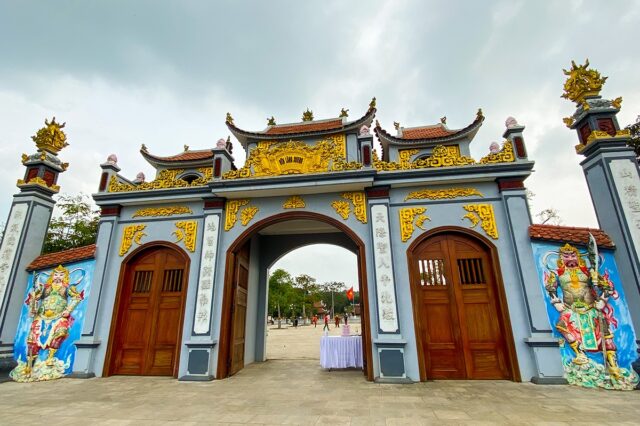
Theo các tư liệu còn lưu giữ, đền Lăng Sương được khởi dựng từ thời Thục An Dương Vương, trùng tu vào thời Lê và được đại tu dưới triều Nguyễn, đặc biệt vào các năm 1847–1848 khi dựng bia đá ghi lại công đức trùng tu. Trải qua thời gian và chiến tranh, đền từng bị xuống cấp nghiêm trọng. Năm 1991, chính quyền và nhân dân địa phương đã tiến hành tôn tạo trên khuôn viên rộng khoảng 3.000 m², gồm các hạng mục: cổng đền, miếu Hai Cô, giếng Thiên Thanh, nhà bia, nhà võng, tả mạc, hữu mạc và lăng Thánh Mẫu.
Qua cổng đền là miếu Hai Cô (còn gọi là miếu Nhà Bà), thờ thần giữ đất cùng hai thị nữ Đào Hoa và Quế Hoa. Phía sau miếu là giếng Thiên Thanh, nước quanh năm trong vắt. Theo truyền thuyết, đây là nơi Thánh Mẫu thường gánh nước và tắm gội; dấu tích hòn Đá Quỳ bên giếng được cho là in lại vết tích khi bà sinh Tản Viên. Gần giếng là nhà bia dựng theo kiểu kiến trúc bốn mái, lưu giữ tấm bia khắc năm 1848 ghi công những người tu sửa đền. Phía trước đền chính là nhà võng – nơi tương truyền Tản Viên khi nhỏ từng nằm võng; trong nhà còn giữ chậu đá tắm và các cột đá có niên đại thời Lê.
Đền chính được xây theo kiểu chữ công (工), gồm 3 gian đại bái, ống muốn và 3 gian hậu cung. Trong tòa đại bái có xây bệ thờ tượng Cao Sơn và Quý Minh là bộ tướng có công giúp Tản Viên dẹp giặc Thục. Tòa hậu cung bài trí long ngai thờ Thánh Mẫu Đinh Thị Đen (mẹ của Tản Viên) và thờ đức Thánh Tản. Trong tòa hậu cung còn thờ Thánh phụ Tản Viên là ông Cao Hành, bà dưỡng mẫu (mẹ nuôi) là Ma Thị và công chúa Ngọc Hoa (vợ Tản Viên). Cách khu đến Lăng Sương khoảng 50 mét về phía Đông Bắc, tương truyền có ngôi mộ của Thánh Mẫu nay ở đó đã được xây thành lăng tẩm.
Hằng năm, đền Lăng Sương tổ chức lễ hội vào ngày 25 tháng 10 âm lịch (giỗ Thánh Mẫu) và rằm tháng Giêng (giỗ chính của Đức Thánh Tản). Các nghi lễ truyền thống, đặc biệt là tục rước nước sông Đà, phản ánh tín ngưỡng thờ thần nước của cư dân nông nghiệp lúa nước xưa. Lễ hội đền Lăng Sương là một trong những lễ hội tiêu biểu của vùng núi Tản – sông Đà, thể hiện sự kết hợp hài hòa giữa di sản văn hóa vật thể và phi vật thể, góp phần làm nên không gian văn hóa giàu huyền thoại của đất Tổ.
Với những giá trị lịch sử và văn hóa tâm linh sâu sắc, đền Lăng Sương đã được Bộ Văn hóa Thông tin (nay là Bộ Văn hóa, Thể thao và DU lịch)ra quyết định số 25/2005/QĐ-BVHTT ngày 12/7/2005 xếp hạng là Di tích lịch sử cấp Quốc gia.
Lễ hội Đền Lăng Sương
Lễ hội ngày rằm tháng Giêng (15 tháng Giêng âm lịch)
Từ sáng ngày 14 tháng Giêng, cụ từ và các chức việc trong làng mở cửa đền, tiến hành lễ cáo yết, kính cáo với thần linh và Thánh Tản xin phép mở hội đầu xuân. Nghi thức này đánh dấu sự khởi đầu chính thức của mùa lễ hội, thể hiện lòng thành kính và sự trang nghiêm của cộng đồng đối với thần thánh.
Sáng ngày 15 tháng Giêng, sau khi hoàn tất các nghi lễ trong đền, dân làng tổ chức đoàn rước kiệu từ đền Lăng Sương tiến ra bờ sông Đà. Đoàn rước đi qua khu Lăng – nơi tương truyền Tản Viên Sơn Thánh thường dừng chân nghỉ ngơi mỗi khi từ núi Ngọc Tản về làng – rồi tiếp tục hướng về bến đò Trung Nghĩa. Cuộc rước mang ý nghĩa nghênh đón Tản Viên Sơn Thánh từ núi Tản (Ba Vì) trở về đền Lăng Sương dự hội cùng dân làng.
Đoàn rước được tổ chức long trọng, quy củ với đầy đủ cờ thần, bát bửu, nghi trượng, chiêng trống và đội tế lễ. Tuy không khí rộn ràng, náo nhiệt, nhưng mọi nghi thức đều diễn ra trong sự tôn nghiêm, thành kính. Trên suốt dọc đường rước, cứ khoảng 50 mét, đoàn lại dừng chân thực hiện nghi thức “chạy cờ”, tái hiện hình ảnh Tản Viên luyện quân, bày trận và đánh giặc, gợi lại chiến công hiển hách của Đức Thánh trong truyền thuyết.
Khi đoàn rước đến gần bờ sông Đà, chủ tế đứng trước hương án đặt trang trọng, thực hiện lễ bái vọng về phía núi Ba Vì, đọc văn khấn cung thỉnh Đức Thánh Tản và mẹ nuôi là Ma Thị Cao Sơn về dự lễ hội. Sau nghi thức bái vọng, đoàn rước quay về đền Lăng Sương, nơi dân làng tiến hành lễ tế chính trong không khí linh thiêng, trang trọng.
Kết thúc phần tế lễ là phần hội. Nhiều trò chơi dân gian truyền thống như đấu vật, chọi gà, tổ tôm, ném còn, kéo co… được tổ chức sôi nổi, thu hút đông đảo người dân và du khách thập phương tham gia. Trong khi đó, tại không gian nội tự, dòng người vẫn tấp nập vào lễ Thánh, cầu mong một năm mới mưa thuận gió hòa, quốc thái dân an, gia đình bình yên và làm ăn thịnh vượng. Lễ hội rằm tháng Giêng tại đền Lăng Sương thường kéo dài suốt ba ngày đêm.
Lễ hội ngày 25 tháng 10 âm lịch (giỗ Thánh Mẫu)
Ngày 25 tháng 10 âm lịch là ngày giỗ Thánh Mẫu. Từ sáng sớm ngày 24, làng tổ chức nghi lễ rước nước từ sông Đà về đền. Đoàn rước trong trang phục nghi lễ chỉnh tề tiến ra bờ sông; các quan viên, ông từ và chủ tế xuống thuyền, chèo ra giữa dòng sông Đà để lấy nước thiêng mang về làm lễ. Khi đoàn rước trở về đền, nước giếng Thiên Thanh được dùng để làm lễ ngự dội, thể hiện sự thanh tẩy, giao hòa giữa nguồn nước thiêng của sông Đà và giếng cổ trong khu di tích.
Đêm ngày 24 diễn ra lễ tế Thánh Mẫu. Lễ vật dâng cúng gồm thủ lợn phủ mỡ chài, đu đủ xanh, chuối, gà rừng và xôi nếp nương – những sản vật gắn bó với đời sống nông nghiệp và núi rừng của cư dân địa phương, thể hiện lòng thành kính đối với Thánh Mẫu.
Sáng sớm ngày 25 tháng 10, dân làng tổ chức rước kiệu từ đền Lăng Sương ra khu nghỉ bên bờ sông Đà để nghênh đón Tản Viên Sơn Thánh từ núi Ba Vì trở về làm lễ báo hiếu mẹ. Khi đoàn rước đến khu Lăng, kiệu được dừng lại để cử hành nghi lễ tế, với lễ vật đặc biệt là một con bò thui nguyên con. Chủ tế đọc văn tế, cung thỉnh Đức Thánh Tản hồi về đền dự lễ giỗ Thánh Mẫu. Theo quan niệm dân gian, khi gió nổi lên làm cờ xí bay phấp phới, đó là dấu hiệu Đức Thánh đã hiển linh trở về; đoàn rước khi ấy tiếp tục hành trình đưa kiệu trở lại đền Lăng Sương trong sự trang nghiêm và thành kính của toàn thể dân làng.
Ý nghĩa
Lễ hội đền Lăng Sương không chỉ là sinh hoạt tín ngưỡng truyền thống của cộng đồng cư dân địa phương mà còn mang ý nghĩa lịch sử, văn hóa và nhân văn sâu sắc, gắn liền với tín ngưỡng thờ Tản Viên Sơn Thánh – một trong “Tứ bất tử” của dân gian Việt Nam.
Trước hết, lễ hội thể hiện đạo lý “uống nước nhớ nguồn”, lòng biết ơn và sự tôn kính của nhân dân đối với Thánh Mẫu và Đức Thánh Tản – những nhân vật huyền thoại có công bảo hộ dân làng, che chở cho cuộc sống bình yên và mùa màng no đủ. Các nghi lễ nghênh rước, tế lễ, báo hiếu trong lễ hội phản ánh sâu sắc truyền thống hiếu nghĩa, coi trọng tình mẫu tử và mối quan hệ thiêng liêng giữa con người với tổ tiên, thần linh.
Bên cạnh đó, lễ hội đền Lăng Sương là sự tiếp nối sinh động của tín ngưỡng nông nghiệp lúa nước cổ truyền. Nghi lễ rước nước từ sông Đà, lễ ngự dội và các nghi thức liên quan đến nguồn nước thể hiện quan niệm tôn thờ thần nước, cầu mong mưa thuận gió hòa, thiên nhiên hài hòa, con người và vũ trụ giao cảm. Đây là dấu ấn rõ nét của thế giới quan và nhân sinh quan của cư dân Việt cổ sống dựa vào nông nghiệp và sông ngòi.
Lễ hội còn mang giá trị lịch sử – văn hóa khi tái hiện qua các nghi thức rước kiệu, chạy cờ, diễn tích Tản Viên luyện quân đánh giặc, qua đó khắc họa hình tượng người anh hùng bảo vệ non sông, biểu trưng cho khát vọng chinh phục thiên nhiên và giữ gìn bờ cõi. Những nghi thức này góp phần củng cố ý thức cộng đồng, tinh thần đoàn kết và niềm tự hào về cội nguồn văn hóa dân tộc.
Tài liệu tham khảo
- Đặng Đình Thuận, 2014, Lễ hội truyền thống vùng đất tổ, Nxb Văn hóa Thông tin
- Phạm Bá Khiêm, 2018, Về miền Lễ Hội cội nguồn dân tộc Việt Nam, Nxb Hội nhà văn.
- Phương Hà, 2018, Lễ hội đền Lăng Sương, xã Trung Nghĩa, huyện Thanh Thủy, tỉnh Phú Thọ, Sở Van hóa Thể Thao và Du Lịch tỉnh Phú Thọ, truy cập tại: http://svhttdl.phutho.gov.vn/tin/le-hoi-den-lang-suong-xa-trung-nghia-huyen-thanh-thuy-tinh-phu-tho_984.html
Ngôn ngữ khác
Tiếng Anh
Lang Suong Temple Festival
Time
Every year, Lang Suong Temple holds its traditional festival on two occasions: the 25th day of the tenth lunar month (the death anniversary of the Holy Mother who gave birth to Saint Tan) and the full moon of the first lunar month, which is the main anniversary (also regarded as the birthday of Saint Tan).
Location
Lang Suong Temple is located in Trung Nghia Commune, Thanh Thuy District, Phu Tho Province.
History and Relics
Lang Suong Temple is situated in Lang Suong Hamlet, Trung Nghia Commune, Thanh Thuy District (Phu Tho), in a semi-mountainous area on the left bank of the Da River, surrounded by hills and natural earthen mounds. The Da River flowing through the area creates a picturesque landscape of mountains and water. About one kilometer to the southeast of the temple stands the majestic Ba Vi Mountain (Tan Vien Mountain), often covered in clouds and closely associated with many folk legends. Within the relic complex are also the Holy Mother Temple worshipping Tan Vien Son Thanh, the Holy Mother, and two generals, Cao Son and Quy Minh—figures associated with the Hung Kings era.
According to preserved historical documents, Lang Suong Temple was originally established during the reign of Thuc An Duong Vuong, renovated during the Le dynasty, and extensively restored under the Nguyen dynasty, especially in the years 1847–1848, when a stone stele was erected to record the merits of the restoration. Over time and through wars, the temple once fell into serious disrepair. In 1991, local authorities and residents carried out restoration works on an area of about 3,000 square meters, including the temple gate, Hai Co Shrine, Thien Thanh Well, stele house, hammock house, left and right auxiliary halls, and the Holy Mother’s tomb.
Passing through the temple gate is the Hai Co Shrine (also known as Nha Ba Shrine), which worships the land guardian deity together with two maidservants, Dao Hoa and Que Hoa. Behind the shrine is Thien Thanh Well, whose water remains crystal clear throughout the year. According to legend, this was the place where the Holy Mother used to fetch water and bathe; the Da Quy Stone beside the well is believed to bear traces from the time she gave birth to Tan Vien. Near the well is the stele house built in a four-roof architectural style, preserving a stone stele dated 1848 that records the contributors to the temple’s renovation. In front of the main temple is the hammock house, where Tan Vien is said to have rested in a hammock during his childhood; inside are still preserved a stone bathing basin and stone pillars dating from the Le dynasty.
The main temple is built in the “cong” (工) architectural style, consisting of three bays of the front hall, an intermediary section, and three bays of the rear sanctuary. In the front hall stands an altar dedicated to Cao Son and Quy Minh, the generals who helped Tan Vien repel the Thuc invaders. The rear sanctuary is arranged with a ceremonial throne worshipping the Holy Mother Dinh Thi Den (mother of Tan Vien) and Saint Tan. It also venerates Tan Vien’s father Cao Hanh, his foster mother Ma Thi, and Princess Ngoc Hoa (his wife). About 50 meters to the northeast of the Lang Suong complex is believed to be the tomb of the Holy Mother, which has now been built into a mausoleum.
Every year, Lang Suong Temple organizes festivals on the 25th day of the tenth lunar month (the death anniversary of the Holy Mother) and on the full moon of the first lunar month (the main anniversary of Saint Tan). Traditional rituals, especially the water procession from the Da River, reflect the ancient wet-rice agricultural belief in water deities. The Lang Suong Temple Festival is one of the most representative festivals of the Tan Mountain–Da River region, demonstrating a harmonious combination of tangible and intangible cultural heritage and contributing to the legendary cultural landscape of the ancestral land.
With its profound historical and spiritual values, Lang Suong Temple was officially recognized as a National Historical Site under Decision No. 25/2005/QD-BVHTT dated July 12, 2005, issued by the Ministry of Culture and Information (now the Ministry of Culture, Sports and Tourism).
Lang Suong Temple Festival
Festival on the Full Moon of the First Lunar Month (15th day of the first lunar month)
From the morning of the 14th day of the first lunar month, the temple caretaker and village officials open the temple and perform the cao yet ritual, respectfully informing the deities and Saint Tan and seeking permission to open the spring festival. This rite marks the official beginning of the festival season, expressing the community’s reverence and solemn devotion.
On the morning of the 15th day of the first lunar month, after completing the rituals inside the temple, villagers organize a palanquin procession from Lang Suong Temple to the bank of the Da River. The procession passes through the Lang area—believed to be a place where Tan Vien Son Thanh often stopped to rest when returning from Ngoc Tan Mountain to the village—then continues toward the Trung Nghia ferry landing. The procession symbolizes welcoming Tan Vien Son Thanh from Tan Mountain (Ba Vi) back to Lang Suong Temple to attend the festival with the villagers.
The procession is organized in a solemn and orderly manner, with sacred flags, ritual objects, ceremonial insignia, gongs, drums, and a ritual team. Although lively and festive, all rites are conducted with reverence. Along the procession route, approximately every 50 meters, the procession pauses to perform the “flag-running” ritual, reenacting scenes of Tan Vien training troops, deploying formations, and fighting enemies, evoking his legendary military achievements.
When the procession approaches the Da River, the chief officiant stands before a solemnly arranged altar, performs a ritual bow toward Ba Vi Mountain, and recites invocations inviting Saint Tan and his foster mother Ma Thi Cao Son to attend the festival. After this rite, the procession returns to Lang Suong Temple, where the main sacrificial ceremony is conducted in a sacred and dignified atmosphere.
Following the ritual section is the festive part. Many traditional folk games such as wrestling, cockfighting, to tom card games, con throwing, and tug-of-war are held, attracting large numbers of local residents and visitors. Meanwhile, within the temple grounds, streams of worshippers continue to offer incense and pray for favorable weather, national peace, family well-being, and prosperous livelihoods. The full-moon festival at Lang Suong Temple usually lasts for three days and nights.
Festival on the 25th Day of the Tenth Lunar Month (Death Anniversary of the Holy Mother)
The 25th day of the tenth lunar month marks the death anniversary of the Holy Mother. From early morning on the 24th, the village organizes a water procession from the Da River to the temple. The procession, with participants dressed in full ceremonial attire, proceeds to the riverbank; village officials, the temple caretaker, and the chief officiant board a boat and row to the middle of the Da River to collect sacred water for ritual use. When the procession returns to the temple, water from Thien Thanh Well is used for the ablution ritual, symbolizing purification and the harmonious union between the sacred water of the Da River and the ancient well within the relic site.
On the night of the 24th, the Holy Mother sacrificial ceremony takes place. Offerings include a pig’s head covered with netted fat, green papaya, bananas, wild chicken, and upland sticky rice—products closely associated with the agricultural and mountainous life of the local community, expressing sincere devotion to the Holy Mother.
Early in the morning of the 25th day of the tenth lunar month, villagers organize a palanquin procession from Lang Suong Temple to a resting area by the Da River to welcome Tan Vien Son Thanh from Ba Vi Mountain back to perform filial rites for his mother. When the procession reaches the Lang area, the palanquin is halted to conduct sacrificial rites, with a special offering of a whole roasted cow. The chief officiant reads the ritual text, inviting Saint Tan to return to the temple to attend the Holy Mother’s death anniversary. According to folk belief, when the wind rises and causes flags to flutter, it is a sign that the Saint has manifested and returned; the procession then continues, bringing the palanquin back to Lang Suong Temple in an atmosphere of solemn reverence shared by the entire village.
Significance
The Lang Suong Temple Festival is not only a traditional religious activity of the local community but also carries profound historical, cultural, and humanistic significance, closely associated with the worship of Tan Vien Son Thanh—one of the “Four Immortals” in Vietnamese folk belief.
First, the festival embodies the moral principle of gratitude and remembrance, expressing the people’s respect and thankfulness toward the Holy Mother and Saint Tan—legendary figures believed to protect the village, ensure peaceful lives, and bring abundant harvests. Rituals of procession, sacrifice, and filial devotion during the festival deeply reflect traditions of filial piety and the sacred bond between humans, ancestors, and deities.
Moreover, the Lang Suong Temple Festival represents a vivid continuation of ancient wet-rice agricultural beliefs. The water procession from the Da River, the ablution ritual, and other water-related ceremonies reflect reverence for water deities and prayers for favorable weather, harmony with nature, and communion between humans and the cosmos. These practices clearly express the worldview and philosophy of ancient Vietnamese communities dependent on agriculture and river systems.
The festival also holds historical and cultural value by reenacting, through palanquin processions, flag-running rituals, and dramatizations of Tan Vien training troops and fighting enemies, the image of a heroic figure defending the land. These rites contribute to strengthening community consciousness, solidarity, and pride in cultural origins.
References
- Đặng Đình Thuận, 2014, Lễ hội truyền thống vùng đất tổ, Nxb Văn hóa Thông tin
- Phạm Bá Khiêm, 2018, Về miền Lễ Hội cội nguồn dân tộc Việt Nam, Nxb Hội nhà văn.
- Phương Hà, 2018, Lễ hội đền Lăng Sương, xã Trung Nghĩa, huyện Thanh Thủy, tỉnh Phú Thọ, Sở Van hóa Thể Thao và Du Lịch tỉnh Phú Thọ, truy cập tại: http://svhttdl.phutho.gov.vn/tin/le-hoi-den-lang-suong-xa-trung-nghia-huyen-thanh-thuy-tinh-phu-tho_984.html
Tiếng Pháp
Fête du temple Lang Suong
Période
Chaque année, le temple Lang Suong organise sa fête traditionnelle à deux dates principales :
- le 25e jour du dixième mois lunaire, jour de commémoration de la Sainte Mère, mère de Thanh Tan ;
- la pleine lune du premier mois lunaire (15e jour du premier mois), fête principale correspondant au jour de naissance de Thanh Tan.
Lieu
Le temple Lang Suong est situé dans la commune de Trung Nghia, district de Thanh Thuy, province de Phu Tho.
Histoire et vestiges
Le temple Lang Suong se trouve dans le hameau de Lang Suong, commune de Trung Nghia, district de Thanh Thuy (Phu Tho), une zone de moyenne montagne située sur la rive gauche de la riviere Da, entourée de collines et de reliefs naturels. La riviere Da, qui traverse la région, compose un paysage harmonieux de montagnes et d’eaux. À environ un kilometre au sud-est du temple s’élève le massif majestueux de Ba Vi (mont Tan Vien), enveloppé de nuages tout au long de l’année et étroitement lié à de nombreuses légendes populaires. Le complexe cultuel comprend également le temple de la Sainte Mère, dédié a Tan Vien Son Thanh, a la Sainte Mère ainsi qu’aux deux generaux Cao Son et Quy Minh, figures associées a l’epoque des rois Hung.
Selon les sources conservées, le temple Lang Suong fut fondé sous le règne de Thuc An Duong Vuong, restauré à l’époque des Le, puis profondément remanié sous la dynastie Nguyen, notamment en 1847–1848, période durant laquelle une stèle de pierre fut érigée afin de commémorer les travaux de restauration. Au fil du temps et des conflits, le monument se dégrada fortement. En 1991, les autorités et la population locales entreprirent une vaste campagne de restauration sur une superficie d’environ 3 000 m², comprenant la porte du temple, le sanctuaire des Hai Co, le puits Thien Thanh, la maison des stèles, la maison du hamac, les bâtiments latéraux gauche et droit, ainsi que le mausolée de la Sainte Mère.
En franchissant la porte du temple, on accède au sanctuaire des Hai Co (également appelé sanctuaire Nha Ba), dédié au génie protecteur du sol et aux deux suivantes Dao Hoa et Que Hoa. Derrière ce sanctuaire se trouve le puits Thien Thanh, dont l’eau est limpide toute l’année. Selon la tradition, c’est à cet endroit que la Sainte Mère puisait l’eau et se baignait ; la pierre dite Da Quy, située près du puits, conserverait l’empreinte laissée lors de la naissance de Tan Vien. À proximité se dresse la maison des stèles, construite selon une architecture à quatre toits, abritant une stèle gravée en 1848 relatant les mérites des restaurateurs du temple. Devant le sanctuaire principal se trouve la maison du hamac, où, selon la légende, Tan Vien enfant se serait reposé ; elle conserve encore un bassin de bain en pierre et plusieurs piliers datant de l’époque des Le.
Le sanctuaire principal est construit selon le plan en forme de caractère « cong » (工), comprenant trois travées de salle cérémonielle, un couloir de liaison et trois travées de sanctuaire postérieur. Dans la salle cérémonielle se trouvent les autels dédiés aux generaux Cao Son et Quy Minh, qui aidèrent Tan Vien a vaincre les envahisseurs Thuc. Le sanctuaire postérieur abrite les trônes cultuels de la Sainte Mère Dinh Thi Den, mère de Tan Vien, ainsi que de Duc Thanh Tan. On y vénère également le père de Tan Vien, Cao Hanh, sa mère adoptive Ma Thi, et la princesse Ngoc Hoa, son épouse. À environ 50 mètres au nord-est du complexe de Lang Suong se situerait, selon la tradition, la tombe de la Sainte Mère, aujourd’hui aménagée en mausolée.
Chaque année, le temple Lang Suong organise des fêtes les 25e jour du dixième mois lunaire (commémoration de la Sainte Mère) et à la pleine lune du premier mois lunaire (fête principale de Duc Thanh Tan). Les rituels traditionnels, notamment la procession de l’eau de la riviere Da, témoignent du culte des divinités de l’eau propre aux anciennes sociétés agricoles rizicoles. La fête du temple Lang Suong est l’une des célébrations emblématiques de la région du mont Tan – riviere Da, illustrant l’harmonie entre patrimoine matériel et immatériel et contribuant a la richesse mythique de l’espace culturel de la terre ancestrale.
En reconnaissance de ses profondes valeurs historiques et spirituelles, le temple Lang Suong a été classé monument historique national par décision n° 25/2005/QD-BVHTT du 12 juillet 2005 du Ministere de la Culture et de l’Information (actuellement Ministere de la Culture, des Sports et du Tourisme).
Fête du temple Lang Suong
Dès la matinée du 14e jour du premier mois lunaire, le gardien du temple et les notables du village ouvrent le sanctuaire et accomplissent le rite de cáo yết afin d’annoncer solennellement aux divinités et a Thanh Tan l’ouverture de la fête du début d’année. Ce rituel marque le commencement officiel de la saison festive et exprime la piété et le respect de la communauté envers le sacré.
Le matin du 15e jour, après l’achèvement des rites à l’intérieur du temple, les villageois organisent une procession de palanquins depuis le temple Lang Suong jusqu’aux rives de la riviere Da. Le cortège traverse la zone de Lang, lieu où Tan Vien Son Thanh se serait reposé lors de ses allers-retours entre le mont Ngoc Tan et le village, puis se dirige vers l’embarcadère de Trung Nghia. Cette procession symbolise l’accueil de Tan Vien Son Thanh, invité à descendre du mont Tan (Ba Vi) pour célébrer la fête avec les habitants.
La procession est organisée de manière solennelle et ordonnée, avec bannières sacrées, objets rituels, instruments de cérémonie, tambours et gongs, ainsi qu’une équipe chargée des sacrifices. Malgré l’ambiance animée, tous les gestes rituels sont accomplis avec recueillement et respect. Tout au long du parcours, environ tous les 50 mètres, le cortège s’arrête pour effectuer le rite dit de « course des drapeaux », évoquant Tan Vien entraînant ses troupes, disposant ses formations et combattant l’ennemi, rappelant ainsi ses exploits héroïques dans la tradition légendaire.
À l’approche de la riviere Da, le maître de cérémonie se tient devant l’autel d’encens et accomplit le rite de prosternation en direction du mont Ba Vi, en récitant une prière pour inviter solennellement Duc Thanh Tan et sa mère adoptive Ma Thi Cao Son à participer à la fête. Après ce rite, la procession retourne au temple Lang Suong, où se déroule la cérémonie sacrificielle principale dans une atmosphère sacrée et solennelle.
À l’issue des rites commence la partie festive. De nombreux jeux populaires traditionnels, tels que la lutte, les combats de coqs, le jeu de to tom, le lancer de balle conique ou le tir à la corde, sont organisés dans une ambiance animée, attirant habitants et visiteurs. Pendant ce temps, dans l’espace intérieur du temple, les fidèles affluent pour prier le Saint, implorant une nouvelle année de pluies favorables, de paix nationale, de sérénité familiale et de prospérité. La fête de la pleine lune du premier mois lunaire au temple Lang Suong dure généralement trois jours et trois nuits.
Fête du 25e jour du dixième mois lunaire (commémoration de la Sainte Mère)
Le 25e jour du dixième mois lunaire correspond à la commémoration de la Sainte Mère. Dès l’aube du 24e jour, le village organise la procession de l’eau depuis la riviere Da jusqu’au temple. Le cortège, vêtu de costumes rituels, se rend au bord du fleuve ; les dignitaires, le gardien du temple et le maître de cérémonie montent sur une embarcation et rament jusqu’au milieu du courant afin de prélever l’eau sacrée destinée aux rites. De retour au temple, l’eau du puits Thien Thanh est utilisée pour le rituel de purification, symbolisant l’harmonie entre l’eau sacrée de la riviere Da et celle du puits ancien du sanctuaire.
Dans la nuit du 24 a lieu la cérémonie sacrificielle dédiée à la Sainte Mère. Les offrandes comprennent une tête de porc recouverte de crépine, des papayes vertes, des bananes, un coq sauvage et du riz gluant de montagne, produits étroitement liés à la vie agricole et forestière locale, exprimant la dévotion envers la Sainte Mère.
À l’aube du 25e jour du dixième mois lunaire, les villageois organisent une procession de palanquins depuis le temple Lang Suong jusqu’au lieu de repos situé au bord de la riviere Da, afin d’accueillir Tan Vien Son Thanh descendant du mont Ba Vi pour accomplir le rite de piété filiale envers sa mère. Lorsque le cortège atteint la zone de Lang, le palanquin s’arrête pour une cérémonie sacrificielle particulière, dont l’offrande principale est un bœuf rôti entier. Le maître de cérémonie récite alors l’oraison rituelle, invitant Duc Thanh Tan à retourner au temple pour participer à la commémoration de la Sainte Mère. Selon la croyance populaire, lorsque le vent se lève et fait flotter les bannières, c’est le signe que le Saint s’est manifesté et est revenu ; la procession reprend alors le chemin du retour vers le temple Lang Suong dans un climat de solennité et de ferveur collective.
Signification
La fête du temple Lang Suong ne constitue pas seulement une pratique cultuelle traditionnelle de la communauté locale, mais revêt également une profonde signification historique, culturelle et humaniste, étroitement liée au culte de Tan Vien Son Thanh, l’un des « Quatre Immortels » du panthéon populaire vietnamien.
Avant tout, la fête exprime la morale du « souvenir de la source », la gratitude et le respect du peuple envers la Sainte Mère et Duc Thanh Tan, figures légendaires protectrices du village, garantes de la paix et de l’abondance des récoltes. Les rituels d’accueil, de sacrifice et de piété filiale accomplis lors de la fête reflètent avec force la tradition vietnamienne de respect de la mère, de la famille et des liens sacrés entre les êtres humains, les ancêtres et les divinités.
Par ailleurs, la fête du temple Lang Suong constitue une continuité vivante des croyances agricoles rizicoles anciennes. La procession de l’eau de la riviere Da, le rituel de purification et les pratiques liées à l’eau témoignent du culte des divinités aquatiques et du souhait de pluies favorables, d’un équilibre harmonieux entre la nature et l’homme. Il s’agit là d’une expression marquante de la vision du monde et de la conception de la vie des anciens Viet, profondément ancrées dans l’agriculture et les cours d’eau.
Enfin, la fête possède une valeur historique et culturelle en reconstituant, à travers les processions, les courses de drapeaux et les scènes légendaires de Tan Vien entraînant ses troupes et combattant l’ennemi, l’image de l’héros protecteur du territoire. Ces rites contribuent à renforcer la cohésion communautaire, l’esprit de solidarité et la fierté liée aux origines culturelles nationales.
Références
- Đặng Đình Thuận, 2014, Lễ hội truyền thống vùng đất tổ, Nxb Văn hóa Thông tin
- Phạm Bá Khiêm, 2018, Về miền Lễ Hội cội nguồn dân tộc Việt Nam, Nxb Hội nhà văn.
- Phương Hà, 2018, Lễ hội đền Lăng Sương, xã Trung Nghĩa, huyện Thanh Thủy, tỉnh Phú Thọ, Sở Van hóa Thể Thao và Du Lịch tỉnh Phú Thọ, truy cập tại: http://svhttdl.phutho.gov.vn/tin/le-hoi-den-lang-suong-xa-trung-nghia-huyen-thanh-thuy-tinh-phu-tho_984.html
Tiếng Trung
凌霜庙会(Le hoi Den Lang Suong)
时间
每年,凌霜庙举行传统庙会,时间为农历十月二十五日(为圣母忌日,诞生圣坦之日)以及农历正月十五——正忌(为圣坦诞辰)。
地点
凌霜庙位于中义社(Trung Nghia)、清水县(Thanh Thuy)、富寿省(Phu Tho)。
历史与遗存
凌霜庙坐落于凌霜村(Lang Suong)、中义社、清水县(富寿省),地处陀江左岸的半山地带,四周环绕着自然丘陵与土岗。陀江蜿蜒而过,形成山水相映的秀美景观;距庙东南约一公里处为雄伟的巴维山(Ba Vi),又称坦圆山(Tan Vien),终年云雾缭绕,承载着众多民间传说。遗址群内尚有供奉坦圆山圣(Tan Vien Son Thanh)的圣母庙,以及供奉其两位部将高山(Cao Son)、贵明(Quy Minh)的祠所,皆与雄王时代密切相关。
据现存资料记载,凌霜庙始建于蜀安阳王(Thuc An Duong Vuong)时期,黎朝重修,阮朝大修,尤以1847—1848年立石碑记载修葺功德最为重要。历经岁月与战乱,庙宇一度严重损毁。1991年,当地政府与民众在约3,000平方米的范围内进行整修,新建与修复项目包括:庙门、二姑祠、天清井、碑亭、网屋、左庑、右庑及圣母陵。
穿过庙门即为二姑祠(又称婆庙),供奉护土地之神及两位侍女桃花(Dao Hoa)、桂花(Que Hoa)。祠后为天清井,井水终年清澈。相传此处为圣母汲水沐浴之所,井畔跪石(Da Quy)被认为留有圣母诞生坦圆之痕迹。井旁的碑亭为四坡顶式建筑,保存有1848年刻立、记述修庙功德的石碑。正殿前为网屋,相传坦圆幼时曾在此卧网,屋内尚存石浴盆及黎代石柱。
正殿按“工”字形布局,包括三间大拜、过廊与三间后宫。大拜内设坛供奉高山(Cao Son)、贵明(Quy Minh)二将,纪念其助坦圆平定蜀敌之功。后宫供奉丁氏登(Dinh Thi Den)——坦圆之母,以及圣坦(Thanh Tan);并配祀其父高行(Cao Hanh)、养母马氏(Ma Thi)与其妻玉花公主(Ngoc Hoa)。距凌霜区东北约50米处,相传为圣母墓址,今已建为陵寝。
每年,凌霜庙于农历十月二十五日(圣母忌日)与正月十五日(圣坦正忌)举行庙会。传统仪式,尤其是自陀江取水的迎水礼,反映了稻作农业社会对水神的信仰。凌霜庙会是坦山—陀江区域的重要庙会之一,体现了有形与无形文化遗产的和谐融合,构成富寿祖地富于神话色彩的文化空间。
凭借其深厚的历史与宗教文化价值,凌霜庙已于2005年7月12日由文化信息部(今文化、体育与旅游部)依据第25/2005/QD-BVHTT号决定,列为国家级历史遗迹。
凌霜庙会
正月十五庙会(农历正月十五)
正月十四清晨,庙祝与村中执事开启庙门,举行告谒礼,恭告神灵与圣坦,祈请准许新春开会。此仪式标志着庙会正式开始,体现社区对神圣的敬畏与虔诚。
正月十五清晨,完成庙内仪式后,村民自凌霜庙出发,组织迎轿前往陀江岸。迎轿途经陵区——相传坦圆自玉坦山(Ngoc Tan)返乡时常驻足歇息之处——继而前往中义渡口(Trung Nghia)。此举寓意迎请坦圆山圣自坦山(巴维)回庙与民同庆。
迎轿队伍庄严有序,配备神旗、八宝、仪仗、锣鼓与祭礼队。沿途每行约50米,队伍即停驻举行“跑旗”仪式,重现坦圆练兵布阵、征战传说中的壮举。
近抵陀江岸时,主祭于香案前面向巴维山行望拜礼,诵祝文,恭请坦圆山圣及其养母马氏(Ma Thi)降临。礼毕返庙,举行正祭。祭礼结束后为会场活动:摔跤、斗鸡、祖宗牌、投球、拔河等民俗竞技热闹非凡;而内殿香火不绝,民众祈愿风调雨顺、国泰民安、家业兴旺。正月庙会通常持续三天三夜。
农历十月二十五庙会(圣母忌日)
农历十月二十五日为圣母忌辰。自二十四日清晨起,村中举行迎水礼,队伍盛装前往陀江,官员、庙祝与主祭登船至江心取圣水。返庙后,以天清井之水行御洗礼,象征陀江圣水与古井灵泉的净化与交融。
二十四日夜举行圣母祭。供品包括:覆油网的猪头、青木瓜、香蕉、山鸡与高山糯米饭,体现对圣母的虔敬及与山林农耕生活的紧密联系。
十月二十五日清晨,村民自凌霜庙迎轿至陀江岸的休憩区,恭迎坦圆山圣自巴维山回庙为母行报孝礼。迎轿至陵区时,举行祭礼,特供整牛炙烤。主祭宣读祭文,恭请圣坦回庙主祭。民间认为,若风起旗动,乃圣灵显应之兆;随即迎轿返庙,全村肃穆随行。
意义
凌霜庙会不仅是当地社区的重要传统信仰活动,更具有深厚的历史、文化与人文内涵,紧密关联对坦圆山圣(Tan Vien Son Thanh)——越南民间“四不死”之一——的崇祀。
其一,庙会彰显“饮水思源”的伦理观,表达民众对圣母与圣坦的感恩与敬仰。迎请、祭祀与报孝等仪式,深刻体现孝道传统及人与祖先、神灵之间的神圣联系。
其二,庙会生动延续了古老的稻作农业信仰。迎水、御洗等与水相关的仪式,反映了对水神的崇拜与对风调雨顺、天人和合的祈愿,呈现越古居民的世界观与人生观。
其三,通过迎轿、跑旗与坦圆练兵征战的演绎,庙会重塑守护山河的英雄形象,象征征服自然、保卫疆土的集体愿望,强化社区凝聚力与文化认同。
参考文献
- Đặng Đình Thuận, 2014, Lễ hội truyền thống vùng đất tổ, Nxb Văn hóa Thông tin
- Phạm Bá Khiêm, 2018, Về miền Lễ Hội cội nguồn dân tộc Việt Nam, Nxb Hội nhà văn.
- Phương Hà, 2018, Lễ hội đền Lăng Sương, xã Trung Nghĩa, huyện Thanh Thủy, tỉnh Phú Thọ, Sở Van hóa Thể Thao và Du Lịch tỉnh Phú Thọ, truy cập tại: http://svhttdl.phutho.gov.vn/tin/le-hoi-den-lang-suong-xa-trung-nghia-huyen-thanh-thuy-tinh-phu-tho_984.html