

Thông tin chung
Nguyễn Phúc Ngọc Cầu (chữ Hán: 阮福玉球; 1734 – 8 tháng 7 năm 1804) là Công nữ thuộc hoàng tộc Nguyễn, đồng thời là cung tần của Chúa Nguyễn Phúc Khoát. Bà sinh trưởng trong bối cảnh Đàng Trong dưới thời các chúa Nguyễn đang ở giai đoạn ổn định và phát triển, là một trong những nữ nhân hoàng tộc có địa vị gắn liền với phủ chúa Phú Xuân. Với thân phận vừa là Công nữ, vừa là cung tần, Nguyễn Phúc Ngọc Cầu là nhân vật phản ánh mối quan hệ chặt chẽ giữa huyết thống hoàng gia và thiết chế hậu cung của chính quyền chúa Nguyễn, góp phần tạo nên diện mạo đời sống cung đình Đàng Trong trước thời kỳ chuyển tiếp sang triều Nguyễn.
Xuất thân
Công nữ Nguyễn Phúc Ngọc Cầu có xuất thân cao quý trong hoàng tộc nhà Nguyễn, thuộc Nguyễn Phúc tộc. Bà là con gái của Thái bảo Dận Quốc công Nguyễn Phúc Điền, người con trai thứ mười hai của Chúa Minh Nguyễn Phúc Chu (Hiển Tông). Với dòng dõi như vậy, Ngọc Cầu sinh ra trong nhánh tông thất gần gũi với trung tâm quyền lực của phủ chúa Đàng Trong.
Xét về vai vế trong hoàng tộc, do cha bà và cha của Chúa Vũ Nguyễn Phúc Khoát là anh em ruột, nên Công nữ Ngọc Cầu là em họ của Chúa Vũ. Trong lịch sử, bà mang thân phận kép đặc biệt: vừa là Công nữ – con gái của dòng chúa Nguyễn, vừa là cung tần trong hậu cung của chính Chúa Nguyễn Phúc Khoát.
Cuộc đời
Nguyễn Phúc Ngọc Cầu vừa là một Công nữ thuộc hoàng tộc Nguyễn Phúc, vừa là một cung tần có ảnh hưởng sâu sắc đến cục diện chính trị Đàng Trong vào nửa sau thế kỷ XVIII. Sinh trưởng trong dòng tông thất gần gũi với trung tâm quyền lực, Ngọc Cầu sớm bước vào đời sống cung đình trong bối cảnh triều chính Đàng Trong đang dần suy thoái.
Trong những năm cuối trị vì, Chúa Vũ Nguyễn Phúc Khoát sa vào tửu sắc, bỏ bê việc nước. Quyền thần Trương Phúc Loan, đồng thời là cậu ruột của Chúa Vũ, đã lợi dụng sự suy đồi ấy để thao túng triều chính, trong đó có việc tạo điều kiện cho Công nữ Ngọc Cầu thường xuyên ra vào Vương phủ và gần gũi Chúa. Mối quan hệ tình cảm giữa Chúa Vũ và bà Ngọc Cầu vốn là em họ bị xem là hành vi loạn luân theo lễ giáo đương thời, gây tai tiếng lớn trong nội bộ hoàng tộc. Vì mặc cảm và sợ điều tiếng, Chúa Vũ không công khai thừa nhận các con chung, phải cho nuôi kín trong hậu cung.
Tuy vậy, Ngọc Cầu vẫn là người được Chúa Vũ đặc biệt sủng ái, và bà đã sinh cho Chúa hai người con trai: Công tử Nguyễn Phúc Diệu (mất sớm, được truy tặng Thiếu bảo Quận công) và Công tử Nguyễn Phúc Thuần, sinh năm 1754, người sau này kế vị ngôi Chúa. Với tham vọng đưa con mình lên ngôi, bà Ngọc Cầu nhiều lần dỗ dành Chúa Vũ, song phần lớn đình thần đều phản đối, khiến Chúa Vũ không lập Nguyễn Phúc Thuần làm Thế tử, mà chọn Công tử Nguyễn Phúc Luân – con của cung tần Trương Thị Dung, khi ấy đã 33 tuổi, thông minh và cứng cỏi làm người kế vị.
Biến cố lớn nhất trong cuộc đời Ngọc Cầu xảy ra vào năm Ất Dậu (1765), khi Chúa Nguyễn Phúc Khoát băng hà. Di chiếu ban đầu truyền ngôi cho Công tử Nguyễn Phúc Luân, nhưng Trương Phúc Loan đã cấu kết với bà Ngọc Cầu, Thái giám Chử Đức Hầu và Chưởng dinh Nguyễn Cửu Thông tiến hành một cuộc đảo chính cung đình. Nhóm này không cho phát tang, bố trí binh sĩ mai phục trong Vương phủ, dụ Thái phó Y Đức hầu Trương Văn Hạnh – thầy dạy của Công tử Luân vào bàn việc rồi sát hại ông, sau đó bắt giam Nguyễn Phúc Luân và tôn Công tử Nguyễn Phúc Thuần, khi ấy mới 12 tuổi, lên ngôi Chúa, tức Duệ Tông.
Việc lập một vị Chúa nhỏ tuổi đã tạo điều kiện để Trương Phúc Loan nắm trọn quyền lực, dẫn đến tình trạng tham nhũng, sưu thuế nặng nề và sự suy yếu nhanh chóng của chính quyền chúa Nguyễn. Hệ quả là xã hội Đàng Trong rơi vào khủng hoảng nghiêm trọng, tạo điều kiện cho quân Trịnh từ Đàng Ngoài tiến công và cho phong trào Tây Sơn bùng nổ. Năm Giáp Ngọ (1774), khi quân Trịnh đánh chiếm Phú Xuân, Chúa Nguyễn Phúc Thuần cùng vương thất phải chạy vào Gia Định lánh nạn. Riêng bà Ngọc Cầu không theo con trai vào Nam, mà ở lại Phú Xuân, cho lập chùa Phước Thành để tu hành.
Những năm cuối đời, Ngọc Cầu sống ẩn dật trong khuôn viên chùa Phước Thành, tách khỏi vòng xoáy chính trị đầy biến động. Năm Gia Long thứ 3 (1804), mùa hạ, bà qua đời, thọ 71 tuổi, được triều Nguyễn truy tặng tôn hiệu Tuệ Tĩnh Thánh Mẫu Nguyên Sư, hiệu Thiệu Long Giáo chủ. Mộ bà được an táng trong khuôn viên chùa Phước Thành. Năm Gia Long thứ 4 (1805), vua Gia Long cấp 15 mẫu ruộng làm tự điền và sai Tôn Thất Sài trông coi việc thờ cúng.
Cuộc đời Công nữ Nguyễn Phúc Ngọc Cầu gắn liền với cả bi kịch gia tộc, bê bối luân lý và những biến động lớn của lịch sử Đàng Trong. Từ một công nữ hoàng tộc bước vào cung đình, bà trở thành nhân vật trung tâm trong biến cố phế lập năm 1765, góp phần trực tiếp hoặc gián tiếp đẩy chính quyền chúa Nguyễn vào giai đoạn suy sụp không thể cứu vãn. Nhìn từ sử liệu, hình ảnh Ngọc Cầu vừa mang dấu ấn của một người phụ nữ được sủng ái trong hậu cung, vừa là biểu tượng cho mặt trái của quyền lực và sự suy đồi lễ giáo ở giai đoạn cuối thời các chúa Nguyễn.
Thờ phụng
Việc thờ phụng Công nữ Nguyễn Phúc Ngọc Cầu gắn liền với ngôi chùa do chính bà khai sơn cũng như các danh hiệu cao quý mà triều Nguyễn truy tặng sau khi bà qua đời. Đây vừa là sự ghi nhận thân phận hoàng tộc của bà, vừa phản ánh quãng đời hậu vận gắn bó với cửa Phật.
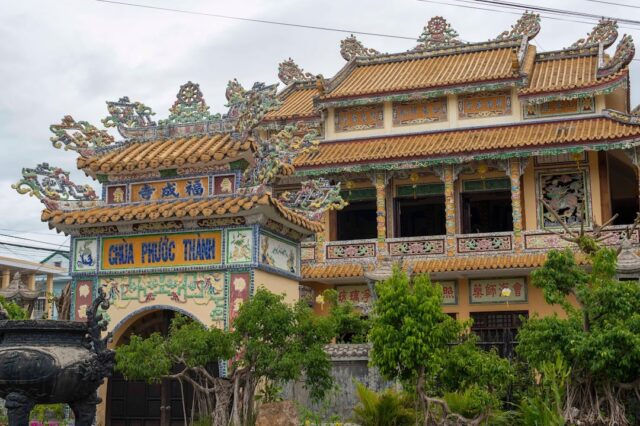
Năm Giáp Ngọ (1774), khi quân Trịnh từ Đàng Ngoài tiến chiếm Phú Xuân, Chúa Duệ Tông Nguyễn Phúc Thuần cùng vương thất phải chạy vào Gia Định lánh nạn. Công nữ Ngọc Cầu không theo con trai vào phương Nam mà ở lại Phú Xuân, cho lập chùa Phước Thành tại vùng An Cựu để tu hành. Ngôi chùa này hiện nay tọa lạc trên đường Phan Đình Phùng, phường An Cựu, thành phố Huế, và là nơi gắn liền với những năm tháng cuối đời của bà.
Sau khi mất vào mùa hạ năm Gia Long thứ 3 (1804), Công nữ Nguyễn Phúc Ngọc Cầu được an táng ngay trong khuôn viên chùa Phước Thành. Mộ phần của bà được xây dựng theo hình thức tháp Phật, phù hợp với thân phận một người đã quy y và tu tập trong những năm cuối đời. Chùa Phước Thành vì vậy trở thành nơi thờ phụng chính thức của bà cho đến nay.
Triều đình nhà Nguyễn đã truy tặng cho bà những danh hiệu trang trọng. Thụy hiệu của bà là Tuệ Tĩnh Thánh Mẫu Nguyên Sư (có tài liệu chép là Huệ Tĩnh), thể hiện sự tôn kính đối với vai vế hoàng tộc và đời sống tu hành của bà; đạo hiệu là Thiệu Long Giáo chủ, nhấn mạnh vai trò hộ trì Phật pháp gắn với việc lập chùa và an cư tu tập.
Mặc dù Công nữ Ngọc Cầu từng có liên quan đến những biến cố chính trị lớn trong giai đoạn cuối của chính quyền Chúa Nguyễn ở Đàng Trong, song với tư cách là bậc bề trên trong tông thất, việc thờ phụng bà vẫn được triều Nguyễn, đặc biệt dưới thời vua Gia Long, thực hiện một cách tôn nghiêm. Cho đến nay, chùa Phước Thành vẫn được xem là một di tích tôn giáo – lịch sử quan trọng tại Huế, lưu giữ dấu tích về cuộc đời nhiều biến động của Công nữ Nguyễn Phúc Ngọc Cầu, từ thân phận hoàng tộc, vai trò trong chính trường cho đến những năm tháng nương cửa Phật ở cuối đời.
Tài liệu tham khảo
- Lại Nhật, Trịnh Sâm và Nguyễn Phúc Khoát: Trẻ không chơi, già đổ đốn, Báo Dân việt, ngày 28/08/2022.
- Tiểu sử của Ngài Nguyễn Phúc Khoát 阮福濶 (1714 – 1765) – Vũ Vương 武王 (1738 – 1765), Nguyễn Phúc tộc.
- Quốc sử quán triều Nguyễn (2006), Đại Nam liệt truyện Tiền biên, Viện Sử học dịch, Nhà xuất bản Thuận Hóa.
Ngôn ngữ khác
Tiếng Anh (English)
General Information
Nguyen Phuc Ngoc Cau (Han characters: Nguyen Phuc Ngoc Cau; 1734 – 8 July 1804) was a princess of the Nguyen royal clan and at the same time a consort of Lord Nguyen Phuc Khoat in eighteenth century Vietnamese history. She was born during a period when Dang Trong under the Nguyen lords was relatively stable and expanding, and she was one of the royal women closely associated with the lordly court at Phu Xuan. Holding the dual status of both a princess and a palace consort, Nguyen Phuc Ngoc Cau exemplifies the close relationship between royal bloodline and the institution of the inner palace within the Nguyen lordly regime, contributing to the character of court life in Dang Trong prior to the transition to the Nguyen dynasty.
Origin
Princess Nguyen Phuc Ngoc Cau was of noble origin within the Nguyen royal clan, belonging to the Nguyen Phuc lineage. She was the daughter of Thai Bao Dan Quoc Cong Nguyen Phuc Dien, the twelfth son of Lord Minh Nguyen Phuc Chu (Hien Tong). By lineage, she was thus born into a branch of the royal family closely connected to the center of power of the Dang Trong lordly court.
In terms of kinship, because her father and the father of Lord Vu Nguyen Phuc Khoat were full brothers, Princess Ngoc Cau was a cousin of Lord Vu. Historically, she held a distinctive dual status: she was both a princess of the Nguyen clan and a consort within the inner palace of Lord Nguyen Phuc Khoat himself.
Life
Nguyen Phuc Ngoc Cau was both a princess of the Nguyen Phuc royal house and a palace consort who exerted significant influence on the political situation in Dang Trong during the latter half of the eighteenth century. Born into a branch of the royal clan close to the seat of power, she entered court life at an early age, at a time when the Dang Trong administration was beginning to decline.
In the later years of his reign, Lord Vu Nguyen Phuc Khoat became increasingly indulgent in wine and women and neglected state affairs. The powerful minister Truong Phuc Loan, who was also the maternal uncle of Lord Vu, took advantage of this moral and political decay to manipulate the court. Among his actions was facilitating the frequent presence of Princess Ngoc Cau at the princely residence and her close association with the Lord. The intimate relationship between Lord Vu and Ngoc Cau, who was his cousin, was regarded as incestuous according to contemporary moral norms and caused major scandal within the royal clan. Because of shame and fear of public censure, Lord Vu did not openly acknowledge their children, having them raised discreetly within the inner palace.
Nevertheless, Ngoc Cau remained a favored consort of Lord Vu and bore him two sons: Prince Nguyen Phuc Dieu, who died young and was posthumously granted the title Thieu Bao Quan Cong, and Prince Nguyen Phuc Thuan, born in 1754, who later succeeded to the position of Lord. With the ambition of placing her own son on the throne, Ngoc Cau repeatedly persuaded Lord Vu. However, most court officials opposed this plan. As a result, Lord Vu did not appoint Nguyen Phuc Thuan as heir, but instead chose Prince Nguyen Phuc Luan, the son of the consort Truong Thi Dung, who at the time was thirty three years old and known for his intelligence and firmness.
The greatest turning point in Ngoc Cau’s life occurred in the At Dau year (1765), when Lord Nguyen Phuc Khoat passed away. The original testament designated Prince Nguyen Phuc Luan as successor. However, Truong Phuc Loan conspired with Ngoc Cau, the eunuch Chu Duc Hau, and the commander Nguyen Cuu Thong to carry out a palace coup. They withheld the announcement of mourning, deployed troops within the princely residence, lured Thai Pho Y Duc Hau Truong Van Hanh, tutor to Prince Luan, into a meeting and murdered him, then imprisoned Nguyen Phuc Luan and enthroned Prince Nguyen Phuc Thuan, who was only twelve years old, as Lord, known posthumously as Due Tong.
The enthronement of a minor enabled Truong Phuc Loan to monopolize power, leading to rampant corruption, heavy taxation, and the rapid weakening of the Nguyen lordly government. As a consequence, Dang Trong society plunged into deep crisis, creating conditions for Trinh forces from Dang Ngoai to invade and for the Tay Son movement to erupt. In the Giap Ngo year (1774), when Trinh troops captured Phu Xuan, Lord Nguyen Phuc Thuan and the royal family fled south to Gia Dinh. Ngoc Cau did not follow her son but remained in Phu Xuan, where she founded Phuoc Thanh Pagoda and devoted herself to religious life.
In her later years, Ngoc Cau lived in seclusion within the grounds of Phuoc Thanh Pagoda, removed from the turbulent political arena. In the summer of the third year of the Gia Long reign (1804), she passed away at the age of seventy one. The Nguyen dynasty posthumously conferred upon her the honorific title Tue Tinh Thanh Mau Nguyen Su and the religious title Thieu Long Giao Chu. She was buried within the grounds of Phuoc Thanh Pagoda. In the fourth year of Gia Long (1805), Emperor Gia Long granted fifteen mau of land as endowment fields and appointed Ton That Sai to oversee her worship.
The life of Princess Nguyen Phuc Ngoc Cau was closely intertwined with family tragedy, moral scandal, and major historical upheavals in Dang Trong. From a royal princess entering palace life, she became a central figure in the succession crisis of 1765, directly or indirectly contributing to the irreversible decline of the Nguyen lordly regime. Seen through historical sources, her image bears both the mark of a favored woman of the inner palace and that of a symbol of the darker side of power and moral decay in the final phase of Nguyen lordly rule.
Veneration
The veneration of Princess Nguyen Phuc Ngoc Cau is closely associated with the pagoda she herself founded and with the honorific titles conferred upon her by the Nguyen dynasty after her death. This veneration reflects both her royal status and her later life devoted to Buddhism.
In the Giap Ngo year (1774), when Trinh forces from Dang Ngoai occupied Phu Xuan and Lord Due Tong Nguyen Phuc Thuan fled south with the royal family to Gia Dinh, Ngoc Cau remained behind in Phu Xuan. She founded Phuoc Thanh Pagoda in the An Cuu area and entered religious life there. The pagoda is today located on Phan Dinh Phung Street, An Cuu Ward, Hue City, and is closely associated with her final years.
After her death in the summer of the third year of the Gia Long reign (1804), Nguyen Phuc Ngoc Cau was buried within the grounds of Phuoc Thanh Pagoda. Her tomb was constructed in the form of a Buddhist stupa, consistent with her status as a woman who had taken refuge and practiced Buddhism in her later years. Phuoc Thanh Pagoda thus became her principal site of worship.
The Nguyen court posthumously granted her solemn honorifics. Her posthumous title was Tue Tinh Thanh Mau Nguyen Su (some sources record Hue Tinh), expressing reverence for both her royal rank and her religious life, while her religious appellation Thieu Long Giao Chu emphasized her role in protecting Buddhism through the founding of the pagoda and her monastic practice.
Although Princess Ngoc Cau was involved in major political events during the final period of the Nguyen lordly government in Dang Trong, her worship as a senior member of the royal clan was nevertheless conducted with due solemnity by the Nguyen dynasty, especially under Emperor Gia Long. To this day, Phuoc Thanh Pagoda is regarded as an important religious and historical site in Hue, preserving the memory of the turbulent life of Princess Nguyen Phuc Ngoc Cau, from royal lineage and political involvement to her final years seeking refuge in the Buddhist path.
References
- Lại Nhật, Trịnh Sâm và Nguyễn Phúc Khoát: Trẻ không chơi, già đổ đốn, Báo Dân việt, ngày 28/08/2022.
- Tiểu sử của Ngài Nguyễn Phúc Khoát 阮福濶 (1714 – 1765) – Vũ Vương 武王 (1738 – 1765), Nguyễn Phúc tộc.
- Quốc sử quán triều Nguyễn (2006), Đại Nam liệt truyện Tiền biên, Viện Sử học dịch, Nhà xuất bản Thuận Hóa.
Tiếng Trung (中文)
一般信息
阮福玉球(Nguyen Phuc Ngoc Cau,汉字:阮福玉球;1734年-1804年7月8日)是十八世纪越南历史上阮氏皇族的一位宗女,同时也是阮主阮福濶(Nguyen Phuc Khoat)的宫嫔。她成长于内地(Đàng Trong)阮主政权处于相对稳定并持续开拓的发展阶段,是与富春王府密切相关、具有一定地位的皇族女性之一。
以其既为宗女、又为宫嫔的双重身份,阮福玉球体现了阮主政权中皇族血缘与后宫制度之间的紧密联系,并在阮主末期、向阮朝过渡之前的内地宫廷生活中占有独特地位。
出身
阮福玉球出身于阮氏皇族,属于阮福宗族的核心支系。她是太保、润国公阮福田(Nguyen Phuc Dien)之女,而阮福田则是阮主明王阮福淍(Nguyen Phuc Chu,庙号显宗)的第十二子。由此可见,玉球自出生起便隶属于与内地主权核心极为接近的宗室分支。
从辈分关系来看,由于她的父亲与武王阮福濶(Nguyen Phuc Khoat)之父为同胞兄弟,故玉球为武王的堂妹。然而在历史上,她却具有一种极为特殊的双重身份:一方面是阮主宗族的宗女,另一方面却成为阮福濶后宫中的宫嫔。
生平
阮福玉球既是阮福皇族的宗女,又是一位对十八世纪后半叶内地政治局势产生深刻影响的宫嫔。她成长于宗室权力中心附近,在内地主政权逐渐走向衰败的背景下步入宫廷生活。
阮福濶在其统治晚年沉溺酒色,荒废政务。权臣张福鸾(Truong Phuc Loan),亦即武王的舅父,趁机操纵朝政,并为阮福玉球频繁出入王府、亲近阮主创造条件。阮福濶与其堂妹玉球之间的情感关系,在当时的礼教观念下被视为乱伦之举,在宗室内部引发极大非议。由于羞惭与畏惧舆论,阮福濶并未公开承认二人所生子嗣,而是将其秘密养于后宫之中。
尽管如此,玉球仍深受阮福濶宠爱,并为其生下两名儿子:公子阮福耀(Nguyen Phuc Dieu,早逝,追赠少保郡公)与公子阮福淳(Nguyen Phuc Thuan,生于1754年),后者日后继承阮主之位。玉球一心希望立其子阮福淳为嗣君,多次劝说阮福濶,但大多数廷臣坚决反对。最终,阮福濶并未立阮福淳为世子,而是选择当时已三十三岁、聪慧刚毅的公子阮福伦(Nguyen Phuc Luan,张氏容所生)作为继承人。
玉球人生中最大的变故发生在乙酉年(1765年)。当年阮主阮福濶去世,最初遗诏传位于阮福伦。但张福鸾却与阮福玉球、太监楮德侯以及掌营阮久通勾结,发动了一场宫廷政变。他们秘不发丧,在王府内布置伏兵,诱杀阮福伦之师、太傅医德侯张文幸,继而囚禁阮福伦,拥立年仅十二岁的阮福淳即位,是为睿宗。
幼主即位使张福鸾得以独揽大权,导致贪腐横行、赋税繁重,阮主政权迅速衰败。内地社会由此陷入严重危机,为北方郑军南侵及西山起义的爆发创造了条件。甲午年(1774年),郑军攻占富春,阮福淳率王族南逃嘉定避难。唯独阮福玉球未随行,而是留在富春,于安旧一带创建福成寺,遁入佛门修行。
晚年,玉球隐居于福成寺,远离动荡的政治漩涡。嘉隆三年(1804年)夏,她去世,享年七十一岁。阮朝追赠其尊号为“慧静圣母元师”,道号“绍龙教主”。其墓安葬于福成寺境内。嘉隆四年(1805年),嘉隆帝赐十五亩田为寺产,并命尊室柴负责祭祀事宜。
阮福玉球的一生,交织着家族悲剧、伦理丑闻与内地历史的重大转折。她从一位宗女步入宫廷,成为1765年废立事件的关键人物之一,其行为直接或间接推动了阮主政权的全面崩溃。从史料角度看,她既是后宫宠妃的代表,也象征着阮主末期权力失序与礼教败坏的阴暗面。
祭祀与奉祀
阮福玉球的奉祀活动主要围绕其亲自创建的寺院,以及阮朝在其身后所追赠的尊号展开。这既是对其皇族身份的承认,也反映了其晚年归依佛门的生活轨迹。
甲午年(1774年),郑军南下攻占富春,睿宗阮福淳携王族南奔嘉定。玉球未随行,而是留在富春安旧地区创建福成寺修行。该寺今位于顺化市安旧坊潘廷逢街,是她晚年生活的重要遗址。
嘉隆三年(1804年)夏,玉球去世后即安葬于福成寺内,其墓制为佛塔形式,符合其晚年剃度修行的身份。福成寺因此成为至今奉祀她的主要场所。
阮朝为其追赠正式谥号“慧静圣母元师”(部分文献作“惠静”),道号“绍龙教主”,彰显其皇族辈分与护持佛法的功德。
尽管玉球曾深度卷入阮主末期的重大政治事件,但作为宗室长辈,其奉祀在嘉隆帝时期仍以庄重礼制进行。直至今日,福成寺仍被视为顺化一处重要的宗教—历史遗迹,见证了阮福玉球从皇族宗女、政治人物到晚年归依佛门的复杂人生轨迹。
参考文献
- Lại Nhật, Trịnh Sâm và Nguyễn Phúc Khoát: Trẻ không chơi, già đổ đốn, Báo Dân việt, ngày 28/08/2022.
- Tiểu sử của Ngài Nguyễn Phúc Khoát 阮福濶 (1714 – 1765) – Vũ Vương 武王 (1738 – 1765), Nguyễn Phúc tộc.
- Quốc sử quán triều Nguyễn (2006), Đại Nam liệt truyện Tiền biên, Viện Sử học dịch, Nhà xuất bản Thuận Hóa.
Tiếng Pháp (Français’)
Informations generales
Nguyen Phuc Ngoc Cau (chinois : 阮福玉球 ; 1734 – 8 juillet 1804) etait une Cong nu appartenant a la famille imperiale Nguyen, et en meme temps une concubine du seigneur Nguyen Phuc Khoat, dans l’histoire du Vietnam au XVIIIe siecle.
Elle naquit et grandit dans le contexte du Dang Trong, a une periode ou le pouvoir des seigneurs Nguyen connaissait une phase de stabilite et d’expansion. Comptant parmi les femmes de haut rang de la famille princiere, sa position etait etroitement liee au palais seigneurial de Phu Xuan.
Son double statut, a la fois princesse et concubine, reflete les liens etroits entre la lignée royale et l’institution du harem dans le regime des seigneurs Nguyen, contribuant a faconner la vie de cour du Dang Trong avant la transition vers la dynastie Nguyen.
Origines
Cong nu Nguyen Phuc Ngoc Cau etait issue d’une famille de haut rang de la maison Nguyen, appartenant au clan Nguyen Phuc. Elle etait la fille de Thai bao Dan Quoc cong Nguyen Phuc Dien, douzieme fils du seigneur Minh Nguyen Phuc Chu (Hien Tong).
Par sa naissance, Ngoc Cau appartenait a une branche de la famille princiere tres proche du centre du pouvoir du palais seigneurial du Dang Trong.
Du point de vue genealogique, le pere de Ngoc Cau et le pere du seigneur Vu Nguyen Phuc Khoat etaient freres, ce qui faisait d’elle la cousine germaine du seigneur.
Dans l’histoire, elle porta ainsi un statut particulier : a la fois Cong nu, fille de la lignée seigneuriale Nguyen, et concubine du seigneur Nguyen Phuc Khoat lui-meme.
Vie
Nguyen Phuc Ngoc Cau fut a la fois une princesse de la famille Nguyen Phuc et une concubine dont l’influence pesa lourdement sur la situation politique du Dang Trong dans la seconde moitie du XVIIIe siecle.
Issue d’une branche proche du pouvoir, elle entra tot dans la vie de cour, a une epoque ou le gouvernement du Dang Trong montrait deja des signes de decadence.
Dans les dernieres annees de son regne, le seigneur Vu Nguyen Phuc Khoat s’abandonna aux plaisirs et delaissa les affaires de l’Etat. Le puissant ministre Truong Phuc Loan, egalement oncle maternel du seigneur, profita de cette situation pour manipuler la cour. Il facilita notamment les allers-retours frequents de Cong nu Ngoc Cau au palais et sa proximite avec le seigneur.
La relation entre le seigneur Vu et Ngoc Cau, qui etait sa cousine, etait consideree comme incestueuse selon les normes morales de l’epoque, provoquant un scandale au sein de la famille princiere. Par crainte des critiques, le seigneur ne reconnut pas officiellement leurs enfants, qui furent eleves discretement dans le harem.
Malgre cela, Ngoc Cau resta une favorite particulierement choyee. Elle donna naissance a deux fils :
- le prince Nguyen Phuc Dieu (mort jeune, titule a titre posthume Thieu bao Quan cong) ;
- le prince Nguyen Phuc Thuan, ne en 1754, qui devait plus tard monter sur le trone seigneurial.
Animee par l’ambition de voir son fils heriter du pouvoir, Ngoc Cau tenta a plusieurs reprises d’influencer le seigneur Vu. Toutefois, la majorite des mandarins s’y opposa, et le seigneur designa comme heritier le prince Nguyen Phuc Luan, fils de la concubine Truong Thi Dung, alors age de 33 ans, reconnu pour son intelligence et son caractere ferme.
Le plus grand bouleversement de la vie de Ngoc Cau survint en 1765 (annee At Dau), a la mort du seigneur Nguyen Phuc Khoat. Le testament designait initialement Nguyen Phuc Luan comme successeur. Cependant, Truong Phuc Loan s’allia avec Ngoc Cau, l’eunuque Chu Duc Hau et le commandant Nguyen Cuu Thong pour organiser un coup d’Etat de palais.
Ils empecherent la proclamation officielle du deces, disposerent des soldats en embuscade dans le palais, attirerent le precepteur Truong Van Hanh sous pretexte de deliberations, puis l’assassinerent. Nguyen Phuc Luan fut emprisonne, et Nguyen Phuc Thuan, alors age de 12 ans, fut place sur le trone sous le nom de Due Tong.
L’avenement d’un seigneur mineur permit a Truong Phuc Loan de concentrer tous les pouvoirs, entrainant corruption, lourdes taxes et affaiblissement rapide du regime. Le Dang Trong entra dans une crise profonde, ouvrant la voie a l’invasion des troupes Trinh du Dang Ngoai et au soulevement des Tay Son.
En 1774 (annee Giap Ngo), lorsque les troupes Trinh s’emparerent de Phu Xuan, le seigneur Nguyen Phuc Thuan et la famille princiere s’enfuirent vers Gia Dinh. Ngoc Cau, quant a elle, resta a Phu Xuan et fonda la pagode Phuoc Thanh pour se retirer dans la vie religieuse.
Elle passa ses dernieres annees dans la retraite, a l’ecart des tourmentes politiques. A l’ete 1804 (troisieme annee Gia Long), elle mourut a l’age de 71 ans. La cour Nguyen lui conféra a titre posthume le titre Tue Tinh Thanh Mau Nguyen Su, avec le nom religieux Thieu Long Giao chu.
Sa tombe fut erigee dans l’enceinte de la pagode Phuoc Thanh. En 1805, l’empereur Gia Long accorda quinze mau de terres comme biens cultuels et chargea Ton That Sai de veiller au culte.
La vie de Cong nu Nguyen Phuc Ngoc Cau fut marquee par des tragedies familiales, des scandales moraux et de grands bouleversements historiques du Dang Trong. Partie d’un statut de princesse, elle devint une figure centrale du coup de palais de 1765, contribuant directement ou indirectement a la chute irreversible du regime des seigneurs Nguyen.
Dans les sources historiques, elle apparait a la fois comme une femme favorisee du harem et comme un symbole des derivees du pouvoir et de la decadence morale de la fin de l’epoque des seigneurs Nguyen.
Culte et memoire
Le culte rendu a Cong nu Nguyen Phuc Ngoc Cau est etroitement lie a la pagode qu’elle fonda elle-meme, ainsi qu’aux titres honorifiques conferes par la dynastie Nguyen apres sa mort. Il s’agit a la fois d’une reconnaissance de son statut princier et d’un reflet de sa vie tardive consacree au bouddhisme.
En 1774, lors de la prise de Phu Xuan par les troupes Trinh, le seigneur Due Tong Nguyen Phuc Thuan s’enfuit vers le Sud. Ngoc Cau choisit de rester a Phu Xuan et fit eriger la pagode Phuoc Thanh dans la region d’An Cuu pour s’y retirer.
Aujourd’hui, cette pagode se situe rue Phan Dinh Phung, quartier An Cuu, ville de Hue, et demeure etroitement associee aux dernieres annees de sa vie.
Apres son deces en 1804, elle fut inhumee dans l’enceinte meme de la pagode Phuoc Thanh. Sa sepulture, de forme de stupa bouddhique, correspond a son statut de nonne laique et a sa pratique religieuse des dernieres annees.
La cour Nguyen lui attribua des titres solennels :
- le titre posthume Tue Tinh Thanh Mau Nguyen Su (egalement note Hue Tinh dans certaines sources), exprimant le respect envers son rang et sa vie religieuse ;
- le titre religieux Thieu Long Giao chu, soulignant son role de protectrice du bouddhisme a travers la fondation de la pagode.
Bien qu’elle ait ete impliquee dans des evenements politiques majeurs de la fin du regime des seigneurs Nguyen, son culte fut maintenu avec solennite, notamment sous le regne de l’empereur Gia Long.
Aujourd’hui encore, la pagode Phuoc Thanh est consideree comme un site religieux et historique important a Hue, conservant la memoire d’une femme dont la vie traversa les fastes de la cour, les tempetes politiques et la retraite spirituelle.
References
- Lại Nhật, Trịnh Sâm và Nguyễn Phúc Khoát: Trẻ không chơi, già đổ đốn, Báo Dân việt, ngày 28/08/2022.
- Tiểu sử của Ngài Nguyễn Phúc Khoát 阮福濶 (1714 – 1765) – Vũ Vương 武王 (1738 – 1765), Nguyễn Phúc tộc.
- Quốc sử quán triều Nguyễn (2006), Đại Nam liệt truyện Tiền biên, Viện Sử học dịch, Nhà xuất bản Thuận Hóa.