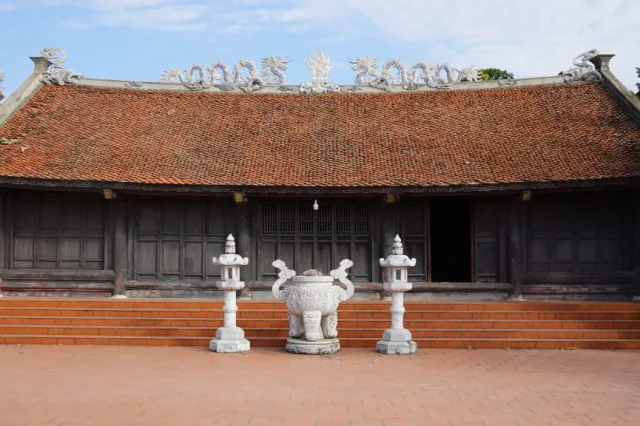


Tên gọi và vị trí địa lý
Đình Lễ Hợp thuộc xã Tam Đa huyện Vĩnh Bảo TP. Hải Phòng, nay là xã Vĩnh Bảo TP. Hải Phòng. Tam Đa nằm phía Nam huyện Vĩnh Bảo xưa được thành lập vào năm 1946 trên cơ sở hợp nhất 3 xã: Lễ Hợp, Đông Quất, Kinh Trì của tổng Can Trì xưa. Theo các bậc trưởng lão địa phương, tên chữ Tam Đa được rút chọn từ điền tích “ Tam Đa Chúc Thọ”, mong muốn cho quê hương luôn là mảnh đất đa phúc, đa lộc và đa thọ.
Lịch sử và nhân vật
Đình Lễ Hợp là nơi thờ Thành hoàng Phạm Đàm (còn gọi là Phạm Đầm), một vị tướng dưới thời Hai Bà Trưng, có công tham gia cuộc khởi nghĩa chống quân Đông Hán vào thế kỷ I. Trong ký ức và tín ngưỡng của cư dân địa phương, ông không chỉ là một danh tướng chống ngoại xâm mà còn là người có mối gắn bó đặc biệt với vùng đất Lễ Hợp từ thuở thiếu thời cho đến khi dựng nghiệp.
Theo truyền tích dân gian, Phạm Đàm sinh ngày mồng 10 tháng 3 âm lịch tại vùng Giác Sơn, phủ Kim Môn, đạo Hải Dương. Cha ông vốn là người học rộng, từng nhiều năm đến trang Lễ Hợp mở lớp dạy học nên có quan hệ gần gũi với cư dân nơi đây. Từ nhỏ, Phạm Đàm đã nổi tiếng thông minh, học một biết mười, lại giỏi cả văn chương lẫn võ nghệ. Người đương thời thường gọi ông là “Thánh Đồng” để ca ngợi tư chất khác thường.
Bối cảnh xã hội khi ấy dưới ách cai trị của nhà Đông Hán rất khắc nghiệt. Thái thú Giao Chỉ là Tô Định nổi tiếng tàn bạo, thường đàn áp hà khắc đối với người Việt. Cha của Phạm Đàm bị Tô Định sát hại, khiến gia đình ly tán. Sau biến cố đó, mẹ con ông phải lẩn trốn về trang Lễ Hợp để nương náu. Nhờ mối giao tình cũ với người cha từng dạy học tại đây, dân làng Lễ Hợp đã che chở và nuôi dưỡng hai mẹ con trong thời gian khó khăn. Chính quãng thời gian này đã tạo nên sự gắn bó sâu sắc giữa Phạm Đàm với vùng đất Lễ Hợp.
Vài năm sau, khi tình hình tạm yên, mẹ con ông trở về quê cũ. Tuy nhiên, sau khi mẹ mất, Phạm Đàm lại quay trở về Lễ Hợp sinh sống lâu dài. Chứng kiến cảnh nhân dân bị áp bức, lại mang mối thù nhà vì cha bị giết, ông dần tập hợp trai tráng trong vùng, chiêu mộ hào kiệt các nơi, bí mật luyện quân và tích trữ lương thực để chuẩn bị chống lại chính quyền Đông Hán. Nhờ uy tín và tài năng của mình, ông được nhân dân Lễ Hợp cùng nhiều vùng lân cận hưởng ứng, theo về ngày càng đông.
Đúng vào thời điểm ấy, Hai Bà Trưng dựng cờ khởi nghĩa tại cửa Hát. Phạm Đàm nhanh chóng đem quân và lương thảo đến hội quân. Sau thắng lợi ban đầu của cuộc khởi nghĩa, ông được Trưng Vương phong chức “Thống chế kiêm Nguyên soái thủy đạo”, giao nhiệm vụ trấn giữ vùng ven biển phía đông, nơi có vị trí quan trọng về quân sự và giao thương đường thủy. Điều này cho thấy ông không chỉ là võ tướng giỏi chiến trận mà còn là người am hiểu địa hình sông biển và có năng lực chỉ huy thủy quân.
Khi nhà Hán cử Mã Viện sang đàn áp cuộc khởi nghĩa, Phạm Đàm tiếp tục cùng các tướng lĩnh của Hai Bà Trưng chiến đấu chống quân xâm lược. Dù lực lượng ngày càng suy yếu trước đội quân đông và thiện chiến của Đông Hán, ông vẫn chiến đấu đến cùng. Theo truyền thuyết địa phương, khi thế trận không còn cứu vãn được, để giữ trọn khí tiết và không rơi vào tay giặc, ông đã gieo mình xuống đầm Lôi Trạch (còn gọi là Đầm Sét) tự vẫn. Hành động ấy được nhân dân xem như biểu tượng của lòng trung nghĩa và tinh thần bất khuất trước ngoại xâm.
Sau khi ông mất, nhân dân trang Lễ Hợp lập đình thờ phụng và tôn ông làm Thành hoàng làng. Từ đó, đình Lễ Hợp không chỉ là nơi sinh hoạt tín ngưỡng mà còn là không gian lưu giữ ký ức lịch sử về một vị tướng thời Hai Bà Trưng gắn bó mật thiết với địa phương.
Theo lời kể của các bậc cao niên, đình Lễ Hợp xưa có quy mô khá lớn, kiến trúc mang phong cách truyền thống với mái đao cong mềm mại, tiền đường lát ván gỗ và nhiều cấu kiện chạm khắc tinh xảo. Do tồn tại qua thời gian dài và chịu ảnh hưởng của thời tiết, công trình dần xuống cấp. Vì vậy vào năm Nhâm Tuất, niên hiệu Khải Định thứ 6 (1922), đình đã được trùng tu lớn. Dấu tích của đợt tu sửa này hiện vẫn còn lưu lại qua dòng lạc khoản khắc tại câu đầu tòa tiền đường với nội dung: “Hoàng triều Nhâm Tuất niên, mạnh đông tạo”, ghi nhận thời điểm dân làng tiến hành sửa dựng đình vào đầu mùa đông năm ấy.
Trong thời kỳ kháng chiến chống Pháp, đình là điểm tổ chức lớp bồi dưỡng cho ban chấp hành xã đội toàn huyện. Nơi diễn ra đại hội chi bộ đảng xã Tam Đa lần thứ II ( tháng 10 năm 1949). Nơi tập trung quân của bộ đội đơn vị 112 và du kích địa phương tấn công phá thế bao vây, uy hiếp địch vào tháng 4 năm 1952. Năm 1954, hưởng ứng phong trào noi gương dũng sỹ Cát Bi, Chi bộ Tam Đa đã phát động du kích đào hào giao thông từ Đình lên bốt Cầu Mục để phối hợp với du kích xã Nhân Hoà bao vây đánh địch, góp phần không nhỏ vào chiến thắng Điện Biên Phủ.
Kiến trúc cảnh quan
Đình Lễ Hợp được xây dựng theo kiểu chữ Đinh, gồm năm gian tiền đường nối vuông góc với hai gian hậu cung phía sau. Đây là kiểu bố cục phổ biến của đình làng truyền thống Bắc Bộ, vừa đáp ứng nhu cầu tế lễ, hội họp cộng đồng, vừa tạo sự phân tách rõ ràng giữa không gian sinh hoạt chung và nơi thờ tự chính.
Toàn bộ mái đình lợp ngói ta hai lớp, tạo độ dày và khả năng chống nóng, chống dột phù hợp với khí hậu vùng đồng bằng ven biển. Trên nóc mái đắp đôi kìm chầu bờ nóc, vừa mang ý nghĩa trấn giữ theo quan niệm dân gian vừa tạo điểm nhấn cho tổng thể kiến trúc. Phần hồi tường được xây bằng loại gạch cỡ lớn có kích thước khoảng 52 x 15 x 10 cm, loại vật liệu thường gặp ở các công trình cổ cuối thế kỷ XIX đầu thế kỷ XX. Điều đáng chú ý là kỹ thuật ghép gạch và trát mạch khá chắc chắn, lớp vữa liên kết mịn và đều, cho thấy tay nghề cao của thợ xây đương thời. Dưới bờ nóc mái còn có năm trụ đấu hình chữ T, kiểu trang trí thường xuất hiện ở nhiều công trình kiến trúc dân gian đầu thế kỷ XX.
So với một số đình lớn trong khu vực như đình Quán Khái hay đình Nhân Mục, đình Lễ Hợp không có quy mô quá đồ sộ. Tuy nhiên, giá trị nổi bật của công trình lại nằm ở hệ thống chạm khắc và trang trí nghệ thuật còn bảo lưu khá phong phú. Phần lớn các mảng chạm tập trung tại tòa tiền đường – không gian chuyển tiếp giữa bên ngoài và nội điện, nơi diễn ra các nghi lễ tế thần và sinh hoạt cộng đồng của dân làng. Chính vì vậy, nghệ thuật trang trí ở đây vừa mang tính tín ngưỡng vừa phản ánh quan niệm thẩm mỹ dân gian.
Các đầu dư, bức cốn, cửa võng, đại tự, cuốn thư và câu đối đều được chạm khắc công phu với những đề tài quen thuộc trong mỹ thuật truyền thống như long, ly, quy, phượng. Mỗi linh vật mang một ý nghĩa biểu trưng riêng: rồng gắn với quyền uy và nguồn nước; phượng biểu tượng cho sự cao quý; lân tượng trưng cho điềm lành; rùa thể hiện sự trường tồn và bền vững. Các hình tượng này không chỉ nhằm tôn vinh vị Thành hoàng được thờ mà còn gửi gắm mong muốn của người dân về cuộc sống yên ổn, mùa màng thuận lợi và phúc lộc cho cộng đồng.
Trong số các linh vật, hình tượng rồng xuất hiện nhiều nhất và cũng là điểm đặc sắc của đình Lễ Hợp. Nghệ nhân sử dụng nhiều kỹ thuật khác nhau như chạm nổi, chạm lộng và chạm bong kênh để tạo chiều sâu cho hình khối. Rồng được thể hiện với nhiều dáng vẻ khác nhau: khi uốn lượn trong mây, khi hóa thân trong lá cúc, lúc lại kết hợp với hình cá chép vượt vũ môn. Những đề tài như “phượng hàm thư”, “cá chép hóa rồng” vừa mang ý nghĩa cát tường vừa phản ánh tư duy sáng tạo và tính nhân văn trong nghệ thuật dân gian.
Đặc biệt, các bẩy hiên của đình là nơi tập trung nhiều mảng chạm tinh xảo. Những đề tài như “lão cúc hóa long”, “cành mai con trĩ”, “con sóc chùm nho” được thể hiện mềm mại và sinh động, cho thấy sự kết hợp giữa hình tượng linh vật với cây cỏ, chim thú gần gũi trong đời sống thường nhật. Các đường nét tuy không quá cầu kỳ nhưng giàu cảm giác chuyển động, tạo cho kiến trúc vẻ mềm mại và sống động hơn.
Về cảnh quan, đình nằm trên khu đất tương đối cao và thoáng rộng, phía trước có sân đình lớn phục vụ tế lễ và hội họp dân làng. Tổng thể kiến trúc mang vẻ phóng khoáng nhưng vẫn giữ được sự cân đối, hài hòa. Điểm đáng chú ý nhất là hệ thống sáu cặp đầu dư được cách điệu hình đầu rồng với đầy đủ râu, tóc, mắt lồi và miệng ngậm ngọc. Đây được xem là dấu ấn đặc sắc của nghệ thuật điêu khắc dân gian tại đình.
Các đầu dư ở hai bên hồi đình còn cho thấy sự khác biệt trong phong cách tạo hình của các nhóm thợ thủ công. Ở phía tả, rồng có kiểu râu và tóc xoắn thành làn sóng mềm, râu cong hình số tám tạo cảm giác uyển chuyển. Trong khi đó, đầu dư phía hữu lại có tóc và đao lửa bay thẳng song song, đầu nhọn như lưỡi mác, gợi nhớ phong cách tạo hình rồng thời thế kỷ XVIII. Sự khác biệt này cho thấy đình có thể đã trải qua nhiều giai đoạn sửa chữa hoặc do nhiều tốp thợ khác nhau thực hiện, đồng thời góp phần tạo nên diện mạo độc đáo và cổ kính cho công trình.
Lễ hội
Lễ hội đình Lễ Hợp hàng năm được tổ chức vào ngày mồng 10 tháng 3 (âm Lịch), là dịp để tưởng nhớ, tôn vinh Thành Hoàng Phạm Đàm. Đây là lễ hội lớn được chính quyền và nhân dân rất quan tâm tổ chức. Nghi lễ được tổ chức long trọng và nhiều hoạt động văn hoá, văn nghệ, thể thao phong phú như: Bóng đá, bóng chuyền, cờ tướng, hát chèo cùng các trò chơi dân gian như: đấu vật, chọi gà, cầu thùm. Đây là nét đẹp văn hoá góp phần giáo dục truyền thống cho con cháu về lòng yêu Nước, về đạo lý “uống nước nhớ nguồn”, lòng tự tôn, tự hào dân tộc là trách nhiệm của mỗi người dân đối với quê hương, đất nước.
Xếp hạng
Đình Lễ Hợp được Nhà nước xếp hạng di tích lịch sử – văn hóa cấp Quốc Gia năm 1994.
Tài liệu tham khảo
- Thành đoàn TP. Hải Phòng, 2023, Đình Lễ Hợp, xã Tam Đa, huyện Vĩnh Bảo, truy cập tại: https://thanhdoanhaiphong.gov.vn/dinh-le-hop-xa-tam-da-huyen-vinh-bao-nd23064.html
Ngôn ngữ khác
Tiếng Anh
Le Hop Communal House (Vinh Bao, Hai Phong)
Name and Geographic Location
Le Hop Communal House is located in Tam Da commune, former Vinh Bao district, Hai Phong City, now part of Vinh Bao commune, Hai Phong City. Tam Da lies in the southern part of old Vinh Bao district and was established in 1946 through the merger of the three communes of Le Hop, Dong Quat, and Kinh Tri from former Can Tri district.
According to local elders, the name Tam Da was derived from the classical expression “Tam Da Chuc Tho,” symbolizing wishes for the homeland to be blessed with abundant happiness, prosperity, and longevity.
History and Historical Figure
Le Hop Communal House is dedicated to the tutelary deity Pham Dam (also known as Pham Dam), a military commander under the Trung Sisters who participated in the uprising against the Eastern Han dynasty during the first century. In the memory and spiritual beliefs of local residents, he is remembered not only as a heroic general who fought against foreign invasion but also as a figure deeply connected to the land of Le Hop from his youth through the establishment of his career.
According to local legend, Pham Dam was born on the tenth day of the third lunar month in the region of Giac Son, Kim Mon prefecture, Hai Duong region. His father was a learned scholar who had spent many years teaching in Le Hop village and therefore maintained close ties with the local people. From an early age, Pham Dam was renowned for his intelligence, mastering lessons quickly and excelling in both literature and martial arts. People of his time often referred to him as “Thanh Dong” to praise his extraordinary abilities.
At that time, society under Eastern Han rule was extremely oppressive. To Dinh, the governor of Giao Chi, was notorious for his cruelty and harsh treatment of the Vietnamese population. Pham Dam’s father was killed by To Dinh, causing the family to fall apart. Following this tragedy, Pham Dam and his mother fled to Le Hop village for refuge. Because of the friendship formed through his father’s years of teaching there, the villagers of Le Hop sheltered and cared for the mother and son during this difficult period. This experience created a deep bond between Pham Dam and the land of Le Hop.
Several years later, after conditions temporarily stabilized, the family returned to their native village. However, after his mother passed away, Pham Dam returned to Le Hop and settled there permanently. Witnessing the suffering of the people under oppression and bearing the personal grief of his father’s death, he gradually gathered young men from the area, recruited talented individuals from surrounding regions, secretly trained troops, and stored provisions in preparation for resistance against Eastern Han authority. Thanks to his reputation and abilities, increasing numbers of people from Le Hop and neighboring regions rallied to his cause.
At that very time, the Trung Sisters raised the banner of revolt at Hat Gate. Pham Dam quickly brought his troops and supplies to join their forces. After the initial victories of the uprising, Trung Vuong appointed him “Thong Che kiem Nguyen Soai Thuy Dao,” assigning him responsibility for defending the eastern coastal region, an area of strategic military and commercial importance. This appointment demonstrated that he was not only a skilled battlefield commander but also someone with deep knowledge of riverine and maritime geography and capable naval leadership.
When the Han dynasty dispatched Ma Vien to suppress the uprising, Pham Dam continued fighting alongside the generals of the Trung Sisters against the invading forces. Although the rebel forces gradually weakened against the large and experienced Han army, he continued fighting until the very end. According to local tradition, when the situation became hopeless, in order to preserve his honor and avoid capture, he threw himself into Loi Trach Lagoon (also called Dam Set Lagoon) and took his own life. The people regarded this act as a symbol of loyalty, righteousness, and unyielding resistance against foreign invaders.
After his death, the people of Le Hop village established a communal house to worship him and honored him as the village tutelary deity. Since then, Le Hop Communal House has served not only as a religious center but also as a place preserving historical memory of a general of the Trung Sisters era who maintained a deep connection with the local community.
According to village elders, the communal house of Le Hop was once fairly large, built in the traditional architectural style with gracefully curved roof corners, wooden-plank floors in the front hall, and many finely carved structural elements. Due to long-term aging and weather conditions, the structure gradually deteriorated. Therefore, in the year of Nham Tuat, during the sixth year of the Khai Dinh reign (1922), the communal house underwent a major restoration. Evidence of this renovation still survives in an inscription carved on the principal beam of the front hall reading: “Hoang trieu Nham Tuat nien, manh dong tao,” recording that the villagers restored the communal house in early winter of that year.
During the resistance war against the French, the communal house served as a training site for commune militia executive committees throughout the district. It was also the venue for the Second Congress of the Tam Da Commune Party Cell in October 1949. In April 1952, it became the gathering point for soldiers of Unit 112 and local guerrilla forces before attacks aimed at breaking enemy encirclement and pressure tactics.
In 1954, responding to the patriotic emulation movement inspired by the heroes of Cat Bi, the Tam Da Party Cell mobilized guerrilla forces to dig communication trenches from the communal house to Cau Muc outpost. Together with guerrillas from Nhan Hoa commune, they besieged enemy forces and contributed significantly to the victory at Dien Bien Phu.
Architecture and Landscape
Le Hop Communal House was built in the shape of the Chinese character “Dinh” (丁), consisting of a five-compartment front hall connected perpendicularly to a two-compartment rear sanctuary. This layout is common among traditional Northern Vietnamese communal houses, serving both ritual ceremonies and community gatherings while clearly separating communal spaces from the sacred worship area.
The entire roof is covered with two layers of traditional Vietnamese tiles, providing insulation and protection against leakage suitable for the climate of the coastal delta region. Along the roof ridge are decorative paired “kim” ornaments facing each other, symbolizing protection according to folk beliefs while also serving as architectural highlights.
The side walls are constructed from large bricks measuring approximately 52 × 15 × 10 centimeters, a material commonly found in architectural works from the late nineteenth and early twentieth centuries. Particularly noteworthy is the solid masonry technique and the smooth, even mortar joints, demonstrating the high craftsmanship of builders of the period. Beneath the roof ridge are five T-shaped decorative pillars, a motif commonly seen in folk architecture of the early twentieth century.
Compared with larger communal houses in the region such as Quan Khai or Nhan Muc, Le Hop Communal House is not monumental in scale. However, its most outstanding value lies in its rich system of carvings and artistic decoration. Most of the decorative carvings are concentrated in the front hall, the transitional space between the exterior and the inner sanctuary where ritual ceremonies and community activities were held. As a result, the decorative art here reflects both religious significance and folk aesthetic ideals.
Beam ends, supporting panels, ornamental door screens, large character plaques, decorative scrolls, and parallel sentences are all elaborately carved with familiar motifs from traditional Vietnamese art such as dragons, qilins, turtles, and phoenixes. Each sacred creature carries symbolic meaning: dragons represent authority and water; phoenixes symbolize nobility; qilins signify auspiciousness; and turtles embody longevity and stability. These motifs not only honor the tutelary deity but also express villagers’ hopes for peace, prosperous harvests, and blessings for the community.
Among these sacred creatures, dragon imagery appears most frequently and forms the distinctive artistic feature of Le Hop Communal House. Artisans employed various carving techniques such as relief carving, openwork carving, and deep layered carving to create depth and dimensionality. Dragons are depicted in many forms: winding through clouds, transforming among chrysanthemum leaves, or combined with the image of carp leaping through the Dragon Gate. Motifs such as “phoenix holding a scroll” and “carp transforming into dragon” convey auspicious meanings while reflecting the creativity and humanistic spirit of folk art.
Especially notable are the decorative carvings on the eave-supporting beams, where many of the most refined artistic compositions are concentrated. Themes such as “old chrysanthemum transforming into dragon,” “plum branch with pheasant,” and “squirrel with grape cluster” are rendered with graceful liveliness, demonstrating the blending of sacred imagery with familiar plants and animals from everyday life. Although the carving lines are not excessively elaborate, they convey strong movement and vitality, making the architecture appear softer and more animated.
Regarding landscape, the communal house stands on relatively high and open ground. In front is a large courtyard used for ceremonies and village gatherings. The overall architectural composition possesses an open and expansive character while still maintaining harmony and balance. The most striking feature is the system of six pairs of beam-end carvings stylized into dragon heads complete with whiskers, flowing hair, bulging eyes, and mouths holding pearls. These are considered remarkable examples of folk sculptural art preserved at the site.
The dragon-head carvings on opposite sides of the communal house also reveal differences in artistic style among various groups of craftsmen. On the left side, the dragons feature flowing wave-like whiskers and hair, with curved figure-eight-shaped beards creating a graceful appearance. On the right side, however, the dragons display straight, parallel flame-like hair and pointed forms resembling spear blades, recalling dragon styles of the eighteenth century. These differences suggest that the communal house may have undergone multiple restoration phases or been worked on by different groups of artisans, contributing to the building’s distinctive and ancient character.
Festival
The annual festival of Le Hop Communal House is held on the tenth day of the third lunar month to commemorate and honor the tutelary deity Pham Dam. This is a major local festival organized with great attention by both authorities and residents.
Ceremonies are conducted solemnly alongside a wide variety of cultural, artistic, and sporting activities such as football, volleyball, Chinese chess, cheo singing performances, and traditional folk games including wrestling, cockfighting, and cau thum. The festival represents an important cultural tradition that helps educate younger generations about patriotism, gratitude toward ancestors and predecessors, and national pride, emphasizing each citizen’s responsibility toward their homeland and country.
Recognition Status
Le Hop Communal House was recognized by the State as a National Historical and Cultural Relic in 1994.
References
- Thành đoàn TP. Hải Phòng, 2023, Đình Lễ Hợp, xã Tam Đa, huyện Vĩnh Bảo, truy cập tại: https://thanhdoanhaiphong.gov.vn/dinh-le-hop-xa-tam-da-huyen-vinh-bao-nd23064.html
Tiếng Pháp
Maison communale de Le Hop (Vinh Bao, Hai Phong)
Nom et situation geographique
La maison communale de Le Hop appartient a l’ancienne commune de Tam Da, district de Vinh Bao, ville de Hai Phong, aujourd’hui commune de Vinh Bao, ville de Hai Phong. Tam Da se situe au sud de l’ancien district de Vinh Bao et fut creee en 1946 par la fusion de trois communes : Le Hop, Dong Quat et Kinh Tri, autrefois rattachees au tong Can Tri. Selon les anciens du village, le nom sino-vietnamien « Tam Da » provient de l’expression traditionnelle « Tam Da Chuc Tho », exprimant le souhait que cette terre soit toujours riche en bonheur, en prosperite et en longevite.
Histoire et personnage historique
La maison communale de Le Hop est consacree au genie tutélaire Pham Dam (egalement appele Pham Dam), un general ayant servi sous les Trung Sisters et participe a l’insurrection contre les Han orientaux au Ier siecle. Dans la memoire et les croyances des habitants, il n’est pas seulement un heros ayant lutte contre les envahisseurs, mais aussi un personnage intimement lie a la region de Le Hop depuis son enfance jusqu’a sa carriere militaire.
Selon la tradition populaire, Pham Dam naquit le dixieme jour du troisieme mois lunaire dans la region de Giac Son, prefecture de Kim Mon, province de Hai Duong. Son pere etait un lettré erudit qui avait longtemps enseigne dans le trang Le Hop, entretenant ainsi des liens etroits avec les habitants locaux. Des son plus jeune age, Pham Dam se distingua par son intelligence exceptionnelle, assimilant rapidement les connaissances et excellant autant dans les lettres que dans les arts martiaux. Ses contemporains le surnommerent « Thanh Dong » afin de louer ses qualites hors du commun.
A cette epoque, la domination des Han orientaux etait particulierement oppressive. To Dinh, gouverneur de Giao Chi, etait connu pour sa brutalite et ses persecutions envers les Vietnamiens. Le pere de Pham Dam fut tue par To Dinh, provoquant la dispersion de la famille. Apres cette tragedie, sa mere et lui durent se refugier dans le trang Le Hop. Grace aux anciennes relations de son pere avec les habitants du village, ceux-ci protegerent et nourrirent la mere et le fils durant cette periode difficile. Cette experience renforça profondement l’attachement de Pham Dam a la terre de Le Hop.
Quelques annees plus tard, lorsque la situation se calma temporairement, ils retournerent dans leur region natale. Cependant, apres la mort de sa mere, Pham Dam revint s’installer durablement a Le Hop. Temoignant des souffrances infligees a la population et nourrissant le desir de venger son pere, il commenca a rassembler les jeunes hommes du village, recruta des heros des regions voisines et organisa secretement l’entrainement des troupes ainsi que le stockage de vivres en preparation de la lutte contre les Han orientaux. Grace a son prestige et a ses talents, il obtint rapidement le soutien des habitants de Le Hop et des regions environnantes.
C’est alors que les Trung Sisters leverent l’etendard de la revolte a cua Hat. Pham Dam rejoignit aussitot leurs forces avec ses soldats et ses provisions. Apres les premiers succes de l’insurrection, Trung Vuong lui attribua le titre de « Thong che kiem Nguyen soai thuy dao » et lui confia la defense des regions cotieres orientales, zone strategique pour les operations militaires et les voies fluviales. Cela montre qu’il etait non seulement un brillant general, mais aussi un excellent connaisseur des regions maritimes et un chef de flotte competent.
Lorsque les Han envoyerent Ma Vien pour reprimer l’insurrection, Pham Dam continua a combattre aux cotes des autres generaux des Trung Sisters. Bien que les forces insurgées fussent progressivement affaiblies face a l’armee nombreuse et experimentee des Han, il poursuivit la lutte jusqu’au bout. Selon la legende locale, lorsque la situation devint desesperee, afin de preserver son honneur et eviter de tomber aux mains de l’ennemi, il se jeta dans l’etang Loi Trach (egalement appele Dam Set) pour se suicider. Cet acte fut considere par les habitants comme le symbole de la fidelite et de l’esprit indomptable face aux envahisseurs.
Apres sa mort, les habitants du trang Le Hop lui eleverent une maison communale et le venererent comme genie tutelaire du village. Depuis lors, la maison communale de Le Hop est devenue non seulement un lieu de culte, mais aussi un espace conservant la memoire historique d’un general de l’epoque des Trung Sisters intimement lie a la region.
Selon les anciens du village, la maison communale de Le Hop etait autrefois un vaste edifice de style traditionnel, avec des toitures aux extremites recourbees, un pavillon avant recouvert de planches de bois et de nombreuses sculptures raffinees. Avec le temps et les effets du climat, le monument se degrada progressivement. C’est pourquoi une importante restauration fut entreprise en l’annee Nham Tuat, sixieme annee de l’ere Khai Dinh (1922). Les traces de cette restauration subsistent encore aujourd’hui grace a une inscription gravee sur la poutre principale du tien duong, indiquant : « Hoang trieu Nham Tuat nien, manh dong tao », rappelant la reconstruction realisee au debut de l’hiver cette annee-la.
Durant la guerre de resistance contre les Français, la maison communale servit de lieu de formation pour les responsables militaires communaux de tout le district. Elle accueillit egalement le deuxieme congres de la cellule du Parti de la commune de Tam Da en octobre 1949. En avril 1952, elle devint le point de rassemblement des soldats de l’unite 112 et des guerilleros locaux avant une offensive destinee a briser l’encerclement ennemi. En 1954, repondant au mouvement suivant l’exemple des heros de Cat Bi, la cellule du Parti de Tam Da mobilisa les guerilleros pour creuser des tranchees reliant la maison communale au poste de Cau Muc afin de coordonner les attaques avec les forces de la commune de Nhan Hoa, contribuant ainsi a la victoire de Dien Bien Phu.
Architecture et paysage
La maison communale de Le Hop est construite selon un plan en forme de caractere chinois « Dinh », compose de cinq travées du pavillon avant reliees perpendiculairement a deux travées du sanctuaire arriere. Cette disposition est typique des maisons communales traditionnelles du Nord du Vietnam, permettant a la fois l’organisation des ceremonies religieuses, des reunions communautaires et une separation claire entre les espaces collectifs et le lieu de culte principal.
L’ensemble de la toiture est couvert de doubles couches de tuiles traditionnelles vietnamiennes, assurant une bonne protection contre la chaleur et les infiltrations adaptee au climat des plaines cotieres. Au sommet du toit se trouvent deux figures de kim regardant la ligne de faîte, symboles protecteurs selon les croyances populaires et elements decoratifs majeurs de l’edifice. Les murs lateraux sont construits en grandes briques d’environ 52 x 15 x 10 cm, materiau frequemment utilise dans les constructions de la fin du XIXe et du debut du XXe siecle. La technique d’assemblage des briques et la qualite du mortier temoignent du savoir-faire remarquable des artisans de l’epoque. Sous la ligne de faîte apparaissent egalement cinq piliers decoratifs en forme de T, motif courant dans l’architecture populaire du debut du XXe siecle.
Comparée a certaines grandes maisons communales voisines comme celles de Quan Khai ou de Nhan Muc, la maison communale de Le Hop ne possede pas des dimensions monumentales. Toutefois, sa valeur exceptionnelle reside dans la richesse de ses sculptures et decorations artistiques encore bien conservees. La plupart des sculptures se concentrent dans le tien duong, espace de transition entre l’exterieur et le sanctuaire interieur, ou se deroulaient les rites et les activites communautaires du village. L’art decoratif y combine ainsi dimensions religieuses et sensibilite esthetique populaire.
Les consoles, panneaux sculptes, portes suspendues, inscriptions monumentales, cuon thu et sentences paralleles sont richement ornes de motifs traditionnels tels que dragon, licorne, tortue et phenix. Chaque creature symbolique porte une signification particuliere : le dragon evoque le pouvoir et l’eau ; le phenix represente la noblesse ; la licorne symbolise les auspices heureux ; la tortue incarne la permanence et la stabilite. Ces motifs ne glorifient pas seulement le genie tutélaire du village, mais expriment egalement les souhaits des habitants pour la paix, de bonnes recoltes et la prosperite communautaire.
Parmi ces motifs, le dragon apparait le plus frequemment et constitue l’une des principales originalites de la maison communale de Le Hop. Les artisans ont utilise diverses techniques telles que la sculpture en relief, ajouree ou en haut relief afin de donner profondeur et mouvement aux formes. Les dragons sont representes sous diverses attitudes : ondulant parmi les nuages, surgissant des feuilles de chrysantheme ou associes a la carpe franchissant la porte du dragon. Des themes comme « phuong ham thu » ou « ca chep hoa rong » possedent des significations auspicieuses tout en illustrant la creativite et l’humanisme de l’art populaire vietnamien.
Les consoles des auvents constituent l’un des elements les plus remarquables du decor sculpté. Des themes tels que « lao cuc hoa long », « branche de prunier et faisan » ou « ecureuil et grappe de raisin » y sont representes avec souplesse et vivacite, montrant l’association harmonieuse des creatures symboliques avec les plantes et animaux familiers de la vie quotidienne. Les lignes, sans etre excessivement complexes, transmettent une forte impression de mouvement et donnent a l’architecture davantage de souplesse et de vitalite.
Concernant le paysage, la maison communale est situee sur un terrain relativement eleve et degage. Devant s’etend une vaste cour servant aux ceremonies et aux reunions des habitants. L’ensemble architectural degage une impression d’ouverture tout en conservant equilibre et harmonie. L’element le plus remarquable demeure le systeme de six paires de consoles sculptées en forme de tete de dragon, avec moustaches, cheveux, yeux saillants et perle dans la bouche. Ces sculptures sont considerees comme l’une des signatures majeures de l’art populaire local.
Les consoles situees sur les deux cotes lateraux de la maison communale montrent egalement des differences stylistiques entre les groupes d’artisans. Du cote gauche, les dragons possedent des moustaches et des cheveux formes de vagues souples, avec des moustaches courbees en forme de huit. Du cote droit, les flammes et les cheveux s’etirent de maniere parallele et pointue comme des lances, rappelant le style des dragons du XVIIIe siecle. Ces differences suggerent que la maison communale a connu plusieurs phases de restauration ou l’intervention de differents ateliers, contribuant a son caractere unique et ancien.
Festival
Le festival annuel de la maison communale de Le Hop se tient le dixieme jour du troisieme mois lunaire afin de commemorer et d’honorer le genie tutélaire Pham Dam. Cette fete constitue l’un des grands evenements de la region et fait l’objet d’une attention particuliere de la part des autorites et de la population.
Les ceremonies sont organisees solennellement et accompagnees de nombreuses activites culturelles, artistiques et sportives telles que football, volley-ball, echecs traditionnels, chant cheo et divers jeux populaires comme la lutte traditionnelle, les combats de coqs ou le cau thum. Ce festival represente une belle tradition culturelle contribuant a transmettre aux jeunes generations l’amour de la patrie, la morale de la gratitude envers les ancetres ainsi que la fierte et la conscience nationales.
Classement
La maison communale de Le Hop a ete classee Monument historique et culturel national par l’Etat en 1994.
Bibliographie
- Thành đoàn TP. Hải Phòng, 2023, Đình Lễ Hợp, xã Tam Đa, huyện Vĩnh Bảo, truy cập tại: https://thanhdoanhaiphong.gov.vn/dinh-le-hop-xa-tam-da-huyen-vinh-bao-nd23064.html
Tiếng Trung
礼合亭(海防市永保社)
名称与地理位置
礼合亭位于海防市永保县三多社,今属海防市永保社。三多位于旧永保县南部,于1946年由礼合、东橘(Dong Quat)、京池(Kinh Tri)三社合并而成,旧属甘池总。据当地长者所述,“三多”之名取自“多福、多禄、多寿”之典故,寓意乡土富饶安康、福寿绵长。
历史与人物
礼合亭供奉城隍神范谭(Pham Dam,又作Pham Dam),为征侧、征贰二征夫人时期的一位将领,曾参与一世纪反抗东汉统治的起义。在当地居民的记忆与信仰中,他不仅是一位抗击外敌的名将,也是一位与礼合地区关系密切的人物,自幼年起便与此地结缘,并最终在此建立功业。
根据民间传说,范谭生于海阳道金门府角山地区,农历三月初十诞生。其父博学多闻,曾长期在礼合庄设馆授学,因此与当地居民关系密切。范谭自幼聪颖过人,举一反三,兼擅文武,当时人称“圣童”,以赞其异禀天资。
当时东汉统治极为严酷,交趾太守苏定残暴横征,对越人压迫深重。范谭之父遭苏定杀害,家道破碎。此后,母子二人为避祸逃往礼合庄。由于当地百姓念及其父昔日授业之情,遂收留并照顾他们。正是这一段经历,使范谭与礼合土地建立了深厚感情。
数年后,局势稍缓,母子二人返回故乡。然而母亲去世后,范谭又回到礼合长期居住。目睹百姓饱受压迫,又怀有杀父之仇,他逐渐聚集乡中青年,招募四方豪杰,秘密训练兵士并储备粮草,准备反抗东汉政权。凭借个人威望与才能,他得到礼合及周边地区百姓广泛响应,追随者日益增多。
恰逢此时,二征夫人在喝门(Hat Mon)举兵起义。范谭迅速率军与粮草前往会师。起义初战告捷后,征王封其为“统制兼元帅水道”,命其镇守东部沿海地区——这一具有重要军事与水路交通意义的区域。这表明他不仅善于陆战,也熟悉江海地形,并具备统领水军的能力。
后来汉朝派马援南下镇压起义,范谭继续与二征夫人麾下诸将并肩抗敌。尽管面对兵力强盛、训练有素的东汉军队,义军逐渐陷入劣势,他仍坚持战斗到底。据地方传说,当战局已无法挽回时,为保全气节、不落敌手,他投身雷泽潭(又称雷池)自尽。此举被百姓视为忠义与不屈精神的象征。
范谭逝世后,礼合庄百姓建立亭庙奉祀,并尊其为本村城隍。从此,礼合亭不仅是民间信仰场所,也成为保存二征时期历史记忆的重要空间。
据当地长者回忆,礼合亭旧时规模颇大,建筑具有传统风格,飞檐柔美,前堂铺设木板,内部木构雕刻精美。由于年代久远及风雨侵蚀,建筑逐渐损坏。启定六年壬戌(1922年),村民曾进行大规模重修。此次修缮的痕迹至今仍保存在前堂梁架题记中,其文曰:“皇朝壬戌年孟冬造”,记载了当年初冬村民修建礼合亭之事。
抗法战争时期,礼合亭还是重要革命活动地点。这里曾举办全县乡队委员会干部培训班,并于1949年10月召开三多社共产党支部第二次代表大会。1952年4月,此地又成为112部队与地方游击队集结进攻敌军的重要据点。1954年,在响应“学习吉碑勇士”运动时,三多党支部发动游击队从礼合亭至桥木碉堡开挖交通壕,并联合仁和社游击队包围攻击敌军,为奠边府战役胜利作出了贡献。
建筑与景观
礼合亭采用传统北部村亭常见的“丁”字形布局,由五间前堂与后方垂直连接的两间后宫组成。这种结构既满足祭祀与村民集会需要,也清晰区分了公共活动空间与核心祭祀空间。
整个屋顶覆盖双层传统瓦片,既增强隔热防漏效果,也适应沿海平原气候。屋脊顶部饰有一对“钳吻”装饰,既具有镇护寓意,也成为建筑视觉重点。山墙使用大型砖块砌筑,尺寸约为52×15×10厘米,这种材料常见于十九世纪末至二十世纪初的古建筑。值得注意的是,砖墙砌筑工艺十分扎实,灰缝均匀细密,显示出当时工匠高超的技艺。屋脊下方还设有五个“T”字形斗柱装饰,这是二十世纪初民间建筑常见的装饰元素。
与观概亭(Quan Khai)或仁牧亭(Nhan Muc)等大型村亭相比,礼合亭规模并不宏大,但其艺术价值主要体现在保存较丰富的雕刻与装饰体系。大部分雕刻集中于前堂区域——即连接外部与内殿的过渡空间,也是举行祭礼与社区活动的重要场所。因此,这里的装饰既具有宗教意义,也反映了民间审美观念。
梁头、撑木、门罩、横匾、卷书及楹联均雕刻精细,主题多为传统美术中的龙、麟、龟、凤四灵。龙象征权威与水源;凤代表高贵;麟寓意祥瑞;龟象征长久与稳固。这些灵兽形象不仅用于颂扬城隍神,也寄托百姓对安宁生活、风调雨顺与福禄兴旺的期望。
其中,龙纹雕刻最为突出,也是礼合亭艺术特色所在。工匠采用浮雕、透雕与高浮雕等技法增强立体感。龙形态多样:或腾云驾雾,或隐现于菊叶之间,或与鲤鱼跃龙门结合。诸如“凤衔书”“鲤鱼化龙”等题材,不仅寓意吉祥,也体现民间艺术的创造力与人文精神。
尤其值得注意的是檐撑部分的雕刻,保存了大量精美图案。如“老菊化龙”“梅枝与雉鸡”“松鼠葡萄”等题材,柔和自然地结合灵兽、花木与日常鸟兽形象,显示出民间艺术中现实生活与象征意涵的融合。线条虽不繁复,却富有动感,使整体建筑显得更为生动柔美。
在景观方面,礼合亭建于较高且开阔的地势上,前方为宽广庭院,用于祭礼与村民集会。整体建筑气势舒展,同时保持良好的比例与协调性。其中最引人注目的是六对龙首形梁头装饰,龙须、鬃发、凸目与含珠口部刻画完整,被视为礼合亭民间雕刻艺术的重要标志。
两侧山墙梁头在造型风格上也呈现差异。左侧龙纹鬃发与胡须卷曲如波浪,八字形龙须显得柔和灵动;右侧龙纹则火焰与鬃发平直向后延伸,尖锐如矛,带有十八世纪龙纹风格特点。这种差异说明礼合亭可能经历过多次修缮,或由不同工匠群体参与建造,也使建筑更具历史层次感与古朴风貌。
节庆
礼合亭每年农历三月初十举行传统庙会,以纪念城隍神范谭。该节庆受到政府与民众高度重视,规模盛大。祭礼庄严隆重,同时举办丰富的文化、文艺与体育活动,如足球、排球、中国象棋、传统“嘲剧”演唱,以及摔跤、斗鸡、打“求屯”等民间游戏。
这一节庆不仅是地方传统文化的重要体现,也承担着教育后代爱国精神、“饮水思源”传统伦理及民族自豪感的重要作用。
等级保护
合亭于1994年被越南国家列为国家级历史文化遗迹。
参考资料
- Thành đoàn TP. Hải Phòng, 2023, Đình Lễ Hợp, xã Tam Đa, huyện Vĩnh Bảo, truy cập tại: https://thanhdoanhaiphong.gov.vn/dinh-le-hop-xa-tam-da-huyen-vinh-bao-nd23064.html