

Đối tượng suy tôn
Nhân vật được suy tôn trong lễ hội Nghinh Cô là “Cô” – theo truyền thuyết dân gian có tên là Lê Thị Hồng Thủy, còn gọi là Thị Cách. Cô được nhân dân vùng biển Long Hải tôn kính như một vị nữ thần che chở cho ngư dân, phù hộ ghe thuyền ra khơi bình an, mưa thuận gió hòa, tôm cá đầy khoang. Trong tâm thức cư dân ven biển Nam Bộ, Cô không chỉ là một nhân vật linh thiêng mà còn là biểu tượng của lòng nhân hậu, sự che chở và niềm tin tâm linh gắn với đời sống biển cả.
Theo truyền thuyết được lưu truyền rộng rãi nhất, Cô vốn quê ở Bình Thuận hoặc Phan Rang, theo cha vào vùng Bà Rịa – Gò Công buôn bán. Trong một lần ghe thuyền đi ngang vùng biển Long Hải, Cô bị rơi xuống biển và mất khi mới 16 tuổi. Ba ngày sau, xác Cô dạt vào vùng vũng Mù U và được ngư dân xã Phước Hải chôn cất tử tế. Sau này, dân làng tin rằng Cô rất linh thiêng, thường hiển linh phù hộ cho người đi biển thoát nạn, vượt qua sóng gió, nên lập miếu thờ và lấy ngày mất của Cô là ngày 12 tháng Hai âm lịch để tổ chức lễ cúng hằng năm.
Ngoài truyền thuyết trên còn có một dị bản khác cho rằng Cô là liên lạc viên của nghĩa quân Tây Sơn hoặc con của một vị tướng Tây Sơn, bị quân Nguyễn sát hại khi hoạt động ở vùng biển này. Dù cách kể khác nhau nhưng các truyền thuyết đều thống nhất ở những điểm chung: Cô là một thiếu nữ chết trẻ, chết oan, rất linh thiêng và được nhân dân lập miếu thờ phụng.
Địa điểm tổ chức
Lễ hội Nghinh Cô diễn ra tại Dinh Cô, thuộc thị trấn Long Hải, huyện Long Điền, tỉnh Bà Rịa – Vũng Tàu. Dinh nằm dưới chân núi Thùy Vân, quay mặt ra biển, phía trước là bãi biển Long Hải rộng lớn, tạo nên một không gian sơn thủy hữu tình và linh thiêng.
Ban đầu nơi thờ Cô chỉ là một ngôi miếu nhỏ bằng cây lá dựng sát mé biển. Về sau, do sóng biển xâm thực và lượng người đến cúng bái ngày càng đông, ngư dân địa phương đã nhiều lần di dời, trùng tu và xây dựng lại Dinh Cô ngày càng khang trang hơn. Đến nay, Dinh Cô là một quần thể kiến trúc lớn với diện tích gần 1.000m², lưng tựa núi, mặt hướng biển, trở thành điểm tín ngưỡng nổi tiếng của cư dân vùng biển Nam Bộ.
Cổng tam quan của Dinh được trang trí hình “Lưỡng long chầu nguyệt”, đắp nổi rồng hổ theo quan niệm “Long Hổ hội”. Từ chân núi lên điện thờ là 37 bậc tam cấp. Bên trong chính điện có nhiều bàn thờ như bàn thờ Bà Cô, Diêu Trì Phật Mẫu, Chúa Cậu, Ngũ Hành Nương Nương, Tứ Pháp Nương Nương, Ông Địa, Thần Tài cùng nhiều vị thần linh khác. Ngoài Dinh Cô còn có Mộ Cô nằm trên đồi Cô Sơn, cách Dinh khoảng hơn 1km, là nơi khách hành hương thường đến viếng trong dịp lễ hội.
Thời gian tổ chức
Lễ hội Nghinh Cô được tổ chức hằng năm từ ngày 10 đến ngày 12 tháng Hai âm lịch, trong đó ngày 12 là ngày chính lễ, cũng là ngày vía và ngày giỗ của Cô theo quan niệm dân gian.
Từ nhiều ngày trước lễ hội, ngư dân các địa phương đã chuẩn bị ghe thuyền, cờ hoa và sắp xếp công việc để trở về Long Hải dự lễ. Đối với cư dân vùng biển, đây là dịp quan trọng nhất trong năm nên mọi hoạt động đánh bắt thường được tạm gác lại để hướng về ngày cúng Cô.
Hiện nay, nhiều năm lễ hội còn được tổ chức kéo dài hơn với nhiều hoạt động văn hóa – du lịch đặc sắc nhằm phục vụ đông đảo du khách và người dân địa phương.
Không gian lễ hội
Lễ hội Nghinh Cô được xem là lễ hội nước lớn và đông người nhất của cư dân ven biển Nam Bộ. Không gian lễ hội trải dài từ khu vực Dinh Cô, bãi biển Long Hải đến ngoài khơi biển rộng.
Điểm đặc sắc nhất của lễ hội là sự kết hợp hài hòa giữa yếu tố tín ngưỡng linh thiêng với không khí hội hè náo nhiệt. Trong những ngày lễ, cả thị trấn Long Hải như bước vào mùa hội lớn. Ghe thuyền từ khắp nơi tập trung về bến biển, trang trí cờ hoa rực rỡ, đèn lồng sáng khắp mặt biển tạo nên cảnh tượng huy hoàng đặc biệt vào ban đêm.
Khách hành hương đến lễ hội không chỉ để cúng bái, cầu an mà còn kết hợp nghỉ ngơi, du lịch biển và tham gia các hoạt động văn hóa dân gian. Chính điều này đã khiến lễ hội mang sắc thái vừa truyền thống vừa hiện đại.
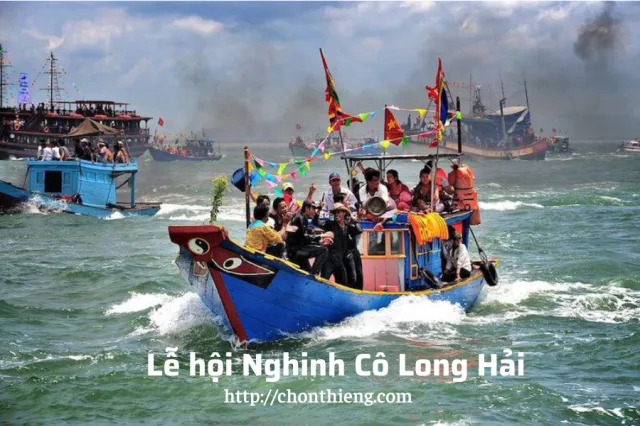
Lễ hội còn nổi bật bởi sự tham gia đông đảo của cộng đồng ngư dân. Những nghi thức trên biển với hàng trăm ghe thuyền nối đuôi nhau ra khơi, tiếng trống chiêng, tiếng hát bả trạo, tiếng pháo và tiếng reo hò vang dội đã tạo nên bầu không khí rất đặc trưng của văn hóa cư dân biển Nam Bộ.
Phần lễ
Lễ hội Nghinh Cô còn được gọi là lễ rước Bà Thủy hay lễ hội Dinh Cô. Tuy nhiên, tên gọi “Nghinh Cô” được sử dụng phổ biến hơn vì nhấn mạnh nghi thức chính của lễ hội là lễ nghinh rước trên biển. Đây là một trong những lễ hội nước lớn nhất của cư dân ven biển Nam Bộ, mang đậm màu sắc tín ngưỡng dân gian vùng biển. Lễ hội thuộc loại hình tín ngưỡng thờ Mẫu – Nữ thần, đồng thời kết hợp với tục thờ thần biển và lễ hội cầu ngư của ngư dân miền Nam.
Phần lễ của lễ hội Nghinh Cô diễn ra trang nghiêm, kéo dài trong ba ngày với nhiều nghi thức truyền thống đặc sắc. Từ sáng ngày 10 tháng Hai âm lịch, Ban quý tế cùng ngư dân tập trung về Dinh để chuẩn bị cho lễ hội. Các nghi thức như Thỉnh Long vị Bà Thủy, nghinh Ông Nam Hải, cúng Tiền hiền – Hậu hiền và lễ cầu quốc thái dân an được tổ chức trang trọng. Khách hành hương từ khắp nơi cũng bắt đầu đổ về Long Hải bằng nhiều phương tiện khác nhau.
Đêm ngày 11 diễn ra lễ cầu an tại chính điện. Các vị sư trong vùng đến tụng kinh, cầu cho quốc thái dân an, mưa thuận gió hòa, người dân làm ăn thuận lợi. Cùng lúc đó bên ngoài diễn ra đêm hội hoa đăng tưng bừng. Hàng trăm ghe thuyền kết đèn hoa rực rỡ neo đậu trước biển, tất cả đều hướng mũi vào Dinh Cô thực hiện nghi thức “Chầu Cô”. Ánh đèn từ ghe thuyền chiếu sáng cả một vùng biển, tạo nên cảnh tượng huyền ảo và linh thiêng.
Nghi thức quan trọng nhất là lễ Nghinh Cô diễn ra vào sáng ngày 12 tháng Hai âm lịch. Từ Dinh Cô, đoàn rước với kiệu sơn son thếp vàng, đội học trò lễ, dàn nhạc ngũ âm, đội chèo bả trạo và đoàn lân sư rồng tiến ra bãi biển. Những người tham gia chính lên ghe lễ đã được trang trí lộng lẫy bằng cờ hoa, bàn hương án và lễ vật.
Sau hiệu lệnh xuất phát, đoàn ghe thuyền nối nhau rẽ sóng ra khơi trong tiếng trống chiêng rộn rã. Khi ra đến địa điểm được cho là nơi Cô tử nạn năm xưa, đoàn ghe dừng lại để làm lễ nghinh rước. Chủ tế cùng ban lễ thực hiện nghi thức niệm hương, thỉnh mời Cô, Ông Nam Hải và các vị thần linh về dinh dự lễ. Đội chèo bả trạo cất tiếng hát cầu mong trời yên biển lặng, ngư dân đánh bắt thuận lợi, cuộc sống bình an.
Sau lễ ngoài khơi, đoàn ghe quay trở lại bến trong tiếng reo hò của hàng ngàn người đứng đón trên bờ. Kiệu rước được đưa về Dinh để tiến hành chánh tế. Lễ vật dâng cúng gồm heo quay, heo toàn sinh, hương hoa, bánh trái, xôi chè và nhiều lễ phẩm khác.
Ngoài các nghi thức tế lễ còn có múa Tam hiển, múa Mâm vàng, hát bội, hát chặp địa nàng, hát bóng rỗi và nghi thức phóng sinh chim cầu phúc. Đây đều là những hình thức diễn xướng dân gian gắn liền với tín ngưỡng cư dân biển Nam Bộ.
Phần hội
Bên cạnh phần lễ mang tính tâm linh trang nghiêm, phần hội của lễ hội Nghinh Cô diễn ra vô cùng sôi động và náo nhiệt. Trong suốt ba ngày lễ hội, khu vực bãi biển Long Hải và quanh Dinh Cô luôn đông nghịt người. Ban đêm diễn ra hội hoa đăng với hàng trăm ghe thuyền treo đèn lồng, kết hoa rực rỡ tạo nên khung cảnh lung linh trên mặt biển.
Các hoạt động văn hóa dân gian và nghệ thuật truyền thống được tổ chức liên tục như múa lân – sư – rồng, hát bội, biểu diễn ca cổ, giao lưu đờn ca tài tử, hát bả trạo, múa bông, múa mâm vàng, múa mâm bạc… Những tiết mục này vừa phục vụ nhu cầu thưởng thức nghệ thuật của người dân vừa góp phần bảo tồn văn hóa truyền thống của cư dân biển Nam Bộ.
Nhiều trò chơi dân gian đặc trưng miền biển cũng được tổ chức như đua thuyền, đua thúng, bắt vịt trên sóng nước, thi bắt cá, bắt lươn, bơi lội, thi đan lưới, cột lưới, gánh cá, đi cà kheo trên cát… Các trò chơi này thu hút đông đảo thanh niên ngư dân tham gia trong tiếng cổ vũ sôi nổi của du khách.
Một nét đặc sắc khác là nghi thức phóng sinh chim. Hàng trăm con chim được thả lên bầu trời cùng những quả bóng bay đủ màu sắc, thể hiện ước vọng bình an, tự do và hạnh phúc.
Xếp hạng
Qua thời gian, lễ hội Nghinh Cô không còn chỉ là sinh hoạt tín ngưỡng của người dân Long Hải mà đã trở thành lễ hội lớn thu hút hàng chục vạn người từ nhiều tỉnh thành phía Nam như Bến Tre, Trà Vinh, Cà Mau, Rạch Giá, Gò Công, Thành phố Hồ Chí Minh, Đồng Nai… về tham dự.
Năm 2023, Bộ Văn hóa, Thể thao và Du lịch đã đưa Lễ hội truyền thống Dinh Cô – Long Hải vào Danh mục Di sản văn hóa phi vật thể quốc gia. Đây là sự ghi nhận giá trị văn hóa đặc sắc và vai trò quan trọng của lễ hội trong đời sống tinh thần cư dân vùng biển Nam Bộ.
Tài liệu tham khảo
- Gia Nguyễn, Truyền thuyết về Long Hải thần nữ nổi tiếng linh thiêng ở Dinh Cô, Báo Pháp luật, ngày 23/01/2022.
- Bà Rịa – Vũng Tàu: Từ Dinh Cô nghĩ về sức hút của lễ hội truyền thống, Bộ Văn hóa, Thể thao và Du lịch, ngày 22/3/2024.
- Thạc Phương – Lê Trung Vũ (2015), 60 lễ hội truyền thống Việt Nam, Nxb Tổng hợp Thành phố Hồ Chí Minh.
- Nguyễn Long, Lễ hội Dinh Cô là Di sản văn hóa phi vật thể quốc gia, Báo Thanh niên, ngày 02/03/2023.
- Thùy Dương, Những điều thú vị về Lễ hội Dinh Cô, Lễ hội Nghinh Ông – 2 Di sản văn hóa phi vật thể QG mới, VTV Online, ngày 17/02/2023.
- An Nhiên, Lễ hội truyền thống Dinh Cô (Bà Rịa – Vũng Tàu): Tạo dấu ấn để phát triển du lịch, Cục Du lịch quốc gia Việt Nam, ngày 25/02/2023.
- Hạnh Phước, Lễ hội Nghinh Cô Long Hải, Bảo tàng Bà Rịa – Vũng Tàu, ngày 20/11/2013.
- Lễ hội Dinh Cô, Wikipedia.
Ngôn ngữ khác
Tiếng Anh (English)
Honored Figure
The central figure venerated in the Nghinh Co Festival is “Co” (the Lady), who, according to local folklore, was named Le Thi Hong Thuy, also known as Thi Cach. She is revered by the coastal communities of Long Hai as a protective sea goddess who safeguards fishermen, ensures safe voyages, brings favorable weather, and grants abundant catches. In the spiritual life of southern coastal residents, Co is not only a sacred figure but also a symbol of compassion, protection, and faith closely connected to the sea.
According to the most widely circulated legend, Co was originally from Binh Thuan or Phan Rang. She traveled with her father, who engaged in trading activities between Ba Ria and Go Cong. During one voyage passing through the waters of Long Hai, she accidentally fell into the sea and drowned at the age of sixteen. Three days later, her body washed ashore at Mu U Bay and was respectfully buried by the fishermen of Phuoc Hai Village. Later, villagers believed that her spirit was highly sacred and often appeared to protect seafarers from danger and storms. As a result, they built a shrine in her honor and chose the twelfth day of the second lunar month—the day of her death—as the annual day of worship.
Another version of the legend suggests that Co was a messenger for the Tay Son insurgents or the daughter of a Tay Son general who was killed by Nguyen forces while carrying out activities in this coastal region. Although the details vary, all versions share common elements: Co was a young woman who died prematurely and tragically, possessed extraordinary spiritual power, and was subsequently worshipped by local people.
Festival Venue
The Nghinh Co Festival takes place at Dinh Co, located in Long Hai Town, Long Dien District, Ba Ria–Vung Tau Province. The shrine stands at the foot of Thuy Van Mountain, facing the sea and overlooking the expansive Long Hai Beach, creating a scenic and sacred landscape where mountains and sea harmoniously converge.
Originally, the shrine was merely a small thatched structure built close to the shoreline. Over time, due to coastal erosion and the increasing number of worshippers, local fishermen repeatedly relocated, renovated, and expanded the shrine. Today, Dinh Co has developed into a large architectural complex covering nearly 1,000 square meters. Backed by mountains and facing the sea, it has become one of the most prominent religious sites of the southern coastal region.
The shrine’s three-entrance gate is decorated with the motif of “Two Dragons Worshipping the Moon” and reliefs of dragons and tigers symbolizing the traditional concept of the “Meeting of Dragon and Tiger.” A staircase of thirty-seven steps leads from the foot of the hill to the main sanctuary. Inside are numerous altars dedicated to Co, the Mother Goddess of the Jade Pond, Prince Cau, the Five Elements Goddesses, the Four Dharma Goddesses, the Earth God, the God of Wealth, and various other deities. In addition to Dinh Co, there is also Co’s Tomb, located on Co Son Hill about one kilometer away, which pilgrims frequently visit during the festival.
Festival Time
The Nghinh Co Festival is held annually from the 10th to the 12th day of the second lunar month, with the 12th being the principal day of celebration, marking both Co’s death anniversary and her feast day according to folk belief.
Several days before the festival, fishermen from surrounding regions prepare their boats, decorate them with flags and flowers, and arrange their work schedules so they can return to Long Hai to participate. For coastal communities, this is the most important festival of the year, and fishing activities are often temporarily suspended in order to focus on the celebration.
Today, the festival is often extended beyond the traditional dates and accompanied by various cultural and tourism activities to accommodate the growing number of visitors and local participants.
Origins and Significance of the Festival
The Nghinh Co Festival is also known as the Lady of the Waters Procession Festival or the Dinh Co Festival. However, the name “Nghinh Co” is the most commonly used because it highlights the festival’s principal ritual—the maritime procession honoring Co.
This is one of the largest water-based festivals among the coastal communities of southern Vietnam and is deeply rooted in local folk beliefs. It belongs to the tradition of Mother Goddess worship while also incorporating elements of sea deity worship and fishermen’s whale-worship ceremonies.
In local belief, Co is the guardian deity of seafarers. Fishermen trust that she protects their boats amidst storms, brings good fortune, ensures successful fishing expeditions, and helps them overcome dangers at sea. Therefore, the festival serves not only to commemorate a sacred figure but also as an occasion to pray for peace, prosperous fishing seasons, national stability, and abundant livelihoods.
Over time, the Nghinh Co Festival has evolved beyond a local religious celebration of Long Hai residents into a major regional event attracting hundreds of thousands of participants from southern provinces such as Ben Tre, Tra Vinh, Ca Mau, Rach Gia, Go Cong, Ho Chi Minh City, and Dong Nai.
In 2023, the Ministry of Culture, Sports and Tourism officially inscribed the Traditional Dinh Co Festival of Long Hai on the National List of Intangible Cultural Heritage. This recognition affirms the festival’s unique cultural value and its important role in the spiritual life of southern coastal communities.
Festival Space and Characteristics
The Nghinh Co Festival is regarded as the largest and most heavily attended maritime festival among southern Vietnamese coastal communities. The festival space extends from Dinh Co and Long Hai Beach to the offshore waters.
Its most distinctive feature is the harmonious combination of sacred religious rituals and a vibrant festive atmosphere. During the celebration, the entire town of Long Hai transforms into a grand festival ground. Boats from various localities gather at the harbor, adorned with colorful flags, flowers, and lanterns. At night, countless lights illuminate the sea, creating a magnificent spectacle.
Pilgrims attend not only to worship and pray for blessings but also to enjoy seaside recreation, tourism activities, and traditional cultural events. This combination gives the festival both traditional and contemporary dimensions.
Another notable characteristic is the active participation of the fishing community. Maritime rituals involving hundreds of boats sailing in procession, accompanied by drums, gongs, ba trao chants, firecrackers, and enthusiastic cheers, create an atmosphere uniquely associated with the culture of southern Vietnamese fishermen.
Rituals
The ritual component of the Nghinh Co Festival is solemn and elaborate, lasting three days and encompassing numerous traditional ceremonies.
From the morning of the 10th day of the second lunar month, members of the ritual committee and local fishermen gather at Dinh Co to prepare for the festivities. Ceremonies such as the Invitation of the Lady’s Sacred Tablet, the Procession of Ong Nam Hai (the Whale Deity), offerings to village founders and ancestors, and prayers for national peace and prosperity are conducted with great reverence. Pilgrims from across the country begin arriving by various means of transportation.
On the evening of the 11th day, a prayer ceremony for peace takes place in the main sanctuary. Buddhist monks from nearby temples chant sutras and pray for national prosperity, favorable weather, and successful livelihoods. Simultaneously, a grand lantern festival is held outside. Hundreds of boats illuminated with colorful lights anchor offshore, all facing Dinh Co in the ritual known as “Paying Homage to Co.” The lights from the vessels illuminate the sea, creating a mystical and sacred atmosphere.
The most important ceremony is the Nghinh Co Procession, held on the morning of the 12th day. A grand procession departs from Dinh Co, including a gilded palanquin, ceremonial attendants, a five-tone orchestra, a ba trao performance troupe, and lion-dragon dance teams, moving toward the beach. The principal participants board elaborately decorated ceremonial boats adorned with flags, altars, and offerings.
At the signal to depart, the flotilla sails into the sea amid the sound of drums and gongs. Upon reaching the location believed to be where Co drowned, the boats stop for the principal ritual. The chief officiant and ritual committee burn incense and formally invite Co, Ong Nam Hai, and other deities to return to the shrine and witness the festival. The ba trao troupe performs ceremonial songs praying for calm seas, successful fishing seasons, and peaceful lives.
After the offshore ceremony, the flotilla returns to shore amid the cheers of thousands of spectators. The palanquin is then carried back to Dinh Co, where the main sacrificial rite takes place. Offerings include roasted pigs, whole sacrificial pigs, incense, flowers, cakes, sticky rice desserts, and various ritual items.
Additional ceremonies include the Tam Hien Dance, Golden Tray Dance, classical opera performances, Chap Dia Nang singing, Bong Roi performances, and bird-release rituals for blessings. These forms of folk performance are closely associated with the religious traditions of southern coastal communities.
Festive Activities
Alongside the solemn religious ceremonies, the festive component of the Nghinh Co Festival is lively and dynamic.
Throughout the three-day celebration, Long Hai Beach and the surrounding area of Dinh Co are crowded with visitors. At night, the lantern festival features hundreds of illuminated boats decorated with flowers and lanterns, creating a dazzling spectacle on the sea.
Traditional cultural performances are presented continuously, including lion, unicorn, and dragon dances; Hat Boi (classical opera); cai luong excerpts; Don Ca Tai Tu exchanges; ba trao singing; flower dances; golden tray dances; and silver tray dances. These performances not only entertain visitors but also contribute to preserving the cultural heritage of southern fishing communities.
Numerous traditional coastal games are also organized, such as boat racing, basket-boat racing, duck-catching in the water, fish-catching competitions, eel-catching contests, swimming events, net-weaving competitions, net-tying contests, fish-carrying races, and stilt-walking on the sand. These activities attract many young fishermen and enthusiastic spectators.
Another distinctive feature is the bird-release ceremony. Hundreds of birds are released into the sky together with colorful balloons, symbolizing hopes for peace, freedom, and happiness.
Cultural Value and Contemporary Significance
The Nghinh Co Festival is not merely a folk religious event but also a significant cultural symbol of southern coastal communities. It vividly reflects the spiritual life of fishermen, expressing their faith in divine protection and their aspirations to master the sea.
The festival also serves as an important occasion for strengthening community bonds. During the celebration, local people work together to prepare boats and offerings, participate in rituals, and enjoy communal festivities, thereby reinforcing solidarity and social cohesion.
Today, the festival plays an increasingly important role in the cultural and spiritual tourism development of Ba Ria–Vung Tau Province. Each year, it attracts hundreds of thousands of visitors who come to worship, seek blessings, and enjoy vacations in Long Hai.
Furthermore, donations from pilgrims are used by the Dinh Co Management Board to support meaningful social programs, including the construction of charity houses, assistance for disadvantaged families, scholarships for poor students, aid for disaster victims, and various charitable activities. These efforts enhance the festival’s humanitarian significance alongside its spiritual value.
However, as urbanization and tourism continue to develop, the Nghinh Co Festival has also undergone changes. Alongside traditional rituals, many modern elements have appeared in costumes, organization methods, and festival activities. This situation highlights the need to balance the preservation of traditional values with the demands of cultural and tourism development, ensuring that the festival retains its distinctive identity as a cultural heritage of southern Vietnamese coastal communities.
References
- Gia Nguyễn, Truyền thuyết về Long Hải thần nữ nổi tiếng linh thiêng ở Dinh Cô, Báo Pháp luật, ngày 23/01/2022.
- Bà Rịa – Vũng Tàu: Từ Dinh Cô nghĩ về sức hút của lễ hội truyền thống, Bộ Văn hóa, Thể thao và Du lịch, ngày 22/3/2024.
- Thạc Phương – Lê Trung Vũ (2015), 60 lễ hội truyền thống Việt Nam, Nxb Tổng hợp Thành phố Hồ Chí Minh.
- Nguyễn Long, Lễ hội Dinh Cô là Di sản văn hóa phi vật thể quốc gia, Báo Thanh niên, ngày 02/03/2023.
- Thùy Dương, Những điều thú vị về Lễ hội Dinh Cô, Lễ hội Nghinh Ông – 2 Di sản văn hóa phi vật thể QG mới, VTV Online, ngày 17/02/2023.
- An Nhiên, Lễ hội truyền thống Dinh Cô (Bà Rịa – Vũng Tàu): Tạo dấu ấn để phát triển du lịch, Cục Du lịch quốc gia Việt Nam, ngày 25/02/2023.
- Hạnh Phước, Lễ hội Nghinh Cô Long Hải, Bảo tàng Bà Rịa – Vũng Tàu, ngày 20/11/2013.
- Lễ hội Dinh Cô, Wikipedia.
Tiếng Trung (中文)
崇奉对象
迎姑节所崇奉的人物为“姑娘(Cô)”。根据民间传说,她名叫黎氏红水(Lê Thị Hồng Thủy),又称氏格(Thị Cách)。当地沿海居民尊奉她为庇护渔民的海神,保佑渔船出海平安、风调雨顺、渔获丰收。在越南南部沿海居民的精神世界中,姑娘不仅是一位神圣人物,更是仁慈、庇护与海洋信仰的象征。
流传最广的传说认为,姑娘原籍平顺或潘朗一带,随父亲前往巴地—鹅贡地区经商。一次船只经过龙海海域时,她不慎落海身亡,年仅十六岁。三天后,她的遗体漂至乌榆湾(Vũng Mù U),被福海社渔民妥善安葬。后来,村民相信她神灵显赫,经常显灵保佑出海者脱险避难、战胜风浪,于是为其建庙祭祀,并以她的忌日——农历二月十二日——作为每年的祭典日期。
除上述传说外,还有另一种说法认为她是西山义军的联络员,或是一位西山将领之女,在此海域活动时被阮军杀害。尽管故事版本不同,但都一致认为:她是一位早逝的年轻女子,死于非命,神灵显赫,因此受到百姓长期供奉。
举办地点
迎姑节在姑庙(Dinh Cô)举行。姑庙位于巴地-头顿省龙田县龙海镇,坐落于垂云山(Thùy Vân)山麓,面向大海,前方即为辽阔的龙海海滩,形成一处山海相依、风景秀丽而神圣的祭祀空间。
最初供奉姑娘的地方只是海边一座简陋的草木小庙。后来由于海浪侵蚀以及香客日益增多,当地渔民多次迁建、修缮,逐渐形成今日规模宏大的姑庙建筑群。如今的姑庙占地近一千平方米,背山面海,已成为越南南部沿海居民著名的信仰中心。
姑庙三关门饰有“双龙朝月”图案,并塑造龙虎相会的装饰形象。从山脚通往主殿共有三十七级石阶。主殿内设有多个神坛,包括姑娘神位、瑶池佛母、主公主姑、五行娘娘、四法娘娘、土地神、财神以及其他神灵神位。此外,还有位于姑山(Cô Sơn)上的姑娘墓,距离姑庙约一公里,是香客在节庆期间必定前往祭拜的重要地点。
举办时间
迎姑节每年于农历二月初十至十二举行,其中二月十二日为正祭日,也是民间所认为的姑娘诞辰纪念日和忌辰。
在节日前数日,各地渔民便开始准备渔船、彩旗和祭品,并安排好生产事务返回龙海参加庆典。对于沿海居民而言,这是全年最重要的节日之一,因此许多渔民会暂时停止捕鱼活动,专心参与祭祀。
近年来,节庆时间有所延长,并增加了丰富的文化与旅游活动,以满足日益增长的游客需求。
节日起源与意义
迎姑节又称“迎水婆节”或“姑庙节”,但“迎姑节”这一名称最为普遍,因为它突出体现了节庆最重要的仪式——海上迎神巡游。
这是越南南部沿海居民规模最大的水上节庆之一,具有浓厚的海洋民间信仰色彩。其信仰体系属于母神崇拜与女性神灵崇拜范畴,同时融合了海神信仰以及南部渔民传统的求鱼祭俗。
在当地居民心目中,姑娘是海上守护神。渔民相信她能保佑船只平安航行、出海顺利、渔获丰收,并帮助人们躲避海难。因此,节庆不仅是纪念神圣人物的活动,也是祈求平安、祈求丰收、祈愿国泰民安和海域安宁的重要仪式。
随着时间推移,迎姑节已不再局限于龙海居民的信仰活动,而发展成为吸引数十万信众与游客参加的大型民俗节庆。来自槟椥、茶荣、金瓯、迪石、鹅贡、胡志明市、同奈等地的人们纷纷前来朝拜。
2023年,越南文化体育与旅游部正式将龙海姑庙传统节庆列入国家级非物质文化遗产名录。这是对其独特文化价值及其在南部沿海居民精神生活中重要地位的充分肯定。
节庆空间与特色
迎姑节被誉为越南南部沿海地区规模最大、参与人数最多的水上节庆。其活动空间涵盖姑庙、龙海海滩以及近海海域。
节庆最独特之处在于神圣信仰与热闹庆典氛围的完美结合。节日期间,整个龙海镇仿佛进入盛大的节庆季节。来自各地的船只聚集海港,装饰着五彩旗帜与灯笼,夜晚海面灯火辉煌,形成壮观景象。
前来参加节庆的人们不仅祭拜祈福,也同时进行海滨休闲旅游和文化体验,因此节庆兼具传统与现代特色。
此外,广大渔民的积极参与也是节庆的重要特征。数百艘渔船组成浩荡船队驶向海面,伴随着锣鼓声、把桡歌声、鞭炮声和欢呼声,展现出南部海洋文化独有的魅力。
祭祀部分
迎姑节的祭祀活动庄严隆重,持续三天,包含多项传统仪式。
农历二月初十清晨,祭祀委员会与渔民便齐聚姑庙准备庆典。迎请水婆神位、迎奉南海翁、祭祀前贤后贤以及祈求国泰民安等仪式相继举行。与此同时,各地香客陆续抵达龙海参加节庆。
二月十一日晚举行平安祈福法会。当地僧侣诵经祈福,祝愿国家昌盛、风调雨顺、百姓安居乐业。与此同时,庙外则举行盛大的海上花灯会。数百艘渔船悬挂彩灯停泊海面,船首一致朝向姑庙,举行“朝姑”仪式。灯光映照海面,营造出神秘而庄严的氛围。
最重要的仪式是农历二月十二日上午举行的“迎姑礼”。仪仗队从姑庙出发,由金碧辉煌的神轿、礼生队伍、五音乐队、把桡歌队以及舞龙舞狮队组成,浩浩荡荡前往海边。参加迎神仪式的船只都装饰得富丽堂皇,并设有香案和祭品。
启航后,船队在锣鼓声中破浪前行。当抵达传说中姑娘当年遇难的海域时,船队停下举行迎神仪式。主祭与祭祀人员焚香祈请姑娘、南海翁及诸神返回姑庙参加庆典。把桡歌队则高唱祈福歌,祝愿风平浪静、渔业兴旺、百姓安康。
海上仪式结束后,船队返回港口。岸上数千民众夹道欢迎,随后神轿被迎回姑庙举行正祭。供品包括烤乳猪、全猪祭品、香花、水果、糯米甜品以及各种祭礼用品。
此外,祭祀期间还举行三显舞、金盘舞、戏曲演出、地娘唱曲、婆舞以及放生仪式等传统民间表演活动,这些都是南部沿海居民信仰文化的重要组成部分。
娱乐活动部分
除了庄严的祭祀活动外,迎姑节的娱乐部分同样热闹非凡。
节庆三天期间,龙海海滩和姑庙周边始终人潮涌动。夜间举行的花灯会最具特色,数百艘渔船悬挂灯笼和彩饰,在海面形成璀璨壮观的景象。
各种传统文化艺术活动轮番上演,包括舞龙舞狮、传统戏曲、古乐演唱、才子弹唱交流、把桡歌表演、花舞、金盘舞和银盘舞等。这些活动不仅满足群众的文化需求,也有助于传统艺术的传承与保护。
节庆期间还举办许多富有海洋特色的民间竞技活动,如赛船、赛圆筐船、海上抓鸭、捕鱼比赛、捉鳝比赛、游泳比赛、编网比赛、修网比赛、挑鱼比赛以及高跷竞走等,吸引众多青年渔民参与。
另一项特色活动是放生仪式。数百只鸟儿与五彩气球一同飞向天空,寄托着人们对平安、自由与幸福生活的美好祝愿。
文化价值与当代意义
迎姑节不仅是一项民间信仰活动,也是越南南部沿海文化的重要象征。节庆真实反映了渔民的精神世界,体现了他们对神灵庇佑的信仰以及征服海洋、创造美好生活的愿望。
同时,这也是加强社区凝聚力的重要契机。人们共同准备船只与祭品,共同参与仪式和娱乐活动,从而增进团结与互助精神。
如今,迎姑节还承担着推动巴地-头顿省文化旅游与心灵旅游发展的重要功能。每年都有数十万游客前来参观、朝拜和度假。
此外,香客捐献所得也被姑庙管理委员会用于建设慈善住房、资助贫困家庭、发放学生奖学金、救助灾民及开展其他公益活动,使节庆不仅具有宗教意义,也蕴含深厚的人文关怀价值。
然而,随着城市化和旅游业的发展,迎姑节也发生了一些变化。传统仪式之外,出现了更多现代化元素,包括服饰、组织形式和节庆活动内容。因此,如何在保护传统文化价值的同时适应现代社会和旅游发展的需求,成为未来传承与发展的重要课题。只有做到传统与现代相协调,迎姑节才能持续保持其独特的南部海洋文化特色。
参考资料
- Gia Nguyễn, Truyền thuyết về Long Hải thần nữ nổi tiếng linh thiêng ở Dinh Cô, Báo Pháp luật, ngày 23/01/2022.
- Bà Rịa – Vũng Tàu: Từ Dinh Cô nghĩ về sức hút của lễ hội truyền thống, Bộ Văn hóa, Thể thao và Du lịch, ngày 22/3/2024.
- Thạc Phương – Lê Trung Vũ (2015), 60 lễ hội truyền thống Việt Nam, Nxb Tổng hợp Thành phố Hồ Chí Minh.
- Nguyễn Long, Lễ hội Dinh Cô là Di sản văn hóa phi vật thể quốc gia, Báo Thanh niên, ngày 02/03/2023.
- Thùy Dương, Những điều thú vị về Lễ hội Dinh Cô, Lễ hội Nghinh Ông – 2 Di sản văn hóa phi vật thể QG mới, VTV Online, ngày 17/02/2023.
- An Nhiên, Lễ hội truyền thống Dinh Cô (Bà Rịa – Vũng Tàu): Tạo dấu ấn để phát triển du lịch, Cục Du lịch quốc gia Việt Nam, ngày 25/02/2023.
- Hạnh Phước, Lễ hội Nghinh Cô Long Hải, Bảo tàng Bà Rịa – Vũng Tàu, ngày 20/11/2013.
- Lễ hội Dinh Cô, Wikipedia.
Tiếng Pháp (Français’)
personnage honoré
La personnalité honorée lors de la fête de Nghinh Cô est « Cô » (« la Demoiselle »), qui, selon la tradition populaire, s’appelait Lê Thị Hồng Thủy, également connue sous le nom de Thị Cách. Les habitants du littoral de Long Hải la vénèrent comme une divinité protectrice des pêcheurs, veillant sur les embarcations en mer, apportant des conditions météorologiques favorables et des prises abondantes. Dans l’imaginaire religieux des communautés côtières du Sud du Viêt Nam, Cô n’est pas seulement une figure sacrée, mais aussi un symbole de bonté, de protection et de foi spirituelle liée à la mer.
Selon la version la plus répandue de la légende, Cô était originaire de Bình Thuận ou de Phan Rang et accompagnait son père dans ses activités commerciales entre Bà Rịa et Gò Công. Lors d’un voyage maritime au large de Long Hải, elle tomba à la mer et mourut à l’âge de seize ans. Trois jours plus tard, son corps échoua dans la région de Vũng Mù U, où les pêcheurs de la commune de Phước Hải lui offrirent une sépulture digne. Par la suite, les habitants crurent en sa puissance spirituelle, affirmant qu’elle apparaissait pour secourir les marins en danger et les protéger des tempêtes. Ils lui édifièrent alors un sanctuaire et fixèrent la date du 12e jour du deuxième mois lunaire comme jour annuel de commémoration.
Une autre version raconte que Cô aurait été agente de liaison des insurgés Tây Sơn ou la fille d’un général Tây Sơn, tuée par les forces Nguyễn alors qu’elle menait des activités dans cette région côtière. Malgré leurs différences, toutes les légendes s’accordent sur plusieurs éléments : Cô était une jeune fille morte prématurément dans des circonstances tragiques, dotée d’une grande puissance spirituelle, et honorée par la population locale.
lieu de célébration
La fête de Nghinh Cô se déroule au Dinh Cô, situé dans la ville de Long Hải, district de Long Điền, province de Bà Rịa – Vũng Tàu. Le sanctuaire se trouve au pied du mont Thùy Vân, face à la mer, dominant la vaste plage de Long Hải, dans un paysage à la fois harmonieux et sacré.
À l’origine, le lieu de culte n’était qu’un petit oratoire construit en matériaux végétaux près du rivage. Avec le temps, en raison de l’érosion marine et de l’augmentation du nombre de pèlerins, les habitants l’ont déplacé, restauré et agrandi à plusieurs reprises. Aujourd’hui, le Dinh Cô constitue un ensemble architectural de près de 1 000 m², adossé à la montagne et tourné vers la mer, devenu l’un des centres religieux les plus célèbres des communautés maritimes du Sud.
Le portail principal est décoré du motif des « deux dragons jouant avec la lune », accompagné de représentations de dragons et de tigres illustrant le principe traditionnel de la « rencontre du Dragon et du Tigre ». Pour accéder au sanctuaire, les visiteurs doivent gravir trente-sept marches. À l’intérieur se trouvent plusieurs autels consacrés à Cô, à la Mère Bouddhique Diêu Trì, au Seigneur Cậu, aux Déesses des Cinq Éléments, aux Déesses des Quatre Phénomènes Naturels, au Génie du Sol, au Dieu de la Richesse et à d’autres divinités. Non loin de là se trouve également la Tombe de Cô, située sur la colline Cô Sơn, à plus d’un kilomètre du sanctuaire, lieu de pèlerinage incontournable pendant la fête.
période de célébration
La fête de Nghinh Cô est organisée chaque année du 10 au 12 du deuxième mois lunaire. Le 12 constitue le jour principal des célébrations ; il correspond à la fois à la fête votive et à la date anniversaire du décès de Cô selon la croyance populaire.
Plusieurs jours avant l’événement, les pêcheurs des régions voisines préparent leurs embarcations, les décorations et réorganisent leurs activités afin de pouvoir revenir à Long Hải pour participer à la fête. Pour les communautés côtières, il s’agit de l’événement le plus important de l’année ; les activités de pêche sont souvent suspendues afin de se consacrer pleinement aux cérémonies.
Aujourd’hui, les festivités peuvent se prolonger sur une période plus longue grâce à l’ajout de nombreuses activités culturelles et touristiques destinées à accueillir un public toujours plus nombreux.
origine et signification de la fête
La fête de Nghinh Cô est également connue sous les noms de « fête de procession de la Dame des Eaux » ou « fête du Dinh Cô ». Toutefois, l’appellation « Nghinh Cô » demeure la plus courante car elle met l’accent sur la cérémonie principale de procession maritime.
Cette fête constitue l’une des plus importantes fêtes nautiques des communautés côtières du Sud du Viêt Nam et reflète profondément les croyances populaires liées à la mer. Elle appartient au système des cultes dédiés aux Déesses-Mères tout en intégrant le culte des divinités marines et les traditions de prière pour la pêche.
Dans la pensée des habitants locaux, Cô protège les marins. Les pêcheurs croient qu’elle veille sur les embarcations pendant les tempêtes, leur apporte la chance, favorise les bonnes prises et les préserve des accidents en mer. La fête n’est donc pas seulement un hommage à une figure sacrée ; elle constitue également une cérémonie destinée à invoquer la paix, la prospérité, l’abondance des ressources marines et la stabilité du pays.
Au fil du temps, la fête a dépassé le cadre de la communauté de Long Hải pour devenir un événement majeur attirant des centaines de milliers de participants venus de nombreuses provinces du Sud, telles que Bến Tre, Trà Vinh, Cà Mau, Rạch Giá, Gò Công, Hô Chi Minh-Ville ou Đồng Nai.
En 2023, le Ministère de la Culture, des Sports et du Tourisme a inscrit la fête traditionnelle du Dinh Cô – Long Hải sur la liste du patrimoine culturel immatériel national, reconnaissant ainsi son importance culturelle et spirituelle.
espace et caractéristiques de la fête
La fête de Nghinh Cô est considérée comme la plus grande fête nautique des populations côtières du Sud du Viêt Nam. Son espace s’étend du Dinh Cô à la plage de Long Hải et jusqu’aux eaux du large.
L’un de ses traits les plus remarquables est l’harmonie entre la dimension sacrée des croyances et l’atmosphère festive populaire. Pendant les jours de célébration, toute la ville de Long Hải semble entrer dans une période de réjouissances. Des embarcations venues de toutes les régions convergent vers le port, décorées de drapeaux multicolores et de lanternes illuminant la mer, particulièrement spectaculaire la nuit.
Les pèlerins viennent non seulement pour prier et faire des offrandes, mais aussi pour profiter de la plage, du tourisme balnéaire et des activités culturelles traditionnelles. Cette combinaison confère à la fête un caractère à la fois traditionnel et contemporain.
La participation massive des pêcheurs constitue également un élément essentiel de son identité. Les processions maritimes réunissant des centaines d’embarcations, accompagnées de tambours, de gongs, de chants bả trạo, de pétards et d’acclamations, créent une ambiance caractéristique de la culture maritime méridionale.
partie cérémonielle
La partie cérémonielle se déroule sur trois jours dans une atmosphère solennelle et comprend de nombreux rites traditionnels.
Dès le matin du 10e jour du deuxième mois lunaire, le comité rituel et les pêcheurs se réunissent au sanctuaire pour préparer les cérémonies. Les rituels comprennent notamment l’invitation de la tablette sacrée de la Dame des Eaux, l’accueil de Ông Nam Hải (la Baleine sacrée), les cérémonies dédiées aux ancêtres fondateurs et les prières pour la prospérité du pays.
Dans la nuit du 11, une cérémonie de prière pour la paix est organisée dans le sanctuaire principal. Les moines des environs récitent des sutras afin d’implorer la paix, la prospérité et des conditions climatiques favorables. Simultanément, à l’extérieur, se tient une grande fête des lanternes. Des centaines de bateaux décorés de lumières et de fleurs sont ancrés face au sanctuaire pour accomplir le rite appelé « rendre hommage à Cô ». Les reflets lumineux sur la mer créent un spectacle à la fois féerique et sacré.
Le rite principal, appelé Nghinh Cô, a lieu le matin du 12. Une procession composée d’un palanquin richement décoré, d’élèves-officiants, d’un orchestre traditionnel, d’une troupe de chants bả trạo et de groupes de danse du lion et du dragon se dirige vers la plage.
Les participants embarquent alors sur des bateaux de cérémonie ornés de drapeaux, d’autels et d’offrandes. Au signal du départ, la flottille prend la mer dans un concert de tambours et de gongs. Arrivés à l’endroit où Cô aurait trouvé la mort, les officiants accomplissent les rites d’invocation et invitent symboliquement Cô, Ông Nam Hải et les autres divinités à revenir au sanctuaire.
Après cette cérémonie en mer, les embarcations regagnent le rivage sous les acclamations de milliers de personnes. Le palanquin est ensuite ramené au Dinh Cô pour la cérémonie principale d’offrandes. Les offrandes comprennent notamment des porcs rôtis, des animaux sacrificiels entiers, de l’encens, des fleurs, des gâteaux traditionnels et diverses spécialités locales.
D’autres formes d’expressions rituelles accompagnent les cérémonies : danse Tam Hiển, danse du Plateau d’Or, théâtre hát bội, chants chặp địa nàng, hát bóng rỗi et lâchers d’oiseaux symbolisant les bénédictions et la prospérité.
partie festive
À côté des rites religieux, la partie festive se caractérise par une ambiance particulièrement animée.
Durant toute la fête, la plage de Long Hải et les environs du Dinh Cô accueillent une foule considérable. Les soirées sont marquées par les festivités des lanternes, durant lesquelles des centaines de bateaux illuminés créent un paysage spectaculaire sur la mer.
De nombreuses activités artistiques et culturelles traditionnelles sont proposées : danses du lion, du dragon et de la licorne, théâtre hát bội, chant vọng cổ, concerts de đờn ca tài tử, chants bả trạo, danses aux fleurs, danses des plateaux d’or et d’argent, entre autres.
Divers jeux populaires liés au monde maritime sont également organisés : courses de bateaux, courses de coracles, capture de canards sur l’eau, concours de pêche, compétitions de natation, démonstrations de fabrication de filets, transport de poissons et marche sur échasses dans le sable. Ces activités attirent de nombreux jeunes pêcheurs et suscitent l’enthousiasme des visiteurs.
Un autre moment marquant est le lâcher d’oiseaux. Des centaines d’oiseaux sont libérés dans le ciel en même temps que des ballons multicolores, exprimant les aspirations collectives à la paix, à la liberté et au bonheur.
valeur culturelle et signification actuelle
La fête de Nghinh Cô constitue bien davantage qu’une simple manifestation religieuse populaire ; elle représente un symbole culturel majeur des communautés maritimes du Sud du Viêt Nam. Elle reflète la vie spirituelle des pêcheurs, leur confiance dans la protection des divinités et leur aspiration à maîtriser les défis de la mer.
La fête joue également un rôle important dans le renforcement des liens communautaires. Les habitants participent ensemble à la préparation des bateaux, des offrandes, aux cérémonies et aux festivités, consolidant ainsi la solidarité et la cohésion sociale.
Aujourd’hui, elle contribue aussi au développement du tourisme culturel et spirituel de la province de Bà Rịa – Vũng Tàu. Chaque année, elle attire des centaines de milliers de visiteurs venus pour le pèlerinage, la découverte culturelle et les séjours balnéaires.
Les dons recueillis au Dinh Cô servent par ailleurs à financer de nombreuses actions sociales : construction de maisons de solidarité, aide aux personnes défavorisées, bourses scolaires, soutien aux victimes de catastrophes naturelles et autres activités caritatives. Cette dimension humanitaire renforce encore la portée sociale et morale de la fête.
Cependant, avec l’urbanisation et le développement touristique, la fête connaît également certaines transformations. Des éléments modernes apparaissent progressivement dans les costumes, l’organisation et les pratiques festives. Cette évolution souligne la nécessité de concilier la préservation des traditions avec les exigences du développement culturel et touristique contemporain, afin de maintenir l’identité propre des communautés maritimes du Sud du Viêt Nam.
bibliographie
- Gia Nguyễn, Truyền thuyết về Long Hải thần nữ nổi tiếng linh thiêng ở Dinh Cô, Báo Pháp luật, ngày 23/01/2022.
- Bà Rịa – Vũng Tàu: Từ Dinh Cô nghĩ về sức hút của lễ hội truyền thống, Bộ Văn hóa, Thể thao và Du lịch, ngày 22/3/2024.
- Thạc Phương – Lê Trung Vũ (2015), 60 lễ hội truyền thống Việt Nam, Nxb Tổng hợp Thành phố Hồ Chí Minh.
- Nguyễn Long, Lễ hội Dinh Cô là Di sản văn hóa phi vật thể quốc gia, Báo Thanh niên, ngày 02/03/2023.
- Thùy Dương, Những điều thú vị về Lễ hội Dinh Cô, Lễ hội Nghinh Ông – 2 Di sản văn hóa phi vật thể QG mới, VTV Online, ngày 17/02/2023.
- An Nhiên, Lễ hội truyền thống Dinh Cô (Bà Rịa – Vũng Tàu): Tạo dấu ấn để phát triển du lịch, Cục Du lịch quốc gia Việt Nam, ngày 25/02/2023.
- Hạnh Phước, Lễ hội Nghinh Cô Long Hải, Bảo tàng Bà Rịa – Vũng Tàu, ngày 20/11/2013.
- Lễ hội Dinh Cô, Wikipedia.