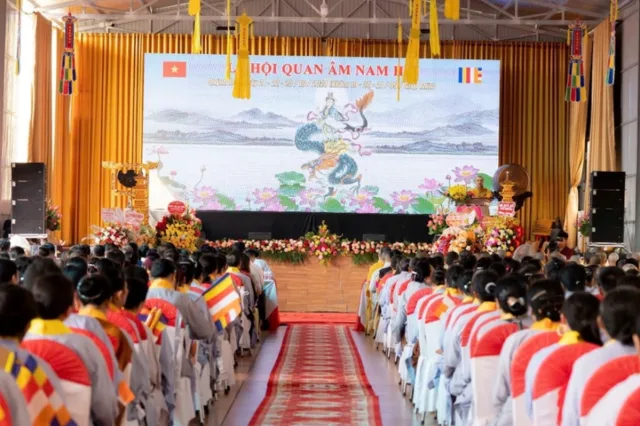
Lược sử
Từ những thế kỷ đầu Công nguyên, cùng với quá trình du nhập và phát triển của Phật giáo tại Việt Nam, hình tượng Bồ tát Quan Thế Âm đã dần trở thành một biểu tượng tôn giáo và văn hóa có sức ảnh hưởng sâu rộng trong đời sống tinh thần của nhân dân. Trong Phật giáo Đại thừa, Bồ tát Quan Thế Âm được tôn kính là hiện thân của lòng từ bi vô lượng, luôn lắng nghe tiếng kêu cứu của chúng sinh để cứu khổ cứu nạn. Tư tưởng ấy được thể hiện rõ trong phẩm Phổ Môn của kinh Diệu Pháp Liên Hoa. Khi hòa quyện với nền văn hóa bản địa giàu yếu tố mẫu hệ và tín ngưỡng thờ Mẫu của người Việt, hình tượng Quan Thế Âm nhanh chóng được tiếp nhận, bản địa hóa và trở thành một trong những đối tượng tín ngưỡng phổ biến nhất trong dân gian, đặc biệt tại các cộng đồng cư dân ven biển.
Tại vùng biển Quỳnh Lưu, chùa Ngọc Lâm (An Thái) từ lâu đã là trung tâm sinh hoạt tín ngưỡng và văn hóa quan trọng của cư dân địa phương. Trong tâm thức người dân, Đức Quan Âm không chỉ là vị Bồ tát cứu độ chúng sinh khỏi tai ương, bệnh tật, hoạn nạn mà còn là đấng từ mẫu luôn che chở, bảo hộ cho con người trong cuộc sống thường nhật. Đối với ngư dân miền biển, niềm tin vào Phật Bà Nam Hải càng trở nên thiêng liêng hơn, bởi mỗi chuyến vươn khơi đều phải đối mặt với những bất trắc của thiên nhiên và biển cả. Hình tượng Quan Âm Nam Hải vì thế được xem như vị thần hộ mệnh, mang lại bình an, may mắn và chỗ dựa tinh thần cho những người mưu sinh trên biển.
Trong đời sống văn hóa dân gian Việt Nam, hình tượng Quan Thế Âm đã được phản ánh sâu sắc qua nhiều tác phẩm văn học, truyền thuyết và tín ngưỡng dân gian. Những câu chuyện như Quan Âm Thị Kính, Quan Âm Tọa Sơn, Đức Chúa Ba chùa Hương Tích hay Quan Âm Nam Hải đều thể hiện lý tưởng từ bi cứu khổ của Bồ tát dưới những hình thức gần gũi với đời sống người Việt. Chính từ nền tảng tín ngưỡng đó, lễ hội Quan Âm Nam Hải tại chùa Ngọc Lâm đã được phục dựng và duy trì như một nét sinh hoạt văn hóa – tâm linh đặc sắc của cư dân vùng biển Nghệ An. Thấu hiểu những khát vọng và đời sống tinh thần của ngư dân địa phương, Đại đức Thích Minh Hải, trụ trì chùa Ngọc Lâm, đã khởi xướng việc phục dựng lễ hội Quan Âm Nam Hải.
Diễn biến lễ hội
Hiện nay, lễ hội được tổ chức thường niên từ ngày 18 đến ngày 21 tháng Chín âm lịch. Bên cạnh đó, chùa còn long trọng tổ chức các ngày lễ quan trọng gắn với tín ngưỡng Quan Âm như lễ Khánh đản Quan Thế Âm vào ngày 19 tháng Hai âm lịch và lễ kỷ niệm ngày Quan Âm thành đạo vào ngày 19 tháng Sáu âm lịch.
Lễ hội Quan Âm Nam Hải mang đậm dấu ấn giao thoa giữa Phật giáo với tín ngưỡng dân gian truyền thống. Phần lễ bao gồm nhiều nghi thức tâm linh đặc sắc như nghinh thỉnh chư Phật, chư Thánh và Hội đồng thần linh; thỉnh Thủy phủ Thánh đế, Hà Bá, Long Vương, Thủy Tiên Thánh Mẫu, Động Đình Thủy Tề, Đức Ông Đông Hải; tổ chức lễ Ngũ bách danh Quan Âm trên đỉnh núi Phượng Hoàng; đồng thời lập đàn cầu siêu, chiêu hồn cho những người gặp nạn trên biển tại các cửa lạch trong toàn huyện. Những nghi lễ này phản ánh rõ nét đặc trưng văn hóa của cư dân miền biển, nơi tín ngưỡng Phật giáo hòa quyện với niềm tin dân gian về các vị thần cai quản sông nước.
Điểm nhấn quan trọng nhất của lễ hội là nghi thức rước kiệu Quan Âm. Trong không khí trang nghiêm, đoàn rước với kiệu bát cống, long đình và Phật đình cung nghinh tôn tượng Quan Âm tuần du qua các khu dân cư, sau đó tiến ra cửa biển Ngọc Lâm rồi trở về chùa. Trên suốt hành trình, người dân hai bên đường đều lập hương án nghinh đón, thành kính dâng hương và cầu nguyện cho quốc thái dân an, gia đình hạnh phúc, những chuyến ra khơi được thuận buồm xuôi gió, tôm cá đầy khoang.
Bên cạnh phần lễ, phần hội cũng được tổ chức phong phú với nhiều hoạt động văn hóa dân gian đặc sắc. Các chương trình diễn xướng thực hành tín ngưỡng thờ Mẫu, tái hiện sự tích Quan Âm Nam Hải, kể chuyện Quan Âm Thị Kính cùng các trò chơi dân gian như kéo co, vá lưới, đắp đê, hoạt cảnh thuyền chài… không chỉ góp phần bảo tồn các giá trị văn hóa truyền thống mà còn tôn vinh vẻ đẹp cần cù, nhân hậu của người phụ nữ và cư dân vùng biển. Thông qua các hoạt động này, lễ hội trở thành dịp để cộng đồng cùng nhau gìn giữ bản sắc văn hóa địa phương, khơi dậy niềm tự hào về quê hương và truyền thống lao động gắn bó với biển cả.
Không chỉ mang ý nghĩa tín ngưỡng, lễ hội Quan Âm Nam Hải còn là dịp để lan tỏa những giá trị nhân văn và ý thức trách nhiệm đối với môi trường sinh thái biển. Trong những năm gần đây, Ban Trị sự Giáo hội Phật giáo Việt Nam tỉnh Nghệ An phối hợp với các cơ quan chức năng tổ chức nhiều hoạt động ý nghĩa trong khuôn khổ lễ hội như phóng sinh tái tạo nguồn lợi thủy sản, tuyên truyền bảo vệ môi trường biển, hạn chế rác thải nhựa, ứng phó biến đổi khí hậu và bảo tồn hệ sinh thái biển. Đồng thời, các chương trình tuyên truyền về chủ quyền biển đảo, an ninh mạng, phòng cháy chữa cháy, cứu nạn cứu hộ và chống khai thác hải sản bất hợp pháp (IUU) cũng được lồng ghép triển khai, góp phần nâng cao nhận thức cộng đồng và xây dựng đời sống văn hóa bền vững cho cư dân ven biển.
Ngày nay, lễ hội Quan Âm Nam Hải không chỉ là một sinh hoạt tín ngưỡng đặc sắc của Phật tử và nhân dân vùng biển Quỳnh Lưu mà còn là một di sản văn hóa mang giá trị lịch sử, xã hội và nhân văn sâu sắc. Lễ hội phản ánh sinh động đời sống tinh thần của cộng đồng cư dân miền biển, đồng thời góp phần bảo tồn, phát huy những giá trị văn hóa truyền thống trong bối cảnh phát triển và hội nhập đương đại.
Tài liệu tham khảo
- Nguyễn Đại Đồng, Thích Thọ Lạc (Đồng Chủ biên) (2021), Lịch sử Phật giáo Nghệ An, Nxb Tôn Giáo.
- Tư liệu Lịch sử chùa An Thái do Đại đức Thích Minh Hải cung cấp.
Ngôn ngữ khác
Tiếng Anh (English)
Historical Overview
From the early centuries of the Common Era, together with the introduction and development of Buddhism in Vietnam, the image of Bodhisattva Avalokiteśvara, known in Vietnamese as Quan Thế Âm, gradually became a religious and cultural symbol with far-reaching influence in the spiritual life of the people. In Mahāyāna Buddhism, Bodhisattva Avalokiteśvara is revered as the embodiment of boundless compassion, always listening to the cries for help of sentient beings in order to relieve suffering and rescue them from calamity. This idea is clearly expressed in the Universal Gate Chapter of the Lotus Sutra. When blended with the indigenous culture of Vietnam, which is rich in matriarchal elements and the Mother Goddess worship tradition, the image of Quan Thế Âm was quickly received, localized, and became one of the most popular objects of folk belief, especially among coastal communities.
In the coastal area of Quỳnh Lưu, Ngọc Lâm Pagoda, also known as An Thái Pagoda, has long been an important center of religious and cultural life for the local population. In the minds of the people, Đức Quan Âm is not only the Bodhisattva who saves sentient beings from disasters, illness, and misfortune, but also a compassionate mother who constantly shelters and protects people in their daily lives. For coastal fishermen, faith in Phật Bà Nam Hải becomes even more sacred, because every voyage out to sea involves facing the uncertainties of nature and the ocean. The image of Quan Âm Nam Hải is therefore regarded as a guardian deity, bringing peace, good fortune, and spiritual support to those who make their living at sea.
In Vietnamese folk culture, the image of Quan Thế Âm has been deeply reflected in many literary works, legends, and popular beliefs. Stories such as Quan Âm Thị Kính, Quan Âm Tọa Sơn, Đức Chúa Ba of Hương Tích Pagoda, and Quan Âm Nam Hải all express the Bodhisattva’s ideal of compassionate salvation in forms that are close to the life of the Vietnamese people. It is from this foundation of belief that the Quan Âm Nam Hải Festival at Ngọc Lâm Pagoda has been restored and maintained as a distinctive cultural and spiritual activity of the coastal residents of Nghệ An. Understanding the aspirations and spiritual life of the local fishing community, Venerable Thích Minh Hải, abbot of Ngọc Lâm Pagoda, initiated the restoration of the Quan Âm Nam Hải Festival.
Festival Proceedings
At present, the festival is held annually from the 18th to the 21st day of the ninth lunar month. In addition, the pagoda also solemnly organizes important observances associated with the belief in Quan Âm, such as the celebration of Quan Thế Âm’s birth on the 19th day of the second lunar month and the commemoration of Quan Âm’s attainment of enlightenment on the 19th day of the sixth lunar month.
The Quan Âm Nam Hải Festival bears a strong mark of interaction between Buddhism and traditional folk belief. The ceremonial part includes many distinctive spiritual rites, such as inviting and welcoming the Buddhas, the Saints, and the Council of deities; inviting the Holy Emperor of the Water Palace, Hà Bá, the Dragon King, Thủy Tiên Thánh Mẫu, the Water Court of Động Đình, and Đức Ông Đông Hải; holding the rite of the Five Hundred Names of Quan Âm on the summit of Phượng Hoàng Mountain; and setting up altars to pray for salvation and summon the souls of those who have met with accidents at sea at the river mouths throughout the district. These rituals clearly reflect the cultural characteristics of coastal residents, where Buddhist belief is interwoven with folk faith in the deities who govern rivers and waters.
The most important highlight of the festival is the Quan Âm palanquin procession. In a solemn atmosphere, the procession, with a bát cống palanquin, long đình, and Phật đình, reverently escorts the sacred image of Quan Âm through residential areas, then proceeds to the Ngọc Lâm sea gate before returning to the pagoda. Throughout the journey, residents along both sides of the road set up incense altars to welcome the procession, respectfully offer incense, and pray for peace and prosperity for the nation, happiness for families, favorable winds and calm seas for voyages, and boats filled with shrimp and fish.
Alongside the ceremonial part, the festive part is also richly organized with many distinctive folk cultural activities. Performances of Mother Goddess worship practices, reenactments of the legend of Quan Âm Nam Hải, storytelling about Quan Âm Thị Kính, and folk games such as tug of war, net-mending, dyke-building, and fishing-boat scenes not only contribute to preserving traditional cultural values but also honor the industrious and kind-hearted beauty of women and coastal residents. Through these activities, the festival becomes an occasion for the community to preserve local cultural identity together, awaken pride in their homeland, and uphold the labor traditions closely connected with the sea.
The Quan Âm Nam Hải Festival is not only significant in terms of religious belief, but also serves as an occasion to spread humanistic values and a sense of responsibility toward the marine ecological environment. In recent years, the Executive Board of the Vietnam Buddhist Sangha in Nghệ An Province has coordinated with relevant authorities to organize many meaningful activities within the framework of the festival, such as releasing aquatic creatures to help restore fishery resources, raising awareness about marine environmental protection, reducing plastic waste, responding to climate change, and conserving marine ecosystems. At the same time, programs promoting awareness of maritime and island sovereignty, cybersecurity, fire prevention and fighting, rescue and relief work, and the prevention of illegal, unreported, and unregulated fishing (IUU) have also been integrated and implemented, contributing to raising community awareness and building a sustainable cultural life for coastal residents.
Today, the Quan Âm Nam Hải Festival is not only a distinctive religious activity of Buddhists and the people of the Quỳnh Lưu coastal region, but also a cultural heritage with profound historical, social, and humanistic value. The festival vividly reflects the spiritual life of coastal communities, while also contributing to the preservation and promotion of traditional cultural values in the context of contemporary development and integration.
References
- Nguyễn Đại Đồng, Thích Thọ Lạc (Đồng Chủ biên) (2021), Lịch sử Phật giáo Nghệ An, Nxb Tôn Giáo.
- Tư liệu Lịch sử chùa An Thái do Đại đức Thích Minh Hải cung cấp.
Tiếng Pháp (Français)
Bref historique
Dès les premiers siècles de notre ère, parallèlement au processus d’introduction et de développement du bouddhisme au Vietnam, l’image du bodhisattva Quan Thế Âm est progressivement devenue un symbole religieux et culturel exerçant une influence profonde dans la vie spirituelle du peuple. Dans le bouddhisme du Grand Véhicule, le bodhisattva Quan Thế Âm est vénéré comme l’incarnation de la compassion infinie, toujours à l’écoute des appels au secours des êtres afin de les délivrer de la souffrance et des calamités. Cette pensée est clairement exprimée dans le chapitre Phổ Môn du Sūtra du Lotus. En se mêlant à la culture autochtone, riche en éléments matriarcaux et en croyances vietnamiennes liées au culte des Mères, l’image de Quan Thế Âm fut rapidement reçue, localisée et devint l’un des objets de croyance les plus populaires dans la tradition populaire, en particulier au sein des communautés côtières.
Dans la région maritime de Quỳnh Lưu, la pagode Ngọc Lâm, également appelée An Thái, constitue depuis longtemps un centre important de vie religieuse et culturelle pour les habitants locaux. Dans la conscience populaire, Đức Quan Âm n’est pas seulement le bodhisattva qui sauve les êtres des catastrophes, des maladies et des malheurs, mais aussi une mère compatissante qui protège et abrite les hommes dans leur vie quotidienne. Pour les pêcheurs du littoral, la foi en Phật Bà Nam Hải devient encore plus sacrée, car chaque sortie en mer les confronte aux incertitudes de la nature et de l’océan. L’image de Quan Âm Nam Hải est ainsi considérée comme une divinité tutélaire, apportant paix, chance et soutien spirituel à ceux qui vivent de la mer.
Dans la vie culturelle populaire vietnamienne, l’image de Quan Thế Âm a été profondément reflétée à travers de nombreuses œuvres littéraires, légendes et croyances populaires. Des récits tels que Quan Âm Thị Kính, Quan Âm Tọa Sơn, Đức Chúa Ba de la pagode Hương Tích ou Quan Âm Nam Hải expriment tous l’idéal de compassion et de salut du bodhisattva sous des formes proches de la vie du peuple vietnamien. C’est sur ce fondement de croyance que la fête de Quan Âm Nam Hải à la pagode Ngọc Lâm a été restaurée et maintenue comme une activité culturelle et spirituelle caractéristique des habitants du littoral de Nghệ An. Comprenant les aspirations et la vie spirituelle des pêcheurs locaux, le Vénérable Thích Minh Hải, supérieur de la pagode Ngọc Lâm, a pris l’initiative de restaurer la fête de Quan Âm Nam Hải.
Déroulement de la fête
Actuellement, la fête est organisée chaque année du 18e au 21e jour du neuvième mois lunaire. En outre, la pagode organise solennellement d’autres cérémonies importantes liées à la croyance en Quan Âm, telles que la célébration de la naissance de Quan Thế Âm le 19e jour du deuxième mois lunaire et la commémoration du jour où Quan Âm atteignit l’Éveil, le 19e jour du sixième mois lunaire.
La fête de Quan Âm Nam Hải porte fortement l’empreinte de l’interaction entre le bouddhisme et les croyances populaires traditionnelles. La partie rituelle comprend de nombreux rites spirituels caractéristiques, tels que l’accueil et l’invitation des Bouddhas, des Saints et du Conseil des divinités ; l’invitation du Saint Empereur du Palais des Eaux, de Hà Bá, du Roi Dragon, de Thủy Tiên Thánh Mẫu, de Động Đình Thủy Tề et de Đức Ông Đông Hải ; l’organisation du rite des Cinq Cents Noms de Quan Âm au sommet du mont Phượng Hoàng ; ainsi que l’établissement d’autels de prière pour le salut et l’appel des âmes des personnes victimes d’accidents en mer aux embouchures de tout le district. Ces rites reflètent clairement les caractéristiques culturelles des habitants du littoral, où la foi bouddhique se mêle aux croyances populaires envers les divinités gouvernant les fleuves et les eaux.
Le moment le plus important de la fête est le rituel de procession du palanquin de Quan Âm. Dans une atmosphère solennelle, le cortège, avec le palanquin bát cống, le long đình et le Phật đình, accompagne respectueusement la statue sacrée de Quan Âm à travers les quartiers d’habitation, puis se dirige vers l’embouchure maritime de Ngọc Lâm avant de revenir à la pagode. Tout au long du parcours, les habitants des deux côtés de la route dressent des autels d’encens pour accueillir la procession, offrent respectueusement de l’encens et prient pour la paix du pays et du peuple, le bonheur des familles, des sorties en mer favorisées par les vents et les courants, et des bateaux remplis de crevettes et de poissons.
À côté de la partie rituelle, la partie festive est également organisée de manière riche, avec de nombreuses activités culturelles populaires caractéristiques. Les programmes de représentation des pratiques liées au culte des Mères, la reconstitution de la légende de Quan Âm Nam Hải, le récit de l’histoire de Quan Âm Thị Kính, ainsi que les jeux populaires tels que le tir à la corde, le raccommodage des filets, la construction de digues, les scènes de bateaux de pêche, etc., contribuent non seulement à préserver les valeurs culturelles traditionnelles, mais aussi à honorer la beauté laborieuse et bienveillante des femmes et des habitants du littoral. À travers ces activités, la fête devient une occasion pour la communauté de préserver ensemble l’identité culturelle locale, d’éveiller la fierté du pays natal et des traditions de travail étroitement liées à la mer.
Au-delà de sa signification religieuse, la fête de Quan Âm Nam Hải est aussi l’occasion de diffuser des valeurs humanistes et le sens de la responsabilité envers l’environnement écologique marin. Ces dernières années, le Comité exécutif de l’Église bouddhique du Vietnam de la province de Nghệ An, en coordination avec les organismes compétents, a organisé de nombreuses activités significatives dans le cadre de la fête, telles que la libération d’êtres vivants afin de régénérer les ressources aquatiques, la sensibilisation à la protection de l’environnement marin, la limitation des déchets plastiques, la réponse au changement climatique et la préservation des écosystèmes marins. En même temps, des programmes de sensibilisation à la souveraineté maritime et insulaire, à la cybersécurité, à la prévention et à la lutte contre les incendies, au sauvetage et aux secours, ainsi qu’à la lutte contre la pêche illégale, non déclarée et non réglementée (INN/IUU), sont également intégrés et mis en œuvre, contribuant à élever la conscience communautaire et à construire une vie culturelle durable pour les habitants du littoral.
Aujourd’hui, la fête de Quan Âm Nam Hải n’est pas seulement une activité religieuse caractéristique des bouddhistes et des habitants de la région maritime de Quỳnh Lưu, mais aussi un patrimoine culturel porteur de profondes valeurs historiques, sociales et humanistes. La fête reflète de manière vivante la vie spirituelle des communautés côtières, tout en contribuant à préserver et à promouvoir les valeurs culturelles traditionnelles dans le contexte du développement et de l’intégration contemporains.
Références
- Nguyễn Đại Đồng, Thích Thọ Lạc (Đồng Chủ biên) (2021), Lịch sử Phật giáo Nghệ An, Nxb Tôn Giáo.
- Tư liệu Lịch sử chùa An Thái do Đại đức Thích Minh Hải cung cấp.
Tiếng Trung (中文)
简史
自公元初几个世纪以来,随着佛教传入并在越南发展,观世音菩萨的形象逐渐成为一种宗教与文化象征,对人民的精神生活产生了深远影响。在大乘佛教中,观世音菩萨被尊奉为无量慈悲的化身,常常倾听众生的求救之声,以救苦救难。这一思想在《妙法莲华经·普门品》中有着鲜明体现。当观世音信仰与越南本土文化中浓厚的母系因素及母神崇拜相融合时,观世音形象很快被接纳、本土化,并成为民间最为普遍的信仰对象之一,尤其在沿海居民群体中更为突出。
在琼琉沿海地区,玉林寺(安泰寺)长期以来一直是当地居民重要的信仰与文化活动中心。在民众心中,观音菩萨不仅是救度众生脱离灾厄、疾病和患难的菩萨,也是如慈母一般时刻庇护、护佑人们日常生活的神圣存在。对于沿海渔民而言,对南海佛母的信仰更显神圣,因为每一次出海都必须面对自然与大海的种种不测。因此,南海观音的形象被视为守护神,为以海为生的人们带来平安、幸运和精神依靠。
在越南民间文化生活中,观世音形象通过诸多文学作品、传说和民间信仰得到深刻反映。诸如《观音氏敬》、坐山观音、香迹寺第三公主以及南海观音等故事,都以贴近越南人民生活的形式,体现了菩萨慈悲救苦的理想。正是在这一信仰基础上,玉林寺南海观音节得以恢复并延续,成为乂安沿海居民一种独具特色的文化与心灵活动。体察当地渔民的愿望与精神生活,玉林寺住持释明海大德发起了恢复南海观音节的工作。
节庆活动过程
目前,该节庆每年于农历九月十八日至二十一日举行。此外,寺院还隆重举行与观音信仰相关的重要节日,如农历二月十九日观世音圣诞,以及农历六月十九日观音成道纪念日。
南海观音节鲜明体现了佛教与传统民间信仰之间的交融。礼仪部分包括多种独具特色的精神仪式,如迎请诸佛、诸圣及神灵会众;奉请水府圣帝、河伯、龙王、水仙圣母、洞庭水齐、东海德翁;在凤凰山顶举行观音五百名法会;同时在全县各河海口设坛超度、招魂,追荐海上遇难者。这些仪式清晰反映了沿海居民的文化特征,即佛教信仰与民间关于江河水域诸神的信仰相互融合。
节庆中最重要的亮点是观音圣轿巡游仪式。在庄严的氛围中,巡游队伍以八贡轿、龙亭和佛亭恭迎观音圣像,巡行各居民区,随后前往玉林海口,再返回寺院。整个行程中,道路两旁的民众皆设香案迎接,虔诚上香,并祈愿国泰民安、家庭幸福、出海顺风顺水、鱼虾满舱。
除礼仪部分外,节庆活动也十分丰富,包含许多独具特色的民间文化内容。母神信仰实践表演、南海观音事迹再现、观音氏敬故事讲述,以及拔河、补网、筑堤、渔船情景表演等民间游戏和活动,不仅有助于保存传统文化价值,也赞颂了妇女和沿海居民勤劳、仁厚的美好品格。通过这些活动,节庆成为社区共同守护地方文化身份、唤起乡土自豪感以及传承与海洋密切相连的劳动传统的重要契机。
南海观音节不仅具有信仰意义,也是传播人文价值和海洋生态环境责任意识的契机。近年来,越南佛教教会乂安省治事委员会与有关职能机关协同,在节庆框架内组织了许多有意义的活动,如放生以恢复水产资源、宣传保护海洋环境、减少塑料垃圾、应对气候变化以及保护海洋生态系统。同时,有关海岛主权、网络安全、消防安全、救援救助以及反对非法、不报告和不受管制捕捞(IUU)的宣传项目也被融入实施,有助于提升社区意识,并为沿海居民建设可持续的文化生活。
如今,南海观音节不仅是琼琉沿海地区佛教徒和民众独具特色的信仰活动,也是一项具有深厚历史、社会和人文价值的文化遗产。该节庆生动反映了沿海居民共同体的精神生活,同时也在当代发展与融合背景下,为保存和弘扬传统文化价值作出贡献。
参考资料
- Nguyễn Đại Đồng, Thích Thọ Lạc (Đồng Chủ biên) (2021), Lịch sử Phật giáo Nghệ An, Nxb Tôn Giáo.
- Tư liệu Lịch sử chùa An Thái do Đại đức Thích Minh Hải cung cấp.