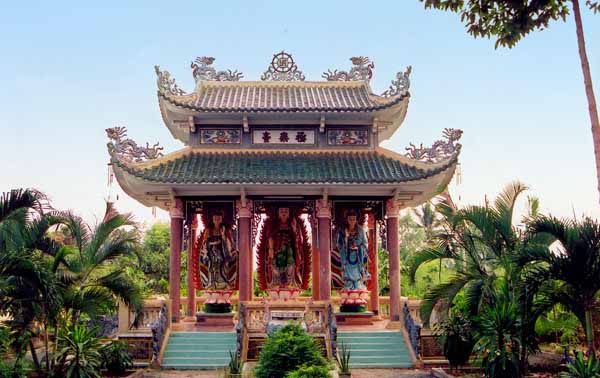


Thân thế
Lê Văn Duyệt sinh năm 1763 hoặc 1764 tại làng Hòa Khánh, tổng Phong Hòa, huyện Kiến Đăng, phủ Kiến An, trấn Định Tường (nay thuộc xã Cái Bè, tỉnh Đồng Tháp). Tổ tiên của ông vốn là người làng Bồ Đề, huyện Chương Nghĩa (nay thuộc huyện Mộ Đức, tỉnh Quảng Ngãi). Ông nội là Lê Văn Hiếu di cư vào vùng Định Tường khai khẩn và lập nghiệp. Sau khi Lê Văn Hiếu qua đời vì dịch bệnh, cha ông là Lê Văn Toại chuyển đến sinh sống tại vùng Rạch Gầm, làng Long Hưng, huyện Kiến Hưng, trấn Định Tường (nay thuộc tỉnh Đồng Tháp).
Ông là một trong những tướng lĩnh chủ chốt phò tá Nguyễn Ánh trong cuộc chiến với nhà Tây Sơn, góp phần quan trọng vào quá trình thống nhất đất nước và thành lập triều Nguyễn năm 1802. Dưới hai triều vua Gia Long và Minh Mạng, Lê Văn Duyệt giữ nhiều chức vụ trọng yếu trong quân sự và hành chính, từng nhiều lần được cử trấn giữ Bắc Thành và hai lần đảm nhiệm chức Tổng trấn Gia Định, có ảnh hưởng lớn đến việc quản lý và phát triển vùng Nam Bộ đầu thế kỷ XIX.
Sự nghiệp
Theo phò Nguyễn Ánh và những năm đầu binh nghiệp
Sự nghiệp của Lê Văn Duyệt bắt đầu trong bối cảnh cuộc chiến giữa chúa Nguyễn và nhà Tây Sơn đang diễn ra quyết liệt. Năm 1780, khi Nguyễn Phúc Ánh bị quân Tây Sơn truy kích phải lánh nạn tại vùng Trà Lọt, ông đã được gia đình Lê Văn Toại cưu mang, che chở. Để ghi nhận ân nghĩa ấy, Nguyễn Ánh thu nhận Lê Văn Duyệt vào phục vụ trong nội phủ với chức thái giám, giao nhiệm vụ bảo vệ cung quyến. Khi đó, Lê Văn Duyệt mới khoảng mười sáu tuổi. Sự kiện này không chỉ đánh dấu bước khởi đầu trong cuộc đời binh nghiệp của ông mà còn mở ra mối quan hệ gắn bó lâu dài với Nguyễn Ánh, người sau này trở thành vua Gia Long.
Trong những năm đầu theo phò Nguyễn Ánh, Lê Văn Duyệt luôn kề cận chủ tướng trong hoàn cảnh vô cùng gian nan. Theo Quốc triều sử toát yếu, trong một trận giao chiến tại Đồng Văn, ông từng bị quân Tây Sơn bắt giữ nhưng đã tìm cách trốn thoát để tiếp tục trở về với lực lượng của Nguyễn Ánh. Tháng 11 năm 1784, ông gặp lại Nguyễn Ánh và từ đó trở thành một trong những cận thần thân tín nhất. Trong giai đoạn Nguyễn Ánh nhiều lần phải sang Xiêm cầu viện, Lê Văn Duyệt cũng hai lần hộ giá, cùng chia sẻ những năm tháng lưu vong đầy khó khăn. Chính quá trình đồng cam cộng khổ này đã tạo dựng niềm tin đặc biệt của Nguyễn Ánh đối với ông.
Đến năm 1787, khi Nguyễn Ánh trở lại Gia Định để khôi phục lực lượng, Lê Văn Duyệt chủ động xin chiêu mộ binh lính và trực tiếp tham gia quân đội. Từ đây, ông chuyển từ vai trò một người hầu cận trong nội phủ sang một võ tướng thực thụ. Nhờ sự dũng cảm, quyết đoán và tài năng quân sự, ông nhanh chóng lập được nhiều chiến công, đặt nền móng cho sự nghiệp lẫy lừng sau này.
Làm quan dưới hai triều vua
- Triều vua Gia Long (1802–1820)
Sau khi nhà Nguyễn được thành lập năm 1802, Lê Văn Duyệt từ một võ tướng chinh chiến trở thành một trong những công thần giữ vai trò quan trọng trong việc củng cố chính quyền mới. Với uy tín được tạo dựng từ những chiến công trong cuộc chiến chống Tây Sơn, ông được vua Gia Long đặc biệt tín nhiệm, giao phó nhiều trọng trách về quân sự, hành chính và quốc phòng tại các địa bàn chiến lược.
Ngay trong năm Gia Long thứ hai (1803), Lê Văn Duyệt đã thể hiện sự thẳng thắn và tinh thần trọng chữ tín khi dâng sớ nhắc lại lời hứa trước đây của Nguyễn Ánh với tướng sĩ rằng sau khi thu phục được kinh đô sẽ cho quân lính trở về nghỉ ngơi. Nay đất nước đã thống nhất, từ Phú Xuân đến Bắc Hà đều thuộc quyền cai quản của triều Nguyễn, ông cho rằng nếu không thực hiện lời hứa sẽ làm suy giảm lòng tin của quân sĩ và ảnh hưởng đến lòng người ở Nam Hà. Tuy kiến nghị này không được Gia Long chấp thuận, nhưng qua đó có thể thấy Lê Văn Duyệt luôn quan tâm đến đời sống binh lính và coi trọng việc giữ chữ tín giữa người cầm quyền với thuộc hạ.
Trong những năm đầu triều Gia Long, ông tiếp tục được giao nhiệm vụ trấn áp các cuộc nổi dậy ở miền Trung, đặc biệt là tại vùng Đá Vách (Quảng Ngãi). Năm 1803, ông nhanh chóng dẹp yên cuộc nổi dậy của các nhóm cư dân miền núi và được nhà vua ban thưởng. Đến năm 1808, khi tình hình khu vực này lại trở nên bất ổn, Gia Long tiếp tục cử Lê Văn Duyệt đem quân đến xử lý. Sau khi điều tra nguyên nhân, ông nhận thấy cuộc nổi dậy không hoàn toàn xuất phát từ sự chống đối của người dân mà do viên Phó quản cơ Lê Quốc Huy hà hiếp, bóc lột khiến dân chúng phẫn uất. Vì vậy, ông xin triều đình xử chém viên quan này để ổn định lòng dân. Sau khi yêu cầu được chấp thuận, tình hình Quảng Ngãi nhanh chóng trở lại yên ổn. Cách xử lý này cho thấy Lê Văn Duyệt không chỉ sử dụng biện pháp quân sự mà còn chú trọng giải quyết tận gốc nguyên nhân dẫn đến bất ổn xã hội.
Năm 1809, ông gặp phải một biến cố trong quan trường khi Tham luận Nguyễn Văn Tài vì bất mãn sau khi bị khiển trách đã vu cáo ông có ý mưu phản. Sau quá trình điều tra, triều đình kết luận đây là lời vu cáo, Nguyễn Văn Tài bị xử tử, còn uy tín của Lê Văn Duyệt không những không suy giảm mà còn được củng cố. Tuy nhiên, sự việc cũng phản ánh rõ tính cách cương trực, nghiêm khắc của ông. Theo sử sách, quân sĩ dưới quyền đều hết sức kính sợ, các quan đồng liêu cũng ít người dám trái ý. Chính phong cách làm việc nghiêm minh ấy giúp ông duy trì kỷ cương trong quân đội, song đồng thời cũng khiến ông không tránh khỏi những mâu thuẫn với một số quan lại trong triều.
Một bước ngoặt quan trọng trong sự nghiệp của Lê Văn Duyệt diễn ra vào năm 1812, khi vua Gia Long bổ nhiệm ông giữ chức Tổng trấn Gia Định thành, kiêm quản cả Bình Thuận và Hà Tiên. Đây là một trong những chức vụ quan trọng nhất của triều Nguyễn lúc bấy giờ, bởi Gia Định không chỉ là trung tâm kinh tế lớn nhất phương Nam mà còn là khu vực giữ vị trí chiến lược trong quan hệ với Chân Lạp và Xiêm. Cùng với Phó Tổng trấn Trương Tấn Bửu và Hiệp trấn Ngô Nhân Tịnh, Lê Văn Duyệt từng bước ổn định bộ máy cai trị tại Nam Bộ, tạo nền tảng cho sự phát triển lâu dài của vùng đất này.
Năm 1813, ông được giao chỉ huy hơn mười ba nghìn quân hộ tống vua Nặc Chân trở về Chân Lạp. Trong quá trình thực hiện nhiệm vụ, Lê Văn Duyệt nhận thấy sự đe dọa thường xuyên của Xiêm đối với quốc gia láng giềng nên đã chủ động đề nghị Gia Long cho xây dựng thành Nam Vang làm nơi đóng đô của vua Chân Lạp, đồng thời xây thành Lô Yêm để tích trữ lương thực và bố trí quân đội Đại Nam ở lại bảo hộ. Những đề xuất này đều được Gia Long chấp thuận. Chính sách ấy không chỉ giúp ổn định tình hình Chân Lạp mà còn góp phần mở rộng ảnh hưởng của triều Nguyễn tại khu vực Tây Nam, đồng thời thiết lập một vành đai an ninh nhằm hạn chế sự can thiệp của Xiêm vào bán đảo Đông Dương.
Sau khi trở về Gia Định, Lê Văn Duyệt tập trung chấn chỉnh bộ máy hành chính, duy trì trật tự xã hội và xử lý nghiêm các loại tội phạm. Dưới sự điều hành của ông, Gia Định tiếp tục phát triển ổn định, trở thành căn cứ kinh tế và quân sự quan trọng nhất của triều Nguyễn ở phương Nam.
Trong những năm cuối triều Gia Long, Lê Văn Duyệt vẫn giữ vai trò đặc biệt quan trọng trong triều chính. Năm 1815, ông được triệu về kinh để tham gia bàn định việc lập người kế vị. Đến năm 1819, ông được cử làm Kinh lược Thanh Hóa, Nghệ An và Thanh Bình nhằm ổn định tình hình tại các địa phương thường xuyên mất mùa và xảy ra nạn trộm cướp. Sau khi khảo sát thực tế, ông dâng sớ xin giảm thuế cho dân và đề nghị lựa chọn những viên quan có năng lực để cai trị các địa phương này. Những kiến nghị ấy đều được Gia Long chấp thuận, phản ánh quan điểm quản lý lấy việc an dân làm trọng của ông.
Cũng trong thời gian kinh lược miền Bắc, Lê Văn Duyệt thu nhận Lê Văn Khôi làm con nuôi sau khi người này ra hàng triều đình. Đồng thời, ông chủ trương tiếp nhận những người từng chống đối nhưng biết quy thuận, tổ chức họ thành các đơn vị quân đội mới để phục vụ triều đình. Chính sách vừa khoan dung vừa thực dụng này giúp triều Nguyễn nhanh chóng ổn định tình hình sau nhiều năm chiến tranh liên miên.
Cuối năm 1819, trước khi qua đời, vua Gia Long triệu Lê Văn Duyệt cùng Thượng thư Phạm Đăng Hưng vào cung để nhận di chiếu, tôn Hoàng tử Nguyễn Phúc Đảm lên nối ngôi, tức vua Minh Mạng. Đồng thời, ông được giao thống lĩnh năm dinh Thần Sách, cho thấy Lê Văn Duyệt vẫn là một trong những đại thần được Gia Long tin cậy nhất cho đến cuối triều đại. Cũng trong năm này, theo đề nghị của ông, triều đình cho xây dựng Trường Lũy kéo dài từ Quảng Ngãi đến Bình Định nhằm kiểm soát vùng miền núi và phòng ngừa các cuộc nổi dậy của cư dân thiểu số. Công trình này vừa có ý nghĩa quân sự, vừa góp phần củng cố hệ thống quản lý hành chính của triều Nguyễn ở khu vực miền Trung.
- Triều vua Minh Mạng (1820–1832)
Sau khi vua Gia Long qua đời, Hoàng tử Nguyễn Phúc Đảm lên ngôi, lấy niên hiệu Minh Mạng. Giữa Minh Mang và Lê Văn Duyệt thường xuất hiện nhiều bất đồng trong quan điểm trị nước, song ở những năm đầu triều đại, Minh Mạng vẫn hết sức tin tưởng và trọng dụng Lê Văn Duyệt. Năm 1820, ông được cử trở lại giữ chức Tổng trấn Gia Định thành lần thứ hai, thay Nguyễn Huỳnh Đức vừa qua đời. Với cương vị này, Lê Văn Duyệt được trao quyền rất lớn trong việc điều hành toàn bộ vùng Nam Bộ. Ông được phép chủ động quyết định việc bổ nhiệm, bãi miễn quan lại địa phương, giải quyết các vấn đề hành chính, kinh tế, quân sự cũng như xử lý các công việc liên quan đến biên giới trước khi tâu báo về triều đình. Điều này cho thấy Gia Định thành vẫn được xem là khu vực đặc biệt quan trọng đối với triều Nguyễn và Lê Văn Duyệt là người duy nhất đủ uy tín để đảm nhiệm trọng trách ấy. Những thuộc hạ từng theo ông trong thời gian kinh lược miền Bắc, như các đội quân Thanh Thuận, An Thuận và Tham hiệp Trần Nhật Vĩnh, cũng được điều vào Gia Định để tiếp tục phục vụ dưới quyền.
Ngay sau khi Minh Mạng lên ngôi, triều đình đang trong thời kỳ quốc hiếu nên nghiêm cấm các nghi lễ tang chế. Đúng lúc ấy, thân phụ của Lê Văn Duyệt qua đời. Xét công lao và địa vị đặc biệt của ông, nhà vua đã đặc cách cho phép ông mặc áo tang để làm tròn đạo hiếu, sau đó tiếp tục trở lại mặc quốc phục theo quy định. Đồng thời, cha của ông cũng được truy tặng hàm Thống chế. Đây là một trong những biểu hiện cho thấy Lê Văn Duyệt vẫn nhận được sự tín nhiệm và ưu đãi đặc biệt của Minh Mạng trong những năm đầu trị vì.
Quân sự và đối ngoại
Trong lĩnh vực quân sự, Lê Văn Duyệt tiếp tục phát huy vai trò của một vị Tổng trấn có nhiều kinh nghiệm. Năm 1820, tại Chân Lạp xuất hiện cuộc nổi dậy do một nhà sư tên Kế lãnh đạo, lực lượng này nhiều lần cướp phá vùng Phiên An rồi tiến sang bao vây thành Nam Vang. Trước tình hình đó, Lê Văn Duyệt trước hết cử Phó Tổng trấn Huỳnh Công Lý đem quân đánh dẹp, buộc lực lượng nổi dậy phải rút về Chân Lạp. Khi quân của sư Kế tiếp tục bao vây Nam Vang và vua Chân Lạp gửi thư cầu cứu, ông lập tức điều Thống chế Nguyễn Văn Trí chỉ huy quân Đại Nam sang cứu viện. Chỉ trong một thời gian ngắn, cuộc nổi dậy bị dập tắt hoàn toàn, sư Kế bị tiêu diệt và tình hình Chân Lạp nhanh chóng được ổn định. Sự kiện này tiếp tục khẳng định chính sách duy trì ảnh hưởng của triều Nguyễn tại Chân Lạp, đồng thời cho thấy khả năng điều hành quân sự linh hoạt của Lê Văn Duyệt trong việc bảo vệ vùng biên giới Tây Nam.
Bên cạnh việc bảo vệ an ninh biên giới, Lê Văn Duyệt còn nổi tiếng với thái độ cương quyết trong việc xử lý quan lại tham nhũng. Cũng trong năm 1820, Phó Tổng trấn Gia Định là Huỳnh Công Lý bị quân lính tố cáo hơn mười tội danh liên quan đến tham ô và lạm quyền. Mặc dù Huỳnh Công Lý là cha vợ của vua Minh Mạng, Lê Văn Duyệt vẫn lập tức tâu sự việc lên triều đình và đề nghị xét xử theo pháp luật. Sau quá trình điều tra, Huỳnh Công Lý bị kết án tử hình vào năm 1821. Việc xử lý nghiêm minh một đại thần có quan hệ thân thích với hoàng gia không chỉ thể hiện tính cương trực, công minh của Lê Văn Duyệt mà còn góp phần củng cố kỷ cương của bộ máy cai trị tại Gia Định.
Kinh tế
Nhằm thúc đẩy sự phát triển kinh tế vùng Nam Bộ, năm 1822 Minh Mạng giao cho Lê Văn Duyệt huy động hơn ba mươi chín nghìn quân dân tiếp tục đào kênh Vĩnh Tế. Công trình được hoàn thành vào năm 1824, trở thành một trong những công trình thủy lợi lớn nhất dưới triều Nguyễn. Tuyến kênh không chỉ tạo điều kiện khai hoang, mở rộng sản xuất nông nghiệp và giao thông đường thủy mà còn có ý nghĩa đặc biệt về quân sự, góp phần bảo vệ biên giới Tây Nam và tăng cường khả năng kiểm soát khu vực giáp Chân Lạp.
Trong thời gian giữ chức Tổng trấn Gia Định, Lê Văn Duyệt cũng thường xuyên tiếp xúc với các sứ đoàn nước ngoài. Năm 1822, sứ giả người Anh John Crawfurd đến Gia Định với mong muốn được ra Huế yết kiến vua Minh Mạng nhằm thiết lập quan hệ ngoại giao. Mặc dù triều đình từ chối đề nghị này, Crawfurd vẫn ghi nhận vai trò và uy tín rất lớn của Lê Văn Duyệt ở phương Nam, đồng thời nhận thấy sự dè dặt và đố kỵ của một số quan lại triều đình đối với vị Tổng trấn quyền lực này. Năm 1823, sứ đoàn Miến Điện do Gibson dẫn đầu cũng được Lê Văn Duyệt tiếp đón tại Gia Định trước khi triều đình quyết định từ chối việc thiết lập quan hệ ngoại giao. Qua những ghi chép của các sứ thần phương Tây, Lê Văn Duyệt được mô tả là một vị quan quyết đoán, nghiêm khắc và có quyền lực rất lớn trong việc điều hành Nam Bộ.
Uy tín ngày càng cao của Lê Văn Duyệt cũng khiến ông nhiều lần vướng vào các vụ việc liên quan đến thuộc hạ. Năm 1823, khi thị vệ Trần Văn Tình bí mật về kinh tố cáo Trần Nhật Vĩnh – một cận thần thân tín của ông – Lê Văn Duyệt đã phản ứng rất quyết liệt, thậm chí tuyên bố sẽ trả lại ấn Tổng trấn nếu triều đình không xử lý người tố cáo. Tuy nhiên, vài năm sau, sau khi triều đình bí mật điều tra và chứng minh Trần Nhật Vĩnh có nhiều hành vi tham nhũng, lạm quyền, cướp đoạt tài sản và ức hiếp dân chúng, chính Lê Văn Duyệt cũng chấp nhận để thuộc hạ bị xử chém vào năm 1828. Sự việc này phản ánh một mặt hạn chế trong việc dùng người của ông, nhưng đồng thời cũng cho thấy triều đình từng bước tăng cường kiểm soát đối với bộ máy dưới quyền Tổng trấn Gia Định.
Đối ngoại
Trong lĩnh vực đối ngoại, Lê Văn Duyệt tiếp tục giữ quan điểm cứng rắn nhằm mở rộng ảnh hưởng của Đại Nam tại khu vực Đông Nam Á lục địa. Năm 1824, khi Chân Lạp xin dâng ba phủ Lợi-kha-vát, Chân Xâm và Mật Luật, ông đề nghị chỉ tiếp nhận hai phủ Chân Xâm và Mật Luật, thể hiện thái độ thận trọng trong việc mở rộng lãnh thổ để tránh tạo thêm căng thẳng với các nước láng giềng. Đến năm 1827, khi Xiêm tấn công Vạn Tượng và vua Chao Anouvong chạy sang Nghệ An cầu cứu, Lê Văn Duyệt chủ trương tiếp nhận và hỗ trợ lực lượng này để kiềm chế sự bành trướng của Xiêm. Tuy nhiên, Minh Mạng không chấp thuận chủ trương ấy, đánh dấu sự khác biệt ngày càng rõ trong quan điểm đối ngoại giữa nhà vua và vị Tổng trấn Gia Định.
Những năm cuối đời, mặc dù vẫn được Minh Mạng dành nhiều sự ưu ái, như phong tặng cha mẹ ông những tước vị cao quý và cho phép gia đình hưởng nhiều đặc ân, khoảng cách trong quan điểm giữa hai người ngày càng lớn. Sau khi Tổng trấn Bắc Thành Lê Chất qua đời, Minh Mạng tiến hành bãi bỏ Bắc Thành để tập trung quyền lực vào triều đình trung ương. Nhận thấy xu hướng cải cách đó, Lê Văn Duyệt cũng chủ động xin bãi bỏ Gia Định thành, song đề nghị này chưa được chấp thuận trước khi ông qua đời. Điều này cho thấy Minh Mạng vẫn chưa tìm được người đủ năng lực để thay thế vai trò của ông tại Nam Bộ.
Gia quyến
Cha của Lê Văn Duyệt là Lê Văn Toại, mẹ là Nguyễn Thị. Sau khi triều Nguyễn được thành lập, cả hai đều nhiều lần được vua Gia Long và Minh Mạng gia phong để ghi nhận công lao của gia đình đối với sự nghiệp trung hưng. Năm 1803, Lê Văn Toại được triệu vào kinh ban thưởng khăn áo và được phong chức Chưởng cơ, còn ông nội Lê Văn Hiếu được truy tặng chức Cẩm y vệ Cai cơ. Sau khi Lê Văn Toại qua đời, Minh Mạng truy tặng ông hàm Thống chế, rồi tiếp tục gia phong lên Đô thống chế nhất phẩm vào năm 1827. Mẹ của Lê Văn Duyệt cũng được sắc phong Phu nhân năm 1822 và sau đó được tấn phong Nhất phẩm phu nhân năm 1827.
Vợ của Lê Văn Duyệt là Đỗ Thị Phẩn, vốn là một cung nữ được vua Gia Long ban gả cho ông trong thời kỳ trung hưng. Dù là hoạn quan, Lê Văn Duyệt vẫn có gia thất theo lệ ban hôn của triều đình dành cho một số hoạn quan có nhiều công lao. Năm 1825, vua Minh Mạng ban thưởng cho bà Đỗ Thị Phẩn một nghìn quan tiền, thể hiện sự quan tâm và đãi ngộ đối với gia quyến của ông.
Do là hoạn quan nên Lê Văn Duyệt không có con ruột, để duy trì việc hương hỏa, ông nhận Lê Văn Yên làm con nuôi nối dõi. Dưới triều Gia Long, Lê Văn Yên được phong chức Kiêu kỵ đô úy. Đến năm 1824, vua Minh Mạng gả Trưởng công chúa Ngọc Ngôn cho Lê Văn Yên, phong làm Phò mã đô úy.
Qua đời – thờ phụng
Đêm 30 tháng 7 năm Nhâm Thìn (28 tháng 8 năm 1832), Lê Văn Duyệt qua đời tại Gia Định khi đang giữ chức Chưởng Tả quân kiêm Tổng trấn Gia Định thành, hưởng thọ 69 tuổi. Triều đình truy tặng ông danh hiệu Tá vận công thần Đặc tiến Tráng Võ tướng quân, Tả quân Đô thống phủ Chưởng phủ sự, Thái bảo Quận công, ban thụy hiệu Oai Nghị. Sự ra đi của Lê Văn Duyệt khép lại sự nghiệp của một trong những công thần và nhà quản lý kiệt xuất nhất đầu triều Nguyễn. Đồng thời, đây cũng là dấu mốc mở đầu cho quá trình Minh Mạng tiến hành cải cách hành chính, bãi bỏ chế độ Tổng trấn và tăng cường quyền lực tập trung của triều đình trung ương.
Nhận định – đánh giá
Lê Văn Duyệt được xem là một trong những công thần và nhà quản lý xuất sắc của triều Nguyễn trong nửa đầu thế kỷ XIX. Trong hai lần giữ chức Tổng trấn Gia Định thành (1812–1816 và 1820–1832), ông đã có nhiều đóng góp quan trọng trong việc ổn định tình hình chính trị, bảo đảm an ninh, phát triển kinh tế và củng cố quốc phòng ở vùng Nam Bộ. Dưới sự điều hành của ông, nhiều công trình giao thông và thủy lợi được xây dựng hoặc hoàn thiện, tiêu biểu là việc tiếp tục đào kênh Vĩnh Tế, xây dựng hệ thống đường sá và thành lũy nhằm phục vụ cả mục đích phát triển kinh tế lẫn bảo vệ biên giới. Ông cũng quan tâm đến các hoạt động an sinh xã hội thông qua việc thành lập các cơ sở từ thiện như Anh Hài và Giáo Dưỡng, góp phần chăm sóc trẻ mồ côi và những người có hoàn cảnh khó khăn.
Trong lĩnh vực đối ngoại, Lê Văn Duyệt có chủ trương mềm dẻo và thực dụng. Ông tạo điều kiện thuận lợi cho các thương nhân phương Tây đến buôn bán tại Gia Định, góp phần thúc đẩy hoạt động thương mại của vùng Nam Bộ. Đồng thời, với uy tín và năng lực quân sự của mình, ông duy trì được ảnh hưởng của triều Nguyễn tại Chân Lạp, góp phần bảo vệ biên giới Tây Nam và kiềm chế sự can thiệp của Xiêm. Đương thời, ông được nhân dân Nam Bộ kính trọng, thường gọi bằng những danh xưng như “Ông Lớn Thượng” hay “Đức Thượng Công”, trong khi các nước láng giềng cũng dành cho ông sự nể trọng nhất định.
Tuy nhiên, bên cạnh những đóng góp to lớn, Lê Văn Duyệt cũng là một nhân vật gây nhiều tranh luận trong lịch sử. Theo Đại Nam chính biên liệt truyện, ông là người tận tụy với triều đình, trung thành, dũng cảm và hết lòng vì việc nước, nhờ đó được tướng sĩ hết sức tín phục. Song bộ sử này cũng phê phán ông vì nhiều lần hành xử chuyên quyền, lạm dụng hình phạt và giải quyết công việc theo ý riêng. Đặc biệt, do được trao quyền rất lớn tại Gia Định thành, quyền lực của ông đôi khi vượt ra ngoài sự kiểm soát trực tiếp của triều đình trung ương, trở thành một trong những nguyên nhân dẫn đến những bất đồng giữa ông với vua Minh Mạng trong giai đoạn cuối đời.
Ngoài ra, Đại Nam thực lục còn ghi nhận một số cáo buộc cho rằng trong thời gian làm Tổng trấn, Lê Văn Duyệt đã thu nhận nhiều sản vật địa phương như sừng tê, ngà voi, gỗ quý và để cấp dưới che giấu những sai phạm. Bộ sử này cũng cho rằng một số thuộc hạ thân tín của ông, tiêu biểu là Lê Văn Khôi và Trần Nhật Vĩnh, đã lợi dụng uy thế của Tổng trấn để tham ô, lạm quyền và trục lợi. Tuy nhiên, cần lưu ý rằng những đánh giá này được biên soạn dưới triều Nguyễn sau khi xảy ra vụ nổi dậy của Lê Văn Khôi (1833–1835), trong bối cảnh triều đình tiến hành xét lại toàn bộ hoạt động của Lê Văn Duyệt. Vì vậy, nhiều nhà nghiên cứu hiện nay cho rằng các ghi chép này cần được tiếp cận một cách thận trọng, đối chiếu với nhiều nguồn tư liệu khác để có cái nhìn khách quan hơn về vai trò và công lao của ông.
Nhìn chung, bất chấp những tranh luận còn tồn tại, phần lớn các công trình nghiên cứu đều thống nhất rằng Lê Văn Duyệt là một trong những công thần có ảnh hưởng lớn nhất dưới thời Gia Long và Minh Mạng. Ông không chỉ là một danh tướng có nhiều chiến công trong quá trình thống nhất đất nước mà còn là một nhà quản lý có năng lực, góp phần quan trọng vào việc ổn định và phát triển vùng Nam Bộ trong những thập niên đầu của triều Nguyễn.
Tài liệu tham khảo
- Trần Trọng Kim (2001), Việt Nam Sử Lược, Nxb Văn hóa Thông tin.
- Quốc sử quán Triều Nguyễn (1998), Quốc triều chính biên toát yếu, Cao Xuân Dục (Chủ biên), Nxb Thuận .
- Quốc sử quán Triều Nguyễn (2007), Đại Nam thực lục, Viện Sử học dịch, Tập 2, Nxb Giáo dục.
- Quốc sử quán triều Nguyễn (1993), Đại Nam liệt truyện, Viện Sử học dịch, Nxb Thuận Hóa.
- Nguyễn Q. Thắng, Nguyễn Bá Thế (1992), Từ điển nhân vật lịch sử Việt Nam, Nxb Khoa học xã hội.
- Nguyễn Khắc Thuần (1999), Việt sử giai thoại, Tập 8, Nxb Giáo dục.
Ngôn ngữ khác
Tiếng Anh (English)
Background
Lê Văn Duyệt was born in 1763 or 1764 in Hòa Khánh village, Phong Hòa canton, Kiến Đăng district, Kiến An prefecture, Định Tường town, now part of Cái Bè commune, Đồng Tháp province. His ancestors originally came from Bồ Đề village, Chương Nghĩa district, now in Mộ Đức district, Quảng Ngãi province. His grandfather, Lê Văn Hiếu, migrated to the Định Tường region to reclaim land and settle there. After Lê Văn Hiếu died of an epidemic, his father, Lê Văn Toại, moved to live in the Rạch Gầm area, Long Hưng village, Kiến Hưng district, Định Tường town, now in Đồng Tháp province.
He was one of the key generals who assisted Nguyễn Ánh in the war against the Tây Sơn dynasty, making important contributions to the process of national unification and the establishment of the Nguyễn dynasty in 1802. Under the reigns of Gia Long and Minh Mạng, Lê Văn Duyệt held many important military and administrative posts. He was repeatedly assigned to guard Bắc Thành and twice served as Governor-General of Gia Định, exerting great influence on the administration and development of Southern Vietnam in the early nineteenth century.
Career
Following Nguyễn Ánh and the Early Years of His Military Career
Lê Văn Duyệt’s career began in the context of the fierce war between the Nguyễn lords and the Tây Sơn dynasty. In 1780, when Lord Nguyễn Phúc Ánh was pursued by Tây Sơn forces and had to take refuge in the Trà Lọt area, he was sheltered and protected by the family of Lê Văn Toại. To acknowledge this favor, Nguyễn Ánh accepted Lê Văn Duyệt into service in the inner palace as a eunuch, assigning him the duty of protecting the royal women. At that time, Lê Văn Duyệt was only about sixteen years old. This event not only marked the beginning of his military life but also opened a long-standing close relationship with Nguyễn Ánh, who later became Emperor Gia Long.
During the early years of following Nguyễn Ánh, Lê Văn Duyệt always remained close to his lord in extremely difficult circumstances. According to Quốc triều sử toát yếu, in a battle at Đồng Văn, he was once captured by Tây Sơn troops but managed to escape and return to Nguyễn Ánh’s forces. In November 1784, he met Nguyễn Ánh again and from then on became one of his most trusted close attendants. During the period when Nguyễn Ánh repeatedly had to flee to Siam to seek assistance, Lê Văn Duyệt also escorted him twice, sharing the hardship of years of exile. It was this process of enduring hardship together that established Nguyễn Ánh’s special trust in him.
By 1787, when Nguyễn Ánh returned to Gia Định to rebuild his forces, Lê Văn Duyệt proactively asked to recruit soldiers and directly joined the army. From this point on, he moved from the role of an attendant in the inner palace to that of a true military general. Thanks to his courage, decisiveness, and military talent, he quickly achieved many military merits, laying the foundation for his later illustrious career.
Serving as an Official under Two Reigns
The Reign of Gia Long (1802-1820)
After the Nguyễn dynasty was established in 1802, Lê Văn Duyệt, from a battle-hardened general, became one of the meritorious officials who played an important role in consolidating the new government. With the prestige he had earned through his military achievements in the war against the Tây Sơn, he was especially trusted by Emperor Gia Long and was entrusted with many major responsibilities in military affairs, administration, and national defense in strategic areas.
In the second year of Gia Long’s reign, 1803, Lê Văn Duyệt already showed his frankness and his spirit of honoring promises when he submitted a memorial reminding the emperor of Nguyễn Ánh’s earlier promise to his soldiers that after the capital had been recovered, the troops would be allowed to return home and rest. Now that the country had been unified, and the territory from Phú Xuân to Bắc Hà was under the administration of the Nguyễn dynasty, he argued that if this promise was not fulfilled, it would undermine the trust of the soldiers and affect the hearts of the people in Nam Hà. Although this recommendation was not accepted by Gia Long, it showed that Lê Văn Duyệt always cared about the lives of soldiers and valued the keeping of promises between rulers and subordinates.
In the early years of Gia Long’s reign, he continued to be assigned the task of suppressing uprisings in Central Vietnam, especially in the Đá Vách region of Quảng Ngãi. In 1803, he quickly pacified an uprising by mountain-dwelling groups and was rewarded by the emperor. By 1808, when the situation in this area became unstable again, Gia Long again sent Lê Văn Duyệt with troops to handle it. After investigating the causes, he realized that the uprising did not arise entirely from opposition by the people but from the oppression and exploitation carried out by Deputy Commander Lê Quốc Huy, which had caused popular resentment. Therefore, he requested that the court execute this official in order to stabilize the people’s hearts. After his request was approved, the situation in Quảng Ngãi quickly returned to peace. This way of handling the matter shows that Lê Văn Duyệt did not rely solely on military measures but also paid attention to resolving the root causes of social unrest.
In 1809, he encountered an incident in officialdom when the councilor Nguyễn Văn Tài, resentful after being reprimanded, falsely accused him of plotting rebellion. After an investigation, the court concluded that this was a false accusation; Nguyễn Văn Tài was executed, while Lê Văn Duyệt’s reputation not only remained intact but was further strengthened. However, the incident also clearly reflected his upright and strict character. According to historical records, the soldiers under his command deeply respected and feared him, and few of his fellow officials dared to oppose his will. This strict working style helped him maintain discipline in the army, but at the same time it also made it difficult for him to avoid conflicts with certain officials at court.
An important turning point in Lê Văn Duyệt’s career occurred in 1812, when Emperor Gia Long appointed him Governor-General of Gia Định Citadel, with authority over Bình Thuận and Hà Tiên as well. This was one of the most important positions of the Nguyễn dynasty at the time, because Gia Định was not only the largest economic center of the South but also a region of strategic importance in relations with Chenla and Siam. Together with Deputy Governor-General Trương Tấn Bửu and Deputy Administrator Ngô Nhân Tịnh, Lê Văn Duyệt gradually stabilized the governing apparatus in Southern Vietnam, laying a foundation for the long-term development of this region.
In 1813, he was assigned to command more than thirteen thousand troops to escort King Nặc Chân back to Chenla. During the mission, Lê Văn Duyệt recognized the constant threat posed by Siam to the neighboring country, so he proactively proposed that Gia Long allow the construction of Nam Vang Citadel as the capital of the Chenla king, and at the same time build Lô Yêm Citadel to store provisions and station Đại Nam troops there for protection. These proposals were all approved by Gia Long. This policy not only helped stabilize the situation in Chenla but also contributed to expanding the Nguyễn dynasty’s influence in the southwest, while establishing a security belt to limit Siamese intervention in the Indochinese peninsula.
After returning to Gia Định, Lê Văn Duyệt focused on reorganizing the administrative apparatus, maintaining social order, and strictly handling criminals. Under his administration, Gia Định continued to develop steadily, becoming the most important economic and military base of the Nguyễn dynasty in the South.
In the final years of Gia Long’s reign, Lê Văn Duyệt still played an especially important role in court affairs. In 1815, he was summoned back to the capital to participate in discussions on choosing the successor. In 1819, he was appointed as Imperial Commissioner of Thanh Hóa, Nghệ An, and Thanh Bình in order to stabilize the situation in localities that frequently suffered crop failures and outbreaks of banditry. After conducting field inspections, he submitted a memorial requesting tax reductions for the people and proposing the selection of capable officials to govern these localities. These recommendations were all approved by Gia Long, reflecting his administrative view that pacifying and caring for the people should be the priority.
Also during his time as Imperial Commissioner in the North, Lê Văn Duyệt adopted Lê Văn Khôi as his foster son after Khôi surrendered to the court. At the same time, he advocated receiving former opponents who were willing to submit, organizing them into new military units to serve the court. This policy, both tolerant and practical, helped the Nguyễn dynasty quickly stabilize the situation after many years of continuous war.
At the end of 1819, before his death, Emperor Gia Long summoned Lê Văn Duyệt and Minister Phạm Đăng Hưng into the palace to receive the imperial testament, which enthroned Prince Nguyễn Phúc Đảm as successor, namely Emperor Minh Mạng. At the same time, Lê Văn Duyệt was entrusted with command over the five Thần Sách garrisons, showing that he remained one of the great ministers most trusted by Gia Long until the end of the reign. Also in that year, at his recommendation, the court ordered the construction of Trường Lũy, extending from Quảng Ngãi to Bình Định, in order to control the mountainous areas and prevent uprisings by ethnic minority communities. This work had military significance while also contributing to the consolidation of the Nguyễn dynasty’s administrative management system in Central Vietnam.
The Reign of Minh Mạng (1820-1832)
After Emperor Gia Long passed away, Prince Nguyễn Phúc Đảm ascended the throne, taking the reign title Minh Mạng. Differences in views on governance often arose between Minh Mạng and Lê Văn Duyệt, but in the early years of the reign, Minh Mạng still greatly trusted and relied on Lê Văn Duyệt. In 1820, he was sent back to serve as Governor-General of Gia Định Citadel for the second time, replacing Nguyễn Huỳnh Đức, who had just died. In this position, Lê Văn Duyệt was granted very broad authority in administering the entire Southern region. He was permitted to decide proactively on the appointment and dismissal of local officials, handle administrative, economic, and military affairs, and deal with border-related matters before reporting them to the court. This shows that Gia Định Citadel was still regarded as an especially important region for the Nguyễn dynasty, and that Lê Văn Duyệt was the only person with enough prestige to undertake such a responsibility. Subordinates who had followed him during his period as Imperial Commissioner in the North, such as the Thanh Thuận and An Thuận troops and Deputy Commissioner Trần Nhật Vĩnh, were also transferred to Gia Định to continue serving under him.
Soon after Minh Mạng ascended the throne, the court was in a period of national mourning and therefore strictly prohibited funeral rites. At that time, Lê Văn Duyệt’s father passed away. In consideration of his merits and special status, the emperor granted him an exceptional permission to wear mourning garments to fulfill filial duty, after which he returned to wearing official court attire according to regulations. At the same time, his father was posthumously granted the rank of Commander. This was one of the signs that Lê Văn Duyệt still received special trust and favor from Minh Mạng in the early years of the reign.
Military Affairs and Foreign Relations
In military affairs, Lê Văn Duyệt continued to demonstrate the role of an experienced Governor-General. In 1820, an uprising broke out in Chenla under the leadership of a monk named Kế. This force repeatedly plundered the Phiên An region and then advanced to besiege Nam Vang Citadel. In response, Lê Văn Duyệt first sent Deputy Governor-General Huỳnh Công Lý with troops to suppress them, forcing the rebels to retreat back to Chenla. When the forces of Monk Kế continued to besiege Nam Vang and the king of Chenla sent a letter requesting aid, Lê Văn Duyệt immediately dispatched Commander Nguyễn Văn Trí to lead Đại Nam troops to the rescue. In a short time, the uprising was completely suppressed, Monk Kế was killed, and the situation in Chenla was quickly stabilized. This event further affirmed the Nguyễn dynasty’s policy of maintaining influence in Chenla, while also showing Lê Văn Duyệt’s flexible military command in protecting the southwestern frontier.
In addition to protecting border security, Lê Văn Duyệt was also famous for his firm attitude in handling corrupt officials. Also in 1820, the Deputy Governor-General of Gia Định, Huỳnh Công Lý, was accused by soldiers of more than ten offenses related to embezzlement and abuse of power. Although Huỳnh Công Lý was the father-in-law of Emperor Minh Mạng, Lê Văn Duyệt immediately reported the matter to the court and requested that it be judged according to the law. After the investigation, Huỳnh Công Lý was sentenced to death in 1821. The strict handling of a high official with close ties to the royal family not only demonstrated Lê Văn Duyệt’s integrity and impartiality but also helped consolidate discipline within the governing apparatus in Gia Định.
Economy
In order to promote the economic development of Southern Vietnam, in 1822 Minh Mạng assigned Lê Văn Duyệt to mobilize more than thirty-nine thousand soldiers and civilians to continue digging the Vĩnh Tế Canal. The project was completed in 1824 and became one of the largest hydraulic works under the Nguyễn dynasty. The canal not only facilitated land reclamation, expanded agricultural production, and improved waterway transportation, but also had special military significance, contributing to the defense of the southwestern frontier and strengthening control over the region adjoining Chenla.
During his tenure as Governor-General of Gia Định, Lê Văn Duyệt also frequently met foreign diplomatic missions. In 1822, the British envoy John Crawfurd arrived in Gia Định with the desire to go to Huế to have an audience with Emperor Minh Mạng and establish diplomatic relations. Although the court rejected this request, Crawfurd still recorded the very great role and prestige of Lê Văn Duyệt in the South, while also noting the caution and jealousy of some court officials toward this powerful Governor-General. In 1823, a Burmese mission led by Gibson was also received by Lê Văn Duyệt in Gia Định before the court decided to reject the establishment of diplomatic relations. Through the accounts of Western envoys, Lê Văn Duyệt was described as a decisive and strict official with very great authority in governing Southern Vietnam.
Lê Văn Duyệt’s growing prestige also caused him to become involved several times in matters concerning his subordinates. In 1823, when the guard Trần Văn Tình secretly returned to the capital to accuse Trần Nhật Vĩnh, one of his trusted close subordinates, Lê Văn Duyệt reacted very strongly, even declaring that he would return the seal of Governor-General if the court did not punish the accuser. However, several years later, after the court secretly investigated and proved that Trần Nhật Vĩnh had committed many acts of corruption, abuse of power, seizure of property, and oppression of the people, Lê Văn Duyệt himself also accepted that his subordinate be executed in 1828. This incident reflects a limitation in his use of personnel, but at the same time shows that the court was gradually strengthening its control over the apparatus under the authority of the Governor-General of Gia Định.
Foreign Relations
In foreign relations, Lê Văn Duyệt continued to hold a firm position aimed at expanding Đại Nam’s influence in mainland Southeast Asia. In 1824, when Chenla requested to present the three prefectures of Lợi-kha-vát, Chân Xâm, and Mật Luật, he proposed accepting only the two prefectures of Chân Xâm and Mật Luật, showing a cautious attitude toward territorial expansion in order to avoid creating additional tensions with neighboring countries. In 1827, when Siam attacked Vientiane and King Chao Anouvong fled to Nghệ An to seek assistance, Lê Văn Duyệt advocated receiving and supporting this force in order to restrain Siamese expansion. However, Minh Mạng did not approve this policy, marking an increasingly clear difference in foreign-policy views between the emperor and the Governor-General of Gia Định.
In his final years, although Minh Mạng still granted him many favors, such as bestowing high titles on his parents and allowing his family to enjoy many privileges, the gap in views between the two men grew increasingly wide. After Governor-General of Bắc Thành Lê Chất passed away, Minh Mạng abolished Bắc Thành in order to concentrate power in the central court. Recognizing this reform trend, Lê Văn Duyệt also proactively requested the abolition of Gia Định Citadel, but this proposal was not approved before he passed away. This shows that Minh Mạng had still not found a person capable enough to replace his role in Southern Vietnam.
Family
Lê Văn Duyệt’s father was Lê Văn Toại, and his mother was Nguyễn Thị. After the Nguyễn dynasty was established, both were repeatedly granted titles by Emperors Gia Long and Minh Mạng in recognition of the family’s contributions to the restoration cause. In 1803, Lê Văn Toại was summoned to the capital, granted scarves and clothing, and appointed Chưởng cơ, while Lê Văn Duyệt’s grandfather, Lê Văn Hiếu, was posthumously granted the position of Cai cơ of the Embroidered Uniform Guard. After Lê Văn Toại passed away, Minh Mạng posthumously granted him the rank of Commander, and then further promoted him to First-Rank Grand Commander in 1827. Lê Văn Duyệt’s mother was also granted the title Phu nhân in 1822 and later promoted to First-Rank Lady in 1827.
Lê Văn Duyệt’s wife was Đỗ Thị Phẩn, originally a palace maid whom Emperor Gia Long granted to him in marriage during the restoration period. Although he was a eunuch, Lê Văn Duyệt still had a household according to the court practice of granting marriage to certain eunuchs who had rendered great service. In 1825, Emperor Minh Mạng awarded Đỗ Thị Phẩn one thousand strings of cash, showing concern and favorable treatment toward his family.
Because he was a eunuch, Lê Văn Duyệt had no biological children. To maintain ancestral worship, he adopted Lê Văn Yên as his heir. Under Gia Long’s reign, Lê Văn Yên was appointed Kiêu kỵ đô úy. In 1824, Emperor Minh Mạng married Princess Ngọc Ngôn to Lê Văn Yên and appointed him Phò mã đô úy.
Death and Worship
On the night of the 30th day of the seventh month of the Nhâm Thìn year, August 28, 1832, Lê Văn Duyệt passed away in Gia Định while holding the position of Commander of the Left Army and Governor-General of Gia Định Citadel, at the age of sixty-nine. The court posthumously granted him the titles “Meritorious Official Assisting the Dynasty,” “Especially Advanced General of Martial Valor,” “Commander of the Left Army Governor’s Office,” “Grand Guardian,” and “Duke,” and bestowed on him the posthumous name Oai Nghị. The death of Lê Văn Duyệt brought to a close the career of one of the most outstanding meritorious officials and administrators of the early Nguyễn dynasty. At the same time, it also marked the beginning of Minh Mạng’s administrative reforms, abolishing the Governor-General system and strengthening the centralized power of the imperial court.
Assessment and Evaluation
Lê Văn Duyệt is regarded as one of the outstanding meritorious officials and administrators of the Nguyễn dynasty in the first half of the nineteenth century. During his two terms as Governor-General of Gia Định Citadel (1812-1816 and 1820-1832), he made many important contributions to stabilizing the political situation, ensuring security, developing the economy, and consolidating national defense in Southern Vietnam. Under his administration, many transportation and irrigation works were built or completed, most notably the continued digging of the Vĩnh Tế Canal, along with the construction of roads and fortifications serving both economic development and border defense. He also paid attention to social welfare activities through the establishment of charitable institutions such as Anh Hài and Giáo Dưỡng, contributing to the care of orphans and people in difficult circumstances.
In foreign relations, Lê Văn Duyệt pursued a flexible and pragmatic policy. He created favorable conditions for Western merchants to trade in Gia Định, helping promote commercial activity in Southern Vietnam. At the same time, with his prestige and military ability, he maintained the influence of the Nguyễn dynasty in Chenla, contributing to the protection of the southwestern frontier and restraining Siamese intervention. In his own time, he was respected by the people of Southern Vietnam, who often referred to him by names such as “Ông Lớn Thượng” or “Đức Thượng Công,” while neighboring countries also showed him a certain degree of respect.
However, alongside his great contributions, Lê Văn Duyệt is also a figure who has caused much debate in history. According to Đại Nam chính biên liệt truyện, he was devoted to the court, loyal, brave, and wholeheartedly committed to affairs of state, and therefore was deeply trusted and admired by soldiers. Yet this historical work also criticized him for repeatedly acting autocratically, abusing punishments, and handling affairs according to his own will. In particular, because he was granted very extensive authority in Gia Định Citadel, his power at times went beyond the direct control of the central court, becoming one of the causes of disagreements between him and Emperor Minh Mạng in his final years.
In addition, Đại Nam thực lục also records a number of accusations that during his tenure as Governor-General, Lê Văn Duyệt accepted many local products such as rhinoceros horns, elephant tusks, and precious timber, and allowed his subordinates to conceal wrongdoing. This work also states that some of his trusted subordinates, notably Lê Văn Khôi and Trần Nhật Vĩnh, took advantage of the Governor-General’s prestige to embezzle, abuse power, and seek personal gain. However, it should be noted that these evaluations were compiled under the Nguyễn dynasty after the Lê Văn Khôi uprising (1833-1835), in the context of the court’s re-examination of all of Lê Văn Duyệt’s activities. Therefore, many modern researchers believe that these records need to be approached with caution and compared with many other sources in order to obtain a more objective view of his role and achievements.
In general, despite the remaining debates, most research works agree that Lê Văn Duyệt was one of the most influential meritorious officials under Gia Long and Minh Mạng. He was not only a famous general with many military achievements in the process of national unification, but also a capable administrator who made important contributions to the stabilization and development of Southern Vietnam in the first decades of the Nguyễn dynasty.
References
- Trần Trọng Kim (2001), Việt Nam Sử Lược, Nxb Văn hóa Thông tin.
- Quốc sử quán Triều Nguyễn (1998), Quốc triều chính biên toát yếu, Cao Xuân Dục (Chủ biên), Nxb Thuận .
- Quốc sử quán Triều Nguyễn (2007), Đại Nam thực lục, Viện Sử học dịch, Tập 2, Nxb Giáo dục.
- Quốc sử quán triều Nguyễn (1993), Đại Nam liệt truyện, Viện Sử học dịch, Nxb Thuận Hóa.
- Nguyễn Q. Thắng, Nguyễn Bá Thế (1992), Từ điển nhân vật lịch sử Việt Nam, Nxb Khoa học xã hội.
- Nguyễn Khắc Thuần (1999), Việt sử giai thoại, Tập 8, Nxb Giáo dục.
Tiếng Pháp (Français)
Origines
Lê Văn Duyệt naquit en 1763 ou 1764 au village de Hòa Khánh, canton de Phong Hòa, district de Kiến Đăng, préfecture de Kiến An, province militaire de Định Tường, aujourd’hui rattaché à la commune de Cái Bè, province de Đồng Tháp. Ses ancêtres étaient originaires du village de Bồ Đề, district de Chương Nghĩa, aujourd’hui rattaché au district de Mộ Đức, province de Quảng Ngãi. Son grand-père, Lê Văn Hiếu, migra vers la région de Định Tường pour défricher les terres et s’y établir. Après la mort de Lê Văn Hiếu lors d’une épidémie, son père, Lê Văn Toại, s’installa dans la région de Rạch Gầm, village de Long Hưng, district de Kiến Hưng, province militaire de Định Tường, aujourd’hui rattachée à la province de Đồng Tháp.
Il fut l’un des principaux généraux qui assistèrent Nguyễn Ánh dans la guerre contre les Tây Sơn, contribuant de manière importante au processus d’unification du pays et à la fondation de la dynastie Nguyễn en 1802. Sous les deux règnes des empereurs Gia Long et Minh Mạng, Lê Văn Duyệt occupa de nombreuses fonctions essentielles dans les domaines militaire et administratif. Il fut envoyé à plusieurs reprises garder Bắc Thành et exerça deux fois la fonction de gouverneur général de Gia Định, jouant un rôle très influent dans l’administration et le développement de la région du Nam Bộ au début du XIXe siècle.
Carrière
Ralliement à Nguyễn Ánh et premières années militaires
La carrière de Lê Văn Duyệt commença dans le contexte de la guerre acharnée entre les seigneurs Nguyễn et les Tây Sơn. En 1780, lorsque le seigneur Nguyễn Phúc Ánh, poursuivi par les troupes Tây Sơn, dut se réfugier dans la région de Trà Lọt, il fut secouru et protégé par la famille de Lê Văn Toại. Pour reconnaître cette bienveillance, Nguyễn Ánh prit Lê Văn Duyệt à son service dans le palais intérieur avec la fonction d’eunuque, lui confiant la protection de l’entourage du palais. Lê Văn Duyệt avait alors environ seize ans. Cet événement marqua non seulement le début de sa carrière militaire, mais ouvrit aussi une relation durable avec Nguyễn Ánh, qui devint par la suite l’empereur Gia Long.
Durant les premières années au service de Nguyễn Ánh, Lê Văn Duyệt demeura toujours auprès de son maître dans des circonstances extrêmement difficiles. Selon le Quốc triều sử toát yếu, lors d’un combat à Đồng Văn, il fut une fois capturé par les troupes Tây Sơn, mais parvint à s’échapper pour revenir auprès des forces de Nguyễn Ánh. En novembre 1784, il retrouva Nguyễn Ánh et devint dès lors l’un de ses serviteurs les plus proches et les plus fidèles. Pendant la période où Nguyễn Ánh dut à plusieurs reprises se rendre au Siam pour demander de l’aide, Lê Văn Duyệt l’accompagna aussi deux fois, partageant avec lui les années d’exil pleines d’épreuves. C’est précisément cette période de difficultés partagées qui établit la confiance particulière que Nguyễn Ánh lui accorda.
En 1787, lorsque Nguyễn Ánh revint à Gia Định pour reconstituer ses forces, Lê Văn Duyệt demanda de sa propre initiative à recruter des soldats et participa directement à l’armée. Dès lors, il passa du rôle de serviteur proche dans le palais intérieur à celui de véritable général. Grâce à son courage, à sa détermination et à ses talents militaires, il remporta rapidement de nombreux succès, posant les fondations de sa carrière éclatante par la suite.
Service sous deux règnes
Règne de Gia Long (1802-1820)
Après la fondation de la dynastie Nguyễn en 1802, Lê Văn Duyệt passa du statut de général engagé dans les campagnes militaires à celui de l’un des grands serviteurs méritants jouant un rôle important dans la consolidation du nouveau pouvoir. Grâce au prestige acquis par ses victoires dans la guerre contre les Tây Sơn, il reçut une confiance particulière de l’empereur Gia Long, qui lui confia de nombreuses responsabilités importantes dans les domaines militaire, administratif et défensif sur des territoires stratégiques.
Dès la deuxième année de Gia Long, en 1803, Lê Văn Duyệt manifesta sa franchise et son attachement à la parole donnée en présentant un mémoire rappelant l’ancienne promesse de Nguyễn Ánh aux soldats, selon laquelle, une fois la capitale reconquise, les troupes seraient autorisées à rentrer se reposer. À présent que le pays était unifié, de Phú Xuân au Bắc Hà sous l’autorité de la dynastie Nguyễn, il estimait que ne pas tenir cette promesse affaiblirait la confiance des soldats et affecterait l’attachement des populations du Nam Hà. Bien que cette proposition ne fût pas acceptée par Gia Long, elle montre que Lê Văn Duyệt se souciait toujours de la vie des soldats et attachait de l’importance au respect de la parole donnée entre le dirigeant et ses subordonnés.
Dans les premières années du règne de Gia Long, il continua à recevoir la mission de réprimer les soulèvements dans le Centre, en particulier dans la région de Đá Vách, à Quảng Ngãi. En 1803, il pacifia rapidement le soulèvement de groupes d’habitants des montagnes et fut récompensé par l’empereur. En 1808, lorsque la situation de cette région redevint instable, Gia Long envoya de nouveau Lê Văn Duyệt y régler les troubles. Après avoir enquêté sur les causes, il constata que le soulèvement ne venait pas entièrement d’une opposition de la population, mais des vexations et de l’exploitation exercées par le vice-commandant Lê Quốc Huy, qui avaient provoqué l’indignation du peuple. C’est pourquoi il demanda à la cour de faire décapiter ce fonctionnaire afin de stabiliser les esprits. Une fois cette demande acceptée, la situation à Quảng Ngãi revint rapidement au calme. Cette manière de procéder montre que Lê Văn Duyệt ne recourait pas seulement aux moyens militaires, mais cherchait aussi à résoudre à la racine les causes de l’instabilité sociale.
En 1809, il connut une épreuve dans la vie mandarinale lorsque le conseiller Nguyễn Văn Tài, mécontent d’avoir été réprimandé, l’accusa faussement d’avoir l’intention de se rebeller. Après enquête, la cour conclut qu’il s’agissait d’une accusation mensongère ; Nguyễn Văn Tài fut condamné à mort, tandis que le prestige de Lê Văn Duyệt, loin d’être diminué, s’en trouva renforcé. Cependant, cet événement reflète aussi clairement son caractère droit et sévère. Selon les livres d’histoire, les soldats placés sous son commandement le craignaient et le respectaient grandement, et peu de ses collègues mandarins osaient le contredire. Ce style de travail strict et rigoureux l’aida à maintenir la discipline dans l’armée, mais l’empêcha aussi difficilement d’éviter des conflits avec certains mandarins de la cour.
Un tournant important dans la carrière de Lê Văn Duyệt eut lieu en 1812, lorsque l’empereur Gia Long le nomma gouverneur général de Gia Định thành, avec autorité sur Bình Thuận et Hà Tiên. C’était l’une des fonctions les plus importantes de la dynastie Nguyễn à cette époque, car Gia Định n’était pas seulement le plus grand centre économique du Sud, mais aussi une région de position stratégique dans les relations avec le Chân Lạp et le Siam. Avec le vice-gouverneur général Trương Tấn Bửu et le gouverneur adjoint Ngô Nhân Tịnh, Lê Văn Duyệt stabilisa progressivement l’appareil administratif du Nam Bộ, jetant les bases du développement durable de cette région.
En 1813, il reçut le commandement de plus de treize mille soldats chargés d’escorter le roi Nặc Chân lors de son retour au Chân Lạp. Dans l’exécution de cette mission, Lê Văn Duyệt constata la menace permanente du Siam contre ce pays voisin et proposa de sa propre initiative à Gia Long de construire la citadelle de Nam Vang pour servir de capitale au roi du Chân Lạp, tout en édifiant la citadelle de Lô Yêm afin d’y stocker des vivres et d’y stationner les troupes du Đại Nam pour assurer la protection. Ces propositions furent toutes acceptées par Gia Long. Cette politique contribua non seulement à stabiliser la situation du Chân Lạp, mais aussi à étendre l’influence de la dynastie Nguyễn dans la région du Sud-Ouest, tout en établissant une ceinture de sécurité destinée à limiter l’intervention du Siam dans la péninsule indochinoise.
Après son retour à Gia Định, Lê Văn Duyệt se concentra sur la réorganisation de l’administration, le maintien de l’ordre social et la répression sévère des crimes. Sous sa direction, Gia Định continua à se développer de manière stable, devenant la base économique et militaire la plus importante de la dynastie Nguyễn dans le Sud.
Dans les dernières années du règne de Gia Long, Lê Văn Duyệt conserva un rôle particulièrement important dans les affaires de la cour. En 1815, il fut rappelé à la capitale pour participer aux discussions sur la désignation de l’héritier. En 1819, il fut nommé commissaire impérial chargé de Thanh Hóa, Nghệ An et Thanh Bình afin de stabiliser la situation dans ces localités souvent touchées par les mauvaises récoltes et le brigandage. Après avoir mené une enquête sur le terrain, il présenta un mémoire demandant une réduction des impôts pour la population et proposa de choisir des fonctionnaires compétents pour administrer ces localités. Ces propositions furent toutes approuvées par Gia Long, reflétant sa conception d’une administration fondée sur la pacification et le bien-être du peuple.
Durant cette même période de mission dans le Nord, Lê Văn Duyệt adopta Lê Văn Khôi comme fils après que celui-ci se fut rendu à la cour. Parallèlement, il préconisa d’accueillir ceux qui s’étaient opposés au pouvoir mais acceptaient de se soumettre, en les organisant en nouvelles unités militaires au service de la cour. Cette politique à la fois clémente et pragmatique aida la dynastie Nguyễn à stabiliser rapidement la situation après de longues années de guerres incessantes.
À la fin de l’année 1819, avant de mourir, l’empereur Gia Long convoqua Lê Văn Duyệt et le ministre Phạm Đăng Hưng au palais afin de recevoir son testament impérial, qui désignait le prince Nguyễn Phúc Đảm comme successeur, c’est-à-dire l’empereur Minh Mạng. En même temps, Lê Văn Duyệt se vit confier le commandement des cinq divisions Thần Sách, ce qui montre qu’il demeurait l’un des grands dignitaires les plus dignes de confiance de Gia Long jusqu’à la fin de son règne. Cette même année, sur sa proposition, la cour fit construire le Trường Lũy, s’étendant de Quảng Ngãi à Bình Định, afin de contrôler les régions montagneuses et de prévenir les soulèvements des minorités ethniques. Cet ouvrage avait à la fois une signification militaire et contribuait au renforcement du système administratif de la dynastie Nguyễn dans le Centre.
Règne de Minh Mạng (1820-1832)
Après la mort de l’empereur Gia Long, le prince Nguyễn Phúc Đảm monta sur le trône et prit le nom de règne Minh Mạng. Entre Minh Mạng et Lê Văn Duyệt apparurent souvent de nombreux désaccords dans leur conception du gouvernement, mais au début du règne, Minh Mạng continua à lui accorder une grande confiance et à l’employer avec considération. En 1820, Lê Văn Duyệt fut renvoyé à Gia Định pour y occuper une seconde fois la fonction de gouverneur général de Gia Định thành, en remplacement de Nguyễn Huỳnh Đức, qui venait de mourir. À ce poste, il reçut de très larges pouvoirs dans l’administration de toute la région du Nam Bộ. Il fut autorisé à décider de manière autonome des nominations et révocations des fonctionnaires locaux, à traiter les questions administratives, économiques et militaires, ainsi qu’à régler les affaires relatives aux frontières avant d’en rendre compte à la cour. Cela montre que Gia Định thành était toujours considéré comme une région particulièrement importante pour la dynastie Nguyễn et que Lê Văn Duyệt était la seule personne jouissant d’un prestige suffisant pour assumer cette lourde responsabilité. Les subordonnés qui l’avaient suivi lors de sa mission dans le Nord, comme les unités Thanh Thuận, An Thuận et le conseiller militaire Trần Nhật Vĩnh, furent également envoyés à Gia Định pour continuer à servir sous ses ordres.
Peu après l’accession de Minh Mạng au trône, la cour était en période de deuil national et interdisait strictement les rites funéraires. C’est précisément à ce moment que le père de Lê Văn Duyệt mourut. Considérant ses mérites et son statut particulier, l’empereur l’autorisa exceptionnellement à porter les vêtements de deuil pour accomplir son devoir filial, puis à reprendre ensuite l’habit officiel conformément aux règles. En même temps, son père reçut à titre posthume le rang de Thống chế. Ce fut l’une des manifestations montrant que Lê Văn Duyệt continuait à bénéficier de la confiance et de faveurs particulières de Minh Mạng dans les premières années du règne.
Affaires militaires et relations extérieures
Dans le domaine militaire, Lê Văn Duyệt continua à exercer le rôle d’un gouverneur général riche d’expérience. En 1820, au Chân Lạp, éclata un soulèvement dirigé par un moine nommé Kế ; cette force pilla à plusieurs reprises la région de Phiên An puis avança jusqu’à assiéger la citadelle de Nam Vang. Face à cette situation, Lê Văn Duyệt envoya d’abord le vice-gouverneur général Huỳnh Công Lý mener les troupes pour réprimer le mouvement, obligeant les insurgés à se retirer vers le Chân Lạp. Lorsque les troupes du moine Kế continuèrent à assiéger Nam Vang et que le roi du Chân Lạp envoya une lettre demandant secours, Lê Văn Duyệt ordonna aussitôt au général Nguyễn Văn Trí de commander les troupes du Đại Nam pour porter assistance. En peu de temps, le soulèvement fut complètement écrasé, le moine Kế fut éliminé et la situation du Chân Lạp fut rapidement stabilisée. Cet événement confirma de nouveau la politique de maintien de l’influence de la dynastie Nguyễn au Chân Lạp, tout en montrant la capacité de Lê Văn Duyệt à diriger avec souplesse les opérations militaires pour protéger la frontière du Sud-Ouest.
Outre la protection de la sécurité frontalière, Lê Văn Duyệt était également célèbre pour sa fermeté dans le traitement des fonctionnaires corrompus. Cette même année 1820, le vice-gouverneur général de Gia Định, Huỳnh Công Lý, fut accusé par les soldats de plus de dix chefs liés à la corruption et aux abus de pouvoir. Bien que Huỳnh Công Lý fût le beau-père de l’empereur Minh Mạng, Lê Văn Duyệt rapporta immédiatement l’affaire à la cour et demanda qu’elle soit jugée selon la loi. Après enquête, Huỳnh Công Lý fut condamné à mort en 1821. Le châtiment sévère infligé à un grand dignitaire lié par parenté à la famille impériale manifesta non seulement la droiture et l’impartialité de Lê Văn Duyệt, mais contribua aussi à renforcer la discipline de l’appareil administratif à Gia Định.
Économie
Afin de promouvoir le développement économique du Nam Bộ, Minh Mạng chargea en 1822 Lê Văn Duyệt de mobiliser plus de trente-neuf mille soldats et habitants pour poursuivre le creusement du canal Vĩnh Tế. L’ouvrage fut achevé en 1824 et devint l’un des plus grands travaux hydrauliques réalisés sous la dynastie Nguyễn. Le canal facilita non seulement le défrichement, l’extension de la production agricole et le transport fluvial, mais possédait aussi une signification militaire particulière, contribuant à protéger la frontière du Sud-Ouest et à renforcer la capacité de contrôle de la région limitrophe du Chân Lạp.
Pendant la période où il exerça la fonction de gouverneur général de Gia Định, Lê Văn Duyệt eut aussi régulièrement des contacts avec des délégations étrangères. En 1822, l’émissaire britannique John Crawfurd arriva à Gia Định avec le souhait de se rendre à Huế pour être reçu par l’empereur Minh Mạng afin d’établir des relations diplomatiques. Bien que la cour refusât cette proposition, Crawfurd nota tout de même le rôle et le très grand prestige de Lê Văn Duyệt dans le Sud, ainsi que la réserve et la jalousie de certains mandarins de la cour envers ce puissant gouverneur général. En 1823, la délégation birmane conduite par Gibson fut également reçue par Lê Văn Duyệt à Gia Định avant que la cour ne décidât de refuser l’établissement de relations diplomatiques. À travers les notes des envoyés occidentaux, Lê Văn Duyệt fut décrit comme un mandarin résolu, sévère et doté d’un très grand pouvoir dans l’administration du Nam Bộ.
Le prestige croissant de Lê Văn Duyệt fit aussi qu’il fut plusieurs fois impliqué dans des affaires liées à ses subordonnés. En 1823, lorsque le garde Trần Văn Tình retourna secrètement à la capitale pour accuser Trần Nhật Vĩnh, l’un de ses proches fidèles, Lê Văn Duyệt réagit avec une grande vigueur, allant jusqu’à déclarer qu’il rendrait le sceau de gouverneur général si la cour ne punissait pas l’accusateur. Cependant, quelques années plus tard, après que la cour eut mené une enquête secrète et prouvé que Trần Nhật Vĩnh avait commis de nombreux actes de corruption, d’abus de pouvoir, de spoliation de biens et d’oppression du peuple, Lê Văn Duyệt accepta lui-même que son subordonné fût décapité en 1828. Cette affaire reflète une limite dans son choix des hommes, mais montre aussi que la cour renforçait progressivement son contrôle sur l’appareil placé sous l’autorité du gouverneur général de Gia Định.
Relations extérieures
Dans le domaine des relations extérieures, Lê Văn Duyệt continua à défendre une position ferme visant à étendre l’influence du Đại Nam dans l’Asie du Sud-Est continentale. En 1824, lorsque le Chân Lạp demanda à offrir les trois préfectures de Lợi-kha-vát, Chân Xâm et Mật Luật, il proposa de n’accepter que les deux préfectures de Chân Xâm et Mật Luật, manifestant une attitude prudente dans l’expansion territoriale afin d’éviter de créer de nouvelles tensions avec les pays voisins. En 1827, lorsque le Siam attaqua Vạn Tượng et que le roi Chao Anouvong se réfugia à Nghệ An pour demander secours, Lê Văn Duyệt préconisa d’accueillir et de soutenir cette force afin de contenir l’expansion du Siam. Cependant, Minh Mạng n’approuva pas cette orientation, marquant une divergence de plus en plus nette entre la conception diplomatique de l’empereur et celle du gouverneur général de Gia Định.
Dans les dernières années de sa vie, bien que Minh Mạng continuât à lui accorder de nombreuses faveurs, comme l’octroi de titres élevés à ses parents et l’autorisation pour sa famille de jouir de nombreux privilèges, l’écart de vues entre les deux hommes devint de plus en plus important. Après la mort du gouverneur général de Bắc Thành, Lê Chất, Minh Mạng procéda à la suppression de Bắc Thành afin de concentrer le pouvoir dans la cour centrale. Constatant cette tendance réformatrice, Lê Văn Duyệt demanda aussi de sa propre initiative la suppression de Gia Định thành, mais cette proposition ne fut pas acceptée avant sa mort. Cela montre que Minh Mạng n’avait pas encore trouvé une personne suffisamment compétente pour remplacer son rôle au Nam Bộ.
Famille
Le père de Lê Văn Duyệt était Lê Văn Toại, et sa mère était Nguyễn Thị. Après la fondation de la dynastie Nguyễn, tous deux reçurent à plusieurs reprises des titres conférés par les empereurs Gia Long et Minh Mạng afin de reconnaître les mérites de leur famille dans l’œuvre de restauration. En 1803, Lê Văn Toại fut convoqué à la capitale, reçut des vêtements et des récompenses, et fut nommé Chưởng cơ ; son grand-père Lê Văn Hiếu reçut à titre posthume la fonction de Cai cơ de la garde Cẩm y. Après la mort de Lê Văn Toại, Minh Mạng lui conféra à titre posthume le rang de Thống chế, puis continua à l’élever au rang de Đô thống chế de premier rang en 1827. La mère de Lê Văn Duyệt reçut aussi le titre de Phu nhân en 1822, puis fut élevée au rang de Nhất phẩm phu nhân en 1827.
L’épouse de Lê Văn Duyệt était Đỗ Thị Phẩn, à l’origine une dame du palais que l’empereur Gia Long lui avait donnée en mariage durant la période de restauration. Bien qu’il fût eunuque, Lê Văn Duyệt avait tout de même une famille selon la coutume des mariages accordés par la cour à certains eunuques ayant rendu de grands services. En 1825, l’empereur Minh Mạng offrit à Madame Đỗ Thị Phẩn mille ligatures de sapèques, manifestant ainsi son attention et ses égards envers la famille de Lê Văn Duyệt.
Comme il était eunuque, Lê Văn Duyệt n’eut pas d’enfant biologique. Pour maintenir le culte familial, il adopta Lê Văn Yên comme fils héritier. Sous le règne de Gia Long, Lê Văn Yên reçut la fonction de Kiêu kỵ đô úy. En 1824, l’empereur Minh Mạng donna en mariage la princesse aînée Ngọc Ngôn à Lê Văn Yên, qui fut nommé Phò mã đô úy.
Décès et culte
Dans la nuit du 30e jour du septième mois de l’année Nhâm Thìn, soit le 28 août 1832, Lê Văn Duyệt mourut à Gia Định alors qu’il occupait encore la fonction de Chưởng Tả quân et gouverneur général de Gia Định thành. Il avait 69 ans. La cour lui conféra à titre posthume le titre de Tá vận công thần, Đặc tiến Tráng Võ tướng quân, Tả quân Đô thống phủ Chưởng phủ sự, Thái bảo Quận công, et lui attribua le nom posthume Oai Nghị. La disparition de Lê Văn Duyệt mit fin à la carrière de l’un des serviteurs méritants et administrateurs les plus remarquables du début de la dynastie Nguyễn. En même temps, elle marqua le début du processus par lequel Minh Mạng entreprit des réformes administratives, supprima le régime des gouverneurs généraux et renforça le pouvoir centralisé de la cour.
Appréciations et évaluations
Lê Văn Duyệt est considéré comme l’un des grands serviteurs méritants et administrateurs éminents de la dynastie Nguyễn dans la première moitié du XIXe siècle. Au cours de ses deux mandats de gouverneur général de Gia Định thành, de 1812 à 1816 et de 1820 à 1832, il apporta de nombreuses contributions importantes à la stabilisation politique, au maintien de la sécurité, au développement économique et au renforcement de la défense nationale dans la région du Nam Bộ. Sous sa direction, de nombreux ouvrages de communication et d’hydraulique furent construits ou achevés, notamment la poursuite du creusement du canal Vĩnh Tế, la construction d’un réseau de routes et de citadelles servant à la fois au développement économique et à la défense des frontières. Il s’intéressa aussi aux activités d’assistance sociale à travers la création d’établissements charitables comme Anh Hài et Giáo Dưỡng, contribuant à prendre soin des orphelins et des personnes en difficulté.
Dans le domaine des relations extérieures, Lê Văn Duyệt adopta une ligne souple et pragmatique. Il facilita la venue des commerçants occidentaux à Gia Định pour y faire du commerce, contribuant à stimuler les activités commerciales du Nam Bộ. En même temps, grâce à son prestige et à ses capacités militaires, il maintint l’influence de la dynastie Nguyễn au Chân Lạp, contribuant à protéger la frontière du Sud-Ouest et à contenir l’intervention du Siam. À son époque, il était respecté par la population du Nam Bộ, qui l’appelait souvent par des appellations telles que « Ông Lớn Thượng » ou « Đức Thượng Công », tandis que les pays voisins lui témoignaient également une certaine considération.
Cependant, malgré ses grandes contributions, Lê Văn Duyệt demeure aussi un personnage suscitant de nombreux débats dans l’histoire. Selon le Đại Nam chính biên liệt truyện, il était un homme dévoué à la cour, loyal, courageux et entièrement consacré aux affaires de l’État, ce qui lui valut la profonde confiance des soldats. Mais cet ouvrage historique lui reproche également d’avoir agi à plusieurs reprises de manière autoritaire, d’avoir abusé des châtiments et d’avoir traité les affaires selon sa propre volonté. En particulier, parce qu’il disposait de très grands pouvoirs à Gia Định thành, son autorité dépassait parfois le contrôle direct de la cour centrale, devenant l’une des causes des désaccords entre lui et l’empereur Minh Mạng dans la dernière période de sa vie.
En outre, le Đại Nam thực lục rapporte aussi certaines accusations selon lesquelles, durant son mandat de gouverneur général, Lê Văn Duyệt aurait reçu de nombreux produits locaux tels que cornes de rhinocéros, défenses d’éléphant et bois précieux, et aurait laissé ses subordonnés dissimuler des fautes. Cet ouvrage estime également que certains de ses proches subordonnés, notamment Lê Văn Khôi et Trần Nhật Vĩnh, profitèrent du prestige du gouverneur général pour détourner des biens, abuser de leur pouvoir et tirer profit de leur position. Toutefois, il faut noter que ces appréciations furent compilées sous la dynastie Nguyễn après le soulèvement de Lê Văn Khôi, de 1833 à 1835, dans le contexte où la cour réexamina l’ensemble des activités de Lê Văn Duyệt. C’est pourquoi de nombreux chercheurs actuels considèrent que ces mentions doivent être abordées avec prudence et confrontées à diverses autres sources afin d’obtenir une vision plus objective de son rôle et de ses mérites.
Dans l’ensemble, malgré les débats qui subsistent, la plupart des travaux de recherche s’accordent à reconnaître que Lê Văn Duyệt fut l’un des grands serviteurs méritants les plus influents sous les règnes de Gia Long et de Minh Mạng. Il ne fut pas seulement un grand général ayant remporté de nombreuses victoires dans le processus d’unification du pays, mais aussi un administrateur compétent, qui contribua de manière importante à la stabilisation et au développement du Nam Bộ dans les premières décennies de la dynastie Nguyễn.
Documents de référence
- Trần Trọng Kim (2001), Việt Nam Sử Lược, Nxb Văn hóa Thông tin.
- Quốc sử quán Triều Nguyễn (1998), Quốc triều chính biên toát yếu, Cao Xuân Dục (Chủ biên), Nxb Thuận .
- Quốc sử quán Triều Nguyễn (2007), Đại Nam thực lục, Viện Sử học dịch, Tập 2, Nxb Giáo dục.
- Quốc sử quán triều Nguyễn (1993), Đại Nam liệt truyện, Viện Sử học dịch, Nxb Thuận Hóa.
- Nguyễn Q. Thắng, Nguyễn Bá Thế (1992), Từ điển nhân vật lịch sử Việt Nam, Nxb Khoa học xã hội.
- Nguyễn Khắc Thuần (1999), Việt sử giai thoại, Tập 8, Nxb Giáo dục.
Tiếng Trung (中文)
身世
黎文悦生于1763年或1764年,出生地为定祥镇建安府建登县丰和总和庆村,今属同塔省盖贝社。其祖先原为广义省章义县菩提村人,今属广义省慕德县。其祖父黎文孝迁入定祥地区开垦土地、建立家业。黎文孝因疫病去世后,其父黎文遂迁至定祥镇建兴县龙兴村沥淦一带居住,今属同塔省。
他是辅佐阮映与西山朝作战的主要将领之一,对统一国家以及1802年建立阮朝的过程作出了重要贡献。在嘉隆和明命两朝,黎文悦担任多项军事与行政要职,曾多次受命镇守北城,并两次出任嘉定总镇,对十九世纪初南部地区的治理与发展产生了重大影响。
事业
追随阮映与早年军旅生涯
黎文悦的事业开始于阮主与西山朝之间战争激烈进行的背景之下。1780年,阮福映被西山军追击,被迫避难于茶洛地区,当时得到黎文遂一家收留和保护。为铭记这一恩义,阮映收纳黎文悦入内府任职,授以太监之职,负责保护宫眷。当时,黎文悦年仅约十六岁。这一事件不仅标志着其军旅生涯的开端,也开启了他与阮映之间长期密切的关系;阮映后来即为嘉隆皇帝。
在追随阮映的最初几年中,黎文悦始终在极其艰难的处境中陪伴主帅。据《国朝史撮要》记载,在同文一场交战中,他曾被西山军俘获,但后来设法逃脱,继续返回阮映的队伍。1784年十一月,他再次见到阮映,自此成为阮映最为亲信的近臣之一。在阮映多次前往暹罗求援的阶段,黎文悦也两次护驾,陪同经历艰难的流亡岁月。正是这一同甘共苦的过程,使阮映对他建立了特殊的信任。
到1787年,阮映返回嘉定以恢复力量时,黎文悦主动请求招募士兵,并亲自参加军队。从此,他由内府侍从的身份转变为真正的武将。凭借勇敢、果断和军事才能,他很快建立了许多战功,为日后显赫的事业奠定了基础。
在两朝为官
嘉隆朝(1802—1820)
1802年阮朝建立之后,黎文悦由一名征战武将成为巩固新政权的重要功臣之一。凭借在抗击西山战争中建立的威望,他得到嘉隆皇帝的特别信任,被委以多项军事、行政和国防方面的重任,尤其是在战略要地任职。
嘉隆二年(1803),黎文悦便展现出直率和重信守诺的精神。他上疏重提阮映从前对将士的承诺,即收复京城之后将准许军士回乡休息。如今国家已统一,从富春到北河皆归阮朝治理,他认为若不履行承诺,便会削弱军士的信任,并影响南河民心。虽然这一建议未被嘉隆采纳,但由此可见,黎文悦始终关心士兵生活,并重视执政者与部属之间的信用。
在嘉隆朝初年,他继续受命镇压中部地区的起义,尤其是广义省石壁一带。1803年,他迅速平定山区居民群体的起事,并获得皇帝赏赐。到1808年,该地区局势再次不稳,嘉隆继续派黎文悦率军前往处理。调查原因之后,他发现这次起事并非完全出于百姓反抗朝廷,而是因为副管机黎国辉欺压、剥削,导致民众愤怒。因此,他奏请朝廷处斩此官,以安定民心。请求获准后,广义局势很快恢复安宁。此种处理方式表明,黎文悦不仅采用军事手段,也注重从根本上解决社会不稳的原因。
1809年,他在官场上遭遇一次变故。参论阮文才因被责备后心怀不满,诬告他有谋反之意。经过调查,朝廷认定此为诬告,阮文才被处死,黎文悦的威望不仅没有下降,反而得到巩固。不过,此事也反映出他刚直、严厉的性格。据史书记载,其麾下军士皆十分敬畏他,同僚官员中也很少有人敢违逆其意。正是这种严明作风,使他能够维持军中纪律,但同时也使他难免与朝中一些官员产生矛盾。
黎文悦事业中的一个重要转折发生在1812年。当时,嘉隆皇帝任命他为嘉定城总镇,兼管平顺和河仙。这是阮朝当时最重要的职位之一,因为嘉定不仅是南方最大的经济中心,也是与真腊、暹罗关系中的战略要地。与副总镇张晋宝、协镇吴仁静一同,黎文悦逐步稳定南部的统治机构,为该地区的长期发展奠定了基础。
1813年,他受命率领一万三千余名军队护送匿螉王返回真腊。在执行任务过程中,黎文悦看到暹罗对邻国真腊长期构成威胁,便主动建议嘉隆准许修筑南旺城,作为真腊国王建都之地,同时修筑炉淹城,用以储粮,并部署大南军队留驻保护。这些建议均获嘉隆批准。此项政策不仅有助于稳定真腊局势,也扩大了阮朝在西南地区的影响,同时建立起一道安全屏障,以限制暹罗对中南半岛的干预。
返回嘉定后,黎文悦集中整顿行政机构,维持社会秩序,并严厉惩治各种犯罪。在他的治理之下,嘉定继续稳定发展,成为阮朝在南方最重要的经济和军事基地。
在嘉隆朝晚年,黎文悦仍在朝政中发挥特别重要的作用。1815年,他被召回京城,参与商议立储之事。1819年,他被任命为清化、乂安和清平经略,以稳定这些经常遭遇歉收并发生盗匪之患的地方。实地考察之后,他上疏请求为百姓减税,并建议选择有能力的官员治理这些地方。相关建议均获嘉隆采纳,反映出他以安民为重的治理观点。
也在经略北部期间,黎文悦在黎文魁归顺朝廷后收其为养子。同时,他主张接纳曾经反抗但愿意归顺者,并将其编成新的军队单位,为朝廷效力。这种既宽容又务实的政策,帮助阮朝在多年连绵战争之后迅速稳定局势。
1819年底,嘉隆皇帝临终之前,召黎文悦与尚书范登兴入宫接受遗诏,尊皇子阮福胆继位,即明命皇帝。同时,黎文悦受命统领神策五营,显示出直到嘉隆朝末期,他仍是最受嘉隆信任的大臣之一。同年,根据他的建议,朝廷下令修筑自广义至平定的长垒,以控制山区并预防少数族群居民的起义。此工程既具有军事意义,也有助于巩固阮朝在中部地区的行政管理体系。
明命朝(1820—1832)
嘉隆皇帝去世后,皇子阮福胆即位,年号明命。明命与黎文悦在治国观点上常出现诸多分歧,但在明命朝初年,明命仍十分信任并重用黎文悦。1820年,他被派回嘉定城,第二次出任总镇,接替刚刚去世的阮黄德。凭借这一职位,黎文悦在治理整个南部地区方面拥有很大权力。他可以主动决定地方官员的任免,处理行政、经济、军事事务以及涉及边境的问题,然后再上奏朝廷。这说明嘉定城仍被阮朝视为特别重要的地区,而黎文悦也是唯一拥有足够威望承担这一重任的人。此前在北部经略期间追随他的部属,如清顺、安顺等队伍,以及参协陈日永,也被调入嘉定,继续在其麾下效力。
明命即位不久,朝廷正处国丧期间,因此严格禁止普通丧礼。恰在此时,黎文悦的父亲去世。考虑到他的功劳与特殊地位,皇帝特许他穿孝服以尽孝道,随后再按规定继续穿国服。同时,其父也被追赠统制衔。这是明命即位初年黎文悦仍获得特殊信任与优待的表现之一。
军事与对外事务
在军事领域,黎文悦继续发挥一位经验丰富的总镇的作用。1820年,真腊出现一场由名为计的僧人领导的起义,其势力多次劫掠藩安一带,并进而包围南旺城。面对这一局势,黎文悦首先派副总镇黄公理率军镇压,迫使起义力量退回真腊。后来,僧计军队继续围攻南旺,真腊国王致书求救,黎文悦立即调遣统制阮文智率大南军前往援救。很短时间内,起义被彻底平定,僧计被消灭,真腊局势迅速稳定。此事再次确认了阮朝维持其在真腊影响力的政策,同时也体现出黎文悦在保护西南边境方面灵活的军事指挥能力。
除保卫边境安全之外,黎文悦还以坚决处理贪腐官吏而闻名。同在1820年,嘉定副总镇黄公理被士兵控告十余项涉及贪污和滥权的罪名。尽管黄公理是明命皇帝的岳父,黎文悦仍立即将此事奏报朝廷,并请求依法审理。经过调查,黄公理于1821年被判处死刑。严惩一名与皇室有姻亲关系的大臣,不仅体现了黎文悦刚直、公正的性格,也有助于巩固嘉定统治机构的法纪。
经济
为推动南部地区经济发展,1822年,明命命黎文悦动员三万九千余名军民继续开凿永济渠。工程于1824年完成,成为阮朝时期最大的水利工程之一。该渠不仅有利于开荒、扩大农业生产和水路交通,也具有特殊的军事意义,有助于保卫西南边界,并加强对邻近真腊地区的控制。
在担任嘉定总镇期间,黎文悦也经常接触外国使团。1822年,英国使者约翰·克劳福德来到嘉定,希望前往顺化觐见明命皇帝,以建立外交关系。虽然朝廷拒绝了这一请求,克劳福德仍记录了黎文悦在南方所具有的巨大作用和威望,同时也注意到朝廷中一些官员对这位权力强大的总镇持有谨慎甚至忌惮的态度。1823年,由吉布森率领的缅甸使团也在嘉定受到黎文悦接待,之后朝廷决定拒绝建立外交关系。通过西方使节的记载,黎文悦被描述为一位果断、严厉,并在南部治理中拥有极大权力的官员。
黎文悦日益提高的威望,也使他多次卷入与部属有关的事件。1823年,侍卫陈文情秘密回京控告陈日永——黎文悦的一名亲信近臣。黎文悦对此反应十分强烈,甚至表示如果朝廷不处理控告者,他将交还总镇印信。然而几年后,朝廷秘密调查并证明陈日永存在多项贪污、滥权、侵夺财产和欺压百姓的行为,黎文悦最终也接受其部属于1828年被处斩的结果。此事反映出他在用人方面的某些局限,但同时也显示出朝廷正逐步加强对嘉定总镇属下机构的控制。
对外事务
在对外方面,黎文悦继续持强硬立场,意在扩大大南在东南亚大陆地区的影响。1824年,当真腊请求献上利 kha vát、真寻和密律三府时,他建议只接收真寻和密律两府,体现出他在扩展领土问题上的谨慎态度,以避免与邻国增加紧张。到1827年,暹罗进攻万象,昭阿努王逃至乂安求援时,黎文悦主张接纳并支援这支力量,以牵制暹罗扩张。然而,明命没有采纳这一主张,这标志着皇帝与嘉定总镇之间在对外观点上的差异日益明显。
晚年,尽管明命仍给予黎文悦许多优待,如追封其父母高贵爵位,并允许其家庭享有多项特恩,但二人之间的观点距离越来越大。北城总镇黎质去世后,明命着手废除北城,以将权力集中于中央朝廷。看到这一改革趋势,黎文悦也主动请求废除嘉定城,但这一请求在他去世之前尚未获准。这说明明命当时仍未找到足以取代黎文悦在南部角色的人选。
家属
黎文悦的父亲是黎文遂,母亲姓阮。阮朝建立之后,为表彰其家族对中兴事业的功劳,二人多次获得嘉隆和明命皇帝加封。1803年,黎文遂被召入京城,获赐衣巾,并被授予掌奇之职;其祖父黎文孝则被追赠锦衣卫该奇之职。黎文遂去世后,明命追赠其统制衔,1827年又继续加封为一品都统制。黎文悦的母亲也于1822年被封为夫人,之后于1827年晋封为一品夫人。
黎文悦的妻子为杜氏粉,原是嘉隆皇帝在中兴时期赐婚给他的一名宫女。虽然黎文悦为宦官,但按照朝廷赐婚惯例,一些功劳卓著的宦官仍可成家。1825年,明命皇帝赐给杜氏粉一千贯钱,体现了对黎文悦家眷的关照与优待。
由于身为宦官,黎文悦没有亲生子。为了延续香火,他收黎文燕为养子。嘉隆朝时,黎文燕被授予骁骑都尉之职。到1824年,明命皇帝将长公主玉言嫁给黎文燕,并封其为驸马都尉。
去世与祭祀
壬辰年七月三十日夜,即1832年8月28日,黎文悦在嘉定去世,当时他正任掌左军兼嘉定城总镇,享年六十九岁。朝廷追赠他为佐运功臣、特进壮武将军、左军都统府掌府事、太保郡公,赐谥号威毅。黎文悦的去世,结束了阮朝初期一位最杰出功臣和管理者的事业。同时,这也成为明命推行行政改革、废除总镇制度并加强中央朝廷集权的开端。
认定与评价
黎文悦被视为十九世纪上半叶阮朝最出色的功臣和管理者之一。在两次担任嘉定城总镇期间,即1812—1816年和1820—1832年,他在稳定政治局势、保障治安、发展经济和巩固南部国防方面作出了许多重要贡献。在他的治理之下,许多交通和水利工程得以修建或完成,其中具有代表性的是继续开凿永济渠、建设道路和城垒体系,以服务经济发展和边境防卫两重目标。他也关注社会救济活动,通过设立“婴孩”和“教养”等慈善机构,帮助照顾孤儿和处境困难者。
在对外领域,黎文悦持灵活而务实的主张。他为西方商人来到嘉定贸易创造便利条件,有助于推动南部地区的商业活动。同时,凭借个人威望和军事能力,他维持了阮朝在真腊的影响,帮助保护西南边界,并遏制暹罗的干预。当时,南部百姓十分敬重他,常以“上大人”或“德上公”等称号称呼他;邻近各国也对他抱有一定敬畏。
然而,除巨大贡献之外,黎文悦也是历史上一位颇具争议的人物。据《大南正编列传》记载,他是尽忠朝廷、忠诚勇敢并一心为国事之人,因此深受将士信服。但该史书也批评他多次专权行事、滥用刑罚,并常按个人意志处理政务。尤其由于他在嘉定城被授予很大权力,其权势有时超出中央朝廷的直接控制,成为晚年他与明命皇帝之间产生分歧的原因之一。
此外,《大南实录》还记载了一些指控,称黎文悦在担任总镇期间收取多种地方物产,如犀角、象牙、贵木,并任由部下掩盖过失。该书也认为,他的一些亲信部属,如黎文魁和陈日永,曾利用总镇的权势贪污、滥权和谋取私利。然而,需要注意的是,这些评价是在黎文魁起义(1833—1835)之后,由阮朝编纂而成,当时朝廷正在重新审查黎文悦的全部活动。因此,今天许多研究者认为,这些记载应当谨慎对待,并与多种资料相互对照,才能更客观地理解他的角色与功劳。
总体而言,尽管仍存在争议,多数研究成果仍一致认为,黎文悦是嘉隆和明命时期最有影响力的功臣之一。他不仅是一位在统一国家过程中建立许多战功的名将,也是一位有能力的治理者,对阮朝初期数十年间南部地区的稳定与发展作出了重要贡献。
参考资料
- Trần Trọng Kim (2001), Việt Nam Sử Lược, Nxb Văn hóa Thông tin.
- Quốc sử quán Triều Nguyễn (1998), Quốc triều chính biên toát yếu, Cao Xuân Dục (Chủ biên), Nxb Thuận .
- Quốc sử quán Triều Nguyễn (2007), Đại Nam thực lục, Viện Sử học dịch, Tập 2, Nxb Giáo dục.
- Quốc sử quán triều Nguyễn (1993), Đại Nam liệt truyện, Viện Sử học dịch, Nxb Thuận Hóa.
- Nguyễn Q. Thắng, Nguyễn Bá Thế (1992), Từ điển nhân vật lịch sử Việt Nam, Nxb Khoa học xã hội.
- Nguyễn Khắc Thuần (1999), Việt sử giai thoại, Tập 8, Nxb Giáo dục.