

Tên gọi và vị trí địa lý
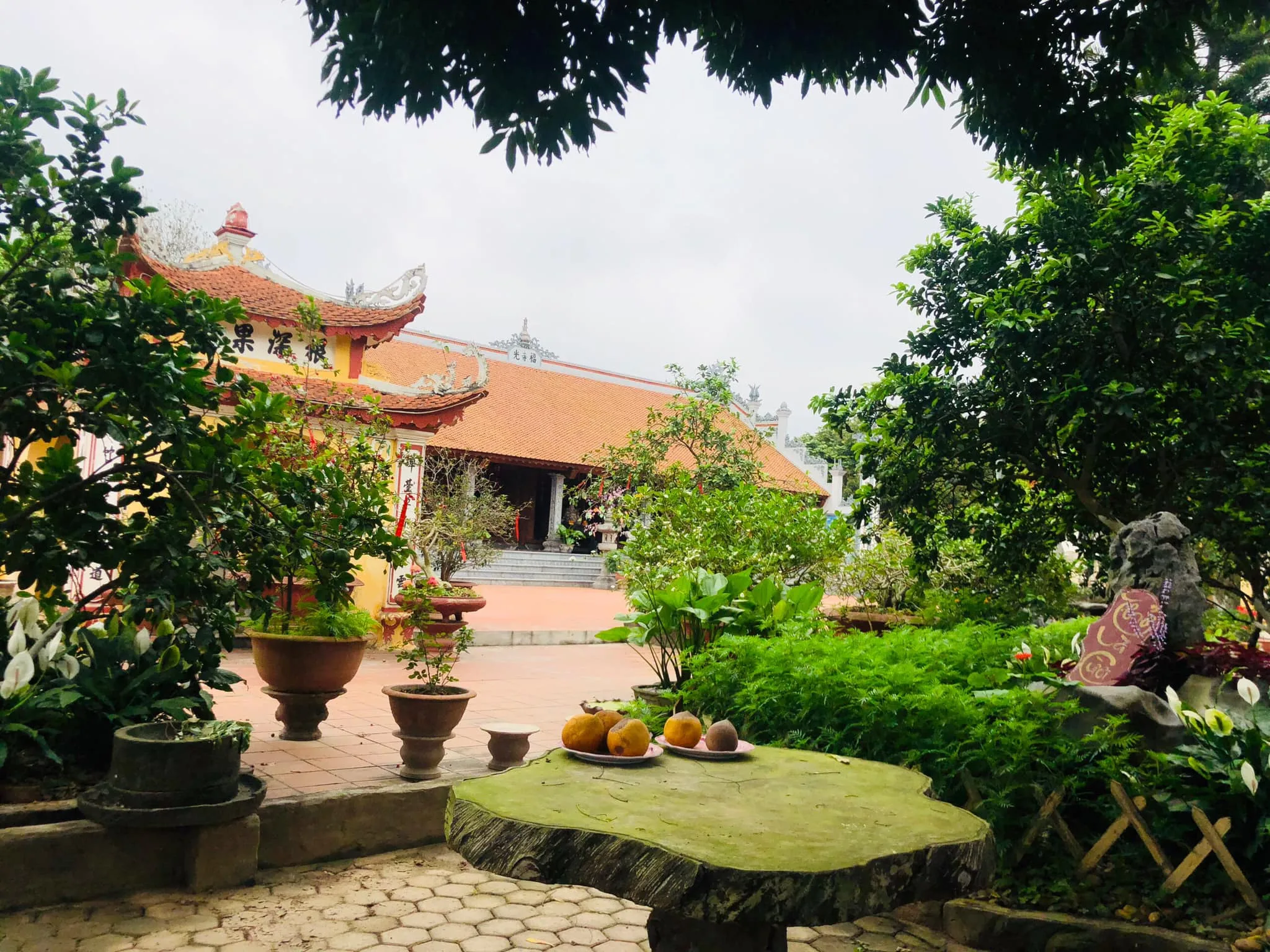
Chùa Đình Quán là một ngôi cổ tự lâu đời, còn được biết đến với các tên gọi Bà Bông tự và Phúc Quang tự. Chùa tọa lạc tại thôn Đình Quán, nay thuộc phường Phú Diễn, thành phố Hà Nội.
Ngôi chùa được xây dựng trên một khu đất cao, quay về hướng Tây Bắc, nằm bên Quốc lộ 32, tuyến đường nối Hà Nội với Sơn Tây.
Lịch sử và nhân vật
Theo truyền thuyết địa phương, chùa Đình Quán có lịch sử từ hơn 2.000 năm trước, tuy nhiên, hiện chưa có tư liệu đủ cơ sở để xác nhận niên đại này. Cuộc khai quật khảo cổ học đầu tháng 3 năm 1984, cách chùa chừng vài chục mét về phía Bắc, người làng đào ao đã tìm thấy ngôi mộ cổ trong quan ngoài quách, toàn bộ quan tài được phủ một lớp than dày 0,4m. Đây là nét đặc biệt trong cấu trúc mộ quách gỗ quý được biết xưa nay. Đồ tuỳ táng trong ngôi mộ chủ yếu là đồ trang sức. Cùng với tư liệu hiểu biết của trên dưới mười ngôi mộ cùng loại được khai quật và nghiên cứu tại Việt Nam, có thể ngôi mộ này có niên đại thuộc thời Trần và có thể liên quan đến chùa. Cũng theo lời của nhân dân trong vùng, chùa do một vị công chúa triều Trần khởi dựng. Ngoài ra, các văn bia tại chùa cũng chép lại chùa được xây dựng thời Trần.
Đến thời Lê sơ, khoảng thế kỷ XV, chùa gắn với một nhân vật nữ được nhân dân địa phương tưởng nhớ và phụng thờ. Tương truyền, một bà vãi quê ở làng Bông Cời, huyện Thanh Oai, lên chùa tu hành, đồng thời bỏ tiền tu sửa chùa, mua ba mẫu ruộng của làng rồi hiến cho Tam Bảo. Bà tiếp tục ở chùa cho đến khi qua đời. Cảm phục công đức của bà, nhân dân địa phương gọi chùa là chùa Bà Bông, đồng thời tạc tượng để thờ tại phía Bắc trong Tam Bảo. Từ đây, tên gọi Bà Bông tự dần trở thành tên gọi quen thuộc của ngôi chùa.
Đến cuối thế kỷ XVI, chùa tiếp tục được trùng tu. Công trình được khởi dựng năm 1588 và hoàn thành năm 1592. Trong đợt tu sửa này, Phùng Khắc Khoan được mời soạn văn bia, trong đó tên chùa được ghi là chùa Bà Bông. Nội dung văn bia không chỉ ghi lại quá trình tu tạo mà còn phản ánh quan niệm về Phật giáo và tư tưởng Tam giáo đồng nguyên, đồng thời ghi nhận công đức của các vị tín thí đã đóng góp tiền của, ruộng đất cho việc xây dựng và duy trì Tam Bảo. Văn bia còn cho biết vị sư trụ trì chùa lúc bấy giờ là Lê Pháp Đăng, pháp danh Mậu Hóa, quê ở huyện Quảng Xương, phủ Tĩnh Gia, xứ Thanh Hóa. Ông xuất gia theo Phật giáo và cùng nhân dân thôn Đình Quán, các vị tín thí chung sức tu sửa chùa. Các hạng mục được sửa chữa gồm phòng ốc trong ngoài, tượng Phật và đồ thờ tự; sau khi hoàn thành, những người phát tâm còn mua ruộng đất, ao hồ hiến vào Tam Bảo. Văn bia được lập nhằm ghi nhận công đức và lưu lại sự việc cho hậu thế:
“… các vị lại mua đặt ruộng đất, ao hồ, hiến vào làm đất Tam Bảo, nhờ ta viết ra để mọi người biết việc này. Mọi người lớn nhỏ trong thôn Đình Quán, các vị tín thí này cùng nhau để tâm làm điều thiện, mở rộng lòng thiện, tu sửa chùa vào tháng Giêng năm Mậu Tý (1588)…”
Đến thời Gia Long, năm 1819, quả chuông cổ hiện còn lưu giữ tại chùa được đúc và trên chuông vẫn ghi tên chùa Bà Bông, cho thấy tên gọi này tiếp tục được sử dụng phổ biến vào đầu thời Nguyễn.
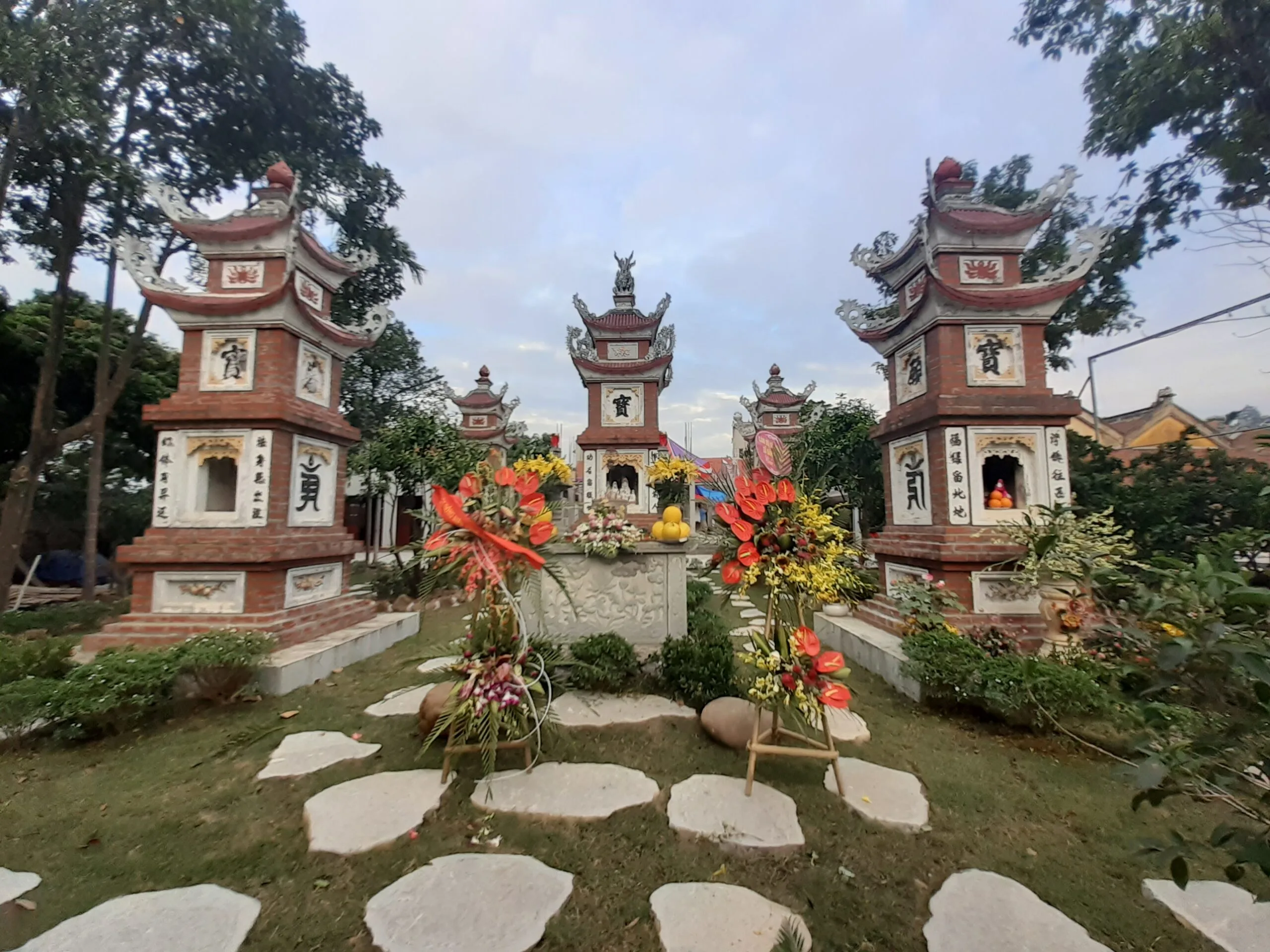
Trải qua nhiều thế kỷ, chùa Đình Quán nhiều lần xuống cấp và biến đổi. Trong những năm gần đây, chính quyền địa phương, nhà chùa, nhân dân và Phật tử thập phương đã cùng đóng góp kinh phí để từng bước tu bổ, tôn tạo di tích. Các hạng mục được sửa chữa, xây dựng gồm Tam Bảo, nhà Mẫu, Tam Quan, nhà Tổ, nhà bia và nhà khách, góp phần duy trì diện mạo kiến trúc và bảo đảm các hoạt động sinh hoạt tín ngưỡng, Phật giáo tại di tích.
Kiến trúc cảnh quan
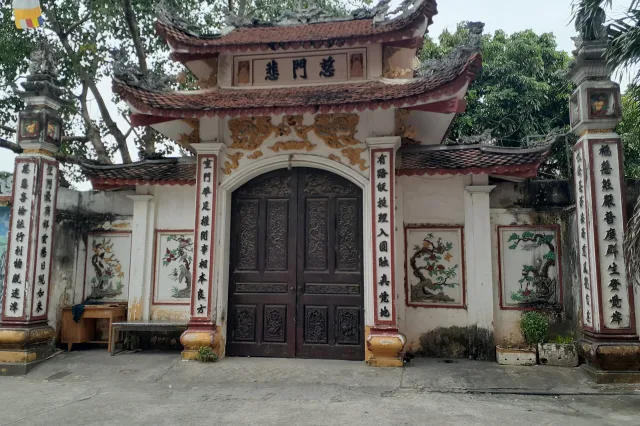
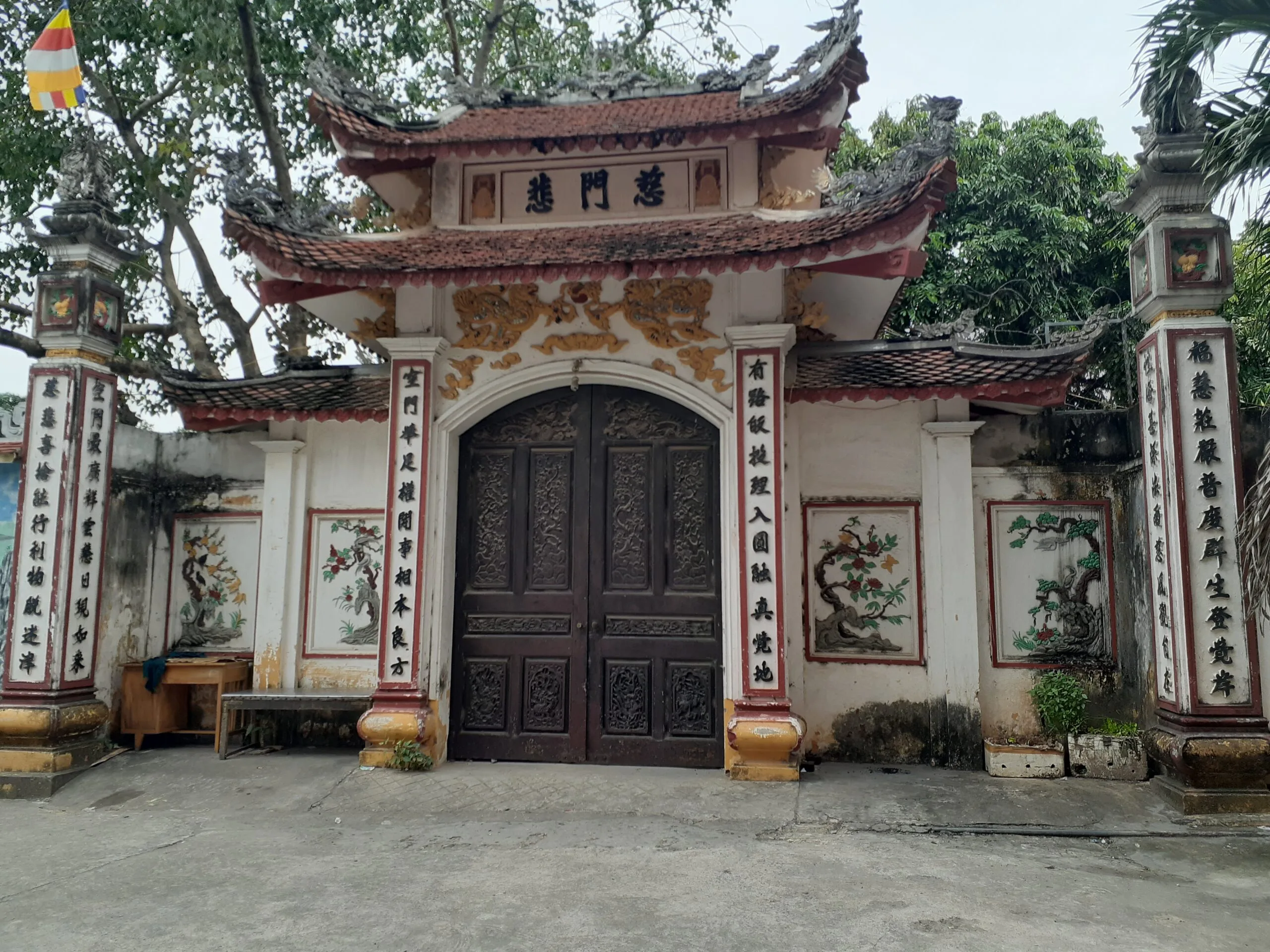
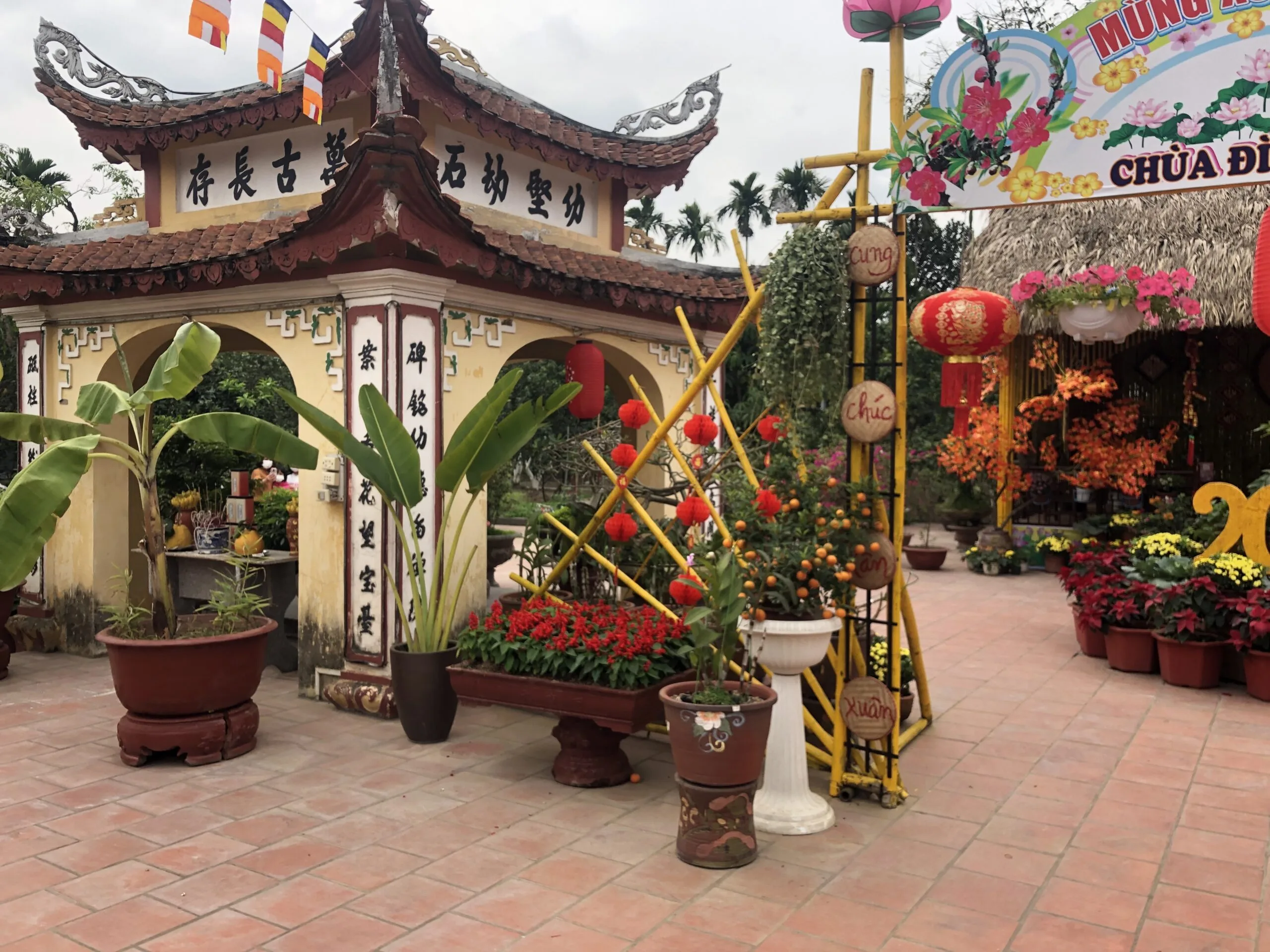
Cổng tam quan xây kiểu bỏ trụ ngoài cùng là hai trụ lớn, kiểu trụ lồng đèn, đỉnh mỗi trụ đắp nổi hình bốn con chim phượng đuôi chụm vào nhau đầu quay bốn hướng tạo thành hình trái dành cách điệu. Thân trụ tạo gờ nổi, trên thân ghi các câu đối chữ Hán. Qua cổng tam quan là khoảng vuờn rộng bao quanh các công trình kiến trúc của chùa.
Chùa chính (Bảo Điện) bao gồm tiền đường và thượng điện, nhà tiền đường năm gian xây kiểu tuờng hồi bít đốc tay ngai, mái lớp ngói mũi hài cổ, bờ nóc đắp kiểu bờ đinh, giữa bờ nóc đắp nổi bình nước cam lộ, phía duới trổ hàng hoa chanh chạy suốt bờ đinh, giữa bờ đinh đắp ba đại tự đề ba chữ Hán vuông vức “Phúc Quang Tự”. Hai đốc mái đắp hình rồng miệng ngậm bờ nóc, đuôi rồng uốn cong. Bên trong các vì kèo đỡ mái kết cấu theo kiểu vì kèo cầu quá giang trốn hàng cột phía trước. Mái phân thượng tam hạ tứ, nền nhà lát gạch vuông, tại toà tiền đường đặt các bộ tuợng Đức Ông, Thánh Tăng, Hộ pháp giống như cách bài trí phổ biến như bao ngôi chùa khác ở miền Bắc nuớc ta.
Nối liền với Tiền Đường là Thượng Điện gồm nếp nhà bốn gian chạy dọc phía sau tạo thành hình chữ Đinh, nhà được xây tường hồi bít đốc, các vì kèo đỡ mái làm kiểu kèo cầu quá giang vỉ ruồi mái phân thượng tam hạ tứ. Mái lợp ngói mũi hài cổ, đốc mái đắp hình rồng miệng ngập bờ nóc, trải dài tường hậu đắp các trụ nhỏ, đỉnh trụ đắp hình chim phượng và các bình nước nhỏ.
Phía trong Thượng Điện là hệ thống năm lớp tượng được bài trí mang đặc trưng của Phật giáo Đại thừa Bắc tông, tuân thủ theo quy định nghiêm ngặt của đại Phật.
- Hàng trên cùng cao nhất của đại phật điện là bộ tượng Tam Thế Phật thường trụ diệu pháp thân, Phật của quá khứ, hiện tại và vị lai.
- Lớp thứ hai là bộ tượng Di Đà Tam Tôn, chính giữa là pho tượng Phật A-Di-Đà, hai bên là tượng Quán Thế Âm và Đại thế chí bồ tát.
- Lớp thứ ba là tượng Quán Âm Chuẩn Đề, hai bên là tượng Phổ Hiền Bồ Tát.
- Lớp tượng ngoài cùng của Phật điện là toà Cửu Long và tượng Thích Ca sơ sinh. Tượng Thích Ca đứng trên toà sen ba lớp cánh, tay trái chỉ lên trời, tay phải chỉ xuống đất. Toà Cửu Long trang trí chín hình rồng phun nước tắm cho đức Phật lúc Ngài mới ra đời, điểm xuyết chín hình rồng là 18 pho tượng Phật được sắp xếp theo thứ tự như toà Tam bảo thu nhỏ.
- Sát tường hậu thượng điện, bên phải là bệ tượng Quan Âm Toạ Sơn, bên trái là tượng Quan Âm Tống Tử (hay còn gọi là tượng Quan Âm Thị kính). Các pho tượng Phật đều thuộc phong cách nghệ thuật thế kỉ thứ XVIII – XIX.
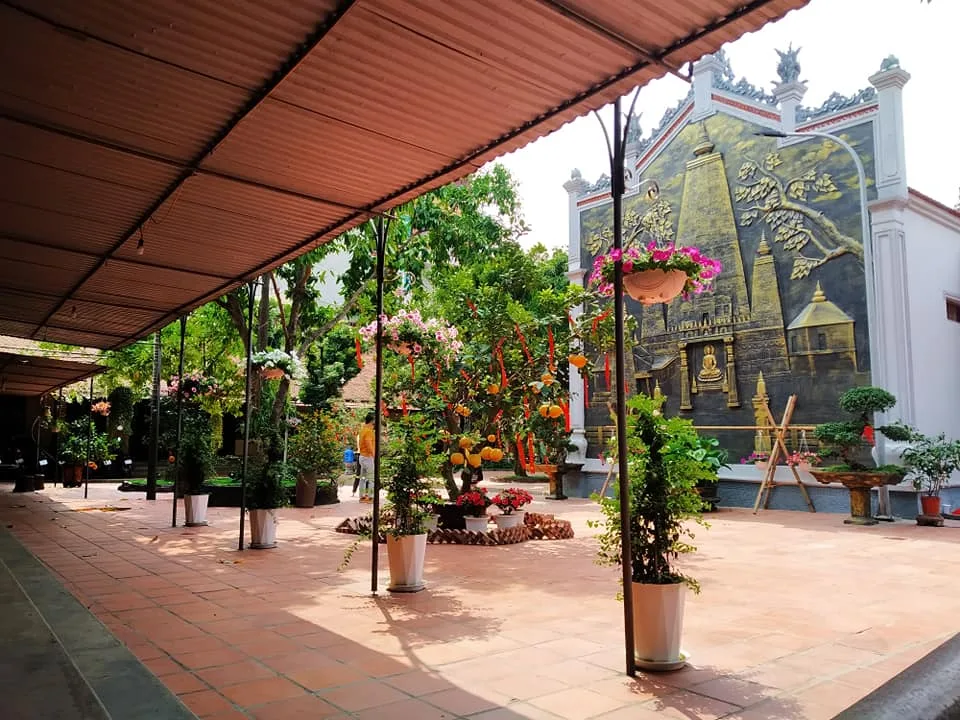
Phía sau tam bảo, qua một khoảng sân gạch khá rộng là Nhà Tổ, Nhà Mẫu và dãy nhà giải vũ.
Hiện vật
Chùa còn lưu giữ nhiều hiện vật quý có giá trị về lịch sử và nghệ thuật điêu khắc như:
- 34 pho tượng Phật
- 13 tấm bia đá, trong đó có ba tấm bia ghi việc trùng tu chùa trong các niên hiệu vua: Quang Hưng ( 1678 – 1599), Chính Hoà (1680 – 1705), Gia Long (1802 – 1819).
- 1 quả chuông lớn Bà Bông Tự, được đúc vào năm Gia Long thứ 18 (1819)
Sự kiện và lễ hội
Các hoạt động tại chùa Đình Quán được tổ chức tương đối đa dạng, tập trung vào ba nhóm chính gồm khóa tu, nghi lễ Phật giáo và hoạt động từ thiện, góp phần duy trì sinh hoạt tín ngưỡng, tu học và phát huy vai trò xã hội của ngôi chùa.
1. Khóa tu
Từ năm 2022, chùa tổ chức các khóa tu định kỳ và hằng tháng, hướng đến nhiều nhóm đối tượng khác nhau. Các khóa tu định kỳ gồm Khóa tu Chánh niệm được tổ chức vào tháng 4, Khóa tu “Hiểu và Thương” dành cho lứa tuổi thiếu nhi và Khóa tu “Quốc Khánh” dành cho mọi lứa tuổi. Bên cạnh đó, hằng tháng chùa tổ chức các khóa tu một ngày như “An Lạc”, “Búp sen từ bi” và “Tuổi trẻ”, tạo điều kiện cho Phật tử và người tham gia thực hành giáo lý, rèn luyện đời sống tinh thần.
2. Nghi lễ
Các nghi lễ Phật giáo được tổ chức theo lịch âm hằng năm, gồm:
- Lễ Thượng Nguyên vào ngày 12 tháng Giêng
- Đại lễ Phật đản vào ngày 12 tháng 4
- Đại lễ Vu Lan vào ngày 15 tháng 7
- Giỗ Tổ chùa Đình Quán vào ngày 24 tháng 9
- Lễ tạ cuối năm vào ngày 12 tháng 12.
3. Hoạt động từ thiện
Bên cạnh hoạt động tôn giáo, chùa còn duy trì các hoạt động thiện nguyện hướng đến cộng đồng. Hằng tuần, vào sáng thứ Sáu, chùa tổ chức phát cháo từ thiện cho bệnh nhân tại Bệnh viện E; vào sáng thứ Bảy, chùa phát cơm chay miễn phí cho bệnh nhân. Các hoạt động này thể hiện tinh thần từ bi, cứu khổ của Phật giáo, đồng thời góp phần lan tỏa giá trị nhân ái và trách nhiệm cộng đồng.
Xếp hạng
Chùa Đình Quán đã được Bộ Văn Hóa – Thông Tin xếp hạng di tích kiến trúc nghệ thuật ngày 27/8/1996.
Tài liệu tham khảo
- Chùa Đình Quán – Bắc Từ Liêm, Trang tin của GHPGVN Thành phố Hà Nội.
- Giới thiệu cùa Đình Quán
- Quỳnh Ngọc, “Chùa Đình Quán”, Báo Hà Nội mới, ngày 11/06/2022.
Ngôn ngữ khác
Tiếng Anh (English)
Name and Geographical Location
Đình Quán Pagoda is an ancient Buddhist temple with a long history and is also known by the names Bà Bông Pagoda and Phúc Quang Pagoda. It is located in Đình Quán Hamlet, now part of Phú Diễn Ward, Hanoi.
The pagoda was built on elevated ground, facing northwest, beside National Highway 32, the road connecting Hanoi with Sơn Tây.
History and Associated Figures
According to local tradition, Đình Quán Pagoda is said to have a history of more than 2,000 years. However, there is currently insufficient documentary evidence to confirm such an early date.
In early March 1984, during an archaeological discovery several dozen meters north of the pagoda, villagers digging a pond uncovered an ancient tomb consisting of an inner coffin and an outer burial chamber. The entire coffin was covered by a layer of charcoal approximately 0.4 meters thick. This is a distinctive feature among the known structures of tombs using precious wooden burial chambers. The burial goods found inside consisted mainly of ornaments.
Based on what is known from roughly ten other tombs of the same type that have been excavated and studied in Vietnam, this tomb may date to the Trần period and may possibly have been connected with the pagoda. Local residents also maintain that the pagoda was originally founded by a princess of the Trần dynasty. In addition, inscriptions on steles preserved at the pagoda also record that it was built during the Trần period.
By the Early Lê period, around the fifteenth century, the pagoda became associated with a woman who was remembered and worshipped by the local population. According to tradition, a female Buddhist devotee from Bông Cời village, Thanh Oai District, came to the pagoda to practice the Buddhist faith. She also spent her own money repairing the temple, purchased three mẫu of village fields, and donated them to the Three Jewels. She continued to live at the pagoda until her death.
In gratitude for her meritorious deeds, local residents began calling the temple Bà Bông Pagoda and carved a statue of her for worship on the northern side of the Tam Bảo sanctuary. From that time onward, the name Bà Bông Pagoda gradually became a familiar name for the temple.
By the late sixteenth century, the pagoda underwent further restoration. The work began in 1588 and was completed in 1592. During this restoration, Phùng Khắc Khoan was invited to compose a stele inscription, in which the temple was recorded under the name Bà Bông Pagoda.
The inscription not only records the process of restoration but also reflects contemporary conceptions of Buddhism and the idea of the common origin of the Three Teachings. It further records the merits of donors who contributed money, fields, and other property for the construction and maintenance of the Three Jewels.
The stele also states that the abbot at that time was Lê Pháp Đăng, whose Dharma name was Mậu Hóa, a native of Quảng Xương District, Tĩnh Gia Prefecture, Thanh Hóa. He entered the Buddhist order and, together with the people of Đình Quán Hamlet and various benefactors, contributed to the restoration of the pagoda.
The works included repairs to buildings both inside and outside the complex, Buddhist statues, and ritual objects. After the restoration was completed, those who had made vows of merit also purchased fields, land, ponds, and lakes and donated them to the Three Jewels. The stele was erected to record these contributions and preserve the events for later generations:
“… they also purchased fields, land, ponds, and lakes and donated them as property of the Three Jewels, asking me to write this down so that everyone might know of the matter. The people of Đình Quán Hamlet, both old and young, together with these benefactors, united in their intention to perform good deeds, broadened their benevolent hearts, and restored the pagoda in the first lunar month of the Mậu Tý year (1588)…”
During the Gia Long period, in 1819, the ancient bell that is still preserved at the pagoda was cast. The bell continues to bear the name Bà Bông Pagoda, showing that this name remained widely used in the early Nguyễn period.
Over the course of many centuries, Đình Quán Pagoda has repeatedly deteriorated and undergone changes. In recent years, the local authorities, the pagoda, local residents, and Buddhist followers from various regions have jointly contributed funds to restore and renovate the monument step by step.
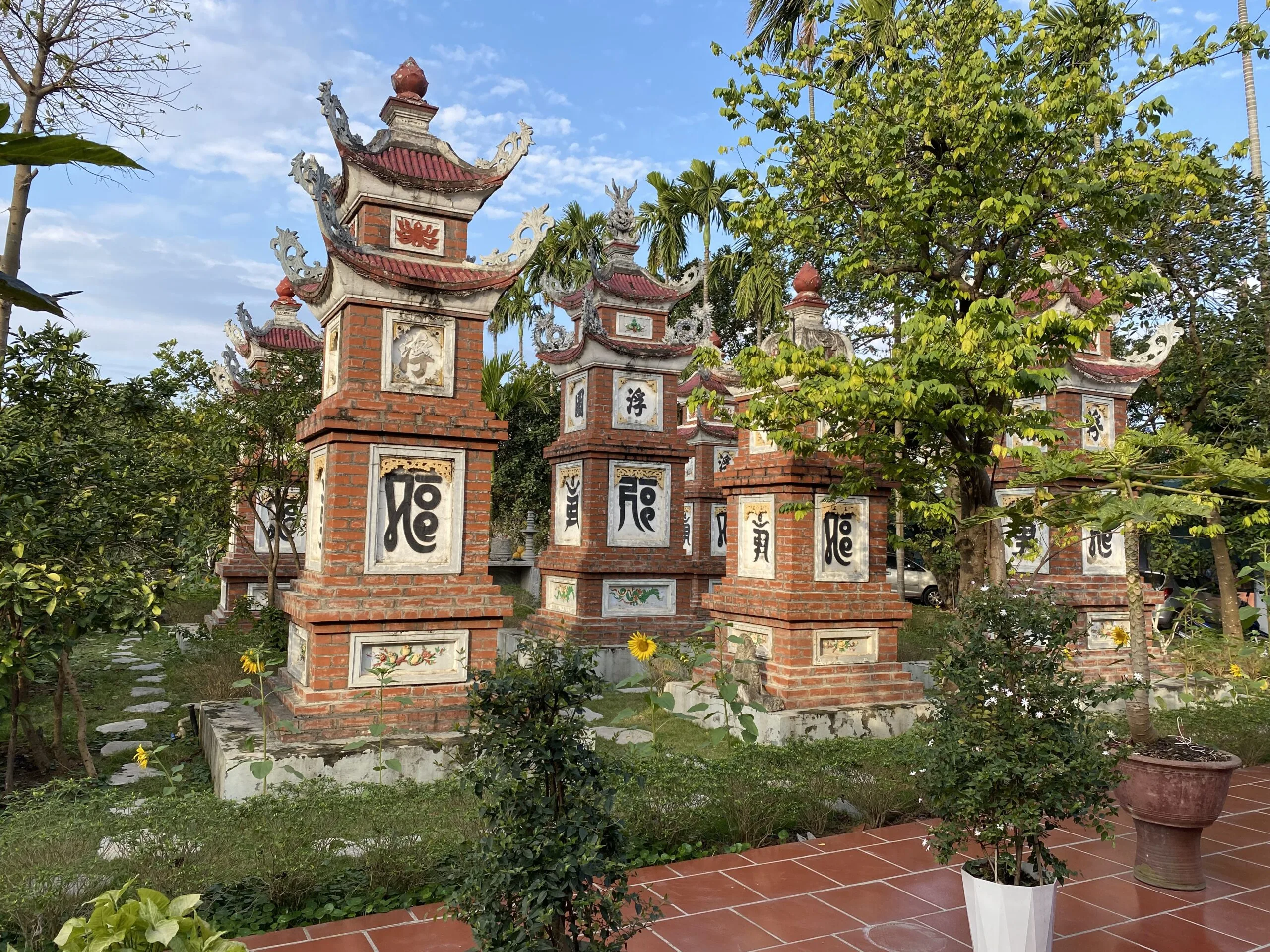
The repaired or newly constructed structures include the Tam Bảo sanctuary, the Mother Goddess Hall, the Three-Entrance Gate, the Patriarch Hall, the Stele House, and the Guest House. These works have helped maintain the architectural appearance of the complex and support religious and Buddhist activities at the site.
Architecture and Landscape
The Three-Entrance Gate is constructed with large outer pillars. The two principal pillars are designed in the form of lantern pillars. At the top of each pillar are reliefs of four phoenixes whose tails meet at the center while their heads face in four directions, forming the stylized shape of a trái dành.
The pillar shafts are decorated with raised moldings, and Chinese-character couplets are inscribed on their surfaces. Passing through the Three-Entrance Gate, visitors enter a spacious garden surrounding the architectural structures of the pagoda.
The main sanctuary, or Bảo Điện, consists of the Front Hall and Upper Sanctuary. The Front Hall has five bays and is built with solid gable walls and projecting side walls. The roof is covered with traditional shoe-shaped tiles. The roof ridge is built in the bờ đinh style, with a relief image of an ambrosia vase at the center. Beneath it runs a continuous decorative band of stylized lime-blossom motifs along the ridge.
At the center of the ridge are three large square Chinese characters reading “Phúc Quang Tự”. At both gable ends are relief dragons whose mouths appear to grasp the roof ridge, while their tails curve upward.
Inside, the roof trusses are constructed in a style using crossbeams spanning the structure and omitting the front row of columns. The roof is divided according to the thượng tam hạ tứ arrangement. The floor is paved with square tiles.
Within the Front Hall are sets of statues of Đức Ông, Thánh Tăng, and the Dharma Protectors, arranged in a manner commonly found in Buddhist temples throughout northern Vietnam.
Connected directly to the Front Hall is the Upper Sanctuary, consisting of a four-bay structure extending lengthwise to the rear and forming a Đinh-shaped plan. The building has solid gable walls, while the roof-supporting trusses use a crossbeam structure with vỉ ruồi framing. The roof follows the thượng tam hạ tứ arrangement.
The roof is covered with old shoe-shaped tiles. The gable ends are decorated with dragons whose mouths appear to embrace the roof ridge. Along the rear wall stand small decorative pillars topped with phoenix figures and small water jars.
Inside the Upper Sanctuary is a system of five tiers of statues arranged according to the characteristics of Northern Mahayana Buddhism and in accordance with the established order of the main Buddhist altar.
The highest tier of the main Buddhist altar consists of the statues of the Three Buddhas of the Past, Present, and Future, representing the eternal wondrous Dharma body.
The second tier is the Amitābha Triad, with Amitābha Buddha in the center, flanked by Avalokiteśvara and Mahāsthāmaprāpta Bodhisattva.
The third tier contains the statue of Cundi Avalokiteśvara, with statues of Samantabhadra Bodhisattva on either side.
The outermost tier of the Buddhist altar consists of the Nine-Dragon Shrine and the statue of the newborn Śākyamuni. The statue of Śākyamuni stands on a lotus pedestal with three layers of petals, his left hand pointing upward toward heaven and his right hand pointing downward toward the earth. The Nine-Dragon Shrine is decorated with nine dragons spraying water to bathe the Buddha at his birth. Interspersed among the nine dragons are eighteen Buddha statues arranged in the manner of a miniature Tam Bảo altar.
Against the rear wall of the Upper Sanctuary, on the right is the pedestal of Avalokiteśvara Seated on the Mountain, while on the left is the statue of Avalokiteśvara Bestowing Children, also known as Avalokiteśvara Thị Kính. The Buddhist statues belong stylistically to the eighteenth and nineteenth centuries.
Behind the Tam Bảo sanctuary, across a fairly spacious brick-paved courtyard, stand the Patriarch Hall, the Mother Goddess Hall, and a range of auxiliary buildings.
Artifacts
The pagoda preserves many valuable artifacts of historical significance and artistic value, particularly in sculpture, including:
34 Buddhist statues
13 stone steles, including three recording restorations of the pagoda during the reign periods of Quang Hưng, Chính Hòa, and Gia Long
One large bell bearing the inscription Bà Bông Tự, cast in the eighteenth year of the Gia Long era (1819)
Events and Festivals
Activities at Đình Quán Pagoda are relatively diverse and are concentrated in three main groups: Buddhist retreats, religious ceremonies, and charitable activities. Together, they help maintain religious practice, Buddhist study, and the temple’s social role.
1. Buddhist Retreats
Since 2022, the pagoda has organized regular and monthly Buddhist retreats aimed at different groups of participants.
Regular retreats include the Mindfulness Retreat held in April, the “Understanding and Love” retreat for children, and the “National Day” retreat for participants of all ages.
In addition, the pagoda organizes monthly one-day retreats such as “Peace and Happiness,” “Lotus Bud of Compassion,” and “Youth,” providing opportunities for Buddhists and other participants to practice Buddhist teachings and cultivate their spiritual lives.
2. Religious Ceremonies
Annual Buddhist ceremonies are organized according to the lunar calendar and include:
Thượng Nguyên Festival on the twelfth day of the first lunar month
Vesak Festival on the twelfth day of the fourth lunar month
Vu Lan Festival on the fifteenth day of the seventh lunar month
Memorial Day of the Patriarch of Đình Quán Pagoda on the twenty-fourth day of the ninth lunar month
Year-end thanksgiving ceremony on the twelfth day of the twelfth lunar month
3. Charitable Activities
In addition to religious activities, the pagoda also maintains charitable programs for the community.
Every Friday morning, the pagoda distributes charitable porridge to patients at E Hospital. On Saturday mornings, it provides free vegetarian meals to patients.
These activities express the Buddhist spirit of compassion and relief of suffering while also helping to spread values of kindness and community responsibility.
Heritage Classification
Đình Quán Pagoda was officially classified by the Ministry of Culture and Information as an architectural and artistic monument on August 27, 1996.
References
- Chùa Đình Quán – Bắc Từ Liêm, Trang tin của GHPGVN Thành phố Hà Nội.
- Giới thiệu cùa Đình Quán
- Quỳnh Ngọc, “Chùa Đình Quán”, Báo Hà Nội mới, ngày 11/06/2022.
Tiếng Pháp (Français)
Nom et situation géographique
La pagode Đình Quán est un ancien temple bouddhique de longue date, également connu sous les noms de Bà Bông tự et Phúc Quang tự. Elle se trouve dans le hameau de Đình Quán, aujourd’hui rattaché au quartier de Phú Diễn, ville de Hà Nội.
La pagode a été construite sur un terrain élevé, orienté vers le nord-ouest, au bord de la route nationale 32, axe reliant Hà Nội à Sơn Tây.
Histoire et personnages
Selon la tradition locale, la pagode Đình Quán aurait une histoire remontant à plus de 2 000 ans. Toutefois, aucun document suffisamment probant ne permet actuellement de confirmer une telle ancienneté. Au début du mois de mars 1984, lors de travaux effectués à quelques dizaines de mètres au nord de la pagode, des habitants qui creusaient un étang découvrirent une tombe ancienne constituée d’un cercueil placé à l’intérieur d’une enveloppe funéraire. L’ensemble du cercueil était recouvert d’une couche de charbon de 0,4 mètre d’épaisseur. Il s’agit d’une particularité remarquable dans la structure des tombes à enveloppe de bois précieux connues jusqu’à présent. Le mobilier funéraire retrouvé dans la tombe était principalement constitué de parures. Si l’on rapproche cette découverte des données provenant d’une dizaine d’autres tombes du même type mises au jour et étudiées au Vietnam, cette sépulture pourrait dater de la dynastie Trần et pourrait avoir un lien avec la pagode. Selon les récits des habitants de la région, la pagode aurait par ailleurs été fondée par une princesse de la dynastie Trần. Les inscriptions sur stèles conservées dans la pagode indiquent également que l’établissement aurait été construit sous les Trần.
Sous la première dynastie des Lê, vers le XVe siècle, la pagode fut associée à une figure féminine dont la mémoire resta honorée par les habitants. Selon la tradition, une pratiquante bouddhiste originaire du village de Bông Cời, district de Thanh Oai, vint mener une vie religieuse dans la pagode. Elle consacra également son argent à la restauration du temple, acheta trois mẫu de terres appartenant au village et les offrit au Tam Bảo. Elle continua à vivre dans la pagode jusqu’à sa mort. Admiratifs de ses mérites, les habitants appelèrent alors le lieu chùa Bà Bông et firent sculpter une statue à son effigie, installée dans la partie nord du Tam Bảo. À partir de cette époque, le nom de Bà Bông tự devint progressivement l’une des appellations courantes de la pagode.
À la fin du XVIe siècle, la pagode fit l’objet d’une nouvelle restauration. Les travaux commencèrent en 1588 et s’achevèrent en 1592. À l’occasion de cette campagne, Phùng Khắc Khoan fut invité à rédiger une inscription sur stèle, dans laquelle l’établissement est désigné sous le nom de chùa Bà Bông. Le texte de la stèle ne se contente pas de rapporter les travaux de restauration ; il reflète également certaines conceptions du bouddhisme et l’idée de l’origine commune des Trois Enseignements, tout en enregistrant les mérites des fidèles qui contribuèrent par des dons d’argent et de terres à la construction et à l’entretien du Tam Bảo.
La stèle indique également que le moine supérieur de la pagode était alors Lê Pháp Đăng, de nom religieux Mậu Hóa, originaire du district de Quảng Xương, préfecture de Tĩnh Gia, région de Thanh Hóa. Entré dans la vie monastique bouddhique, il participa avec les habitants du hameau de Đình Quán et les donateurs à la restauration de la pagode. Les travaux portèrent sur les bâtiments intérieurs et extérieurs, les statues bouddhiques et les objets cultuels. Après l’achèvement des travaux, les fidèles achetèrent encore des terres, des rizières et des étangs qu’ils offrirent au Tam Bảo. La stèle fut érigée afin d’enregistrer ces mérites et de transmettre le souvenir de l’événement aux générations futures :
« … les donateurs achetèrent encore des terres, des rizières et des étangs qu’ils offrirent comme biens du Tam Bảo, et me demandèrent de mettre ces faits par écrit afin que tous puissent en avoir connaissance. Tous les habitants, grands et petits, du hameau de Đình Quán, ainsi que les fidèles donateurs, unirent leurs efforts pour accomplir le bien, élargir leur cœur vertueux et restaurer la pagode au premier mois de l’année Mậu Tý (1588)… »
Sous le règne de Gia Long, en 1819, la grande cloche ancienne encore conservée aujourd’hui dans la pagode fut fondue. L’inscription portée sur cette cloche utilise toujours le nom de Bà Bông tự, montrant que cette appellation demeurait largement en usage au début de la dynastie Nguyễn.
Au fil des siècles, la pagode Đình Quán connut de nombreuses dégradations et transformations. Ces dernières années, les autorités locales, la communauté monastique, les habitants et les fidèles venus de différentes régions ont contribué financièrement à la restauration progressive du monument. Les travaux ont notamment porté sur le Tam Bảo, le Nhà Mẫu, le Tam Quan, le Nhà Tổ, la maison des stèles et la maison d’accueil, contribuant ainsi à préserver l’aspect architectural du site et à maintenir les activités religieuses et bouddhiques qui y sont pratiquées.
Architecture et paysage
Le portail Tam Quan est construit selon une disposition dans laquelle les piliers extérieurs sont constitués de deux grands piliers de type « lanterne ». Au sommet de chacun d’eux figurent quatre phénix en relief, dont les queues se rejoignent tandis que les têtes sont tournées vers les quatre directions, formant une composition stylisée en forme de fruit dành. Le corps des piliers est rythmé par des moulures saillantes et porte des sentences parallèles en caractères chinois. Après avoir franchi le Tam Quan, on accède à un vaste jardin entourant les différents bâtiments de la pagode.
Le bâtiment principal, ou Bảo Điện, comprend le Tiền Đường et le Thượng Điện. Le Tiền Đường comporte cinq travées et est construit selon le type tường hồi bít đốc tay ngai. La toiture est couverte d’anciennes tuiles mũi hài. Le faîte est traité selon le style bờ đinh ; en son centre se trouve un relief représentant un vase contenant l’eau d’ambroisie, tandis qu’une frise de motifs floraux court sous le faîte. Au centre de celui-ci figurent trois grands caractères chinois carrés : « Phúc Quang Tự ». Aux deux extrémités du toit sont représentés des dragons dont la gueule semble saisir le faîte et dont la queue se recourbe.
À l’intérieur, les charpentes soutenant la toiture sont construites selon le type vì kèo cầu quá giang trốn hàng cột phía trước. La toiture est divisée selon le principe thượng tam hạ tứ et le sol est pavé de carreaux carrés. Dans le Tiền Đường sont installées les statues de Đức Ông, Thánh Tăng et des Hộ pháp, selon une disposition couramment rencontrée dans les pagodes du nord du Vietnam.
Relié directement au Tiền Đường, le Thượng Điện est constitué d’un bâtiment de quatre travées se développant longitudinalement à l’arrière, formant un plan en forme du caractère Đinh. Le bâtiment est construit avec des murs pignons fermés ; les charpentes sont de type kèo cầu quá giang vỉ ruồi et la toiture suit également le principe thượng tam hạ tứ. Elle est couverte d’anciennes tuiles mũi hài. Les pignons sont ornés de dragons dont la gueule rejoint le faîte. Le long du mur arrière s’élèvent de petits piliers dont les sommets sont décorés de phénix et de petits vases.
À l’intérieur du Thượng Điện se trouve un ensemble de cinq niveaux de statues, disposées selon les caractéristiques du bouddhisme Mahāyāna de tradition septentrionale et conformément aux règles strictes de l’autel principal :
Au niveau le plus élevé de l’autel bouddhique se trouve l’ensemble des Tam Thế Phật, représentant les Bouddhas du passé, du présent et du futur.
Le deuxième niveau est occupé par l’ensemble Di Đà Tam Tôn, avec au centre la statue du Bouddha Amitābha, entourée de Quán Thế Âm et de Đại Thế Chí Bồ Tát.
Le troisième niveau comporte une statue de Quán Âm Chuẩn Đề, accompagnée de statues de Phổ Hiền Bồ Tát.
Le niveau le plus extérieur de l’autel comprend la composition du Cửu Long et la statue de Śākyamuni nouveau-né. La statue de Śākyamuni se tient debout sur un lotus formé de trois rangées de pétales, la main gauche pointée vers le ciel et la main droite vers la terre. Le Cửu Long est décoré de neuf dragons projetant de l’eau pour baigner le Bouddha à sa naissance ; entre ces neuf dragons sont disposées dix-huit statues de Bouddha, selon un ordre rappelant un Tam Bảo miniature.
Contre le mur arrière du Thượng Điện, à droite, se trouve l’autel de Quan Âm Toạ Sơn ; à gauche, la statue de Quan Âm Tống Tử, également appelée Quan Âm Thị Kính. Les statues bouddhiques appartiennent toutes au style artistique des XVIIIe et XIXe siècles.
Derrière le Tam Bảo, au-delà d’une assez vaste cour pavée de briques, se trouvent le Nhà Tổ, le Nhà Mẫu et la rangée de bâtiments giải vũ.
Objets et vestiges
La pagode conserve encore de nombreux objets précieux présentant un intérêt historique et artistique, notamment :
34 statues bouddhiques ;
13 stèles de pierre, dont trois relatent des restaurations de la pagode sous les ères Quang Hưng (1678–1599), Chính Hòa (1680–1705) et Gia Long (1802–1819) ;
une grande cloche intitulée Bà Bông Tự, fondue en la dix-huitième année de Gia Long (1819).
Événements et fêtes
Les activités organisées à la pagode Đình Quán sont relativement diverses et se répartissent principalement en trois groupes : retraites bouddhiques, cérémonies religieuses et œuvres caritatives. Elles contribuent à maintenir la vie cultuelle et la pratique religieuse, tout en renforçant le rôle social de la pagode.
1. Retraites
Depuis 2022, la pagode organise des retraites périodiques et mensuelles destinées à différents publics. Les retraites régulières comprennent la retraite Chánh niệm, organisée au 4e mois, la retraite « Hiểu và Thương » destinée aux enfants, ainsi que la retraite « Quốc Khánh » ouverte à tous les âges.
Chaque mois, la pagode organise également des retraites d’une journée telles que « An Lạc », « Búp sen từ bi » et « Tuổi trẻ », permettant aux fidèles et aux participants de mettre en pratique les enseignements bouddhiques et de cultiver leur vie spirituelle.
2. Cérémonies
Les principales cérémonies bouddhiques sont organisées chaque année selon le calendrier lunaire :
cérémonie de Thượng Nguyên, le 12e jour du 1er mois ;
grande fête de Phật đản, le 12e jour du 4e mois ;
grande fête de Vu Lan, le 15e jour du 7e mois ;
anniversaire du patriarche de la pagode Đình Quán, le 24e jour du 9e mois ;
cérémonie de remerciement de fin d’année, le 12e jour du 12e mois.
3. Activités caritatives
Parallèlement aux activités religieuses, la pagode maintient des actions caritatives tournées vers la communauté. Chaque semaine, le vendredi matin, elle distribue gratuitement de la bouillie de riz aux patients de l’Hôpital E ; le samedi matin, elle offre des repas végétariens gratuits aux malades. Ces activités expriment l’esprit bouddhique de compassion et de soulagement de la souffrance, tout en contribuant à diffuser des valeurs de solidarité et de responsabilité envers la communauté.
Classement patrimonial
La pagode Đình Quán a été classée monument d’architecture et d’art par le ministère de la Culture et de l’Information le 27 août 1996.
Références bibliographiques
- Chùa Đình Quán – Bắc Từ Liêm, Trang tin của GHPGVN Thành phố Hà Nội.
- Giới thiệu cùa Đình Quán
- Quỳnh Ngọc, “Chùa Đình Quán”, Báo Hà Nội mới, ngày 11/06/2022.
Tiếng Trung (中文)
名称与地理位置
Đình Quán 寺是一座历史悠久的古刹,又称 Bà Bông 寺 和 Phúc Quang 寺。
寺院坐落于 Đình Quán 村,今属河内市 Phú Diễn 坊。
寺院建在一处较高的地势上,坐向西北,位于32号国道旁,这条道路连接河内与 Sơn Tây。
历史与相关人物
据当地传说,Đình Quán 寺已有两千多年历史。不过,目前尚无足够资料能够确认这一年代。
1984年3月初,在距离寺院北面约数十米处进行考古发掘时,当地村民挖池塘发现了一座古墓。墓葬采用“棺内椁外”的结构,整个棺木外包覆着厚约0.4米的木炭层。这是在目前已知珍贵木椁墓结构中较为特殊的现象。
墓中随葬品主要为装饰品。
结合越南境内目前已发掘、研究的大约十座同类墓葬资料推测,这座古墓可能属于陈朝时期,也可能与寺院有关。
当地民间还传说,该寺由陈朝一位公主创建。
此外,寺内碑刻同样记载寺院始建于陈朝。
到了黎初时期,大约15世纪,寺院又与一位受到当地居民纪念和奉祀的女性人物联系起来。
相传,一位来自 Thanh Oai 县 Bông Cời 村的女居士来到寺院修行,同时出资修缮寺庙,并购买村中三亩田地捐献给三宝。
她一直住在寺中,直到去世。
当地居民感念她的功德,因此把寺院称为 Bà Bông 寺,并为她塑像,供奉在三宝殿北侧。
从此,“Bà Bông tự”逐渐成为这座寺院的一个常用名称。
到了16世纪末,寺院再次进行大规模修缮。
工程始于1588年,至1592年竣工。
此次修缮期间,Phùng Khắc Khoan 受邀撰写碑文,碑文中寺名记作 Bà Bông 寺。
碑文不仅记录了修缮经过,还反映了有关佛教以及“三教同源”思想的观念,同时记载了各位信众为修建和维持三宝所捐献的钱财、田地等功德。
碑文还记载,当时寺院住持为 Lê Pháp Đăng,法名 Mậu Hóa,籍贯 Thanh Hóa 地区 Tĩnh Gia 府 Quảng Xương 县。
他出家奉佛,并与 Đình Quán 村民及各位施主共同修缮寺院。
修缮项目包括内外房舍、佛像及祭祀用品;工程完成以后,发心行善者还购买田地、池塘,捐献给三宝。
立碑的目的,正是为了记录这些功德,并将事情传之后世:
“……诸位又购置田地、池塘,捐作三宝之产,请我撰文,使众人知晓此事。Đình Quán 村大小居民以及各位施主,共同发心行善,广开善念,于戊子年(1588)正月修缮寺院……”
到了 Gia Long 时期,1819年,寺中现存的一口古钟铸成。钟上仍刻有“Bà Bông tự”这一寺名,说明到了阮朝初年,这一名称仍被广泛使用。
经历数百年以后,Đình Quán 寺曾多次衰败和发生变化。
近年来,当地政府、寺院、居民以及各地佛教信众共同筹集经费,逐步对遗迹进行修缮和整治。
修建、修复的项目包括三宝殿、母殿、三关门、祖堂、碑亭和客堂,从而有助于维持寺院建筑面貌,并保障遗迹内的信仰和佛教活动。
建筑与景观
三关门采用省去最外侧立柱的形式,主体为两根大型灯笼式石柱。
每根柱顶都浮塑四只凤凰,四只凤凰的尾部汇聚在一起,头部则朝向四方,组成一种经过艺术化处理的“trái dành”造型。
柱身设有凸起线脚,并题刻汉字对联。
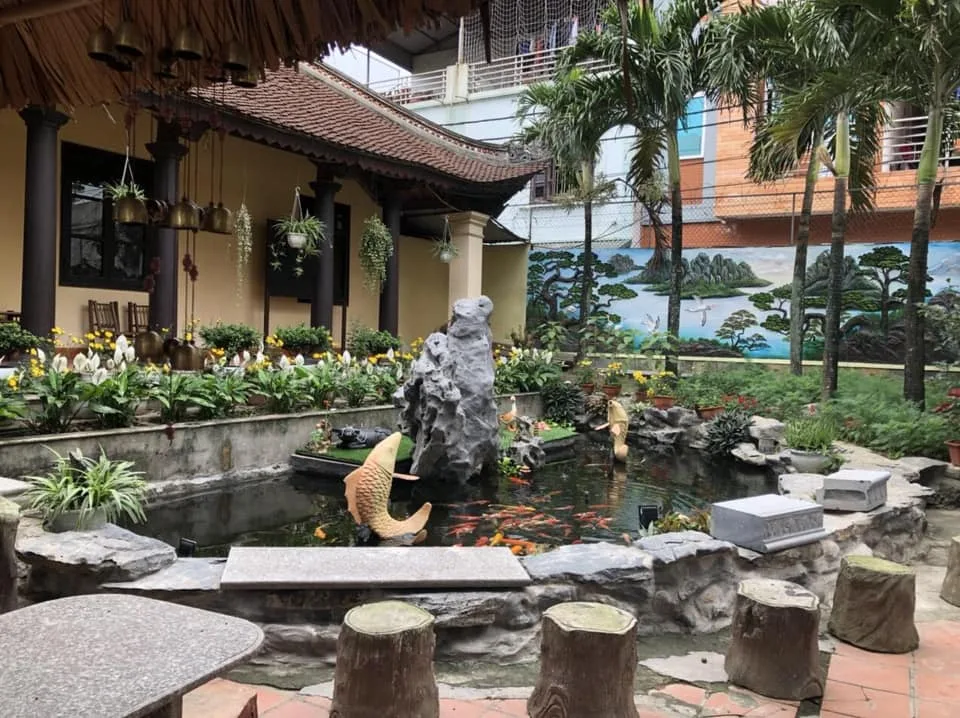
穿过三关门后,是一片较为宽阔的庭园,围绕着寺内各组建筑。
寺院主殿,即 Bảo Điện,包括前堂和上殿。
前堂为五间,采用封山式山墙结构,屋顶铺设传统鞋头形瓦,屋脊采用 bờ đinh 样式。
正脊中央塑有甘露水瓶,下方饰有一排连续的花纹。
屋脊中央另塑三枚方整大字,即“Phúc Quang Tự”。
两侧山墙塑有龙形,龙口衔着屋脊,龙尾弯曲。
内部屋架采用过梁式结构,并省去前排立柱。
屋面结构为“上三下四”,地面铺方砖。
前堂内供奉 Đức Ông、Thánh Tăng、Hộ pháp 等塑像,其布局与越南北方许多寺院常见的陈设方式相似。
与前堂相连的是上殿。
上殿由四间纵向向后延伸的屋舍组成,整体形成“丁”字形平面。
建筑同样采用封山式山墙,承托屋面的构架为过梁式并配 vỉ ruồi 结构,屋面仍为“上三下四”。
屋顶铺传统鞋头瓦,山墙塑龙,龙口衔屋脊。
后墙沿线设有若干小柱,柱顶塑凤凰及小型水瓶。
上殿内部设置五层佛像,体现北宗大乘佛教的特征,并按照大佛殿较为严格的秩序陈设。
最上层为 三世佛,象征过去、现在、未来三世常住妙法身佛。
第二层为 阿弥陀三尊,中央是阿弥陀佛,两侧分别为观世音菩萨和大势至菩萨。
第三层为 准提观音像,两侧为普贤菩萨像。
佛殿最外层为 九龙座 与 释迦初生像。释迦像立于三层莲座之上,左手指天,右手指地。九龙座上装饰九条喷水之龙,象征佛陀诞生时九龙浴佛;九条龙之间还点缀排列着18尊佛像,布局如同缩小的三宝殿。
靠近上殿后墙,右侧为 Quan Âm Toạ Sơn 像台,左侧为 Quan Âm Tống Tử 像,也称 Quan Âm Thị Kính。这些佛像均具有18—19世纪的艺术风格。
三宝殿后方,穿过一片较宽阔的砖铺庭院,即为祖堂、母殿以及两侧 giải vũ 建筑。
文物
寺内仍保存许多具有历史价值和雕刻艺术价值的文物,包括:
34尊佛像
13方石碑,其中有三方记载寺院在以下年号期间进行修缮:Quang Hưng(1678—1599)、Chính Hoà(1680—1705)、Gia Long(1802—1819)
1口大型古钟 Bà Bông Tự,铸于 Gia Long 十八年(1819)
活动与节庆
Đình Quán 寺目前开展的活动较为多样,主要集中于三类:修行活动、佛教仪式以及慈善活动。
这些活动共同维系寺院的信仰生活与修学活动,同时发挥其社会功能。
1. 修行活动
自2022年起,寺院开始定期并按月组织各类修行活动,面向不同年龄和群体。
定期活动包括:
每年4月举行的 正念修行营
面向儿童的 “Hiểu và Thương”修行营
面向所有年龄层的 “Quốc Khánh”修行营
此外,寺院每月还举办一日修行活动,如:
“An Lạc”
“Búp sen từ bi”
“Tuổi trẻ”
这些活动为佛教信众和其他参与者提供了实践佛法、培养精神生活的机会。
2. 佛教仪式
寺院每年依照农历举行多项佛教仪式,包括:
正月十二:Thượng Nguyên 礼
四月十二:佛诞大典
七月十五:盂兰盆大典
九月二十四:Đình Quán 寺祖师忌日
十二月十二:年终谢礼
3. 慈善活动
除了宗教活动之外,寺院还持续开展面向社会的慈善工作。
每周五上午,寺院为 E 医院患者发放慈善粥。
每周六上午,则为患者免费提供素食餐。
这些活动体现了佛教慈悲济苦的精神,同时也有助于传播仁爱价值与社会责任意识。
文物等级
Đình Quán 寺于1996年8月27日被 文化—信息部 列为建筑艺术类遗迹。
参考资料
- Chùa Đình Quán – Bắc Từ Liêm, Trang tin của GHPGVN Thành phố Hà Nội.
- Giới thiệu cùa Đình Quán
- Quỳnh Ngọc, “Chùa Đình Quán”, Báo Hà Nội mới, ngày 11/06/2022.