

Tên gọi và vị trí địa lý
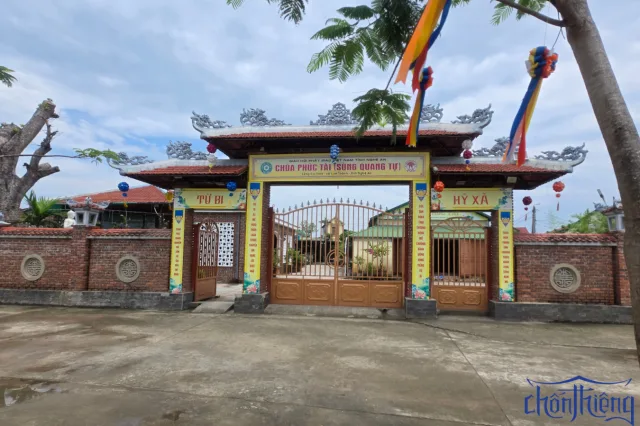
Chùa Phúc Tài có tên chữ là Sùng Quang tự, tọa lạc trên khu đất rộng có địa thế hài hòa và thoáng đãng nằm trên địa bàn xóm 2, xã Lam Thành, tỉnh Nghệ An.
Chùa quay mặt về hướng Nam, phía trước nhìn ra dòng sông Rum hiền hòa uốn chảy, tạo nên thế “tiền thủy hậu cư” truyền thống tạo nên sự linh thiêng, yên bình cho chốn già lam cổ tự.
Lịch sử và nhân vật
Chùa Phúc Tài là một ngôi chùa cổ có lịch sử hình thành từ rất sớm, tuy hiện nay chưa xác định được chính xác niên đại khởi dựng. Nhân dân trong vùng tương truyền rằng chùa dựng vào năm 1032 (thời Lý) .Tuy nhiên, căn cứ vào hai pho tượng cổ của chùa hiện còn được lưu giữ tại đền làng Cự Thôn, có niên đại vào khoảng thế kỷ XVII, có thể suy đoán rằng chùa Phúc Tài đã tồn tại từ thế kỷ XVII hoặc thậm chí sớm hơn nữa. Ngôi chùa được dựng trên khu đất rộng khoảng 1.924m², thuộc thửa số 184, tờ bản đồ số 3; phía Đông và phía Nam giáp đường làng, tạo nên vị thế thuận tiện và gần gũi với đời sống sinh hoạt của cư dân địa phương.
Từ khi hình thành, chùa Phúc Tài không chỉ là nơi thờ Phật, thực hành tín ngưỡng và sinh hoạt tâm linh của nhân dân trong vùng mà còn gắn bó mật thiết với lịch sử đấu tranh cách mạng của quê hương. Trong những năm đầu hoạt động cách mạng và thời kỳ kháng chiến chống thực dân Pháp, chùa từng là cơ sở hoạt động bí mật của chi bộ Đảng địa phương, nơi hội họp, liên lạc và triển khai nhiều nhiệm vụ cách mạng quan trọng. Đến thời kỳ kháng chiến chống Mỹ, chùa tiếp tục chứng kiến nhiều biến động lớn lao của lịch sử dân tộc. Bom đạn chiến tranh cùng thiên tai lũ lụt đã khiến ngôi chùa bị tàn phá nặng nề, nhiều hạng mục bị hư hỏng hoặc cuốn trôi hoàn toàn.
Trong suốt hai cuộc kháng chiến chống Pháp và chống Mỹ, chùa Phúc Tài còn là địa điểm diễn ra nhiều hoạt động xã hội có ý nghĩa quan trọng đối với đời sống nhân dân địa phương. Nơi đây từng được sử dụng để mở các lớp bình dân học vụ nhằm xóa nạn mù chữ cho người dân sau Cách mạng tháng Tám. Đồng thời, chùa cũng là nơi hội họp của làng xã để phổ biến chủ trương của Đảng và Nhà nước, vận động nhân dân tăng gia sản xuất, đóng góp sức người sức của cho kháng chiến và động viên thanh niên lên đường nhập ngũ bảo vệ Tổ quốc.
Trải qua hơn sáu thế kỷ tồn tại giữa một vùng đất thường xuyên chịu ảnh hưởng của thiên tai và chiến tranh, chùa Phúc Tài nhiều lần bị xuống cấp nghiêm trọng. Do nằm ngoài đê nên hằng năm ngôi chùa phải gánh chịu những trận lũ lớn của vùng hạ lưu sông Lam. Đặc biệt, trận đại hồng thủy năm 1978 đã làm chùa hư hại hoàn toàn. Trước đó, vào khoảng năm 1956, chùa đã gần như mai một, chỉ còn lại khu đất cũ cùng một cây đa cổ thụ; các pho tượng Phật và đồ thờ phần lớn bị nước lũ cuốn trôi và thất lạc.
Bước sang đầu thế kỷ XXI, nhờ sự quan tâm của chính quyền địa phương cùng tấm lòng hướng về cội nguồn tâm linh của nhân dân và con em xa quê, chùa Phúc Tài dần được phục hồi. Năm 2011, ngôi chính điện được tôn tạo trở lại, đồng thời phục dựng nhiều hạng mục như nhà linh, đài Quan Âm, cột hương, sân chùa và mái che phục vụ sinh hoạt tín ngưỡng.
Đầu năm 2014, một số Phật tử và người dân tâm huyết đã đứng ra vận động quyên góp công đức từ bà con địa phương và những người xa quê để tiếp tục xây dựng thêm nhà tăng, nhà bếp cùng nhiều công trình phụ trợ khác. Cũng trong thời gian này, nhân dân cung thỉnh Thầy Thích Định Tuệ về trụ trì chùa. Từ đó, các hoạt động Phật sự tại chùa dần được duy trì thường xuyên hơn; vào các buổi tối hằng ngày, đông đảo Phật tử và nhân dân đến tụng kinh, lễ Phật và sinh hoạt tín ngưỡng. Ban hộ tự hướng dẫn người dân thực hành nghi lễ Phật giáo theo đúng tinh thần chính pháp, phù hợp chủ trương của Đảng và Nhà nước, góp phần bài trừ mê tín dị đoan và từng bước xóa bỏ những tập tục lạc hậu trong đời sống tâm linh cộng đồng. Tuy nhiên, do nhiều điều kiện khách quan, Thầy Thích Định Tuệ không ở lại chùa lâu dài.
Đến năm 2017, sau nhiều lần khảo sát, lập phương án và chuẩn bị các điều kiện cần thiết, chùa Phúc Tài chính thức được phê duyệt phục dựng với quy mô mới. Cũng trong năm này, một sư cô cùng hai đệ tử đã về chùa tu hành, chăm nom hương khói và từng bước khôi phục các hoạt động Phật sự, đánh dấu sự hồi sinh của ngôi cổ tự sau nhiều năm hoang phế bởi chiến tranh, thiên tai và biến động lịch sử.
Từ đó đến nay, nhờ sự chung tay của chính quyền địa phương, Phật tử gần xa và bà con quê hương, chùa Phúc Tài từng bước được xây dựng khang trang hơn. Hiện nay, ngôi chùa đã cơ bản được phục dựng hoàn chỉnh với đầy đủ các hạng mục kiến trúc phục vụ sinh hoạt tín ngưỡng và tu học, trở thành không gian tâm linh trang nghiêm, thanh tịnh, đáp ứng nhu cầu sinh hoạt văn hóa tín ngưỡng của nhân dân địa phương.
Kiến trúc cảnh quan
Chùa Phúc Tài tọa lạc trong không gian thanh tĩnh, hài hòa với cảnh quan làng quê vùng đồng bằng ven sông. Bao quanh khuôn viên chùa là nhiều cây xanh cổ thụ tỏa bóng quanh năm, tạo nên vẻ u tịch và linh thiêng cho chốn thiền môn. Nổi bật nhất trong khuôn viên là cây đa cổ thụ lớn, tán lá sum suê, từ lâu đã trở thành biểu tượng gắn bó với ký ức tâm linh của người dân địa phương. Dưới gốc đa, nhà chùa tôn trí tượng Đức Phật A-di-đà, tạo thành một không gian thờ tự ngoài trời trang nghiêm, thanh thoát và gần gũi với thiên nhiên.
Ngôi chùa xưa vốn được dựng bằng gỗ lim theo lối kiến trúc truyền thống, song trải qua nhiều biến động lịch sử, chiến tranh và thiên tai nên phần lớn công trình cũ đã hư hỏng, xuống cấp nghiêm trọng. Về sau, chùa được tôn tạo và phục dựng lại nhằm đáp ứng nhu cầu sinh hoạt tín ngưỡng của Phật tử và nhân dân trong vùng. Dù không mang quy mô đồ sộ, tổng thể kiến trúc hiện nay vẫn giữ được dáng vẻ mộc mạc, thanh tịnh đặc trưng của những ngôi chùa làng xứ Nghệ.
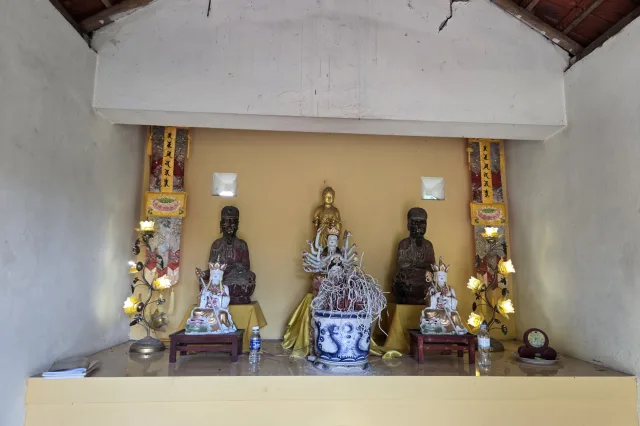
Không gian nội tự được bài trí trang nghiêm với hệ thống tượng thờ và pháp khí phục vụ nghi lễ Phật giáo. Chính điện hiện tôn trí tượng Đức Phật A-di-đà, ba pho tượng Tam Thế Phật, hai tượng Hộ pháp cùng hai tượng Quan Âm, tạo nên không gian thờ tự linh thiêng và cân đối. Ngoài ra, chùa còn lưu giữ nhiều đồ thờ truyền thống như hương án, lư hương, chuông, mõ cùng các pháp khí phục vụ tụng niệm và lễ bái hằng ngày.
Về mặt quy hoạch, khu Tam Bảo có diện tích khoảng 50m², là không gian trung tâm dành cho việc thờ Phật và hành lễ. Phía trước là khu Bái đường rộng khoảng 200m², nơi Phật tử tập trung tụng kinh, niệm Phật và tổ chức các nghi lễ lớn nhỏ trong năm. Bên cạnh đó, chùa còn có hai gian nhà tăng, nhà ăn, giếng nước cùng các công trình phụ trợ với tổng diện tích khoảng 100m², phục vụ sinh hoạt tu hành và các hoạt động cộng đồng.
Lối dẫn vào chùa và sân nội tự được đổ đá cấp phối, tạo sự thuận tiện cho việc đi lại nhưng vẫn giữ được nét mộc mạc, giản dị của không gian làng quê truyền thống. Bao quanh các hạng mục kiến trúc là hệ thống cây xanh tỏa bóng mát quanh năm, góp phần tạo nên môi trường thanh sạch, yên bình và đậm chất thiền vị.
Toàn bộ kinh phí phục dựng và xây dựng chùa đều do nhân dân địa phương, Phật tử gần xa cùng con em quê hương phát tâm công đức bằng tiền bạc, vật liệu và ngày công lao động, thể hiện tinh thần đoàn kết và lòng hướng về cội nguồn tâm linh của cộng đồng.
Đặc biệt, trong khuôn viên chùa hiện vẫn còn một ngôi mộ cổ của vị sư trụ trì cuối cùng của chùa xưa. Theo lời kể của các bậc cao niên địa phương, vị sư này viên tịch vào khoảng những năm 1965. Ngôi mộ hiện này là biểu tượng cho sự tiếp nối mạch nguồn Phật pháp tại ngôi cổ tự Phúc Tài.
Hiện vật
Hiện vật cổ quý giá nhất gắn với chùa Phúc Tài hiện nay là hai pho tượng Tam Thế có niên đại khoảng thế kỷ XVII, hiện được lưu giữ tại đền làng Cự Thôn. Đây là những dấu tích vật chất quan trọng, góp phần khẳng định bề dày lịch sử lâu đời của ngôi chùa cổ. Theo lời kể của nhân dân địa phương, ban đầu bộ tượng Tam Thế của chùa gồm đầy đủ ba pho tượng, tượng trưng cho chư Phật của ba thời: quá khứ, hiện tại và vị lai. Tuy nhiên, qua những biến động của chiến tranh, thiên tai và thời gian, một pho tượng đã bị thất lạc, hiện chỉ còn lại hai pho được bảo tồn đến ngày nay. Các pho tượng mang phong cách tạo tác cổ kính với đường nét chạm khắc mộc mạc nhưng tinh tế, phản ánh nghệ thuật tạo hình Phật giáo dân gian xứ Nghệ vào khoảng thế kỷ XVII. Dù trải qua nhiều thế kỷ và không còn nguyên vẹn bộ tượng ban đầu, những hiện vật này vẫn có giá trị lớn về mặt lịch sử, mỹ thuật và tín ngưỡng, đồng thời là chứng tích hiếm hoi còn lưu lại của ngôi chùa Phúc Tài xưa.
Ngoài ra tại nhà Linh (nhà Vong) của chùa còn lưu giữ một tấm bài vị bằng đá của một vị sư có pháp danh là Phúc Chang.
Sự kiện và lễ hội
Hiện nay, chùa Phúc Tài là điểm sinh hoạt tâm linh quen thuộc của đông đảo Phật tử trong vùng. Nhà chùa hiện có hơn 100 Phật tử thường xuyên tu học, trong đó có 98 Phật tử đã quy y Tam Bảo tại các ngôi chùa trong tỉnh Nghệ An. Các hoạt động Phật sự và sinh hoạt tín ngưỡng được duy trì nền nếp dưới sự hướng dẫn của Ban hộ tự, góp phần giữ gìn đời sống văn hóa tâm linh lành mạnh tại địa phương.
Ngoài những ngày sóc vọng như mùng một và ngày rằm hằng tháng, mỗi tối từ 19 giờ đến 21 giờ, chùa đều có đông đảo Phật tử trở về tụng kinh, niệm Phật và thực hành các nghi lễ Phật giáo. Mỗi buổi sinh hoạt thường thu hút hơn 50 người tham dự, tạo nên không khí thanh tịnh và gắn kết cộng đồng. Các thời khóa tụng niệm không chỉ giúp Phật tử hướng tâm tu học mà còn nuôi dưỡng tinh thần từ bi, nhân ái và đời sống đạo đức trong nhân dân.
Bên cạnh sinh hoạt thường nhật, nhà chùa còn tổ chức các buổi tu tập định kỳ vào chiều ngày 14 và chiều ngày 30 âm lịch hằng tháng. Thời gian sinh hoạt được điều chỉnh phù hợp theo mùa: Mùa đông từ 16 giờ đến 18 giờ. Mùa hè từ 17 giờ đến 19 giờ.
Vào các ngày vía Phật, ngày kỷ niệm lớn của Phật giáo, chùa tổ chức thêm các khóa lễ trang nghiêm để Phật tử và nhân dân tham gia hành lễ, cầu nguyện và công đức.
Trong năm, nhiều đại lễ Phật giáo được tổ chức tại chùa như lễ Phật Đản, lễ Vu Lan báo hiếu, lễ cầu an đầu năm cùng các nghi thức cầu siêu, tụng kinh và dâng hương vào các dịp quan trọng. Những ngày này thu hút đông đảo Phật tử và nhân dân địa phương về tham dự, vừa thể hiện đời sống tín ngưỡng phong phú, vừa góp phần gìn giữ nét đẹp văn hóa truyền thống của cộng đồng làng quê xứ Nghệ.
Tài liệu tham khảo
- Hồ sơ đề nghị phục hồi chùa Phúc Tài – Xã Hưng Lợi.
- Tài liệu phỏng vấn bác Nguyễn Sỹ Kiệm – Trưởng Ban Hộ tự, Xóm trưởng xóm 2. Ngày 28/04/2026.
Ngôn ngữ khác
Tiếng Anh (English)
Name and Geographic Location
Phuc Tai Pagoda is situated on a spacious tract of land with a harmonious and open setting in Hamlet 2, Lam Thanh Commune, Nghe An Province.
The pagoda faces south, overlooking the gentle Rum River flowing gracefully in front, forming the traditional geomantic arrangement of “water in front and settlement behind,” which contributes to the sacred and peaceful atmosphere of this ancient Buddhist sanctuary.
History and Historical Figures
Phuc Tai Pagoda is an ancient temple with a very early origin, although its exact date of establishment has not yet been determined. Local residents traditionally believe that the pagoda was built in 1032 during the Ly Dynasty. However, based on two ancient statues currently preserved at Cu Thon Village Temple, dating from approximately the 17th century, it may be inferred that Phuc Tai Pagoda existed from at least the 17th century, or perhaps even earlier. The pagoda was constructed on a site covering approximately 1,924 square meters, corresponding to Plot No. 184 on Map Sheet No. 3. The eastern and southern sides border village roads, giving the pagoda a convenient location closely connected to the daily life of local residents.
Since its establishment, Phuc Tai Pagoda has served not only as a place for Buddhist worship, religious practice, and spiritual activities for local people, but also as a site closely associated with the revolutionary history of the homeland. During the early revolutionary period and the resistance war against French colonialism, the pagoda functioned as a secret operational base for the local Party cell, hosting meetings, communications, and many important revolutionary activities. During the resistance war against the United States, the pagoda continued to witness major historical upheavals. Bombing raids, warfare, and severe flooding caused extensive destruction, damaging or completely washing away many structures.
Throughout both resistance wars against the French and the Americans, Phuc Tai Pagoda also served as a venue for many socially significant activities benefiting local residents. It was used to organize literacy classes aimed at eradicating illiteracy after the August Revolution. At the same time, the pagoda hosted village meetings to disseminate Party and State policies, mobilize people to increase agricultural production, contribute manpower and resources to the resistance effort, and encourage young men to enlist in defense of the nation.
After more than six centuries of existence in a region frequently affected by natural disasters and war, Phuc Tai Pagoda suffered repeated severe deterioration. Located outside the dike system, the pagoda endured annual floods from the lower Lam River basin. In particular, the catastrophic flood of 1978 completely devastated the pagoda. Even before that, around 1956, the temple had nearly disappeared, leaving only the original grounds and an ancient banyan tree; most Buddhist statues and ritual objects were swept away or lost in floodwaters.
Entering the early 21st century, thanks to the attention of local authorities and the devotion of residents and people living away from their homeland, Phuc Tai Pagoda gradually began to recover. In 2011, the main hall was restored, along with the reconstruction of various structures such as the spirit house, the Avalokitesvara platform, incense pillars, the temple courtyard, and shelter roofs serving religious activities.
At the beginning of 2014, devoted Buddhists and local residents organized fundraising campaigns to collect donations from villagers and expatriates to continue constructing monks’ quarters, kitchens, and other auxiliary buildings. During this same period, the community respectfully invited Venerable Thich Dinh Tue to become the abbot of the pagoda. Since then, Buddhist activities have gradually become more regular, with many Buddhists and local residents gathering every evening to chant sutras, worship the Buddha, and participate in religious practices. The temple caretaking committee guided local people in practicing Buddhism according to orthodox teachings and in accordance with Party and State policies, thereby contributing to the elimination of superstition and outdated spiritual customs within community life. However, due to various objective circumstances, Venerable Thich Dinh Tue did not remain at the pagoda permanently.
By 2017, after numerous surveys, planning efforts, and preparations, Phuc Tai Pagoda officially received approval for large-scale restoration. During that same year, a Buddhist nun and two disciples came to reside at the pagoda, maintaining incense offerings and gradually reviving Buddhist activities, marking the rebirth of the ancient temple after many years of abandonment caused by war, natural disasters, and historical upheavals.
Since then, through the collective efforts of local authorities, Buddhists from near and far, and members of the local community, Phuc Tai Pagoda has gradually been rebuilt into a more dignified and complete religious complex. Today, the pagoda has essentially been fully restored with comprehensive architectural facilities serving religious worship and Buddhist practice, becoming a solemn and tranquil spiritual space that fulfills the cultural and spiritual needs of local residents.
Architectural Landscape
Phuc Tai Pagoda is located within a peaceful setting harmoniously integrated with the rural landscape of the riverside plains. The pagoda grounds are surrounded by ancient shade trees that provide year-round greenery, creating an atmosphere of tranquility and sacredness for this Buddhist sanctuary. Most notable within the compound is a large ancient banyan tree with a luxuriant canopy, long regarded as a spiritual symbol deeply associated with the memories of local residents. Beneath the banyan tree, the temple enshrines a statue of Amitabha Buddha, forming a solemn and graceful outdoor worship space closely connected to nature.
The original pagoda was constructed from ironwood in traditional architectural style. However, due to historical upheavals, warfare, and natural disasters, most of the old structures suffered severe deterioration and damage. Later, the pagoda was renovated and reconstructed to meet the spiritual needs of Buddhists and local residents. Although not monumental in scale, the present architectural complex still preserves the rustic and tranquil character typical of village pagodas in the Nghe region.
The inner sanctuary is solemnly arranged with statues and ritual instruments used in Buddhist ceremonies. The main hall currently enshrines a statue of Amitabha Buddha, three statues of the Buddhas of the Three Times, two Dharma Protector statues, and two Avalokitesvara statues, creating a sacred and harmonious worship space. In addition, the pagoda preserves many traditional ritual objects such as altars, incense burners, bells, wooden fish drums, and ceremonial instruments used for daily chanting and worship.
In terms of planning, the Tam Bao Hall covers approximately 50 square meters and serves as the central worship and ceremonial area. In front lies the Bai Duong Hall, covering about 200 square meters, where Buddhists gather for sutra chanting, Buddha recitation, and major ceremonies throughout the year. The pagoda also includes two monks’ quarters, a dining area, a well, and auxiliary structures with a total area of approximately 100 square meters, supporting monastic life and community activities.
The pathways leading into the pagoda and the inner courtyard are surfaced with compacted stone, facilitating movement while preserving the rustic simplicity characteristic of traditional rural spaces. Surrounding the architectural structures is a system of trees providing year-round shade, contributing to a clean, peaceful environment imbued with meditative serenity.
All funding for the restoration and construction of the pagoda has come entirely from donations of money, materials, and labor contributed by local residents, Buddhists from various places, and people originating from the homeland, reflecting community solidarity and devotion toward spiritual roots.
Notably, within the pagoda grounds there remains an ancient tomb belonging to the last resident monk of the old pagoda. According to local elders, this monk passed away around 1965. Today, the tomb stands as a symbol of the continuity of the Buddhist lineage at the ancient Phuc Tai Pagoda.
Artifacts
The most valuable ancient artifacts associated with Phuc Tai Pagoda today are two statues of the Buddhas of the Three Times, dating from approximately the 17th century, currently preserved at Cu Thon Village Temple. These objects constitute important material evidence affirming the long historical existence of the ancient pagoda. According to local accounts, the original set of Three Times Buddha statues consisted of three complete figures symbolizing the Buddhas of the past, present, and future. However, through the upheavals of war, natural disasters, and time, one statue was lost, leaving only two preserved today. The remaining statues exhibit an ancient artistic style characterized by simple yet refined carvings, reflecting the folk Buddhist sculptural art of the Nghe region during the 17th century. Despite the incomplete preservation of the original set, these artifacts retain significant historical, artistic, and religious value and remain among the few surviving testimonies of the old Phuc Tai Pagoda.
In addition, the Linh House (Spirit Memorial House) of the pagoda still preserves a stone memorial tablet dedicated to a monk bearing the Dharma name Phuc Chang.
Events and Festivals
Today, Phuc Tai Pagoda serves as a familiar spiritual center for a large number of Buddhists in the region. The pagoda currently has more than 100 regular Buddhist practitioners, including 98 Buddhists who have formally taken refuge in the Triple Gem at temples throughout Nghe An Province. Religious activities and spiritual practices are maintained systematically under the guidance of the temple caretaking committee, contributing to the preservation of healthy spiritual and cultural life within the locality.
In addition to observance days such as the first day and full moon day of each lunar month, every evening from 7:00 PM to 9:00 PM many Buddhists gather at the pagoda to chant sutras, recite the Buddha’s name, and perform Buddhist rituals. Each gathering usually attracts more than 50 participants, creating an atmosphere of tranquility and community solidarity. These chanting sessions not only help Buddhists cultivate their spiritual practice but also nurture compassion, benevolence, and ethical values among local residents.
Besides daily religious activities, the pagoda also organizes regular meditation and practice sessions on the afternoons of the 14th and 30th days of each lunar month. The schedules vary according to the season:
Winter: from 4:00 PM to 6:00 PM
Summer: from 5:00 PM to 7:00 PM
On Buddhist holy days and major commemorative occasions, the pagoda organizes solemn ceremonies allowing Buddhists and local residents to participate in worship, prayer, and merit-making activities.
Throughout the year, many major Buddhist festivals are celebrated at the pagoda, including Vesak (Buddha’s Birthday Festival), the Vu Lan Festival of Filial Piety, New Year Peace-Praying Ceremonies, requiem rituals, sutra chanting ceremonies, and incense offerings on important occasions. These events attract large numbers of Buddhists and local residents, reflecting a rich spiritual life while also preserving the traditional cultural beauty of rural communities in the Nghe region.
References
- Hồ sơ đề nghị phục hồi chùa Phúc Tài – Xã Hưng Lợi.
- Tài liệu phỏng vấn bác Nguyễn Sỹ Kiệm – Trưởng Ban Hộ tự, Xóm trưởng xóm 2. Ngày 28/04/2026.
Tiếng Pháp (Français)
Nom et situation géographique
La pagode Phuc Tai est située sur un vaste terrain au relief harmonieux et dégagé, dans le hameau 2 de la commune de Lam Thanh, province de Nghe An.
La pagode est orientée vers le sud. À l’avant s’étend la paisible rivière Rum aux méandres doux, créant la configuration traditionnelle dite « eau devant, habitat derrière », apportant au lieu monastique ancien une atmosphère sacrée et sereine.
Histoire et personnages
La pagode Phuc Tai est une ancienne pagode dont l’origine remonte à une époque très ancienne, bien que sa date exacte de fondation n’ait pas encore été déterminée avec précision. Selon les traditions orales locales, elle aurait été construite en 1032, sous la dynastie Ly. Toutefois, en se fondant sur deux anciennes statues conservées actuellement dans le temple communal de Cu Thon, datées approximativement du XVIIe siècle, on peut supposer que la pagode Phuc Tai existait déjà au XVIIe siècle, voire plus tôt encore. La pagode fut édifiée sur un terrain d’environ 1 924 m², correspondant à la parcelle n°184 de la feuille cadastrale n°3 ; ses côtés est et sud bordent les chemins du village, lui conférant une position à la fois accessible et intimement liée à la vie quotidienne des habitants.
Depuis sa fondation, la pagode Phuc Tai n’a pas seulement servi de lieu de culte bouddhique et de pratique spirituelle pour les habitants de la région, mais elle a également été étroitement associée à l’histoire révolutionnaire locale. Durant les premières années du mouvement révolutionnaire et pendant la guerre de résistance contre la colonisation française, la pagode servit de base clandestine au comité local du Parti, accueillant réunions, communications et nombreuses missions révolutionnaires importantes. Pendant la guerre contre les États-Unis, la pagode fut de nouveau témoin de grands bouleversements historiques. Les bombardements ainsi que les catastrophes naturelles et les inondations causèrent de lourds dégâts, détruisant ou emportant de nombreuses structures.
Au cours des deux guerres de résistance contre la France puis contre les États-Unis, la pagode Phuc Tai fut également le théâtre de nombreuses activités sociales importantes pour la population locale. Elle accueillit des cours d’alphabétisation populaire destinés à éradiquer l’analphabétisme après la Révolution d’Août. Elle servait également de lieu de réunion villageois pour diffuser les politiques du Parti et de l’État, encourager la production agricole, mobiliser les contributions humaines et matérielles pour la guerre et inciter les jeunes à rejoindre l’armée afin de défendre la patrie.
Après plus de six siècles d’existence dans une région régulièrement frappée par les catastrophes naturelles et les guerres, la pagode Phuc Tai subit de nombreuses dégradations majeures. Située hors des digues, elle était chaque année exposée aux importantes crues de la basse vallée de la rivière Lam. La grande inondation de 1978 détruisit entièrement la pagode. Auparavant, vers 1956, elle était déjà presque tombée en ruine, ne laissant subsister que le terrain ancien et un grand banian centenaire ; la plupart des statues bouddhiques et objets de culte avaient été emportés ou perdus dans les eaux.
Au début du XXIe siècle, grâce au soutien des autorités locales ainsi qu’à l’attachement spirituel des habitants et des personnes originaires de la région vivant ailleurs, la pagode Phuc Tai commença progressivement à renaître. En 2011, le sanctuaire principal fut restauré et plusieurs structures furent reconstruites, notamment la maison des esprits, l’autel de Quan Am, la colonne d’encens, la cour de la pagode et des abris destinés aux activités religieuses.
Au début de l’année 2014, plusieurs fidèles bouddhistes et habitants dévoués organisèrent des collectes de dons auprès de la population locale et des expatriés originaires du village afin de poursuivre la construction de la résidence monastique, de la cuisine et d’autres bâtiments annexes. Durant cette même période, la communauté invita le moine Thich Dinh Tue à devenir abbé de la pagode. Dès lors, les activités religieuses y furent progressivement rétablies de manière régulière ; chaque soir, de nombreux fidèles et habitants venaient réciter les sutras, prier Bouddha et participer aux pratiques spirituelles. Le comité de gestion religieuse guidait les habitants dans la pratique correcte des rites bouddhiques conformément aux principes orthodoxes et aux orientations du Parti et de l’État, contribuant ainsi à lutter contre les superstitions et à éliminer progressivement les coutumes rétrogrades dans la vie spirituelle communautaire. Toutefois, pour diverses raisons objectives, le moine Thich Dinh Tue ne demeura pas durablement à la pagode.
En 2017, après de nombreuses études, préparations et démarches administratives, la restauration officielle de la pagode Phuc Tai fut approuvée dans un nouveau projet d’envergure. La même année, une nonne et deux disciples vinrent s’y installer afin d’entretenir le culte et de rétablir progressivement les activités religieuses, marquant la renaissance de l’ancienne pagode après de longues années d’abandon dues aux guerres, aux catastrophes naturelles et aux bouleversements historiques.
Depuis lors, grâce aux efforts conjoints des autorités locales, des fidèles proches et lointains ainsi que des habitants originaires du village, la pagode Phuc Tai a été progressivement reconstruite de manière plus majestueuse. Aujourd’hui, elle est pratiquement entièrement restaurée avec tous les éléments architecturaux nécessaires aux activités religieuses et à la pratique spirituelle, devenant un espace sacré, solennel et paisible répondant aux besoins culturels et spirituels de la population locale.
Architecture et paysage
La pagode Phuc Tai se situe dans un environnement calme et harmonieux, parfaitement intégré au paysage rural des plaines riveraines. Le domaine est entouré de nombreux arbres centenaires offrant leur ombre tout au long de l’année, créant une atmosphère à la fois paisible et sacrée propre au monde monastique. L’élément le plus remarquable du site est un immense banian ancien au feuillage luxuriant, devenu depuis longtemps un symbole associé à la mémoire spirituelle des habitants. Sous cet arbre, la pagode abrite une statue du Bouddha Amitabha, formant un espace de culte extérieur solennel, élégant et intimement lié à la nature.
L’ancienne pagode était construite en bois de fer selon le style architectural traditionnel. Cependant, les bouleversements historiques, les guerres et les catastrophes naturelles ont gravement endommagé la majorité des structures anciennes. Par la suite, la pagode fut restaurée et reconstruite afin de répondre aux besoins religieux des fidèles et des habitants de la région. Bien que l’ensemble ne soit pas monumental, l’architecture actuelle conserve l’aspect simple et paisible caractéristique des pagodes villageoises de la région de Nghe.
L’espace intérieur du sanctuaire est aménagé avec solennité et comprend un système de statues et d’objets rituels destinés aux cérémonies bouddhiques. Le sanctuaire principal abrite actuellement une statue du Bouddha Amitabha, trois statues des Bouddhas des Trois Temps, deux statues des gardiens du Dharma ainsi que deux statues de Quan Am, formant un espace cultuel sacré et harmonieux. La pagode conserve également de nombreux objets traditionnels tels qu’autels d’encens, brûle-parfums, cloches, mokugyo et divers instruments liturgiques utilisés lors des récitations et cérémonies quotidiennes.
Sur le plan architectural, l’espace Tam Bao couvre environ 50 m² et constitue le centre principal consacré au culte et aux cérémonies religieuses. Devant celui-ci se trouve la salle de prière Bai Duong d’environ 200 m², où les fidèles se réunissent pour réciter les sutras, invoquer Bouddha et organiser les différentes cérémonies de l’année. La pagode comprend également deux bâtiments pour les moines, une salle à manger, un puits et plusieurs constructions annexes totalisant environ 100 m², destinés à la vie monastique et aux activités communautaires.
Le chemin menant à la pagode ainsi que la cour intérieure sont recouverts de pierres compactées, facilitant les déplacements tout en préservant la simplicité rustique du paysage rural traditionnel. Les différentes constructions sont entourées d’arbres offrant une ombre permanente, contribuant à créer un environnement pur, paisible et profondément empreint de spiritualité méditative.
L’ensemble des travaux de restauration et de construction de la pagode a été financé par les dons des habitants locaux, des fidèles bouddhistes proches et lointains ainsi que des personnes originaires de la région, sous forme d’argent, de matériaux et de journées de travail, témoignant de l’esprit de solidarité et de l’attachement de la communauté à ses racines spirituelles.
Particularité remarquable : le domaine de la pagode conserve encore aujourd’hui la tombe ancienne du dernier moine abbé de l’ancienne pagode. Selon les récits des anciens du village, ce moine serait décédé vers 1965. Cette tombe symbolise aujourd’hui la continuité de la transmission du Dharma bouddhique au sein de l’ancienne pagode Phuc Tai.
Objets et vestiges
Les objets anciens les plus précieux liés à la pagode Phuc Tai sont actuellement deux statues des Bouddhas des Trois Temps datant approximativement du XVIIe siècle, conservées aujourd’hui dans le temple communal de Cu Thon. Ces vestiges matériels constituent des preuves importantes attestant de l’ancienneté historique de cette pagode. Selon les habitants, l’ensemble des Bouddhas des Trois Temps comprenait à l’origine trois statues représentant les Bouddhas du passé, du présent et du futur. Cependant, les guerres, les catastrophes naturelles et le temps ont entraîné la disparition de l’une d’entre elles ; seules deux statues ont été conservées jusqu’à aujourd’hui. Ces sculptures présentent un style ancien aux lignes sobres mais raffinées, reflétant l’art populaire bouddhique de la région de Nghe au XVIIe siècle. Malgré les siècles écoulés et la perte d’une partie de l’ensemble original, ces objets conservent une grande valeur historique, artistique et religieuse, constituant également de rares témoignages matériels subsistant de l’ancienne pagode Phuc Tai.
Par ailleurs, la maison Linh (maison des âmes ou maison des défunts) de la pagode conserve également une stèle funéraire en pierre dédiée à un moine portant le nom religieux Phuc Chang.
Événements et fêtes
Aujourd’hui, la pagode Phuc Tai est un lieu de pratique spirituelle familier pour de nombreux fidèles de la région. Elle compte actuellement plus de cent pratiquants réguliers, dont quatre-vingt-dix-huit ont officiellement pris refuge dans les Trois Joyaux auprès de différentes pagodes de la province de Nghe An. Les activités religieuses et les pratiques spirituelles sont maintenues de manière régulière sous la direction du comité de gestion religieuse, contribuant à préserver une vie culturelle et spirituelle saine au sein de la communauté locale.
En dehors des jours de nouvelle lune et de pleine lune de chaque mois lunaire, de nombreux fidèles se rendent chaque soir à la pagode entre 19 heures et 21 heures pour réciter les sutras, invoquer Bouddha et pratiquer les rites bouddhiques. Chaque séance rassemble généralement plus de cinquante participants, créant une atmosphère paisible et renforçant les liens communautaires. Ces pratiques ne permettent pas seulement aux fidèles d’approfondir leur chemin spirituel, mais nourrissent également les valeurs de compassion, de bonté et de moralité dans la population.
En complément des activités quotidiennes, la pagode organise aussi des séances de pratique périodiques les après-midis des 14e et 30e jours du calendrier lunaire. Les horaires varient selon les saisons :
En hiver : de 16 h à 18 h ;
En été : de 17 h à 19 h.
Lors des fêtes bouddhiques et des grandes commémorations religieuses, la pagode organise des cérémonies solennelles permettant aux fidèles et aux habitants de participer aux prières, aux rites et aux actes de mérite.
Tout au long de l’année, plusieurs grandes fêtes bouddhiques sont célébrées à la pagode, telles que Vesak, Vu Lan dédié à la piété filiale, les cérémonies de prière pour la paix au début de l’année ainsi que divers rites de prières pour les défunts, récitations de sutras et offrandes d’encens lors des occasions importantes. Ces événements attirent de nombreux fidèles et habitants, illustrant à la fois la richesse de la vie spirituelle locale et la préservation des traditions culturelles des villages de Nghe.
Références
- Hồ sơ đề nghị phục hồi chùa Phúc Tài – Xã Hưng Lợi.
- Tài liệu phỏng vấn bác Nguyễn Sỹ Kiệm – Trưởng Ban Hộ tự, Xóm trưởng xóm 2. Ngày 28/04/2026.
Tiếng Trung (中文)
名称与地理位置
福财寺(Chua Phuc Tai)坐落于越南乂安省蓝城县第二村(Xom 2, Xa Lam Thanh)一片宽阔、地势和谐开阔的土地之上。
寺庙坐南朝北,前方可眺望宁静蜿蜒的Rum河,形成传统“前水后居”的风水格局,使这座古老伽蓝更显灵秀与安宁。
历史与人物
福财寺是一座历史悠久的古寺,其创建年代至今尚未完全确定。当地民间相传寺庙建于1032年(李朝时期)。然而,根据目前仍保存于巨村祠庙(Den lang Cu Thon)的两尊古佛像,其年代约可追溯至十七世纪,因此可推测福财寺至少在十七世纪便已存在,甚至可能更早。
寺庙建于面积约1,924平方米的土地上,属于第三号地图第184地块,东侧与南侧毗邻乡村道路,地理位置便利,与当地居民生活联系密切。
自创建以来,福财寺不仅是当地民众礼佛、信仰实践及精神生活的重要场所,也与家乡革命斗争历史紧密相连。在革命初期以及抗法战争时期,寺庙曾作为地方党支部秘密活动据点,用于召开会议、联络以及部署多项重要革命任务。
至抗美战争时期,寺庙继续见证民族历史的重大变迁。战争炮火与洪涝灾害使寺庙遭受严重破坏,许多建筑部分损毁甚至完全被冲毁。
在抗法与抗美两场战争期间,福财寺还承担了许多重要社会功能。八月革命后,这里曾开办扫盲班,帮助当地民众消除文盲。同时,寺庙也是乡村集会地点,用于宣传党和国家政策,动员人民发展生产、支援抗战,并鼓励青年参军保卫祖国。
经历六个多世纪的风雨与战争,福财寺多次严重损毁。由于寺庙位于堤坝之外,每年都要承受蓝江下游洪水侵袭。尤其是1978年的特大洪灾,使寺庙彻底毁坏。更早之前,大约1956年时,寺庙已几近荒废,仅剩旧址与一株古榕树;多数佛像与法器也被洪水冲走或遗失。
进入二十一世纪后,在地方政府关怀以及民众与海外乡亲心系精神根源的支持下,福财寺逐渐得到恢复。2011年,寺庙正殿获得修缮,同时重建了灵堂、观音台、香柱、寺院庭院以及用于宗教活动的遮棚等建筑。
2014年初,一些热心佛教信众与当地居民发起募捐活动,号召乡民及离乡人士捐献功德,以继续兴建僧舍、厨房及其他辅助设施。同一时期,当地民众恭请释定慧法师(Thich Dinh Tue)前来住持寺院。
此后,寺庙佛事活动逐渐恢复正常。每天晚上,众多佛教信众与居民前来诵经、礼佛及参与宗教活动。护寺委员会积极指导民众按照正法精神实践佛教仪轨,并配合党和国家政策,反对迷信活动,逐步消除社区精神生活中的落后习俗。然而,由于多种客观原因,释定慧法师未能长期留驻寺院。
2017年,在经过多次勘察、规划与准备之后,福财寺正式获准按新规模进行重建。同年,一位比丘尼及两名弟子来到寺院修行、照料香火,并逐步恢复佛事活动,标志着这座因战争、自然灾害与历史动荡而荒废多年的古寺重新焕发生机。
自那以后,在地方政府、各地佛教信众以及家乡人民共同努力下,福财寺逐步建设得更加庄严完善。如今,寺庙已基本恢复完整,各类宗教活动与修学设施齐备,成为一处庄严清净的精神空间,满足当地居民的文化与信仰需求。
建筑与景观
福财寺坐落于宁静祥和的环境中,与河畔平原乡村景观融为一体。寺院周围环绕着多株古树,四季成荫,使整个禅门空间更显幽静与神圣。
寺院内最引人注目的是一株枝繁叶茂的大榕树,长期以来已成为当地居民精神记忆的重要象征。榕树下供奉着阿弥陀佛圣像,形成庄严清雅且亲近自然的露天礼佛空间。
古时寺庙原以铁木建造,采用传统建筑风格。然而,由于历史动荡、战争与自然灾害,多数旧建筑已严重损毁。后来,寺院得到修缮与重建,以满足当地佛教信众与居民的宗教需求。虽然规模不算宏大,但现今整体建筑仍保留着乂安乡村寺庙特有的朴素与宁静风貌。
寺内空间庄严肃穆,供奉佛像及法器齐全。正殿现供奉阿弥陀佛圣像、三世佛三尊、两尊护法神像以及两尊观音像,共同营造出神圣而协调的礼佛空间。
此外,寺庙还保存着多种传统法器与供具,如香案、香炉、铜钟、木鱼以及用于日常诵经礼拜的各种法器。
在整体规划方面,三宝殿面积约50平方米,是礼佛与举行法会的核心空间。前方拜堂面积约200平方米,是佛教信众诵经、念佛及举办各类法会的重要场所。
此外,寺庙还设有两间僧舍、食堂、水井及其他辅助建筑,总面积约100平方米,用于僧众生活与社区活动。
通往寺庙及内院的道路采用碎石铺设,既方便通行,又保留了传统乡村空间的朴实风格。各建筑周围绿树成荫,进一步营造出清净、安宁且富有禅意的环境。
寺庙全部修缮与建设经费均来自当地居民、各地佛教信众以及离乡游子的捐献,包括资金、建材与劳动力,体现出社区团结以及人们对精神根源的深厚情感。
特别值得一提的是,寺院内至今仍保存着一座古墓,据说是昔日最后一位住持僧人的墓塔。根据当地长者回忆,这位僧人大约于1965年前后圆寂。如今,这座墓塔成为福财古寺佛法传承延续的重要象征。
文物
目前,与福财寺相关最珍贵的古代文物,是两尊约十七世纪的三世佛像,现保存于巨村祠庙。这些文物是证明古寺悠久历史的重要实物遗存。据当地居民讲述,原本寺庙的三世佛像共有三尊,分别象征过去、现在与未来三世诸佛。然而,由于战争、自然灾害与岁月变迁,其中一尊已遗失,目前仅存两尊保存至今。 这些佛像具有古朴典雅的雕塑风格,线条质朴而细腻,反映了十七世纪乂安地区民间佛教造像艺术特色。尽管佛像已不完整,并历经数百年风霜,但它们依然具有极高的历史、艺术与宗教价值,也是昔日福财寺极为珍贵且罕见的历史遗存。
此外,在寺院的灵堂(亡灵堂)内,目前仍保存着一块石质牌位,上面刻有一位法号为“福昌(Phuc Chang)”僧人的名号。
活动与节庆
如今,福财寺已成为当地佛教信众重要的精神活动中心。寺内现有一百多位经常参与修学的佛教徒,其中98位已在乂安省各寺院正式皈依三宝。
在护寺委员会指导下,寺庙佛事与宗教活动持续有序开展,为维护当地健康的精神文化生活发挥积极作用。
除每月初一与十五等传统斋日外,每晚19时至21时,寺庙都会举行诵经、念佛及佛教仪式活动,通常吸引超过50位信众参加,营造出宁静祥和且凝聚社区情感的氛围。
这些诵经修持活动不仅帮助佛教徒专注修学,也培养居民慈悲、仁爱与道德精神。
此外,寺庙每月农历十四日下午与三十日下午还会举行定期修学活动。活动时间依据季节调整:
冬季:16时至18时
夏季:17时至19时
在佛教重要纪念日及佛诞日,寺庙还会举行庄严法会,供佛教信众与当地居民参加礼佛、祈福与供养活动。
每年寺内举办多项大型佛教节庆活动,如佛诞节、盂兰盆报恩节、新春祈安法会,以及超度法会、诵经与焚香仪式等。
这些活动吸引大量佛教信众与当地居民前来参加,不仅展现丰富多彩的民间信仰生活,也有助于保护与传承乂安乡村社区的传统文化特色。
参考资料
- Hồ sơ đề nghị phục hồi chùa Phúc Tài – Xã Hưng Lợi.
- Tài liệu phỏng vấn bác Nguyễn Sỹ Kiệm – Trưởng Ban Hộ tự, Xóm trưởng xóm 2. Ngày 28/04/2026.