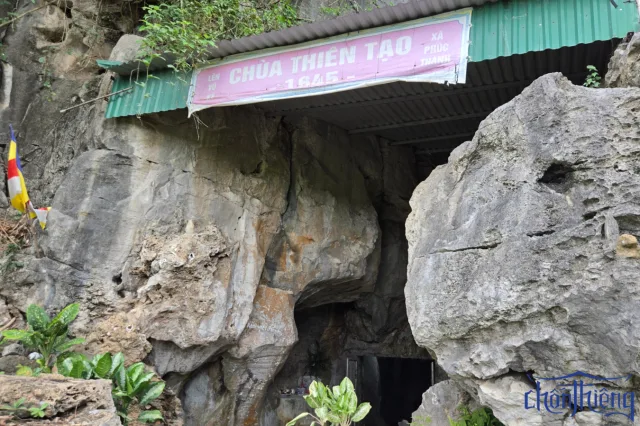


Tên gọi và vị trí địa lý
Chùa Thiên Tạo là một ngôi chùa động độc đáo nằm trong hang đá thuộc lèn Vũ Kỳ, nay tọa lạc trên địa bàn xã Giai Lạc, tỉnh Nghệ An.
Lèn Vũ Kỳ trước đây vốn là một quần thể núi đá gồm chín mỏm núi lớn nhỏ nối tiếp nhau, tạo thành thế núi trùng điệp giữa vùng đồng bằng. Tuy nhiên, qua thời gian cùng quá trình khai thác đá kéo dài, phần lớn các mỏm núi đã bị phá vỡ, hiện nay chỉ còn lại bốn mỏm núi tồn tại.
Lịch sử và nhân vật
Ở phía đông lèn Vũ Kỳ có một hang động tự nhiên đặc biệt, tuy không phải hang lớn nhất nhưng lại mang hình dáng tựa giọt nước hay búp sen khổng lồ, tạo nên vẻ đẹp kỳ thú hiếm có. Không gian trong động khô ráo, sạch sẽ, nhiều ngách đá sâu hun hút, vừa huyền bí vừa linh thiêng. Chính vẻ đẹp tự nhiên ấy đã khiến nơi đây từ rất sớm trở thành điểm dừng chân của những người hướng Phật.
Tương truyền, vào khoảng thế kỷ XV, các Phật tử trong vùng đã chọn hang động này làm nơi tụng kinh, niệm Phật và hành lễ. Từ đó, một ngôi chùa đặc biệt dần hình thành giữa lòng núi đá mà hầu như không cần sự can thiệp lớn của bàn tay con người. Bởi được tạo dựng hoàn toàn từ thiên nhiên nên người dân gọi nơi đây là chùa Thiên Tạo – nghĩa là ngôi chùa do trời tạo thành.
Xưa kia, lèn Vũ Kỳ là quần thể núi đá có nhiều hang động rộng lớn và nổi tiếng như hang Tiền, hang Bạc, hang Bông Lúa… Tuy nhiên, trải qua thời gian cùng những biến động địa chất, phần lớn các hang động ấy đã bị sập hoặc mất lối vào. Đến nay, chùa Thiên Tạo gần như là hang động nguyên vẹn duy nhất còn tồn tại, trở thành dấu tích quý giá của cả một vùng núi đá cổ.
Trong hai cuộc kháng chiến chống Pháp và chống Mỹ, nhờ địa thế kín đáo và hiểm trở, chùa Thiên Tạo cùng lèn Vũ Kỳ đã trở thành nơi cất giấu lương thực, vũ khí cho các đơn vị quân đội hoạt động trong vùng. Phong trào Cần Vương chống Pháp, Lèn Vũ Kỳ và chùa Thiên Tạo ở huyện Đô Lương được lãnh tụ Nguyễn Xuân Ôn sử dụng làm nơi luyện tập binh dao, rèn đúc vũ khí tuyển mộ quân cờ, phất cờ chống Pháp.
Cuối năm 1929, ông Nguyễn Phong Sắc cử cán bộ ra Yên Thành để lựa chọn những Đảng viên Tân Việt tích cực, tổ chức một cuộc họp ở lèn Vũ Kỳ, thành lập chi bộ Đông Dương Cộng sản Đảng, gồm các ông Phan Đăng Điệu làm Bí thư, Phan Xuân Thuyên, Phan Lạc và một số vị khác.
Năm 1937, Đoàn Thanh niên Dân chủ huyện Yên Thành đã họp mít tinh tại chùa Thiên Tạo để tưởng nhớ ông Phan Thanh², một chiến sĩ cách mạng hoạt động công khai nơi tiếng của Đảng vừa từ trần và để tuyên truyền vận động Thanh niên. Cuộc mít tinh này vừa có ý nghĩa chính trị vừa là hoạt động văn hóa tham quan du lịch thích hợp với lứa tuổi Thanh niên. Những bài hát tập thể như: Quốc tế ca, Bài hát thanh niên xích vệ bằng tiếng Pháp vận động trong chùa Thiên Tạo.
Tháng 6 năm 1945, chùa Thiên Tạo là nơi mở hội nghị thành lập Ban vận động Việt Minh huyện Yên Thành, do ông Chu Văn Biên chủ trì.
Những năm 1965 – 1975 chùa Thiên Tạo huyện Yên Thành là nơi cất giấu và chế tạo vũ khí của đơn vị Z12, Liên khu IV và Tỉnh đội Nghệ An sử dụng làm nơi hội họp, là kho Quân khí.
Sau chiến tranh, chùa Thiên Tạo từng có thời gian dài bị bỏ hoang. Đến tháng 8 năm 2017, nhờ sự phát tâm công đức của nhân dân và Phật tử trong vùng, chùa Thiên Tạo được sửa sang và tôn tạo trở lại. Hệ thống tượng Phật, ban thờ, điện chiếu sáng cùng nhiều vật dụng phục vụ sinh hoạt tín ngưỡng hiện nay đều do người dân và Phật tử chung tay đóng góp. Từ đó, ngôi chùa động linh thiêng giữa lèn Vũ Kỳ dần hồi sinh, tiếp tục trở thành điểm tựa tâm linh và một thắng tích đặc biệt của vùng đất Nghệ An.
Kiến trúc cảnh quan
Chùa Thiên Tạo có hình dáng tựa một búp sen khổng lồ đang hé nở giữa núi đá, cao khoảng 20m và rộng hơn 25m, tạo nên cảm giác vừa kỳ vĩ vừa linh thiêng. Không gian bên trong động rộng mở, mái hang vươn cao chót vót với hệ thống nhũ đá tự nhiên buông rủ xuống mềm mại, óng ánh qua ánh sáng tự nhiên, đem lại vẻ đẹp huyền ảo hiếm thấy.
Ngay từ khi bước vào cửa động, có thể cảm nhận rõ sự mát lành và thanh tịnh lan tỏa trong không gian, đặc biệt vào những ngày hè oi bức. Không khí trong hang luôn khô ráo, thoáng đãng, tạo nên cảm giác an yên như tách biệt khỏi thế giới bên ngoài. Chính điều này đã khiến chùa Thiên Tạo từ lâu trở thành nơi tìm về của những người muốn hướng tâm thanh tịnh và hòa mình vào thiên nhiên linh thiêng.
Không gian thờ tự trong chùa được bố trí hài hòa theo cấu trúc tự nhiên của hang động. Chùa hiện có ba ban thờ chính, tất cả đều nằm trong những hốc đá và hang nhỏ bên trong lòng động. Trung tâm chùa là điện Tam Bảo, trước điện Tam Bảo là giếng Ngọc nằm giữa hang, sâu khoảng 2,7m, đường kính khoảng 2m, nước trong vắt quanh năm.
Bên trái động chính là hang Thiên, bên phải là hang Tiên Nữ. Mỗi hang động nhỏ đều gắn với những câu chuyện dân gian và yếu tố huyền thoại khác nhau, góp phần tạo nên chiều sâu văn hóa tâm linh cho chùa Thiên Tạo. Trên bề mặt đá của hang Tam Bảo và hang Thiên hiện vẫn còn nhiều dấu lõm tự nhiên giống hình bàn chân người. Theo truyền thuyết dân gian, đây chính là dấu chân của Đức Phật lưu lại khi ngài hiển linh tại vùng núi này, khiến nơi đây càng thêm linh thiêng trong tâm thức người dân địa phương.
Điểm độc đáo nhất của chùa Thiên Tạo nằm ở việc toàn bộ không gian kiến trúc gần như hoàn toàn dựa vào cấu trúc nguyên sơ của thiên nhiên. Các ban thờ được đặt trong những hốc đá tựa hình đài sen hay búp sen nở, tạo cảm giác như đã được trời đất khéo léo sắp đặt từ thuở ban đầu. Bao quanh là hệ thống nhũ đá, vân đá với hình thù sinh động, biến hóa kỳ ảo, vừa mang giá trị thẩm mỹ tự nhiên vừa tạo nên bầu không khí huyền bí cho không gian thờ tự.
Dù không sở hữu những công trình kiến trúc đồ sộ hay chạm trổ cầu kỳ như nhiều ngôi chùa khác, chùa Thiên Tạo vẫn mang vẻ đẹp rất riêng, vẻ đẹp của sự hòa quyện giữa tín ngưỡng Phật giáo với cảnh quan hang động tự nhiên. Chính nét nguyên sơ, thanh tịnh và linh thiêng ấy đã khiến ngôi chùa trở thành điểm đến tâm linh đặc biệt của nhân dân trong vùng và du khách thập phương suốt bao thế hệ.
Hiện vật
Trải qua nhiều biến động của lịch sử cùng sự tàn phá của thời gian và chiến tranh, phần lớn tượng Phật, đồ thờ tự, cổ vật cùng nhiều thắng tích tự nhiên trong chùa Thiên Tạo đã bị hư hại hoặc thất lạc. Tuy nhiên, đến nay ngôi chùa vẫn còn lưu giữ được hai hiện vật cổ có giá trị đặc biệt, gắn liền với lịch sử hình thành và đời sống tín ngưỡng của nhân dân địa phương.
Trong đó, đáng chú ý nhất là một bát hương bằng đá có niên đại từ năm 1645. Bát hương được chế tác từ đá nguyên khối, mang dáng vẻ mộc mạc nhưng cổ kính, là minh chứng cho sự hiện diện lâu đời của hoạt động thờ tự tại hang động này. Theo lời kể của người dân trong vùng, vào thời kỳ kháng chiến chống thực dân Pháp, để tránh sự tàn phá của chiến tranh, dân làng đã bí mật mang bát hương về cất giữ trong nhà. Sau khi chiến sự qua đi, hiện vật mới được đưa trở lại chùa và tiếp tục dùng trong việc hương khói, thờ phụng.
Bên cạnh đó, chùa còn lưu giữ một cốt Phật cổ, được nhân dân xem như linh vật thiêng của ngôi chùa hang động. Dù không còn nguyên vẹn hệ thống tượng thờ như trước kia, nhưng những hiện vật còn sót lại vẫn phản ánh chiều sâu lịch sử, đời sống tâm linh và sự gắn bó bền chặt của cộng đồng cư dân địa phương đối với chùa Thiên Tạo suốt nhiều thế kỷ.
Sự kiện và lễ hội
Hiện nay, chùa Thiên Tạo không có sư trụ trì thường xuyên, việc hương khói và chăm sóc chùa chủ yếu do nhân dân địa phương cùng các Phật tử quanh vùng đảm nhiệm. Vào các ngày mùng một, ngày rằm hằng tháng, người dân và khách thập phương thường đến chùa dâng hương, lễ Phật và vãn cảnh nơi hang động linh thiêng giữa lèn Vũ Kỳ.
Tuy vậy, các hoạt động tu học và sinh hoạt Phật sự tại chùa vẫn được duy trì nhờ sự quan tâm, hướng dẫn của Đại đức Thích Tuệ Minh cùng đạo tràng Phật tử địa phương. Định kỳ vào chiều mồng tám âm lịch hằng tháng, quý thầy về chùa giảng pháp, hướng dẫn Phật tử tu học và thực hành giáo lý nhà Phật.
Vào chiều ngày 14 âm lịch hằng tháng, nhà chùa tổ chức khóa lễ tụng kinh, sám hối với sự tham gia của đông đảo Phật tử trong đạo tràng và nhân dân địa phương. Đây là dịp để mọi người cùng hướng tâm thanh tịnh, cầu nguyện bình an và nuôi dưỡng đời sống tinh thần theo tinh thần từ bi của đạo Phật.
Bên cạnh đó, vào chiều ngày 29 đối với tháng thiếu hoặc ngày 30 đối với tháng đủ, chùa tổ chức lễ cầu yên và tụng kinh Phổ Môn dành cho Phật tử và nhân dân có nhu cầu cầu an cho gia đình, sức khỏe và cuộc sống.
Đặc biệt, trong các ngày mùng một và ngày rằm hằng tháng, cửa chùa luôn rộng mở để đón khách thập phương đến dâng hương lễ Phật, chiêm bái và thưởng ngoạn cảnh sắc thiên nhiên kỳ thú của động chùa Thiên Tạo. Không gian thanh tịnh giữa núi đá cùng vẻ đẹp hoang sơ của hang động đã khiến nơi đây trở thành điểm sinh hoạt tâm linh quen thuộc của người dân trong vùng.
Xếp hạng
Lèn Vũ Kỳ được UBND tỉnh cấp bằng công nhận là di tích lịch sử cấp tỉnh năm 2017.
Tài liệu tham khảo
- Nguyễn Đại Đồng, Thích Thọ Lạc (Đồng Chủ biên) (2021), Lịch sử Phật giáo Nghệ An, Nxb Tôn Giáo.
- Huyền bí ngôi chùa cổ mang tên Thiên Tạo nằm trong hang động vô cùng độc đáo ở Nghệ An
- Yên Thành đón nhận Bằng xếp hạng di tích lịch sử cấp tỉnh Lèn Vũ Kỳ – Đài phát thanh và truyền hình Nghệ An
Ngôn ngữ khác
Tiếng Anh (English)
Name and Geographic Location
Thien Tao Pagoda is a unique cave pagoda located inside a rock cavern within Vu Ky Mountain, now situated in Giai Lac Commune, Nghe An Province.
Previously, Vu Ky Mountain was a limestone mountain complex consisting of nine interconnected peaks of various sizes, forming a majestic mountainous landscape amid the plains. However, over time and through prolonged stone quarrying activities, most of the peaks were destroyed, and only four peaks remain today.
History and Historical Figures
On the eastern side of Vu Ky Mountain lies a remarkable natural cave. Although it is not the largest cave in the area, its shape resembles a giant droplet of water or a blooming lotus bud, creating an exceptionally fascinating beauty. The interior of the cave is dry and clean, with deep rocky passages extending mysteriously into the darkness, evoking both sacredness and wonder. It was precisely this natural beauty that made the site an early destination for Buddhist practitioners.
According to local tradition, around the 15th century, Buddhists in the region selected this cave as a place for chanting sutras, reciting the Buddha’s name, and conducting religious ceremonies. Gradually, a unique pagoda was formed within the heart of the rocky mountain with almost no major intervention by human hands. Because it was created entirely by nature, local people named it Thien Tao Pagoda, meaning “the pagoda created by Heaven.”
In earlier times, Vu Ky Mountain was a vast limestone complex containing many famous caves such as Tien Cave, Bac Cave, and Bong Lua Cave. However, through geological changes and the passage of time, most of these caves collapsed or lost their entrances. Today, Thien Tao Pagoda is nearly the only intact cave still surviving, becoming a precious remnant of an ancient limestone region.
During the resistance wars against the French and the Americans, thanks to its secluded and rugged terrain, Thien Tao Pagoda and Vu Ky Mountain became secret storage sites for food supplies and weapons used by military units operating in the area. During the Can Vuong anti-French movement, Nguyen Xuan On used Vu Ky Mountain and Thien Tao Pagoda in Do Luong District as a place for military training, weapon forging, troop recruitment, and raising the anti-French resistance banner.
At the end of 1929, Nguyen Phong Sac sent cadres to Yen Thanh to select active members of the Tan Viet Party. A meeting was organized at Vu Ky Mountain to establish a cell of the Indochinese Communist Party, including Phan Dang Dieu as Secretary, along with Phan Xuan Thuyen, Phan Lac, and several others.
In 1937, the Democratic Youth Union of Yen Thanh District held a rally at Thien Tao Pagoda to commemorate Phan Thanh, a revolutionary activist publicly associated with the Party who had recently passed away, while also promoting youth mobilization activities. This rally held both political significance and cultural-tourism value appropriate for young participants. Collective songs such as “The Internationale” and the “Red Guard Youth Song” in French were sung within Thien Tao Pagoda during the event.
On June 26, 1939, the Yen Thanh District Party Committee organized a meeting at Vu Ky Mountain involving young people from Giai Lac, Trang Thanh, and Phuc Tang communes to discuss the establishment of an anti-imperialist youth organization named the “Phan Thanh Youth Group.”
In June 1945, Thien Tao Pagoda hosted the conference establishing the Viet Minh Mobilization Committee of Yen Thanh District, chaired by Chu Van Bien.
Between 1965 and 1975, Thien Tao Pagoda in Yen Thanh District served as a weapons storage and manufacturing site for Unit Z12. Military Region IV and the Nghe An Provincial Military Command also used the site for meetings and as an armory depot.
After the war, Thien Tao Pagoda remained abandoned for a long period. In August 2017, thanks to donations and contributions from local residents and Buddhists, the pagoda was restored and renovated. The present system of Buddhist statues, altars, lighting, and ritual equipment has all been collectively donated by villagers and Buddhists. Since then, the sacred cave pagoda within Vu Ky Mountain has gradually revived, once again becoming a spiritual refuge and a distinctive cultural landmark of Nghe An Province.
Architectural Landscape
Thien Tao Pagoda resembles a giant lotus bud blooming among the limestone mountains, approximately 20 meters high and more than 25 meters wide, creating an atmosphere that is both majestic and sacred. The interior space of the cave is spacious, with a soaring ceiling adorned by natural stalactites hanging gracefully and shimmering under natural light, producing a rare mystical beauty.
Immediately upon entering the cave, visitors can feel the coolness and tranquility permeating the atmosphere, especially during hot summer days. The air inside the cave remains dry and well-ventilated year-round, creating a peaceful feeling isolated from the outside world. This quality has long made Thien Tao Pagoda a destination for those seeking spiritual serenity and communion with sacred nature.
The worship spaces inside the pagoda are harmoniously arranged according to the natural structure of the cave. The pagoda currently contains three main altars, all situated within stone recesses and smaller chambers inside the cavern. At the center is the Tam Bao Hall. In front of the Tam Bao Hall lies Ngoc Well, located within the cave itself, approximately 2.7 meters deep and 2 meters in diameter, with crystal-clear water throughout the year.
To the left of the main cave is Thien Cave, while to the right is Tien Nu Cave. Each smaller cave is associated with different folk legends and mythical elements, contributing to the spiritual and cultural depth of Thien Tao Pagoda. On the rock surfaces of the Tam Bao Cave and Thien Cave, many natural depressions resembling human footprints can still be seen. According to local folklore, these are believed to be the footprints left by the Buddha when he manifested in this mountainous region, making the site even more sacred in local belief.
The most distinctive feature of Thien Tao Pagoda lies in the fact that its entire architectural space depends almost completely on the untouched natural structure of the cave. The altars are placed within stone recesses shaped like lotus pedestals or blooming lotus buds, creating the impression that they were carefully arranged by heaven and earth from the beginning of time. Surrounding them is a system of stalactites and rock patterns with vivid and fantastical shapes, carrying both natural aesthetic value and a mysterious atmosphere for the worship space.
Although it does not possess monumental architecture or elaborate carvings like many other pagodas, Thien Tao Pagoda has a unique beauty of its own — a beauty born from the harmony between Buddhist faith and the natural cave landscape. This pristine, tranquil, and sacred quality has made the pagoda a special spiritual destination for local residents and pilgrims from afar across many generations.
Artifacts
After many historical upheavals, together with the destruction caused by time and war, most Buddhist statues, worship objects, ancient artifacts, and natural scenic features of Thien Tao Pagoda were damaged or lost. Nevertheless, the pagoda still preserves two valuable ancient artifacts closely associated with its history and the spiritual life of local residents.
Most notable among them is a stone incense burner dating from 1645. Carved from a single block of stone, the incense burner possesses a simple yet ancient appearance, serving as evidence of the long-standing worship activities within this cave sanctuary. According to local accounts, during the resistance war against French colonialism, villagers secretly removed the incense burner and hid it inside private homes to protect it from wartime destruction. After the war ended, the artifact was returned to the pagoda and continues to be used for incense offerings and worship today.
In addition, the pagoda preserves an ancient Buddhist relic regarded by local people as the sacred spiritual treasure of the cave pagoda. Although the original system of statues is no longer intact, the surviving artifacts still reflect the deep historical roots, spiritual life, and enduring attachment of the local community to Thien Tao Pagoda over many centuries.
Events and Festivals
Currently, Thien Tao Pagoda does not have a resident abbot. Incense offerings and maintenance of the pagoda are primarily undertaken by local residents and Buddhists from surrounding areas. On the first day and full moon day of each lunar month, local people and pilgrims frequently come to offer incense, worship the Buddha, and admire the sacred cave scenery within Vu Ky Mountain.
Nevertheless, Buddhist study and religious activities continue to be maintained thanks to the guidance and support of Venerable Thich Tue Minh together with the local Buddhist congregation. On the afternoon of the eighth day of each lunar month, monks come to the pagoda to give Dharma teachings and guide Buddhists in practicing Buddhist doctrine.
On the afternoon of the fourteenth day of each lunar month, the pagoda organizes chanting and repentance ceremonies attended by many Buddhists and local residents. These occasions provide opportunities for participants to cultivate peaceful minds, pray for well-being, and nourish their spiritual lives according to the compassionate teachings of Buddhism.
Additionally, on the afternoon of the twenty-ninth day of short lunar months or the thirtieth day of full lunar months, the pagoda holds peace-praying ceremonies and chants the Universal Gate Chapter for Buddhists and local residents wishing to pray for family peace, health, and well-being.
Especially on the first and full moon days of each lunar month, the pagoda’s doors remain open to welcome visitors from all directions who come to offer incense, worship, contemplate, and admire the extraordinary natural beauty of the cave sanctuary. The tranquil atmosphere among the limestone mountains and the untouched beauty of the cave have made this site a familiar spiritual destination for local residents.
Classification
Thien Tao Mountain was officially recognized by the Nghe An Provincial People’s Committee as a Provincial Historical Relic Site in 2017.
References
- Nguyễn Đại Đồng, Thích Thọ Lạc (Đồng Chủ biên) (2021), Lịch sử Phật giáo Nghệ An, Nxb Tôn Giáo.
- Huyền bí ngôi chùa cổ mang tên Thiên Tạo nằm trong hang động vô cùng độc đáo ở Nghệ An
- Yên Thành đón nhận Bằng xếp hạng di tích lịch sử cấp tỉnh Lèn Vũ Kỳ – Đài phát thanh và truyền hình Nghệ An
Tiếng Pháp (Français)
Nom et situation géographique
La pagode Thien Tao est une pagode-grotte unique, située dans une cavité rocheuse du massif de Vu Ky, aujourd’hui localisée dans la commune de Giai Lac, province de Nghe An.
Autrefois, le massif de Vu Ky formait un ensemble montagneux composé de neuf pics rocheux de tailles diverses reliés entre eux, créant un paysage de montagnes superposées au milieu des plaines. Cependant, au fil du temps et en raison de l’exploitation prolongée de la pierre, la plupart de ces sommets ont été détruits ; il n’en subsiste aujourd’hui que quatre.
Histoire et personnages
À l’est du massif de Vu Ky se trouve une grotte naturelle remarquable qui, bien qu’elle ne soit pas la plus vaste, possède une forme évoquant une goutte d’eau ou un immense bouton de lotus, lui conférant une beauté rare et fascinante. L’intérieur de la grotte est sec et propre, traversé de profondes cavités rocheuses mystérieuses qui renforcent son caractère sacré. Cette beauté naturelle fit très tôt de cet endroit un lieu de retraite privilégié pour les fidèles bouddhistes.
Selon la tradition, vers le XVe siècle, les bouddhistes de la région choisirent cette grotte comme lieu de récitation des sutras, de prières et de cérémonies religieuses. C’est ainsi qu’une pagode singulière se forma progressivement au cœur de la montagne, sans presque aucune intervention humaine. Parce qu’elle semblait entièrement créée par la nature elle-même, les habitants l’appelèrent pagode Thien Tao, c’est-à-dire « la pagode créée par le ciel ».
Autrefois, le massif de Vu Ky était célèbre pour ses nombreuses grandes grottes telles que les grottes Tien, Bac et Bong Lua. Cependant, avec le temps et les transformations géologiques, la plupart de ces cavités se sont effondrées ou ont perdu leur accès. Aujourd’hui, la pagode Thien Tao demeure pratiquement la seule grotte encore intacte, constituant un précieux vestige de cet ancien massif rocheux.
Pendant les guerres de résistance contre la France puis contre les États-Unis, grâce à sa position discrète et difficile d’accès, la pagode Thien Tao et le massif de Vu Ky servirent de lieu de stockage pour les vivres et les armes destinés aux unités militaires opérant dans la région. Durant le mouvement Can Vuong contre la colonisation française, le massif de Vu Ky et la pagode Thien Tao, dans le district de Do Luong, furent utilisés par le dirigeant Nguyen Xuan On comme lieu d’entraînement militaire, de fabrication d’armes, de recrutement de troupes et de soulèvement contre les Français.
À la fin de l’année 1929, Nguyen Phong Sac envoya des cadres à Yen Thanh afin de sélectionner les membres les plus actifs du Parti Tan Viet. Une réunion fut organisée au massif de Vu Ky pour fonder une cellule du Parti communiste d’Indochine, composée notamment de Phan Dang Dieu comme secrétaire, Phan Xuan Thuyen, Phan Lac et plusieurs autres militants.
En 1937, l’Union de la Jeunesse démocratique du district de Yen Thanh organisa un meeting à la pagode Thien Tao en mémoire de Phan Thanh², un militant révolutionnaire engagé dans les activités publiques du Parti récemment décédé, tout en menant des actions de mobilisation de la jeunesse. Ce rassemblement avait à la fois une portée politique et culturelle, combinée à une activité de découverte touristique adaptée aux jeunes. Des chants collectifs tels que L’Internationale et le Chant de la jeunesse des gardes rouges en français furent entonnés dans la pagode.
Le 26 juin 1939, le comité du Parti du district de Yen Thanh tint une réunion au massif de Vu Ky réunissant plusieurs jeunes des communes de Giai Lac, Trang Thanh et Phuc Tang afin de discuter de la création d’un groupe de jeunesse révolutionnaire nommé « Groupe de jeunesse Phan Thanh ».
En juin 1945, la pagode Thien Tao accueillit la conférence de création du Comité de mobilisation Viet Minh du district de Yen Thanh, présidée par Chu Van Bien.
Durant la période 1965–1975, la pagode Thien Tao du district de Yen Thanh servit de dépôt et d’atelier de fabrication d’armes pour l’unité Z12 ; elle fut également utilisée comme lieu de réunion et dépôt d’armement par la Région militaire IV et le commandement militaire de la province de Nghe An.
Après la guerre, la pagode Thien Tao connut une longue période d’abandon. Ce n’est qu’en août 2017, grâce aux dons pieux des habitants et des fidèles de la région, qu’elle fut restaurée et réaménagée. Les statues bouddhiques, autels, systèmes d’éclairage et autres équipements destinés aux activités religieuses actuelles furent financés collectivement par la population et les fidèles. Depuis lors, cette pagode-grotte sacrée du massif de Vu Ky a progressivement retrouvé vie, redevenant un important lieu spirituel et un site remarquable de la province de Nghe An.
Architecture et paysage
La pagode Thien Tao ressemble à un immense bouton de lotus s’épanouissant au milieu des montagnes rocheuses. Elle mesure environ vingt mètres de hauteur et plus de vingt-cinq mètres de largeur, offrant une impression à la fois majestueuse et sacrée. L’intérieur de la grotte est vaste ; sa voûte s’élève très haut et présente un ensemble de stalactites naturelles aux formes souples et scintillantes sous la lumière naturelle, créant un spectacle d’une rare beauté féerique.
Dès l’entrée de la grotte, on ressent immédiatement une fraîcheur et une sérénité particulières, surtout durant les journées estivales étouffantes. L’air à l’intérieur reste constamment sec et aéré, donnant une sensation de paix comme si l’on était séparé du monde extérieur. C’est précisément cette atmosphère qui fait depuis longtemps de la pagode Thien Tao un lieu de retraite privilégié pour ceux qui cherchent le calme spirituel et la communion avec une nature sacrée.
L’espace cultuel de la pagode est organisé harmonieusement selon la structure naturelle de la grotte. La pagode possède actuellement trois autels principaux, tous installés dans des niches rocheuses et de petites cavités à l’intérieur de la montagne. Au centre se trouve le sanctuaire Tam Bao ; devant celui-ci se situe le puits Ngoc, placé au cœur de la grotte, profond d’environ 2,7 mètres et large de près de deux mètres, dont l’eau reste limpide toute l’année.
À gauche de la grotte principale se trouve la grotte Thien, tandis qu’à droite s’ouvre la grotte des Fées. Chacune de ces cavités est liée à diverses légendes populaires et éléments mythiques, enrichissant la profondeur spirituelle et culturelle de la pagode Thien Tao. Sur les parois rocheuses de la grotte Tam Bao et de la grotte Thien subsistent encore aujourd’hui plusieurs creux naturels ressemblant à des empreintes de pas humains. Selon la tradition populaire, il s’agirait des traces laissées par Bouddha lors de sa manifestation spirituelle dans cette montagne, renforçant encore davantage le caractère sacré du lieu dans la conscience des habitants.
L’élément le plus singulier de la pagode Thien Tao réside dans le fait que l’ensemble de son architecture repose presque entièrement sur la structure originelle de la nature. Les autels sont placés dans des niches rocheuses ressemblant à des lotus ou à des boutons de lotus éclos, donnant l’impression que le ciel et la terre ont eux-mêmes organisé cet espace depuis les temps anciens. Tout autour se déploie un système de stalactites et de formations rocheuses aux formes vivantes et fantastiques, offrant à la fois une grande valeur esthétique naturelle et une atmosphère mystérieuse au lieu de culte.
Bien qu’elle ne possède ni constructions monumentales ni sculptures raffinées comparables à celles de nombreuses autres pagodes, la pagode Thien Tao conserve une beauté tout à fait particulière : celle de l’harmonie entre la foi bouddhique et le paysage naturel des grottes. Cette simplicité originelle, cette sérénité et cette sacralité ont fait de la pagode un haut lieu spirituel pour les habitants de la région et les visiteurs venus de loin à travers les générations.
Objets et vestiges
Malgré les bouleversements de l’histoire, les ravages du temps et les destructions liées aux guerres, la majorité des statues bouddhiques, objets de culte, antiquités et paysages naturels remarquables de la pagode Thien Tao ont été endommagés ou perdus. Toutefois, la pagode conserve encore aujourd’hui deux objets anciens d’une valeur exceptionnelle, intimement liés à son histoire et à la vie spirituelle des habitants locaux.
Le plus remarquable est un brûle-encens en pierre datant de 1645. Sculpté dans un bloc de pierre unique, cet objet présente une apparence simple mais ancienne et constitue un témoignage précieux de l’ancienneté des pratiques cultuelles dans cette grotte. Selon les habitants de la région, durant la guerre contre la colonisation française, afin de protéger cet objet des destructions, les villageois le cachèrent secrètement dans une maison privée. Après la guerre, il fut rapporté à la pagode et continua à être utilisé pour les rites d’encens et de vénération.
Par ailleurs, la pagode conserve également une relique bouddhique ancienne, considérée par la population comme un objet sacré protecteur de cette pagode-grotte. Bien que le système originel des statues cultuelles ne soit plus intact, les vestiges restants témoignent encore de la profondeur historique, de la richesse spirituelle et de l’attachement durable de la communauté locale envers la pagode Thien Tao à travers les siècles.
Événements et fêtes
Aujourd’hui, la pagode Thien Tao ne dispose pas d’un moine résident permanent ; l’entretien du culte et la préservation du site sont principalement assurés par les habitants locaux et les fidèles de la région. Les premiers jours et les jours de pleine lune de chaque mois lunaire, les habitants et les visiteurs viennent y offrir de l’encens, prier Bouddha et admirer le paysage sacré de la grotte du massif de Vu Ky.
Toutefois, les activités religieuses et la pratique bouddhique continuent d’être maintenues grâce à l’attention et aux enseignements du Vénérable Thich Tue Minh ainsi qu’à la communauté locale des fidèles. Chaque huitième jour du calendrier lunaire, des moines viennent à la pagode pour enseigner le Dharma et guider les fidèles dans l’étude et la pratique des enseignements bouddhiques.
Chaque quatorzième jour lunaire, la pagode organise des cérémonies de récitation des sutras et de repentir auxquelles participent de nombreux fidèles et habitants locaux. Ces moments permettent à chacun de purifier son esprit, de prier pour la paix et de nourrir sa vie spirituelle selon les valeurs de compassion du bouddhisme.
En outre, le vingt-neuvième jour des mois courts ou le trentième jour des mois complets, la pagode célèbre des cérémonies de prières pour la paix ainsi que des récitations du Sutra Phổ Môn destinées aux fidèles souhaitant prier pour la santé, la sérénité familiale et le bonheur dans la vie quotidienne.
Particulièrement lors des jours de nouvelle lune et de pleine lune, les portes de la pagode restent largement ouvertes afin d’accueillir les visiteurs venus de toutes les régions pour offrir de l’encens, vénérer Bouddha, contempler les lieux saints et admirer les paysages naturels extraordinaires de la grotte de Thien Tao. La tranquillité des montagnes rocheuses et la beauté sauvage de la grotte font de cet endroit un haut lieu spirituel familier pour les habitants de la région.
Classement patrimonial
Le site de Len Thien Tao a été officiellement classé monument historique provincial par le Comité populaire de la province en 2017.
Références
- Nguyễn Đại Đồng, Thích Thọ Lạc (Đồng Chủ biên) (2021), Lịch sử Phật giáo Nghệ An, Nxb Tôn Giáo.
- Huyền bí ngôi chùa cổ mang tên Thiên Tạo nằm trong hang động vô cùng độc đáo ở Nghệ An
- Yên Thành đón nhận Bằng xếp hạng di tích lịch sử cấp tỉnh Lèn Vũ Kỳ – Đài phát thanh và truyền hình Nghệ An
Tiếng Trung (中文)
名称与地理位置
天造寺(Chua Thien Tao)是一座独具特色的洞窟寺庙,位于岩洞之中,坐落在武圻岭(Len Vu Ky)山体内,今属越南乂安省佳乐社(Xa Giai Lac)。
昔日的武圻岭原本是一片由九座大小石峰相连而成的石灰岩山群,群峰起伏,屹立于平原之间,形成壮观的山岳景观。然而,随着岁月流逝及长期采石活动,大部分山峰已遭破坏,如今仅剩四座山峰保存至今。
历史与人物
在武圻岭东侧,有一处十分特殊的天然洞窟。虽然它并非最大的山洞,却因整体形状宛如一滴水珠或一朵巨大的莲花花苞而显得格外奇妙罕见。洞内空间干燥洁净,深邃岩缝幽深莫测,既神秘又充满灵气。正是这种天然奇景,使这里很早便成为信佛之人驻足修行之地。
相传约在十五世纪,当地佛教信众便已将此洞作为诵经、念佛与举行法会的场所。从那时起,一座特殊的寺庙逐渐在石山腹地形成,而几乎无需人为大规模建造。由于整个寺院完全依托天然洞窟形成,因此当地民众将其称为“天造寺”,意即“由天地自然造化而成的寺庙”。
古时,武圻岭曾拥有众多宽广著名的洞窟,如钱洞(Hang Tien)、银洞(Hang Bac)、稻花洞(Hang Bong Lua)等。然而,随着岁月流逝及地质变化,大部分洞窟已经坍塌或失去入口。至今,天造寺几乎成为唯一仍较完整保存下来的天然洞窟,也是这片古老石山区域极其珍贵的遗迹。
在抗法战争与抗美战争期间,由于地势隐蔽险要,天造寺与武圻岭曾成为当地武装力量藏匿粮食与武器的重要地点。
在抗法勤王运动时期,都良县(Do Luong)的武圻岭与天造寺曾被领袖阮春温(Nguyen Xuan On)用作训练兵器、锻造武器、招募义军以及发动抗法斗争的重要基地。
1929年底,阮丰色(Nguyen Phong Sac)派遣干部前往安城县(Yen Thanh),挑选积极的“新越党”党员,并在武圻岭召开会议,成立“印度支那共产党支部”。该支部成员包括潘登调(Phan Dang Dieu)担任书记,以及潘春宣(Phan Xuan Thuyen)、潘乐(Phan Lac)等人。
1937年,安城县民主青年团曾在天造寺举行群众集会,悼念刚刚逝世的革命战士潘清(Phan Thanh²),同时开展青年宣传活动。这次集会既具有政治意义,也兼具文化与旅游性质,十分适合青年参与。当时,《国际歌》及法语版《青年赤卫队之歌》等集体歌曲曾在天造寺内传唱。
1939年6月26日,安城县委在武圻岭召开会议,召集佳乐社(Giai Lac)、长城社(Trang Thanh)、福增社(Phuc Tang)部分青年,商议成立“潘清青年团”。
1945年6月,天造寺成为成立安城县越盟运动委员会会议的举办地点,由朱文边(Chu Van Bien)主持。
1965年至1975年间,安城县天造寺又成为Z12部队、第四联区以及乂安省军事指挥部储藏与制造武器的重要地点,同时也是军械仓库和会议场所。
战后,天造寺曾长期荒废。
直到2017年8月,在当地民众与佛教信众发心捐助下,天造寺才重新得到修缮与恢复。如今寺中的佛像、供桌、照明系统以及各种宗教用品,皆由民众与佛教徒共同捐献完成。
自此,这座位于武圻岭中的灵验洞寺逐渐重获新生,再次成为当地居民的重要精神依托,也成为乂安地区极具特色的宗教胜迹。
建筑与景观
天造寺整体外形宛如一朵正在山岩间绽放的巨大莲花,高约20米、宽逾25米,给人一种既壮丽又神圣的感觉。
洞内空间宽广开阔,洞顶高耸,天然钟乳石柔美垂挂,在自然光映照下闪耀晶莹光泽,展现出极为罕见的梦幻之美。
当人们步入洞口时,便能明显感受到一股清凉与宁静弥漫于空间之中,尤其在炎热夏日更显舒适。洞内空气始终干爽通风,令人仿佛远离尘世纷扰,获得内心安宁。因此,长期以来,天造寺一直是人们静心修行、亲近灵山自然的重要去处。
寺内供奉空间依据天然洞窟结构巧妙布置。目前寺中设有三座主要佛坛,均位于洞内岩壁凹穴与小洞窟之中。
寺院中央为三宝殿,殿前则有一口位于洞中的“玉井(Gieng Ngoc)”,井深约2.7米,直径约2米,井水终年清澈见底。
主洞左侧为“天洞(Hang Thien)”,右侧则是“仙女洞(Hang Tien Nu)”。每个小洞窟都与不同民间传说及神话故事相关,为天造寺增添了深厚的精神文化内涵。
在三宝洞与天洞的岩石表面上,如今仍可见许多天然凹痕,形似人类脚印。根据民间传说,这些正是佛陀显灵于此山时留下的足迹,因此更加强化了当地居民心中的神圣感。
天造寺最独特之处,在于其整体建筑空间几乎完全依托天然岩洞原貌形成。佛坛设置于宛如莲台或莲花花苞般的天然石穴之中,令人仿佛感受到天地自古便已巧妙安排这一神圣空间。
四周遍布形态奇异、变化万千的钟乳石与岩石纹理,不仅具有天然美学价值,也为整个礼佛空间营造出神秘而庄严的氛围。
尽管天造寺并不像许多大型寺庙那样拥有宏伟建筑或精美雕刻,但它依然具有独特魅力——那是一种佛教信仰与天然洞窟景观完美融合之美。
正是这种原始、清净而神圣的气息,使天造寺数百年来始终成为当地居民与四方游客的重要精神圣地。
文物
经历历史变迁、战争破坏与岁月侵蚀后,天造寺过去的大部分佛像、供器、古物以及自然胜景均已损毁或散失。
然而,至今寺庙仍保存着两件极具价值的古代文物,与当地居民长期信仰生活及寺院历史密切相关。
其中最重要的是一只刻于1645年的石制香炉。该香炉由整块石材雕刻而成,造型朴素古雅,是这一洞窟长期存在宗教祭祀活动的重要见证。
据当地居民讲述,在抗法战争时期,为避免战争破坏,村民曾秘密将石香炉藏于民宅之中。待战乱结束后,这件文物才被重新迎回寺庙,并继续用于供香礼佛。
此外,寺中还保存着一件古老佛舍利,当地居民视其为洞寺最神圣的灵物。
虽然昔日完整的佛像体系已不复存在,但这些遗留下来的文物,依然反映出天造寺深厚的历史底蕴、精神文化传统,以及当地居民数百年来对这座洞窟寺庙的深厚情感。
活动与节庆
目前,天造寺没有常驻住持,寺院香火与日常维护主要由当地居民及周边佛教信众共同负责。
每月初一与十五,当地民众及四方香客都会前来寺庙焚香礼佛,并游览这座位于武圻岭中的灵验洞寺。
不过,在释慧明大德(Thich Tue Minh)及当地佛教道场的关怀与指导下,寺庙的修学活动与佛事仍持续开展。
每月农历初八下午,法师们会前来寺院讲经说法,指导佛教徒修学佛法与实践佛教教义。
每月农历十四日下午,寺庙会举行诵经与忏悔法会,吸引众多佛教徒与当地居民参加。人们借此净化身心、祈求平安,并培养佛教慈悲精神。
此外,小月农历二十九日下午或大月三十日下午,寺庙还会举行祈安法会及《普门品》诵经活动,供佛教徒与民众为家庭、健康及生活平安祈福。
尤其在每月初一与十五,寺门始终向四方来客开放,人们不仅前来礼佛焚香,也前来欣赏天造洞寺奇特壮丽的自然景观。
宁静的山岩环境与原始神秘的洞窟之美,使这里长期以来成为当地居民重要而熟悉的精神活动场所。
评级
“天造岭(Len Thien Tao)”于2017年被乂安省人民委员会正式认定为省级历史遗迹。
参考资料
- Nguyễn Đại Đồng, Thích Thọ Lạc (Đồng Chủ biên) (2021), Lịch sử Phật giáo Nghệ An, Nxb Tôn Giáo.
- Huyền bí ngôi chùa cổ mang tên Thiên Tạo nằm trong hang động vô cùng độc đáo ở Nghệ An
- Yên Thành đón nhận Bằng xếp hạng di tích lịch sử cấp tỉnh Lèn Vũ Kỳ – Đài phát thanh và truyền hình Nghệ An