

Tên gọi và vị trí địa lý
Chùa Vạn Thắng, tên chữ Hương Tản tự thuộc địa phận thôn Mai Sơn, xã Nhân Hòa, huyện Vĩnh Bảo, thành phố Hải Phòng; mảnh đất có truyền thống cách mạng, bề dày lịch sử, hiếu học.
Lịch sử và nhân vật
Chùa Vạn Thắng, xã Nhân Hòa là công trình tâm linh trong đời sống văn hoá của nhân dân địa phương, gắn liền với quá trình xây dựng, phát triển của làng xã; nơi ghi dấu những kỷ niệm của nhiều thế hệ dân cư tham gia kháng chiến giải phóng dân tộc và xây dựng đất nước.
Chùa được xây dựng vào thời Lê Trung Hưng (thế kỷ 17), đáp ứng nhu cầu sinh hoạt tín ngưỡng của nhân dân. Trải qua hai cuộc kháng chiến chống Pháp và chống Mỹ của dân tộc, chùa đã bị hủy hoại một phần và xuống cấp nghiêm trọng. Năm 2009, nhân dân địa phương trùng tu, tôn tạo chùa có một khuôn viên rộng rãi, có kiến trúc độc đáo và đẹp mắt, được bao quanh bởi cây xanh và hồ sen tạo nên một không gian linh thiêng và yên bình như hiện nay.
Kiến trúc cảnh quan
Từ xa, khách thập phương sẽ nhìn thấy đỉnh chùa cao vút, được trang trí bằng những hoa văn tinh xảo và các tác phẩm điêu khắc tinh tế.
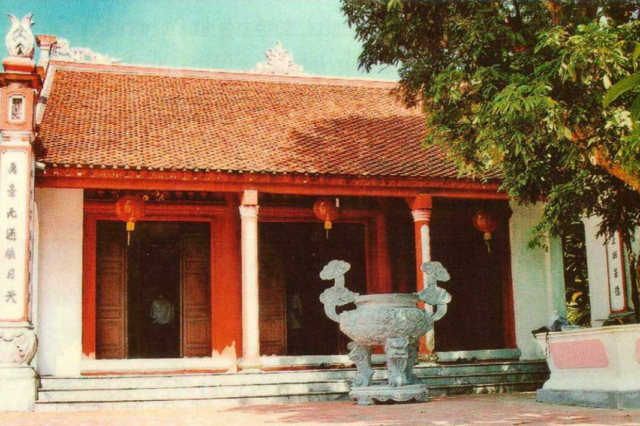
Chùa Hương Tản tọa lạc tại khu đất đầu làng, trước mặt là cánh đồng lúa. Chùa với diện tích 1.992 m2, bao gồm cổng, sân, vườn, giếng cổ. Công trình kiến trúc gồm: tòa Phật điện kiểu chữ Đinh, phục dựng theo lối cổ, gồm 3 gian tiền điện và 2 gian thượng điện. Các vì của bộ khung chịu lực ngôi chùa được tạo tác kiểu vì 4 hàng chân cột. Trên các cấu kiện kiến trúc đều được trang trí theo các đề tài truyền thống như: lá lật, vân tản, vân cụm… Mái chùa lợp ngói mũi, trang trí trụ đấu hồi văn. Ngoài tòa Phật điện, trong khuôn viên chùa còn có nhà thờ tổ, nhà khách cũng được làm theo thể thức truyền thông. Nhìn chung toàn bộ toà Phật điện, các công trình phụ trợ và khuôn viên chùa, thể hiện một khu thiền tự hoàn chỉnh.
Hiện vật
Chùa Vạn Thắng hiện còn lưu giữ được hệ thống tượng pháp tương đối đầy đủ, được bài trí trên thượng điện gồm: 3 pho Tam Thế; Quán Âm Chuẩn Đề; A Di Đà; Quán Âm Tọa Sơn; Quán Âm Tống Tử; Tòa Cửu Long và tượng Thích Ca Sơ Sinh; Ngọc Hoàng. Các pho tượng được sơn son, thếp bạc phủ hoàn kim. Tượng cổ mang niên đại thế kỷ 19 đầu thế kỷ 20. Ngoài các pho tượng chư Phật trên thượng điện, tiền điện chùa Vạn Thắng còn có các pho tượng Đức Ông. Tượng Đức Ông có niên đại cuối thế kỷ 19. Chùa bảo lưu được nhiều câu đối, đại tự, nhang án… chất liệu gỗ sơn son, thếp bạc phủ hoàn kim mang niên đại thế kỷ 19 và đầu thế kỷ 20.
Xếp hạng
Chùa Hương Tản đã được Ủy ban nhân dân thành phố Hải Phòng ra quyết định xếp hạng là Di tích Lịch sử Văn hoá.
Tham khảo
- Thích Thanh Giác (2017), Chùa cổ Hải Phòng, tập 2, Nxb Hải Phòng.
__________________________
Các ngôn ngữ khác
1. English
Name and geographical location
Van Thang Pagoda, whose Sino-Vietnamese name is Huong Tan Tu, is located in Mai Son Hamlet, Nhan Hoa Commune, Vinh Bao District, Hai Phong City — a land known for its revolutionary tradition, long history, and scholarly spirit.
History and figures
Van Thang Pagoda in Nhan Hoa Commune is a spiritual and cultural center of the local community, closely tied to the historical development of the village. It also bears witness to the contributions of many generations who participated in the resistance wars for national liberation and reconstruction.
The pagoda was built during the Le Trung Hung period (17th century) to serve the spiritual and religious needs of the people. Through the two resistance wars against the French and the Americans, the pagoda suffered severe damage and deterioration. In 2009, the local people restored and renovated it, creating a spacious compound with unique and elegant architecture, surrounded by greenery and lotus ponds, forming a serene and sacred landscape as it appears today.
Architecture and landscape
From afar, visitors can see the pagoda’s tall spire adorned with intricate motifs and refined carvings.
Huong Tan Pagoda sits at the entrance of the village, facing vast rice fields. The pagoda covers an area of 1,992 m², comprising a gate, courtyard, garden, and an ancient well. The main architectural structure — the Buddha Hall — is built in the shape of the Vietnamese character “Đinh” (丁), reconstructed in traditional style, with three compartments in the front hall and two in the upper hall. The wooden frame consists of four rows of columns, and the architectural details are decorated with traditional motifs such as reversed leaves, swirling clouds, and clustered scrolls. The roof is covered with curved nose tiles (ngoi mui), decorated with reliefs and floral designs.
In addition to the main hall, the pagoda compound includes an ancestral house and a guesthouse, both built in traditional style. Overall, the Buddha Hall, auxiliary structures, and surrounding gardens form a harmonious and complete Zen monastery complex.
Artifacts
Van Thang Pagoda preserves a relatively complete collection of Buddhist statues, displayed in the upper sanctuary. These include the Three Worlds Buddhas (Tam The), Avalokiteshvara Cundi (Quan Am Chuan De), Amitabha Buddha (A Di Da), Avalokiteshvara on the Mountain (Quan Am Toa Son), Avalokiteshvara Bestowing Children (Quan Am Tong Tu), the Nine Dragons Pedestal (Cuu Long) with the Infant Shakyamuni Buddha, and the Jade Emperor (Ngoc Hoang).
All statues are gilded and lacquered, dating from the 19th to early 20th century. In the front hall stands the statue of Duc Ong (the Guardian Deity), also from the late 19th century. The pagoda further retains many antique wooden artifacts — such as parallel sentences, large horizontal plaques, and incense altars — lacquered and gilded in gold and silver, representative of 19th–early 20th century craftsmanship.
Recognition
Huong Tan Pagoda (Van Thang Pagoda) has been officially recognized by the People’s Committee of Hai Phong City as a Historical and Cultural Relic Site.
2. Français
Nom et situation géographique
La pagode Van Thang, dont le nom en caractères sino-vietnamiens est Huong Tan Tu, se situe dans le hameau de Mai Son, commune de Nhan Hoa, district de Vinh Bao, ville de Hai Phong — une région réputée pour sa tradition révolutionnaire, son histoire ancienne et son esprit studieux.
Historique et figures associées
La pagode Van Thang constitue un centre spirituel et culturel au cœur de la vie religieuse des habitants de la commune de Nhan Hoa. Elle est étroitement liée à l’histoire du village et témoigne de la contribution de nombreuses générations à la lutte pour l’indépendance nationale et la reconstruction du pays.
Édifiée sous la dynastie des Lê Restaurés (XVIIᵉ siècle), la pagode répondait aux besoins spirituels des fidèles. Au fil des deux guerres de résistance contre les Français et les Américains, elle fut partiellement détruite et gravement détériorée. En 2009, les habitants ont entrepris sa restauration, donnant naissance à un vaste ensemble architectural harmonieux, entouré d’arbres et d’un étang de lotus, formant un paysage paisible et sacré.
Architecture et paysage
De loin, le visiteur aperçoit le clocher de la pagode s’élevant fièrement, orné de motifs délicats et de sculptures raffinées.
Située à l’entrée du village, la pagode Huong Tan fait face à de vastes rizières et s’étend sur 1 992 m², comprenant portail, cour, jardin et puits ancien.
Le bâtiment principal — la salle du Bouddha — adopte le plan en caractère « Đinh » (丁), reconstruit dans le style ancien, avec trois travées à l’avant et deux à l’arrière. La charpente repose sur quatre rangées de colonnes, et les éléments décoratifs reprennent des motifs traditionnels : feuilles retournées, nuages spiralés et ornements floraux. Le toit, couvert de tuiles courbées, est décoré de reliefs et de motifs stylisés.
Outre la salle principale, le complexe comprend une maison des Patriarches et un pavillon d’hôtes, tous deux construits dans un style traditionnel. Dans son ensemble, la pagode forme un monastère zen complet et harmonieux.
Objets conservés
La pagode Van Thang conserve un ensemble de statues bouddhiques relativement complet, exposé dans la salle principale : les Trois Bouddhas des Trois Mondes (Tam The), Avalokiteshvara à mille bras (Quan Am Chuan De), Amitabha (A Di Da), Guanyin sur la montagne (Quan Am Toa Son), Guanyin donnant des enfants (Quan Am Tong Tu), le Piédestal des Neuf Dragons (Cuu Long) avec le Bouddha Shakyamuni enfant, ainsi que le Jade Empereur (Ngoc Hoang).
Toutes les statues sont laquées et dorées, datant des XIXᵉ–début XXᵉ siècles. Dans le vestibule se trouve la statue du Saint Gardien (Duc Ong), de la fin du XIXᵉ siècle. La pagode conserve également de nombreuses pièces anciennes en bois laqué et doré — couplets, panneaux, autels — représentatives du savoir-faire vietnamien des XIXᵉ–début XXᵉ siècles.
Classement
La pagode Huong Tan (Van Thang) a été officiellement classée Monument Historique et Culturel par le Comité populaire de la ville de Hai Phong.
3. 中文繁體
名稱與地理位置
萬勝寺,字香傘寺,位於海防市永保縣仁和社梅山村,此地歷史悠久,革命傳統與好學之風深厚。
歷史與人物
萬勝寺為仁和社居民信仰與文化生活之中心,見證了地方社會之形成與發展,亦記錄了多代人民參與抗戰與建國之歷程。
該寺建於黎中興時期(十七世紀),以滿足民眾之宗教信仰需求。經歷抗法、抗美兩場戰爭後,寺宇部分毀壞並嚴重老化。二〇〇九年地方民眾集資修復,形成今日寬敞清雅、綠樹環抱、荷塘相映之寧靜佛境。
建築與景觀
遠望香傘寺,寺頂高聳,雕飾精巧,氣勢非凡。
寺建於村首,前臨稻田,占地一千九百九十二平方米,設有山門、庭院、花園與古井。
主體佛殿呈「丁」字形,仿古重建,前殿三間、後殿兩間,木構四行柱,雕飾傳統紋樣如翻葉、雲紋、團花等。屋頂覆瓦,施以斗拱、花紋裝飾。
除佛殿外,寺院尚有祖堂與客舍,皆依傳統形式建造。整體佈局嚴謹,構成一完整禪院之格局。
文物
萬勝寺現存佛像系統較為完整,上殿供奉三世佛、觀音準提、阿彌陀佛、觀音坐山、觀音送子、九龍座與釋迦誕生像、玉皇大帝等。諸像皆施以朱漆、鍍銀、貼金,年代約十九至二十世紀初。
前殿供奉聖公像,約十九世紀末作品。寺中並保存諸多楹聯、匾額、香案等木製供具,彩繪貼金,亦屬十九至二十世紀初之文物。
評級
香傘寺(萬勝寺)已被海防市人民委員會列為歷史文化遺跡。