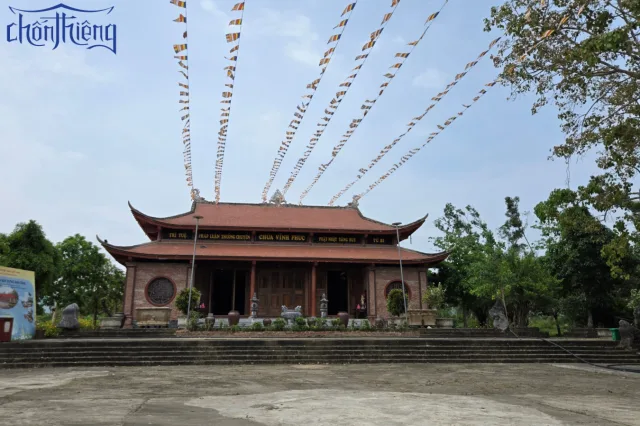


Tên gọi và vị trí địa lý
Chùa Vĩnh Phúc, trước đây còn được biết đến với tên gọi chùa Mưng, “Mưng” là tên địa phương của cây lộc vừng, loài cây này từng mọc dày đặc quanh khu vực chùa, từ đó gắn liền với tên gọi ban đầu của ngôi chùa.
Hiện nay chùa tọa lạc tại xóm 3, xã Đại Huệ, tỉnh Nghệ An. Công trình được dựng trên một gò đất rộng rãi, cao ráo, có địa thế hài hòa: phía sau tựa vào dãy núi Đại Huệ vững chãi, phía trước mở ra không gian đồng bằng bao la với làng mạc trù phú, đông đúc. Thế đất “tựa sơn hướng thủy” này không chỉ thuận lợi về cảnh quan mà còn mang ý nghĩa phong thủy, tạo nên sự cân bằng và linh thiêng cho chốn thiền môn.
Lịch sử và nhân vật
Qua khảo cứu các nguồn tư liệu lịch sử, thần tích địa phương cùng những dấu tích còn lưu lại trong dân gian, chùa Vĩnh Phúc (tên nôm là chùa Mưng) được cho là khởi dựng từ thời Lý (1009 – 1225) giai đoạn Phật giáo phát triển cực thịnh và giữ vai trò quốc giáo trong đời sống Đại Việt. Trải qua các triều đại Trần, Hồ, Lê Sơ và Mạc, ngôi chùa nhiều lần được trùng tu, mở rộng, dần trở thành một trung tâm tín ngưỡng quan trọng của vùng hữu ngạn sông Lam.
Từ buổi đầu hình thành, chùa Vĩnh Phúc không chỉ là nơi thờ Phật mà còn gắn bó mật thiết với quá trình khai cơ lập ấp của cư dân các vùng Nam Anh, Nam Xuân, Xuân Hòa, Nam Lĩnh ngày nay. Bao quanh ngôi chùa là hệ thống làng cổ trù phú dưới chân núi Đại Huệ, nơi lưu truyền nhiều huyền tích dân gian, phản ánh đời sống tinh thần phong phú của cư dân xứ Nghệ. Trong tâm thức cộng đồng, chùa Mưng từ lâu đã trở thành chốn linh thiêng để gửi gắm niềm tin, cầu mong quốc thái dân an, mùa màng tốt tươi và cuộc sống bình yên.
Suốt nhiều thế kỷ tồn tại, chùa Vĩnh Phúc còn là nơi hội tụ tinh thần yêu nước của Tăng Ni, Phật tử và nhân dân địa phương. Mỗi giai đoạn lịch sử biến động của dân tộc đều in dấu sự hiện diện và đồng hành của ngôi cổ tự này.
Dưới triều Hậu Lê, chùa do Thiền sư Nguyễn Bá Na trụ trì. Ngài xuất thân trong một gia đình danh giá, là cháu đích tôn của Quận công Nguyễn Hiên, công thần khai quốc thời Hậu Lê. Từ nhỏ, Nguyễn Bá Na đã nổi tiếng thông minh, chăm chỉ đèn sách, am hiểu kinh sử. Tuy nhiên, sau nhiều biến cố trong cuộc sống gia đình, ông quyết chí xuất gia, tìm đến cửa thiền tại chùa Vĩnh Phúc để tu học. Tại đây, ngài không chỉ tinh thông giáo lý mà còn tiếp tục tham học với nhiều bậc cao tăng đương thời, nhờ vậy đạo hạnh và uy tín ngày càng vang xa.
Danh tiếng của Thiền sư Nguyễn Bá Na lan đến tận kinh thành Thăng Long. Triều đình nhà Lê đã sắc phong cho ngài danh hiệu Đại Hòa thượng Thiền sư, pháp hiệu Pháp Tâm Như Lai, ghi nhận đạo lực và công đức lớn lao của một bậc chân tu. Sau khi viên tịch vào ngày mồng 6 tháng 4 âm lịch (không rõ năm), các đệ tử và Phật tử đã an táng nhục thân của ngài ngay trong khuôn viên chùa, bên cạnh cây bồ đề cổ thụ. Theo thời gian, rễ cây bồ đề lớn dần, ôm trọn phần mộ tháp, tạo nên một cảnh tượng linh thiêng, huyền nhiệm và trở thành biểu tượng tâm linh đặc biệt của chùa Vĩnh Phúc cho đến ngày nay.
Bước sang thời Tây Sơn và triều Nguyễn, xã hội Nghệ An liên tiếp trải qua những biến động lớn về chính trị, chiến tranh và thiên tai. Lũ lụt, mất mùa, đói kém thường xuyên xảy ra dọc đôi bờ sông Lam khiến đời sống nhân dân vô cùng cực khổ. Trong bối cảnh ấy, chùa Vĩnh Phúc cùng nhiều ngôi chùa trong vùng trở thành chỗ dựa tinh thần quan trọng cho người dân địa phương.
Sau cuộc khởi nghĩa Giáp Tuất năm 1874, nhiều làng mạc thuộc Nam Anh, Nam Xuân, Xuân Hòa bị tàn phá nặng nề, hàng trăm nghĩa sĩ yêu nước bị sát hại. Chùa Vĩnh Phúc đã đứng ra tổ chức các lễ cầu siêu cho những người con trung dũng đã ngã xuống trong phong trào chống triều đình và thực dân. Không gian thiền môn khi ấy vừa là nơi an ủi nỗi đau mất mát, vừa lưu giữ tinh thần bất khuất của quê hương.
Từ năm 1885 đến 1895, phong trào Cần Vương chống Pháp lan rộng khắp vùng Nam Đàn. Chùa Vĩnh Phúc trở thành địa điểm quyên góp lương thực, cất giấu vũ khí và luyện tập võ nghệ cho nghĩa quân. Nhiều Tăng Ni, Phật tử và nhân dân quanh vùng đã trực tiếp tham gia hoặc âm thầm hỗ trợ nghĩa sĩ chống Pháp. Khi phong trào thất bại, thực dân Pháp cùng chính quyền tay sai tiến hành đàn áp khốc liệt, nhưng chùa vẫn tiếp tục là nơi tổ chức cầu siêu và tưởng niệm các nghĩa sĩ đã hy sinh vì độc lập dân tộc.
Bước vào đầu thế kỷ XX, trong các phong trào đấu tranh yêu nước và cách mạng, chùa Vĩnh Phúc tiếp tục đóng vai trò quan trọng đối với phong trào địa phương. Trong cao trào Xô Viết Nghệ Tĩnh (1930 – 1931) và phong trào vận động dân chủ (1936 – 1939), Tăng Ni và Phật tử của chùa đã tham gia che chở cán bộ cách mạng, cất giấu tài liệu bí mật, đồng thời vận động quần chúng tham gia đấu tranh.
Đến giai đoạn vận động giải phóng dân tộc (1939 – 1945), sư trụ trì cùng nhân dân Nam Xuân tích cực tham gia xây dựng cơ sở Việt Minh, tổ chức Hội Thanh niên Phật tử yêu nước, vận động nhân dân tham gia cách mạng và luyện tập võ nghệ chuẩn bị khởi nghĩa. Chùa Vĩnh Phúc trở thành một trong những địa điểm góp phần quan trọng vào thắng lợi của Tổng khởi nghĩa tháng Tám năm 1945 tại địa phương.
Sau Cách mạng tháng Tám, ngôi chùa tiếp tục giữ vai trò như một thiết chế văn hóa – xã hội đặc biệt của làng quê. Trong những năm đầu chính quyền cách mạng còn nhiều khó khăn, chùa trở thành nơi mở lớp Bình dân học vụ xóa nạn mù chữ cho nhân dân. Sư trụ trì cùng các Phật tử biết chữ trực tiếp tham gia giảng dạy, vận động phong trào “hũ gạo đồng tâm” cứu đói và khuyến khích nhân dân khai hoang, phục hóa, tăng gia sản xuất.
Nhiều thanh niên Phật tử của chùa đã tình nguyện lên đường nhập ngũ ngay từ những năm đầu cuộc kháng chiến chống thực dân Pháp. Đặc biệt, tháng 10 năm 1953, chùa Vĩnh Phúc còn là nơi diễn ra Đại hội Đảng bộ xã Nam Xuân khóa I, sự kiện có ý nghĩa quan trọng trong đời sống chính trị địa phương.
Tuy nhiên, từ nửa sau thế kỷ XX, do ảnh hưởng của chiến tranh và những biến động xã hội, chùa Vĩnh Phúc dần bị tháo dỡ, xuống cấp nghiêm trọng rồi trở thành phế tích. Trong suốt nhiều thập niên, nơi đây chỉ còn lại dấu nền xưa, cây bồ đề cổ kính cùng những huyền tích được truyền lại trong ký ức dân gian.
Mãi đến đầu thế kỷ XXI, khi công cuộc phục hưng Phật giáo tại Nghệ An được đẩy mạnh, chùa Vĩnh Phúc mới bắt đầu được quan tâm khôi phục. Nhờ sự chung tay của Giáo hội Phật giáo Nghệ An, chính quyền địa phương, các doanh nghiệp, nhà hảo tâm và đông đảo nhân dân, nhiều hạng mục như Chính điện, tượng Phật, đại hồng chung, nhà Tăng và các công trình phụ trợ lần lượt được tái thiết.
Đặc biệt, Đại đức Thích Thiên Tuệ đã có nhiều đóng góp quan trọng trong quá trình phục dựng và phát triển chùa Vĩnh Phúc. Không chỉ chú trọng kiến thiết cơ sở vật chất, Đại đức còn tổ chức nhiều hoạt động Phật sự, khóa tu và sinh hoạt tâm linh, thu hút đông đảo Tăng Ni, Phật tử và nhân dân tham gia, từng bước đưa chùa trở lại vị thế là trung tâm sinh hoạt văn hóa – tín ngưỡng của cộng đồng địa phương.
Ngày 25 tháng 12 năm 2011, Ban Trị sự Giáo hội Phật giáo tỉnh Nghệ An, căn cứ Hiến chương Giáo hội Phật giáo Việt Nam và các quy định của Nhà nước về tín ngưỡng tôn giáo, đã long trọng tổ chức lễ công bố phục hồi và bổ nhiệm trụ trì chùa Vĩnh Phúc. Theo đó, Đại đức Thích Thiên Tuệ chính thức được bổ nhiệm làm trụ trì chùa. Đây là dấu mốc quan trọng, tạo cơ sở pháp lý và điều kiện thuận lợi để chùa Vĩnh Phúc từng bước phục hưng, tiếp nối truyền thống “chùa của làng” đã tồn tại qua nhiều thế kỷ trên vùng đất Nam Đàn giàu truyền thống văn hóa và lịch sử.
Kiến trúc cảnh quan
Chùa Vĩnh Phúc tuy không có quy mô đồ sộ hay kiến trúc quá cầu kỳ, song lại mang vẻ đẹp thanh tịnh, cổ kính và đậm dấu ấn của một ngôi chùa làng xứ Nghệ. Toàn bộ công trình được dựng theo lối kiến trúc truyền thống miền Bắc với bố cục hình chữ Đinh, kết hợp hài hòa cùng không gian làng quê miền Trung, tạo nên cảm giác trang nghiêm nhưng gần gũi, mộc mạc.
Thuở ban đầu, khi Đại đức Thích Thiên Tuệ về tiếp nhận và phục dựng, chùa chỉ còn là một ngôi cổ tự hoang phế, diện tích nhỏ hẹp, nhiều hạng mục xuống cấp nghiêm trọng. Với sự chung tay của chính quyền địa phương, Phật tử và nhân dân quanh vùng, chùa dần được dựng lại bằng những công trình đơn sơ để phục vụ nhu cầu sinh hoạt tín ngưỡng của nhân dân. Trải qua nhiều năm tôn tạo, diện mạo chùa ngày nay từng bước khang trang hơn nhưng vẫn giữ được nét thanh tịnh vốn có của một ngôi chùa quê truyền thống.
Không gian thờ tự của chùa mang đặc trưng văn hóa Phật giáo miền Trung. Chính Điện tôn trí hệ thống tượng Tam Thế Phật, tượng trưng cho quá khứ, hiện tại và vị lai. Trong chùa hiện còn lưu giữ pho tượng gỗ Phật Thích Ca Mâu Ni có niên đại rất cổ, được xem là một trong những hiện vật linh thiêng gắn liền với quá trình hình thành và tồn tại của ngôi cổ tự từ thuở sơ khai.
Điểm đặc biệt và cũng là linh hồn cảnh quan của chùa Vĩnh Phúc chính là cây bồ đề cổ thụ hàng trăm, thậm chí hàng nghìn năm tuổi nằm trong khuôn viên chùa. Cây có thân lớn với đường kính hơn 2 mét, tán cao trên 30 mét, cành lá tỏa rộng xanh mát quanh năm. Theo thời gian, bộ rễ khổng lồ của cây đã ôm trọn phần lăng mộ bằng gạch của Thiền sư Nguyễn Bá Na, vị cao tăng nổi tiếng dưới thời Hậu Lê từng trụ trì tại chùa. Tương truyền, ngài vốn thông minh, nổi tiếng học rộng từ thuở nhỏ nhưng do duyên đời không trọn vẹn nên đã xuất gia học đạo, chuyên tâm tu hành tại chùa Vĩnh Phúc. Về sau, nhờ đạo hạnh và công đức lớn lao, ngài được triều đình sắc phong là Đại Hòa thượng Thiền sư, pháp hiệu Tâm Pháp Như Lai. Khi viên tịch, các đệ tử an táng ngài ngay trong khuôn viên chùa, bên cạnh cây bồ đề cổ. Qua hàng trăm năm, rễ cây phát triển bao bọc lấy ngôi tháp mộ như biểu tượng cho sự trường tồn của đạo pháp và công hạnh của bậc chân tu.
Giữa không gian núi non Đại Huệ và làng quê thanh bình, chùa Vĩnh Phúc không chỉ là một công trình tôn giáo mà còn là nơi lưu giữ ký ức văn hóa, tâm linh của nhiều thế hệ cư dân vùng Nam Đàn xứ Nghệ.
Hiện vật
Trong khuôn viên chùa Vĩnh Phúc, phía trước gốc bồ đề cổ thụ, nhà chùa tôn trí pho tượng Đức Phật Thích Ca Mâu Ni trong tư thế tọa thiền trên đài sen. Hình tượng Đức Phật an nhiên giữa không gian cổ tự thanh tịnh càng làm tăng thêm vẻ trang nghiêm và linh thiêng cho ngôi chùa.
Kề bên tượng Phật là tấm bia giới thiệu về cuộc đời và đạo nghiệp của Thiền sư Nguyễn Bá Na, vị cao tăng có nhiều công đức đối với chùa Vĩnh Phúc. Nội dung văn bia ghi lại thân thế, quá trình tu hành và những đóng góp của ngài đối với Phật giáo cũng như đời sống tinh thần của nhân dân trong vùng.
Sự kiện và lễ hội
Không chỉ là chốn già lam linh thiêng để nhân dân và Phật tử thập phương tìm về lễ Phật, cầu nguyện quốc thái dân an, gia đạo bình an và cuộc sống thuận hòa, chùa Vĩnh Phúc còn là trung tâm sinh hoạt văn hóa – tâm linh quan trọng của cộng đồng cư dân vùng Nam Đàn xứ Nghệ.
Hằng năm, vào các ngày lễ lớn của Phật giáo như Phật Đản, Vu Lan, rằm tháng Giêng hay các ngày sóc vọng, chùa đón tiếp đông đảo thiện nam tín nữ về dâng hương, lễ Phật và tham dự các nghi lễ cầu an, cầu siêu. Không gian thanh tịnh nơi cửa thiền trở thành điểm tựa tinh thần cho biết bao người tìm về gửi gắm niềm tin và những ước nguyện tốt đẹp trong cuộc sống.
Bên cạnh các hoạt động tín ngưỡng truyền thống, chùa Vĩnh Phúc còn thường xuyên tổ chức nhiều khóa tu học Phật pháp dành cho thanh thiếu niên Phật tử trong và ngoài địa phương. Các khóa tu thu hút hàng ngàn bạn trẻ tham gia, góp phần giáo dục đạo đức, nuôi dưỡng đời sống tâm linh và hướng con người đến những giá trị thiện lành, hiếu nghĩa và nhân ái.
Trong những ngày thường, tại chùa đều diễn ra các thời khóa tụng kinh, sám hối, lễ cầu an cho bá tánh và cầu siêu cho chư hương linh. Tiếng chuông chùa cùng lời kinh kệ ngân vang giữa không gian thanh tịnh đã trở thành nét đẹp văn hóa tâm linh quen thuộc, góp phần giữ gìn đời sống tinh thần an hòa cho nhân dân địa phương.
Tài liệu tham khảo
- Nguyễn Đại Đồng, Thích Thọ Lạc (Đồng Chủ biên) (2021), Lịch sử Phật giáo Nghệ An, Nxb Tôn Giáo.
- Linh Thiêng Cõi Phật: “Chùa Vĩnh Phúc – Huyền tích Bồ Đề”, Truyền hình Nghệ An.
Ngôn ngữ khác
Tiếng Anh (English)
Name and Geographical Location
Vinh Phuc Pagoda, formerly known as Mung Pagoda, derived its original name from the local word “Mung,” referring to the loc vung tree (Barringtonia acutangula). These trees once grew densely around the pagoda grounds, and over time became closely associated with the pagoda’s earliest name.
Today, the pagoda is located in Hamlet 3, Dai Hue Commune, Nghe An Province. The complex stands on a spacious and elevated mound of land with a harmonious geographical setting: backed by the majestic Dai Hue mountain range and facing an expansive plain filled with prosperous and densely populated villages. This terrain configuration, traditionally described as “leaning against the mountains and facing the water,” not only offers scenic beauty but also carries significant feng shui meaning, creating balance and sacredness for the Buddhist sanctuary.
History and Historical Figures
Based on historical documents, local legends, and surviving folk traces, Vinh Phuc Pagoda (commonly called Mung Pagoda) is believed to have been originally established during the Ly Dynasty (1009–1225), a period when Buddhism flourished and served as the national religion of Dai Viet. Through the Tran, Ho, Early Le, and Mac dynasties, the pagoda underwent numerous restorations and expansions, gradually becoming an important spiritual center on the right bank of the Lam River.
From its earliest days, Vinh Phuc Pagoda was not merely a Buddhist worship site but was also closely connected to the settlement and village formation of the people living in present-day Nam Anh, Nam Xuan, Xuan Hoa, and Nam Linh areas. Surrounding the pagoda was a prosperous system of ancient villages at the foot of Dai Hue Mountain, where many folk legends were preserved, reflecting the rich spiritual life of the Nghe people. In the collective consciousness of the community, Mung Pagoda long became a sacred place where people entrusted their faith and prayed for national peace, favorable harvests, and peaceful lives.
Throughout centuries of existence, Vinh Phuc Pagoda also served as a gathering place for the patriotic spirit of monks, nuns, Buddhists, and local residents. Every turbulent period in the nation’s history bore the mark of this ancient pagoda’s presence and companionship.
During the Later Le Dynasty, the pagoda was administered by Zen Master Nguyen Ba Na. He was born into a prestigious family and was the eldest grandson of Duke Nguyen Hien, a meritorious founding official of the Later Le Dynasty. From a young age, Nguyen Ba Na was renowned for his intelligence, diligence in scholarship, and profound knowledge of Confucian classics and history. However, after many family hardships, he resolved to renounce worldly life and entered the monastic path at Vinh Phuc Pagoda. There, he not only mastered Buddhist teachings but also continued studying under many eminent monks of the time, causing his virtue and reputation to spread widely.
The fame of Zen Master Nguyen Ba Na eventually reached the imperial capital of Thang Long. The Le royal court conferred upon him the title “Great Venerable Zen Master” with the Dharma name Phap Tam Nhu Lai, recognizing his spiritual attainment and immense merit as a true practitioner. After his passing on the sixth day of the fourth lunar month (exact year unknown), his disciples and devotees interred his remains within the pagoda grounds beside an ancient bodhi tree. Over time, the bodhi tree’s roots gradually enveloped the burial tower, creating a sacred and mystical scene that remains a unique spiritual symbol of Vinh Phuc Pagoda to this day.
During the Tay Son and Nguyen dynasties, Nghe An society experienced continuous upheavals caused by political instability, warfare, and natural disasters. Floods, crop failures, and famine frequently occurred along the Lam River, bringing immense suffering to the people. In this context, Vinh Phuc Pagoda, together with many other pagodas in the region, became an important spiritual refuge for local inhabitants.
Following the Giap Tuat Uprising of 1874, many villages in Nam Anh, Nam Xuan, and Xuan Hoa were severely devastated, and hundreds of patriotic insurgents were killed. Vinh Phuc Pagoda organized requiem ceremonies for those courageous patriots who sacrificed themselves in resistance movements against the feudal regime and colonial powers. At that time, the pagoda served both as a place to console collective grief and as a guardian of the homeland’s indomitable spirit.
From 1885 to 1895, during the Can Vuong anti-French movement throughout Nam Dan District, Vinh Phuc Pagoda became a site for collecting food supplies, hiding weapons, and practicing martial arts for resistance fighters. Many monks, nuns, Buddhists, and local residents directly participated in or secretly supported anti-French insurgents. Even after the movement failed and the French colonial authorities imposed brutal repression, the pagoda continued to hold memorial and requiem ceremonies for fallen patriots who had sacrificed themselves for national independence.
Entering the early twentieth century, during patriotic and revolutionary movements, Vinh Phuc Pagoda continued to play an important role in local activism. During the Nghe-Tinh Soviet Movement (1930–1931) and the Democratic Movement (1936–1939), monks, nuns, and Buddhists associated with the pagoda sheltered revolutionary cadres, hid secret documents, and mobilized the masses to participate in struggles.
During the national liberation movement (1939–1945), the abbot and the people of Nam Xuan actively helped establish Viet Minh bases, organized patriotic Buddhist youth associations, encouraged the people to participate in revolutionary activities, and practiced martial arts in preparation for the uprising. Vinh Phuc Pagoda became one of the important sites contributing to the success of the August Revolution of 1945 in the locality.
After the August Revolution, the pagoda continued to function as a unique socio-cultural institution of the village community. During the difficult early years of the revolutionary government, the pagoda hosted literacy classes aimed at eradicating illiteracy among the people. The abbot and literate Buddhists directly participated in teaching, promoted the “solidarity rice jar” movement to combat famine, and encouraged land reclamation and agricultural production.
Many young Buddhist followers from the pagoda volunteered to join the army during the early years of the resistance war against the French colonialists. Notably, in October 1953, Vinh Phuc Pagoda also hosted the First Congress of the Nam Xuan Commune Party Committee, an event of major political significance for the locality.
However, from the latter half of the twentieth century onward, due to the effects of war and social upheavals, Vinh Phuc Pagoda was gradually dismantled, severely deteriorated, and eventually fell into ruin. For many decades, only the ancient foundation, the venerable bodhi tree, and legends preserved in folk memory remained.
It was not until the early twenty-first century, when Buddhist revival efforts in Nghe An intensified, that Vinh Phuc Pagoda began receiving attention for restoration. Thanks to the collective support of the Nghe An Buddhist Sangha, local authorities, businesses, benefactors, and local residents, many structures including the Main Hall, Buddha statues, the great bronze bell, monks’ quarters, and auxiliary works were gradually rebuilt.
In particular, Venerable Thich Thien Tue made significant contributions to the restoration and development of Vinh Phuc Pagoda. Beyond rebuilding physical structures, he also organized numerous Buddhist ceremonies, retreats, and spiritual activities that attracted large numbers of monks, nuns, Buddhists, and residents, gradually restoring the pagoda’s role as a center of local cultural and spiritual life.
On December 25, 2011, the Executive Board of the Nghe An Buddhist Sangha, in accordance with the Charter of the Vietnam Buddhist Sangha and state regulations on religion and belief, solemnly organized the ceremony announcing the restoration of Vinh Phuc Pagoda and the appointment of its abbot. Accordingly, Venerable Thich Thien Tue was officially appointed as the pagoda’s abbot. This marked an important milestone, providing both legal foundation and favorable conditions for Vinh Phuc Pagoda to gradually revive and continue the tradition of a “village pagoda” that had endured for centuries in the culturally and historically rich land of Nam Dan.
Architecture and Landscape
Although Vinh Phuc Pagoda is neither grand in scale nor excessively elaborate in architecture, it possesses a serene, ancient beauty deeply characteristic of a traditional Nghe-region village pagoda. The entire complex follows the traditional northern Vietnamese architectural style with a “Dinh-shaped” layout, harmoniously integrated into the rural landscape of Central Vietnam, creating an atmosphere that is solemn yet intimate and rustic.
When Venerable Thich Thien Tue first arrived to oversee the restoration, the pagoda was little more than an abandoned ancient structure with limited space and severely deteriorated facilities. With support from local authorities, Buddhists, and surrounding residents, the pagoda was gradually rebuilt through simple structures to meet the spiritual needs of the community. After many years of renovation, the pagoda today has become increasingly dignified and well-maintained while still preserving the tranquil simplicity of a traditional rural pagoda.
The worship space reflects the cultural characteristics of Central Vietnamese Buddhism. The Main Hall enshrines the Three Buddhas of the Three Times, symbolizing the past, present, and future. The pagoda also preserves an ancient wooden statue of Shakyamuni Buddha, considered one of the sacred relics closely connected to the pagoda’s earliest history.
The most remarkable feature and spiritual soul of Vinh Phuc Pagoda’s landscape is the ancient bodhi tree, estimated to be several hundred or even thousands of years old, standing within the pagoda grounds. The tree has a massive trunk over two meters in diameter and a canopy rising more than thirty meters high, providing shade throughout the year. Over time, its enormous roots have enveloped the brick tomb tower of Zen Master Nguyen Ba Na, the renowned monk who once served as the pagoda’s abbot during the Later Le Dynasty.
According to local tradition, Nguyen Ba Na was exceptionally intelligent and widely learned from childhood. However, due to an unfulfilled worldly destiny, he chose monastic life and devoted himself to spiritual cultivation at Vinh Phuc Pagoda. Later, because of his virtue and great merit, he was honored by the royal court with the title “Great Venerable Zen Master” and the Dharma name Tam Phap Nhu Lai. After his passing, his disciples buried him beside the ancient bodhi tree within the pagoda grounds. Over hundreds of years, the tree roots gradually embraced the burial tower, symbolizing the enduring nature of Buddhist teachings and the spiritual legacy of a true monk.
Amid the mountainous landscape of Dai Hue and the peaceful countryside, Vinh Phuc Pagoda is not only a religious structure but also a repository of the cultural and spiritual memories of generations of residents in the Nam Dan region of Nghe land.
Artifacts
Within the grounds of Vinh Phuc Pagoda, in front of the ancient bodhi tree, the temple enshrines a statue of Shakyamuni Buddha seated in meditation upon a lotus pedestal. The serene image of the Buddha amidst the tranquil setting of the ancient pagoda enhances the solemn and sacred atmosphere of the temple.
Beside the Buddha statue stands a stele introducing the life and spiritual achievements of Zen Master Nguyen Ba Na, the eminent monk who made great contributions to Vinh Phuc Pagoda. The inscription records his background, monastic journey, and contributions to Buddhism as well as to the spiritual life of local residents.
Events and Festivals
Not only is Vinh Phuc Pagoda a sacred Buddhist sanctuary where residents and pilgrims from afar come to worship and pray for national peace, family well-being, and harmonious lives, but it is also an important center of cultural and spiritual activities for the community of the Nam Dan region in Nghe land.
Every year, during major Buddhist celebrations such as Vesak, Vu Lan Festival, the Full Moon Festival of the First Lunar Month, and other lunar observance days, the pagoda welcomes large numbers of devotees who come to offer incense, worship the Buddha, and participate in ceremonies for peace and requiem prayers. The tranquil atmosphere of the pagoda has become a spiritual refuge where many people place their faith and aspirations for goodness in life.
Alongside traditional religious activities, Vinh Phuc Pagoda frequently organizes Buddhist retreats and Dharma study programs for young Buddhists from both local and surrounding areas. These retreats attract thousands of participants, contributing to moral education, spiritual cultivation, and the promotion of compassion, filial piety, and kindness.
On ordinary days, regular chanting sessions, repentance ceremonies, prayers for peace, and memorial services for departed souls are held at the pagoda. The sound of the pagoda bell and Buddhist sutra chanting resonating through the peaceful surroundings has become a familiar aspect of local spiritual culture, helping preserve a harmonious inner life for the community.
References
- Nguyễn Đại Đồng, Thích Thọ Lạc (Đồng Chủ biên) (2021), Lịch sử Phật giáo Nghệ An, Nxb Tôn Giáo.
- Linh Thiêng Cõi Phật: “Chùa Vĩnh Phúc – Huyền tích Bồ Đề”, Truyền hình Nghệ An.
Tiếng Pháp (Français)
Nom et situation géographique
La pagode Vĩnh Phúc, autrefois connue sous le nom de pagode Mưng, tire son appellation du mot local « Mưng », désignant l’arbre lộc vừng (Barringtonia acutangula), une espèce qui poussait jadis en abondance autour de la pagode et qui donna ainsi son nom originel à ce lieu sacré.
Aujourd’hui, la pagode est située au hameau 3, commune de Đại Huệ, province de Nghệ An. L’édifice a été construit sur une vaste éminence de terrain élevée et dégagée, bénéficiant d’une position harmonieuse : à l’arrière s’étend solidement la chaîne montagneuse de Đại Huệ, tandis qu’à l’avant s’ouvre une immense plaine fertile, parsemée de villages prospères et densément peuplés. Cette configuration géomantique dite « adossée à la montagne et tournée vers l’eau » offre non seulement un paysage favorable, mais revêt également une signification spirituelle et feng shui, conférant équilibre et caractère sacré au lieu monastique.
Histoire et personnages
D’après les recherches menées à partir des documents historiques, des légendes locales et des vestiges transmis par la tradition populaire, la pagode Vĩnh Phúc (appelée familièrement pagode Mưng) aurait été fondée sous la dynastie des Lý (1009-1225), période durant laquelle le bouddhisme connut son apogée et occupa le rang de religion d’État dans la société du Đại Việt. Au fil des dynasties Trần, Hồ, Lê sơ et Mạc, la pagode fut plusieurs fois restaurée et agrandie, devenant progressivement un important centre religieux de la rive droite du fleuve Lam.
Dès ses origines, la pagode Vĩnh Phúc ne fut pas seulement un lieu de culte bouddhique, mais également un élément étroitement lié à l’établissement des premiers villages des régions actuelles de Nam Anh, Nam Xuân, Xuân Hòa et Nam Lĩnh. Autour de la pagode se développa un réseau de villages anciens prospères au pied des montagnes Đại Huệ, où furent transmises de nombreuses légendes populaires reflétant la richesse spirituelle des habitants du Nghệ An. Dans la conscience collective, la pagode Mưng est depuis longtemps considérée comme un lieu sacré où les habitants viennent déposer leurs prières pour la paix du pays, l’abondance des récoltes et une vie sereine.
Au cours des siècles, la pagode Vĩnh Phúc devint également un symbole de patriotisme pour les moines, les fidèles bouddhistes et les habitants locaux. Chaque période mouvementée de l’histoire nationale porta la marque de la présence et de l’engagement de cet ancien sanctuaire.
Sous la dynastie des Lê postérieurs, la pagode fut dirigée par le maître zen Nguyễn Bá Na. Issu d’une famille prestigieuse, il était le petit-fils direct du duc Nguyễn Hiên, grand mandarin ayant contribué à la fondation de la dynastie des Lê postérieurs. Dès son enfance, Nguyễn Bá Na était réputé pour son intelligence, son assiduité aux études et sa maîtrise des classiques. Cependant, à la suite de nombreux bouleversements familiaux, il décida de renoncer à la vie mondaine et entra dans les ordres à la pagode Vĩnh Phúc. Là, il approfondit non seulement les enseignements bouddhiques, mais étudia également auprès de nombreux maîtres renommés de son époque, ce qui renforça considérablement sa réputation et sa vertu spirituelle.
La renommée du maître zen Nguyễn Bá Na parvint jusqu’à la capitale impériale de Thăng Long. La cour royale des Lê lui décerna alors le titre de Grand Vénérable Maître Zen, avec le nom religieux de Pháp Tâm Như Lai, en reconnaissance de ses mérites spirituels exceptionnels. Après son décès, survenu le sixième jour du quatrième mois lunaire (année inconnue), ses disciples et fidèles inhumèrent sa dépouille dans l’enceinte même de la pagode, à côté d’un ancien arbre bodhi. Avec le temps, les racines de cet arbre grandirent jusqu’à entourer entièrement le tombeau, créant une image empreinte de mystère et de sacralité devenue aujourd’hui encore l’un des symboles spirituels majeurs de la pagode Vĩnh Phúc.
À l’époque des Tây Sơn puis sous la dynastie Nguyễn, la société de Nghệ An traversa de profonds bouleversements politiques, des guerres et des catastrophes naturelles. Les inondations, les mauvaises récoltes et les famines frappaient fréquemment les rives du fleuve Lam, plongeant la population dans une grande misère. Dans ce contexte, la pagode Vĩnh Phúc, comme beaucoup d’autres pagodes de la région, devint un important refuge spirituel pour les habitants.
Après l’insurrection de Giáp Tuất en 1874, de nombreux villages des régions de Nam Anh, Nam Xuân et Xuân Hòa furent sévèrement détruits, et des centaines de patriotes furent massacrés. La pagode Vĩnh Phúc organisa alors des cérémonies de prières pour les âmes des héros tombés dans les mouvements de résistance contre la cour impériale et les forces coloniales. Le sanctuaire bouddhique devint ainsi un lieu de consolation et de mémoire du courage patriotique local.
De 1885 à 1895, le mouvement Cần Vương contre la colonisation française se propagea dans toute la région de Nam Đàn. La pagode Vĩnh Phúc servit alors de lieu de collecte de vivres, de cache d’armes et d’entraînement martial pour les insurgés. De nombreux moines, fidèles et habitants participèrent directement ou apportèrent un soutien discret aux résistants. Même après l’échec du mouvement et la répression brutale menée par les autorités coloniales françaises et leurs collaborateurs, la pagode continua d’organiser des cérémonies commémoratives pour les patriotes morts pour l’indépendance nationale.
Au début du XXe siècle, lors des mouvements patriotiques et révolutionnaires, la pagode Vĩnh Phúc continua de jouer un rôle important dans la région. Pendant le mouvement révolutionnaire Xô Viết Nghệ Tĩnh (1930-1931) ainsi que durant les campagnes démocratiques (1936-1939), les moines et fidèles de la pagode participèrent à la protection des militants révolutionnaires, à la dissimulation de documents secrets et à la mobilisation populaire.
Durant la période de lutte pour l’indépendance nationale (1939-1945), l’abbé de la pagode et les habitants de Nam Xuân participèrent activement à l’organisation des bases du Việt Minh, à la création de l’Association de la jeunesse bouddhiste patriotique et à la préparation de l’insurrection armée. La pagode Vĩnh Phúc contribua ainsi de manière significative au succès de la Révolution d’Août de 1945 dans la région.
Après la Révolution d’Août, la pagode continua de jouer le rôle d’institution culturelle et sociale particulière du village. Durant les premières années du gouvernement révolutionnaire, alors que les conditions restaient difficiles, elle accueillit des classes d’alphabétisation populaire destinées à lutter contre l’analphabétisme. L’abbé et les fidèles instruits participèrent directement à l’enseignement, tout en encourageant des mouvements de solidarité contre la famine et le développement agricole.
De nombreux jeunes bouddhistes de la pagode s’engagèrent volontairement dans l’armée dès les premières années de la guerre de résistance contre la colonisation française. En particulier, en octobre 1953, la pagode Vĩnh Phúc accueillit le premier congrès du comité du Parti de la commune de Nam Xuân, événement marquant de la vie politique locale.
Cependant, à partir de la seconde moitié du XXe siècle, sous l’effet des guerres et des bouleversements sociaux, la pagode Vĩnh Phúc fut progressivement démantelée, gravement dégradée puis réduite à l’état de ruines. Pendant plusieurs décennies, seuls subsistèrent les anciennes fondations, le vieux bodhi et les légendes conservées dans la mémoire populaire.
Ce n’est qu’au début du XXIe siècle, lorsque le renouveau du bouddhisme fut encouragé dans la province de Nghệ An, que la pagode Vĩnh Phúc commença à être restaurée. Grâce aux efforts conjoints de l’Association bouddhique de Nghệ An, des autorités locales, d’entreprises, de mécènes et de nombreux habitants, plusieurs ouvrages tels que le sanctuaire principal, les statues bouddhiques, la grande cloche, les bâtiments monastiques et diverses infrastructures furent reconstruits.
Le Vénérable Thích Thiên Tuệ joua notamment un rôle essentiel dans la restauration et le développement de la pagode Vĩnh Phúc. Outre la reconstruction matérielle, il organisa de nombreuses activités religieuses, retraites spirituelles et cérémonies bouddhiques, attirant un grand nombre de moines, de fidèles et d’habitants, contribuant ainsi au retour de la pagode comme centre culturel et spirituel de la communauté locale.
Le 25 décembre 2011, le Comité exécutif de l’Association bouddhique de la province de Nghệ An, conformément à la Charte de l’Église bouddhique du Vietnam et aux réglementations nationales relatives aux religions, organisa solennellement la cérémonie officielle de restauration et de nomination de l’abbé de la pagode Vĩnh Phúc. À cette occasion, le Vénérable Thích Thiên Tuệ fut officiellement nommé abbé de la pagode. Cet événement constitua une étape importante, offrant un cadre juridique et des conditions favorables à la renaissance progressive de la pagode Vĩnh Phúc et à la perpétuation de la tradition de la « pagode du village » qui perdure depuis des siècles sur la terre historique et culturelle de Nam Đàn.
Architecture et paysage
Bien que la pagode Vĩnh Phúc ne possède ni dimensions monumentales ni architecture excessivement sophistiquée, elle dégage une beauté paisible, ancienne et profondément marquée par le caractère des pagodes rurales du Nghệ An. L’ensemble de l’édifice suit le style architectural traditionnel du nord du Vietnam, avec une structure en forme de caractère « Đinh », harmonieusement intégrée au paysage rural du Centre du pays, créant une atmosphère à la fois solennelle, simple et familière.
Lorsque le Vénérable Thích Thiên Tuệ prit en charge la restauration de la pagode, celle-ci n’était plus qu’un ancien sanctuaire abandonné, aux dimensions réduites et fortement dégradé. Grâce aux contributions des autorités locales, des fidèles et des habitants de la région, plusieurs constructions modestes furent progressivement édifiées afin de répondre aux besoins religieux de la population. Après de nombreuses années de rénovation, la pagode présente aujourd’hui une apparence plus digne et ordonnée, tout en conservant la sérénité propre aux anciennes pagodes villageoises.
L’espace cultuel de la pagode reflète les caractéristiques du bouddhisme du Centre du Vietnam. Le sanctuaire principal abrite les statues des Trois Bouddhas des Temps, symbolisant le passé, le présent et l’avenir. On y conserve également une très ancienne statue en bois du Bouddha Shakyamuni, considérée comme l’un des objets sacrés liés à la fondation même de l’ancien temple.
L’élément le plus remarquable et véritable âme du paysage de la pagode Vĩnh Phúc est sans doute l’ancien arbre bodhi vieux de plusieurs centaines, voire de milliers d’années, situé dans l’enceinte du temple. Son tronc imposant dépasse deux mètres de diamètre et sa cime s’élève à plus de trente mètres, offrant une ombre verdoyante toute l’année. Avec le temps, ses immenses racines ont enveloppé le mausolée en briques du maître zen Nguyễn Bá Na, célèbre moine de l’époque des Lê postérieurs qui fut abbé de la pagode. Selon la tradition, celui-ci était un érudit brillant dès son enfance mais, déçu par les vicissitudes de la vie, il choisit la voie monastique et se consacra entièrement à la pratique bouddhique à la pagode Vĩnh Phúc. Grâce à sa vertu et à ses mérites, il reçut plus tard de la cour royale le titre de Grand Vénérable Maître Zen et le nom religieux de Tâm Pháp Như Lai. Après son décès, ses disciples l’inhumèrent dans l’enceinte de la pagode, à proximité de l’arbre bodhi. Au fil des siècles, les racines de l’arbre se développèrent autour du tombeau, devenant un symbole de la pérennité du Dharma et des mérites spirituels du maître.
Au cœur des montagnes Đại Huệ et du paisible paysage rural, la pagode Vĩnh Phúc n’est pas seulement un monument religieux : elle constitue également un lieu de mémoire culturelle et spirituelle pour de nombreuses générations d’habitants de la région de Nam Đàn au Nghệ An.
Objets et vestiges
Dans l’enceinte de la pagode Vĩnh Phúc, devant l’ancien arbre bodhi, est installée une statue du Bouddha Shakyamuni représenté en méditation sur un lotus. L’image du Bouddha serein au sein du calme monastique renforce encore davantage le caractère sacré et solennel du lieu.
À côté de cette statue se trouve une stèle présentant la vie et l’œuvre spirituelle du maître zen Nguyễn Bá Na, grand moine ayant contribué de manière significative au développement de la pagode Vĩnh Phúc. Le texte gravé retrace son origine, son parcours religieux ainsi que ses contributions au bouddhisme et à la vie spirituelle des habitants de la région.
Événements et fêtes
La pagode Vĩnh Phúc n’est pas seulement un sanctuaire bouddhique sacré où les habitants et les fidèles venus de diverses régions se rendent pour prier pour la paix du pays, l’harmonie familiale et une vie prospère ; elle constitue également un important centre culturel et spirituel pour les communautés de la région de Nam Đàn au Nghệ An.
Chaque année, lors des grandes fêtes bouddhiques telles que Vesak, Vu Lan, la pleine lune du premier mois lunaire ou les jours de culte mensuels, la pagode accueille un grand nombre de fidèles venus offrir de l’encens, rendre hommage au Bouddha et participer aux cérémonies de prières pour la paix et le repos des défunts. Le calme du lieu devient alors un refuge spirituel pour ceux qui viennent y déposer leurs espoirs et leurs souhaits les plus sincères.
Parallèlement aux activités religieuses traditionnelles, la pagode Vĩnh Phúc organise régulièrement des retraites et formations bouddhiques destinées aux jeunes fidèles de la région et d’ailleurs. Ces retraites attirent des milliers de jeunes participants et contribuent à l’éducation morale, au développement spirituel ainsi qu’à la promotion des valeurs de bonté, de piété filiale et de compassion.
Dans la vie quotidienne du temple, des séances régulières de récitation des sutras, de repentance, de prières pour la paix des vivants et le salut des âmes sont continuellement organisées. Le son de la cloche de la pagode et les chants liturgiques résonnant dans le silence du sanctuaire sont devenus une composante familière de la culture spirituelle locale, contribuant à préserver une vie intérieure paisible pour les habitants.
Références
- Nguyễn Đại Đồng, Thích Thọ Lạc (Đồng Chủ biên) (2021), Lịch sử Phật giáo Nghệ An, Nxb Tôn Giáo.
- Linh Thiêng Cõi Phật: “Chùa Vĩnh Phúc – Huyền tích Bồ Đề”, Truyền hình Nghệ An.
Tiếng Trung (中文)
名称与地理位置
永福寺,旧称“芒寺”(Chùa Mưng)。“Mưng”是当地对“禄荣树”的称呼,这种树木过去曾大量生长于寺院周边,因此成为寺庙最初名称的由来。
如今,寺庙坐落于乂安省(Nghệ An)大慧乡(Đại Huệ)第三村。整座寺院建于一处宽阔高爽的土岗之上,地势和谐:背倚稳固雄伟的大慧山脉,前临广阔平原与富庶繁盛的村落。此种“背山面水”的地势不仅景观优美,也蕴含风水意义,使这处佛门净地更显庄严与灵圣。
历史与人物
根据历史文献、地方神迹资料以及民间遗存考证,永福寺(俗称芒寺)被认为始建于李朝时期(1009—1225),当时佛教发展极盛,并被奉为大越国教。历经陈朝、胡朝、后黎初朝及莫朝多个时代,寺院屡次重修扩建,逐渐成为蓝江右岸地区重要的宗教信仰中心。
自创建之初,永福寺不仅是供奉佛陀之地,也与今日南英、南春、春和、南岭等地区居民的开垦建村历史密切相关。寺院周围环绕着大慧山脚下富庶的古老村落,当地流传着众多民间传说,反映出乂安地区居民丰富的精神文化生活。在民众心中,芒寺早已成为寄托信仰、祈求国泰民安、风调雨顺与生活安宁的神圣之地。
数百年来,永福寺亦是僧尼、佛子及地方百姓爱国精神的汇聚之所。民族历史每一次动荡时期,都留下了这座古寺同行与见证的印记。
后黎朝时期,寺院由禅师阮伯那(Nguyễn Bá Na)主持。禅师出身名门,为后黎开国功臣阮贤郡公(Nguyễn Hiên)的嫡长孙。自幼聪慧勤学,精通经史。然而经历家庭变故后,他决心出家,于永福寺修行。在寺中,他不仅深研佛法,还遍访当代高僧,因此道行与声望日益远播。
阮伯那禅师的名声甚至传至升龙京城。黎朝朝廷敕封其为“大和上禅师”,法号“法心如来”,以表彰其深厚道力与卓著功德。禅师于农历四月初六圆寂(具体年份不详)后,弟子与信众将其肉身安葬于寺院菩提古树旁。随着岁月流逝,菩提树根逐渐生长,环抱整座墓塔,形成神秘而庄严的景象,并成为永福寺延续至今的重要精神象征。
进入西山朝与阮朝时期,乂安社会接连经历政治动荡、战争与自然灾害。蓝江两岸频繁遭遇洪灾、歉收与饥荒,百姓生活困苦不堪。在此背景下,永福寺与当地诸寺成为民众重要的精神依托。
1874年甲戌起义后,南英、南春、春和等地村庄遭到严重破坏,数百名爱国义士惨遭杀害。永福寺曾举行超度法会,祭奠在反抗朝廷与殖民势力斗争中牺牲的忠勇志士。彼时佛门净地不仅抚慰了民众失去亲人的悲痛,也保存了家乡不屈的民族精神。
1885年至1895年间,抗法勤王运动遍及南坛地区。永福寺成为募集粮食、藏匿武器及训练义军武艺的重要地点。许多僧尼、佛子与当地百姓直接参与或秘密支援抗法义士。运动失败后,法国殖民者及傀儡政权展开残酷镇压,但寺院依然继续举行超度与纪念活动,悼念为民族独立而牺牲的义士。
进入二十世纪初,在爱国与革命运动中,永福寺继续发挥重要作用。在乂静苏维埃运动(1930—1931)及民主运动(1936—1939)高潮期间,寺院僧尼与佛子曾掩护革命干部、藏匿秘密文件,并动员群众参与斗争。
1939年至1945年民族解放运动期间,住持法师与南春乡民积极建立越盟基层组织,成立爱国佛教青年会,发动群众参加革命,并训练武艺准备起义。永福寺成为推动当地1945年八月总起义胜利的重要据点之一。
八月革命之后,寺院继续作为乡村特殊的文化与社会机构发挥作用。在革命政权初建、困难重重的时期,寺院开办平民识字班,为百姓扫除文盲。住持与识字佛子亲自授课,同时发动“同心米缸”赈灾运动,并鼓励民众开荒复耕、发展生产。
许多寺院青年佛子在抗法战争初期便自愿参军。尤其在1953年10月,永福寺还是南春乡第一届党部大会的召开地点,此事件在地方政治生活中具有重要意义。
然而,自二十世纪后半叶起,由于战争与社会变迁影响,永福寺逐渐被拆毁并严重荒废,最终沦为遗址。数十年间,仅剩旧地基、古老菩提树以及流传于民间记忆中的种种传说。
直到二十一世纪初,随着乂安佛教复兴事业推进,永福寺才重新受到关注并开始修复。在乂安佛教教会、地方政府、企业、善信与广大民众共同努力下,大雄宝殿、佛像、大洪钟、僧舍及附属建筑陆续得以重建。
尤其是释天慧大德(Thích Thiên Tuệ)在永福寺复建与发展过程中作出了重要贡献。他不仅致力于基础设施建设,还组织众多佛事活动、禅修课程与精神文化活动,吸引大量僧尼、佛子及民众参与,使寺院逐步恢复为当地重要的文化与信仰中心。
2011年12月25日,乂安省佛教教会理事会依据《越南佛教教会宪章》及国家宗教信仰相关法规,隆重举行永福寺恢复与住持任命仪式。释天慧大德正式被任命为永福寺住持。这一重要里程碑为永福寺的复兴提供了法律基础与有利条件,使其得以延续数百年来“乡村寺院”的传统,继续屹立于文化与历史底蕴深厚的南坛地区。
建筑与景观
永福寺虽规模并不宏伟、建筑亦不十分繁复,却展现出宁静古朴、富有乂安乡村寺庙特色的独特风貌。整体建筑采用越南北部传统建筑风格,布局呈“丁”字形,并与中部乡村环境和谐融合,营造出庄严而质朴的氛围。
最初,释天慧大德前来接管并修复时,寺院已是一座荒废古刹,面积狭小,多项建筑严重损毁。在地方政府、佛子及周边民众共同努力下,寺院逐步以简朴建筑恢复,以满足当地民众的宗教生活需求。经过多年修缮,如今寺院面貌日渐庄严整洁,同时依旧保留着传统乡村寺庙的清净气息。
寺院供奉空间具有中部佛教文化特色。大雄宝殿供奉三世佛像,象征过去、现在与未来。寺中现仍保存一尊年代久远的释迦牟尼木雕佛像,被视为与寺院早期历史紧密相连的重要圣物。
永福寺最特殊、亦是其景观灵魂的,是寺内一株拥有数百甚至上千年历史的菩提古树。树干直径超过两米,树冠高逾三十米,枝叶终年苍翠。随着时间推移,其巨大的根系已环抱后黎时期著名高僧阮伯那禅师的砖砌墓塔。相传禅师自幼聪慧博学,却因尘缘未满而出家修道,专心于永福寺修行。后来因其高深道行与广大功德,朝廷敕封其为“大和上禅师”,法号“心法如来”。圆寂后,弟子将其安葬于菩提古树旁。数百年来,树根逐渐包覆墓塔,象征佛法长存与高僧功德永续。
在大慧山与宁静乡村的环抱之中,永福寺不仅是一座宗教建筑,更是保存南坛地区数代居民文化与精神记忆的重要场所。
文物
在永福寺院内、菩提古树前方,供奉着释迦牟尼佛结跏趺坐于莲台上的佛像。佛陀安然静坐于古寺清幽环境之中,更增添了寺院的庄严与神圣气氛。
佛像旁立有介绍阮伯那禅师生平与道业的碑文。碑文记载了禅师身世、修行历程,以及其对佛教和当地民众精神生活所作出的贡献。
活动与节庆
永福寺不仅是十方善信礼佛、祈求国泰民安、家宅平安与生活和谐的神圣道场,同时也是南坛地区居民重要的文化与精神活动中心。
每逢佛诞节、盂兰盆节、正月十五及朔望日等佛教重大节日,寺院都会迎来大量善男信女前来焚香礼佛,并参与祈安、超度等法会。清净庄严的佛门空间,成为无数人寄托信仰与美好愿望的重要精神依靠。
除传统宗教活动外,永福寺还经常举办面向本地及外地青少年佛子的佛法修学营。各类修学活动吸引数千名青年参与,在弘扬道德教育、培育精神生活以及引导人们走向善良、孝道与仁爱价值方面发挥了积极作用。
平日里,寺院亦持续举行诵经、忏悔、祈安与超度法会。悠扬钟声与经文回荡于清净空间之中,已成为当地熟悉而美好的精神文化景象,并有助于维护民众安和宁静的精神生活。
参考资料
- Nguyễn Đại Đồng, Thích Thọ Lạc (Đồng Chủ biên) (2021), Lịch sử Phật giáo Nghệ An, Nxb Tôn Giáo.
- Linh Thiêng Cõi Phật: “Chùa Vĩnh Phúc – Huyền tích Bồ Đề”, Truyền hình Nghệ An.