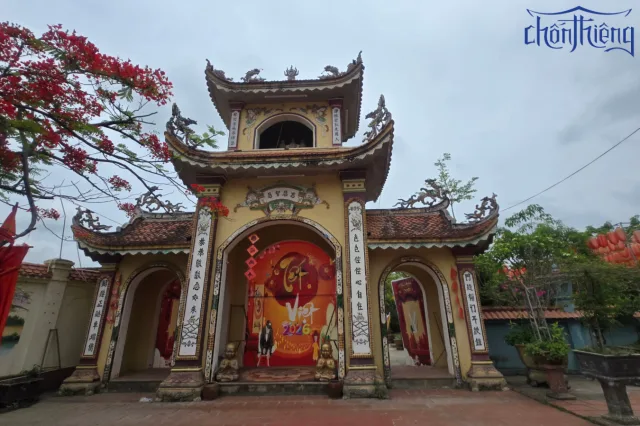


Tên gọi và vị trí địa lý
Chùa Gám có tên chữ là Chí Linh tự, trong đó “Gám” là cách gọi dân gian bắt nguồn từ tên làng cổ Chân Cảm. Cùng nằm trong quần thể, đền Gám mang tên chữ Chân Cảm từ, song trong đời sống thường nhật, người dân quen gọi là Đền Cả – hàm ý chỉ ngôi đền lớn nhất, có vị thế trung tâm trong không gian văn hóa – tín ngưỡng của vùng Kẻ Gám xưa.
Hiện nay, cụm di tích đền – chùa Gám tọa lạc tại xóm 3, xã Quan Thành, tỉnh Nghệ An. Với vị trí nằm trong khu vực đồng bằng xen đồi núi, gần các trục giao thông và khu dân cư, di tích không chỉ thuận lợi cho việc hành hương, lễ bái mà còn giữ vai trò như một điểm hội tụ văn hóa – tâm linh của cộng đồng địa phương và du khách thập phương.
Lịch sử và nhân vật
Theo các tư liệu cổ còn lưu lại, chùa Gám có nguồn gốc từ thời tiền Lý, khi ấy chỉ là một am tranh nhỏ ẩn mình giữa không gian tĩnh mịch. Sang thời nhà Trần, quy mô chùa dần được mở rộng, đặt nền móng cho sự phát triển lâu dài về sau. Đến thế kỷ XVI, dấu mốc quan trọng được ghi nhận khi Trịnh Thị Ngọc Dung – phu nhân của Lại Quận công Phan Công Tích đã phát tâm công đức, đứng ra trùng tu và tôn tạo toàn bộ khu đền – chùa Gám. Từ đó, nơi đây không chỉ là một cơ sở tôn giáo mà còn trở thành thắng địa tâm linh có quy mô và ảnh hưởng rộng lớn trong vùng.
Năm 1645, danh sĩ Ngũ Phương Tiên Sinh đã mở trường dạy học ngay trong khuôn viên đền – chùa. Ngôi trường nhanh chóng nổi danh, đào tạo nhiều nhân tài đỗ đạt cao, giữ những chức vị trọng yếu trong triều đình; trong số đó có thể kể đến Lê Hiệu, Trần Đăng Dinh, Hồ Sĩ Dương… Điều này cho thấy vai trò của chùa Gám không chỉ trong đời sống tín ngưỡng mà còn là trung tâm giáo dục, hun đúc nhân tài cho đất nước. Trải suốt các thế kỷ XVII đến XX, di tích luôn được các triều đại phong kiến quan tâm tu bổ, gìn giữ.
Trong không gian thờ tự của đền Gám, nhiều nhân vật lịch sử và tín ngưỡng được phối thờ, tiêu biểu như Thần Cao Sơn – Cao Các, Lý Thiên Cương, Uy Minh Vương Lý Nhật Quang, Hưng Đạo Vương Trần Quốc Tuấn, Sát Hải Đại Vương Hoàng Tá Thốn, cùng Nhũ mẫu Trịnh Thị Ngọc Dung, Tứ Vị Thánh Nương và các bậc tiền nhân có công khai khẩn, lập làng. Bên cạnh đó, di tích còn thờ Chủ tịch Hồ Chí Minh và các anh hùng liệt sĩ, thể hiện sự kết nối giữa truyền thống lịch sử và tinh thần dân tộc hiện đại.
Tuy nhiên, cùng với những biến động dữ dội của lịch sử, đặc biệt trong các giai đoạn như Phong trào Xô Viết Nghệ Tĩnh, cải cách ruộng đất (1950 – 1954) và những năm biến động sau đó, đền – chùa Gám đã nhiều lần bị phá hủy, tiêu thổ và sử dụng cho các mục đích công ích khác. Năm 1972, khu di tích được trưng dụng làm trụ sở Ủy ban nhân dân xã Xuân Thành.
Mãi đến năm 2007, khi trụ sở hành chính được chuyển đi, khu đền – chùa mới có điều kiện phục hồi. Di tích được mở rộng khuôn viên và được Ủy ban nhân dân tỉnh Nghệ An công nhận là di tích lịch sử – văn hóa cấp tỉnh. Những năm tiếp theo, đặc biệt từ năm 2010, một số hạng mục quan trọng như đài Quan Âm, cổng Tam quan được tu bổ. Đến cuối năm 2011, khi hoạt động Phật giáo chính thức được khôi phục và chùa có trụ trì, công cuộc trùng tu bước vào giai đoạn quy hoạch bài bản, từng bước định hình diện mạo khang trang như ngày nay.
Từ một am tranh sơ khai, trải qua bao thăng trầm lịch sử, đền – chùa Gám đã trở thành một trung tâm văn hóa – tâm linh tiêu biểu, nơi hội tụ giữa truyền thống tín ngưỡng, giáo dục và tinh thần yêu nước của vùng đất xứ Nghệ.
Kiến trúc cảnh quan
Đền – chùa Gám tọa lạc trên khu đất rộng quay về hướng Tây Nam – một hướng được xem là hài hòa về mặt phong thủy, kết hợp giữa yếu tố âm – dương, tạo nên thế đất vững chãi, an ổn. Trước mặt và bên phải di tích là cánh đồng Cồn Mồ, Cồn Trang xanh tốt; xa hơn là lèn Hai Vai (còn gọi là núi Di Lặc) như một bức bình phong tự nhiên che chắn. Phía sau tựa vào núi Phượng Lĩnh (núi Gám), tạo thế “tọa sơn hướng thủy”.
Đền Gám
Trước đây, đền Gám là một công trình kiến trúc quy mô, gồm ba tòa Thượng – Trung – Hạ điện liên hoàn, tạo thành một chỉnh thể thống nhất và bề thế. Tuy nhiên, trải qua thời gian cùng những biến động của thiên tai và chiến tranh, hiện nay di tích chỉ còn lại nhà bái đường (Trung điện) và hậu cung (Thượng điện), được bố trí theo kiểu chữ Đinh.
Cổng đền được dựng bằng hai trụ gạch vữa tam hợp, dáng vuông vức, trên đỉnh đắp hình búp sen, chân trụ giật cấp tạo thế vững chắc. Hai bên cổng khắc đôi câu đối chữ Hán mang ý nghĩa ca ngợi sự trường tồn của di tích và sự tiếp nối giữa truyền thống và hiện tại.
Nhà bái đường có mặt bằng hình chữ nhật, gồm ba gian, bốn vì kèo, mang phong cách kiến trúc thời Nguyễn. Nền nhà được nâng cao hơn mặt sân, lát gạch nung đỏ sẫm, xung quanh bó vỉa bằng gạch thẻ và vữa tam hợp. Mái lợp ngói âm dương, hai bờ nóc trang trí hoa văn vân mây cách điệu, tạo nên vẻ thanh thoát mà vẫn trang nghiêm.
Nối liền bái đường và hậu cung là hệ thống mái nối kín, hình thành kiểu “trùng thiềm điệp ốc” đặc trưng của kiến trúc truyền thống. Nhà hậu cung gồm hai gian, ba vì, ba mặt thưng ván, mái lợp ngói âm dương. Trên bờ nóc đắp hình hổ phù giản lược nhưng sắc nét; phần hồi phía Bắc trang trí hình rồng cuộn mây, tạo điểm nhấn thẩm mỹ và tăng thêm vẻ linh thiêng cho công trình.
Chùa Gám
Không gian chùa Gám xưa được quy hoạch theo bố cục hoàn chỉnh với cổng Tam Quan, sân chùa và các công trình thờ tự phía trong. Tam Quan xây bằng vữa tam hợp, phía trước là khoảng sân rộng, tiếp đến là nghi môn kiểu chồng diêm, bố cục theo dạng chữ “khẩu” phổ biến trong kiến trúc chùa truyền thống. Khuôn viên trước đây còn có nhiều cây cổ thụ như xoài, trôi, gạo, muỗm, thị… tạo nên cảnh quan cổ kính, thâm nghiêm; tuy nhiên, phần lớn đã bị mai một từ cuối thế kỷ XX.
Sân chùa rộng khoảng 1.000 m², chia thành hai lớp: lớp ngoài là sân đất, lớp trong lát vữa tam hợp thành các ô vuông ngay trước bái đường. Giữa sân nổi bật với cây trôi lớn, bên trái là cây thị cổ thụ hàng trăm năm tuổi; phía trước vẫn còn dấu tích của ao sen, gợi nhắc về không gian thanh tịnh xưa kia.
Nhà bái đường của chùa được dựng bằng gỗ lim, gồm năm gian, bốn vì, tường hồi bít đốc. Kết cấu khung gỗ liên kết bằng mộng truyền thống, tạo độ bền vững cao. Mái lợp ngói âm dương, bờ nóc đắp hình “lưỡng long chầu nguyệt” cùng các họa tiết trang trí tinh xảo. Hệ thống chạm khắc trên các ván gió trải dài suốt năm gian, thể hiện nhiều đề tài phong phú như tứ linh (Long – Ly – Quy – Phượng), cảnh “Trúc Lâm thất hiền”, “Nam sơn tứ hải”, hay hình tượng sinh hoạt “sĩ – nông – công – thương”. Các mảng chạm vừa sinh động vừa hài hòa, phản ánh trình độ thẩm mỹ và tay nghề điêu luyện của nghệ nhân xưa.
Bên trong, gian giữa nổi bật với các mảng chạm rồng uốn lượn, kết hợp hình tượng “lưỡng long chầu nguyệt”, “phượng hàm thư”, “cá chép hóa rồng”… tạo nên không gian linh thiêng và giàu tính biểu tượng. Hệ thống cửa “thượng song hạ bản” sơn đỏ phía trước vừa đảm bảo công năng vừa tăng tính thẩm mỹ, trong khi phía sau mở thông với các công trình phụ trợ, tạo sự liên hoàn trong tổng thể kiến trúc.
Nhà hậu cung là nơi thờ Phật Tam Thế và chư vị Bồ Tát, gồm ba gian, bốn vì, hai hồi văn. Công trình có kết cấu vững chắc với hệ thống 16 cột gỗ kê trên chân đá xanh. Mái lợp ngói âm dương, bờ nóc và bờ dải tạo đường nét khỏe khoắn, góp phần hoàn thiện tổng thể kiến trúc trang nghiêm, cổ kính của chùa.
Tổng thể đền – chùa Gám, dù đã trải qua nhiều biến thiên lịch sử, vẫn giữ được những giá trị cơ bản của kiến trúc truyền thống xứ Nghệ. Sự kết hợp hài hòa giữa địa thế tự nhiên và bố cục kiến trúc đã tạo nên một không gian tâm linh vừa uy nghi, vừa gần gũi, phản ánh rõ nét chiều sâu văn hóa của vùng đất này.
Hiện vật
Cây gạo trong khuôn viên chùa được cộng nhận là Cây di tích lịch sử văn hóa Việt Nam ngày 25/04/2016, mã số: CDTLSNA 036.
Sự kiện và lễ hội
Sự kiện
Đền – chùa Gám từ lâu đã giữ vai trò là trung tâm sinh hoạt văn hóa – tâm linh của một vùng dân cư rộng lớn, nơi hội tụ và dung hòa giữa tín ngưỡng dân gian (thờ Thành hoàng) và tôn giáo (thờ Phật cùng chư vị Bồ Tát). Hằng năm, tại di tích diễn ra nhiều nghi lễ và lễ hội quan trọng theo lịch âm, vừa đáp ứng nhu cầu tín ngưỡng, vừa góp phần duy trì và phát huy các giá trị văn hóa truyền thống của cộng đồng.
Trước hết, vào các ngày rằm lớn trong năm như 15 tháng Giêng, 15 tháng Hai và đặc biệt là 15 tháng Bảy (lễ Vu Lan), địa phương tổ chức lễ cúng chúng sinh và cầu siêu cho các vong linh không nơi nương tựa. Trong đó, lễ ngày 15 tháng Bảy được tiến hành long trọng nhất, thu hút đông đảo nhân dân tham dự. Sau phần nghi lễ trang nghiêm là phần hội với nhiều trò chơi dân gian, tiêu biểu như tục “cướp rằm” – một hình thức sinh hoạt cộng đồng mang ý nghĩa cầu may mắn, tài lộc cho năm mới.
Bên cạnh đó, đền – chùa Gám còn thường xuyên tổ chức các khóa tu mùa hè dành cho thanh thiếu niên, những hoạt động này đã thu hút hàng chục nghìn lượt người tham dự từ nhiều địa phương.
Lễ hội đền – chùa Gám ngày 13 – 15/2 AL.
- Phần lễ: gồm 7 nội dung: Lễ khai quang; lễ rước, lễ yết cáo, lễ tân, lễ tế, lễ tạ, lễ cầu an.
- Lễ khai quang
Thời gian: ngày 12/2 AL
- Lễ rước chân hương từ đền rú về đền – chùa Gám
Thời gian: Ngày 14/2 AL.
- Lễ yết cáo
Thời gian: Ngày 14/2 AL.
- Lễ rước ngựa
Thời gian: Ngày 15/2 AL.
- Lễ khai mạc
Thời gian: Ngày 15/2 AL.
- Lễ dâng hương
Thời gian: Ngày 15/2 AL.
- Lễ đại tế
Thời gian: Ngày 15/2 AL.
- Lễ cầu an
Thời gian: Ngày 15/2 AL.
- Lễ tạ
Thời gian: Ngày 15/2 AL.
- Phần hội:
Bao gồm các nội dung: Chương trình thuyết giảng và Chương trình thắp nến hoa đăng; đêm văn nghệ quần chúng, biểu diễn tuồng cổ, thi biểu diễn trống tế giữa các xóm; giải bóng chuyền nam mở rộng; giải kéo co nữ; các trò chơi dân gian; biểu diễn võ nhất nam. Có 2 giải thể thao do huyện tổ chức gồm: giải vật nam, giải bóng chuyền hơi tuổi trung niên…
- Giải bóng chuyền nam mở rộng
- Giải đấy gậy nam
- Giải kéo co nam, nữ kết hợp
- Giải võ cổ truyền
- Giải bóng bàn
- Giải cờ thẻ
- Tổ chức các trò chơi dân gian
– Bịt mắt đập niêu
– Bịt mắt bắt vịt
- Chương trình thuyết giảng và thắp nến hoa đăng
- Biểu diễn tuồng cổ
- Giao lưu văn nghệ
- giao lưu trống tế
Ngày 15.4: Là ngày lễ phật đản, được dân làng tổ chức rất quy mô không chỉ thu hút được đông đảo bà con phật tử trong làng mà còn thu hút được rất nhiều du khách thập phương về dâng hương.
Ngày 15.11: Lễ cúng thần nông, lễ xuống đồng cày cấy cho năm sau.
Ngoài lễ hội trên thì hàng năm tại điểm du lịch sinh thái tâm linh Đền – Chùa Gám còn tổ chức Lễ Vu lan báo hiếu, lễ cầu an, cầu phúc đầu năm, khóa tu mùa hè… đã thu hút hàng chục nghìn du khách từ Bắc chí Nam tạo nên bầu không khí của lễ hội của xã Xuân Thành rất vui tươi và ấm cúng.
Xếp hạng
Đền – Chùa Rú Gám xã Xuân Thành được Ủy ban nhân dân tỉnh Nghệ An công nhận là Di tích lịch sử- văn hóa cấp tỉnh tại Quyết định số 3727/QĐ-BND.VX ngày 27/9/2007 và được công nhận là Điểm du lịch sinh thái tâm linh cấp tỉnh tại Quyết định số 1154/QĐ-UBND ngày 28/4/2022.
Tài liệu tham khảo
- Độc đáo kiến trúc nghệ thuật chùa Gám
- Lịch sử Đền – Chùa Gám
- Nền độc đáo của quần thể Đền – Chùa Gám
Ngôn ngữ khác
Tiếng Anh (English)
Name and Geographical Location
Gam Pagoda is formally known as Chi Linh Tu, in which “Gam” is a vernacular name derived from the ancient village name Chan Cam. Within the same complex, Gam Temple bears the formal name Chan Cam Tu; however, in everyday usage, local people commonly refer to it as Den Ca—implying the largest temple and the central spiritual and cultural locus of the former Ke Gam region.
At present, the Gam Temple–Pagoda complex is located in Hamlet 3, Quan Thanh Commune, Nghe An Province. Situated in a terrain combining plains and hills, near transportation routes and residential areas, the site is not only convenient for pilgrimage and worship but also serves as a focal point for cultural and spiritual activities of the local community and visitors from afar.
History and Historical Figures
According to surviving ancient records, Gam Pagoda originated in the pre–Ly Dynasty period, when it was merely a small thatched hermitage secluded in a tranquil setting. During the Tran Dynasty, the pagoda was gradually expanded, laying the foundation for its long-term development. In the 16th century, a significant milestone was marked when Trinh Thi Ngoc Dung—wife of Lai Quan Cong Phan Cong Tich—made meritorious contributions to restore and renovate the entire temple–pagoda complex. From that time onward, the site evolved into not only a religious institution but also a major spiritual center of considerable scale and regional influence.
In 1645, the scholar Ngu Phuong Tien Sinh established a school within the complex. The school quickly gained renown, producing many successful scholars who attained high academic distinctions and held important positions in the royal court, including Le Hieu, Tran Dang Dinh, and Ho Si Duong. This demonstrates that Gam Pagoda functioned not only as a religious site but also as an educational center nurturing talents for the nation. From the 17th to the 20th centuries, the monument was continuously preserved and restored by successive feudal dynasties.
Within the sacred space of Gam Temple, various historical and spiritual figures are worshipped, notably Ly Thien Cuong, Ly Nhat Quang, Tran Hung Dao, Hoang Ta Thon, along with Trinh Thi Ngoc Dung and early settlers who contributed to land reclamation and village formation. In addition, the site venerates Ho Chi Minh and fallen heroes, reflecting the connection between historical tradition and modern national spirit.
However, due to turbulent historical events—particularly during the Nghe Tinh Soviet Movement, the land reform period (1950–1954), and subsequent years—the complex was repeatedly destroyed, dismantled, and repurposed for public use. In 1972, it was requisitioned as the headquarters of the Xuan Thanh Commune People’s Committee.
It was not until 2007, when administrative offices were relocated, that the site could be restored. The complex was expanded and officially recognized by the Nghe An Provincial People’s Committee as a provincial-level historical–cultural relic. In subsequent years, especially from 2010 onward, important structures such as the Avalokitesvara (Quan Am) platform and the Tam Quan gate were restored. By the end of 2011, when Buddhist activities were officially reinstated and the pagoda had a resident abbot, restoration efforts entered a systematically planned phase, gradually shaping the well-ordered appearance seen today.
From a rudimentary hermitage, through many historical vicissitudes, the Gam Temple–Pagoda complex has become a representative cultural–spiritual center, embodying the convergence of religious tradition, education, and patriotism in the Nghe region.
Architectural Landscape
The Gam Temple–Pagoda complex is situated on a spacious site facing southwest—a direction considered harmonious in feng shui, balancing yin and yang and creating a stable and peaceful setting. In front and to the right lie the fertile Con Mo and Con Trang fields; further away stands Len Hai Vai (also known as Di Lac Mountain), serving as a natural screen. Behind the complex is Phuong Linh Mountain (Gam Mountain), forming the geomantic configuration of “backed by mountains, facing water.”
Gam Temple
Historically, Gam Temple was a large-scale structure comprising three interconnected sections—Upper, Middle, and Lower sanctuaries—forming a unified and imposing architectural ensemble. Due to time and the impacts of natural disasters and wars, only the forecourt hall (Middle sanctuary) and the inner sanctum (Upper sanctuary) remain today, arranged in a Dinh-shaped layout.
The temple gate is constructed with two square brick pillars made of traditional mortar, topped with lotus bud motifs. The stepped bases create a solid foundation. Parallel couplets in Chinese characters are inscribed on both sides, praising the monument’s longevity and continuity between past and present.
The forecourt hall has a rectangular plan with three compartments and four roof frames, reflecting Nguyen Dynasty architectural style. The floor is elevated above the courtyard and paved with dark red fired bricks, bordered by brick and mortar edging. The roof is covered with yin–yang tiles, with stylized cloud motifs decorating the ridge, creating both elegance and solemnity.
Connecting the forecourt hall and the inner sanctum is a continuous roofing system forming the traditional “double-eaved, layered-roof” style. The inner sanctum consists of two compartments, three frames, enclosed on three sides by wooden panels, and roofed with yin–yang tiles. The ridge is adorned with a stylized ho phu (tiger-face motif), while the northern gable features a dragon amidst clouds, enhancing the sacred aesthetic.
Gam Pagoda
Historically, the pagoda was laid out in a complete plan including the Tam Quan gate, courtyard, and inner worship structures. The Tam Quan gate was built with traditional mortar; beyond it lies a spacious courtyard, followed by a multi-tiered ceremonial gate arranged in a “khau” (口) layout typical of traditional pagoda architecture. The grounds once featured many ancient trees such as mango, troi, silk-cotton, muom, and thi, creating an ancient and solemn atmosphere; however, most of these have disappeared since the late 20th century.
The pagoda courtyard, approximately 1,000 m² in area, is divided into two sections: an outer earthen yard and an inner section paved with mortar in square patterns before the forecourt hall. A large troi tree stands prominently in the center, while to the left is a centuries-old thi tree; traces of a former lotus pond remain at the front, recalling the once tranquil setting.
The pagoda’s forecourt hall is constructed from ironwood, consisting of five compartments and four frames, with enclosed gable walls. The wooden framework is joined using traditional mortise-and-tenon techniques, ensuring durability. The roof is tiled in yin–yang style, with the ridge decorated by “two dragons flanking the moon” and intricate ornamental motifs. Carvings on the wind panels extend across all five compartments, depicting diverse themes such as the Four Sacred Animals (Dragon – Qilin – Turtle – Phoenix), the “Seven Sages of Truc Lam,” “Nam Son Tu Hai,” and representations of the four traditional social classes (scholars, farmers, artisans, merchants). These carvings are vivid and harmonious, reflecting the aesthetic sensibility and craftsmanship of past artisans.
Inside, the central compartment features elaborate dragon carvings combined with symbolic motifs such as “two dragons flanking the moon,” “phoenix holding a scroll,” and “carp transforming into a dragon,” creating a sacred and symbolically rich space. The front door system, painted red in the “upper lattice–lower panel” style, balances functionality and aesthetics, while the rear opens to auxiliary structures, forming a continuous architectural layout.
The inner sanctum houses the Three Buddhas of the Three Times and various Bodhisattvas. It consists of three compartments, four frames, and two decorated gables. The structure is supported by 16 wooden columns set on green stone bases. The yin–yang tiled roof and well-defined ridgelines contribute to the overall solemn and ancient architectural character.
Despite numerous historical transformations, the Gam Temple–Pagoda complex retains the essential values of traditional Nghe architectural heritage. The harmonious integration of natural landscape and architectural layout creates a spiritual space that is both majestic and approachable, clearly reflecting the cultural depth of the region.
Artifacts
The silk-cotton tree within the pagoda grounds was recognized as a Vietnam Historical–Cultural Heritage Tree on April 25, 2016 (Code: CDTLSNA 036).
Events and Festivals
Events
The Gam Temple–Pagoda complex has long served as a central hub for cultural and spiritual activities across a wide population, harmonizing folk beliefs (veneration of village tutelary deities) with organized religion (Buddhist worship). Annually, numerous important rituals and festivals are held according to the lunar calendar, meeting spiritual needs while preserving and promoting traditional cultural values.
On major full-moon days such as the 15th of the first, second, and especially seventh lunar months (Vu Lan Festival), ceremonies are held for wandering souls and prayers for the deceased. The 15th day of the seventh month is the most solemn, attracting large crowds. Following the rituals are festive activities, including folk games such as the “ram contest,” symbolizing wishes for luck and prosperity.
Additionally, the site regularly hosts summer retreats for youth, attracting tens of thousands of participants from various regions.
Gam Temple–Pagoda Festival (13th–15th of the 2nd Lunar Month)
Ritual Section (7 main rites):
Opening ritual; procession; announcement ceremony; welcoming ritual; sacrificial rite; thanksgiving; peace-prayer ceremony.
Opening ritual: 7:30–10:00 (12/2 lunar)
Incense procession: 14:00–15:30 (14/2 lunar)
Announcement ceremony: 15:30–16:30 (14/2 lunar)
Horse procession: 6:00–8:30 (15/2 lunar)
Opening ceremony: 9:00–10:00 (15/2 lunar)
Incense offering: 10:00–10:15 (15/2 lunar)
Grand sacrificial rite: 10:30–11:30 (15/2 lunar)
Peace prayer: 14:00 (15/2 lunar)
Thanksgiving: 17:00 (15/2 lunar)
Festival Activities
Include Dharma talks, lantern-lighting ceremonies, folk performances, traditional tuong opera, ritual drum competitions, sports tournaments (men’s volleyball, tug of war, wrestling), folk games, and traditional martial arts performances.
Additional highlights:
Buddha’s Birthday (15/4 lunar) – large-scale celebration
Agricultural ritual (15/11 lunar) – prayers for farming prosperity
Other annual events include Vu Lan Festival, peace and prosperity prayers, and summer retreats, attracting visitors nationwide and creating a vibrant and warm festive atmosphere.
Recognition
Gam Temple–Pagoda in Xuan Thanh Commune was recognized as a provincial-level historical–cultural relic by Decision No. 3727/QD-BND.VX dated September 27, 2007, and later designated as a provincial-level spiritual eco-tourism site by Decision No. 1154/QD-UBND dated April 28, 2022.
References
- Độc đáo kiến trúc nghệ thuật chùa Gám
- Lịch sử Đền – Chùa Gám
- Nền độc đáo của quần thể Đền – Chùa Gám
Tiếng Pháp (Français)
Nom et situation géographique
La pagode Gám porte le nom lettré Chí Linh tự, dans lequel « Gám » est une appellation populaire issue du nom de l’ancien village Chân Cảm. Situé dans le même ensemble, le temple Gám porte le nom lettré Chân Cảm từ, mais dans la vie quotidienne, les habitants l’appellent communément Đền Cả, terme qui désigne le temple le plus grand, occupant une position centrale dans l’espace culturel et cultuel de l’ancienne région de Kẻ Gám.
Actuellement, l’ensemble des vestiges temple–pagode Gám est situé au hameau 3, commune de Quan Thành, province de Nghệ An. Implanté dans une zone de plaine mêlée de collines, à proximité des axes de communication et des zones résidentielles, le site est non seulement favorable aux pèlerinages et aux pratiques rituelles, mais joue également le rôle de point de convergence culturel et spirituel pour la communauté locale ainsi que pour les visiteurs venus de diverses régions.
Histoire et personnages
Selon les documents anciens conservés, la pagode Gám remonte à l’époque pré-Lý, où elle n’était qu’un petit ermitage en chaume dissimulé dans un espace paisible. Sous la dynastie Trần, sa taille fut progressivement agrandie, jetant les bases de son développement ultérieur. Au XVIe siècle, un tournant important fut marqué lorsque Trịnh Thị Ngọc Dung, épouse de Lại Quận công Phan Công Tích, finança et dirigea la restauration complète de l’ensemble temple–pagode Gám. Dès lors, ce lieu devint non seulement un établissement religieux, mais aussi un centre spirituel d’envergure dans la région.
En 1645, l’érudit Ngũ Phương Tiên Sinh ouvrit une école au sein du complexe. Celle-ci acquit rapidement une grande renommée, formant de nombreux talents qui réussirent brillamment aux concours impériaux et occupèrent des postes importants à la cour, tels que Lê Hiệu, Trần Đăng Dinh, Hồ Sĩ Dương… Cela témoigne du rôle de la pagode Gám non seulement dans la vie religieuse, mais aussi comme centre éducatif formant des élites pour le pays. Du XVIIe au XXe siècle, le site fut régulièrement restauré et préservé par les dynasties féodales.
Dans l’espace cultuel du temple Gám, plusieurs personnages historiques et figures de croyance sont vénérés conjointement, notamment Lý Thiên Cương, Lý Nhật Quang, Trần Hưng Đạo, Hoàng Tá Thốn, ainsi que Trịnh Thị Ngọc Dung et les ancêtres ayant contribué à la fondation des villages. Par ailleurs, le site rend également hommage à Hồ Chí Minh et aux martyrs, illustrant le lien entre tradition historique et esprit national moderne.
Cependant, au fil des bouleversements historiques, notamment durant le mouvement Xô Viết Nghệ Tĩnh, la réforme agraire (1950–1954) et les années suivantes, le complexe subit de nombreuses destructions et fut réaffecté à des usages publics. En 1972, il fut utilisé comme siège du Comité populaire de la commune de Xuân Thành.
Ce n’est qu’en 2007, après le transfert des services administratifs, que le site put être restauré. Il fut agrandi et reconnu comme monument historique et culturel de niveau provincial par le Comité populaire de la province de Nghệ An. À partir de 2010, plusieurs éléments importants furent rénovés, tels que la statue de Quan Âm et la porte Tam Quan. Fin 2011, avec la reprise officielle des activités bouddhiques et la nomination d’un abbé, les travaux de restauration entrèrent dans une phase planifiée, façonnant progressivement l’aspect actuel du site.
D’un simple ermitage, le complexe temple–pagode Gám est ainsi devenu un centre culturel et spirituel emblématique, réunissant traditions religieuses, éducation et patriotisme de la région de Nghệ.
Architecture et paysage
Le complexe est implanté sur un vaste terrain orienté vers le sud-ouest, direction considérée comme harmonieuse en feng shui, combinant les éléments yin–yang pour former un site stable et paisible. Devant et à droite s’étendent les champs verdoyants de Cồn Mồ et Cồn Trang ; au loin se dresse le mont Hai Vai (également appelé mont Di Lặc), servant d’écran naturel. À l’arrière se trouve la montagne Phượng Lĩnh (mont Gám), formant la configuration « adossé à la montagne, face à l’eau ».
Temple Gám
Autrefois, le temple Gám était une construction imposante composée de trois bâtiments alignés (supérieur, médian et inférieur). Aujourd’hui, seuls subsistent la salle des cérémonies (trung điện) et le sanctuaire (thượng điện), disposés en plan en forme de « Đinh ».
La porte du temple est construite en briques et mortier traditionnel, avec des piliers carrés surmontés de motifs de boutons de lotus. Des couplets en caractères chinois y sont gravés, louant la pérennité du site.
La salle des cérémonies, de plan rectangulaire, comprend trois travées et adopte le style architectural de la dynastie Nguyễn. Le toit est couvert de tuiles yin–yang et décoré de motifs de nuages stylisés.
Le sanctuaire, relié par une toiture continue, forme une structure typique « trùng thiềm điệp ốc ». Il présente des décorations telles que le masque de tigre (hổ phù) et des motifs de dragons.
Pagode Gám
Autrefois organisée selon un plan complet comprenant porte Tam Quan, cour et sanctuaires, la pagode possédait également de nombreux arbres centenaires créant une atmosphère solennelle.
La cour, d’environ 1 000 m², est divisée en deux parties. On y trouve encore un grand arbre trôi, un arbre thị centenaire et les vestiges d’un ancien étang de lotus.
La salle principale, construite en bois de lim, comprend cinq travées avec une charpente traditionnelle assemblée sans clous. Le toit est décoré du motif « deux dragons face à la lune ». Les sculptures représentent des thèmes variés : les quatre animaux sacrés, la scène « Trúc Lâm thất hiền », ou encore les métiers traditionnels.
À l’intérieur, les motifs de dragons, phénix et carpes symboliques créent un espace sacré riche en symbolisme.
Le sanctuaire arrière, dédié aux Bouddhas du passé et aux Bodhisattvas, repose sur 16 piliers en bois posés sur des bases en pierre, complétant l’ensemble architectural solennel.
Objets patrimoniaux
Le kapokier (cây gạo) situé dans l’enceinte de la pagode a été reconnu comme Arbre du patrimoine historique et culturel du Vietnam le 25 avril 2016 (code : CDTLSNA 036).
Événements et fêtes
Le complexe est depuis longtemps un centre d’activités culturelles et spirituelles, combinant culte des génies tutélaires et bouddhisme.
Parmi les principales cérémonies annuelles figurent les pleines lunes importantes (notamment celle du 7e mois – fête Vu Lan), accompagnées de rites pour les âmes errantes et de jeux traditionnels comme la « prise de la pleine lune ».
Le festival principal se déroule du 13 au 15 du 2e mois lunaire, comprenant de nombreux rituels : ouverture des yeux, procession, offrandes, grande cérémonie, prière pour la paix, etc.
La partie festive inclut des activités culturelles et sportives : théâtre traditionnel (tuồng), compétitions de tambours rituels, volley-ball, tir à la corde, arts martiaux traditionnels, jeux populaires…
D’autres événements importants incluent :
le 15/4 (naissance du Bouddha)
le 15/11 (rite agraire dédié au dieu de l’agriculture)
Chaque année, des retraites d’été, cérémonies Vu Lan et prières de début d’année attirent des dizaines de milliers de visiteurs.
Classement
Le complexe temple–pagode Rú Gám (commune de Xuân Thành) a été reconnu comme monument historique et culturel provincial par décision n° 3727/QĐ-BND.VX du 27/09/2007, et comme site de tourisme écologique et spirituel provincial par décision n° 1154/QĐ-UBND du 28/04/2022.
Références
- Độc đáo kiến trúc nghệ thuật chùa Gám
- Lịch sử Đền – Chùa Gám
- Nền độc đáo của quần thể Đền – Chùa Gám
Tiếng Trung (中文)
名称与地理位置
甘寺的汉字名称为“志灵寺”,其中“甘”为源自古村“真感村”的民间称呼。同属一个建筑群的甘庙,其汉字名称为“真感祠”,但在日常生活中,当地居民习惯称其为“大庙”,意指该庙为规模最大、在昔日甘村地区文化与信仰空间中居于核心地位的建筑。
目前,甘庙—甘寺遗址群位于乂安省冠城县第三村。该遗址坐落于平原与丘陵交错地带,靠近交通干线及居民区,不仅便于朝拜与宗教活动,同时也是本地社区及四方游客的文化与精神汇聚之地。
历史与人物
根据现存古籍资料记载,甘寺起源于前李时期,当时仅为隐于幽静环境中的一座简陋草庵。至陈朝时期,寺庙规模逐渐扩大,为其后续发展奠定基础。至十六世纪,出现重要转折——郑氏玉容(赖郡公潘公积之夫人)发心布施,主持全面重修甘庙—甘寺建筑群。自此,该地不仅是宗教场所,更发展成为区域内具有广泛影响的精神圣地。
1645年,名士五方先生在庙寺内开设学堂,迅速声名远播,培养出众多高中科举、在朝廷担任要职的人才,如黎孝、陈登廷、胡士阳等。这表明甘寺不仅在信仰生活中具有重要地位,同时也是教育中心与人才培养之地。从十七世纪至二十世纪,该遗址持续受到历代封建王朝的修缮与保护。
甘庙的祭祀空间中合祀多位历史与信仰人物,包括李天刚、李日光、陈兴道、黄佐存,以及郑氏玉容与开垦建村的先贤。此外,还供奉胡志明及诸位烈士,体现了历史传统与现代民族精神的融合。
然而,由于历史剧烈变动,特别是在乂静苏维埃运动、土地改革(1950—1954)及其后动荡时期,甘庙—甘寺多次遭到破坏、焚毁,并被用于其他公共用途。1972年,该遗址被征用为春城县人民委员会办公场所。
直到2007年行政机关迁出后,遗址才得以恢复,并扩建空间,被乂安省人民委员会认定为省级历史文化遗迹。此后,特别是自2010年起,观音台、三关门等重要建筑陆续修复。至2011年底佛教活动正式恢复并设立住持后,整体修复进入系统规划阶段,逐步形成今日庄严整齐的面貌。
从最初的草庵发展至今,历经历史沧桑,甘庙—甘寺已成为集信仰、教育与爱国精神于一体的典型文化精神中心。
建筑与景观
甘庙—甘寺位于一块朝向西南的广阔地带,此方位在风水上被认为阴阳调和,地势稳固。遗址前方及右侧为茂盛的田野,远处有二肩山(亦称弥勒山)如天然屏障;背靠凤凰岭山(甘山),形成“背山面水”的理想格局。
甘庙
昔日甘庙为大型建筑群,由上殿、中殿、下殿三部分连贯组成,气势宏伟。现仅存拜堂(中殿)与后宫(上殿),呈“丁”字形布局。
庙门由砖与三合灰砌成,方形结构,顶饰莲花蕾,基座分级稳固。两侧刻有汉字对联,赞颂遗址的长存与传统延续。
拜堂为长方形三间结构,四架梁,属阮朝建筑风格。地面高于院落,铺深红色烧砖,屋顶覆阴阳瓦,脊饰云纹,庄重而雅致。
后宫与拜堂通过连顶结构相接,形成典型“重檐叠屋”形式。后宫两间三架梁,三面木板围护,屋脊饰简化虎符,北侧山墙雕刻龙卷云纹,增强神圣感。
甘寺
古代甘寺按完整布局规划,包括三关门、庭院及内部礼佛建筑。三关门由三合灰建造,前有宽广庭院,其后为重檐式仪门,整体呈“口”字布局。
寺院曾有多种古树如芒果树、木棉树、无花果树等,形成古朴幽深景观,但多已于二十世纪末消失。
寺院庭院约1000平方米,分为内外两层:外为土地,内为三合灰铺设方格。庭中有大树,左侧有百年柿树,前方尚存莲池遗迹。
拜堂采用铁木建造,五间四架梁,木构榫卯结构坚固耐久。屋顶覆阴阳瓦,脊饰“双龙朝月”等精美雕刻。雕刻内容丰富,包括四灵、竹林七贤、四海名山及士农工商生活场景,体现高超工艺与审美。
内部中央雕刻尤为突出,如盘龙、双龙朝月、凤衔书、鲤鱼化龙等,营造神圣象征空间。前部设红漆“上窗下板”门,后部连通附属建筑,结构连贯。
后宫供奉三世佛及诸菩萨,三间四架梁,16根木柱立于青石柱础之上,结构稳固,整体庄严古朴。
总体而言,甘庙—甘寺虽历经变迁,仍保留乂安地区传统建筑精髓,自然地势与建筑布局和谐统一,展现深厚文化底蕴。
文物
寺内木棉树于2016年4月25日被认定为越南历史文化遗产树,编号:CDTLSNA 036。
活动与节庆
甘庙—甘寺长期作为区域文化与精神活动中心,融合民间信仰(城隍)与宗教信仰(佛教)。每年按农历举办多项重要仪式与节庆。
重要节日包括正月十五、二月十五及七月十五(盂兰盆节),举行超度孤魂法会,其中七月节最为隆重,并伴随民间游戏如“抢月”,象征祈福纳财。
此外,还定期举办青少年夏令修行活动,吸引大量参与者。
甘庙—甘寺节(农历2月13—15日)
仪式部分包括:
开光、迎请、禀告、迎宾、祭祀、谢恩、祈安等。
(以下为时间安排,保持原结构)
开光仪式:2月12日7:30–10:00
迎香仪式:2月14日14:00–15:30
禀告仪式:2月14日15:30–16:30
迎马仪式:2月15日6:00–8:30
开幕式:2月15日9:00–10:00
上香仪式:2月15日10:00–10:15
大祭:2月15日10:30–11:30
祈安仪式:2月15日14:00
谢礼:2月15日17:00
娱乐活动包括:
讲经、放花灯、文艺演出、传统戏剧、祭鼓比赛、排球、拔河、武术等。
此外还有县级体育赛事,如摔跤与中年气排球比赛等。
其他重要节日:
4月15日:佛诞节
11月15日:农神祭祀与开耕仪式
每年还举办盂兰节、祈福活动及夏令营,吸引全国游客,营造热闹温馨的节庆氛围。
评级
春城县甘山庙—甘寺于2007年9月27日被乂安省人民委员会认定为省级历史文化遗迹(第3727/QĐ-BND.VX号决定),并于2022年4月28日被认定为省级生态精神旅游点(第1154/QĐ-UBND号决定)。
参考资料