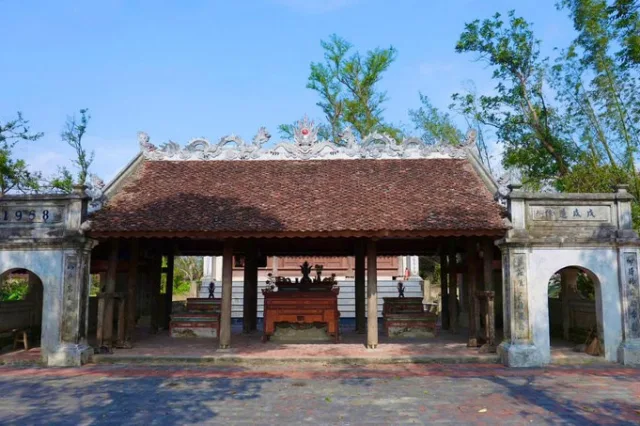


Tên gọi và vị trí địa lý
Tọa lạc tại xóm Châu Nhân 9 nay là Xóm Châu Nhân 9 xã Lam Thành Tỉnh Nghệ An, đền Rậm từ lâu đã trở thành một trong những ngôi đền linh thiêng bậc nhất của xã Lam Thành, với bề dày lịch sử hàng trăm năm cùng những giá trị văn hóa – tâm linh đặc sắc. Không chỉ là nơi sinh hoạt tín ngưỡng quen thuộc của Nhân dân địa phương, đền Rậm còn là điểm đến hấp dẫn đối với du khách gần xa khi tìm về với không gian văn hóa truyền thống của xứ Nghệ.
Lịch sử và nhân vật
Đền Rậm được xây dựng vào năm 1831 dưới triều vua Minh Mạng, là một công trình tín ngưỡng quan trọng của cộng đồng cư dân địa phương. Ngôi đền được lập nên nhằm thờ phụng những vị thần và những nhân vật có công lao đối với quê hương, đất nước qua nhiều thời kỳ lịch sử. Trải qua gần hai thế kỷ tồn tại, đền không chỉ là nơi thực hành tín ngưỡng dân gian mà còn trở thành một địa điểm ghi dấu nhiều sự kiện lịch sử quan trọng, gắn liền với các phong trào yêu nước và cách mạng của địa phương.
Đối tượng thờ tự chính của đền gồm các vị thần linh và những nhân vật được nhân dân tôn kính vì có công khai phá, bảo vệ và xây dựng quê hương. Trong đó, nổi bật là Cao Sơn đại vương, vị thần được thờ phụng rộng rãi tại nhiều địa phương ở khu vực Bắc Trung Bộ. Theo quan niệm dân gian, Cao Sơn đại vương là vị thần cai quản núi non, che chở cho dân làng, giúp nhân dân chống chọi với thiên tai, dịch bệnh và các thế lực xâm lấn từ bên ngoài. Việc thờ phụng vị thần này phản ánh niềm tin của cư dân nông nghiệp đối với các lực lượng siêu nhiên có khả năng bảo hộ cho cuộc sống cộng đồng.
Bên cạnh đó, đền còn thờ Lê Lô, một nhân vật được truyền tụng trong ký ức dân gian như người có công đối với vùng đất sở tại. Mặc dù tư liệu lịch sử về nhân vật này hiện còn khá hạn chế, việc được phối thờ trong đền cho thấy ông từng giữ vị trí quan trọng trong đời sống cộng đồng và được hậu thế ghi nhớ như một người có nhiều đóng góp cho địa phương.
Một nhân vật khác được nhân dân tôn thờ là Nguyễn Quang Hợp. Theo truyền thống địa phương, ông là người có công lao trong việc chăm lo đời sống nhân dân, góp phần xây dựng và bảo vệ quê hương. Trải qua nhiều thế hệ, tên tuổi của ông vẫn được lưu giữ trong hệ thống thờ tự của đền như một biểu tượng cho tinh thần trách nhiệm và sự cống hiến đối với cộng đồng.
Đặc biệt, đền còn là nơi thờ Bốn già khai cơ, tức bốn vị tiền nhân có công khai phá đất đai, lập làng và đặt nền móng cho sự hình thành cộng đồng cư dân địa phương. Trong truyền thống văn hóa Việt Nam, những người đầu tiên khai khẩn ruộng đất, tổ chức đời sống xã hội và tạo dựng xóm làng thường được hậu thế suy tôn là tiền hiền hoặc khai cơ. Việc thờ phụng các vị này thể hiện đạo lý “uống nước nhớ nguồn”, đồng thời khẳng định ý thức gìn giữ ký ức lịch sử của cộng đồng đối với những người có công mở đất.
Ngoài các nhân vật gắn với lịch sử địa phương, đền còn phối thờ Lê Lợi, vị anh hùng dân tộc lãnh đạo cuộc khởi nghĩa Lam Sơn chống quân Minh xâm lược vào đầu thế kỷ XV. Sau mười năm chiến đấu gian khổ, cuộc khởi nghĩa giành thắng lợi, chấm dứt thời kỳ đô hộ của nhà Minh và khôi phục nền độc lập dân tộc. Năm 1428, Lê Lợi lên ngôi hoàng đế, mở đầu triều Hậu Lê. Việc thờ phụng Lê Lợi tại Đền Rậm phản ánh lòng tôn kính của nhân dân đối với một vị vua có công lớn trong lịch sử dân tộc, đồng thời cho thấy sự gắn kết giữa tín ngưỡng địa phương với truyền thống yêu nước của quốc gia.
Bên cạnh giá trị tín ngưỡng, Đền Rậm còn gắn liền với nhiều hoạt động yêu nước và cách mạng trong thời kỳ cận đại. Vào cuối thế kỷ XIX và đầu thế kỷ XX, khi phong trào đấu tranh chống thực dân Pháp phát triển mạnh mẽ, ngôi đền trở thành nơi gặp gỡ, trao đổi và liên lạc của nhiều nhà yêu nước. Theo tư liệu địa phương, nơi đây từng ghi dấu hoạt động của các chí sĩ cách mạng như Phạm Hồng Thái và Lê Hồng Phong trước khi các ông xuất dương hoạt động. Mặc dù thời gian gắn bó không dài, sự hiện diện của những nhân vật này đã góp phần làm tăng thêm ý nghĩa lịch sử của di tích, cho thấy vai trò của địa phương trong mạng lưới hoạt động yêu nước đầu thế kỷ XX.
Trong phong trào cách mạng những năm 1930–1931, đặc biệt là trong bối cảnh cao trào Xô viết Nghệ Tĩnh lan rộng khắp khu vực Bắc Trung Bộ, Đền Rậm trở thành địa điểm tập hợp quần chúng để nghe tuyên truyền, diễn thuyết về cách mạng và vận động nhân dân tham gia đấu tranh chống ách thống trị của thực dân, phong kiến. Nhiều cuộc họp bí mật và các hoạt động vận động quần chúng đã được tổ chức tại đây. Vai trò của ngôi đền trong giai đoạn này cho thấy các cơ sở tín ngưỡng truyền thống không chỉ là nơi sinh hoạt tâm linh mà còn có thể trở thành không gian kết nối cộng đồng và truyền bá tư tưởng yêu nước.
Đến thời kỳ Cách mạng tháng Tám năm 1945, Đền Rậm tiếp tục là nơi tập hợp lực lượng cách mạng tại địa phương. Các cuộc họp quần chúng, tuyên truyền đường lối cách mạng và chuẩn bị cho việc giành chính quyền đã được tổ chức tại đây. Sự tham gia tích cực của đông đảo nhân dân địa phương đã góp phần vào thắng lợi chung của cuộc Tổng khởi nghĩa, đưa chính quyền cách mạng về tay nhân dân.
Trong cuộc kháng chiến chống Mỹ cứu nước, với vị trí nằm gần tuyến giao thông thủy quan trọng trên sông Lam, Đền Rậm tiếp tục đảm nhận một vai trò đặc biệt. Nơi đây được sử dụng làm địa điểm cất giấu, tập kết và trung chuyển vũ khí từ miền Bắc vào chiến trường miền Nam. Hoạt động vận chuyển được thực hiện bí mật dưới sự hỗ trợ của nhân dân địa phương nhằm bảo đảm an toàn cho các tuyến hậu cần chiến lược. Trong bối cảnh chiến tranh diễn ra ác liệt, sự đóng góp thầm lặng của khu vực Đền Rậm đã góp phần phục vụ công cuộc kháng chiến và thống nhất đất nước.
Qua quá trình hình thành và phát triển, Đền Rậm đã tích tụ nhiều lớp giá trị lịch sử khác nhau. Từ một cơ sở tín ngưỡng thờ thần linh và các bậc tiền nhân có công với quê hương, ngôi đền dần trở thành địa điểm gắn bó với các phong trào yêu nước, cách mạng và kháng chiến của dân tộc. Chính sự đan xen giữa giá trị tín ngưỡng truyền thống và giá trị lịch sử cách mạng đã tạo nên vị trí đặc biệt của Đền Rậm trong đời sống văn hóa và ký ức cộng đồng địa phương.
Kiến trúc cảnh quan
Đền Rậm là một quần thể di tích tín ngưỡng gồm cả đền và chùa, được hình thành trên một khu đất rộng khoảng 10.401 m². Tổng thể di tích bao gồm hai khu vực chính là Đền Rậm trong và Đền Rậm ngoài, được bố trí trong một không gian tương đối hoàn chỉnh, hài hòa với cảnh quan tự nhiên và địa hình địa phương. Sự kết hợp giữa các công trình thờ tự, kiến trúc phụ trợ và hệ thống cây xanh lâu năm đã tạo nên một không gian vừa trang nghiêm, cổ kính vừa mang đậm đặc trưng của kiến trúc tín ngưỡng truyền thống vùng Bắc Trung Bộ.
Đền Rậm trong là khu vực có quy mô lớn và tập trung nhiều hạng mục kiến trúc quan trọng nhất của toàn bộ di tích. Các công trình hiện còn gồm cổng đền, nhà Thánh, chùa, nhà trình, dãy hữu vu cùng hệ thống Hạ điện, Trung điện và Thượng điện được bố trí theo trục thần đạo từ ngoài vào trong. Cách sắp xếp này phản ánh tư duy tổ chức không gian phổ biến trong các công trình tín ngưỡng truyền thống, tạo nên sự phân cấp rõ ràng giữa các khu vực chức năng và dẫn dắt người hành hương từng bước tiến vào không gian linh thiêng nhất của di tích.
Đền Rậm ngoài có quy mô nhỏ hơn nhưng vẫn giữ vai trò quan trọng trong tổng thể kiến trúc. Khu vực này bao gồm cổng đền, tắc môn, hệ thống Hạ điện, Trung điện, Thượng điện và lăng mộ Nguyễn Quang Hợp. Sự hiện diện của lăng mộ trong quần thể di tích cho thấy mối liên hệ chặt chẽ giữa tín ngưỡng thờ thần với việc tưởng niệm các nhân vật lịch sử và những người có công đối với địa phương. Hai khu vực Đền Rậm trong và Đền Rậm ngoài tuy có chức năng riêng nhưng được liên kết với nhau thành một chỉnh thể thống nhất, góp phần tạo nên quy mô và giá trị đặc sắc cho toàn bộ di tích.
Xét về mặt kiến trúc, Đền Rậm là một trong những công trình tiêu biểu phản ánh phong cách kiến trúc dân gian truyền thống của khu vực Bắc Trung Bộ trong thế kỷ XIX. Các tòa đền được xây dựng chủ yếu bằng vật liệu truyền thống như gỗ, gạch, đá và ngói. Hệ thống khung chịu lực sử dụng kết cấu gỗ với các bộ vì kèo liên kết chặt chẽ, tạo nên sự ổn định cho công trình. Kết cấu này được tính toán phù hợp với điều kiện khí hậu khắc nghiệt của miền Trung, nơi thường xuyên chịu ảnh hưởng của mưa bão, gió lớn và độ ẩm cao. Nhờ đó, nhiều hạng mục kiến trúc của đền vẫn tồn tại tương đối bền vững qua thời gian.
Một trong những giá trị nổi bật của quần thể Đền Rậm là kỹ thuật mộc truyền thống được áp dụng trong toàn bộ hệ thống kiến trúc. Các cấu kiện như cột, xà, kẻ, bẩy, cốn và vì kèo được liên kết với nhau bằng hệ thống mộng gỗ mà không phụ thuộc nhiều vào đinh sắt hay các vật liệu liên kết hiện đại. Phương thức liên kết này tạo nên độ bền vững cao, đồng thời cho phép công trình có khả năng thích ứng với sự co giãn tự nhiên của vật liệu trong điều kiện khí hậu nhiệt đới. Các cấu kiện được kết nối theo không gian ba chiều, vừa bảo đảm khả năng chịu lực vừa tạo nên cảm giác đồ sộ, uy nghiêm cho công trình mà vẫn giữ được sự thanh thoát trong tổng thể kiến trúc.
Đặc biệt, Đền Rậm trong còn nổi bật bởi hệ thống chạm khắc gỗ có giá trị nghệ thuật cao. Các nghệ nhân dân gian đã tận dụng từng cấu kiện kiến trúc để thể hiện những đề tài trang trí phong phú mang ý nghĩa biểu tượng. Nhiều mảng chạm được thực hiện trên cùng một thân gỗ với độ kênh sâu lớn, kết hợp kỹ thuật chạm bong kênh và chạm lộng, tạo nên hiệu ứng không gian nhiều lớp sinh động. Những đường nét chạm khắc tuy dày đặc nhưng vẫn giữ được sự hài hòa về bố cục, thể hiện trình độ tay nghề điêu luyện của người thợ thủ công đương thời.
Các họa tiết trang trí xuất hiện tập trung trên hệ thống vì kèo, xà ngang, đầu dư, đầu bẩy, cốn mê và các cấu kiện chịu lực khác. Đề tài được lựa chọn chủ yếu là những hình tượng quen thuộc trong mỹ thuật truyền thống Việt Nam như cá vượt Vũ Môn, cá chép hóa rồng, lưỡng long triều phúc, mai hóa long, mai hóa ly cùng nhiều mô típ thực vật cách điệu. Hình tượng cá vượt Vũ Môn và cá chép hóa rồng biểu trưng cho ý chí vươn lên, sự thành đạt và khát vọng đổi thay. Đề tài lưỡng long triều phúc thể hiện mong ước về sự thịnh vượng, hạnh phúc và phúc lành cho cộng đồng. Trong khi đó, các mô típ mai hóa long, mai hóa ly phản ánh sự sáng tạo của nghệ thuật dân gian khi kết hợp các yếu tố động vật linh thiêng với hình tượng thực vật quen thuộc, tạo nên những biểu tượng mang ý nghĩa cát tường.
Bên cạnh giá trị kiến trúc và điêu khắc, cảnh quan của Đền Rậm còn được tạo dựng bởi hệ thống cây cổ thụ lâu năm bao quanh khuôn viên di tích. Những tán cây lớn không chỉ góp phần điều hòa vi khí hậu mà còn làm tăng thêm vẻ cổ kính, thâm nghiêm cho không gian thờ tự. Sự kết hợp hài hòa giữa kiến trúc, điêu khắc và cảnh quan tự nhiên đã tạo nên một tổng thể di tích có giá trị cao về lịch sử, văn hóa và nghệ thuật, phản ánh trình độ kỹ thuật xây dựng cũng như tư duy thẩm mỹ của cư dân địa phương qua nhiều thế hệ.
Lễ hội
lễ hội truyền thống đình Rậm được tổ chức hàng năm vào ngày 21 và 22 tháng 2 âm lịch. Đây là dịp để Nhân dân địa phương và du khách thập phương về dâng hương tưởng niệm, tri ân các bậc tiền nhân, đồng thời cầu mong quốc thái dân an, mưa thuận gió hòa. Lễ hội diễn ra trong không khí trang nghiêm, linh thiêng, góp phần giữ gìn và phát huy bản sắc văn hóa truyền thống.
Xếp hạng
Đền Rậm được xếp hạng là di tích Kiến trúc Nghệ thuật cấp Quốc gia tại Quyết định số 75/ QĐ- BVHTTDL ngày 22/08/2008.
Tài liệu tham khảo
- Hà Huệ, 2025, Đền Rậm – Di sản kiến trúc nghệ thuật, điểm đến tâm linh của xã Lam Thành, Nghệ An, Cổng thông tin điện tử xã Lam Thành, truy cập tại: https://lamthanh.nghean.gov.vn/du-lich/den-ram-di-san-kien-truc-nghe-thuat-diem-den-tam-linh-cua-xa-lam-thanh-nghe-an-1008183#:~:text=M%E1%BB%99t%20trong%20nh%E1%BB%AFng%20n%C3%A9t%20%C4%91%E1%BA%B9p,an%2C%20m%C6%B0a%20thu%E1%BA%ADn%20gi%C3%B3%20h%C3%B2a.
- Ban Quản lý di tích tỉnh Nghệ An, Hồ sơ di tích đền Rậm.
- Lê Thăng & Thanh Quỳnh, 2017, Di tích quốc gia có nguy cơ thành…phế tích, Báo Nghệ An, truy cập tại: https://baonghean.vn/di-tich-quoc-gia-co-nguy-co-thanh-phe-tich-10125017.html
Ngôn ngữ khác
Tiếng Anh
Ram Temple (Lam Thanh, Nghe An)
Name and Geographic Location
Located in Chau Nhan 9 Hamlet, now Chau Nhan 9 Hamlet, Lam Thanh Commune, Nghe An Province, Ram Temple has long been regarded as one of the most sacred temples in Lam Thanh Commune. With a history spanning hundreds of years and distinctive cultural and spiritual values, the temple serves not only as a familiar center of religious life for local residents but also as an attractive destination for visitors seeking to experience the traditional cultural landscape of Nghe.
History and Historical Figures
Ram Temple was built in 1831 during the Nguyen Dynasty and has served as an important religious institution for the local community. The temple was established to worship deities and individuals who made significant contributions to their homeland and the nation throughout different historical periods. Over nearly two centuries of existence, it has functioned not only as a place for folk religious practices but also as a site associated with many important historical events connected to local patriotic and revolutionary movements.
The principal objects of worship include deities and historical figures revered by local residents for their contributions to the development, protection, and construction of the homeland. Among them, the most prominent is Cao Son Cao Cac, a deity widely worshipped throughout many localities in the North Central region of Vietnam. According to popular belief, Cao Son Cao Cac is the guardian spirit of mountains and forests, protecting villages and helping communities overcome natural disasters, epidemics, and external threats. The worship of this deity reflects the faith of agricultural communities in supernatural forces capable of safeguarding communal life.
The temple also worships Le Lo, a figure remembered in local oral tradition as a person who rendered important services to the region. Although historical documentation concerning him remains limited, his inclusion among the temple’s honored figures indicates that he once held a significant place in community life and was remembered by later generations for his contributions to the locality.
Another revered figure is Nguyen Quang Hop. According to local tradition, he devoted himself to improving the lives of local residents and contributed to the construction and protection of the homeland. Over many generations, his name has remained preserved within the temple’s system of worship as a symbol of responsibility and dedication to the community.
Particularly noteworthy is the worship of the Four Founding Elders (Bon Gia Khai Co), four ancestral pioneers credited with clearing the land, establishing settlements, and laying the foundations of the local community. In Vietnamese cultural tradition, the earliest settlers who reclaimed land, organized social life, and founded villages are often honored as tien hien (venerable predecessors) or founding pioneers. Their worship reflects the moral principle of gratitude toward one’s ancestors while affirming the community’s commitment to preserving the memory of those who first opened and cultivated the land.
In addition to figures associated with local history, the temple also venerates Le Loi, the national hero who led the Lam Son Uprising against Ming occupation forces in the early fifteenth century. After ten years of arduous struggle, the uprising achieved victory, ending Ming domination and restoring Vietnamese independence. In 1428, Le Loi ascended the throne and founded the Later Le Dynasty. His worship at Ram Temple reflects the deep respect of local residents for a monarch who played a crucial role in national history and demonstrates the connection between local religious traditions and the broader patriotic heritage of Vietnam.
Beyond its religious significance, Ram Temple is closely associated with numerous patriotic and revolutionary activities in modern history. During the late nineteenth and early twentieth centuries, when anti-colonial movements against French rule were gaining momentum, the temple served as a meeting place and communication center for many patriots. According to local records, revolutionary activists such as Pham Hong Thai and Le Hong Phong were active at the site before leaving the country to pursue revolutionary activities abroad. Although their association with the temple was relatively brief, their presence enhanced the historical significance of the monument and highlighted the role of the locality within the network of patriotic movements during the early twentieth century.
During the revolutionary movement of 1930–1931, particularly amid the widespread influence of the Nghe Tinh Soviet Movement throughout the North Central region, Ram Temple became a gathering place where local residents listened to revolutionary propaganda, political speeches, and appeals to join the struggle against colonial and feudal oppression. Numerous clandestine meetings and mass mobilization activities were conducted at the site. The temple’s role during this period illustrates how traditional religious institutions could function not only as spiritual centers but also as spaces for community organization and the dissemination of patriotic ideals.
During the August Revolution of 1945, Ram Temple continued to serve as a gathering place for revolutionary forces in the locality. Public meetings, political education sessions, and preparations for the seizure of power were organized there. The active participation of local residents contributed to the success of the General Uprising and the transfer of political authority into the hands of the people.
During the resistance war against the United States, the temple’s location near an important waterway on the Lam River gave it a special strategic role. The site was used to store, assemble, and transport weapons from northern Vietnam to southern battlefields. These operations were conducted secretly with the support of local residents in order to protect critical logistical routes. Amid the hardships of wartime, the quiet contributions of the Ram Temple area played a role in supporting the struggle for national reunification.
Throughout its historical development, Ram Temple has accumulated multiple layers of historical significance. From its origins as a religious institution dedicated to deities and local ancestors, it gradually became associated with patriotic movements, revolutionary activities, and national resistance struggles. This combination of traditional religious values and revolutionary historical significance has given Ram Temple a distinctive place within the cultural life and collective memory of the local community.
Architecture and Landscape
Ram Temple is a religious complex consisting of both a temple and a pagoda, occupying an area of approximately 10,401 square meters. The monument comprises two principal sections: Inner Ram Temple and Outer Ram Temple. Together they form a relatively complete architectural ensemble that harmonizes with the surrounding natural landscape and local topography. The combination of sacred buildings, auxiliary structures, and mature trees creates an environment that is both solemn and picturesque, reflecting the traditional religious architecture of North Central Vietnam.
Inner Ram Temple is the larger section and contains the most important architectural structures within the complex. Existing buildings include the temple gate, Saint Hall, pagoda, ceremonial reception hall, side wing, and a sequence of Lower Hall, Middle Hall, and Upper Hall arranged along the sacred axis extending inward from the entrance. This arrangement reflects the spatial organization commonly found in traditional Vietnamese religious architecture, establishing a clear hierarchy of sacred spaces and guiding pilgrims progressively toward the most sacred area of the monument.
Outer Ram Temple is smaller in scale but remains an important component of the overall complex. It includes a temple gate, screen wall (tac mon), Lower Hall, Middle Hall, Upper Hall, and the tomb of Nguyen Quang Hop. The presence of the tomb within the sacred complex demonstrates the close relationship between deity worship and the commemoration of historical figures and local benefactors. Although the Inner and Outer Ram Temples serve different functions, they are linked together into a unified architectural ensemble that contributes significantly to the scale and distinctive character of the monument.
Architecturally, Ram Temple is one of the representative examples of traditional folk architecture in the North Central region during the nineteenth century. The buildings were constructed primarily from traditional materials such as timber, brick, stone, and roof tiles. The structural framework relies on wooden framing systems with tightly connected trusses and beams, providing stability and durability. These structural solutions were designed to suit the harsh climatic conditions of central Vietnam, where heavy rains, strong winds, and high humidity are common. As a result, many architectural components have survived relatively well over time.
One of the most remarkable features of the Ram Temple complex is its traditional carpentry technique. Structural elements such as columns, beams, braces, corbels, decorative brackets, and trusses are connected through sophisticated mortise-and-tenon joinery with minimal reliance on iron nails or modern fasteners. This method provides exceptional durability while allowing the structure to adapt naturally to the expansion and contraction of materials in a tropical climate. The three-dimensional interlocking system ensures structural strength while creating an imposing and dignified appearance without sacrificing architectural elegance.
Inner Ram Temple is particularly notable for its system of wooden carvings of high artistic value. Folk artisans skillfully utilized architectural components as surfaces for elaborate decorative programs rich in symbolic meaning. Many carvings were executed on single wooden members with deep relief, employing both openwork and undercut carving techniques to create dynamic multilayered visual effects. Despite the density of decoration, the compositions remain balanced and harmonious, demonstrating the remarkable craftsmanship of the artisans who produced them.
Decorative motifs are concentrated on trusses, beams, beam ends, brackets, and other structural components. The subjects depicted include familiar themes from traditional Vietnamese art such as fish leaping through the Vu Mon Gate, carp transforming into dragons, twin dragons paying homage to blessings, apricot blossoms transforming into dragons, apricot blossoms transforming into qilin-like creatures, and various stylized floral motifs. The image of fish leaping through the Vu Mon Gate and carp transforming into dragons symbolizes perseverance, success, and personal advancement. The motif of twin dragons honoring blessings expresses aspirations for prosperity, happiness, and communal well-being. Meanwhile, the apricot-dragon and apricot-qilin motifs demonstrate the creativity of folk artists in combining sacred animals with familiar botanical forms to create auspicious symbols.
In addition to its architectural and sculptural significance, the landscape of Ram Temple is enhanced by numerous ancient trees surrounding the complex. These large trees help regulate the microclimate while reinforcing the solemn and venerable atmosphere of the sacred space. The harmonious integration of architecture, sculpture, and natural scenery has created a monument of considerable historical, cultural, and artistic value, reflecting both the technical achievements and aesthetic sensibilities of local communities across generations.
Festival
The traditional festival of Ram Temple is held annually on the twenty-first and twenty-second days of the second lunar month. This occasion provides an opportunity for local residents and pilgrims from various regions to offer incense, commemorate and honor their ancestors, and pray for national prosperity, social peace, favorable weather, and abundant harvests. The festival is conducted in a solemn and sacred atmosphere and contributes to the preservation and promotion of traditional cultural identity.
Heritage Designation
Ram Temple was designated a National Architectural and Artistic Monument under Decision No. 75/QD-BVHTTDL dated 22 August 2008.
References
- Hà Huệ, 2025, Đền Rậm – Di sản kiến trúc nghệ thuật, điểm đến tâm linh của xã Lam Thành, Nghệ An, Cổng thông tin điện tử xã Lam Thành, truy cập tại: https://lamthanh.nghean.gov.vn/du-lich/den-ram-di-san-kien-truc-nghe-thuat-diem-den-tam-linh-cua-xa-lam-thanh-nghe-an-1008183#:~:text=M%E1%BB%99t%20trong%20nh%E1%BB%AFng%20n%C3%A9t%20%C4%91%E1%BA%B9p,an%2C%20m%C6%B0a%20thu%E1%BA%ADn%20gi%C3%B3%20h%C3%B2a.
- Ban Quản lý di tích tỉnh Nghệ An, Hồ sơ di tích đền Rậm.
- Lê Thăng & Thanh Quỳnh, 2017, Di tích quốc gia có nguy cơ thành…phế tích, Báo Nghệ An, truy cập tại: https://baonghean.vn/di-tich-quoc-gia-co-nguy-co-thanh-phe-tich-10125017.html
Tiếng Pháp
Temple Ram (Lam Thanh, Nghe An)
Nom et situation géographique
Situé au hameau de Chau Nhan 9, aujourd’hui Xom Chau Nhan 9, commune de Lam Thanh, province de Nghe An, le temple Ram est depuis longtemps considéré comme l’un des sanctuaires les plus sacrés de la commune. Fort de plusieurs siècles d’histoire et porteur de riches valeurs culturelles et spirituelles, il constitue non seulement un lieu de pratique religieuse familier pour les habitants de la région, mais également une destination appréciée des visiteurs souhaitant découvrir l’espace culturel traditionnel du pays de Nghe.
Histoire et personnages
Le temple Ram fut construit en 1831 sous la dynastie Nguyen. Il constitue un important édifice cultuel de la communauté locale. Le sanctuaire fut établi afin d’honorer des divinités ainsi que des personnages ayant rendu d’éminents services à leur région et à la nation à travers différentes périodes historiques. Au cours de près de deux siècles d’existence, le temple ne fut pas seulement un lieu de pratique des croyances populaires, mais également un site associé à de nombreux événements historiques importants liés aux mouvements patriotiques et révolutionnaires locaux.
Les principales figures vénérées dans le temple comprennent des divinités et des personnages respectés par la population pour leur contribution à la fondation, à la protection et au développement de la région. Parmi elles figure notamment Cao Son Cao Cac, une divinité largement honorée dans de nombreuses localités du Centre-Nord du Vietnam. Selon les croyances populaires, Cao Son Cao Cac est le dieu des montagnes, protecteur des villages, aidant les habitants à lutter contre les catastrophes naturelles, les épidémies et les menaces extérieures. Son culte reflète la foi des communautés agricoles dans les forces surnaturelles capables de protéger la vie collective.
Le temple honore également Le Lo, personnage dont le souvenir est conservé dans la mémoire populaire comme celui d’un bienfaiteur de la région. Bien que les sources historiques le concernant demeurent limitées, sa présence dans le système cultuel du temple témoigne de l’importance qu’il occupait autrefois dans la vie communautaire et du respect que lui vouèrent les générations suivantes.
Une autre personnalité vénérée est Nguyen Quang Hop. Selon la tradition locale, il consacra ses efforts à l’amélioration des conditions de vie de la population et contribua à la défense et au développement de sa région. Son nom est conservé dans le culte du temple comme symbole de responsabilité et de dévouement envers la communauté.
Le temple est également dédié aux Bon Gia Khai Co (« les Quatre Anciens Fondateurs »), c’est-à-dire les quatre ancêtres ayant défriché les terres, fondé le village et posé les bases de la communauté locale. Dans la tradition culturelle vietnamienne, les premiers pionniers qui mirent les terres en valeur et organisèrent la vie sociale sont souvent honorés sous le titre de tien hien ou khai co. Leur culte exprime le principe moral de la reconnaissance envers les ancêtres et témoigne de la volonté de la communauté de préserver la mémoire de ceux qui ont ouvert et développé le territoire.
Outre les figures liées à l’histoire locale, le temple rend également un culte à Le Loi, héros national qui dirigea l’insurrection de Lam Son contre l’occupation Ming au début du XVe siècle. Après dix années de lutte, son mouvement remporta la victoire, mit fin à la domination chinoise et rétablit l’indépendance nationale. En 1428, Le Loi monta sur le trône impérial et fonda la dynastie des Le posterieurs. Son culte au temple Ram reflète le profond respect de la population envers un souverain ayant joué un rôle majeur dans l’histoire nationale et illustre l’articulation entre croyances locales et tradition patriotique vietnamienne.
Au-delà de sa dimension religieuse, le temple Ram fut associé à de nombreuses activités patriotiques et révolutionnaires à l’époque contemporaine. À la fin du XIXe siècle et au début du XXe siècle, alors que les mouvements de résistance contre la colonisation française se développaient, le temple servit de lieu de rencontre, de communication et d’échanges pour de nombreux patriotes. Selon les archives locales, il fut fréquenté par des révolutionnaires tels que Pham Hong Thai et Le Hong Phong avant leurs départs à l’étranger pour poursuivre leurs activités militantes. Bien que leur présence y fût relativement brève, elle contribua à renforcer l’importance historique du site et témoigne du rôle joué par la région dans les réseaux patriotiques du début du XXe siècle.
Durant le mouvement révolutionnaire de 1930-1931, notamment lors du soulèvement des Soviets de Nghe Tinh qui s’étendit à travers le Centre-Nord du pays, le temple Ram devint un lieu de rassemblement où la population venait écouter des discours révolutionnaires et participer aux campagnes de mobilisation contre le régime colonial et féodal. De nombreuses réunions clandestines et activités de propagande y furent organisées. Le rôle du temple durant cette période montre que les établissements religieux traditionnels pouvaient également devenir des espaces de cohésion sociale et de diffusion des idées patriotiques.
Lors de la Révolution d’Août 1945, le temple Ram continua à servir de centre de rassemblement pour les forces révolutionnaires locales. Des réunions publiques, des séances de propagande et des préparatifs pour la prise du pouvoir y furent organisés. La participation active des habitants contribua au succès de l’insurrection générale qui permit l’établissement du pouvoir révolutionnaire.
Pendant la guerre contre les États-Unis, en raison de sa proximité avec une importante voie de communication fluviale sur la rivière Lam, le temple assuma une fonction particulière. Il fut utilisé comme lieu de stockage, de regroupement et de transit d’armes destinées aux champs de bataille du Sud. Ces opérations étaient menées discrètement avec le soutien de la population locale afin de garantir la sécurité des lignes logistiques stratégiques. Dans le contexte d’une guerre particulièrement intense, la contribution discrète de la région du temple Ram participa à l’effort de résistance et à la réunification du pays.
Au cours de son histoire, le temple Ram a accumulé de multiples couches de valeurs historiques. D’un simple sanctuaire consacré aux divinités et aux ancêtres fondateurs, il est progressivement devenu un lieu associé aux mouvements patriotiques, révolutionnaires et aux luttes de résistance nationale. Cette combinaison entre valeurs religieuses traditionnelles et mémoire révolutionnaire confère au temple Ram une place particulière dans la vie culturelle et dans la mémoire collective locale.
Architecture et paysage
Le temple Ram constitue un ensemble cultuel comprenant à la fois un temple et une pagode, aménagé sur un terrain d’environ 10 401 m². Le complexe est composé de deux espaces principaux : Ram Trong (Temple Ram intérieur) et Ram Ngoai (Temple Ram extérieur). L’ensemble s’inscrit dans un cadre harmonieux où les bâtiments religieux, les constructions annexes et les arbres centenaires forment un paysage à la fois solennel et caractéristique de l’architecture religieuse traditionnelle du Centre-Nord vietnamien.
Le Temple Ram intérieur est la partie la plus vaste et concentre les principaux éléments architecturaux du site. Les constructions conservées comprennent le portail, la Maison des Saints, la pagode, la maison cérémonielle (nha trinh), l’aile latérale droite (huu vu), ainsi que les pavillons de rang inférieur (Ha Dien), intermédiaire (Trung Dien) et supérieur (Thuong Dien), disposés le long d’un axe sacré allant de l’extérieur vers l’intérieur. Cette organisation spatiale reflète les principes traditionnels de hiérarchisation des espaces cultuels et guide progressivement les visiteurs vers la partie la plus sacrée du complexe.
Le Temple Ram extérieur est de dimensions plus modestes mais conserve une fonction importante dans l’ensemble architectural. Il comprend un portail, un mur-écran (tac mon), les pavillons Ha Dien, Trung Dien et Thuong Dien, ainsi que le mausolée de Nguyen Quang Hop. La présence de ce tombeau illustre le lien étroit entre le culte des divinités et la commémoration des personnages historiques ayant contribué au développement de la région. Les deux secteurs, bien que distincts dans leurs fonctions, forment un ensemble cohérent qui participe à l’originalité et à la valeur du monument.
Du point de vue architectural, le temple Ram est l’un des exemples représentatifs de l’architecture populaire traditionnelle du Centre-Nord vietnamien au XIXe siècle. Les bâtiments sont principalement construits en bois, brique, pierre et tuiles. Leur structure repose sur une charpente en bois dotée d’un système complexe de fermes assurant la stabilité de l’ensemble. Cette conception est adaptée aux conditions climatiques rigoureuses du Centre du Vietnam, marqué par les typhons, les vents violents et une forte humidité. Grâce à ces choix techniques, plusieurs éléments du complexe ont pu être conservés jusqu’à nos jours.
L’une des caractéristiques majeures du site réside dans les techniques traditionnelles de charpenterie appliquées à l’ensemble de l’architecture. Les colonnes, poutres, consoles, traverses et fermes sont assemblées au moyen de tenons et mortaises, sans recours important aux clous métalliques ou aux matériaux modernes de fixation. Ce mode d’assemblage assure une grande solidité tout en permettant aux structures de s’adapter aux variations naturelles des matériaux dans un climat tropical. Les éléments sont reliés dans un système tridimensionnel complexe qui garantit la résistance de l’édifice tout en lui conférant une allure monumentale et élégante.
Le Temple Ram intérieur se distingue également par son exceptionnel décor de sculptures sur bois. Les artisans ont exploité chaque élément architectural pour développer un riche programme ornemental à forte valeur symbolique. Plusieurs panneaux sculptés ont été réalisés sur un seul bloc de bois avec une profondeur remarquable, combinant les techniques de sculpture ajourée et de haut relief. Malgré leur densité, les compositions demeurent harmonieuses et témoignent du savoir-faire remarquable des artisans de l’époque.
Les motifs décoratifs se concentrent principalement sur les fermes, les poutres, les extrémités de poutres, les consoles et les éléments porteurs. Les thèmes représentés sont caractéristiques de l’art traditionnel vietnamien : poissons franchissant la Porte Vu Mon, carpes se transformant en dragons, doubles dragons rendant hommage au bonheur (luong long trieu phuc), pruniers se métamorphosant en dragons (mai hoa long), pruniers se transformant en licornes (mai hoa ly), ainsi que de nombreux motifs végétaux stylisés. Les poissons franchissant la Porte Vu Mon et les carpes devenant dragons symbolisent la réussite, l’élévation sociale et l’accomplissement. Les doubles dragons évoquent les souhaits de prospérité et de bonheur collectif. Quant aux compositions associant végétaux et créatures mythiques, elles reflètent la créativité de l’art populaire vietnamien et véhiculent des significations favorables.
Le paysage du temple Ram est également enrichi par la présence de nombreux arbres anciens entourant le complexe. Ces grands arbres contribuent à réguler le microclimat tout en renforçant l’atmosphère de solennité et d’ancienneté du lieu. L’harmonie entre architecture, sculpture et environnement naturel confère au monument une grande valeur historique, culturelle et artistique, révélant le niveau de maîtrise technique et le sens esthétique développés par les populations locales au fil des générations.
Fête traditionnelle
La fête traditionnelle du temple Ram est organisée chaque année les 21 et 22 du deuxième mois lunaire. Elle constitue une occasion pour les habitants de la région et les visiteurs venus de divers horizons de rendre hommage aux ancêtres et aux bienfaiteurs, tout en priant pour la paix du pays, des récoltes abondantes et des conditions climatiques favorables. Les festivités se déroulent dans une atmosphère solennelle et sacrée, contribuant à la préservation et à la valorisation du patrimoine culturel traditionnel.
Classement patrimonial
Le temple Ram a été classé Monument national d’architecture et d’art par la Décision n° 75/QD-BVHTTDL du 22 août 2008.
Bibliographie
- Hà Huệ, 2025, Đền Rậm – Di sản kiến trúc nghệ thuật, điểm đến tâm linh của xã Lam Thành, Nghệ An, Cổng thông tin điện tử xã Lam Thành, truy cập tại: https://lamthanh.nghean.gov.vn/du-lich/den-ram-di-san-kien-truc-nghe-thuat-diem-den-tam-linh-cua-xa-lam-thanh-nghe-an-1008183#:~:text=M%E1%BB%99t%20trong%20nh%E1%BB%AFng%20n%C3%A9t%20%C4%91%E1%BA%B9p,an%2C%20m%C6%B0a%20thu%E1%BA%ADn%20gi%C3%B3%20h%C3%B2a.
- Ban Quản lý di tích tỉnh Nghệ An, Hồ sơ di tích đền Rậm.
- Lê Thăng & Thanh Quỳnh, 2017, Di tích quốc gia có nguy cơ thành…phế tích, Báo Nghệ An, truy cập tại: https://baonghean.vn/di-tich-quoc-gia-co-nguy-co-thanh-phe-tich-10125017.html
Tiếng Trung
岚庙(乂安省蓝城社)
名称与地理位置
岚庙(Đền Rậm)坐落于原周仁九村,今属乂安省蓝城社周仁九村(Xóm Châu Nhân 9)。数百年来,岚庙一直被视为蓝城地区最为灵验的庙宇之一,拥有悠久的历史和丰富的文化、精神价值。这里不仅是当地居民进行信仰活动的重要场所,也是远近游客探寻乂安传统文化的重要目的地。
历史沿革与祭祀人物
岚庙始建于1831年阮朝时期,是当地社区重要的民间信仰建筑。庙宇的建立旨在供奉历代护佑乡里的神灵以及对家乡和国家有功的人物。历经近两个世纪的发展,岚庙不仅是民间信仰实践场所,也成为记录当地爱国运动和革命历史的重要遗址。
庙内主要供奉诸神及受到民众尊崇的历史人物,他们被认为对开拓、保卫和建设家乡作出了重要贡献。
其中最重要的神祇之一为高山高阁神(Cao Sơn Cao Các)。该神广泛供奉于北中部地区各地。民间认为其主管山岳,护佑村民,帮助百姓抵御自然灾害、瘟疫及外来侵扰。对高山高阁神的崇拜反映了农业社会居民对于超自然保护力量的信仰。
此外,庙内还供奉黎卢(Lê Lô)。虽然关于其生平的历史文献较少,但其能够进入庙宇配祀,说明其曾在地方社会中具有重要地位,并被后世铭记为对当地发展作出贡献的人物。
另一位受祭祀的人物是阮光合(Nguyễn Quang Hợp)。根据地方传统记载,他长期关心民生,为建设和保卫家乡贡献良多。历经数代,其事迹仍保存在庙宇祭祀体系之中,成为责任感与奉献精神的象征。
岚庙还供奉“四位开基老人”(Bốn già khai cơ),即最早开垦土地、建立村庄并奠定地方社区基础的四位先贤。在越南传统文化中,最早开发土地、组织社会生活的人往往被尊为“前贤”或“开基祖先”。对他们的祭祀体现了“饮水思源”的传统伦理,也彰显了社区对于历史记忆的珍视。
除地方历史人物外,庙内还配祀民族英雄黎利(Lê Lợi)。十五世纪初,黎利领导蓝山起义,经过十年艰苦斗争,最终驱逐明军,恢复国家独立。1428年,黎利即位称帝,建立后黎朝。岚庙供奉黎利,反映了当地民众对这位民族英雄的崇敬,也体现了地方信仰与国家爱国传统之间的紧密联系。
除了宗教价值外,岚庙还与近代爱国运动和革命活动密切相关。
十九世纪末至二十世纪初,在反抗法国殖民统治的斗争不断高涨的背景下,岚庙成为许多爱国人士聚会、交流和联络的重要地点。据地方资料记载,革命志士范鸿泰(Phạm Hồng Thái)和黎鸿峰(Lê Hồng Phong)在赴海外从事革命活动之前,均曾在此开展相关活动。虽然他们停留时间不长,但其存在使遗址增添了重要的历史意义,也反映出当地在二十世纪初爱国运动网络中的作用。
1930—1931年革命高潮期间,特别是在乂静苏维埃运动席卷北中部地区之际,岚庙成为群众集会的重要场所。革命宣传、群众动员和秘密会议经常在此举行。岚庙在这一时期所发挥的作用表明,传统信仰空间不仅承担宗教功能,也能够成为凝聚社区和传播爱国思想的重要平台。
1945年八月革命时期,岚庙继续承担革命活动据点的功能。当地群众大会、革命路线宣传以及夺取政权的准备工作均在此进行。广大民众的积极参与,为当地革命胜利作出了贡献。
抗美救国战争期间,由于岚庙邻近蓝江(Sông Lam)重要水运线路,因此承担了特殊任务。这里曾作为武器储藏、中转和集结地点,用于将北方支援物资秘密输送至南方战场。在当地群众的掩护和协助下,这些活动有效保障了战略后勤运输的安全,为国家统一事业作出了贡献。
纵观其发展历程,岚庙积淀了丰富而多层次的历史价值。从最初祭祀神灵与地方先贤的信仰场所,逐渐发展为与爱国运动、革命斗争和民族解放事业紧密相连的重要历史空间。正是传统信仰价值与革命历史价值的交汇,使岚庙在当地文化生活与集体记忆中占据独特地位。
建筑与景观
岚庙是一处由庙宇与佛寺共同组成的信仰遗址群,占地面积约10,401平方米。
整个遗址主要由“内岚庙”(Đền Rậm Trong)与“外岚庙”(Đền Rậm Ngoài)两大区域构成。两部分共同组成较为完整的信仰空间,并与周边自然环境和地方地形和谐融合。祭祀建筑、附属设施以及古树群共同营造出庄严肃穆而富有北中部传统特色的文化景观。
内岚庙
内岚庙规模较大,是整个遗址最核心的部分。现存建筑包括:
- 庙门;
- 圣殿;
- 佛寺;
- 呈文厅(Nhà Trình);
- 右翼廊房;
- 下殿;
- 中殿;
- 上殿。
上述建筑沿神道轴线依次排列,自外向内层层递进。这种布局体现了越南传统信仰建筑常见的空间组织理念,通过明确的等级关系,引导参拜者逐步进入最神圣的祭祀空间。
外岚庙
外岚庙规模相对较小,但在整体建筑体系中仍具有重要地位。其主要建筑包括:
- 庙门;
- 屏门(Tắc Môn);
- 下殿;
- 中殿;
- 上殿;
- 阮光合陵墓。
陵墓的存在表明神灵祭祀与地方历史人物纪念之间具有密切联系。内外两处岚庙虽然各自承担不同功能,但彼此联系紧密,共同构成完整的信仰建筑群。
建筑艺术特色
从建筑学角度来看,岚庙是十九世纪北中部地区传统民间建筑风格的重要代表。
建筑主要采用木材、砖石和瓦片等传统材料建造。主体承重结构为木构架体系,各组梁架结合紧密,保证了建筑稳定性。其结构设计充分考虑到中部地区多风暴、高湿度的自然环境,因此许多建筑至今仍保存良好。
岚庙最突出的特色之一,是其精湛的传统木构工艺。
柱、梁、斜撑、斗拱、托木及屋架等构件主要通过榫卯结构连接,而较少依赖铁钉等现代连接材料。这种做法不仅提高了结构耐久性,也使建筑能够适应热带气候条件下木材的自然伸缩变化。
各构件以立体空间方式相互连接,在保证承重能力的同时,也赋予建筑宏伟庄重而不失轻盈优雅的整体气质。
尤其值得关注的是内岚庙保存的大量高水平木雕装饰。
民间工匠充分利用建筑构件表面空间,创作出题材丰富、寓意深刻的装饰图案。许多雕刻采用深浮雕、透雕和镂空雕刻相结合的技法,在同一块木材上营造出层次丰富的视觉效果。
雕刻虽然繁密,却布局严谨,充分展现出传统工匠高超的艺术造诣。
装饰图案主要集中于梁架、横梁、斗栱、撑木及其他承重构件之上,常见题材包括:
- 鱼跃龙门;
- 鲤鱼化龙;
- 两龙朝福;
- 梅化龙;
- 梅化麟;
- 各类变形植物纹样。
其中,“鱼跃龙门”与“鲤鱼化龙”象征奋发向上、功名成就和命运转变;“两龙朝福”表达对繁荣幸福与吉祥福泽的期盼;“梅化龙”“梅化麟”则体现民间艺术将神兽与植物巧妙结合的创造力,寓意吉庆祥瑞。
景观环境
岚庙周边保存有大量古树名木。
高大的树冠不仅调节局部气候,也增强了祭祀空间的古朴与肃穆气氛。建筑、雕刻艺术与自然景观的有机结合,使整个遗址成为兼具历史、文化与艺术价值的重要文化遗产,同时反映出当地居民世代积累的建筑技术和审美观念。
节庆活动
岚庙传统庙会每年农历二月二十一日至二十二日举行。
届时,当地居民及各地香客前来焚香祭祀,缅怀先贤,祈求国泰民安、风调雨顺。节庆活动庄严隆重,既是重要的宗教仪式,也是传承地方传统文化的重要载体。
保护等级
岚庙于2008年8月22日依据越南文化体育旅游部第75/QĐ-BVHTTDL号决定,被列为国家级建筑艺术遗迹。
参考文献
- Hà Huệ, 2025, Đền Rậm – Di sản kiến trúc nghệ thuật, điểm đến tâm linh của xã Lam Thành, Nghệ An, Cổng thông tin điện tử xã Lam Thành, truy cập tại: https://lamthanh.nghean.gov.vn/du-lich/den-ram-di-san-kien-truc-nghe-thuat-diem-den-tam-linh-cua-xa-lam-thanh-nghe-an-1008183#:~:text=M%E1%BB%99t%20trong%20nh%E1%BB%AFng%20n%C3%A9t%20%C4%91%E1%BA%B9p,an%2C%20m%C6%B0a%20thu%E1%BA%ADn%20gi%C3%B3%20h%C3%B2a.
- Ban Quản lý di tích tỉnh Nghệ An, Hồ sơ di tích đền Rậm.
- Lê Thăng & Thanh Quỳnh, 2017, Di tích quốc gia có nguy cơ thành…phế tích, Báo Nghệ An, truy cập tại: https://baonghean.vn/di-tich-quoc-gia-co-nguy-co-thanh-phe-tich-10125017.html