

Tên gọi và vị trí địa lý
Đền Thanh Liệt nằm bên bờ sông Lam thuộc xã Xuân Lam, huyện Hưng Nguyên. Sau sáp nhập và thay đổi địa giới hành chính tháng 7 năm 2025, đền Thanh Liệt thuộc xã Hưng Nguyên Nam, tỉnh Nghệ An.
Lịch sử và nhân vật
Đền Thanh Liệt (còn gọi là đền Vạn) tọa lạc bên bờ sông Lam thuộc địa phận xã Xuân Lam, huyện Hưng Nguyên. Vị trí của ngôi đền gắn chặt với không gian sông nước đặc trưng của vùng hạ lưu sông Lam, nơi từ lâu đã hình thành các cộng đồng cư dân sinh sống bằng nông nghiệp kết hợp khai thác nguồn lợi thủy sản. Đền được khởi dựng từ cuối thời Hậu Lê, trong bối cảnh hệ thống tín ngưỡng dân gian ở khu vực Bắc Trung Bộ phát triển mạnh, đặc biệt là các hình thức thờ thần sông nước và các nhân vật lịch sử có công bảo hộ cư dân.
Đối tượng thờ tự chính của đền là hệ thống thần linh gắn với môi trường sông nước, phản ánh rõ nét đặc trưng sinh hoạt và sinh kế của cư dân ven sông Lam. Trong đó, nổi bật là các vị thủy thần như Long Vương, Hà Bá và các vị thần thuộc hệ thống thủy phủ trong tín ngưỡng dân gian Việt Nam. Những vị thần này được quan niệm là lực lượng cai quản sông nước, có vai trò điều hòa nguồn nước, bảo hộ cho việc đi lại, đánh bắt và sản xuất nông nghiệp của cư dân. Việc thờ phụng các vị thủy thần tại đền cho thấy sự phụ thuộc mật thiết của con người vào môi trường tự nhiên, đồng thời phản ánh nhu cầu tâm linh nhằm tìm kiếm sự an toàn và ổn định trong đời sống gắn với sông nước.
Bên cạnh hệ thống thủy thần, đền còn thờ các nhân vật lịch sử và huyền thoại có công lao đối với dân tộc và cộng đồng địa phương. Tiêu biểu là Hoàng Tá Thốn, một vị tướng được ghi nhận trong lịch sử chống ngoại xâm. Trong truyền thuyết và ký ức dân gian, ông được xem là người có công trong việc bảo vệ đất nước và giữ gìn sự bình yên cho nhân dân vùng ven sông. Hình tượng Hoàng Tá Thốn trong hệ thống thờ tự tại đền thể hiện sự kết hợp giữa yếu tố lịch sử và tín ngưỡng dân gian, trong đó các nhân vật có công lao được thần thánh hóa và trở thành đối tượng thờ phụng lâu dài.
Ngoài Hoàng Tá Thốn, đền còn phối thờ Nguyễn Biểu, một nhân vật lịch sử nổi tiếng thời Trần, được biết đến với tinh thần trung nghĩa và lòng yêu nước sâu sắc trong cuộc kháng chiến chống quân Minh xâm lược. Việc thờ Nguyễn Biểu tại đền phản ánh sự tôn vinh của nhân dân đối với những nhân vật có khí tiết và đóng góp lớn cho lịch sử dân tộc, đồng thời cho thấy sự mở rộng không gian thờ tự từ phạm vi địa phương ra phạm vi quốc gia trong hệ thống tín ngưỡng dân gian.
Hệ thống thờ tự tại Đền Thanh Liệt còn bao gồm một loạt các danh xưng thần linh thuộc hệ thống thủy phủ và thần bản địa, phản ánh sự phong phú và phức tạp của tín ngưỡng dân gian vùng sông nước. Có thể kể đến như Thủy Phủ Phù Tang Cam Lâm Đại Đế, Thủy Quốc Động Đình Quân, Tiên Sư Hà Bá Thủy Quan Long Vương Chúa Tể, Thủy Tinh Phu Nhân, Đào Bá Công Chúa Quế Thánh Nương, Long Vương Chúa Tể Thủy Tộc, Thủy Phủ Ngũ Vị Hoàng Vương, Bản Thổ Tích Phúc Thùy Hưu và Sơn Liêu Độc Cước. Các danh xưng này phản ánh một hệ thống thần linh đa tầng, trong đó có sự đan xen giữa thần sông nước, thần bản thổ, thần núi và các nhân vật mang tính huyền thoại.
Đặc điểm nổi bật của hệ thống thờ tự tại đền là tính dung hợp giữa các yếu tố tự nhiên và lịch sử. Một mặt, các vị thủy thần thể hiện sự tôn trọng và phụ thuộc của con người đối với môi trường sông nước; mặt khác, các nhân vật lịch sử như Hoàng Tá Thốn và Nguyễn Biểu lại thể hiện tinh thần tôn vinh những cá nhân có công lao đối với cộng đồng và quốc gia. Sự kết hợp này tạo nên một cấu trúc tín ngưỡng đặc trưng, trong đó yếu tố tự nhiên, lịch sử và tâm linh hòa quyện chặt chẽ với nhau.
Trong đời sống cộng đồng, Đền Thanh Liệt không chỉ là nơi thực hành tín ngưỡng mà còn là không gian lưu giữ ký ức lịch sử và củng cố mối quan hệ xã hội của cư dân địa phương. Thông qua việc thờ phụng các vị thần và nhân vật lịch sử, cộng đồng thể hiện sự gắn bó với môi trường sống, đồng thời duy trì các giá trị đạo lý truyền thống như tri ân tiền nhân, tôn trọng thiên nhiên và đề cao tinh thần cộng đồng.
Kiến trúc cảnh quan
Đền Thanh Liệt tọa lạc tại một vị trí có ý nghĩa chiến lược gắn với dòng chảy sông Lam, nơi từ thời Trần và thời Lê đã được xem là khu vực trọng yếu trong việc kiểm soát tuyến giao thông đường thủy và tổ chức phòng thủ chống ngoại xâm. Không chỉ có giá trị về mặt địa – quân sự, khu vực này còn hội tụ các điều kiện tự nhiên thuận lợi như địa thế cao ráo tương đối, tầm nhìn thoáng rộng và khả năng kết nối linh hoạt với các vùng cư dân lân cận. Chính vì vậy, trong lịch sử, nơi đây từng được lựa chọn như một điểm tựa quan trọng trong các giai đoạn kháng chiến và bảo vệ lãnh thổ.
Ngôi đền được xây dựng trên một khu đất có phong thủy thuận lợi, nằm trong tổng thể cảnh quan ven sông vừa mang tính mở, vừa đảm bảo sự tĩnh tại cần thiết cho không gian tín ngưỡng. Trải qua nhiều lần trùng tu, tôn tạo qua các thời kỳ lịch sử, kiến trúc hiện nay của đền đã hình thành một chỉnh thể tương đối hoàn chỉnh, phản ánh rõ nét tư duy quy hoạch không gian truyền thống trong kiến trúc tín ngưỡng Việt Nam.
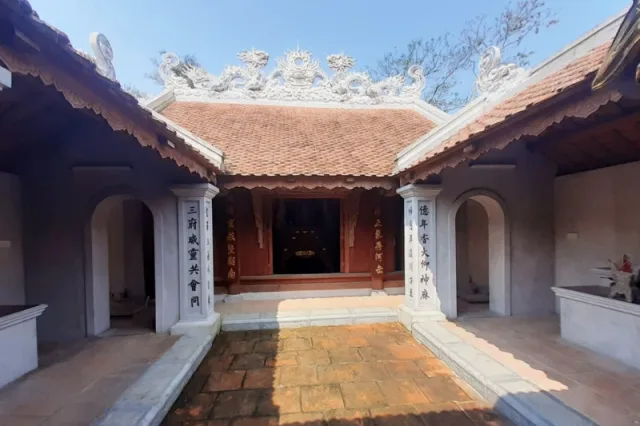
Tổng thể kiến trúc đền bao gồm các hạng mục chính như Nghi môn, Bái đường, Hạ điện, Trung điện, Thượng điện cùng hệ thống Tả vu và Hữu vu bố trí hai bên trục chính. Các công trình này được sắp xếp theo trục thần đạo từ ngoài vào trong, tạo thành một chuỗi không gian liên tục có tính dẫn dắt rõ ràng, giúp người hành lễ di chuyển dần từ không gian thế tục bên ngoài vào không gian linh thiêng trung tâm. Cách tổ chức này vừa đảm bảo tính nghi lễ, vừa thể hiện tính phân cấp không gian trong tư duy kiến trúc truyền thống.
Nghi môn là lớp kiến trúc đầu tiên, đóng vai trò như một ranh giới chuyển tiếp giữa không gian bên ngoài và khu vực nội tự. Tiếp theo là Bái đường, nơi diễn ra các hoạt động hành lễ tập trung, tiếp đón khách thập phương và tổ chức các nghi thức tín ngưỡng quan trọng. Khu vực Hạ điện, Trung điện và Thượng điện được bố trí theo chiều sâu không gian, thể hiện sự tăng dần mức độ linh thiêng, trong đó Thượng điện là không gian trung tâm thờ tự chính, mang tính chất trang nghiêm nhất của toàn bộ di tích. Hai dãy Tả vu và Hữu vu được bố trí cân xứng hai bên trục chính, vừa tạo thế ổn định cho tổng thể kiến trúc, vừa có chức năng hỗ trợ các hoạt động lễ nghi và sinh hoạt tín ngưỡng.
Xét về tổng thể, bố cục kiến trúc của Đền Thanh Liệt thể hiện rõ tính đăng đối và chặt chẽ, phản ánh tư duy tổ chức không gian mang tính quy phạm của kiến trúc truyền thống Việt Nam. Sự cân bằng giữa các trục ngang – dọc, giữa không gian chính – phụ và giữa các khối kiến trúc đã tạo nên một tổng thể vừa uy nghi, vừa hài hòa với cảnh quan tự nhiên ven sông.
Bên cạnh giá trị về bố cục không gian, Đền Thanh Liệt còn lưu giữ nhiều mảng chạm khắc gỗ có giá trị nghệ thuật cao. Các mảng chạm tập trung chủ yếu tại vì kèo, xà ngang, đầu dư, đầu bẩy và các cấu kiện chịu lực trong nội thất kiến trúc. Nội dung trang trí phong phú với nhiều đề tài mang tính biểu tượng như tứ linh, hoa lá cách điệu, mây cuốn và các mô típ liên quan đến tín ngưỡng dân gian. Kỹ thuật chạm khắc thể hiện sự tinh xảo trong xử lý hình khối, với các lớp chạm sâu – nông đan xen, tạo hiệu ứng không gian nhiều tầng và tăng tính sinh động cho các mảng kiến trúc gỗ.
Sự kết hợp giữa bố cục kiến trúc đăng đối, vị trí cảnh quan đặc biệt và hệ thống chạm khắc nghệ thuật đã góp phần tạo nên giá trị tổng thể của Đền Thanh Liệt. Đây không chỉ là một công trình tín ngưỡng đơn thuần mà còn là một không gian văn hóa – lịch sử phản ánh rõ nét tư duy kiến trúc, kỹ thuật xây dựng và đời sống tâm linh của cư dân vùng sông Lam qua nhiều thời kỳ.
Lễ hội
Hàng năm, lễ hội đền Thanh Liệt được tổ chức vào ngày 06/2 Âm lịch. Đây là một trong những lễ hội còn lưu giữ nhiều nét văn hóa cổ truyền đặc sắc, tiêu biểu là lễ rước hến của vùng sông nước xứ Nghệ.
Xếp hạng
Đền được công nhận là di tích Lịch sử và Nghệ thuật cấp quốc gia tại Quyết định số 423-QĐ/VH ngày 20 tháng 02 năm 1997.
Tài liệu tham khảo
- Ban quản lý di tích tỉnh Nghệ An, hồ sơ di tích đền Thanh Liệt.
- Ngọc Ánh, 2023, Đền Thanh Liệt -Di tích lịch sử Nghệ thuật quốc gia với Lễ hội độc đáo, giàu bản sắc, Xã Hưng Nguyên, truy cập tại: https://hungnguyennam.nghean.gov.vn/gioi-thieu/den-thanh-liet-di-tich-lich-su-nghe-thuat-quoc-gia-voi-le-hoi-doc-dao-giau-ban-sac-895671?pageindex=0
- Huy Thư, 2018, Vẻ đẹp của ngôi đền cổ gắn với lễ rước hến nổi tiếng, Báo Nghệ An, truy cập tại: https://baonghean.vn/ve-dep-cua-ngoi-den-co-gan-voi-le-ruoc-hen-noi-tieng-10187328.html#google_vignette
Ngôn ngữ khác
Tiếng Anh
Thanh Liet Temple (Hung Nguyen Nam, Nghe An)
Name and Geographic Location
Thanh Liet Temple is located on the banks of the Lam River in Xuan Lam Commune, Hung Nguyen District. Following the administrative boundary reorganization in July 2025, Thanh Liet Temple now belongs to Hung Nguyen Nam Commune, Nghe An Province.
History and Historical Figures
Thanh Liet Temple (also known as Van Temple) is situated along the Lam River within Xuan Lam Commune, Hung Nguyen District. Its location is closely associated with the riverine landscape typical of the lower Lam River basin, an area where communities have long combined agriculture with the exploitation of aquatic resources. The temple was originally constructed in the late Later Le period, during a time when folk belief systems in the North Central region developed strongly, especially forms of river-deity worship and veneration of historical figures who protected local communities.
The main objects of worship at the temple are deities associated with the riverine environment, reflecting the livelihood and ecological conditions of the local population along the Lam River. Among them, prominent are water deities such as Long Vuong (Dragon King), Ha Ba (River Deity), and other deities within the traditional Vietnamese aquatic pantheon. These deities are believed to govern waterways, regulate water sources, and protect transportation, fishing, and agricultural production. Their worship reflects the dependence of human life on natural water systems and expresses the spiritual need for safety and stability in a river-based environment.
In addition to water deities, the temple also venerates historical and legendary figures associated with national and local achievements. Notably, Hoang Ta Thon is worshipped as a military figure recorded in historical accounts of resistance against foreign invaders. In folklore and collective memory, he is regarded as a protector of the homeland and of riverside communities. His presence in the temple’s pantheon illustrates the fusion of historical memory and folk religion, in which historical figures are gradually deified and integrated into long-term worship practices.
The temple also venerates Nguyen Bieu, a well-known historical figure from the Tran Dynasty, celebrated for his loyalty and patriotic spirit during the resistance against Ming occupation forces. The worship of Nguyen Bieu reflects local reverence for individuals of moral integrity and national contribution, while also demonstrating the expansion of the temple’s spiritual scope from a local to a national historical dimension.
The pantheon of Thanh Liet Temple further includes a wide range of divine titles belonging to the aquatic and indigenous spiritual systems, reflecting the complexity and richness of riverine folk beliefs. These include Thuy Phu Phu Tang Cam Lam Dai De, Thuy Quoc Dong Dinh Quan, Tien Su Ha Ba Thuy Quan Long Vuong Chu Te, Thuy Tinh Phu Nhan, Dao Ba Cong Chua Que Thanh Nuong, Long Vuong Chu Te Thuy Toc, Thuy Phu Ngu Vi Hoang Vuong, Ban Tho Tich Phuc Thuy Huu, and Son Lieu Doc Cuoc. These names reflect a multilayered belief system in which water deities, earth spirits, mountain spirits, and mythological figures coexist.
A notable characteristic of the temple’s belief system is its syncretic nature, combining natural and historical elements. On one hand, water deities express human dependence on the river environment; on the other, historical figures such as Hoang Ta Thon and Nguyen Bieu embody reverence for individuals who contributed to the community and the nation. This combination forms a distinctive religious structure in which nature, history, and spirituality are closely intertwined.
In community life, Thanh Liet Temple serves not only as a place of worship but also as a repository of historical memory and a space for strengthening social cohesion. Through the veneration of deities and historical figures, the community expresses its connection to the natural environment while maintaining traditional ethical values such as gratitude toward ancestors, respect for nature, and communal solidarity.
Architecture
Thanh Liet Temple is located at a strategically significant site along the Lam River, an area that during the Tran and Le dynasties was considered important for controlling waterways and organizing defense against foreign invasions. In addition to its military-geographical importance, the area benefits from favorable natural conditions such as relatively elevated terrain, open visibility, and strong connectivity with surrounding settlements. For this reason, it was historically chosen as a strategic base during resistance and territorial defense periods.
The temple was constructed on land with favorable geomantic conditions, situated within a riverside landscape that is both open and sufficiently tranquil for religious purposes. Through multiple restorations over different historical periods, the current architectural form has developed into a relatively complete ensemble that reflects traditional Vietnamese religious spatial planning.
The architectural complex includes major structures such as the ceremonial gate (Nghi mon), worship hall (Bai duong), Lower Hall (Ha dien), Middle Hall (Trung dien), Upper Hall (Thuong dien), as well as left and right auxiliary halls (Ta vu and Huu vu) arranged symmetrically along the main axis. These structures are organized along a sacred axial line from the exterior to the interior, creating a continuous spatial sequence that guides worshippers from the secular outside world into the sacred inner sanctum. This arrangement reflects both ritual function and hierarchical spatial thinking in traditional architecture.
The Nghi mon serves as the first architectural layer, functioning as a transitional boundary between the outside environment and the inner sanctuary. The Bai duong is the main ceremonial space where collective rituals are conducted, visitors are received, and important religious ceremonies take place. The Ha dien, Trung dien, and Thuong dien are arranged in increasing depth, reflecting a progressive increase in sacredness, with the Thuong dien serving as the most sacred central worship space. The Ta vu and Huu vu are symmetrically placed on both sides of the main axis, providing structural balance and supporting ritual and communal activities.
Overall, the architectural layout of Thanh Liet Temple demonstrates strong symmetry and coherence, reflecting the regulated spatial organization characteristic of traditional Vietnamese architecture. The balance between horizontal and vertical axes, between main and auxiliary spaces, and between architectural volumes creates a monumental yet harmonious composition integrated with the riverside landscape.
In addition to its spatial organization, the temple preserves numerous wooden carvings of high artistic value. These carvings are concentrated on structural components such as trusses, beams, bracket arms, corbels, and load-bearing elements. The decorative themes are rich and symbolic, including the Four Sacred Creatures (Tu Linh), stylized flora, swirling clouds, and motifs associated with folk beliefs. The carving techniques demonstrate refined craftsmanship, with alternating deep and shallow reliefs creating layered spatial effects and enhancing the visual dynamism of the wooden structures.
The combination of symmetrical architecture, distinctive riverside location, and refined sculptural decoration contributes to the overall value of Thanh Liet Temple. It is not merely a religious structure but a cultural and historical space reflecting architectural thinking, construction techniques, and the spiritual life of riverside communities along the Lam River through various historical periods.
Festival
The annual festival of Thanh Liet Temple is held on the 6th day of the second lunar month. It is one of the traditional festivals that preserves many ancient cultural elements, most notably the “clam procession” ritual characteristic of the riverine culture of Nghe region.
Heritage Designation
The temple was recognized as a National Historical and Artistic Monument under Decision No. 423-QD/VH dated 20 February 1997.
References
- Ban quản lý di tích tỉnh Nghệ An, hồ sơ di tích đền Thanh Liệt.
- Ngọc Ánh, 2023, Đền Thanh Liệt -Di tích lịch sử Nghệ thuật quốc gia với Lễ hội độc đáo, giàu bản sắc, Xã Hưng Nguyên, truy cập tại: https://hungnguyennam.nghean.gov.vn/gioi-thieu/den-thanh-liet-di-tich-lich-su-nghe-thuat-quoc-gia-voi-le-hoi-doc-dao-giau-ban-sac-895671?pageindex=0
- Huy Thư, 2018, Vẻ đẹp của ngôi đền cổ gắn với lễ rước hến nổi tiếng, Báo Nghệ An, truy cập tại: https://baonghean.vn/ve-dep-cua-ngoi-den-co-gan-voi-le-ruoc-hen-noi-tieng-10187328.html#google_vignette
Tiếng Pháp
Temple Thanh Liet (Hung Nguyen Nam, Nghe An)
Nom et situation géographique
Le temple Thanh Liet est situé au bord de la rivière Lam, dans l’ancienne commune de Xuan Lam, district de Hung Nguyen. À la suite du redécoupage administratif de juillet 2025, il relève désormais de la commune de Hung Nguyen Nam, province de Nghe An.
Histoire et personnages
Le temple Thanh Liet (également appelé temple Van) se trouve sur la rive de la rivière Lam, dans la commune de Xuan Lam, district de Hung Nguyen. Son emplacement est étroitement lié à l’espace fluvial caractéristique de la basse vallée de la rivière Lam, où se sont formées depuis longtemps des communautés vivant de l’agriculture combinée à l’exploitation des ressources aquatiques. Le temple fut fondé à la fin de la dynastie des Le posterieurs, dans un contexte d’essor des croyances populaires dans le Centre-Nord du Vietnam, notamment les cultes des divinités fluviales et des personnages historiques ayant protégé les communautés locales.
L’objet principal du culte est constitué par un système de divinités liées au milieu aquatique, reflétant les caractéristiques de vie et de subsistance des habitants vivant le long de la rivière Lam. Parmi elles figurent notamment les divinités des eaux telles que Long Vuong, Ha Ba et d’autres divinités appartenant au système du thuy phu dans les croyances vietnamiennes. Ces divinités sont considérées comme les gardiennes des rivières et des eaux, jouant un rôle dans la régulation hydrique et la protection des activités de navigation, de pêche et d’agriculture. Leur culte traduit la dépendance étroite de l’homme envers son environnement naturel, ainsi que le besoin spirituel de sécurité et de stabilité dans un mode de vie fluvial.
Outre les divinités aquatiques, le temple vénère également des personnages historiques et légendaires ayant rendu des services à la nation et à la communauté locale. Parmi eux figure Hoang Ta Thon, général reconnu dans l’histoire des résistances contre les invasions étrangères. Dans la mémoire populaire, il est considéré comme un protecteur du pays et des populations riveraines. Sa sacralisation illustre l’intégration entre histoire et croyance populaire, où les figures historiques sont progressivement divinisées et intégrées au panthéon local.
Le temple inclut également le culte de Nguyen Bieu, personnage historique de la dynastie Tran, connu pour sa loyauté et son patriotisme lors de la résistance contre l’invasion des Ming. Son culte reflète la reconnaissance populaire envers les figures morales et héroïques de l’histoire nationale, tout en élargissant le système cultuel du niveau local au niveau national.
Le système de culte du temple Thanh Liet comprend également une série de divinités appartenant au thuy phu et aux cultes locaux, reflétant la complexité des croyances populaires des régions fluviales : Thuy Phu Phu Tang Cam Lam Dai De, Thuy Quoc Dong Dinh Quan, Tien Su Ha Ba Thuy Quan Long Vuong Chu Te, Thuy Tinh Phu Nhan, Dao Ba Cong Chua Que Thanh Nuong, Long Vuong Chu Te Thuy Toc, Thuy Phu Ngu Vi Hoang Vuong, Ban Tho Tich Phuc Thuy Huu et Son Lieu Doc Cuoc. Cet ensemble illustre un système religieux multicouche mêlant divinités des eaux, divinités territoriales, divinités montagnardes et figures mythologiques.
L’une des caractéristiques essentielles du système cultuel est son syncrétisme entre nature et histoire. D’un côté, les divinités des eaux expriment la dépendance de l’homme vis-à-vis de l’environnement fluvial ; de l’autre, les figures historiques comme Hoang Ta Thon et Nguyen Bieu incarnent la reconnaissance envers ceux qui ont contribué à la communauté et à la nation. Cette combinaison crée une structure religieuse typique où nature, histoire et spiritualité s’entrelacent étroitement.
Dans la vie communautaire, le temple Thanh Liet est non seulement un lieu de pratique religieuse, mais aussi un espace de mémoire historique et de consolidation des liens sociaux. À travers le culte des divinités et des personnages historiques, la communauté exprime son attachement à son environnement, tout en perpétuant des valeurs morales traditionnelles telles que la gratitude envers les ancêtres, le respect de la nature et l’esprit communautaire.
Architecture
Le temple Thanh Liet est situé dans une position stratégique liée au cours de la rivière Lam, zone considérée dès les dynasties Tran et Le comme un axe important de contrôle des voies navigables et de défense contre les invasions. Outre son importance géostratégique, la région bénéficie de conditions naturelles favorables telles qu’un terrain relativement élevé, une bonne visibilité et une connectivité aisée avec les zones résidentielles environnantes. Ainsi, elle a souvent servi de point d’appui dans les périodes de résistance et de défense du territoire.
Le temple est construit sur un terrain bénéficiant d’une bonne géomancie, intégré dans un paysage fluvial à la fois ouvert et propice au recueillement. À travers plusieurs restaurations successives, son architecture actuelle forme un ensemble relativement complet, reflétant la conception traditionnelle de l’organisation spatiale dans les édifices religieux vietnamiens.
L’ensemble comprend les éléments principaux suivants : Nghi mon, Bai duong, Ha dien, Trung dien, Thuong dien, ainsi que les ailes latérales Ta vu et Huu vu disposées de part et d’autre de l’axe principal. Ces constructions sont organisées selon un axe sacré allant de l’extérieur vers l’intérieur, formant une progression spatiale guidant le fidèle du monde profane vers l’espace sacré central.
Le Nghi mon constitue la première frontière architecturale entre l’extérieur et l’espace intérieur. Vient ensuite le Bai duong, espace destiné aux cérémonies collectives et à l’accueil des visiteurs. Les espaces Ha dien, Trung dien et Thuong dien sont disposés en profondeur, traduisant une gradation du sacré, avec le Thuong dien comme espace central et le plus vénérable du sanctuaire. Les deux ailes Ta vu et Huu vu assurent la symétrie de l’ensemble et soutiennent les activités rituelles.
Dans l’ensemble, la composition architecturale du temple Thanh Liet illustre un fort principe de symétrie et de rigueur, caractéristique de la pensée architecturale traditionnelle vietnamienne. L’équilibre entre les axes horizontaux et verticaux, entre espaces principaux et secondaires, confère au site une harmonie entre monumentalité et intégration paysagère.
Le temple conserve également de nombreux ensembles de sculptures sur bois à forte valeur artistique. Les motifs décoratifs se concentrent sur les fermes, poutres, consoles et éléments porteurs. Les thèmes incluent les quatre animaux sacrés (Tu Linh), les fleurs stylisées, les nuages ondoyants et divers motifs issus des croyances populaires. Les techniques de sculpture, combinant relief profond et ajouré, créent des effets de volume complexes et vivants.
L’association entre une architecture symétrique, un emplacement paysager remarquable et un système décoratif riche confère au temple Thanh Liet une valeur globale importante. Il ne s’agit pas seulement d’un édifice religieux, mais d’un espace culturel et historique reflétant la pensée architecturale, les techniques de construction et la vie spirituelle des populations de la rivière Lam à travers les siècles.
Fête traditionnelle
La fête annuelle du temple Thanh Liet est organisée le 6e jour du 2e mois lunaire. Elle conserve de nombreuses traditions culturelles anciennes, notamment la cérémonie de procession des palourdes (le ruoc hen) typique des régions fluviales du Nghe.
Classement patrimonial
Le temple a été classé monument national historique et artistique par la décision n° 423-QD/VH du 20 février 1997.
Bibliographie
- Ban quản lý di tích tỉnh Nghệ An, hồ sơ di tích đền Thanh Liệt.
- Ngọc Ánh, 2023, Đền Thanh Liệt -Di tích lịch sử Nghệ thuật quốc gia với Lễ hội độc đáo, giàu bản sắc, Xã Hưng Nguyên, truy cập tại: https://hungnguyennam.nghean.gov.vn/gioi-thieu/den-thanh-liet-di-tich-lich-su-nghe-thuat-quoc-gia-voi-le-hoi-doc-dao-giau-ban-sac-895671?pageindex=0
- Huy Thư, 2018, Vẻ đẹp của ngôi đền cổ gắn với lễ rước hến nổi tiếng, Báo Nghệ An, truy cập tại: https://baonghean.vn/ve-dep-cua-ngoi-den-co-gan-voi-le-ruoc-hen-noi-tieng-10187328.html#google_vignette
Tiếng Trung
清烈祠(兴元南社,乂安省)
名称与地理位置
清烈祠(越南语:Đền Thanh Liệt)位于兴元县春林社(Xuân Lam),靠近蓝江(sông Lam)河岸。2025年7月行政区划调整与合并后,该祠归属于乂安省兴元南社。
历史与人物
清烈祠(又称万祠)坐落于兴元县春林社蓝江沿岸。其地理位置与蓝江下游典型的水网环境密切相关。长期以来,该区域形成了以农业生产与水产资源利用相结合为生计方式的聚落形态。
该祠始建于后黎朝晚期,当时北中部地区民间信仰体系迅速发展,尤其是水神崇拜以及对有功于地方与国家的历史人物的祭祀活动。
清烈祠的主要祭祀对象为与水域环境相关的神灵体系,反映了蓝江沿岸居民的生活方式与生计结构。其中包括龙王、河伯等越南民间信仰中的水府神灵。这些神灵被认为掌管水域秩序,具有调节水源、护佑航行、渔猎与农业生产的功能。对水神的崇拜体现了人类对自然环境的依赖,同时也反映了对安全与稳定生活的精神诉求。
除水神系统外,该祠亦供奉对民族与地方有功的历史及传说人物。其中包括黄佐屯(Hoàng Tá Thốn),一位被历史记载参与抵御外敌的将领。在民间记忆中,他被视为保护地方安宁的重要人物,其形象逐渐被神化并纳入祭祀体系。
此外,祠中亦配祀阮表(Nguyễn Biểu),为陈朝时期著名人物,以忠义精神与抗明事迹著称。其供奉体现了民众对民族气节与历史功绩人物的尊崇,也反映了地方信仰向国家层面历史记忆的扩展。
清烈祠的神祇体系还包括一系列复杂的水府与地方神灵名号,如扶桑甘林水府大帝、洞庭水国君、河伯水官龙王、天师水府、龙母、水晶夫人、陶伯公主桂圣娘、五位水府王、社土福祐神及山獠独足神等。这些名号体现出多层次神灵体系,融合水神、土地神、山神及半神话人物。
该祠信仰体系的显著特征在于自然崇拜与历史人物崇拜的融合。一方面体现对自然环境的依赖与敬畏,另一方面体现对历史功绩人物的纪念与神圣化,从而形成自然—历史—精神交织的复合信仰结构。
在社区生活中,清烈祠不仅是宗教活动空间,也是地方历史记忆的承载地与社会关系的维系中心。通过祭祀活动,居民强化与自然环境的联系,同时延续感恩祖先、敬畏自然与重视社区共同体的传统价值。
建筑
清烈祠位于蓝江沿岸具有战略意义的地理位置。自陈朝至黎朝时期,该区域被视为控制水路交通与防御外敌的重要节点。该地不仅具备军事与地理优势,同时拥有较高地势、开阔视野以及与周边居民区良好的连接条件,因此在历史上曾多次作为军事与防御支点。
该祠建于风水条件优越的地块,整体环境兼具开放性与宗教空间所需的静谧性。经过多次修缮与重建,其建筑体系逐渐完善,体现了越南传统宗教建筑的空间规划理念。
整体建筑包括:仪门(Nghi môn)、拜堂(Bái đường)、下殿(Hạ điện)、中殿(Trung điện)、上殿(Thượng điện),并在主轴两侧设有左右配殿(Tả vu、Hữu vu)。建筑沿神道轴线由外向内依次展开,形成连续递进的空间序列,使祭祀者逐步从世俗空间进入神圣核心空间。
仪门作为第一重空间界限,起到内外分隔作用。拜堂用于举行集体仪式与接待信众。下殿、中殿与上殿依次递进,神圣性逐步增强,其中上殿为核心祭祀空间,具有最高等级的宗教意义。左右配殿则用于辅助祭祀活动与仪式准备。
整体布局强调对称与秩序,体现越南传统建筑中严格的空间等级观念。横向与纵向轴线的平衡,以及主从空间的组织方式,使建筑整体既庄严又与河岸自然环境相协调。
此外,清烈祠保存有大量具有艺术价值的木雕构件,主要分布于梁架、横枋、斗拱与结构节点。雕刻题材包括四灵纹、植物纹、云纹及民间宗教符号。其工艺体现出高水平的浮雕技法,通过深浅层次变化形成丰富的空间效果与视觉动感。
建筑结构、地理环境与雕刻艺术的结合,使清烈祠成为兼具宗教、历史与艺术价值的综合性文化遗产,反映了蓝江流域居民长期以来的精神世界与建筑技术发展。
节庆
清烈祠每年农历二月初六举行祭祀节庆活动。这一节日保留了浓厚的传统文化特征,其中最具代表性的是乂安地区的“捞螺仪式”(lễ rước hến),体现典型的水乡民俗文化。
级别认定
该祠于1997年2月20日根据第423-QĐ/VH号决定,被认定为国家级历史与艺术遗迹。
参考文献
- Ban quản lý di tích tỉnh Nghệ An, hồ sơ di tích đền Thanh Liệt.
- Ngọc Ánh, 2023, Đền Thanh Liệt -Di tích lịch sử Nghệ thuật quốc gia với Lễ hội độc đáo, giàu bản sắc, Xã Hưng Nguyên, truy cập tại: https://hungnguyennam.nghean.gov.vn/gioi-thieu/den-thanh-liet-di-tich-lich-su-nghe-thuat-quoc-gia-voi-le-hoi-doc-dao-giau-ban-sac-895671?pageindex=0
- Huy Thư, 2018, Vẻ đẹp của ngôi đền cổ gắn với lễ rước hến nổi tiếng, Báo Nghệ An, truy cập tại: https://baonghean.vn/ve-dep-cua-ngoi-den-co-gan-voi-le-ruoc-hen-noi-tieng-10187328.html#google_vignette