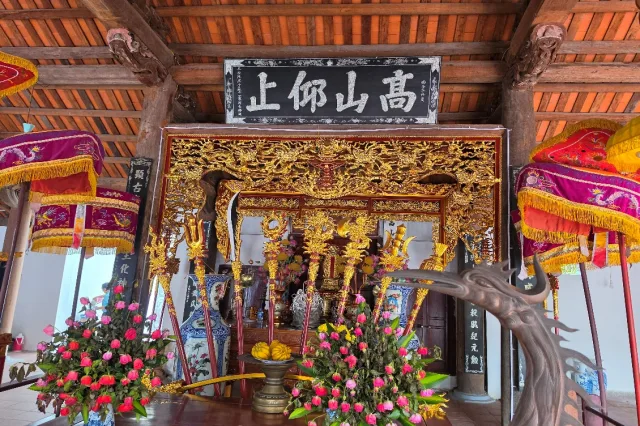


Tên gọi và vị trí địa lý
Miếu Nội xá thuộc xã Hòa Xá, TP. Hà Nội. Nội Xá ở về phía Nam thủ đô Hà Nội, cách trung tâm Hà Nội chừng 50km. Tên Nội Xá có từ xưa. Ở thời Lê gọi là trang Nội Xá. Đến đầu thế kỷ XVIII, Nội Xá là một xã thuộc tổng Thái Đường, huyện Hoài An, phủ Ứng Thiên, trấn Sơn Nam Thượng. Năm Gia Long 13 (1814) phủ Ứng Thiên đổi là phủ Ứng Hòa. Năm Minh Mệnh 12 (1831) bỏ trấn Sơn Nam Thượng đặt làm tỉnh Hà Nội. Đẩu thế kỷ XX thuộc tỉnh Cầu Đơ, sau đó là Hà Đông. Đên trước cách mạng tháng 8/1945, Nội Xá là xã thuộc tổng Thái Đường, phủ Ứng Hòa, tỉnh Hà Đông.
Lịch sử và nhân vật
Miếu Nội Xá là một trong những di tích thờ tự nhân vật lịch sử gắn với thời kỳ đấu tranh chống giặc ngoại xâm, đình thờ Uy quốc Khánh Tuyết Hoàng tử đại sinh nhân quốc chính uy nghi linh thành đại vương – một nhân vật lịch sử, một vị tướng lĩnh trong cuộc khởi nghĩa Lam Sơn. Ông đã từng được Lê Thái Tổ ban quốc tính, xếp vào hàng công thần khai quốc triều Lê.
Vào thời trước vua Lê Thái Tổ, ở vùng đạo Thanh Hoa (Thanh Hóa ngày nay) có người Bảo Lộc họ Trịnh tên Giản, nhờ phức ấm thuở trước lấy được vợ là ngựời trong quận, họ Lê Thị tên Huệ. Vốn nếp nhà gia giáo trâm anh, cả hai ông bà đều ăn ở có đạo đức, chuyên làm điều thiện, không một mảy may làm điều ác. Thời gian trôi, ông tuổi đã gần 60, bà hơn 40 tuổi mà vẫn chưa có con nối dõi. Ông bà thường nói con hiền cháu thảo quý hơn vàng ngọc. Vì vây ông bà thường xuyên giúp đỡ người nghèo khó, lại thành tâm sửa lỗ đến các nơi danh sơn thắng cảnh, đền động linh thiêng mong sớm có con. Một hôm nghe thấy ở vùng huyện Hoài An, phủ Ứng Thiên đạo Sơn Nam có động Tuyết Sơn cực kỳ linh ứng, cầu được như ý, nguyện tất tòng tâm, hai ông bà liềm sắm sanh lễ vật tới động chùa để cầu tự. Làm lễ xong, ông bà nghỉ lại.qua đêm, được mộng báo sẽ có con trai do quan Thủy Thẩn đầu thai xuất thế vào năm Thìn. Hôm sau trên đường về, qua khu đất Nhuế Khu thuộc trang Nội Xá, huyện Hoài An chợt thấy trời đất tối tăm, ông bà vào trú trong miếu “Thủy Thần Tối Linh”, lại có hào quang sáng chiếu vào người. Bà Lê Thị mang thai từ đó. Đến ngày 6 tháng 8 năm Nhâm Thìn bà Lê Thị sinh hạ 1 con trai khôi ngô khác lạ. Ông bà đặt tên con là Khánh Tuyết. Mới 13 tuổi Khánh Tuyết đã học hành tinh thông văn võ binh thư. Đến năm 18 tuổi trong 1 đêm cha mẹ đều qua đời, tang lễ hiếu thuận 3 năm. Lúc ấy, ở nước ta nhà Trần đã mất, người Minh xâm lược đã hơn 2 chục năm tàn sát dân lành, trăm họ diêu đứng. Từ Lam Sơn, Lê Thái Tổ khởi nghĩa dấy binh, kêu gọi hào kiệt anh hùng ra giúp dân cứu nước. Nghe hiệu triệu ông Khánh Tuyết đã chiêu mộ được hơn 500 thuộc hạ tìm vào tận Lam Sơn ứng nghĩa. Thái Tổ thấy ông văn võ toàn tài đã cử ông đi tuần thú ở vùng Sơn Nam. Ông vâng mệnh quản lĩnh hơn 5 ngàn quân thủy binh, tiến thẳng về vùng phủ Ứng Thiên đạo Sơn Nam. Ông đóng quân ở đất Nhuê khu của trang Nội Xá huyên Hoài An, nơi có tòa miếu cổ. Ông sửa lễ bái tạ đền, mời phụ lão lại nói chuyện về Vị thân ở đền … Các cụ già nghe chuyện đã xin làm thần tử. Ông bèn chọn được trong dân hơn 30 người làm gia thần. Ông sai binh sĩ cùng nhân dân sửa sang lại đền thờ, lại cho 30 hốt vàng để mua ruộng làm đất tế điền. Một ngày Ông đang ngồi trong phủ đường, chợt có quang đỏ bay lên, ông hóa. Nhân dân làm lễ tấu vào triều. Vua cho làm lễ an táng và sắc phong cho Khánh Tuyết là Trung đăng Phúc Thần, chuẩn hứa cho dân Nhuế khu trang Nội Xá sửa miếu thờ thần. Đến thời vua Lê Thánh Tông, xét lại sự tích các công thần thời trước đã lập công trong đánh giặc Minh, đã gia phong cho ông là Đương Cảnh Thành Hoàng, sắc tặng thần hiệu là Uy Quốc Khánh Tuyết Hoàng Tử Đại Sinh Nhân Quốc Chính Uy Nghi Linh Thánh Đại Vương.
Theo các bậc cao niên trong lòng, miếu Nội Xá có từ thời Lê Trung Hưng, được dân làng nhiều lần tu bổ và phụng tự. Đến trước cách mạng tháng 8/1945 quy mô của miếu gồm nghi môn, hồ bán nguyệt, nhà Tiền tế, Đại bái, Trung cung và Hậu cung dàn ngang trên một thửa đất rộng. Nơi đây có nhiều cây cổ thụ um tùm tạo nên sư linh thiêng, huyền bí. Trong cuộc chiến tranh, tiền tế và đại bái của miếu đã bị phá dỡ, hồ bán nguyệt bị lấp. Hiện nay chỉ còn tòa Trung cung và hâu cung miếu.
Kiến trúc cảnh quan
Kiến trúc cảnh quan Miếu Nội Xá mang dáng vẻ của một không gian thờ tự dân gian Bắc Bộ quy mô vừa, thiên về sự kín đáo và trang nghiêm hơn là đồ sộ. Tổng thể công trình được bố cục theo trục thần đạo chạy từ nghi môn vào Trung cung, kết hợp hài hòa giữa kiến trúc, sân vườn và hệ thống cây cổ thụ lâu năm tạo nên cảm giác cổ kính, thanh tĩnh.
Trung tâm di tích là tòa Trung cung làm theo kiểu chồng diêm hai tầng tám mái với các đầu đao cong vút. Bộ khung kiến trúc đặt trên nền vuông cao, gồm bốn cột trụ cái liên kết bằng hệ thống xà ngang, xà dọc khá chắc chắn. Hai bộ vì nóc làm theo kiểu chồng rường, liên kết bằng các mộng gỗ truyền thống, vừa tạo độ bền vừa giúp công trình thông thoáng. Ở hai bên cột cái là hệ thống bẩy thượng và bẩy hạ đỡ tàu mái, khiến phần mái xòe rộng nhưng vẫn giữ được dáng thanh thoát. Khoảng chồng diêm giữa hai tầng mái được lắp chấn song con tiện, vừa lấy ánh sáng tự nhiên vừa tạo sự lưu thông không khí cho nội điện.
Trang trí kiến trúc của Trung cung không quá cầu kỳ nhưng vẫn thể hiện rõ phong cách mỹ thuật truyền thống. Các đầu dư, thân bẩy và phần hiên mái hạ được chạm nổi hình long vân, linh thú và dây lá cách điệu. Nét chạm tương đối khỏe, thiên về tạo hình khối hơn là tỉa tót chi li, phù hợp với phong cách kiến trúc dân gian vùng đồng bằng ven biển. Một số cấu kiện gỗ còn lưu dấu sơn son thếp vàng cũ, cho thấy công trình từng trải qua nhiều lần tu sửa nhưng vẫn giữ được dáng dấp cổ truyền ban đầu.
Hai bên Trung cung là hai khoảng sân nhỏ lát gạch Bát Tràng màu đỏ sẫm, thấp hơn nền điện chính vài bậc tạo sự phân tầng không gian rõ rệt. Dọc sân đặt các chậu cảnh, hòn non bộ và đôi đèn đá nhỏ, vừa tạo điểm nhấn cảnh quan vừa giữ vẻ thanh tịnh cho khu thờ tự. Vào mùa hè, bóng cây đại, cây muỗm và cau cảnh phủ kín khoảng sân khiến không gian luôn mát và yên tĩnh.
Phía ngoài hai bên Trung cung là hai bức bình phong xây kiểu giả nghi môn cổng pháo hai tầng tám mái, bố cục đối xứng nhau qua trục chính. Các bình phong vừa có tác dụng che chắn, tạo thế tụ khí theo quan niệm phong thủy dân gian, vừa giúp không gian kiến trúc trở nên khép kín và trang nghiêm hơn. Mặt ngoài bình phong đắp nổi hình hổ phù, mây lửa và hoa sen cách điệu; mặt trong đắp cuốn thư cùng các ô thơ chữ Hán ca ngợi công đức thần linh.
Bao quanh khu miếu là tường gạch thấp xây kiểu bít đốc, phía trước có hồ bán nguyệt nhỏ trồng sen và súng. Vào mùa lễ hội, mặt nước phản chiếu mái đao cong cùng ánh đèn tạo nên cảnh quan khá đặc trưng của các miếu cổ vùng đồng bằng Bắc Bộ. Tuy quy mô không lớn, Miếu Nội Xá vẫn giữ được bố cục hài hòa giữa kiến trúc và cảnh quan, phản ánh rõ đặc điểm tín ngưỡng dân gian truyền thống của cư dân địa phương.
Di vật
Miếu Nội Xá hiện còn bảo lưu nhiều di vật quý có giá trị lịch sử, văn hóa và nghệ thuật, được chế tác từ nhiều chất liệu như gỗ, đá, đồng, gốm sứ và vải. Trong số đó có cuốn thần phả Lê Thái Tổ công thần nhất vị đại vương phả lục, được sao chép lần cuối vào năm Thành Thái thứ 12 (1900), cùng ba bản sao sắc phong niên hiệu Thiệu Trị thứ 7 (1847) và Tự Đức thứ 3 (1850). Hệ thống đồ thờ gồm hai đôi câu đối gỗ (một đôi kiểu lòng máng, một đôi khảm trai trên nền sơn đen), hai bức hoành phi đại tự, một khám thờ kiểu long đình đặt long ngai bài vị, một long ngai bài vị có niên đại thế kỷ XVIII, cùng hương án sơn son thếp vàng chạm nổi các đề tài tứ linh, tứ quý và hổ phù, cũng thuộc thế kỷ XVIII. Miếu còn lưu giữ hai bia đá dựng năm Tự Đức Nhâm Thìn (1872), trán bia chạm lưỡng long chầu nguyệt và diềm chạm hoa dây. Các hiện vật bằng đồng gồm bát hương hình hộp chữ nhật có đôi rồng chầu, bộ tam sự, chiêng đồng, chuông đồng khắc dòng chữ “Nội Xá Từ chung” và bộ lỗ bộ gồm mười cây vũ khí. Bên cạnh đó là nhiều hiện vật gốm sứ có giá trị như chóe sứ men trắng hoa lam, lọ lộc bình men trắng ngà rạn có hai quai hình đầu voi và bát hương sứ hoa lam Móng Cái niên đại thế kỷ XVIII. Ngoài ra, miếu còn có một trái tảo sơn son chạm nổi tứ linh cùng nhiều đồ tế tự khác bằng gốm sứ, đồng và vải, góp phần phản ánh diện mạo tín ngưỡng truyền thống và nghệ thuật trang trí của di tích qua nhiều thời kỳ.
Lễ hội
Tài liệu tham khảo
- Phòng Văn hóa – Xã hội xã Hòa Xá, 2026, Giới thiệu di tích đình – miếu Nội Xá, xã Hòa Xá, truy cập tại: https://hoaxa.hanoi.gov.vn/di-tich-lich-su-va-van-hoa/gioi-thieu-di-tich-dinh-mieu-noi-xa-xa-hoa-xa-271626042123463636.htm
- Nguyễn Sinh Vinh, 2025, Di tích lịch sử văn hóa cấp quốc gia – Thôn Nội Xá, Vạn Thái, Ứng Hòa , Hà Nội, truy cập tại: https://trinhtoc.com/di-tich-lich-su-van-hoa-cap-quoc-gia-o-thon-noi-xa-van-thai-ung-hoa-ha-noi.html
Ngôn ngữ khác
Tiếng Anh
Noi Xa Shrine (Hoa Xa, Ha Noi)
Name and Geographic Location
Noi Xa Shrine is located in Hoa Xa commune, Ha Noi City. Noi Xa lies to the south of the capital, approximately 50 kilometers from the center of Ha Noi. The name Noi Xa has existed since ancient times. During the Le dynasty, it was known as Noi Xa trang. By the early eighteenth century, Noi Xa had become a commune of Thai Duong district, Hoai An county, Ung Thien prefecture, Son Nam Thuong region.
In the 13th year of Gia Long (1814), Ung Thien prefecture was renamed Ung Hoa prefecture. In the 12th year of Minh Menh (1831), the Son Nam Thuong region was abolished and reorganized into Ha Noi province. In the early twentieth century, the area belonged to Cau Do province, and later to Ha Dong province. Before the August Revolution of 1945, Noi Xa was a commune of Thai Duong district, Ung Hoa prefecture, Ha Dong province.
History and Historical Figure
Noi Xa Shrine is one of the religious monuments dedicated to a historical figure associated with the resistance against foreign invasion. The shrine worships Uy Quoc Khanh Tuyet Hoang Tu Dai Sinh Nhan Quoc Chinh Uy Nghi Linh Thanh Dai Vuong, a historical figure and military commander in the Lam Son uprising. He was granted the royal surname by Le Thai To and ranked among the founding meritorious officials of the Le dynasty.
Before the reign of Le Thai To, in the Thanh Hoa region, there lived a man from Bao Loc hamlet of the Trinh family named Gian. Thanks to ancestral merit, he married a woman of the Le family named Hue. Coming from an educated and noble household, both husband and wife lived virtuously, devoted themselves to charitable deeds, and avoided wrongdoing. As time passed, the husband approached sixty years of age and the wife over forty, yet they still had no children.
The couple often said that worthy descendants were more precious than gold and jewels. Therefore, they frequently helped the poor and sincerely traveled to famous mountains, scenic temples, and sacred caves to pray for a child. One day, hearing that Tuyet Son Cave in Hoai An county, Ung Thien prefecture, Son Nam region, was especially sacred and responsive to prayers, they prepared offerings and journeyed there to pray for offspring.
After completing the rites, they stayed overnight at the temple. In a dream, they were told that they would have a son who was the reincarnation of a Water Deity official and that he would be born in the year of the Dragon. The next day, while returning home and passing through Nhue Khu land in Noi Xa trang, Hoai An county, the sky suddenly darkened. The couple sought shelter in the shrine of “Thuy Than Toi Linh,” where a radiant light shone upon them. From that moment, Lady Le Thi became pregnant.
On the sixth day of the eighth lunar month in the year of Nham Thin, she gave birth to an unusually handsome son. The child was named Khanh Tuyet. By the age of thirteen, Khanh Tuyet had already mastered literature, martial arts, and military strategy. At eighteen, both of his parents passed away in the same year, and he observed a full three-year mourning period with utmost filial devotion.
At that time, the Tran dynasty had fallen, and the Ming occupation had lasted for more than twenty years, bringing suffering upon the people. From Lam Son, Le Thai To launched his uprising and called upon heroes and talented men to aid the nation. Hearing the call to arms, Khanh Tuyet recruited more than five hundred followers and traveled to Lam Son to join the resistance.
Recognizing his talents in both civil and military affairs, Le Thai To appointed him to patrol and command the Son Nam region. He was entrusted with more than five thousand naval troops and advanced directly into Ung Thien prefecture. He established his military camp at Nhue Khu in Noi Xa trang, near an ancient shrine. There, he respectfully performed worship ceremonies and invited local elders to speak about the deity worshiped at the shrine. Impressed by his conduct, the elders pledged themselves to his service, and he selected more than thirty local men as retainers.
Khanh Tuyet ordered his soldiers and villagers to restore the shrine and donated thirty bars of gold to purchase ritual lands for its maintenance. One day, while seated in the administrative hall, a red radiance suddenly rose into the sky, and he passed away. The people reported the event to the royal court. The king ordered a formal burial ceremony and posthumously granted Khanh Tuyet the title Trung Dang Phuc Than, while permitting the people of Nhue Khu in Noi Xa trang to restore the shrine in his honor.
During the reign of Le Thanh Tong, when the merits of officials who had contributed to the struggle against the Ming were reviewed, Khanh Tuyet was further honored as Duong Canh Thanh Hoang and granted the divine title Uy Quoc Khanh Tuyet Hoang Tu Dai Sinh Nhan Quoc Chinh Uy Nghi Linh Thanh Dai Vuong.
According to village elders, Noi Xa Shrine dates back to the Le Trung Hung period and was restored and maintained by local villagers many times over the centuries. Before the August Revolution of 1945, the shrine complex included the Nghi Mon gate, a semicircular pond, the Tien Te hall, Dai Bai hall, Trung Cung, and Hau Cung, all arranged across a spacious plot of land. Numerous ancient trees created an atmosphere of sacredness and mystery. During wartime, the Tien Te and Dai Bai halls were destroyed and the semicircular pond was filled in. Today, only the Trung Cung and Hau Cung structures remain.
Architecture and Landscape
The architecture and landscape of Noi Xa Shrine reflect the character of a medium-sized Northern Vietnamese folk religious site, emphasizing solemnity and seclusion rather than grandeur. The overall layout follows a sacred central axis extending from the Nghi Mon gate toward the Trung Cung sanctuary, harmoniously integrating architecture, courtyards, gardens, and ancient trees to create an atmosphere of antiquity and tranquility.
At the center of the site stands the Trung Cung building, constructed in a two-tiered overlapping-roof style with eight curved roof sections. The timber framework rests upon a raised square platform and consists of four main pillars connected by horizontal and longitudinal beams. The roof structure employs the traditional chong ruong system joined with wooden mortise connections, ensuring durability while maintaining ventilation throughout the structure. On either side of the main pillars are upper and lower supporting beams that help extend the roof outward while preserving an elegant appearance. Between the two roof tiers are wooden balustrades that allow natural light and airflow into the sanctuary.
The architectural decoration of the Trung Cung is not overly elaborate but still clearly reflects traditional artistic styles. Carved motifs of dragons amid clouds, mythical creatures, and stylized foliage appear on the beam ends, supporting structures, and lower eaves. The carving style is relatively bold and focuses more on strong forms than intricate detailing, characteristic of folk architecture in the coastal delta region. Some wooden components still preserve traces of old gilded lacquer, indicating that although the shrine underwent multiple restorations, it has retained much of its original traditional appearance.
On both sides of the Trung Cung are small courtyards paved with dark red Bat Trang bricks, positioned slightly lower than the main sanctuary platform to create a clear spatial hierarchy. Along the courtyards are ornamental plants, miniature rockeries, and pairs of small stone lanterns that enhance the peaceful atmosphere of the sacred space. During summer, the shade of frangipani trees, muom trees, and ornamental areca palms keeps the area cool and quiet.
Outside the Trung Cung stand two screen walls designed in the style of symbolic ceremonial gates with two-tiered, eight-roof structures arranged symmetrically along the central axis. These screens serve both as protective architectural features and as elements that gather spiritual energy according to traditional feng shui beliefs, while also creating a more enclosed and solemn space. The outer surfaces are decorated with raised motifs of ho phu masks, flaming clouds, and stylized lotus flowers, while the inner surfaces display scroll-shaped carvings and Chinese-character poetry praising the virtues of the deity.
Surrounding the shrine is a low brick wall built in a traditional closed-gable style. In front lies a small semicircular pond planted with lotus and water lilies. During festival seasons, the water reflects the curved roof ridges and lantern lights, creating a characteristic landscape commonly associated with ancient shrines of the Northern Vietnamese delta. Although modest in scale, Noi Xa Shrine preserves a harmonious balance between architecture and landscape, clearly reflecting the traditional folk beliefs of the local community.
Artifacts
The Nội Xá Temple still preserves many valuable artifacts of historical, cultural, and artistic significance, crafted from various materials such as wood, stone, bronze, ceramics, and fabric. Among them is the genealogical record of Lê Thái Tổ, the most meritorious official and great king, last copied in the 12th year of Thành Thái (1900), along with three copies of royal decrees from the 7th year of Thiệu Trị (1847) and the 3rd year of Tự Đức (1850). The worship system includes two pairs of wooden couplets (one pair in a trough style, one pair in mother-of-pearl inlay on a black painted background), two large horizontal plaques, a shrine in the style of a dragon pavilion with a dragon throne and ancestral tablets, a dragon throne and ancestral tablets dating from the 18th century, and a gilded incense altar with embossed carvings of the four mythical creatures, four seasons, and tiger motifs, also from the 18th century. The temple also preserves two stone steles erected in the year Tự Đức Nhâm Thìn (1872), with the top of the stele carved with two dragons worshipping the moon and the border carved with floral patterns. The bronze artifacts include a rectangular incense burner with a pair of dragons, a set of three ritual objects, a bronze gong, a bronze bell inscribed with the words “Nội Xá Temple Bell,” and a set of ten weapons. Alongside these are many valuable ceramic artifacts such as a white porcelain jar with blue floral patterns, a cracked ivory-white porcelain vase with two elephant-head handles, and a Móng Cái blue floral porcelain incense burner dating back to the 18th century. In addition, the temple also houses a lacquered earthenware vessel with embossed carvings of the four mythical creatures, along with many other ritual objects made of ceramics, bronze, and fabric, reflecting the traditional religious and decorative art of the site through various periods.
Festivals
The Nội Xá Temple is the center of the local community’s worship of the tutelary deity. Monthly, on the first and fifteenth days of the lunar month, and during traditional festivals such as Lunar New Year, the Upper Nguyên Festival, and the Dragon Boat Festival, people offer incense and offerings at the temple to express their reverence and pray for peace and good fortune. Whenever a family has an important event, people also go to the temple to offer prayers to the village guardian deity, asking for protection and blessings.
Throughout the year, the temple is the site of many important rituals associated with the legend and death anniversary of the village guardian deity. Typical examples include the birthday celebration (celebration of the deity’s birth) held on the 5th and 6th of August in the lunar calendar. On the 5th, the villagers open the temple, perform a sacrificial ceremony, and bring water from the Six Wells to perform the ritual of bathing the statue of the guardian deity; on the 6th, the grand birthday celebration is held with both vegetarian and non-vegetarian offerings. The deity’s passing day (10th of November in the lunar calendar) is also celebrated at the temple with solemn rituals, without any entertainment or singing. In addition, there are other celebrations on the 15th of February and the 13th of July in the lunar calendar.
The largest festival of the community is the Great Blessing Ceremony, held on the 10th of January in the lunar calendar. On this occasion, the tutelary deity is carried in procession from the temple to the communal house for the ceremonial rituals and the organization of the festival. After the festival concludes, the procession returns the deity’s statue to the temple. The festival mainly takes place in the communal house area with many folk cultural activities such as wrestling, stick fighting, human chess, Cheo opera, Ca Tru singing, Quan Ho folk singing, and traditional games, reflecting the close relationship between the temple – a sacred place of worship – and the communal house – the community living space of Noi Xa village.
The festival on the 10th day of the first lunar month also clearly demonstrates the hospitality tradition of the people of Noi Xa. Visitors from all over are warmly welcomed and can enjoy traditional products such as sticky rice cakes, sticky rice cakes, thorn cakes, and white cakes. These offerings are not only presented to the tutelary deity but also become cultural symbols of the festival, expressing the hope for a prosperous, peaceful, and united new year.
References
- Phòng Văn hóa – Xã hội xã Hòa Xá, 2026, Giới thiệu di tích đình – miếu Nội Xá, xã Hòa Xá, truy cập tại: https://hoaxa.hanoi.gov.vn/di-tich-lich-su-va-van-hoa/gioi-thieu-di-tich-dinh-mieu-noi-xa-xa-hoa-xa-271626042123463636.htm
- Nguyễn Sinh Vinh, 2025, Di tích lịch sử văn hóa cấp quốc gia – Thôn Nội Xá, Vạn Thái, Ứng Hòa , Hà Nội, truy cập tại: https://trinhtoc.com/di-tich-lich-su-van-hoa-cap-quoc-gia-o-thon-noi-xa-van-thai-ung-hoa-ha-noi.html
Tiếng Pháp
Temple Mieu Noi Xa (Hoa Xa, Ha Noi)
Nom et situation geographique
Le Mieu Noi Xa est situe dans la commune de Hoa Xa, ville de Ha Noi. Le village de Noi Xa se trouve au sud de la capitale Ha Noi, a environ 50 km du centre-ville. Le nom de Noi Xa existe depuis longtemps. Sous la dynastie Le, il etait appele trang Noi Xa. Au debut du XVIIIe siecle, Noi Xa etait une commune appartenant au tong Thai Duong, district de Hoai An, prefecture de Ung Thien, province de Son Nam Thuong. En la treizieme annee Gia Long (1814), la prefecture de Ung Thien fut renommee Ung Hoa. En la douzieme annee Minh Menh (1831), la province de Son Nam Thuong fut supprimee pour former la province de Ha Noi. Au debut du XXe siecle, la region appartenait a la province de Cau Do, puis a celle de Ha Dong. Avant la Revolution d’aout 1945, Noi Xa etait une commune relevant du tong Thai Duong, prefecture de Ung Hoa, province de Ha Dong.
Histoire et personnage historique
Le Mieu Noi Xa est l’un des monuments cultuels consacres a un personnage historique lie a la lutte contre les envahisseurs etrangers. Le sanctuaire honore Uy quoc Khanh Tuyet Hoang tu dai sinh nhan quoc chinh uy nghi linh thanh dai vuong, personnage historique et general ayant participe a l’insurrection de Lam Son. Il recut du roi Le Thai To le nom de famille royal et fut compte parmi les principaux merites fondateurs de la dynastie Le.
Avant l’avenement du roi Le Thai To, dans la region de Thanh Hoa, vivait un homme nomme Trinh Gian, originaire de Bao Loc. Grace aux merites de ses ancetres, il epousa une femme de noble famille nommee Le Thi Hue. Tous deux etaient issus d’une famille de bonne education et vivaient dans la vertu, accomplissant constamment des actes charitables sans jamais commettre de mauvaises actions. Cependant, alors que l’homme approchait des soixante ans et son epouse depassait quarante ans, ils n’avaient toujours pas d’enfant.
Ils disaient souvent qu’un enfant vertueux valait plus que l’or et les pierres precieuses. C’est pourquoi ils aidaient frequemment les pauvres et se rendaient avec devotion dans les montagnes sacrees, les temples et les grottes venerables afin de prier pour avoir un enfant. Un jour, ils apprirent qu’au district de Hoai An, prefecture de Ung Thien, dans la region de Son Nam, se trouvait la grotte sacree de Tuyet Son, reputee tres efficace pour exaucer les voeux. Le couple prepara alors des offrandes et se rendit au temple de la grotte pour prier.
Apres les ceremonies, ils passerent la nuit sur place et recurent en reve l’annonce qu’ils auraient un fils, reincarnation d’un esprit des eaux, ne l’annee du Dragon. Le lendemain, sur le chemin du retour, en passant par la terre de Nhue Khu dans le trang Noi Xa, district de Hoai An, le ciel s’assombrit soudainement. Ils entrerent alors se refugier dans le sanctuaire « Thuy Than Toi Linh », ou une lumiere surnaturelle illumina le corps de Le Thi. Celle-ci tomba enceinte a partir de ce jour.
Le sixieme jour du huitieme mois de l’annee Nham Thin, Le Thi donna naissance a un fils d’une apparence remarquable. Ses parents le nommerent Khanh Tuyet. A seulement treize ans, il maitrisait deja les lettres, les arts martiaux et les traites militaires. A dix-huit ans, il perdit ses deux parents en une meme nuit et observa un deuil filial de trois ans.
A cette epoque, la dynastie Tran avait disparu et les Ming occupaient le pays depuis plus de vingt ans, massacrant la population et plongeant le peuple dans la misere. Depuis Lam Son, Le Thai To leva son armee et appela les heros a sauver la nation. Repondant a cet appel, Khanh Tuyet recruta plus de cinq cents hommes et rejoignit Lam Son. Impressionne par ses talents militaires et litteraires, Le Thai To le nomma inspecteur de la region de Son Nam. A la tete de plus de cinq mille soldats de marine, il se rendit dans la prefecture de Ung Thien et etablit son camp a Nhue Khu, dans le trang Noi Xa, a proximite d’un ancien sanctuaire.
Il organisa des rites au temple et invita les anciens du village a parler de la divinite venerée dans le sanctuaire. Les vieillards, touches par ses paroles, accepterent de devenir ses serviteurs fideles. Il choisit alors plus de trente habitants comme hommes de confiance. Il ordonna egalement a ses soldats et a la population de restaurer le sanctuaire et offrit trente lingots d’or afin d’acheter des terres destinees aux rites sacrificiels.
Un jour, alors qu’il etait assis dans le palais administratif, une lumiere rouge monta soudainement dans le ciel et il mourut sur-le-champ. Les habitants informerent aussitot la cour royale. Le roi ordonna des funerailles officielles et lui accorda le titre de Trung dang Phuc Than, autorisant egalement les habitants de Nhue Khu a restaurer le sanctuaire pour lui rendre un culte.
Sous le regne de Le Thanh Tong, lors du reexamen des merites des anciens heros ayant combattu les Ming, il fut encore honore du titre de Duong Canh Thanh Hoang et recut le nom sacre de Uy Quoc Khanh Tuyet Hoang Tu Dai Sinh Nhan Quoc Chinh Uy Nghi Linh Thanh Dai Vuong.
Selon les anciens du village, le Mieu Noi Xa existe depuis la periode du Le Trung Hung et fut plusieurs fois restaure et entretenu par les habitants. Avant la Revolution d’aout 1945, le sanctuaire comprenait un nghi mon, un bassin demi-lunaire, un tien te, un dai bai, un trung cung et un hau cung disposes sur un vaste terrain. De nombreux arbres centenaires y formaient une atmosphere sacree et mysterieuse. Durant les guerres, le tien te et le dai bai furent detruits et le bassin demi-lunaire comble. Aujourd’hui, seuls subsistent le trung cung et le hau cung.
Architecture et paysage
L’architecture et le paysage du Mieu Noi Xa presentent les caracteristiques d’un sanctuaire populaire du Nord du Vietnam de dimensions moyennes, privilegient davantage la sobriete et le recueillement que la monumentalite. L’ensemble est organise selon un axe sacre allant du nghi mon au trung cung, associant harmonieusement architecture, jardins et arbres anciens, ce qui confere au lieu une atmosphere antique et paisible.
Au centre du site se trouve le trung cung, construit selon le style chong diem a deux niveaux et huit pans de toiture aux extrémités recourbees. La structure repose sur une plateforme carree surelevee avec quatre piliers principaux relies par un solide systeme de poutres horizontales et longitudinales. Les charpentes du toit suivent le style chong ruong, assemblees par des tenons traditionnels assurant solidite et ventilation. Sur les cotes des piliers principaux se trouvent des consoles soutenant les avant-toits, donnant a la toiture une allure large mais elegante. Entre les deux niveaux de toiture, des balustrades ajourees permettent l’eclairage naturel et la circulation de l’air.
La decoration architecturale du trung cung reste relativement sobre tout en exprimant clairement le style artistique traditionnel. Les consoles, poutres et avant-toits sont sculptes de motifs de dragons dans les nuages, d’animaux sacres et de feuillages stylises. Les sculptures sont vigoureuses et privilegient les formes massives plutot que les details minutieux, caracteristiques de l’architecture populaire des plaines cotieres. Certains elements en bois conservent encore des traces d’ancienne laque rouge et de dorure, temoignant des nombreuses restaurations tout en preservant l’aspect traditionnel initial.
De chaque cote du trung cung se trouvent deux petites cours pavees de briques Bat Trang rouge sombre, situees a un niveau inferieur de quelques marches, creant une nette hierarchie spatiale. Des pots de bonsai, des rocailles miniatures et de petites lanternes de pierre y sont installes, embellissant le paysage tout en maintenant la serenite du sanctuaire. Durant l’ete, l’ombre des arbres dai, muom et des arequiers couvre la cour et garde le lieu frais et silencieux.
A l’exterieur du trung cung s’elevent deux ecrans architecturaux construits dans le style de faux nghi mon a deux niveaux et huit pans de toiture, disposes symetriquement autour de l’axe principal. Ces ecrans servent a proteger et concentrer les energies selon les conceptions geomantiques populaires tout en renforçant le caractere clos et solennel du sanctuaire. La face exterieure est ornee de motifs de ho phu, de nuages flamboyants et de lotus stylises, tandis que la face interieure presente des cuon thu et des inscriptions en caracteres chinois louant les merites de la divinite.
Autour du sanctuaire se trouve un mur bas en briques construit selon le style bit doc. A l’avant se situe un petit bassin demi-lunaire plante de lotus et de nenuphars. Durant les fetes, les reflets des toitures recourbees et des lanternes sur l’eau composent un paysage typique des anciens sanctuaires des plaines du Nord. Bien que de dimensions modestes, le Mieu Noi Xa conserve une harmonie remarquable entre architecture et environnement, refletant les croyances populaires traditionnelles des habitants locaux.
Objets patrimoniaux
Le temple Nội Xá conserve encore de nombreux artefacts précieux d’une grande importance historique, culturelle et artistique, confectionnés à partir de divers matériaux tels que le bois, la pierre, le bronze, la céramique et le tissu. Parmi eux figure la généalogie de Lê Thái Tổ, le plus méritant des fonctionnaires et grand roi, dont la dernière copie date de la 12e année de Thành Thái (1900), ainsi que trois copies de décrets royaux datant de la 7e année de Thiệu Trị (1847) et de la 3e année de Tự Đức (1850). Le système de culte comprend deux paires de distiques en bois (une paire de style auge, une paire incrustée de nacre sur fond noir), deux grandes plaques horizontales, un sanctuaire de style pavillon du dragon avec un trône de dragon et des tablettes ancestrales, un trône de dragon et des tablettes ancestrales datant du XVIIIe siècle, ainsi qu’un autel à encens doré orné de sculptures en relief représentant les quatre créatures mythiques, les quatre saisons et des motifs de tigre, également du XVIIIe siècle. Le temple conserve aussi deux stèles en pierre érigées en l’an Tự Đức Nhâm Thìn (1872), dont le sommet est sculpté de deux dragons vénérant la lune et la bordure de motifs floraux. Parmi les objets en bronze figurent un brûle-parfum rectangulaire orné de deux dragons, un ensemble de trois objets rituels, un gong en bronze, une cloche en bronze portant l’inscription « Cloche du temple de Nội Xá » et un ensemble de dix armes. À côté de ces objets se trouvent de nombreuses pièces de céramique précieuses, telles qu’un pot en porcelaine blanche orné de motifs floraux bleus, un vase en porcelaine blanc ivoire craquelé à deux anses en forme de tête d’éléphant, et un brûle-encens en porcelaine bleue à motifs floraux de Móng Cái datant du XVIIIe siècle. Le temple abrite également un vase en terre cuite laquée orné de sculptures en relief représentant les quatre créatures mythiques, ainsi que de nombreux autres objets rituels en céramique, en bronze et en tissu, témoignant de l’art religieux et décoratif traditionnel du site à travers différentes époques.
Fêtes
Le temple Nội Xá est le centre du culte de la divinité tutélaire pour la communauté locale. Chaque mois, les premier et quinzième jours du mois lunaire, ainsi que lors des fêtes traditionnelles telles que le Nouvel An lunaire, la Fête de Nguyên et la Fête des Bateaux-Dragons, les fidèles y déposent de l’encens et des offrandes pour exprimer leur respect et prier pour la paix et la prospérité. Lorsqu’une famille célèbre un événement important, ses membres se rendent au temple pour prier la divinité protectrice du village et implorer sa protection et ses bénédictions.
Tout au long de l’année, le temple est le théâtre de nombreux rituels importants liés à la légende et à l’anniversaire de la mort de la divinité protectrice. Parmi les exemples typiques, citons la célébration de l’anniversaire (la naissance de la divinité) qui a lieu les 5 et 6 août du calendrier lunaire. Le 5, les villageois ouvrent le temple, accomplissent une cérémonie sacrificielle et apportent de l’eau des Six Puits pour baigner la statue de la divinité protectrice. Le 6, une grande fête d’anniversaire est organisée, avec des offrandes végétariennes et non végétariennes. Le jour du décès de la divinité (le 10 novembre du calendrier lunaire) est également célébré au temple par des rituels solennels, sans chants ni divertissements. D’autres célébrations ont lieu les 15 février et 13 juillet du calendrier lunaire.
La plus grande fête de la communauté est la Cérémonie de la Grande Bénédiction, célébrée le 10 janvier du calendrier lunaire. À cette occasion, la divinité tutélaire est portée en procession du temple à la maison commune pour les rituels et l’organisation des festivités. Une fois la fête terminée, la procession ramène la statue de la divinité au temple. Les festivités se déroulent principalement dans la maison commune et proposent de nombreuses activités culturelles folkloriques telles que la lutte, le combat au bâton, les échecs humains, l’opéra Cheo, les chants Ca Tru et Quan Ho, ainsi que des jeux traditionnels. Ces activités témoignent du lien étroit entre le temple, lieu de culte sacré, et la maison commune, espace de vie de la communauté du village de Noi Xa.
La fête du 10e jour du premier mois lunaire illustre également la tradition d’hospitalité des habitants de Noi Xa. Les visiteurs venus de tous horizons sont chaleureusement accueillis et peuvent déguster des produits traditionnels tels que les gâteaux de riz gluant, les gâteaux aux épines et les gâteaux blancs. Ces offrandes ne sont pas seulement présentées à la divinité tutélaire, mais deviennent aussi des symboles culturels de la fête, exprimant l’espoir d’une nouvelle année prospère, paisible et unie.
Bibliographie
- Phòng Văn hóa – Xã hội xã Hòa Xá, 2026, Giới thiệu di tích đình – miếu Nội Xá, xã Hòa Xá, truy cập tại: https://hoaxa.hanoi.gov.vn/di-tich-lich-su-va-van-hoa/gioi-thieu-di-tich-dinh-mieu-noi-xa-xa-hoa-xa-271626042123463636.htm
- Nguyễn Sinh Vinh, 2025, Di tích lịch sử văn hóa cấp quốc gia – Thôn Nội Xá, Vạn Thái, Ứng Hòa , Hà Nội, truy cập tại: https://trinhtoc.com/di-tich-lich-su-van-hoa-cap-quoc-gia-o-thon-noi-xa-van-thai-ung-hoa-ha-noi.html
Tiếng Trung
内舍祠庙(河内市和舍社)
名称与地理位置
内舍祠庙位于河内市和舍社。内舍地处河内首都以南,距市中心约50公里。“内舍”之名自古已有。黎朝时期称为“内舍庄”。至十八世纪初,内舍为山南上镇应天府怀安县太塘总辖下一社。嘉隆十三年(1814年),应天府改称应和府。明命十二年(1831年),撤销山南上镇,设立河内省。二十世纪初属求都省,后属河东省。至1945年八月革命前,内舍为河东省应和府太塘总辖下一社。
历史与人物
内舍祠庙是供奉与抗击外敌历史时期有关历史人物的重要遗迹之一。祠内供奉“卫国庆雪皇子大生人国政威仪灵圣大王”(Uy Quoc Khanh Tuyet Hoang Tu Dai Sinh Nhan Quoc Chinh Uy Nghi Linh Thanh Dai Vuong)——一位历史人物,也是蓝山起义时期的重要将领。他曾获黎太祖赐国姓,并列入黎朝开国功臣之列。
在黎太祖之前,清华道(今清化省)保禄乡有一位郑氏男子名简(Trinh Gian),因祖上余荫,娶得郡中名门女子黎氏惠(Le Thi Hue)为妻。夫妻二人皆出身书香门第,品德高尚,乐善好施,从不为恶。然而时光流逝,丈夫已近六十,妻子亦逾四十,仍无子嗣。二人常言贤子孝孙胜于金玉,因此经常周济贫困,又虔诚前往名山胜境、灵庙神洞祈求得子。
一日,他们听闻山南道应天府怀安县有一座雪山洞灵验非常,有求必应,于是备齐香礼前往祈祷。礼毕后留宿一夜,梦中得神示:将于辰年得一子,为水神转世。翌日返程途中,行至怀安县内舍庄汝区(Nhu Khu)时,忽然天昏地暗,夫妻便进入“水神最灵祠”避雨,随即见一道祥光照于黎氏身上。自此黎氏怀孕。
壬辰年八月初六,黎氏生下一子,相貌异常俊伟,遂取名“庆雪”(Khanh Tuyet)。庆雪十三岁时已通晓文韬武略与兵法。十八岁那年,父母相继去世,他依礼守孝三年。
当时陈朝已亡,明军侵占越南二十余年,百姓饱受战乱之苦。蓝山起义兴起后,黎太祖号召天下英雄共赴救国。庆雪响应号召,招募五百余部众前往蓝山投军。黎太祖见其文武兼备,遂派其巡视山南地区。庆雪奉命率领五千余水军直赴山南道应天府,并驻军于怀安县内舍庄汝区——即古庙所在地。
他备礼祭祀庙神,并召集乡中父老,询问神祇来历。乡老闻其事迹后,愿奉其为主。于是庆雪从百姓中选出三十余人为家臣,又命军士与村民共同修缮祠庙,并捐赠三十笏黄金购置祭田。
一日,庆雪正在府堂中端坐,忽见红光腾起,随即羽化而逝。百姓上奏朝廷,国王下令厚葬,并敕封其为“中等福神”,准许内舍庄汝区百姓修建祠庙奉祀。至黎圣宗时期,朝廷重审前代抗明功臣事迹,再次加封其为“当境城隍”,并赐神号:“卫国庆雪皇子大生人国政威仪灵圣大王”。
据当地高年长者所述,内舍祠庙始建于黎中兴时期,历代村民不断修缮奉祀。至1945年八月革命前,祠庙规模包括仪门、半月池、前祭殿、大拜殿、中宫与后宫,整体横列于一块宽广土地之上。周围古树参天,形成神秘而庄严的氛围。战争期间,前祭殿与大拜殿被毁,半月池亦遭填埋。现今仅存中宫与后宫建筑。
建筑景观
内舍祠庙建筑景观体现出北部民间祭祀建筑中等规模的典型风貌,整体更偏向幽静庄严,而非宏伟壮观。建筑总体沿神道轴线自仪门通往中宫展开,建筑、庭院与古树景观相互融合,营造出古朴宁静的氛围。
遗迹核心建筑为中宫,采用重檐两层八顶式结构,飞檐高翘。主体建筑坐落于高起方形台基之上,由四根主柱支撑,并以横梁、纵梁紧密连接。屋架采用重梁式结构,以传统木榫相连,不仅坚固耐久,也使内部空间通风良好。主柱两侧设有上下撑木支撑屋檐,使屋顶舒展而不失轻盈。上下层檐之间安装栏杆式窗棂,既利于采光,也促进空气流通。
中宫建筑装饰虽不繁复,却明显保留传统美术风格。梁头、撑木及檐下部位雕刻龙云、灵兽与卷草纹饰。雕刻线条较为雄健,重视整体造型而非细部雕琢,符合沿海平原地区民间建筑风格。部分木构件仍残留旧时朱漆贴金痕迹,说明建筑虽历经多次修缮,仍保存原有传统风貌。
中宫两侧为铺设深红色八场砖的小庭院,其地面低于主殿数级台阶,形成明显的空间层次。庭院沿线摆放盆景、假山及石灯,既点缀景观,也保持祭祀空间的清静。夏季时,大花白兰、木梅与槟榔树枝叶成荫,使整个院落凉爽幽静。
中宫外侧两旁建有两座仿仪门式屏风,采用双层八顶“炮楼门”结构,沿中轴线对称分布。这些屏风既具有风水上“聚气挡煞”的作用,也增强了整体建筑空间的封闭感与庄严感。屏风外侧饰有虎符、火云与莲花浮雕;内侧则饰卷书纹与汉字诗文,颂扬神灵功德。
祠庙周围筑有低矮砖墙,采用封山墙形式。前方原有一座种植莲花与睡莲的小型半月池。每逢节庆,池水映照飞檐与灯火,形成北部平原古祠庙颇具代表性的景观。尽管规模不大,内舍祠庙仍完整保留了建筑与自然景观和谐结合的传统格局,鲜明体现当地居民的民间信仰特色。
遗物
内舍寺至今仍保存着许多具有历史、文化和艺术价值的珍贵文物,这些文物由木头、石头、青铜、陶瓷和织物等各种材料制成。其中包括最有功勋的官员和伟大的国王黎太祖的族谱,该族谱最后一次抄写是在成泰十二年(1900年),以及绍治七年(1847年)和嗣德三年(1850年)的三份皇家诏书副本。该寺庙的祭祀用品包括两对木联(一对槽形,一对镶嵌珍珠母贝于黑底),两块大型横匾,一座龙亭式神龛(内设龙座和祖先牌位),一套可追溯至18世纪的龙座和祖先牌位,以及一座鎏金香坛(上雕刻有四神兽、四季和虎纹,亦为18世纪作品)。此外,寺庙还保存着两块立于慈德严政年(1872年)的石碑,碑顶雕刻有双龙拜月图案,碑边雕刻有花卉纹样。青铜器藏品包括:饰有双龙图案的长方形香炉、一套三件祭祀用品、一口铜锣、一口刻有“内舍寺钟”字样的铜钟,以及一套十件兵器。此外,还有许多珍贵的陶瓷器,例如:饰有蓝色花卉图案的白瓷罐、饰有双象头把手的象牙白瓷瓶(瓶身有裂纹)以及一件可追溯至18世纪的蒙才蓝花瓷香炉。寺庙内还藏有一件饰有四神兽浮雕的漆陶器,以及其他众多陶瓷、青铜和织物制成的祭祀用品,展现了该遗址不同时期传统的宗教和装饰艺术。
节日
内舍寺是当地社区祭祀守护神的主要场所。每月农历正月初一和十五,以及春节、上原节、端午节等传统节日期间,人们都会前往寺庙焚香祭拜,以表达敬意并祈求平安吉祥。每当家中有重要事件发生时,人们也会前往寺庙,向村守祈福,祈求庇佑和祝福。
一年之中,寺庙也是许多与村守传说和忌日相关的祭祀活动的举办地。例如,农历八月五、六日会举行村守诞辰庆典。正月初五,村民们会打开寺庙,举行祭祀仪式,并从六口井取水为村守神像沐浴;正月初六则会举行盛大的诞辰庆典,供奉素食和荤食。神明的忌日(农历十一月十日)也在寺庙举行庄严的祭祀仪式,不设任何娱乐或歌唱活动。此外,农历二月十五日和七月十三日也有其他庆祝活动。
社区最重要的节日是农历一月十日举行的“大祈福仪式”。届时,守护神像将被从寺庙抬到社区会所,举行祭祀仪式并组织庆祝活动。节日结束后,队伍会将神像送回寺庙。该节日主要在公社活动区举行,包含摔跤、棍术、人象棋、潮剧、歌舞表演、官和民歌以及传统游戏等众多民俗文化活动,体现了寺庙(神圣的祭祀场所)与公社活动区(诺伊沙村的社区生活空间)之间的紧密联系。
农历正月十的节日也充分展现了诺伊沙村民热情好客的传统。来自四面八方的游客都会受到热烈欢迎,并可以品尝到糯米糕、刺糕、白糕等传统美食。这些供品不仅是献给守护神的,也成为节日的文化象征,寄托着人们对来年繁荣、和平、团结的美好祝愿。
参考资料
- Phòng Văn hóa – Xã hội xã Hòa Xá, 2026, Giới thiệu di tích đình – miếu Nội Xá, xã Hòa Xá, truy cập tại: https://hoaxa.hanoi.gov.vn/di-tich-lich-su-va-van-hoa/gioi-thieu-di-tich-dinh-mieu-noi-xa-xa-hoa-xa-271626042123463636.htm
- Nguyễn Sinh Vinh, 2025, Di tích lịch sử văn hóa cấp quốc gia – Thôn Nội Xá, Vạn Thái, Ứng Hòa , Hà Nội, truy cập tại: https://trinhtoc.com/di-tich-lich-su-van-hoa-cap-quoc-gia-o-thon-noi-xa-van-thai-ung-hoa-ha-noi.htmlTop of Form