

Khái quát về lễ hội
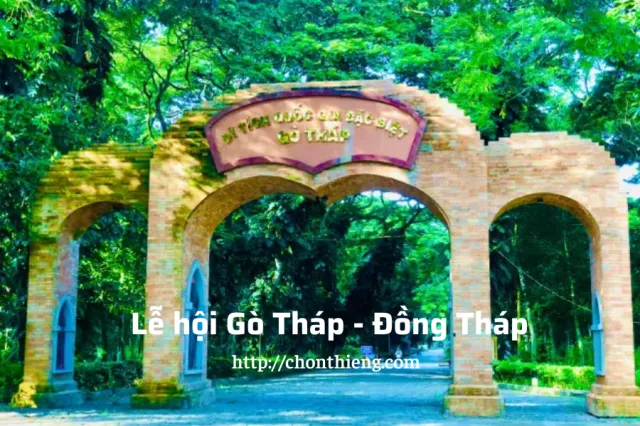
Lễ hội Gò Tháp là một trong những lễ hội truyền thống tiêu biểu và đặc sắc của vùng Đồng Tháp Mười, được tổ chức hằng năm tại Khu Di tích Quốc gia đặc biệt Gò Tháp, thuộc tỉnh Đồng Tháp. Lễ hội diễn ra hai lần trong năm, gồm lễ Vía Bà Chúa Xứ từ ngày 14 đến 16 tháng 3 âm lịch và lễ giỗ Thiên Hộ Dương – Đốc Binh Kiều từ ngày 14 đến 16 tháng 11 âm lịch. Đây không chỉ là dịp để nhân dân tưởng nhớ các bậc tiền nhân có công khai phá vùng đất, chống giặc ngoại xâm mà còn là không gian sinh hoạt văn hóa cộng đồng mang đậm màu sắc tín ngưỡng dân gian Nam Bộ.
Mỗi mùa lễ hội, nhịp sống của người dân Đồng Tháp Mười như trở nên sôi động hơn. Từng đoàn khách hành hương từ khắp nơi đổ về bằng nhiều phương tiện khác nhau như xe khách, ghe xuồng, tàu thuyền… tạo nên khung cảnh đông vui, nhộn nhịp. Lễ hội Gò Tháp vừa mang tính linh thiêng, trang nghiêm vừa gần gũi, nghĩa tình, phản ánh rõ nét đời sống tinh thần và khát vọng của cư dân vùng sông nước Nam Bộ.
Khu di tích Gò Tháp được xem là “cái rốn” của vùng Đồng Tháp Mười, nơi còn lưu giữ nhiều tầng văn hóa lịch sử quan trọng. Tại đây có quần thể di tích của Vương quốc Phù Nam cách đây hơn 1.500 năm, cùng các di tích kháng chiến chống Pháp và chống Mỹ.
Nguồn gốc và ý nghĩa lễ hội
Tục thờ Bà Chúa Xứ Gò Tháp
Theo các tài liệu về di sản văn hóa phi vật thể, tục thờ Bà Chúa Xứ Gò Tháp bắt nguồn từ tín ngưỡng thờ Mẫu của người Việt – một tín ngưỡng gắn liền với nền nông nghiệp lúa nước và quá trình mở cõi về phương Nam. Người dân nơi đây tôn thờ Bà Chúa Xứ như vị thần bảo hộ cho cuộc sống bình an, mùa màng bội thu và sự hưng thịnh của cộng đồng.
Không rõ việc thờ Bà bắt đầu từ khi nào, nhưng tương truyền vào năm 1914, người dân địa phương đã dựng một ngôi miếu nhỏ bằng vật liệu đơn sơ để thờ cúng Bà Chúa Xứ. Trải qua chiến tranh và nhiều lần trùng tu, di dời, đến năm 1996 miếu được xây dựng kiên cố tại vị trí hiện nay trong khu di tích Gò Tháp. Hằng năm, vào dịp rằm tháng 3 âm lịch, nhân dân tổ chức lễ vía để bày tỏ lòng thành kính, cầu mong “quốc thái dân an”, mưa thuận gió hòa và cuộc sống ấm no, hạnh phúc.
Lễ hội Vía Bà Chúa Xứ Gò Tháp mang đậm dấu ấn tín ngưỡng thờ Mẫu của người Việt Nam, đồng thời thể hiện lòng biết ơn đối với cha ông đã có công khai phá và gìn giữ vùng đất Đồng Tháp Mười.
Tưởng niệm Thiên Hộ Dương và Đốc Binh Kiều
Bên cạnh lễ vía Bà Chúa Xứ, Gò Tháp còn là nơi tưởng niệm hai vị anh hùng dân tộc Thiên Hộ Dương (Võ Duy Dương) và Đốc Binh Kiều (Nguyễn Tấn Kiều/Lê Công Kiều). Vào nửa cuối thế kỷ XIX, vùng Gò Tháp từng là căn cứ kháng chiến chống thực dân Pháp nổi tiếng ở Nam Bộ. Hai ông đã lãnh đạo nghĩa quân chiến đấu kiên cường, nêu cao tinh thần yêu nước và ý chí bất khuất của dân tộc.
Với quan niệm “sinh vi tướng, tử vi thần”, sau khi hai ông mất, nhân dân lập đền thờ tại Gò Tháp và duy trì lễ giỗ suốt hơn 150 năm qua. Lễ giỗ không chỉ thể hiện đạo lý “Uống nước nhớ nguồn” mà còn giáo dục truyền thống yêu nước, lòng tự hào dân tộc cho các thế hệ mai sau.
Phần lễ
Các nghi thức cúng lễ
Lễ hội Gò Tháp có phần lễ được tổ chức trang nghiêm theo nghi thức tín ngưỡng dân gian truyền thống Nam Bộ. Trong mỗi kỳ lễ hội đều có các nghi lễ chính như cúng Bà Chúa Xứ, cúng Thiên Hộ Dương và Đốc Binh Kiều. Ngoài ra còn có nhiều nghi lễ phụ như lễ cầu an, lễ thỉnh sanh, cúng Thần Nông, lễ tắm Bà và chánh tế. Mỗi nghi lễ có trình tự và nghi thức riêng nhưng đều mang điểm chung là thể hiện lòng thành kính với thần linh, tiền nhân và cầu mong cuộc sống bình an, mùa màng thuận lợi. Trong các buổi tế lễ, các bô lão chánh bái sẽ đọc văn tế và thực hiện nghi thức dâng trà, rượu, hương trong tiếng nhạc lễ réo rắt, tạo nên không khí linh thiêng và trang trọng.
Nội dung văn tế thường ca ngợi công đức của các bậc tiền nhân, cầu cho quốc thái, dân an, cầu cho mưa thuận gió hòa, nhân dân no ấm, mùa màng bội thu. Các nghi lễ này phản ánh sâu sắc đời sống tâm linh và niềm tin tín ngưỡng của cư dân vùng Đồng Tháp Mười.
Không gian tâm linh và hành hương
Vào dịp lễ hội, hàng trăm nghìn lượt du khách từ khắp nơi đổ về Gò Tháp để dâng hương, cầu nguyện và tham quan di tích. Người hành hương mang theo hương, hoa, trái cây, trà, rượu, gạo, muối, trầu cau, xôi… được chuẩn bị chu đáo, thể hiện lòng thành kính đối với Bà Chúa Xứ và các vị tiền nhân.
Không gian lễ hội vừa linh thiêng vừa gần gũi. Dòng người nối tiếp nhau viếng miếu Bà, đền thờ Thiên Hộ Dương và Đốc Binh Kiều trong bầu không khí trang nghiêm nhưng ấm áp tình người. Chính sự gắn kết cộng đồng ấy đã tạo nên nét đẹp văn hóa riêng của lễ hội Gò Tháp.
Phần hội
Hoạt động văn hóa – nghệ thuật
Bên cạnh phần lễ trang nghiêm, phần hội của lễ hội Gò Tháp diễn ra vô cùng sôi động và phong phú. Nhiều hoạt động văn hóa, nghệ thuật truyền thống được tổ chức như biểu diễn đờn ca tài tử, cải lương, hò Đồng Tháp, múa hát dân gian, múa bóng rỗi, tuồng cổ và các chương trình ca múa nhạc phục vụ khách thập phương.
Ngoài ra còn có các triển lãm ảnh, trưng bày sách báo, hiện vật văn hóa, không gian giới thiệu đặc sản địa phương. Những hoạt động này giúp du khách hiểu thêm về văn hóa, lịch sử và con người Đồng Tháp. Không gian “Chợ quê Gò Tháp” cũng là điểm nhấn đặc sắc của lễ hội với hàng nghìn gian hàng bày bán đặc sản miền Tây, sản vật Đồng Tháp Mười và các món ăn dân dã. Khung cảnh mua bán nhộn nhịp, ghe xuồng tấp nập đã tạo nên nét đặc trưng rất riêng của vùng sông nước Nam Bộ.
Trò chơi dân gian và hoạt động cộng đồng
Trong phần hội còn có nhiều trò chơi dân gian và hoạt động thể dục thể thao nhằm tạo không khí vui tươi, gắn kết cộng đồng. Người dân và du khách cùng hòa mình vào các hoạt động văn hóa tập thể, tạm quên đi những vất vả của cuộc sống thường nhật để hướng về những điều tốt đẹp.
Đặc biệt, lễ hội Gò Tháp còn nổi bật bởi tinh thần sẻ chia và nghĩa tình của người dân Đồng Tháp. Nhiều bếp ăn từ thiện được tổ chức miễn phí để phục vụ khách hành hương. Người dân địa phương, Phật tử và các nhà hảo tâm cùng chung tay nấu cơm, phát nước uống, phục vụ hàng nghìn lượt khách mỗi ngày.
Những hoạt động thiện nguyện ấy đã trở thành nét đẹp văn hóa đặc trưng của lễ hội. Không ít người xem việc tham gia phục vụ lễ hội là niềm vui và cách tích đức cho bản thân, gia đình.
Giá trị văn hóa và di sản
Lễ hội Gò Tháp là sự kết hợp hài hòa giữa tín ngưỡng, lịch sử và văn hóa dân gian Nam Bộ. Đây không chỉ là nơi sinh hoạt tâm linh mà còn là không gian lưu giữ ký ức lịch sử, phản ánh quá trình khai phá vùng đất Đồng Tháp Mười cũng như tinh thần yêu nước của nhân dân Nam Bộ trong thời kỳ chống ngoại xâm.
Lễ hội mang tính cộng đồng sâu sắc, gắn kết con người với nhau thông qua các hoạt động tín ngưỡng, văn hóa và thiện nguyện. Đồng thời, đây cũng là dịp giáo dục truyền thống, bồi đắp lòng tự hào dân tộc và ý thức gìn giữ bản sắc văn hóa cho thế hệ trẻ.
Ngày 27/6/2025, Bộ Văn hóa, Thể thao và Du lịch đã chính thức đưa Lễ giỗ Thiên Hộ Dương và Đốc Binh Kiều cùng Lễ hội Vía Bà Chúa Xứ Gò Tháp vào Danh mục Di sản văn hóa phi vật thể Quốc gia. Đây là sự ghi nhận quan trọng đối với những giá trị lịch sử, văn hóa và tinh thần mà lễ hội đã gìn giữ suốt nhiều thế hệ.
Tài liệu tham khảo
- Nguyễn Thụy An (Biên soạn), 2015, Lễ hội Việt Nam, Nxb Thanh niên.
- Mỹ Xuyên, Lễ hội Gò Tháp: Niềm tự hào di sản văn hóa của Đồng Tháp, Báo Đồng Tháp, ngày 09/01/2026.
- Lễ hội Gò Tháp vía Bà Chúa Xứ thu hút du khách, Báo Lạng Sơn điện tử, ngày 19/04/2011.
- Hữu Nghĩa, Đặc sắc Lễ hội Vía Bà Chúa Xứ tại Gò Tháp, Báo Nhân dân, ngày 30/04/2026.
- Hữu Nghĩa, Lễ hội Vía Bà Chúa Xứ Gò Tháp, Báo Nhân dân, ngày 13/04/2025.
- Mỹ Duyên, Lễ hội Gò Tháp: Niềm tự hào di sản văn hóa của Đồng Tháp, trang vietnam.vn, ngày 11/01/2026.
Ngôn ngữ khác
Tiếng Anh (English)
Overview of the Festival
The Gò Tháp Festival is one of the most representative and distinctive traditional festivals of the Đồng Tháp Mười region, held annually at the Gò Tháp Special National Relic Site in Đồng Tháp Province. The festival takes place twice a year: the Lady of the Realm (Bà Chúa Xứ) Festival from the 14th to the 16th day of the third lunar month, and the death anniversary commemoration of Thiên Hộ Dương and Đốc Binh Kiều from the 14th to the 16th day of the eleventh lunar month. The festival is not only an occasion for local people to honor their ancestors who contributed to the settlement of the region and fought against foreign invaders, but also a communal cultural event deeply imbued with Southern Vietnamese folk beliefs.
During each festival season, life in the Đồng Tháp Mười region becomes especially vibrant. Pilgrims from many places arrive by various means of transportation, including buses, boats, and sampans, creating a lively and bustling atmosphere. The Gò Tháp Festival is both sacred and solemn while remaining warm and approachable, reflecting the spiritual life and aspirations of the people of the Mekong Delta.
Origins and Significance of the Festival
Worship of the Lady of the Realm at Gò Tháp
According to studies on intangible cultural heritage, the worship of the Lady of the Realm at Gò Tháp originates from the Vietnamese Mother Goddess worship tradition, a belief closely associated with wet-rice agriculture and the southward expansion of the Vietnamese people. Local residents revere the Lady as a guardian deity who protects their lives, ensures abundant harvests, and brings prosperity to the community.
Although the exact origins of the worship remain unclear, local tradition holds that in 1914 villagers built a small shrine from simple materials to honor the Lady of the Realm. After periods of war, relocation, and restoration, a permanent shrine was constructed at its present location within the Gò Tháp relic complex in 1996. Every year, during the full moon period of the third lunar month, local people celebrate her festival to express their devotion and pray for peace, favorable weather, and prosperous, happy lives.
The Lady of the Realm Festival at Gò Tháp bears the distinctive features of Vietnamese Mother Goddess worship while also expressing gratitude to the ancestors who pioneered and protected the Đồng Tháp Mười region.
Commemoration of Thiên Hộ Dương and Đốc Binh Kiều
In addition to the Lady of the Realm Festival, Gò Tháp is also a place of remembrance for two national heroes: Thiên Hộ Dương (Võ Duy Dương) and Đốc Binh Kiều (Nguyễn Tấn Kiều/Lê Công Kiều). During the latter half of the nineteenth century, Gò Tháp served as a renowned resistance base against French colonial forces in Southern Vietnam. These leaders commanded local resistance fighters with courage and determination, embodying patriotism and the indomitable spirit of the Vietnamese people.
Following the belief that “a person who dies after serving the nation becomes a sacred spirit,” local people established temples dedicated to these heroes and have maintained annual commemorative ceremonies for more than 150 years. These observances not only reflect the Vietnamese tradition of gratitude but also educate younger generations about patriotism and national pride.
Rituals and Ceremonies
Main Worship Ceremonies
The ceremonial section of the Gò Tháp Festival is conducted with great solemnity according to traditional Southern Vietnamese folk religious practices. Each festival season includes major ceremonies dedicated to the Lady of the Realm, Thiên Hộ Dương, and Đốc Binh Kiều. Additional rituals include peace-praying ceremonies, spirit-inviting rites, offerings to the Agricultural God (Thần Nông), the ritual bathing of the Lady’s statue, and the principal sacrificial ceremony.
Although each ritual follows its own sequence and procedures, all share the common purpose of expressing reverence toward deities and ancestors while praying for peace and favorable harvests. During these ceremonies, respected village elders serving as chief officiants recite ceremonial texts and present offerings of tea, wine, and incense accompanied by traditional ritual music, creating a sacred and dignified atmosphere.
The ritual texts typically praise the merits of revered figures and offer prayers for:
“peace for the nation and prosperity for the people,”
as well as favorable weather, abundant harvests, and prosperous lives. These ceremonies vividly reflect the spiritual life and religious beliefs of the people of the Đồng Tháp Mười region.
Sacred Pilgrimage Space
During the festival, hundreds of thousands of visitors travel to Gò Tháp to offer incense, pray, and visit the historic sites. Pilgrims bring carefully prepared offerings such as flowers, fruit, tea, wine, rice, salt, betel leaves, areca nuts, and sticky rice as expressions of devotion to the Lady of the Realm and the honored ancestors.
The festival space is both sacred and welcoming. Streams of worshippers visit the Lady’s Shrine and the temples dedicated to Thiên Hộ Dương and Đốc Binh Kiều in an atmosphere that is at once solemn and warm. This sense of communal connection forms one of the most beautiful cultural features of the Gò Tháp Festival.
Festive Activities
Cultural and Artistic Performances
Alongside the solemn rituals, the festival’s celebratory section is vibrant and diverse. Various traditional cultural and artistic activities are organized, including performances of Southern amateur music (Đờn ca tài tử), cải lương opera, Đồng Tháp folk songs, traditional dances, bóng rỗi ritual performances, classical theatre, and musical programs for pilgrims and visitors.
The festival also features photo exhibitions, displays of books and historical artifacts, showcases of local OCOP products, and exhibitions introducing regional specialties. These activities provide visitors with deeper insights into the culture, history, and people of Đồng Tháp.
The “Gò Tháp Rural Market” is another highlight of the festival, featuring thousands of stalls selling Mekong Delta specialties, products from Đồng Tháp Mười, and traditional Southern dishes. The bustling atmosphere of trade and the presence of boats and sampans create a uniquely Southern Vietnamese character.
Folk Games and Community Activities
The festive section also includes numerous folk games and sporting activities designed to foster joy and strengthen community bonds. Residents and visitors alike participate in these activities, temporarily setting aside the challenges of daily life and celebrating together.
A particularly remarkable aspect of the Gò Tháp Festival is the spirit of generosity and solidarity among the people of Đồng Tháp. Numerous charitable kitchens provide free meals for pilgrims. Local residents, Buddhists, and benefactors work together to prepare food and distribute drinking water, serving thousands of visitors each day.
These charitable activities have become a distinctive cultural feature of the festival. Many participants regard their service as both a source of personal fulfillment and a way to accumulate merit for themselves and their families.
Cultural and Heritage Values
The Gò Tháp Festival represents a harmonious combination of religious belief, history, and Southern Vietnamese folk culture. It is not only a spiritual gathering but also a space that preserves historical memory, reflecting the settlement of the Đồng Tháp Mười region and the patriotic spirit of Southern Vietnamese people during periods of resistance against foreign domination.
The festival possesses a strong communal character, bringing people together through religious, cultural, and charitable activities. At the same time, it serves as an important means of educating younger generations about tradition, fostering national pride, and encouraging the preservation of cultural identity.
On June 27, 2025, the Ministry of Culture, Sports and Tourism officially inscribed the Death Anniversary Commemoration of Thiên Hộ Dương and Đốc Binh Kiều, together with the Lady of the Realm Festival at Gò Tháp, on the National List of Intangible Cultural Heritage. This recognition acknowledges the historical, cultural, and spiritual values that the festival has preserved across generations.
Gò Tháp: A Historical Site and Tourism Destination
The Gò Tháp Relic Site is often regarded as the “heart” of the Đồng Tháp Mười region, preserving multiple layers of significant historical and cultural heritage. The site contains relics of the ancient Kingdom of Funan dating back more than 1,500 years, as well as monuments associated with resistance movements against both French colonial rule and later conflicts.
Visitors to Gò Tháp can not only participate in the festival but also explore the Shrine of the Lady of the Realm, the temples of Thiên Hộ Dương and Đốc Binh Kiều, Tháp Linh Pagoda, and numerous other cultural monuments of archaeological, architectural, and artistic significance.
Today, Đồng Tháp Province continues to invest in the preservation and promotion of the site while integrating it into sustainable tourism development strategies. As a result, the Gò Tháp Festival has become not only a valuable spiritual heritage but also an important tourism highlight of Đồng Tháp and Southern Vietnam.
References
- Nguyễn Thụy An (Biên soạn), 2015, Lễ hội Việt Nam, Nxb Thanh niên.
- Mỹ Xuyên, Lễ hội Gò Tháp: Niềm tự hào di sản văn hóa của Đồng Tháp, Báo Đồng Tháp, ngày 09/01/2026.
- Lễ hội Gò Tháp vía Bà Chúa Xứ thu hút du khách, Báo Lạng Sơn điện tử, ngày 19/04/2011.
- Hữu Nghĩa, Đặc sắc Lễ hội Vía Bà Chúa Xứ tại Gò Tháp, Báo Nhân dân, ngày 30/04/2026.
- Hữu Nghĩa, Lễ hội Vía Bà Chúa Xứ Gò Tháp, Báo Nhân dân, ngày 13/04/2025.
- Mỹ Duyên, Lễ hội Gò Tháp: Niềm tự hào di sản văn hóa của Đồng Tháp, trang vietnam.vn, ngày 11/01/2026.
Tiếng Trung (中文)
高塔节概述
高塔节(Lễ hội Gò Tháp)是同塔梅地区最具代表性和特色的传统节庆之一,每年在越南同塔省高塔国家特别遗迹区举行。节庆每年举办两次,包括农历三月十四日至十六日的婆主处圣母诞辰祭(Vía Bà Chúa Xứ),以及农历十一月十四日至十六日的天户阳(Thiên Hộ Dương)与督兵桥(Đốc Binh Kiều)忌辰纪念活动。该节庆不仅是当地人民缅怀开拓边疆、抵御外敌先贤的重要场合,也是富有南部民间信仰特色的社区文化活动空间。
每逢节庆来临,同塔梅地区的生活节奏都会变得格外热闹。来自各地的香客乘坐长途汽车、船只、独木舟等交通工具纷纷汇聚于此,形成熙熙攘攘、热闹非凡的景象。高塔节既庄严神圣,又充满浓厚的人情味,生动体现了南部水乡居民的精神生活和美好愿望。
节庆起源与意义
高塔婆主处圣母信仰
根据非物质文化遗产资料记载,高塔婆主处圣母信仰源于越南人的圣母崇拜(母神信仰)。这一信仰与稻作农业文明以及越南民族向南拓展疆域的历史进程密切相关。当地民众尊奉婆主处圣母为守护神,相信她能够保佑百姓平安、五谷丰登以及社区繁荣昌盛。
关于婆主处圣母崇拜始于何时,已无确切记载。相传1914年,当地居民曾修建一座简陋的小庙供奉婆主处圣母。经历战争破坏以及多次修缮迁建之后,1996年,庙宇在现今高塔遗迹区内重建完成。
每年农历三月十五日前后,当地居民都会举行圣母诞辰祭,以表达虔诚敬意,并祈求“国泰民安”、风调雨顺以及幸福富足的生活。
高塔婆主处圣母节体现了越南传统母神信仰的深厚影响,同时也表达了后人对开拓和守护同塔梅地区先民的感恩之情。
纪念天户阳与督兵桥
除了婆主处圣母祭典之外,高塔还是民族英雄天户阳(武维阳,Võ Duy Dương)和督兵桥(阮晋桥/黎公桥,Nguyễn Tấn Kiều/Lê Công Kiều)的纪念地。
十九世纪后半叶,高塔地区曾是南部著名的抗法根据地。两位英雄率领义军英勇抗击法国殖民者,充分展现了越南民族的爱国精神和不屈意志。
根据“生为将,死为神”的传统观念,两位英雄逝世后,当地百姓在高塔建立祠庙供奉,并持续举行祭祀活动至今已有一百五十多年历史。纪念活动不仅体现了“饮水思源”的传统美德,也承担着向后代传承爱国主义精神和民族自豪感的重要作用。
祭祀活动
祭祀仪式
高塔节的祭祀部分严格遵循南部传统民间信仰礼仪,庄严隆重。
每次节庆期间都会举行婆主处圣母祭、天户阳祭以及督兵桥祭等主要仪式。此外,还包括祈安礼、迎生礼、神农祭、圣母沐浴礼以及正祭等辅助仪式。
虽然各项仪式程序有所不同,但共同目的都是表达对神灵和先贤的敬仰,并祈求平安幸福、农业丰收。
祭礼期间,由主祭长老诵读祭文,并依次进行献茶、献酒、献香等仪式。在悠扬庄重的礼乐声中,整个祭场充满神圣肃穆的氛围。
祭文内容多歌颂先贤功德,并祈求:
“国泰民安”,
风调雨顺、百姓安居乐业、五谷丰登。
这些仪式深刻反映了同塔梅居民丰富的精神世界和信仰观念。
朝圣与信仰空间
每逢节庆,数十万名游客和香客从全国各地来到高塔进香祈福并参观遗迹。
朝圣者通常携带香烛、鲜花、水果、茶酒、大米、食盐、槟榔、糯米饭等供品,以表达对婆主处圣母及先贤的敬意。
节庆空间既庄严神圣,又充满亲切温暖的人情味。人们络绎不绝地前往圣母庙、天户阳祠和督兵桥祠祭拜,在庄重肃穆的氛围中感受浓厚的社区情谊。这种凝聚力正是高塔节最独特的文化魅力之一。
娱乐活动
文化艺术活动
除了庄严的祭祀活动,高塔节的娱乐活动同样丰富多彩。
节庆期间举办多种传统艺术表演,包括才子弹唱(Đờn ca tài tử)、改良戏(Cải lương)、同塔民歌、民间舞蹈、影婆舞(Múa bóng rỗi)、传统戏曲以及大型歌舞演出等,为四方来客奉献精彩节目。
此外,还设有摄影展、图书展、文化文物展览,以及OCOP特色产品和地方特产展示区,使游客能够更加深入了解同塔地区的历史文化与风土人情。
“高塔乡村集市”也是节庆的一大亮点。数千个摊位售卖湄公河三角洲特产、同塔梅土特产品以及各种传统乡土美食。热闹的交易场景和川流不息的船只,共同构成了南部水乡独特的风貌。
民间游戏与社区活动
节庆期间还举办各种民间游戏和体育活动,以营造欢乐气氛并促进社区团结。
当地居民和游客共同参与各类集体活动,在欢声笑语中暂时忘却生活的辛劳,共同分享节日喜悦。
高塔节尤以同塔人民乐善好施、互助友爱的精神而闻名。节庆期间,许多慈善厨房免费向香客提供餐食。当地居民、佛教信众及爱心人士共同参与烹饪、送水和接待工作,每天服务数千名游客。
这些公益活动已经成为高塔节独具特色的文化景观。许多人将参与志愿服务视为一种快乐,也是一种积德行善的方式。
文化价值与遗产意义
高塔节是南部民间信仰、历史文化与民俗传统和谐融合的典范。
它不仅是精神信仰活动场所,也是保存历史记忆的重要文化空间,记录着同塔梅地区的开发历程以及南部人民抵御外敌的爱国精神。
节庆具有深厚的社区凝聚功能,通过宗教、文化和公益活动将人们紧密联系在一起。同时,它也是传承历史传统、培养民族自豪感以及增强青年一代文化认同的重要平台。
2025年6月27日,越南文化、体育与旅游部正式将天户阳与督兵桥忌辰祭典以及高塔婆主处圣母节列入国家级非物质文化遗产名录。
这一认定充分肯定了该节庆长期以来所承载的重要历史价值、文化价值和精神价值。
高塔遗迹区——历史文化与旅游价值空间
高塔遗迹区被誉为同塔梅地区的“中心腹地”,保存着丰富而重要的历史文化遗存。
这里既有距今一千五百多年的扶南王国(Phù Nam)遗址,也保存着抗法和抗美战争时期的重要历史遗迹。
游客来到高塔,不仅能够参与节庆活动,还可以参观婆主处圣母庙、天户阳祠、督兵桥祠、塔灵寺(Chùa Tháp Linh)以及众多具有考古、建筑和艺术价值的文化遗址。
目前,同塔省正持续推进遗迹保护与开发工作,将文化遗产保护与可持续旅游发展相结合。
因此,高塔节不仅是一项珍贵的精神文化遗产,也已成为同塔省乃至整个越南南部地区的重要旅游品牌和文化名片。
参考资料
- Nguyễn Thụy An (Biên soạn), 2015, Lễ hội Việt Nam, Nxb Thanh niên.
- Mỹ Xuyên, Lễ hội Gò Tháp: Niềm tự hào di sản văn hóa của Đồng Tháp, Báo Đồng Tháp, ngày 09/01/2026.
- Lễ hội Gò Tháp vía Bà Chúa Xứ thu hút du khách, Báo Lạng Sơn điện tử, ngày 19/04/2011.
- Hữu Nghĩa, Đặc sắc Lễ hội Vía Bà Chúa Xứ tại Gò Tháp, Báo Nhân dân, ngày 30/04/2026.
- Hữu Nghĩa, Lễ hội Vía Bà Chúa Xứ Gò Tháp, Báo Nhân dân, ngày 13/04/2025.
- Mỹ Duyên, Lễ hội Gò Tháp: Niềm tự hào di sản văn hóa của Đồng Tháp, trang vietnam.vn, ngày 11/01/2026.
Tiếng Pháp (Français’)
aperçu de la fête
La fête de Gò Tháp est l’une des fêtes traditionnelles les plus représentatives et les plus remarquables de la région de Đồng Tháp Mười. Elle est organisée chaque année dans le Site historique national spécial de Gò Tháp, situé dans la province de Đồng Tháp. La fête se déroule à deux périodes de l’année : la fête de la Dame Chúa Xứ du 14 au 16 du troisième mois lunaire et la commémoration de Thiên Hộ Dương et Đốc Binh Kiều du 14 au 16 du onzième mois lunaire. Elle constitue non seulement une occasion de rendre hommage aux ancêtres qui ont contribué à l’ouverture de la région et à la lutte contre les envahisseurs étrangers, mais aussi un espace de vie culturelle communautaire imprégné des croyances populaires du Sud du Vietnam.
À chaque saison festive, le rythme de vie des habitants de Đồng Tháp Mười devient plus animé. Des groupes de pèlerins venus de toutes les régions affluent par différents moyens de transport tels que les autocars, les barques ou les bateaux, créant une atmosphère joyeuse et animée. La fête de Gò Tháp est à la fois sacrée, solennelle, chaleureuse et conviviale, reflétant clairement la vie spirituelle et les aspirations des habitants de la région fluviale du Sud.
origine et signification de la fête
culte de la Dame Chúa Xứ de Gò Tháp
Selon les documents consacrés au patrimoine culturel immatériel, le culte de la Dame Chúa Xứ de Gò Tháp trouve son origine dans le culte de la Mère des Vietnamiens, une croyance étroitement liée à la civilisation rizicole et au processus d’expansion vers le Sud. Les habitants vénèrent la Dame Chúa Xứ comme une divinité protectrice garantissant la paix, l’abondance des récoltes et la prospérité de la communauté.
On ignore la date exacte du début de ce culte, mais selon la tradition, les habitants auraient construit en 1914 un petit sanctuaire rudimentaire dédié à la Dame Chúa Xứ. Après les guerres, plusieurs restaurations et déplacements, le sanctuaire actuel fut édifié de manière permanente en 1996 dans l’enceinte du site historique de Gò Tháp. Chaque année, à l’occasion de la pleine lune du troisième mois lunaire, la population organise la fête votive afin d’exprimer sa dévotion et de prier pour la paix du pays, des conditions climatiques favorables ainsi qu’une vie prospère et heureuse.
La fête de la Dame Chúa Xứ de Gò Tháp porte l’empreinte profonde du culte vietnamien de la Mère tout en exprimant la gratitude envers les ancêtres qui ont contribué à la mise en valeur et à la préservation de la région de Đồng Tháp Mười.
commémoration de Thiên Hộ Dương et Đốc Binh Kiều
Outre la fête de la Dame Chúa Xứ, Gò Tháp est également un lieu de commémoration de deux héros nationaux : Thiên Hộ Dương (Võ Duy Dương) et Đốc Binh Kiều (Nguyễn Tấn Kiều ou Lê Công Kiều). Durant la seconde moitié du XIXe siècle, la région de Gò Tháp constitua l’un des principaux foyers de résistance contre la colonisation française dans le Sud du Vietnam. Ces deux chefs menèrent les insurgés avec courage, incarnant le patriotisme et la détermination du peuple vietnamien.
Selon la conception populaire selon laquelle « vivant, on est général ; mort, on devient divinité », les habitants élevèrent après leur décès des temples à leur mémoire et perpétuent depuis plus de cent cinquante ans leurs cérémonies commémoratives. Ces célébrations expriment non seulement la reconnaissance envers les ancêtres mais contribuent aussi à transmettre aux jeunes générations les traditions patriotiques et la fierté nationale.
partie cérémonielle
les rites de culte
La partie cérémonielle de la fête de Gò Tháp est organisée avec solennité selon les traditions cultuelles du Sud du Vietnam. Chaque édition comprend les cérémonies principales dédiées à la Dame Chúa Xứ, à Thiên Hộ Dương et à Đốc Binh Kiều. D’autres rites complémentaires sont également célébrés, tels que les cérémonies pour la paix, l’invocation des âmes, le culte du dieu de l’Agriculture, le bain rituel de la Dame et les grandes cérémonies sacrificielles.
Chaque rituel possède son propre déroulement mais tous expriment la même dévotion envers les divinités et les ancêtres, ainsi que le souhait d’une vie paisible et de récoltes abondantes. Durant les cérémonies, les anciens officiants récitent les textes rituels et accomplissent les offrandes de thé, d’alcool et d’encens au son des musiques cérémonielles, créant une atmosphère sacrée et respectueuse.
Les textes rituels exaltent généralement les mérites des ancêtres et adressent des prières pour :
« la prospérité du pays et la paix du peuple »,
ainsi que pour des conditions climatiques favorables, l’abondance des récoltes et le bien-être de la population.
Ces cérémonies reflètent profondément la vie spirituelle et les croyances des habitants de Đồng Tháp Mười.
espace spirituel et pèlerinage
À l’occasion de la fête, des centaines de milliers de visiteurs affluent vers Gò Tháp afin de brûler de l’encens, prier et visiter les monuments historiques. Les pèlerins apportent des offrandes soigneusement préparées : encens, fleurs, fruits, thé, alcool, riz, sel, feuilles de bétel, gâteaux de riz gluant et autres présents témoignant de leur dévotion envers la Dame Chúa Xứ et les ancêtres honorés.
L’espace festif est à la fois sacré et accueillant. Les fidèles se succèdent pour visiter le sanctuaire de la Dame ainsi que les temples dédiés à Thiên Hộ Dương et Đốc Binh Kiều dans une atmosphère à la fois solennelle et chaleureuse. Cette forte cohésion communautaire constitue l’un des aspects les plus remarquables de la fête de Gò Tháp.
partie festive
activités culturelles et artistiques
À côté des cérémonies religieuses, la partie festive se caractérise par une grande diversité d’activités culturelles et artistiques. Des spectacles de musique traditionnelle đờn ca tài tử, de théâtre rénové cải lương, de chants populaires de Đồng Tháp, de danses folkloriques, de múa bóng rỗi, d’opéra classique et de concerts sont organisés pour les visiteurs.
On y trouve également des expositions photographiques, des présentations d’ouvrages et d’objets culturels, ainsi que des espaces consacrés aux produits OCOP et aux spécialités locales. Ces activités permettent aux visiteurs de mieux découvrir l’histoire, la culture et les habitants de Đồng Tháp.
Le « Marché rural de Gò Tháp » constitue un autre point fort de la fête. Des milliers d’étals y proposent des spécialités du delta du Mékong, des produits typiques de Đồng Tháp Mười et de nombreux plats traditionnels. L’animation du marché, les embarcations et les échanges commerciaux offrent une image caractéristique de la culture fluviale du Sud.
jeux populaires et activités communautaires
La partie festive comprend également de nombreux jeux traditionnels et activités sportives destinés à renforcer les liens communautaires. Habitants et visiteurs participent ensemble à ces animations collectives, oubliant les difficultés du quotidien pour partager un moment de convivialité.
La fête de Gò Tháp se distingue aussi par son esprit de solidarité. De nombreuses cuisines caritatives offrent gratuitement des repas aux pèlerins. Les habitants, les fidèles bouddhistes et les bienfaiteurs s’unissent pour préparer les repas, distribuer de l’eau et accueillir plusieurs milliers de visiteurs chaque jour.
Ces actions de bienfaisance sont devenues une caractéristique culturelle majeure de la fête. Beaucoup considèrent leur participation comme une source de joie et une manière d’accomplir une œuvre méritoire pour eux-mêmes et leur famille.
valeur culturelle et patrimoniale
La fête de Gò Tháp représente une harmonie entre croyances religieuses, histoire et culture populaire du Sud vietnamien. Elle constitue non seulement un lieu de pratique spirituelle mais aussi un espace de mémoire historique qui rappelle la mise en valeur de Đồng Tháp Mười et le patriotisme des populations du Sud durant les périodes de résistance contre les envahisseurs.
La fête possède une forte dimension communautaire, réunissant les habitants autour d’activités religieuses, culturelles et caritatives. Elle contribue également à transmettre les traditions, à renforcer la fierté nationale et à sensibiliser les jeunes générations à la préservation de leur identité culturelle.
Le 27 juin 2025, le ministère vietnamien de la Culture, des Sports et du Tourisme a officiellement inscrit la commémoration de Thiên Hộ Dương et Đốc Binh Kiều ainsi que la fête de la Dame Chúa Xứ de Gò Tháp sur la Liste nationale du patrimoine culturel immatériel. Cette reconnaissance souligne l’importance historique, culturelle et spirituelle de ces célébrations préservées depuis plusieurs générations.
Gò Tháp : espace patrimonial et valeur touristique
Le site de Gò Tháp est considéré comme le « cœur » de la région de Đồng Tháp Mười, où subsistent de nombreuses strates culturelles et historiques majeures. On y trouve notamment des vestiges du royaume de Fou-nan datant de plus de 1 500 ans ainsi que des sites liés aux résistances contre les Français et les Américains.
Les visiteurs qui se rendent à Gò Tháp ne participent pas seulement à la fête ; ils peuvent également découvrir le sanctuaire de la Dame Chúa Xứ, les temples de Thiên Hộ Dương et de Đốc Binh Kiều, la pagode Tháp Linh ainsi que d’autres monuments présentant un intérêt archéologique, architectural et artistique exceptionnel.
Aujourd’hui, la province de Đồng Tháp poursuit ses efforts de préservation et de valorisation du site historique tout en développant un tourisme durable. La fête de Gò Tháp constitue ainsi non seulement un patrimoine culturel immatériel précieux, mais également l’un des principaux atouts touristiques de la province de Đồng Tháp et de l’ensemble du Sud du Vietnam.
bibliographie
- Nguyễn Thụy An (Biên soạn), 2015, Lễ hội Việt Nam, Nxb Thanh niên.
- Mỹ Xuyên, Lễ hội Gò Tháp: Niềm tự hào di sản văn hóa của Đồng Tháp, Báo Đồng Tháp, ngày 09/01/2026.
- Lễ hội Gò Tháp vía Bà Chúa Xứ thu hút du khách, Báo Lạng Sơn điện tử, ngày 19/04/2011.
- Hữu Nghĩa, Đặc sắc Lễ hội Vía Bà Chúa Xứ tại Gò Tháp, Báo Nhân dân, ngày 30/04/2026.
- Hữu Nghĩa, Lễ hội Vía Bà Chúa Xứ Gò Tháp, Báo Nhân dân, ngày 13/04/2025.
- Mỹ Duyên, Lễ hội Gò Tháp: Niềm tự hào di sản văn hóa của Đồng Tháp, trang vietnam.vn, ngày 11/01/2026.