

Khái quát về lễ hội
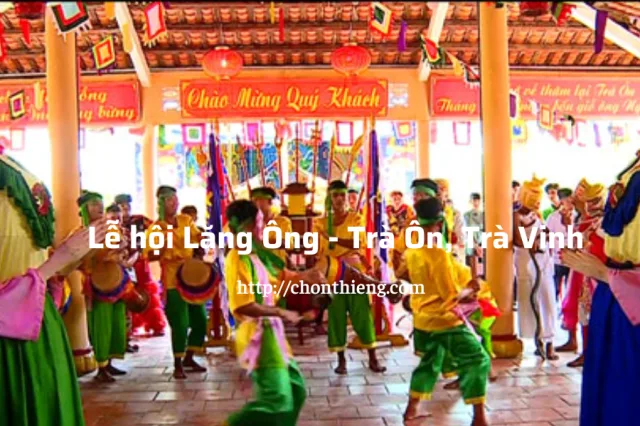
Lễ hội Lăng Ông Trà Ôn là một trong những lễ hội truyền thống tiêu biểu của vùng Tây Nam Bộ, được tổ chức tại Lăng Ông Tiền quân Thống chế Điều bát Nguyễn Văn Tồn, thuộc ấp Mỹ Hòa, xã Thiện Mỹ, huyện Trà Ôn, tỉnh Vĩnh Long. Đây là lễ hội cộng đồng của ba dân tộc Kinh – Khmer – Hoa, diễn ra thường niên vào ngày mùng 3 và mùng 4 tháng Giêng âm lịch nhằm tưởng nhớ công lao của Tiền quân Thống chế Điều bát Nguyễn Văn Tồn – vị tướng có công lớn trong việc khai khẩn đất hoang, bảo vệ vùng biên giới Tây Nam và xây dựng khối đoàn kết dân tộc ở vùng Trà Ôn, Cầu Kè, Măng Thít.
Lăng Ông tọa lạc trên giồng Thanh Bạch, cách thị trấn Trà Ôn khoảng 2 km. Đây vừa là nơi an táng, vừa là nơi thờ phụng ông Nguyễn Văn Tồn và phu nhân. Khu di tích được xây dựng từ năm 1820, trải qua nhiều lần trùng tu vào các năm 1937, 1953, 1960, 1963, 1967, 1992, 1994, 1997 và 2004 nhưng vẫn giữ được dáng vẻ cổ kính, trang nghiêm. Ngày 13 tháng 2 năm 1996, Bộ Văn hóa – Thông tin công nhận nơi đây là Di tích lịch sử văn hóa cấp quốc gia. Đến ngày 22 tháng 01 năm 2020, lễ hội Lăng Ông Trà Ôn tiếp tục được đưa vào Danh mục Di sản văn hóa phi vật thể quốc gia theo Quyết định số 261/QĐ-BVHTTDL.
Không chỉ là lễ giỗ của một nhân vật lịch sử, lễ hội còn mang ý nghĩa cầu phước đầu xuân, cầu cho quốc thái dân an, mưa thuận gió hòa, mùa màng tốt tươi và cuộc sống bình an, no đủ. Qua nhiều thế hệ, ông Nguyễn Văn Tồn đã được nhân dân tôn kính như một vị phúc thần che chở cho cộng đồng cư dân vùng Trà Ôn.
Nhân vật được phụng thờ: Tiền quân Thống chế Điều bát Nguyễn Văn Tồn
Tiền quân Thống chế Điều bát Nguyễn Văn Tồn sinh năm Quý Mùi (1763), quê tại làng Nguyệt Lãng, huyện Vĩnh Bình, nay thuộc xã Bình Phú, huyện Càng Long, tỉnh Trà Vinh. Ông là người Khmer, tên thật là Thạch Duồng, quý danh là Duyên, người dân trong vùng thường gọi là Tà Duồng.
Từ thời trẻ, ông đã theo phò chúa Nguyễn Ánh và có nhiều công lao trong quá trình thống nhất đất nước. Khi Nguyễn Ánh bị quân Tây Sơn đánh đuổi phải sang Vọng Các lánh nạn năm 1787, ông cũng theo phò tá. Sau khi trở về nước, ông được giao nhiệm vụ chiêu mộ dân binh tại vùng Trà Vinh, Măng Thít, Cầu Kè và Trà Ôn. Ông vừa tổ chức lực lượng bảo vệ vùng đất Tây Nam, vừa vận động nhân dân khai hoang, mở đất, lập làng xóm mới.
Sau khi Nguyễn Ánh lên ngôi lấy niên hiệu Gia Long năm 1802, ông được phong chức Cai cơ, Chưởng quản Thủy quân doanh và trấn giữ vùng Trà Ôn thuộc đạo Trấn Giang. Ông tiếp tục có công trong việc ổn định vùng biên giới Tây Nam, chống lại sự xâm lấn của quân Xiêm La và xây dựng đời sống cư dân vùng đất mới.
Năm Gia Long thứ 10 (1811), nhờ công lao giữ yên bờ cõi, ông được phong hàm Thống chế, tước Dung Ngọc Hầu. Năm 1819, ông được bổ nhiệm chức Điều bát Nhung vụ và dẫn dân binh đến Châu Đốc để cùng Thoại Ngọc Hầu đào kênh Vĩnh Tế – công trình có ý nghĩa quan trọng đối với quốc phòng và giao thông vùng Nam Bộ. Vì lao tâm lao lực trong quá trình chỉ huy công việc, ông lâm bệnh và mất vào ngày mùng 4 tháng Giêng năm Canh Thìn (1820), hưởng thọ 58 tuổi.
Sau khi ông mất, triều đình Huế đã cử đại thần mang phẩm vật vào làm lễ điếu tế long trọng trong ba ngày. Vua Minh Mạng truy tặng ông chức Tiền quân Thống chế Điều bát, sắc phong Dung Ngọc Hầu và cho quân lính trông coi mộ phần.
Trong tâm thức người dân vùng Trà Ôn, Nguyễn Văn Tồn không chỉ là một vị võ tướng mà còn là người có công khai phá vùng đất mới, xây dựng khối đoàn kết giữa ba dân tộc Kinh – Khmer – Hoa. Vì vậy, nhân dân luôn tưởng nhớ và tôn kính ông như vị thần bảo hộ của vùng đất này.
Không gian di tích
Khu di tích Lăng Ông có diện tích khoảng 8.000 m², bao gồm chính điện, nhà võ ca, nhà khách, nhà khói và khu mộ song táng của ông cùng phu nhân. Toàn bộ công trình mang vẻ cổ kính, trang nghiêm với nhiều cây xanh, hoa kiểng bao quanh tạo nên không gian thanh tịnh.
Chính điện là nơi thờ Tiền quân Thống chế Điều bát Nguyễn Văn Tồn. Bàn thờ ông đặt ở vị trí trung tâm, phía trước có thanh kiếm tượng trưng cho uy nghi của một vị võ tướng. Bên phải là bàn thờ phu nhân Nguyễn Thị Bạch với bài vị ghi bốn chữ Hán “Hiền Thục chi thần vị”. Bên trái là bàn thờ con trai ông – Vệ úy Nguyễn Văn Vy cùng các vị danh tướng khác như Phó soái Nguyễn An, Tả quân Lê Văn Duyệt, Bình Tây Đại nguyên soái Trương Định và anh hùng Nguyễn Trung Trực.
Phía sau chính điện là khu mộ song táng của ông và phu nhân. Mộ được xây theo kiểu truyền thống Nam Bộ, có bình phong, trụ liễu, kỳ lân đứng hầu và các hoa văn giao long, lá hóa trang trí xung quanh.
Trên trụ liễu có đôi câu đối:
Hoa Di cộng ngưỡng
Mân Quảng đồng tri ân
(Người Hoa, người Khmer đồng ngưỡng mộ
Người Phúc Kiến, người Quảng Ðông đều nhớ ơn)
Đôi câu đối thể hiện rõ sự kính trọng của cộng đồng nhiều dân tộc đối với công lao và đức độ của ông Nguyễn Văn Tồn.
Phần lễ
Tục dựng cây nêu
Mặc dù lễ hội chính diễn ra vào mùng 3 và mùng 4 tháng Giêng, nhưng không khí lễ hội thực tế đã bắt đầu từ ngày 30 tháng Chạp với nghi thức dựng cây nêu. Đây là một phong tục mang đậm dấu ấn văn hóa Á Đông.
Tre được chọn làm cây nêu phải là loại tre “hóp”, vừa nhỏ, chắc và tươi lâu. Người dân đếm các đốt tre, nếu đốt ngọn rơi vào cung Sinh mới được chặt. Toàn bộ cành lá đều được róc sạch, chỉ chừa phần ngọn có lá xanh.
Sau khi các vị hương lão làm lễ cúng trời đất và trình với Ông Tiền quân, cây nêu được dựng lên trước lăng. Trên ngọn nêu treo bùa nêu cùng những vật tượng trưng như cá chép bằng đất hoặc gỗ, khánh, chuông… Khi gió thổi, các vật này phát ra âm thanh nhẹ nhàng, thanh thoát. Người dân tin rằng cây nêu có tác dụng dẫn đường cho Ông về ăn Tết và dự lễ giỗ cùng con cháu.
Lễ Túc yết
Từ sáng sớm ngày mùng 3 Tết, không khí lễ hội đã rất nhộn nhịp. Dàn nhạc ngũ âm của người Khmer từ chùa Gò Xoài vang lên những âm thanh rộn rã khắp khu lăng. Tiếp đó là lễ tụng kinh cầu an của các vị sư Khmer nhằm cầu mong năm mới bình an, mưa thuận gió hòa.
Sau nghi thức cầu an là các tiết mục múa lân của người Hoa và những điệu múa dân gian Khmer như múa rô-băm, múa sa-dăm, hát dù-kê. Đây vừa là nghi thức dâng cúng, vừa tạo không khí vui tươi mở đầu cho mùa lễ hội.
Đến đầu giờ Thân, lễ Túc yết chính thức diễn ra với sự tham gia của các kỳ lão trong làng. Đây là nghi lễ mở đầu cho kỳ lễ giỗ hằng năm. Các nghi thức dâng hương, trà, rượu được tiến hành trang nghiêm trước bàn thờ Hội đồng.
Lễ vật dâng cúng gồm các sản vật địa phương như heo trắng làm sạch, đầu heo, xôi trắng, bánh trái, rượu trà, trầu cau, gạo muối cùng nhiều món ăn dân dã Nam Bộ như thịt kho hột vịt, dưa cải, canh xương hầm, cà ri bánh mì… Tất cả được bày biện như một bữa cơm dành cho Ông.
Lễ Chánh tế
Lễ Chánh tế được tổ chức vào ngày mùng 4 tháng Giêng. Đây là nghi lễ quan trọng nhất của lễ hội, vừa mang ý nghĩa giỗ Ông vừa cầu quốc thái dân an, mùa màng tươi tốt, nhân dân ấm no. Các kỳ lão trong trang phục chỉnh tề thực hiện nghi thức tế lễ trang nghiêm trước hương án. Họ dâng hương, trà, rượu và đọc văn tế để tưởng nhớ công lao của Ông Tiền quân. Sau tuần trà là nghi thức “ẩm phước”. Đây là nghi thức phân hưởng rượu đã dâng cúng lên Ông để nhận phúc lành. Các vị chánh tế và bồi tế nâng ly uống rượu trong không khí trang trọng, sau đó người dân vào lễ bái và cầu nguyện cho gia đình, bản thân được bình an, may mắn.
Lễ Xây chầu đại bội
Sau lễ Chánh tế là nghi thức Xây chầu đại bội nhằm cầu cho quốc thái dân an. Trống chầu được khiêng xuống sân khấu và dân làng cử người cầm chầu. Các đoàn hát bội trình diễn nhiều nghi lễ truyền thống như: Lễ Khai thiên tịnh địa, Lễ Xang nhật nguyệt, Lễ Tam tài chúc tụng Phúc – Lộc – Thọ, Lễ Tứ thiên vương, Lễ Gia quan – Tấn phước và Lễ Bát tiên hiến thọ. Những nghi thức này vừa mang tính tín ngưỡng vừa thể hiện quan niệm cầu phúc, cầu thịnh vượng của cư dân Nam Bộ.
Phần hội
Phần hội của lễ hội Lăng Ông Trà Ôn vô cùng phong phú, phản ánh sự giao thoa văn hóa đặc sắc của ba dân tộc Kinh – Khmer – Hoa. Người Khmer trình diễn nhạc ngũ âm, múa sa-dăm, múa rô-băm, hát dù-kê và múa khỉ. Người Hoa có múa lân, múa sư tử, múa rồng và nhạc Tùa Lầu Cấu. Người Kinh tổ chức hát bội, nhạc lễ và đờn ca tài tử.
Sau các nghi lễ tế cúng, nghệ thuật hát bội được biểu diễn với những vở mang nội dung lịch sử và tinh thần trung quân ái quốc như: “Lý Thường Kiệt bình Tống”, “Mộc Quế Anh”, “Lưu Kim Đính”, “Hoa Mộc Lan”, “Thạch Kim Huê”, “Nhị Phước Tinh lâm phàm”… Các tuồng hát thường kéo dài đến đêm và thu hút rất đông người dân đến xem.
Ngoài ra còn có nhiều hoạt động vui chơi cộng đồng như thi múa lân, kéo co, thi đấu bóng chuyền, hội thi ẩm thực và các trò chơi dân gian. Những hoạt động này tạo nên không khí sôi nổi, gắn kết cộng đồng và giúp lễ hội vừa giữ được truyền thống vừa mang hơi thở của đời sống đương đại.
Giá trị văn hóa và ý nghĩa cộng đồng
Lễ hội Lăng Ông Trà Ôn là biểu hiện sinh động của truyền thống “uống nước nhớ nguồn” trong văn hóa Việt Nam. Thông qua lễ hội, người dân tưởng nhớ công lao của Tiền quân Thống chế Điều bát Nguyễn Văn Tồn đối với vùng đất Nam Bộ và với sự nghiệp giữ nước, mở đất.
Đây cũng là không gian văn hóa thể hiện tinh thần đoàn kết giữa ba dân tộc Kinh – Hoa – Khmer. Sự hiện diện đồng thời của hát bội, nhạc ngũ âm Khmer, múa lân và nhạc Tùa Lầu Cấu cho thấy tính đa dạng nhưng thống nhất trong đời sống văn hóa cộng đồng vùng Trà Ôn.
Lễ hội không chỉ đáp ứng nhu cầu tín ngưỡng mà còn góp phần bảo tồn nghệ thuật dân gian truyền thống, giáo dục lòng yêu nước và gìn giữ bản sắc văn hóa địa phương.
Hiện nay, lễ hội Lăng Ông Trà Ôn là một trong những điểm nhấn quan trọng trong chiến lược phát triển du lịch văn hóa của huyện Trà Ôn, tỉnh Vĩnh Long.
Trà Ôn có nhiều tiềm năng phát triển du lịch với hệ thống sông ngòi chằng chịt, văn hóa miệt vườn đặc sắc và đông đồng bào Khmer sinh sống. Bên cạnh lễ hội Lăng Ông còn có các lễ hội Khmer như Ok Om Bok, Chol Chnam Thmay, Sen Đôn Ta cùng nhiều làng nghề truyền thống như làng nghề bánh tráng Cù lao Mây hơn 100 năm tuổi.
Địa phương đang hướng đến mô hình du lịch sinh thái sông nước kết hợp tham quan văn hóa bản địa, làng nghề, đờn ca tài tử và nghệ thuật dân gian Khmer. Trong định hướng này, lễ hội Lăng Ông giữ vai trò quan trọng như một sản phẩm du lịch văn hóa tiêu biểu, góp phần quảng bá hình ảnh vùng đất Trà Ôn và bảo tồn các giá trị văn hóa truyền thống của cộng đồng cư dân Nam Bộ.
Tài liệu tham khảo
- Nguyễn Thụy An (Biên soạn), 2015, Lễ hội Việt Nam, Nxb Thanh niên.
- Dương Anh, Lễ hội Lăng Ông Trà Ôn, Cục di sản văn hóa.
- N.Hà, Công bố Quyết định di sản văn hóa phi vật thể quốc gia lễ hội lăng Ông Trà Ôn, Sở Văn hóa, Thể thao và Du lịch tỉnh Vĩnh Long, ngày 30/01/2020.
- Trần Phỏng Diều, Lễ hội Lăng Ông Trà Ôn, Báo Cần Thơ online, ngày 31/01/2021.
- Lễ hội Lăng Ông Tiền quân Thống chế Điều bát Nguyễn Văn Tồn (xã Thiện Mỹ, huyện Trà Ôn, tỉnh Vĩnh Long), Bảo tàng Vĩnh Long.
- Tố Loan, Vĩnh Long: Phát triển du lịch Trà Ôn gắn với bảo tồn, phát huy các giá trị văn hóa, làng nghề, Cục Du lịch quốc gia Việt Nam, ngày 14/03/2024.
Ngôn ngữ khác
Tiếng Anh (English)
Overview of the Festival
The Lang Ong Tra On Festival is one of the most representative traditional festivals of the Mekong Delta region. It is held at the Mausoleum of Tien Quan Thong Che Dieu Bat Nguyen Van Ton, located in My Hoa Hamlet, Thien My Commune, Tra On District, Vinh Long Province. This communal festival of the Kinh, Khmer, and Hoa (Chinese) ethnic groups takes place annually on the 3rd and 4th days of the first lunar month to commemorate the merits of Tien Quan Thong Che Dieu Bat Nguyen Van Ton, a distinguished military commander who contributed significantly to reclaiming wasteland, safeguarding the southwestern frontier, and fostering ethnic solidarity in the regions of Tra On, Cau Ke, and Mang Thit.
The mausoleum is situated on Thanh Bach Sandbank, about 2 kilometers from Tra On Town. It serves both as the burial site and the place of worship for Nguyen Van Ton and his wife. The complex was originally built in 1820 and underwent several restorations in 1937, 1953, 1960, 1963, 1967, 1992, 1994, 1997, and 2004, while still retaining its ancient and solemn appearance. On February 13, 1996, the Ministry of Culture and Information recognized the site as a National Historical and Cultural Relic. Subsequently, on January 22, 2020, the Lang Ong Tra On Festival was inscribed on the National Intangible Cultural Heritage List under Decision No. 261/QĐ-BVHTTDL.
More than merely a death anniversary ceremony for a historical figure, the festival also serves as an occasion to pray for blessings at the beginning of the new year, wishing for national prosperity, favorable weather, abundant harvests, and peaceful, prosperous lives. Through generations, Nguyen Van Ton has been revered by local people as a tutelary deity who protects the community of Tra On.
The Honored Figure: Tien Quan Thong Che Dieu Bat Nguyen Van Ton
Tien Quan Thong Che Dieu Bat Nguyen Van Ton was born in the Year of the Goat (1763) in Nguyet Lang Village, Vinh Binh District, present-day Binh Phu Commune, Cang Long District, Tra Vinh Province. He was an ethnic Khmer whose birth name was Thach Duong, courtesy name Duyen, and was commonly known among local people as Ta Duong.
In his youth, he joined and supported Lord Nguyen Anh and made many contributions to the process of national reunification. When Nguyen Anh was forced into exile in Siam (present-day Thailand) in 1787 due to attacks by the Tay Son forces, Nguyen Van Ton accompanied him. Upon returning to Vietnam, he was assigned to recruit militia forces in Tra Vinh, Mang Thit, Cau Ke, and Tra On. In addition to organizing defense forces for the southwestern region, he also encouraged local people to reclaim land, establish settlements, and develop new villages.
After Nguyen Anh ascended the throne in 1802 under the reign title Gia Long, Nguyen Van Ton was appointed Cai Co and Commander of the Naval Forces stationed in Tra On under Tran Giang Commandery. He continued to contribute to stabilizing the southwestern frontier, resisting incursions from Siamese forces, and improving the livelihoods of settlers in newly developed lands.
In the tenth year of Gia Long’s reign (1811), in recognition of his achievements in safeguarding the borders, he was promoted to the rank of Thong Che and granted the noble title Dung Ngoc Hau. In 1819, he was appointed Dieu Bat Nhung Vu and led laborers and soldiers to Chau Doc to assist Thoai Ngoc Hau in excavating the Vinh Te Canal, a project of great strategic significance for transportation and national defense in southern Vietnam. Due to the immense burden of overseeing the project, he fell ill and passed away on the 4th day of the first lunar month of the Year of the Dragon (1820) at the age of 58.
Following his death, the Hue imperial court dispatched high-ranking officials bearing offerings to conduct a three-day state funeral. Emperor Minh Mang posthumously conferred upon him the title Tien Quan Thong Che Dieu Bat, reaffirmed his noble title Dung Ngoc Hau, and ordered soldiers to maintain and guard his tomb.
In the minds of the people of Tra On, Nguyen Van Ton was not only a military commander but also a pioneer who helped reclaim new lands and foster unity among the Kinh, Khmer, and Hoa communities. Consequently, local residents continue to honor and worship him as the guardian spirit of the region.
The Relic Complex
The Lang Ong historical site covers an area of approximately 8,000 square meters, including the main hall, the traditional opera stage, guest house, incense house, and the joint tomb of Nguyen Van Ton and his wife. The entire complex exudes an ancient and solemn atmosphere, surrounded by trees and ornamental plants that create a peaceful setting.
The main hall is dedicated to Nguyen Van Ton. His altar occupies the central position, with a ceremonial sword displayed in front as a symbol of his authority and military prestige. To the right stands the altar of his wife, Nguyen Thi Bach, whose memorial tablet bears the four Chinese characters meaning “Spirit of the Virtuous and Gentle Lady.” To the left are the altars of his son, Commander Nguyen Van Vy, and other notable historical figures such as Deputy Marshal Nguyen An, General Le Van Duyet, Supreme Commander Truong Dinh, and national hero Nguyen Trung Truc.
Behind the main hall lies the joint tomb of Nguyen Van Ton and his wife. The tomb follows the traditional architectural style of southern Vietnam, featuring a screen wall, decorative pillars, guardian qilin statues, and ornamental motifs of dragons and stylized foliage.
Inscribed on the decorative pillars is a pair of parallel sentences:
Hoa Di cộng ngưỡng
Mân Quảng đồng tri ân
“The Hoa and Khmer peoples alike admire him;
The Fujianese and Cantonese alike remember his gratitude.”
These inscriptions vividly express the deep respect and gratitude that diverse ethnic communities have for Nguyen Van Ton’s virtues and achievements.
Rituals
Raising the New Year Pole
Although the main festival takes place on the 3rd and 4th days of the Lunar New Year, preparations begin on the 30th day of the twelfth lunar month with the ritual of raising the New Year pole (cây nêu), a custom deeply rooted in East Asian culture.
The bamboo selected for the pole must be a slender yet sturdy variety capable of remaining fresh for a long period. Villagers count the bamboo nodes, and only if the top node corresponds to the auspicious sign of “Life” in traditional divination is the bamboo considered suitable. All branches and leaves are removed except for a small tuft of green leaves at the top.
After village elders conduct rituals to Heaven and Earth and report to Lord Nguyen Van Ton, the pole is erected in front of the mausoleum. Attached to the top are protective charms and symbolic objects such as clay or wooden carp, bells, and chimes. As the wind blows, these ornaments produce gentle sounds. Local people believe the pole serves as a guide for the spirit of the honored lord to return home and celebrate the New Year with his descendants.
The Tuc Yet Ceremony
From the early morning of the 3rd day of the Lunar New Year, the festival atmosphere becomes lively and vibrant. The Khmer five-tone orchestra (Ngu Am) from Go Xoai Pagoda performs festive music throughout the mausoleum grounds. This is followed by a Buddhist chanting ceremony conducted by Khmer monks to pray for peace, prosperity, and favorable weather in the coming year.
After the prayer ceremony, Chinese lion dances and traditional Khmer performances such as Robam, Sa-dam, and Du-ke theater are presented. These performances serve both as ritual offerings and as joyful celebrations welcoming the festival season.
At the beginning of the Than Hour (mid-afternoon), the Tuc Yet Ceremony officially commences with the participation of village elders. This ritual marks the formal opening of the annual memorial festival. Offerings of incense, tea, and wine are presented solemnly before the ancestral altar.
Offerings include local products such as a cleaned white pig, pig’s head, sticky rice, cakes, tea, wine, betel leaves, areca nuts, rice, salt, and many traditional southern dishes including braised pork with eggs, pickled mustard greens, pork-bone soup, and curry with bread. Together they symbolize a family meal prepared for the honored lord.
The Main Sacrificial Ceremony
The Main Sacrificial Ceremony (Chanh Te) takes place on the 4th day of the first lunar month and is the most important ritual of the festival. It commemorates the death anniversary of Nguyen Van Ton while also praying for national prosperity, abundant harvests, and the well-being of the people.
Village elders dressed in ceremonial attire perform solemn rites before the altar, offering incense, tea, and wine while reciting memorial texts praising his contributions. Following the tea offering comes the “Receiving Blessings” ritual (Am Phuoc), during which participants share the wine that has been offered to the spirit, symbolically receiving his blessings. Afterwards, local residents enter the shrine to pay respects and pray for health, peace, and good fortune.
The Xay Chau Dai Boi Ceremony
After the Main Sacrificial Ceremony comes the Xay Chau Dai Boi ritual, which is intended to pray for peace and prosperity throughout the country.
The ceremonial drum is brought onto the stage, and a representative of the villagers assumes the role of drum master. Traditional Hat Boi (classical Vietnamese opera) troupes then perform a sequence of ritual acts, including:
Opening Heaven and Purifying the Earth;
Saluting the Sun and Moon;
Celebrating the Three Blessings of Happiness, Prosperity, and Longevity;
Honoring the Four Heavenly Kings;
Bestowing Titles and Blessings;
Presenting Longevity Offerings by the Eight Immortals.
These performances carry both ritual significance and the community’s aspirations for prosperity and well-being.
Festive Activities
The festive portion of the Lang Ong Tra On Festival is exceptionally rich and vividly reflects the cultural exchange among the Kinh, Khmer, and Hoa communities.
The Khmer community presents five-tone orchestral performances, Sa-dam dances, Robam dances, Du-ke theater, and monkey dances. The Hoa community contributes lion dances, dragon dances, unicorn dances, and Tua Lau Cau music. The Kinh community organizes Hat Boi performances, traditional ritual music, and Don Ca Tai Tu music.
Following the rituals, Hat Boi troupes stage historical and patriotic plays such as:
Ly Thuong Kiet Defeats the Song Dynasty;
Mu Guiying;
Luu Kim Dinh;
Hua Mulan;
Thach Kim Hue;
The Two Fortune Stars Descend to the Mortal World.
These performances often continue late into the night and attract large audiences.
In addition, the festival features numerous communal activities, including lion dance competitions, tug-of-war contests, volleyball tournaments, culinary competitions, and traditional folk games. These activities create a lively atmosphere, strengthen community bonds, and help the festival preserve its traditions while embracing contemporary life.
Cultural Value and Community Significance
The Lang Ong Tra On Festival is a vivid expression of the Vietnamese tradition of “remembering the source when drinking water.” Through the festival, people honor the contributions of Tien Quan Thong Che Dieu Bat Nguyen Van Ton to the development and defense of southern Vietnam.
The festival also serves as a cultural space that showcases the solidarity of the Kinh, Khmer, and Hoa communities. The coexistence of Hat Boi, Khmer five-tone music, lion dances, and Tua Lau Cau music demonstrates the diversity and harmony of cultural life in the Tra On region.
Beyond fulfilling religious and spiritual needs, the festival contributes to preserving traditional performing arts, promoting patriotism, and safeguarding local cultural identity.
Today, the Lang Ong Tra On Festival is regarded as one of the key cultural highlights in Tra On District’s tourism development strategy.
Tra On possesses significant tourism potential thanks to its dense river network, distinctive orchard culture, and large Khmer population. In addition to the Lang Ong Festival, the district is home to important Khmer festivals such as Ok Om Bok, Chol Chnam Thmay, and Sen Dolta, as well as traditional craft villages, including the over-100-year-old Cu Lao May rice paper village.
Local authorities are promoting a model of river-based ecotourism combined with cultural heritage tours, traditional craft villages, Don Ca Tai Tu music, and Khmer folk arts. Within this strategy, the Lang Ong Festival plays a vital role as a representative cultural tourism product, helping to promote the image of Tra On while preserving the traditional cultural values of southern Vietnamese communities.
References
- Nguyễn Thụy An (Biên soạn), 2015, Lễ hội Việt Nam, Nxb Thanh niên.
- Dương Anh, Lễ hội Lăng Ông Trà Ôn, Cục di sản văn hóa.
- N.Hà, Công bố Quyết định di sản văn hóa phi vật thể quốc gia lễ hội lăng Ông Trà Ôn, Sở Văn hóa, Thể thao và Du lịch tỉnh Vĩnh Long, ngày 30/01/2020.
- Trần Phỏng Diều, Lễ hội Lăng Ông Trà Ôn, Báo Cần Thơ online, ngày 31/01/2021.
- Lễ hội Lăng Ông Tiền quân Thống chế Điều bát Nguyễn Văn Tồn (xã Thiện Mỹ, huyện Trà Ôn, tỉnh Vĩnh Long), Bảo tàng Vĩnh Long.
- Tố Loan, Vĩnh Long: Phát triển du lịch Trà Ôn gắn với bảo tồn, phát huy các giá trị văn hóa, làng nghề, Cục Du lịch quốc gia Việt Nam, ngày 14/03/2024.
Tiếng Trung (中文)
节庆概述
茶温陵翁节(Lễ hội Lăng Ông Trà Ôn)是越南西南部地区最具代表性的传统节庆之一,举办地点位于永隆省茶温县善美社美和邑的阮文存统制调八公陵(Lăng Ông Tiền quân Thống chế Điều bát Nguyễn Văn Tồn)。这是京族、高棉族和华族三大民族共同参与的重要民间节日,每年农历正月初三至初四举行,以纪念阮文存统制调八公在开垦荒地、保卫西南边疆以及促进茶温、桥计(Cầu Kè)、芒秩(Măng Thít)地区民族团结方面所作出的卓越贡献。
陵园坐落于青白岗(Giồng Thanh Bạch),距离茶温镇约两公里,既是阮文存及其夫人的安葬地,也是祭祀场所。陵园始建于1820年,历经1937年、1953年、1960年、1963年、1967年、1992年、1994年、1997年和2004年多次修缮,至今仍保持庄严古朴的风貌。1996年2月13日,该遗址被越南文化信息部列为国家级历史文化遗迹。2020年1月22日,茶温陵翁节又被正式列入国家级非物质文化遗产名录。
这不仅是一场纪念历史人物的祭祀活动,更承载着新春祈福、祈求国泰民安、风调雨顺、五谷丰登和生活安康富足的美好愿望。历经数代传承,阮文存已被当地百姓尊奉为庇护社区的福神。
祭祀人物:前军统制调八阮文存
前军统制调八阮文存(Nguyễn Văn Tồn)生于癸未年(1763年),故乡位于永平县月浪村(今茶荣省更隆县平富社)。他是高棉族人,本名石容(Thạch Duồng),字缘(Duyên),当地民众习惯称其为“塔容”(Tà Duồng)。
年轻时,他便追随阮福映(Nguyễn Ánh),在统一国家的过程中屡建功勋。1787年阮福映被西山军击败、流亡暹罗曼谷(Vọng Các)时,他亦始终随侍左右。返回越南后,他受命在茶荣、芒秩、桥计和茶温地区招募民兵,一方面组织力量保卫西南边疆,一方面带领百姓垦荒拓土、建立村落。
1802年阮福映即位,建立阮朝,年号嘉隆。阮文存被任命为“该机”(Cai cơ)及水军营掌管官,镇守镇江道(Trấn Giang)茶温地区。他继续在稳定西南边境、防御暹罗入侵及建设新开发地区方面发挥重要作用。
1811年,因功绩卓著,被晋封为统制,赐爵“容玉侯”(Dung Ngọc Hầu)。1819年又被任命为调八戎务官,率领民兵前往朱笃(Châu Đốc),与瑞玉侯(Thoại Ngọc Hầu)共同开凿永济运河(Kênh Vĩnh Tế)。由于长期操劳,最终积劳成疾,于1820年农历正月初四逝世,享年58岁。
他去世后,顺化朝廷特派大臣携祭品南下致祭三日。明命皇帝追赠其“前军统制调八”之职,赐封“容玉侯”,并派兵守护墓地。
在茶温地区民众心目中,阮文存不仅是一位武将,更是开发新土地、促进京族、高棉族与华族团结的重要功臣,因此被尊奉为当地的守护神。
遗址空间
陵园总面积约8,000平方米,包括正殿、武歌厅、客厅、香火屋以及阮文存与夫人的合葬墓区。整体建筑古朴庄严,绿树繁花环绕,环境宁静肃穆。
正殿供奉阮文存统制调八。其神位位于中央,前方陈列象征武将威严的宝剑。右侧供奉夫人阮氏白(Nguyễn Thị Bạch),神位题有汉字“贤淑之神位”;左侧则供奉其子卫尉阮文微(Nguyễn Văn Vy)以及阮安、黎文悦、张定、阮忠直等南方著名历史人物。
正殿后方为夫妻合葬墓,采用传统南部建筑形式建造,设有照壁、柳柱、麒麟护卫以及蛟龙与叶纹装饰。
柳柱上刻有一副对联:
华夷共仰
闽广同知恩
意为:
华人、高棉人共同景仰;
福建人、广东人同怀感恩。
这副对联充分体现了多民族社会对阮文存功绩与品德的崇敬。
仪式部分
竖幡竿仪式
虽然正会在农历正月初三、初四举行,但节庆气氛实际上从除夕(腊月三十)便已开始。
作为幡竿的竹子必须选用坚韧耐久的细竹。村民会根据竹节数量占卜吉凶,若顶节落在“生”位方可砍伐。枝叶全部削除,仅保留顶部青叶。
经乡老举行祭天祭地仪式并向阮文存禀告后,幡竿被竖立于陵前。幡顶悬挂符牌、泥制或木制鲤鱼、铜磬、小铃等物件。微风吹过时,发出清脆悦耳的声响。人们相信,幡竿能够为阮文存的英灵引路,使其返回家乡过年并参加祭典。
宿谒礼(Lễ Túc yết)
正月初三清晨,节庆正式进入高潮。
来自高棉寺庙Gò Xoài的五音乐队首先奏响传统乐曲,随后高棉僧侣举行诵经祈安仪式,祈求新年平安、风调雨顺。
接着进行华人舞狮以及高棉传统舞蹈表演,包括罗班舞(Rô-băm)、沙旦舞(Sa-dăm)和都凯戏(Dù-kê)。这些节目既是献礼,也是节庆开场的重要内容。
下午申时左右,宿谒礼正式举行。村中长老参与献香、献茶、献酒等仪式。
祭品包括:
白猪及猪头
白糯米饭
糕点水果
茶酒槟榔
米盐
南部特色菜肴
如卤肉鸡蛋、酸菜、骨汤、咖喱配面包等,皆如同为阮文存准备的一桌家宴。
正祭礼(Lễ Chánh tế)
正月初四举行正祭礼,这是整个节庆最重要的仪式。
长老们身着礼服,在香案前举行隆重祭典,敬献香、茶、酒并诵读祭文,追思阮文存的功绩,祈求:
国泰民安
风调雨顺
五谷丰登
百姓安居乐业
茶礼结束后举行“饮福”仪式。祭祀所献之酒被分给主祭与陪祭者饮用,以接受神灵赐福。随后民众依次进殿参拜祈福。
建鼓大戏仪式(Lễ Xây chầu đại bội)
正祭结束后举行建鼓大戏仪式,祈求国家昌盛、人民安乐。
传统戏班依次演出:
开天净地礼
祭日月礼
三才祝福(福、禄、寿)
四天王礼
加冠进福礼
八仙献寿礼
这些仪式兼具宗教与民俗意义,体现南部居民祈福纳祥的传统观念。
娱乐活动部分
节庆娱乐活动内容极为丰富,充分体现京族、高棉族和华族文化的融合。
高棉族表演:
五音乐
沙旦舞
罗班舞
都凯戏
猴舞
华族表演:
舞狮
舞龙
麒麟舞
Tùa Lầu Cấu传统乐队
京族则组织:
传统戏曲(Hát bội)
礼乐演奏
南部才子弹唱(Đờn ca tài tử)
祭祀结束后,传统戏曲陆续上演,剧目包括:
《李常杰平宋》
《穆桂英》
《刘金定》
《花木兰》
《石金花》
《二福星临凡》等
演出常持续至深夜,吸引大量观众。
此外还有:
舞狮比赛
拔河比赛
排球比赛
美食竞赛
民间游戏
使整个节庆洋溢着热烈欢乐的气氛。
文化价值与社区意义
茶温陵翁节是越南“饮水思源”传统精神的重要体现。通过节庆活动,人们缅怀阮文存在南部开疆拓土和保卫国家方面的贡献。
同时,它也是京族、华族和高棉族团结共融的重要文化空间。传统戏曲、高棉五音乐、华人舞狮及Tùa Lầu Cấu乐队共同出现,展现出茶温地区多元而统一的文化特色。
节庆不仅满足信仰需求,也有助于保护传统民间艺术、弘扬爱国精神和传承地方文化遗产。
如今,茶温陵翁节已成为永隆省茶温县文化旅游发展的重要品牌之一。当地拥有丰富的河网生态、特色果园文化以及大量高棉族居民。除陵翁节外,还有高棉族传统节日:
Ok Om Bok(水灯节)
Chol Chnam Thmay(高棉新年)
Sen Đôn Ta(祭祖节)
以及拥有百余年历史的梅岛米纸村等传统手工艺村落。
目前当地正积极发展结合水乡生态、民俗文化、传统工艺、南部才子弹唱和高棉民间艺术的综合文化旅游模式,而茶温陵翁节正是其中最具代表性的文化旅游资源之一,为推广茶温形象及保护南部传统文化发挥着重要作用。
参考资料
- Nguyễn Thụy An (Biên soạn), 2015, Lễ hội Việt Nam, Nxb Thanh niên.
- Dương Anh, Lễ hội Lăng Ông Trà Ôn, Cục di sản văn hóa.
- N.Hà, Công bố Quyết định di sản văn hóa phi vật thể quốc gia lễ hội lăng Ông Trà Ôn, Sở Văn hóa, Thể thao và Du lịch tỉnh Vĩnh Long, ngày 30/01/2020.
- Trần Phỏng Diều, Lễ hội Lăng Ông Trà Ôn, Báo Cần Thơ online, ngày 31/01/2021.
- Lễ hội Lăng Ông Tiền quân Thống chế Điều bát Nguyễn Văn Tồn (xã Thiện Mỹ, huyện Trà Ôn, tỉnh Vĩnh Long), Bảo tàng Vĩnh Long.
- Tố Loan, Vĩnh Long: Phát triển du lịch Trà Ôn gắn với bảo tồn, phát huy các giá trị văn hóa, làng nghề, Cục Du lịch quốc gia Việt Nam, ngày 14/03/2024.
Tiếng Pháp (Français’)
aperçu de la fête
La fête du Lăng Ông de Trà Ôn est l’une des fêtes traditionnelles les plus représentatives du Sud-Ouest du Vietnam. Elle se déroule au mausolée de Tiền quân Thống chế Điều bát Nguyễn Văn Tồn, situé dans le hameau de Mỹ Hòa, commune de Thiện Mỹ, district de Trà Ôn, province de Vĩnh Long. Cette fête communautaire réunit les trois groupes ethniques Kinh, Khmer et Hoa (Chinois) et se tient chaque année les 3e et 4e jours du premier mois lunaire afin de commémorer les mérites du maréchal Nguyễn Văn Tồn, personnage ayant largement contribué à la mise en valeur des terres vierges, à la défense de la frontière sud-ouest et au renforcement de la solidarité entre les communautés de Trà Ôn, Cầu Kè et Măng Thít.
Le mausolée est situé sur la colline de Thanh Bạch, à environ 2 km du bourg de Trà Ôn. Il constitue à la fois le lieu de sépulture et de culte de Nguyễn Văn Tồn et de son épouse. Le site fut construit en 1820 et restauré à plusieurs reprises en 1937, 1953, 1960, 1963, 1967, 1992, 1994, 1997 et 2004, tout en conservant son caractère ancien et solennel. Le 13 février 1996, il fut classé monument historique et culturel national. Le 22 janvier 2020, la fête du Lăng Ông de Trà Ôn fut inscrite sur la Liste nationale du patrimoine culturel immatériel par la décision n° 261/QĐ-BVHTTDL.
Au-delà d’une simple cérémonie commémorative dédiée à une personnalité historique, cette fête revêt également une signification propitiatoire de début d’année : elle vise à prier pour la paix du pays, l’harmonie du climat, de bonnes récoltes et une vie prospère. Au fil des générations, Nguyễn Văn Tồn a été vénéré par la population comme un génie protecteur veillant sur la communauté locale.
personnage vénéré : tiền quân thống chế điều bát nguyễn văn tồn
Tiền quân Thống chế Điều bát Nguyễn Văn Tồn naquit en 1763 dans le village de Nguyệt Lãng, district de Vĩnh Bình, aujourd’hui situé dans la commune de Bình Phú, district de Càng Long, province de Trà Vinh. D’origine khmère, son nom véritable était Thạch Duồng ; son nom honorifique était Duyên, mais il était plus communément appelé Tà Duồng par la population.
Dès sa jeunesse, il rejoignit les forces du seigneur Nguyễn Ánh et participa activement aux campagnes qui conduisirent à l’unification du pays. Lorsque Nguyễn Ánh dut se réfugier au Siam en 1787 pour échapper aux Tây Sơn, Nguyễn Văn Tồn l’accompagna. Après leur retour, il reçut la mission de recruter des milices dans les régions de Trà Vinh, Măng Thít, Cầu Kè et Trà Ôn. Il organisa la défense du Sud-Ouest tout en encourageant le défrichement des terres et la création de nouveaux villages.
Après l’accession au trône de Nguyễn Ánh sous le nom de Gia Long en 1802, il fut nommé commandant militaire et responsable des forces navales dans la région de Trà Ôn relevant de Trấn Giang. Il continua à assurer la stabilité de la frontière sud-ouest, à repousser les incursions siamoises et à développer les nouveaux territoires.
En 1811, en reconnaissance de ses mérites, il reçut le titre de Thống chế ainsi que le rang nobiliaire de Dung Ngọc Hầu. En 1819, il fut nommé Điều bát Nhung vụ et dirigea des milliers d’ouvriers aux côtés de Thoại Ngọc Hầu pour creuser le canal Vĩnh Tế, ouvrage majeur pour la défense et les communications du Sud. Épuisé par ses responsabilités, il tomba malade et mourut le 4e jour du premier mois lunaire de l’année Canh Thìn (1820), à l’âge de cinquante-huit ans.
Après son décès, la cour impériale de Huế envoya des dignitaires pour célébrer des funérailles officielles pendant trois jours. L’empereur Minh Mạng lui décerna à titre posthume le titre de Tiền quân Thống chế Điều bát et confirma son rang de Dung Ngọc Hầu, tout en ordonnant la surveillance de sa sépulture par des soldats.
Dans la mémoire collective des habitants de Trà Ôn, Nguyễn Văn Tồn n’est pas seulement un grand militaire ; il est également considéré comme un pionnier ayant contribué à la mise en valeur de la région et à l’unité entre les communautés Kinh, Khmer et Hoa. C’est pourquoi il demeure profondément vénéré comme le génie tutélaire de cette terre.
espace du site historique
Le complexe du mausolée couvre une superficie d’environ 8 000 m² et comprend le sanctuaire principal, la maison des représentations théâtrales, la maison d’accueil, la cuisine rituelle et le tombeau commun de Nguyễn Văn Tồn et de son épouse. L’ensemble présente une architecture ancienne et solennelle, entourée d’arbres et de jardins qui créent une atmosphère paisible.
Le sanctuaire principal est consacré à Nguyễn Văn Tồn. Son autel occupe la position centrale et porte une épée symbolisant son autorité militaire. À droite se trouve l’autel de son épouse Nguyễn Thị Bạch, dont la tablette porte l’inscription chinoise « Hiền Thục chi thần vị ». À gauche sont honorés son fils Nguyễn Văn Vy ainsi que plusieurs figures historiques renommées telles que Nguyễn An, Lê Văn Duyệt, Trương Định et Nguyễn Trung Trực.
Derrière le sanctuaire se trouve le tombeau du couple, construit selon le style traditionnel du Sud du Vietnam avec écran mural, piliers décoratifs, statues de qilins et motifs ornementaux de dragons.
Sur les piliers figure un distique :
Hoa Di cộng ngưỡng
Mân Quảng đồng tri ân
Que l’on peut traduire par :
« Les Chinois et les Khmers l’admirent ensemble ;
Les habitants du Fujian et du Guangdong lui sont tous reconnaissants. »
Cette inscription témoigne du profond respect que lui portent les différentes communautés ethniques.
partie rituelle
la plantation du cây nêu
Bien que la fête se déroule officiellement les 3e et 4e jours du premier mois lunaire, les préparatifs commencent dès le 30e jour du dernier mois de l’année avec la cérémonie de plantation du cây nêu, le mât rituel traditionnel.
Le bambou choisi doit être fin, solide et capable de rester vert longtemps. Les anciens comptent soigneusement les nœuds du bambou afin de vérifier qu’ils correspondent à un signe favorable selon les croyances traditionnelles. Toutes les branches sont retirées, sauf celles de l’extrémité supérieure.
Après les rites d’offrande au Ciel et à la Terre ainsi qu’à Nguyễn Văn Tồn, le mât est dressé devant le mausolée. À son sommet sont suspendus des talismans, des carpes en terre cuite ou en bois, des clochettes et d’autres objets symboliques. Les habitants croient que ce mât guide l’esprit du héros afin qu’il revienne célébrer le Nouvel An avec ses descendants.
la cérémonie de túc yết
Dès l’aube du troisième jour du Nouvel An lunaire, la fête s’anime au son de l’orchestre pentatonique khmer venu de la pagode Gò Xoài. Les moines bouddhistes khmers célèbrent ensuite une cérémonie de bénédiction pour souhaiter paix et prospérité.
Des danses du lion exécutées par la communauté chinoise ainsi que des spectacles khmers tels que le rô-băm, le sa-dăm et le dù-kê sont ensuite présentés. Ces performances constituent à la fois des offrandes rituelles et des animations festives.
Dans l’après-midi a lieu la cérémonie de Túc yết, marquant officiellement l’ouverture du cycle commémoratif. Les notables du village accomplissent les rites d’offrandes d’encens, de thé et d’alcool.
Les offrandes comprennent des produits locaux : porc, tête de porc, riz gluant, gâteaux, thé, alcool, bétel, noix d’arec, riz et sel, ainsi que plusieurs plats traditionnels du Sud tels que porc braisé aux œufs, légumes marinés, soupe d’os et curry accompagné de pain.
la cérémonie principale
Le quatrième jour du premier mois lunaire se déroule la cérémonie la plus importante : le Chánh tế. Elle commémore la mort de Nguyễn Văn Tồn tout en formulant des vœux de paix, de prospérité et de bonnes récoltes.
Les dignitaires, vêtus de leurs habits cérémoniels, présentent l’encens, le thé et l’alcool tout en récitant les textes rituels rappelant les mérites du héros. Après les libations, a lieu le rite de ẩm phước, au cours duquel les participants partagent symboliquement le vin offert afin de recevoir les bénédictions du défunt.
la cérémonie de xây chầu đại bội
Après la cérémonie principale vient le rituel de Xây chầu đại bội, destiné à invoquer la prospérité et la paix pour le pays. Le tambour cérémoniel est transporté sur la scène où se succèdent plusieurs représentations rituelles du théâtre classique vietnamien : Khai thiên tịnh địa, Xang nhật nguyệt, Tam tài chúc tụng Phúc – Lộc – Thọ, Tứ thiên vương, Gia quan – Tấn phước et Bát tiên hiến thọ. Ces spectacles expriment les aspirations traditionnelles à la longévité, à la prospérité et au bonheur.
partie festive
La partie festive reflète parfaitement la rencontre culturelle entre les communautés Kinh, Khmer et Hoa.
Les Khmers présentent la musique pentatonique, les danses sa-dăm et rô-băm, le théâtre chanté dù-kê et la danse du singe. Les Chinois organisent des danses du lion, du dragon et des ensembles musicaux traditionnels Tùa Lầu Cấu. Les Vietnamiens interprètent le hát bội, la musique rituelle et le đờn ca tài tử.
Après les cérémonies religieuses, des représentations de théâtre classique mettent en scène des récits historiques et héroïques tels que Lý Thường Kiệt bình Tống, Mộc Quế Anh, Lưu Kim Đính, Hoa Mộc Lan, Thạch Kim Huê ou Nhị Phước Tinh lâm phàm. Ces spectacles attirent chaque année un large public.
La fête comprend également de nombreuses activités communautaires : concours de danse du lion, tir à la corde, tournois de volley-ball, concours culinaires et jeux populaires. Ces animations renforcent la cohésion sociale tout en préservant les traditions locales.
valeur culturelle et importance communautaire
La fête du Lăng Ông de Trà Ôn constitue une expression vivante de la tradition vietnamienne de gratitude envers les ancêtres et les bienfaiteurs. Elle permet à la population de rendre hommage à Nguyễn Văn Tồn pour sa contribution à la mise en valeur du Sud du Vietnam ainsi qu’à la défense du territoire.
Elle représente également un remarquable espace de rencontre entre les cultures Kinh, Khmer et Hoa. La coexistence du hát bội, de la musique pentatonique khmère, des danses du lion et des ensembles musicaux chinois illustre la diversité culturelle harmonieuse qui caractérise la région de Trà Ôn.
Au-delà de sa dimension religieuse, la fête joue un rôle essentiel dans la préservation des arts traditionnels, la transmission du patriotisme et la sauvegarde de l’identité culturelle locale.
Aujourd’hui, la fête du Lăng Ông de Trà Ôn constitue l’un des éléments majeurs de la stratégie de développement du tourisme culturel de la province de Vĩnh Long.
Le district de Trà Ôn dispose en effet d’importants atouts touristiques grâce à son réseau fluvial dense, sa culture des vergers et la présence d’une importante communauté khmère. Outre cette fête, la région accueille également plusieurs célébrations khmères telles que Ok Om Bok, Chol Chnam Thmay et Sen Đôn Ta, ainsi que des métiers traditionnels comme la fabrication des galettes de riz de l’îlot de Cù Lao Mây, pratiquée depuis plus d’un siècle.
Les autorités locales développent aujourd’hui un modèle de tourisme associant écotourisme fluvial, découverte du patrimoine culturel, visites d’ateliers artisanaux, spectacles de đờn ca tài tử et arts traditionnels khmers. Dans cette perspective, la fête du Lăng Ông occupe une place centrale comme produit touristique culturel emblématique, contribuant à promouvoir l’image de Trà Ôn tout en préservant les valeurs culturelles héritées des communautés du Sud du Vietnam.
bibliographie
- Nguyễn Thụy An (Biên soạn), 2015, Lễ hội Việt Nam, Nxb Thanh niên.
- Dương Anh, Lễ hội Lăng Ông Trà Ôn, Cục di sản văn hóa.
- N.Hà, Công bố Quyết định di sản văn hóa phi vật thể quốc gia lễ hội lăng Ông Trà Ôn, Sở Văn hóa, Thể thao và Du lịch tỉnh Vĩnh Long, ngày 30/01/2020.
- Trần Phỏng Diều, Lễ hội Lăng Ông Trà Ôn, Báo Cần Thơ online, ngày 31/01/2021.
- Lễ hội Lăng Ông Tiền quân Thống chế Điều bát Nguyễn Văn Tồn (xã Thiện Mỹ, huyện Trà Ôn, tỉnh Vĩnh Long), Bảo tàng Vĩnh Long.
- Tố Loan, Vĩnh Long: Phát triển du lịch Trà Ôn gắn với bảo tồn, phát huy các giá trị văn hóa, làng nghề, Cục Du lịch quốc gia Việt Nam, ngày 14/03/2024.