

Khái quát
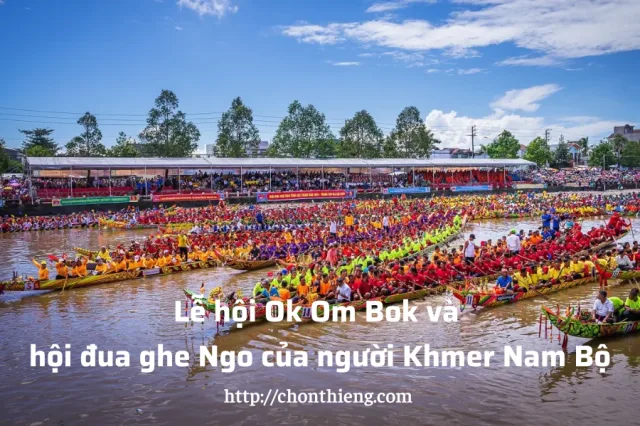
Lễ hội Ok Om Bok và hội đua ghe Ngo là một trong những lễ hội truyền thống tiêu biểu, đặc sắc và có quy mô lớn nhất của đồng bào Khmer Nam Bộ, đặc biệt phổ biến tại các tỉnh Sóc Trăng, Trà Vinh, Cà Mau, Kiên Giang, Hậu Giang và Cần Thơ. Đây là lễ hội gắn liền với tín ngưỡng nông nghiệp của cư dân trồng lúa nước, phản ánh đời sống tinh thần, tâm linh và khát vọng về mùa màng bội thu, cuộc sống bình yên, no đủ của người Khmer.
Lễ hội diễn ra vào dịp rằm tháng Ka-đâk theo Phật lịch Khmer, tương ứng khoảng rằm tháng Mười âm lịch hằng năm. Trong đó, lễ cúng Trăng được tổ chức vào đêm rằm, còn hội đua ghe Ngo diễn ra vào sáng hôm sau. Địa điểm tổ chức phần lễ thường tại sân nhà hoặc sân chùa Khmer, còn phần hội đua ghe diễn ra trên sông, kênh lớn hoặc các đoạn sông thuận lợi cho việc thi đấu và tập trung đông người xem. Hiện nay, trung tâm tổ chức nổi tiếng nhất là tại tỉnh Sóc Trăng, đặc biệt ở khu vực Kinh Sáng (sông Xung Đinh).
Lễ hội không chỉ là sinh hoạt tín ngưỡng quan trọng của người Khmer mà còn là ngày hội văn hóa – thể thao lớn của cả vùng đồng bằng sông Cửu Long. Vào dịp này, hàng chục vạn người Khmer, Kinh và Hoa cùng tham gia, tạo nên bầu không khí vô cùng sôi động, náo nhiệt.
Lịch sử và nguồn gốc lễ hội
Cho đến nay vẫn chưa xác định chính xác thời điểm hình thành lễ hội Ok Om Bok và hội đua ghe Ngo của người Khmer. Tuy nhiên, trong dân gian hiện còn lưu truyền nhiều truyền thuyết và truyện tích lý giải nguồn gốc của lễ hội này.
Theo một truyền thuyết dân gian, vào thời xưa có một trận nước lũ bất ngờ dâng lên vào giữa giờ Ngọ. Khi ấy, người dân trong các sóc đã dùng ghe xuồng đưa các vị sư đang đi khất thực trở về chùa an toàn. Để ghi nhớ sự việc ấy, về sau người Khmer tổ chức đua ghe ngọ, rồi dần đọc thành ghe Ngo.
Một truyện tích khác cho rằng, vào thời cổ xưa khi các bộ tộc thường xuyên xảy ra chiến tranh trên sông nước, người Khmer đã chế tạo những chiếc ghe dài, thân thon để phục vụ chiến trận. Nhờ loại ghe này, họ có thể di chuyển nhanh và chở được nhiều binh lính. Sau khi hòa bình lập lại, người Khmer không còn dùng ghe vào chiến trận nữa, nhưng để tưởng nhớ chiến công của cha ông, họ tổ chức hội đua ghe Ngo vào dịp lễ Óoc om bóc hằng năm.
Ngoài ra còn có truyền thuyết “Sự tích hội bơi đua”, kể về cuộc tranh tài giữa vua Người và vua Rồng vào ngày rằm tháng Mười âm lịch. Từ đó, người Khmer tổ chức đua ghe để tưởng nhớ sự kiện ấy. Một số quan niệm khác cho rằng hình dáng ghe Ngo mô phỏng theo thân rắn Naga – linh vật thiêng trong văn hóa Khmer, biểu tượng của nước, sức mạnh và sự bảo hộ.
Bên cạnh yếu tố truyền thuyết, lễ hội còn bắt nguồn từ tín ngưỡng nông nghiệp lâu đời của người Khmer. Đồng bào quan niệm thần Mặt Trăng là vị thần bảo hộ mùa màng, điều hòa thời tiết và ban phát lương thực cho con người. Vì vậy, sau mùa vụ, vào lúc lúa nếp bắt đầu chín, người Khmer tổ chức lễ cúng Trăng để tạ ơn thần linh và cầu mong mùa màng năm sau tiếp tục tốt tươi. Hội đua ghe Ngo gắn liền với nghi thức “rước nước”, phản ánh khát vọng mưa thuận gió hòa của cư dân nông nghiệp lúa nước.
Ngày xưa, hội đua ghe Ngo thường được tổ chức tại Vàm Tho (Pem Kon Thô) thuộc huyện Mỹ Xuyên, tỉnh Sóc Trăng, nơi thuận tiện cho ghe từ nhiều vùng khác nhau tụ hội. Sau năm 1975, cuộc đua được tổ chức tại sông Nhu Gia và hiện nay chủ yếu diễn ra tại Kinh Sáng (sông Xung Đinh) ở trung tâm thành phố Sóc Trăng. Từ năm 2013, lễ hội được nâng tầm thành “Festival Đua ghe Ngo đồng bào Khmer đồng bằng sông Cửu Long”, tổ chức định kỳ hai năm một lần với quy mô lớn hơn trước.
Đối tượng tưởng niệm và ý nghĩa tín ngưỡng
Đối tượng suy tôn chính trong lễ hội là thần Mặt Trăng – vị thần được người Khmer tin rằng có vai trò bảo vệ mùa màng, mang lại mưa thuận gió hòa, cây cối sinh sôi và lương thực dồi dào.
Thông qua lễ cúng Trăng, người Khmer bày tỏ lòng biết ơn thần linh đã phù hộ cho mùa vụ thuận lợi, đồng thời cầu xin sự che chở trong năm mới. Bên cạnh đó, lễ hội còn mang ý nghĩa tri ân Thần Đất, Thần Nước vì con người đã khai thác thiên nhiên để sản xuất và sinh sống. Người Khmer quan niệm con người có thể vô tình làm tổn hại đến môi trường tự nhiên, nên cần thực hiện nghi lễ để “chuộc lỗi” và cầu xin thần linh tha thứ.
Hội đua ghe Ngo còn thể hiện tinh thần đoàn kết cộng đồng, sức mạnh tập thể, ý chí vượt khó và khát vọng chiến thắng. Đây không chỉ là một hoạt động thể thao mà còn là sinh hoạt văn hóa mang đậm yếu tố tâm linh của đồng bào Khmer Nam Bộ.
Phần lễ
Phần lễ trọng tâm là lễ Ok Om Bok, hay còn gọi là lễ Cúng Trăng hoặc lễ Đút cốm dẹp. Đây là nghi lễ diễn ra vào đêm rằm tháng Mười âm lịch, khi mặt trăng lên cao và sáng nhất.
Để chuẩn bị cho lễ cúng, từ trước đó cả tháng, người dân đã ra đồng lựa những bông nếp vừa chín tới để làm cốm dẹp – lễ vật quan trọng nhất trong lễ cúng Trăng. Cốm được giã từ nếp non nên có mùi thơm và vị dẻo đặc trưng. Ngoài cốm dẹp còn có chuối, dừa, bưởi, khoai lang, khoai mì, khoai môn, bánh kẹo và nhiều loại trái cây khác.
Tại sân nhà hoặc sân chùa, người ta dựng hai cây tre làm cổng lễ, bên trên có xà ngang trang trí hoa lá. Dưới cổng đặt bàn cúng phủ vải đẹp, bày lễ vật, nhang đèn và hoa quả. Khi trăng vừa nhô lên khỏi ngọn cây, người dân tập trung đông đủ, ăn mặc chỉnh tề và hướng mặt về phía mặt trăng để làm lễ.
Một cụ già hoặc người có uy tín trong cộng đồng đứng ra chủ lễ, đọc lời khấn bày tỏ lòng biết ơn thần Mặt Trăng, cầu mong mưa thuận gió hòa, sức khỏe, cuộc sống no đủ và mùa màng bội thu. Sau khi hương tàn, người già gọi trẻ em đến ngồi xếp bằng thành hàng rồi bốc từng nhúm cốm dẹp đút vào miệng các em, tay vỗ nhẹ vào lưng và hỏi:
“Các cháu ngoan của ông (hoặc bà) năm nay muốn gì?”
Những đứa trẻ sẽ nói lên ước mơ của mình như được học hành, có nhiều lúa gạo, trâu bò, vàng bạc hay cuộc sống sung túc. Người lớn xem những lời nói ấy như điềm báo cho tương lai của phum sóc.
Sau nghi lễ cúng Trăng, mọi người cùng nhau hưởng lễ vật, trò chuyện, ca hát và vui chơi suốt đêm. Nếu có khách từ xa đến dự lễ, chủ nhà thường gói cốm dẹp để làm quà.
Trong đêm lễ, người Khmer còn tổ chức thả đèn nước và đèn gió. Đèn nước được làm từ bẹ chuối, tạo hình như ngôi đền nhỏ có cắm nhang đèn và đặt bánh trái bên trong. Sau khi nhà sư tụng kinh cầu phúc, những chiếc đèn được thả trôi theo sông nước trong tiếng nhạc ngũ âm và tiếng reo hò của người xem. Theo quan niệm dân gian, tục thả đèn nhằm xua đi điều xấu, sự ô uế và cầu mong cuộc sống bình an, hạnh phúc.
Ngoài lễ cúng Trăng, trước khi đua ghe Ngo còn có các nghi lễ hạ thủy ghe và cúng thần ghe. Người Khmer tin rằng ghe Ngo là vật thiêng nên mọi hoạt động liên quan đến ghe đều phải tiến hành nghi lễ trang trọng. Trước khi thi đấu khoảng một tuần, người dân trong phum sóc tập trung tại chùa để làm lễ hạ thủy. Lễ vật được bày trước mũi ghe, thầy cúng cùng dàn nhạc ngũ âm làm lễ mời nữ thần bảo hộ ghe Ngo như Neng Khmau hay Neng Teo về chứng giám và phù hộ. Các vị sư tụng kinh cầu bình an, thầy cúng thoa dầu dừa lên mũi ghe rồi chia cho các tay đua xoa lên đầu lấy may. Sau đó, mọi người cùng đưa ghe xuống nước trong tiếng trống, tiếng nhạc rộn ràng.
Phần hội
Phần hội nổi bật nhất là hội đua ghe Ngo diễn ra vào sáng hôm sau lễ cúng Trăng. Đây là hoạt động thu hút đông đảo người tham dự nhất trong toàn bộ lễ hội.
Ghe Ngo, tiếng Khmer gọi là “tuk ngo”, vốn là loại thuyền độc mộc được khoét từ thân cây sao lớn. Về sau ghe được cải tiến bằng cách ghép ván nhưng vẫn giữ kiểu dáng truyền thống: thân dài từ 25 đến hơn 30 mét, đầu và đuôi cong vút, thân thon như rắn Naga để giảm lực cản nước. Mỗi ghe thường có từ 45 đến 60 tay bơi cùng nhiều người điều khiển. Hai bên ghe được trang trí hình rồng, chim công, sư tử, voi hoặc hoa văn truyền thống Khmer với các màu đỏ, vàng, trắng nổi bật.
Người Khmer coi ghe Ngo là vật thiêng của chùa và của cả phum sóc. Ghe được bảo quản cẩn thận trong nhà ghe dựng trong khuôn viên chùa. Trước đây phụ nữ không được đến gần nhà ghe, nhưng hiện nay đã xuất hiện nhiều đội ghe Ngo nữ tại Sóc Trăng, Long Phú, Kế Sách… làm cho lễ hội thêm sôi động.
Để chuẩn bị cho cuộc đua, các đội ghe thường tập luyện từ nhiều tuần trước. Các tay bơi là những thanh niên khỏe mạnh, dẻo dai, được cộng đồng tuyển chọn kỹ lưỡng. Họ luyện tập trên cạn trước để các động tác thật nhịp nhàng rồi mới xuống nước tập luyện. Trên ghe có nhiều vị trí khác nhau như người giữ nhịp ở đầu ghe, người đánh cồng hoặc thổi còi thúc quân, người lái chính và các tay bơi chia theo từng nhóm nhiệm vụ. Tất cả phải phối hợp chính xác tuyệt đối, bởi chỉ cần động tác lệch nhịp là ghe có thể mất thăng bằng và lật úp.
Vào ngày hội, không khí trên các dòng sông trở nên vô cùng náo nhiệt. Các đội ghe tập trung đông đủ, nhận lịch thi đấu và lần lượt vào vị trí xuất phát. Khi hiệu lệnh vang lên, những chiếc ghe dài như những con rắn khổng lồ lao vun vút trên mặt nước. Hàng chục mái chèo giơ lên hạ xuống nhịp nhàng theo tiếng cồng, tiếng còi và tiếng hò thúc quân. Hai bên bờ sông chật kín người xem reo hò cổ vũ, tiếng trống, tiếng nhạc ngũ âm vang dội cả một vùng.
Cuộc đua diễn ra theo từng vòng từ loại trực tiếp đến chung kết. Các đội không chỉ cần sức mạnh mà còn phải có chiến thuật, khả năng phối hợp và sức bền. Tuy nhiên, điều quan trọng nhất của lễ hội không phải thắng thua mà là tinh thần đoàn kết cộng đồng và niềm vui hội ngộ. Sau cuộc đua, các đội thường liên hoan, ca hát trên ghe hậu cần rồi cùng trở về phum sóc của mình.
Ngoài đua ghe Ngo, phần hội còn có nhiều hoạt động văn hóa dân gian khác như hát Dù kê, múa Romvông, Romxaravan, Lăm leo, A day, biểu diễn võ thuật, kéo co, cờ ốc, bi sắt và các trò chơi dân gian khác. Những hoạt động này kéo dài suốt đêm trong không khí lễ hội rộn ràng và náo nhiệt.
Xếp hạng và giá trị di sản
Lễ hội Ok Om Bok và hội đua ghe Ngo của người Khmer Nam Bộ là một di sản văn hóa truyền thống có giá trị đặc biệt về lịch sử, tín ngưỡng, nghệ thuật và tinh thần cộng đồng.
Ngày 12/01/2022, Bộ Văn hóa, Thể thao và Du lịch đã đưa “Lễ hội Đua ghe Ngo của người Khmer” vào Danh mục Di sản văn hóa phi vật thể quốc gia theo Quyết định số 74/QĐ-BVHTTDL.
Hiện nay, lễ hội không chỉ là sinh hoạt văn hóa của người Khmer mà còn trở thành sự kiện văn hóa – du lịch lớn của vùng đồng bằng sông Cửu Long, góp phần bảo tồn bản sắc dân tộc Khmer, tăng cường giao lưu văn hóa giữa các cộng đồng dân cư và quảng bá hình ảnh văn hóa Nam Bộ đến đông đảo du khách trong và ngoài nước.
Tài liệu tham khảo
- Dương Anh, Lễ hội đua ghe Ngo của người Khmer, Cục Di sản văn hóa.
- Thạc Phương – Lê Trung Vũ (2015), 60 lễ hội truyền thống Việt Nam, Nxb Tổng hợp Thành phố Hồ Chí Minh.
- Nguyễn Phong, Độc đáo lễ hội đua ghe Ngo ở Sóc Trăng, Báo Nhân dân, ngày 24/11/2023.
- Tìm hiểu lễ hội đua ghe ngo của người Khmer Sóc Trăng, trang http://khoavanhoc-ngonngu.edu.vn/, ngày 27/10/2023.
- Lễ hội đua ghe ngo Sóc Trăng – Nét văn hóa đặc sắc của đồng bào Khmer, trang scov.gov.vn, ngày 08/02/2022.
- Nguyễn Phong – Biện Diệu, Về Sóc Trăng, xem đua ghe Ngo, vui hội Óoc Om Bóc, Báo Nhân dân.
Ngôn ngữ khác
Tiếng Anh (English)
Overview
The Ok Om Bok Festival and Ngo Boat Racing Festival are among the most representative, distinctive, and largest traditional festivals of the Khmer people in Southern Vietnam. They are particularly widespread in the provinces of Soc Trang, Tra Vinh, Ca Mau, Kien Giang, Hau Giang, and the Can Tho. Closely associated with the agricultural beliefs of wet-rice farming communities, the festival reflects the spiritual life, religious beliefs, and aspirations for abundant harvests, peace, and prosperity among the Khmer people.
The festival takes place on the full moon of the Khmer lunar month of Ka-đâk, corresponding approximately to the fifteenth day of the tenth lunar month each year. The Moon Worship Ceremony is held on the full-moon night, while the Ngo Boat Race takes place the following morning. The ritual ceremonies are usually conducted in family courtyards or within the grounds of Khmer pagodas, whereas the boat races are organized on large rivers and canals capable of accommodating both competitors and spectators. Today, the most famous festival center is located in Soc Trang Province, especially along Kinh Sáng (Xung Dinh River).
The festival is not only an important religious observance for the Khmer community but also a major cultural and sporting event throughout the Mekong Delta. During the celebration, hundreds of thousands of Khmer, Kinh, and Hoa people participate, creating a vibrant and festive atmosphere.
History and Origins of the Festival
To this day, the exact origin of the Ok Om Bok Festival and the Khmer Ngo Boat Racing tradition remains uncertain. However, numerous legends and folk narratives have been passed down to explain their beginnings.
According to one popular legend, a sudden flood once occurred at midday. Villagers used boats and canoes to safely transport Buddhist monks who were out collecting alms back to their pagodas. To commemorate this event, the Khmer people later organized races with “midday boats” (ghe ngọ), a term that gradually evolved into “ghe Ngo.”
Another legend recounts that in ancient times, when tribal conflicts frequently occurred on waterways, the Khmer built long, slender boats for military purposes. These vessels allowed them to travel quickly and carry large numbers of warriors. After peace was restored, the boats were no longer used in warfare. Instead, annual boat races were organized during the Ok Om Bok Festival to honor the achievements of their ancestors.
Another folk tale, known as “The Legend of the Boat Race,” tells of a competition between the King of Humans and the Dragon King on the full moon of the tenth lunar month. The Khmer later established the boat race to commemorate this event. Some also believe that the shape of the Ngo boat was inspired by the sacred Naga serpent, an important symbol in Khmer culture representing water, strength, and divine protection.
Beyond these legends, the festival also originates from the Khmer people’s long-standing agricultural beliefs. The Moon God is regarded as the deity who protects crops, regulates weather, and provides food for humanity. Therefore, after the harvest season, when glutinous rice begins to ripen, Khmer communities hold the Moon Worship Ceremony to express gratitude and pray for another prosperous harvest in the coming year. The Ngo Boat Race is associated with water-related rituals and reflects the agricultural community’s wish for favorable weather and abundant rainfall.
Historically, Ngo boat races were held at Vàm Tho (Pem Kon Thô) in Mỹ Xuyên District, Soc Trang, where boats from various regions could easily gather. After 1975, races were held on the Nhu Gia River and are now primarily organized along Kinh Sáng (Xung Dinh River) in downtown Sóc Trăng City. Since 2013, the event has been elevated to the Khmer Mekong Delta Ngo Boat Racing Festival, held biennially on a larger scale.
Honored Figure and Religious Significance
The primary object of veneration during the festival is the Moon God, whom the Khmer believe protects agricultural production, brings favorable weather, ensures plant growth, and provides abundant food resources.
Through the Moon Worship Ceremony, Khmer communities express gratitude to the deity for a successful harvest and seek continued protection in the coming year. The festival also serves as a tribute to the Earth Spirit and Water Spirit, acknowledging that humans depend upon and exploit nature for survival. The Khmer believe that people may unintentionally harm the natural environment and therefore perform rituals to seek forgiveness and restore harmony with the spiritual world.
The Ngo Boat Race further symbolizes community solidarity, collective strength, perseverance, and the desire for victory. It is not merely a sporting event but also a cultural activity deeply rooted in Khmer spirituality.
Rituals
The Ok Om Bok Ceremony (Moon Worship Ceremony)
The central ritual is the Ok Om Bok Ceremony, also known as the Moon Worship Ceremony or the Flattened Rice Feeding Ceremony. It takes place on the night of the full moon in the tenth lunar month, when the moon appears brightest and highest in the sky.
Preparations begin about a month in advance. Villagers select young glutinous rice panicles at the ideal stage of ripeness to produce flattened rice (cốm dẹp), the most important offering in the ceremony. The flattened rice, made from immature glutinous rice grains, possesses a distinctive fragrance and chewy texture. Other offerings include bananas, coconuts, pomelos, sweet potatoes, cassava, taro, candies, and various fruits.
In family courtyards or temple grounds, two bamboo poles are erected to form a ceremonial gateway decorated with leaves and flowers. Beneath it stands an altar covered with fine cloth and arranged with offerings, incense, candles, and flowers. When the moon rises above the treetops, participants gather, dress respectfully, and face the moon.
An elder or respected community member serves as ritual leader, reciting prayers of gratitude to the Moon God while asking for favorable weather, good health, prosperity, and abundant harvests.
After the incense has burned down, children are invited to sit in rows. The elder places small portions of flattened rice into each child’s mouth, gently pats their back, and asks:
“My good children, what do you wish for this year?”
The children then express their hopes, such as receiving an education, obtaining abundant rice harvests, owning livestock, gaining wealth, or enjoying a prosperous life. Adults regard these responses as symbolic predictions for the future of the community.
Following the ceremony, participants share the offerings, sing, converse, and celebrate throughout the night. Visitors from afar are often given flattened rice as a gift.
Floating Lantern and Sky Lantern Rituals
During the evening celebration, Khmer communities also release floating water lanterns and sky lanterns.
Water lanterns are made from banana stems and fashioned into miniature shrines containing incense, candles, and offerings. After monks chant blessings, the lanterns are released onto rivers and canals amid traditional Khmer music and the cheers of spectators.
According to folk belief, this ritual helps drive away misfortune and impurity while bringing peace, happiness, and good fortune.
Boat Launching and Boat Blessing Ceremonies
Before the Ngo Boat Race, special rituals are performed to launch and bless the boats.
The Khmer regard Ngo boats as sacred objects; therefore, all activities involving them require ritual observances. About one week before the race, villagers gather at the pagoda for the launching ceremony. Offerings are arranged at the bow, while ritual specialists and traditional musicians invite protective female spirits such as Neng Khmau or Neng Teo to witness and bless the boat.
Monks chant prayers for safety and success, while ritual leaders anoint the bow with coconut oil and distribute some to the rowers to apply to their heads for good luck. The boat is then ceremonially launched into the water amid the sounds of drums and traditional music.
Festive Activities
The Ngo Boat Race
The most prominent activity of the festival is the Ngo Boat Race, held on the morning following the Moon Worship Ceremony.
Known in Khmer as tuk ngo, the traditional Ngo boat was originally carved from a single large sao tree trunk. Modern versions are constructed from joined wooden planks while maintaining the traditional design: a long, slender hull measuring approximately 25–30 meters or more, with elegantly curved bow and stern resembling the sacred Naga serpent to reduce water resistance.
Each boat typically carries between 45 and 60 paddlers, along with navigators and rhythm keepers. The hull is decorated with dragons, peacocks, lions, elephants, and traditional Khmer motifs in vivid red, yellow, and white colors.
The Khmer regard the Ngo boat as a sacred possession belonging to both the pagoda and the entire community. Boats are carefully stored in dedicated boathouses within temple grounds. Traditionally, women were not permitted near these structures, although today several women’s Ngo boat teams participate in competitions, especially in Sóc Trăng and neighboring districts.
Training begins weeks before the event. Competitors are selected from among strong and physically fit young men and women. They first practice on land to synchronize their movements before conducting training sessions on the water. Each boat contains specific roles, including rhythm keepers, gong or whistle operators, helmsmen, and paddlers assigned to different sections. Perfect coordination is essential because even slight timing errors can destabilize the boat.
On race day, rivers become extraordinarily lively. Teams assemble, receive race schedules, and take their starting positions. At the signal, the long boats surge forward like giant serpents gliding across the water. Dozens of paddles rise and fall in unison to the rhythm of gongs, whistles, and chants.
Thousands of spectators line both riverbanks, cheering enthusiastically as drums and traditional Khmer music echo throughout the area.
The competition progresses through elimination rounds to the final race. Success requires not only strength but also strategy, endurance, and flawless teamwork. Yet the true significance of the festival lies less in victory than in community unity and shared celebration. After the race, teams commonly gather for feasts, singing, and social activities before returning to their villages.
Other Cultural Activities
In addition to boat racing, the festival includes numerous traditional cultural performances and folk games, such as:
Dù Kê theater
Romvong dance
Romxaravan dance
Lăm Leo performances
A Day folk singing
Martial arts demonstrations
Tug-of-war
Traditional board games
Petanque (bi sắt)
Various folk games
These activities continue throughout the night, contributing to the lively and joyful festival atmosphere.
Heritage Recognition and Cultural Value
The Ok Om Bok Festival and Ngo Boat Racing Festival of the Khmer people in Southern Vietnam constitute a cultural heritage of exceptional historical, religious, artistic, and communal value.
On January 12, 2022, the Ministry of Culture, Sports and Tourism of Vietnam officially inscribed the Khmer Ngo Boat Racing Festival on the National List of Intangible Cultural Heritage under Decision No. 74/QĐ-BVHTTDL.
Today, the festival has evolved beyond a cultural event of the Khmer community to become a major cultural and tourism attraction throughout the Mekong Delta. It contributes significantly to preserving Khmer cultural identity, promoting intercultural exchange among ethnic communities, and introducing the rich cultural heritage of Southern Vietnam to visitors from across the country and around the world.
References
- Dương Anh, Lễ hội đua ghe Ngo của người Khmer, Cục Di sản văn hóa.
- Thạc Phương – Lê Trung Vũ (2015), 60 lễ hội truyền thống Việt Nam, Nxb Tổng hợp Thành phố Hồ Chí Minh.
- Nguyễn Phong, Độc đáo lễ hội đua ghe Ngo ở Sóc Trăng, Báo Nhân dân, ngày 24/11/2023.
- Tìm hiểu lễ hội đua ghe ngo của người Khmer Sóc Trăng, trang http://khoavanhoc-ngonngu.edu.vn/, ngày 27/10/2023.
- Lễ hội đua ghe ngo Sóc Trăng – Nét văn hóa đặc sắc của đồng bào Khmer, trang scov.gov.vn, ngày 08/02/2022.
- Nguyễn Phong – Biện Diệu, Về Sóc Trăng, xem đua ghe Ngo, vui hội Óoc Om Bóc, Báo Nhân dân.
Tiếng Trung (中文)
概述
送水灯节(Ok Om Bok)与高棉龙舟赛(Ghe Ngo)是越南南部高棉族最具代表性、最富特色且规模最大的传统节庆之一,广泛流行于朔庄、茶荣、金瓯、坚江、后江和芹苴等省市。该节日与稻作农业信仰密切相关,反映了高棉族人民的精神生活、宗教信仰以及对五谷丰登、生活安宁富足的美好期盼。
节日于高棉佛历Ka-đâk月望日举行,相当于每年农历十月十五日前后。其中,祭月仪式于满月之夜举行,而龙舟赛则在次日上午进行。祭祀活动一般在家庭庭院或高棉寺院内举行,而龙舟竞渡则在河流、运河或适宜比赛并能容纳大量观众的水域进行。目前最著名的举办地为朔庄省,尤其是Kinh Sáng(Xung Đinh河)一带。
这一节庆不仅是高棉族重要的宗教信仰活动,同时也是整个九龙江三角洲地区盛大的文化与体育盛会。每逢节日,数十万高棉族、京族和华族民众共同参与,形成热烈而壮观的节庆氛围。
历史与起源
关于送水灯节和高棉龙舟赛的确切起源年代,目前尚无明确记载。然而,在民间至今流传着许多关于其起源的传说和故事。
根据一种民间传说,古时曾有一次洪水在正午时分突然暴涨。当时,各村寨居民利用船只将外出化缘的僧侣安全送回寺院。为了纪念这一事件,后来高棉族便举行“午船竞渡”(ghe ngọ),久而久之演变为“龙舟赛”(ghe Ngo)。
另一种传说认为,在古代部落之间频繁发生水上战争的时期,高棉族制造了细长快速的大船用于军事作战。这种船只不仅航行迅速,而且能够运载大量士兵。战争结束后,人们不再将其用于军事用途,但为了纪念祖先的功绩,便在每年送水灯节期间举行龙舟竞赛。
此外,还有“赛舟传说”,讲述人王与龙王于农历十月十五进行竞赛的故事。为了纪念这一事件,高棉族开始举行龙舟比赛。另有观点认为,龙舟的造型模仿神蛇那伽(Naga)的身体。那伽是高棉文化中的神圣灵物,象征水源、力量与守护。
除了传说因素之外,该节日还源于高棉族悠久的农业信仰。高棉族认为月神是守护庄稼、调节气候、赐予粮食的重要神灵。因此,在收获季节、糯稻开始成熟之际,人们举行祭月仪式,以感谢神灵庇佑,并祈求来年继续丰收。龙舟赛则与“迎水”仪式紧密相关,体现了稻作农耕社会对于风调雨顺的共同愿望。
过去,龙舟赛通常在朔庄省美川县的Vàm Tho(Pem Kon Thô)地区举行,便于各地龙舟汇聚。1975年后,比赛移至Nhu Gia河举行;如今则主要在朔庄市中心的Kinh Sáng(Xung Đinh河)举办。自2013年起,该活动升级为“九龙江三角洲高棉族龙舟节”,每两年举办一次,规模远超以往。
崇奉对象与信仰意义
节庆中最主要的崇奉对象是月神。高棉族相信月神掌管庄稼生长,带来风调雨顺、万物繁衍和粮食丰收。
通过祭月仪式,高棉族表达对神灵保佑丰收的感恩之情,同时祈求新的一年继续得到庇护。此外,节日也蕴含感恩土地神和水神的意义,因为人类依赖自然环境进行生产和生活。高棉族认为,人们在生产过程中可能无意间伤害了自然,因此需要通过仪式向神灵表达歉意并祈求宽恕。
龙舟赛还象征着团结协作、集体力量、坚韧精神和追求胜利的意志。它不仅是一项体育竞技活动,更是一种富有精神信仰内涵的文化传统。
祭祀部分
节庆最重要的祭祀活动是送水灯节(Ok Om Bok),又称祭月节或喂扁米节。该仪式于农历十月十五满月之夜举行,此时月亮最圆最亮。
为了准备祭月活动,人们早在一个月前便前往田间挑选刚成熟的糯稻,用来制作扁米(Cốm dẹp),这是祭月仪式中最重要的供品。扁米以嫩糯米舂制而成,具有独特的清香与柔糯口感。除此之外,供品还包括香蕉、椰子、柚子、红薯、木薯、芋头、糖果以及各种水果。
在庭院或寺院广场上,人们竖立两根竹竿作为祭门,上方设横梁并装饰花叶。祭门下摆放覆盖华丽布料的供桌,上面陈列供品、香烛和鲜花水果。当月亮升起至树梢之上时,村民身着整洁服饰聚集在一起,面向月亮举行祭礼。
一位长者或德高望重的人担任主祭,诵读祭文,感谢月神赐予丰收,并祈求风调雨顺、身体健康、生活富足和来年继续丰收。
待香火燃尽后,长者会请孩子们盘腿坐成一排,然后将一把把扁米送入他们口中,同时轻拍他们的后背并询问:
“孩子们,今年你们想要什么呢?”
孩子们会说出自己的愿望,例如希望读书有成、粮食充足、拥有牛羊财富或生活富裕。大人们则把这些回答视为村寨未来运势的预兆。
祭月结束后,人们共同分享供品,聊天、歌唱和娱乐至深夜。如果有远方来客,主人通常会赠送扁米作为礼物。
节日期间,高棉族还会举行放水灯和放天灯活动。水灯以香蕉树鞘制作而成,形似小型神殿,内置香烛与供品。僧侣诵经祈福后,人们将水灯放入河流,伴随着五音乐队的演奏和观众的欢呼缓缓漂流而去。按照民间观念,放灯具有驱除厄运、洗净污秽、祈求平安幸福的意义。
除了祭月仪式外,龙舟比赛前还要举行龙舟下水礼和祭舟神仪式。高棉族认为龙舟是神圣之物,因此所有与龙舟相关的活动都必须举行庄重仪式。比赛前约一周,各村寨居民会聚集于寺院举行下水礼。供品摆放在船首前方,祭师与五音乐队共同迎请守护龙舟的女神,如Neng Khmau或Neng Teo降临庇佑。僧侣诵经祈福,祭师将椰子油涂抹于船首,并分给划手涂抹头部以求好运。随后,在鼓乐声中,众人共同将龙舟推入水中。
娱乐活动部分
节庆中最引人注目的活动是祭月次日上午举行的龙舟赛。
高棉语称龙舟为“Tuk Ngo”。最初这种船由整棵大娑罗树挖空制成,后来改用木板拼接,但仍保持传统造型:船身长约25至30余米,船头和船尾高高翘起,整体细长如神蛇那伽,以减少水阻。每艘龙舟通常配备45至60名划手及若干指挥人员。船体两侧绘有龙、孔雀、狮子、大象或传统高棉纹饰,以红、黄、白等鲜艳色彩为主。
高棉族将龙舟视为寺院和整个村寨的神圣财产。龙舟平时被妥善存放于寺院内专门建造的船屋中。过去妇女不得靠近船屋,但如今朔庄、隆富、计策等地已出现女子龙舟队,使节庆更加丰富多彩。
为了备战比赛,各支队伍通常提前数周开始训练。划手皆为身体强壮、耐力出众的青年,并经过社区严格选拔。他们先在陆地上训练动作协调,再下水实战练习。船上设有领桨员、击锣员、吹哨员、舵手以及不同岗位的划手。所有人必须配合默契,因为只要节奏稍有偏差,龙舟便可能失去平衡甚至倾覆。
比赛当天,河面上热闹非凡。各支龙舟队按赛程依次进入起点。随着发令声响起,一艘艘长龙般的龙舟飞驰于水面之上。数十支船桨整齐划一地起落,配合锣鼓声、号角声和呐喊助威声。两岸观众人山人海,欢呼声与五音乐队的乐声响彻整个赛场。
比赛采取淘汰制,逐轮进行直至决赛。参赛队伍不仅需要力量,更需要战术、协调能力和持久耐力。然而,节日最重要的并非胜负,而是社区团结与重逢欢聚的精神。比赛结束后,各队通常会在后勤船上聚餐庆祝,随后返回各自村寨。
除龙舟赛外,节庆期间还有许多民间文化活动,如Dù Kê戏剧表演、Romvông舞、Romxaravan舞、Lăm Leo舞、A Day对唱、传统武术表演、拔河、贝壳棋、滚球以及各种民间游戏。这些活动往往持续整夜,使节庆气氛更加热烈。
遗产价值与认定
送水灯节和高棉龙舟赛是越南南部高棉族珍贵的传统文化遗产,具有重要的历史、宗教信仰、艺术和社区文化价值。
2022年1月12日,越南文化体育与旅游部依据第74/QĐ-BVHTTDL号决定,正式将“高棉族龙舟赛节”列入国家级非物质文化遗产名录。
如今,该节庆不仅是高棉族的重要文化活动,也已发展成为九龙江三角洲地区重要的文化旅游盛会。它对于保护高棉民族文化特色、促进各民族间文化交流以及向国内外游客展示越南南部独特文化形象具有重要意义。
参考资料
- Dương Anh, Lễ hội đua ghe Ngo của người Khmer, Cục Di sản văn hóa.
- Thạc Phương – Lê Trung Vũ (2015), 60 lễ hội truyền thống Việt Nam, Nxb Tổng hợp Thành phố Hồ Chí Minh.
- Nguyễn Phong, Độc đáo lễ hội đua ghe Ngo ở Sóc Trăng, Báo Nhân dân, ngày 24/11/2023.
- Tìm hiểu lễ hội đua ghe ngo của người Khmer Sóc Trăng, trang http://khoavanhoc-ngonngu.edu.vn/, ngày 27/10/2023.
- Lễ hội đua ghe ngo Sóc Trăng – Nét văn hóa đặc sắc của đồng bào Khmer, trang scov.gov.vn, ngày 08/02/2022.
- Nguyễn Phong – Biện Diệu, Về Sóc Trăng, xem đua ghe Ngo, vui hội Óoc Om Bóc, Báo Nhân dân.
Tiếng Pháp (Français’)
Aperçu général
La fête Ok Om Bok et la course de ghe Ngo constituent l’une des manifestations traditionnelles les plus représentatives, les plus spectaculaires et les plus importantes des Khmers du Sud du Viêt Nam. Elles sont particulièrement répandues dans les provinces de Sóc Trăng, Trà Vinh, Cà Mau, Kiên Giang, Hậu Giang et Cần Thơ. Cette célébration est étroitement liée aux croyances agricoles des communautés rizicoles et reflète leur vie spirituelle, leurs pratiques religieuses ainsi que leur aspiration à des récoltes abondantes, à la paix et à la prospérité.
La fête a lieu à la pleine lune du mois de Ka-đâk selon le calendrier bouddhique khmer, correspondant généralement à la pleine lune du dixième mois lunaire vietnamien. La cérémonie d’offrande à la Lune se déroule dans la nuit de la pleine lune, tandis que la course de ghe Ngo a lieu le lendemain matin. Les rites religieux sont généralement organisés dans les cours des maisons ou des pagodes khmères, tandis que les compétitions nautiques se tiennent sur de larges rivières ou canaux capables d’accueillir un grand nombre de spectateurs. Aujourd’hui, le principal centre des festivités se trouve dans la province de Sóc Trăng, notamment dans la zone de Kinh Sáng (rivière Xung Đinh).
Cette fête n’est pas seulement une célébration religieuse importante pour les Khmers ; elle est également devenue un grand événement culturel et sportif de l’ensemble du delta du Mékong. Chaque année, elle rassemble des centaines de milliers de participants khmers, kinh et chinois, créant une atmosphère particulièrement animée et festive.
Histoire et origine de la fête
Jusqu’à présent, il n’a pas été possible de déterminer avec précision la date d’apparition de la fête Ok Om Bok et de la course de ghe Ngo chez les Khmers. Toutefois, de nombreuses légendes et récits populaires continuent d’en expliquer les origines.
Selon une première légende, une crue soudaine se produisit autrefois à l’heure du midi. Les habitants des différents villages utilisèrent alors leurs embarcations pour ramener sains et saufs à la pagode les moines qui effectuaient leur tournée d’aumônes. Afin de commémorer cet événement, les Khmers organisèrent par la suite une course appelée « ghe Ngọ », dont la prononciation aurait progressivement évolué vers « ghe Ngo ».
Une autre tradition rapporte qu’à une époque où les tribus se livraient fréquemment des guerres fluviales, les Khmers construisirent de longues embarcations étroites destinées au combat. Ces bateaux permettaient des déplacements rapides tout en transportant un grand nombre de guerriers. Après le retour de la paix, ils ne furent plus utilisés à des fins militaires, mais les populations conservèrent leur souvenir en organisant chaque année des courses lors de la fête Ok Om Bok.
Une autre légende encore, appelée « L’histoire de la course nautique », évoque une compétition entre le Roi des Hommes et le Roi Dragon qui se serait déroulée à la pleine lune du dixième mois lunaire. La course de ghe Ngo serait organisée pour perpétuer le souvenir de cet événement. Certains considèrent également que la forme du ghe Ngo s’inspire du corps du serpent sacré Naga, symbole de l’eau, de la puissance et de la protection dans la culture khmère.
Au-delà des légendes, la fête trouve ses racines dans les anciennes croyances agricoles du peuple khmer. Les Khmers considèrent la Lune comme une divinité protectrice des récoltes, capable de réguler les saisons et de procurer la nourriture nécessaire à l’humanité. À la fin de la saison agricole, lorsque le riz gluant commence à mûrir, ils organisent donc une cérémonie de remerciement afin d’exprimer leur gratitude et de solliciter de nouvelles récoltes prospères. La course de ghe Ngo est quant à elle associée au rite de « l’accueil des eaux » et traduit le souhait de bénéficier de pluies favorables.
Autrefois, les courses se déroulaient à Vàm Tho (Pem Kon Thô), dans le district de Mỹ Xuyên, province de Sóc Trăng, un lieu facilement accessible depuis différentes régions. Après 1975, elles furent organisées sur la rivière Nhu Gia, puis principalement sur le canal Kinh Sáng (rivière Xung Đinh) au centre de la ville de Sóc Trăng. Depuis 2013, la manifestation a été élevée au rang de « Festival de la course de ghe Ngo des Khmers du delta du Mékong », organisé tous les deux ans à une échelle plus importante.
Objet de vénération et signification religieuse
La principale divinité honorée durant la fête est le Dieu de la Lune, considéré par les Khmers comme le protecteur des récoltes, celui qui apporte des pluies favorables, favorise la croissance des cultures et assure l’abondance alimentaire.
Par la cérémonie d’offrande à la Lune, les Khmers expriment leur reconnaissance envers cette divinité pour les récoltes obtenues et sollicitent sa protection pour l’année à venir. La fête est également un hommage rendu aux esprits de la Terre et de l’Eau. Selon la croyance populaire, les activités humaines peuvent involontairement porter atteinte à la nature ; des rites spécifiques sont donc accomplis afin de demander pardon aux forces surnaturelles et d’obtenir leur clémence.
La course de ghe Ngo symbolise aussi l’esprit de solidarité communautaire, la force collective, la persévérance et le désir de réussite. Elle représente bien davantage qu’une simple compétition sportive : elle constitue une expression culturelle profondément imprégnée de spiritualité.
Partie cérémonielle
L’élément central des célébrations est la cérémonie d’Ok Om Bok, également appelée fête de la Lune ou cérémonie du cốm dẹp (riz gluant aplati).
Cette cérémonie a lieu dans la nuit de la pleine lune du dixième mois lunaire, lorsque la lune atteint son éclat maximal.
Les préparatifs commencent plusieurs semaines auparavant. Les habitants sélectionnent dans les rizières les épis de riz gluant arrivés à maturité afin de fabriquer le cốm dẹp, l’offrande la plus importante de la cérémonie. Préparé à partir de jeunes grains de riz, celui-ci possède un parfum délicat et une texture particulièrement tendre. Les offrandes comprennent également des bananes, noix de coco, pamplemousses, patates douces, manioc, taro, confiseries et divers fruits.
Dans la cour de la maison ou de la pagode, deux bambous sont dressés afin de former un portail cérémoniel décoré de feuillages. Une table recouverte d’un beau tissu est installée en dessous et reçoit les offrandes, les fleurs, l’encens et les lampes votives. Lorsque la lune apparaît au-dessus des arbres, les participants, vêtus de leurs plus beaux habits, se rassemblent face à l’astre pour accomplir le rite.
Une personne âgée ou respectée de la communauté officie en tant que maître de cérémonie. Elle récite une prière exprimant sa gratitude envers le Dieu de la Lune et demandant des pluies favorables, la santé, l’abondance et de bonnes récoltes. Une fois les bâtonnets d’encens consumés, les enfants sont invités à s’asseoir en rang. L’officiant leur met alors dans la bouche plusieurs bouchées de cốm dẹp, leur tapote doucement le dos et leur demande :
« Que souhaitez-vous pour cette année, mes enfants ? »
Les enfants répondent en exprimant leurs souhaits : poursuivre leurs études, obtenir davantage de récoltes, posséder du bétail, de l’or ou vivre dans l’aisance. Ces réponses sont souvent interprétées comme des présages pour l’avenir de la communauté.
Après la cérémonie, chacun partage les offrandes, chante, discute et se divertit jusque tard dans la nuit. Les visiteurs venus de loin repartent souvent avec du cốm dẹp offert par leurs hôtes.
Au cours de cette même soirée, les Khmers organisent également des lâchers de lanternes flottantes et de lanternes aériennes. Les lanternes flottantes sont confectionnées à partir de gaines de bananier et prennent la forme de petits sanctuaires ornés de cierges, d’encens et d’offrandes. Après les prières récitées par les moines, elles sont déposées sur l’eau au son de l’orchestre traditionnel khmer. Selon la croyance populaire, ce rituel permet d’éloigner les influences néfastes et d’attirer bonheur et sérénité.
Avant la course de ghe Ngo ont également lieu les cérémonies de mise à l’eau et de consécration des embarcations. Les Khmers considèrent en effet le ghe Ngo comme un objet sacré. Environ une semaine avant la compétition, les habitants se réunissent à la pagode pour accomplir ces rites. Les offrandes sont disposées à la proue du bateau tandis que le maître de cérémonie et l’orchestre traditionnel invoquent les déesses protectrices des embarcations, telles que Neng Khmau ou Neng Teo. Les moines récitent des prières de bénédiction et le maître de cérémonie applique de l’huile de coco sur la proue, puis en distribue aux rameurs comme porte-bonheur. L’embarcation est ensuite mise à l’eau dans une ambiance festive.
Partie festive
L’événement le plus attendu est la course de ghe Ngo qui se déroule le matin suivant la cérémonie d’Ok Om Bok.
Le ghe Ngo, appelé tuk ngo en khmer, était à l’origine une embarcation monoxyle creusée dans un immense tronc d’arbre sao. Avec le temps, sa construction a évolué vers un assemblage de planches, tout en conservant sa forme traditionnelle : une coque longue de 25 à plus de 30 mètres, aux extrémités recourbées et au profil évoquant le serpent Naga afin de réduire la résistance de l’eau. Chaque embarcation accueille généralement entre 45 et 60 rameurs ainsi que plusieurs membres d’équipage chargés de la direction. Les flancs sont décorés de dragons, de paons, de lions, d’éléphants ou de motifs traditionnels khmers aux couleurs éclatantes.
Pour les Khmers, le ghe Ngo est un bien sacré appartenant à la pagode et à l’ensemble de la communauté. Il est conservé dans un bâtiment spécifique situé dans l’enceinte du monastère. Autrefois, les femmes ne pouvaient pas s’en approcher, mais aujourd’hui plusieurs équipes féminines participent aux compétitions, notamment à Sóc Trăng, Long Phú et Kế Sách.
La préparation des équipages commence plusieurs semaines avant la course. Les rameurs, choisis parmi les jeunes hommes les plus robustes et endurants de la communauté, s’entraînent d’abord à terre afin de synchroniser leurs mouvements avant de passer aux exercices sur l’eau. Chaque membre possède une fonction précise : chef de rythme à l’avant, joueur de gong ou de sifflet, barreur principal et groupes de rameurs spécialisés. Une coordination parfaite est indispensable, car le moindre décalage peut déséquilibrer l’embarcation.
Le jour de la compétition, l’ambiance devient particulièrement intense. Les équipes se rassemblent, prennent connaissance du programme et rejoignent la ligne de départ. Au signal, les longues embarcations s’élancent à grande vitesse sur la rivière. Les dizaines de pagaies se lèvent et s’abaissent à l’unisson au rythme des gongs, des sifflets et des encouragements. Les berges sont noires de monde ; les applaudissements, les percussions et la musique traditionnelle résonnent dans toute la région.
Les courses se déroulent sous forme d’éliminations successives jusqu’à la finale. Les équipes doivent faire preuve non seulement de puissance physique mais aussi de stratégie, d’endurance et d’esprit collectif. Toutefois, l’essentiel de la fête ne réside pas dans la victoire mais dans la solidarité communautaire et la joie des retrouvailles. Après la compétition, les équipages célèbrent ensemble l’événement avant de regagner leurs villages.
En complément des courses, de nombreuses activités culturelles sont organisées : théâtre chanté Dù kê, danses Romvong, Romxaravan, Lăm leo, A day, démonstrations d’arts martiaux, tir à la corde, jeux de stratégie traditionnels, pétanque et autres divertissements populaires. Ces animations se prolongent souvent toute la nuit dans une ambiance festive.
Classement patrimonial et valeur culturelle
La fête Ok Om Bok et la course de ghe Ngo des Khmers du Sud du Viêt Nam constituent un patrimoine culturel d’une valeur exceptionnelle sur les plans historique, religieux, artistique et communautaire.
Le 12 janvier 2022, le Ministère de la Culture, des Sports et du Tourisme a inscrit la Course de ghe Ngo des Khmers au Registre national du patrimoine culturel immatériel, conformément à la décision n° 74/QĐ-BVHTTDL.
Aujourd’hui, cette fête dépasse largement le cadre de la communauté khmère. Elle est devenue un événement culturel et touristique majeur du delta du Mékong, contribuant à la préservation de l’identité culturelle khmère, au renforcement des échanges entre les différentes communautés et à la promotion de la culture méridionale vietnamienne auprès des visiteurs nationaux et internationaux.
Bibliographie
- Dương Anh, Lễ hội đua ghe Ngo của người Khmer, Cục Di sản văn hóa.
- Thạc Phương – Lê Trung Vũ (2015), 60 lễ hội truyền thống Việt Nam, Nxb Tổng hợp Thành phố Hồ Chí Minh.
- Nguyễn Phong, Độc đáo lễ hội đua ghe Ngo ở Sóc Trăng, Báo Nhân dân, ngày 24/11/2023.
- Tìm hiểu lễ hội đua ghe ngo của người Khmer Sóc Trăng, trang http://khoavanhoc-ngonngu.edu.vn/, ngày 27/10/2023.
- Lễ hội đua ghe ngo Sóc Trăng – Nét văn hóa đặc sắc của đồng bào Khmer, trang scov.gov.vn, ngày 08/02/2022.
- Nguyễn Phong – Biện Diệu, Về Sóc Trăng, xem đua ghe Ngo, vui hội Óoc Om Bóc, Báo Nhân dân.