

Thời gian
Lễ hội đền Tam Giang được tổ chức định kỳ vào ngày 10 tháng 3 âm lịch, trùng với lễ Giỗ Tổ Hùng Vương.
Địa điểm
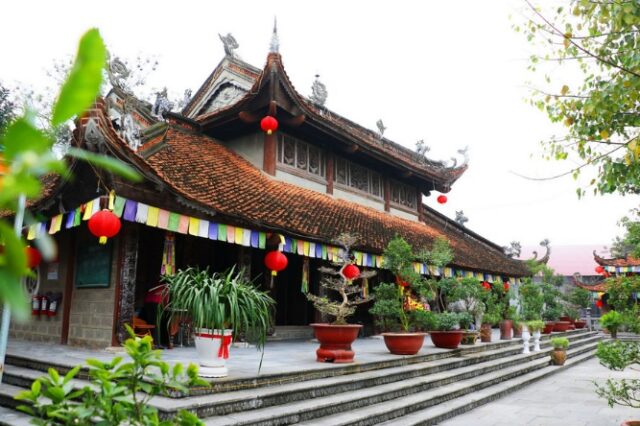
Đền Tam Giang tọa lạc tại phường Bạch Hạc, thành phố Việt Trì, tỉnh Phú Thọ.
Lịch sử và di vật
Theo truyền thuyết, vào những năm Vĩnh Huy (650–655) dưới triều Đường, Lý Thường Minh, khi đó giữ chức Đô đốc quận Giao Châu, nhận thấy vùng Bạch Hạc là nơi “sơn chầu thủy tụ”, địa thế hội tụ của sông núi tại ngã ba sông lớn, được xem là vùng đất linh thiêng. Từ nhận định đó, ông cho xây dựng Thông Thánh Quán, thờ tượng Tam Thanh, gồm hai tòa kiến trúc tiền và hậu.
Khi chuẩn bị tạc tượng thần bản thổ để thờ phụng, Lý Thường Minh còn phân vân về linh khí của thần đất nơi đây nên đã lập đàn cầu khấn, xin thần hiển linh để biết rõ hình dạng. Theo truyền thuyết, ngay trong đêm đó ông mộng thấy hai dị nhân cùng tùy tùng xuất hiện, tự xưng là Thổ Lệnh và Thạch Khanh. Lý Thường Minh đề nghị hai vị so tài, người chiến thắng sẽ được thờ tại quán. Trong cuộc thi, Thạch Khanh nhảy qua sông nhưng lập tức thấy Thổ Lệnh đã đứng sẵn ở bờ bên kia; khi nhảy trở lại, Thổ Lệnh lại xuất hiện ở bờ này. Cảm phục thần lực của hai vị, Lý Thường Minh cho lập tượng thờ Thổ Lệnh tại Thông Thánh Quán (nay là đền Tam Giang), còn Thạch Khanh được thờ tại đền Chi Cát (nay thuộc phường Tiên Cát, thành phố Việt Trì). Dấu tích cuộc thi được dân gian truyền lại qua hình ảnh một vết chân trước đền Tam Giang và một gót chân tại Bến Gót.
Từ đó, đền Tam Giang được xem là nơi linh thiêng, hương khói không ngớt. Nhân dân đến cầu đảo đều tin là linh ứng, nhiều tướng lĩnh trước khi ra trận cũng đến yết lễ và được cho là đã nhận được sự phù trợ, giành thắng lợi. Đặc biệt, vào cuối năm Giáp Thân (1234), trong bối cảnh cuộc kháng chiến chống quân Nguyên Mông lần thứ hai, Chiêu Văn Vương Trần Nhật Duật cùng môn khách Hứa Tông Đạo đã làm lễ cắt tóc ăn thề trước thần đền Tam Giang, nguyện trung thành với triều đình và quyết tâm bảo vệ đất nước. Sau chiến thắng, Trần Nhật Duật tổ chức lễ tạ thần, cho trùng tu đền và đúc chuông lớn dâng cúng. Trưởng công chúa Thiên Thụy, con gái vua Trần Thánh Tông, đã cùng nhân dân địa phương công đức xây dựng lại Thông Thánh Quán; đến năm 1321, Hứa Tông Đạo được giao soạn và khắc bài Minh chuông Thông Thánh.
Trải qua hàng nghìn năm lịch sử và nhiều biến động do chiến tranh, đền Tam Giang đã nhiều lần được trùng tu trên nền đền cũ; riêng hệ thống bậc lên xuống bến chải vẫn được giữ nguyên từ năm 1935. Hiện nay, đền thờ ba vị: Đức Thánh Cả (Thổ Lệnh Cao Quan Bạch Hạc Đại Vương), Đức Thánh Bà (Thánh Mẫu Đức Sinh Quách A Nương) và Đức Thánh Hai (Chiêu Văn Vương Trần Nhật Duật). Đền đã được ban tổng cộng 19 đạo sắc phong qua các triều đại phong kiến và đến năm 2010 được Nhà nước xếp hạng là di tích lịch sử – văn hóa cấp Quốc gia.
Ngày nay, vào các dịp lễ tết, ngày rằm, mùng một và đặc biệt là những ngày cuối năm, đầu xuân, đông đảo nhân dân và du khách thập phương đến đền dâng hương, cầu bình an và may mắn. Hằng năm, đền tổ chức hai kỳ lễ chính: lễ sinh Đức Thánh (diễn ra trong ba ngày 8–10 tháng 3 âm lịch) và lễ hóa Đức Thánh vào ngày 25 tháng 9 âm lịch, đồng thời là dịp kỷ niệm chiến thắng quân Nguyên Mông. Các hoạt động lễ hội gồm lễ rước nước, lễ tế và nhiều trò chơi dân gian như ném còn, đánh đu, chọi gà, giã bánh giầy, đặc biệt là thi bơi chải trên sông Lô, gắn với truyền thống luyện thủy quân thời Trần tại quân cảng Bạch Hạc.
Nhằm đáp ứng nhu cầu sinh hoạt văn hóa tâm linh của nhân dân địa phương và du khách, những năm gần đây, đền Tam Giang đã được Nhà nước quan tâm đầu tư, nhân dân công đức tu bổ, tôn tạo. Tỉnh đã có chủ trương mở rộng quy mô khu di tích trên nền đền cũ với diện tích khoảng 21.000 m²; công tác giải phóng mặt bằng hiện đang được triển khai theo kế hoạch.
Có thể khẳng định, Bạch Hạc là vùng đất hội tụ nhiều di sản văn hóa vật thể và phi vật thể, từ xa xưa đã là khu vực giao thương sầm uất, được dân gian gọi là Kẻ Hạc. Trong quá trình phát triển hiện nay, cùng với tăng trưởng kinh tế – xã hội, các di tích trên địa bàn phường Bạch Hạc ngày càng được bảo tồn và tôn tạo khang trang. Khu di tích lịch sử – văn hóa Quốc gia đền Tam Giang, cùng với chùa Đại Bi và các di tích cấp tỉnh, cũng như hệ thống lễ hội truyền thống, đã góp phần làm nổi bật giá trị văn hóa – lịch sử của Bạch Hạc, thành phố Việt Trì – trung tâm lễ hội gắn với cội nguồn dân tộc Việt Nam.
Lễ hội đền Tam Giang
Hằng năm, Lễ hội Bạch Hạc – đền Tam Giang được tổ chức vào ngày mồng 3 tháng Giêng âm lịch tại khu di tích đền, chùa Tam Giang (phường Bạch Hạc, thành phố Việt Trì, tỉnh Phú Thọ). Đây là lễ hội truyền thống tiêu biểu của vùng đất Văn Lang xưa, gắn liền với lịch sử hình thành cộng đồng cư dân ven sông và hệ thống tín ngưỡng dân gian đặc trưng của vùng trung du Bắc Bộ.
Lễ hội bao gồm hai phần chính là phần lễ và phần hội, trong đó nghi lễ rước nước tại ngã ba Hạc được xem là nghi thức trung tâm, mang đậm giá trị lịch sử, văn hóa và tín ngưỡng.
Điểm đặc sắc và độc đáo nhất của phần lễ là nghi lễ rước nước tại ngã ba Hạc, nơi hợp lưu của ba dòng sông lớn: sông Thao (sông Hồng), sông Lô và sông Đà. Nghi lễ thường diễn ra vào thời khắc giao hòa của trời đất (giờ thiêng được lựa chọn theo quan niệm dân gian), biểu trưng cho sự khởi đầu của một chu kỳ mới, gắn với sản xuất nông nghiệp và đời sống cư dân trồng lúa nước.
Tham gia đoàn rước nước gồm: cụ tiên chỉ (chủ lễ), các bô lão, đội tế nam – nữ, phường bát âm, đội rước long đình, đại diện chính quyền địa phương và đông đảo người dân trong phường. Các thành viên đều mặc trang phục truyền thống, thể hiện sự trang nghiêm và tôn kính đối với thần linh.
Cụ tiên chỉ mặc áo dài đỏ, đội mũ cánh chuồn.
Đội tế nam mặc áo dài xanh, đội mũ quan.
Đội tế nữ mặc áo dài vàng, đội khăn truyền thống.
Phường bát âm đảm nhiệm việc tấu nhạc, đánh trống, chiêng theo hiệu lệnh của chủ tế.
Đoàn rước mang theo long đình, trên đặt bát hương, chóe sứ đựng nước, gáo múc nước bằng đồng, hoa và mâm ngũ quả được trang trí trang trọng. Hai phụ nữ mặc áo dài che lọng hai bên long đình, phía sau là đội chấp kích và các đội tế.
Sau hiệu lệnh xuất phát của cụ tiên chỉ, đoàn rước kiệu từ đền Tam Giang xuống bến sông và lên ba chiếc thuyền rồng được trang trí cờ hoa rực rỡ.
Thuyền thứ nhất chở chủ tế, các chức sắc, phường bát âm và long đình.
Hai thuyền còn lại chở đội tế nam, tế nữ và đại diện các khu dân cư.
Đoàn thuyền xuất phát từ bến sông bên đền Tam Giang, ngược dòng sông Lô về phía cầu Việt Trì, đi qua đền thờ Nữ tướng Quách A Nương, rồi quay thuyền xuôi dòng về ngã ba Hạc. Theo các bô lão địa phương, lộ trình này mang ý nghĩa tái hiện truyền thuyết Tản Viên Sơn Thánh ghé thăm đền Tam Giang và từ biệt Nữ tướng Quách A Nương trước khi rời đi, đồng thời thể hiện yếu tố âm – dương trong tín ngưỡng dân gian.
Tại ngã ba sông, đoàn rước dừng thuyền làm lễ xin phép thần linh. Chủ tế dùng vòng vải màu hoặc vải ngũ sắc thả xuống mặt nước để định vị vị trí lấy nước, sau đó múc nước trong vòng tròn, lọc qua vải đỏ rồi đổ vào chóe. Người được chọn lấy nước phải là người có kinh nghiệm, có “cơ duyên”, dựa vào cảm nhận nhiệt độ và dòng chảy để xác định nơi hội tụ đủ âm – dương, sinh khí tốt nhất.
Nước thiêng sau đó được rước về đền để làm lễ mộc dục và dâng cúng các vị thần.
Sau phần lễ trang nghiêm là phần hội, diễn ra trong không khí vui tươi, gắn kết cộng đồng. Phần hội gồm các hoạt động văn hóa – dân gian truyền thống như: biểu diễn dân ca, trò chơi dân gian, sinh hoạt cộng đồng và các hoạt động văn nghệ mang đậm bản sắc vùng đất Tổ. Đây là dịp để người dân và du khách cùng tham gia, giao lưu và cảm nhận đời sống văn hóa tinh thần của cư dân Bạch Hạc.
Lễ hội Bạch Hạc – đền Tam Giang gắn liền với tín ngưỡng thờ Thành hoàng làng Thổ Lệnh, anh hùng dân tộc Chiêu Văn Vương Trần Nhật Duật và Thánh mẫu Quách A Nương, những nhân vật có công lớn đối với vùng đất Bạch Hạc trong lịch sử.
Nghi lễ rước nước mang ý nghĩa cầu cho mưa thuận gió hòa, mùa màng tươi tốt, con người sinh sôi, cuộc sống no đủ, đồng thời phản ánh tư duy nông nghiệp và quan niệm vũ trụ của cư dân Việt cổ. Với hệ thống nghi lễ, trang phục, âm nhạc và truyền thuyết phong phú, lễ hội được ví như một “bảo tàng sống” về văn hóa dân gian vùng đất Tổ.
Hiện nay, lễ hội Bạch Hạc, đặc biệt là nghi lễ rước nước, được tỉnh Phú Thọ định hướng phát triển thành sản phẩm du lịch văn hóa tâm linh đặc sắc, góp phần bảo tồn di sản văn hóa truyền thống và thu hút du khách đến với Việt Trì – vùng đất cội nguồn của dân tộc Việt Nam.
Tài liệu tham khảo
- Đặng Đình Thuận, 2014, Lễ hội truyền thống vùng đất tổ, Nxb Văn hóa Thông tin
- Nguyễn Khắc Xương, 2011, Hội làng quê đi từ Đất Tổ, Nxb Lao Động.
Ngôn ngữ khác
Tiếng Anh
Tam Giang Temple Festival
Time
The Tam Giang Temple Festival is held annually on the 10th day of the third lunar month, coinciding with the Hung Kings’ Commemoration Day.
Location
Tam Giang Temple is located in Bach Hac Ward, Viet Tri City, Phu Tho Province.
History and Relics
According to legend, during the Vinh Huy period (650–655) under the Tang dynasty, Ly Thuong Minh, who at that time held the position of Governor of Giao Chau, recognized that the Bach Hac area was a place where “mountains pay homage and waters converge”—a geomantically auspicious site located at the confluence of major rivers and regarded as sacred land. Based on this assessment, he ordered the construction of Thong Thanh Quan, where statues of the Three Pure Ones (Tam Thanh) were worshipped, consisting of a front hall and a rear hall.
When preparing to carve statues of the local tutelary deities, Ly Thuong Minh remained uncertain about the spiritual potency of the land. He therefore set up an altar to pray for divine manifestation to reveal the true form of the local spirits. According to legend, that very night he dreamed of two extraordinary beings appearing with their attendants, introducing themselves as Tho Lenh and Thach Khanh. Ly Thuong Minh proposed that the two deities compete, and the victor would be enshrined at the temple. In the contest, Thach Khanh leapt across the river, only to see Tho Lenh already standing on the opposite bank; when Thach Khanh jumped back, Tho Lenh again appeared instantly on this side. Deeply impressed by their supernatural powers, Ly Thuong Minh decided to enshrine Tho Lenh at Thong Thanh Quan (present-day Tam Giang Temple), while Thach Khanh was worshipped at Chi Cat Temple (now in Tien Cat Ward, Viet Tri City). Folk tradition preserves traces of this contest in the form of a footprint in front of Tam Giang Temple and a heel mark at Ben Got Wharf.
From that time on, Tam Giang Temple was regarded as highly sacred, with incense offerings continuously maintained. People believed their prayers were answered, and many military commanders reportedly came to pay homage before going into battle, receiving divine support and achieving victory. Notably, at the end of the year Giap Than (1234), during the second resistance war against the Mongol-Yuan forces, Chieu Van Vuong Tran Nhat Duat, together with his retainer Hua Tong Dao, performed a ritual vow at Tam Giang Temple, cutting their hair and swearing loyalty to the court and determination to defend the country. After the victory, Tran Nhat Duat organized a thanksgiving ceremony, restored the temple, and commissioned the casting of a large bell as an offering. Princess Thien Thuy, daughter of King Tran Thanh Tong, together with local residents, contributed merit to rebuild Thong Thanh Quan. In 1321, Hua Tong Dao was assigned to compose and engrave the inscription Minh Chuong Thong Thanh.
Over thousands of years and through many upheavals caused by war, Tam Giang Temple has been restored multiple times on its original foundation; notably, the system of stone steps leading down to the wharf has been preserved intact since 1935. Today, the temple worships three main deities: Duc Thanh Ca (Tho Lenh Cao Quan Bach Hac Dai Vuong), Duc Thanh Ba (Holy Mother Duc Sinh Quach A Nuong), and Duc Thanh Hai (Chieu Van Vuong Tran Nhat Duat). The temple has received a total of 19 royal ordinations under various feudal dynasties and, in 2010, was officially recognized by the State as a National Historical and Cultural Monument.
At present, on festival days, full-moon days, the first day of each lunar month, and especially at the end of the year and the beginning of spring, large numbers of local residents and visitors come to the temple to offer incense and pray for peace and good fortune. Each year, the temple holds two major ceremonial periods: the Birth Anniversary of Duc Thanh (lasting three days, from the 8th to the 10th day of the third lunar month) and the Deification Anniversary of Duc Thanh on the 25th day of the ninth lunar month, which also commemorates the victory over the Mongol-Yuan forces. Festival activities include the water procession, sacrificial rites, and many folk games such as con throwing, swing games, cockfighting, pounding glutinous rice cakes, and especially traditional boat racing on the Lo River, associated with the tradition of naval training during the Tran dynasty at the Bach Hac military port.
In recent years, to meet the spiritual and cultural needs of local residents and visitors, Tam Giang Temple has received state investment, along with community contributions, for restoration and embellishment. The province has approved a plan to expand the relic site on the original temple grounds to an area of approximately 21,000 square meters, and land clearance is currently being implemented according to schedule.
It can be affirmed that Bach Hac is a land rich in both tangible and intangible cultural heritage. Since ancient times, it has been a bustling trading area known in folk tradition as Ke Hac. In the current development process, along with socio-economic growth, historical sites in Bach Hac Ward have increasingly been preserved and upgraded. The National Historical and Cultural Site of Tam Giang Temple, together with Dai Bi Pagoda, provincial-level monuments, and the system of traditional festivals, has contributed to highlighting the cultural and historical values of Bach Hac and Viet Tri City—the festival center associated with the origins of the Vietnamese nation.
Tam Giang Temple Festival
Every year, the Bach Hac – Tam Giang Temple Festival is held on the 3rd day of the first lunar month at the Tam Giang Temple and Pagoda complex (Bach Hac Ward, Viet Tri City, Phu Tho Province). This is a representative traditional festival of the ancient Van Lang region, closely associated with the formation of riverine communities and the distinctive folk belief system of the northern midland area.
The festival consists of two main parts: the ritual section and the festive section. Among these, the water procession ritual at the Hac river confluence is considered the central ceremony, embodying profound historical, cultural, and religious significance.
The most distinctive and unique feature of the ritual section is the water procession at the Hac confluence, where three major rivers meet: the Thao River (Red River), the Lo River, and the Da River. The ritual usually takes place at a sacred moment determined according to folk beliefs, symbolizing the harmony of heaven and earth and the beginning of a new cycle associated with agricultural production and wet-rice cultivation.
Participants in the water procession include the tien chi (chief ritual elder), village elders, male and female ritual teams, the bat am musical ensemble, the palanquin procession team, representatives of local authorities, and a large number of residents. All participants wear traditional attire, demonstrating solemnity and reverence toward the deities.
- The tien chi wears a red ceremonial robe and a winged mandarin hat.
- The male ritual team wears blue ceremonial robes and mandarin hats.
- The female ritual team wears yellow ceremonial robes and traditional headscarves.
- The bat am ensemble performs ritual music with drums and gongs under the direction of the chief officiant.
The procession carries a palanquin bearing an incense burner, porcelain jars for holding water, a bronze ladle, flowers, and a carefully arranged five-fruit offering tray. Two women in traditional dress hold parasols on either side of the palanquin, followed by weapon-bearing attendants and ritual teams.
After the departure signal from the tien chi, the palanquin procession moves from Tam Giang Temple down to the river wharf and boards three dragon boats decorated with colorful flags and flowers.
- The first boat carries the chief officiant, ritual officials, the bat am ensemble, and the palanquin.
- The other two boats carry the male and female ritual teams and representatives of residential clusters.
The flotilla departs from the wharf near Tam Giang Temple, travels upstream along the Lo River toward Viet Tri Bridge, passes the temple dedicated to the female general Quach A Nuong, and then turns downstream toward the Hac confluence. According to local elders, this route reenacts the legend of Tan Vien Son Thanh visiting Tam Giang Temple and bidding farewell to General Quach A Nuong before departing, while also symbolizing the balance of yin and yang in folk belief.
At the river confluence, the boats stop to perform a ritual requesting permission from the deities. The chief officiant releases a colored or five-colored cloth ring onto the water to mark the water-drawing spot, then scoops water within the circle, filters it through red cloth, and pours it into a porcelain jar. The person chosen to draw the water must be experienced and possess the appropriate “spiritual affinity,” relying on the perception of water temperature and current to identify the point where yin and yang converge and vital energy is strongest.
The sacred water is then solemnly escorted back to the temple for the purification ritual (moc duc) and for offering to the deities.
Following the solemn ritual section is the festive section, held in a joyful and communal atmosphere. Festive activities include traditional folk performances, folk games, community gatherings, and cultural programs imbued with the distinctive identity of the ancestral land. This is an opportunity for residents and visitors to participate together, interact, and experience the spiritual cultural life of the Bach Hac community.
The Bach Hac – Tam Giang Temple Festival is closely associated with the worship of the village tutelary deity Tho Lenh, the national hero Chieu Van Vuong Tran Nhat Duat, and the Holy Mother Quach A Nuong—figures who made significant contributions to the history of the Bach Hac region.
The water procession ritual symbolizes prayers for favorable weather, bountiful harvests, population growth, and prosperous lives, while also reflecting agricultural thinking and cosmological concepts of ancient Vietnamese people. With its rich system of rituals, costumes, music, and legends, the festival is often likened to a “living museum” of folk culture of the ancestral land.
Today, the Bach Hac Festival, especially the water procession ritual, is being developed by Phu Tho Province as a distinctive spiritual and cultural tourism product, contributing to the preservation of traditional cultural heritage and attracting visitors to Viet Tri—the homeland of the Vietnamese nation.
References
- Đặng Đình Thuận, 2014, Lễ hội truyền thống vùng đất tổ, Nxb Văn hóa Thông tin
- Nguyễn Khắc Xương, 2011, Hội làng quê đi từ Đất Tổ, Nxb Lao Động.
Tiếng Pháp
Fete du temple Tam Giang
Temps
La fete du temple Tam Giang est organisee periodiquement le 10 du troisieme mois lunaire, coïncidant avec la commemoration de la mort des rois Hung.
Lieu
Le temple Tam Giang est situe dans le quartier de Bach Hac, ville de Viet Tri, province de Phu Tho.
Histoire et vestiges
Selon la legende, durant les annees Vinh Huy (650–655) sous la dynastie Tang, Ly Thuong Minh, alors gouverneur (Do doc) du district de Giao Chau, constata que la region de Bach Hac etait un lieu ou « les montagnes se tournent vers l’eau et les cours d’eau se rejoignent », un site exceptionnel au confluent de grands fleuves, considere comme sacre. A partir de cette observation, il fit construire le Thong Thanh Quan, dedie au culte des statues du Tam Thanh, comprenant deux edifices, avant et arriere.
Lors de la preparation des statues des divinites locales, Ly Thuong Minh, doutant de la puissance spirituelle du genie de la terre, erigea un autel et pria pour que le dieu se manifeste afin de reveler son apparence. Selon la tradition, la nuit meme, il vit en reve deux personnages extraordinaires accompagnes de leurs suites, se presentant comme Tho Lenh et Thach Khanh. Ly Thuong Minh leur proposa une epreuve : le vainqueur serait honore au temple. Au cours de l’epreuve, Thach Khanh sauta par-dessus le fleuve mais vit aussitot Tho Lenh deja present sur l’autre rive ; lorsqu’il sauta de nouveau, Tho Lenh apparut encore avant lui. Impressionne par leurs pouvoirs, Ly Thuong Minh fit eriger la statue de Tho Lenh au Thong Thanh Quan (actuel temple Tam Giang), tandis que Thach Khanh fut honore au temple Chi Cat (aujourd’hui dans le quartier de Tien Cat, ville de Viet Tri). Les traces de cette epreuve sont transmises par la tradition populaire sous la forme d’une empreinte de pied devant le temple Tam Giang et d’un talon visible au Ben Got.
Depuis lors, le temple Tam Giang est considere comme un lieu sacre, ou l’encens ne s’eteint jamais. Les fideles venant prier croient a son efficacite spirituelle ; de nombreux generaux, avant de partir au combat, y rendaient hommage et auraient beneficie d’une protection divine leur apportant la victoire. En particulier, a la fin de l’annee Giap Than (1234), dans le contexte de la deuxieme resistance contre les troupes mongoles Yuan, le prince Chieu Van Vuong Tran Nhat Duat, accompagne de son disciple Hua Tong Dao, se coupa les cheveux et fit serment devant la divinite du temple Tam Giang, jurant fidelite a la cour et determination a defendre le pays. Apres la victoire, Tran Nhat Duat organisa une ceremonie d’action de grace, fit restaurer le temple et offrit une grande cloche. La princesse Thien Thuy, fille du roi Tran Thanh Tong, contribua avec la population locale a la reconstruction du Thong Thanh Quan ; en 1321, Hua Tong Dao fut charge de composer et de graver l’inscription Minh chung Thong Thanh.
Au fil de milliers d’annees et de nombreuses vicissitudes dues aux guerres, le temple Tam Giang a ete restaure a plusieurs reprises sur son site ancien ; seul l’escalier menant au quai est conserve dans son etat de 1935. Aujourd’hui, le temple honore trois divinites : Duc Thanh Ca (Tho Lenh Cao Quan Bach Hac Dai Vuong), Duc Thanh Ba (Thanh Mau Duc Sinh Quach A Nuong) et Duc Thanh Hai (Chieu Van Vuong Tran Nhat Duat). Le temple a recu au total 19 edicts royaux sous les differentes dynasties feodales et, en 2010, a ete classe monument historique et culturel de rang national.
De nos jours, lors des fetes, des jours de pleine lune, du premier jour du mois lunaire, et surtout a la fin de l’annee et au debut du printemps, de nombreux habitants et visiteurs viennent y offrir de l’encens pour prier pour la paix et la chance. Chaque annee, le temple organise deux grandes ceremonies : la fete de naissance du Saint (du 8 au 10 du troisieme mois lunaire) et la fete de sa transfiguration le 25 du neuvieme mois lunaire, egalement commemorative de la victoire contre les Mongols Yuan. Les activites festives comprennent la procession de l’eau, les rites sacrificiels et de nombreux jeux populaires tels que le lancer de balle en tissu, les balancoires, les combats de coqs, la preparation de banh giay, et surtout les courses de bateaux sur la riviere Lo, en lien avec la tradition d’entrainement naval de l’epoque Tran au port militaire de Bach Hac.
Afin de repondre aux besoins spirituels et culturels de la population locale et des visiteurs, le temple Tam Giang a beneficie ces dernieres annees d’investissements publics et de contributions populaires pour sa restauration et sa mise en valeur. La province a decide d’agrandir le site sur l’ancien emplacement du temple, avec une superficie d’environ 21 000 m² ; les travaux de liberation du terrain sont actuellement en cours.
On peut affirmer que Bach Hac est une region riche en patrimoines culturels materiels et immateriels. Depuis l’Antiquite, elle constituait une zone commerciale dynamique, connue dans la tradition sous le nom de Ke Hac. Aujourd’hui, parallelement au developpement economique et social, les monuments du quartier de Bach Hac sont de plus en plus preserves et valorises. Le complexe historique et culturel national du temple Tam Giang, avec la pagode Dai Bi, les monuments provinciaux et le systeme de fetes traditionnelles, contribue a mettre en valeur l’importance culturelle et historique de Bach Hac, ville de Viet Tri, centre festif lie aux origines du peuple vietnamien.
La fete du temple Tam Giang
Chaque annee, la fete de Bach Hac – temple Tam Giang se tient le 3 du premier mois lunaire dans le complexe du temple et de la pagode Tam Giang (quartier de Bach Hac, ville de Viet Tri, province de Phu Tho). Il s’agit d’une fete traditionnelle representant l’ancienne region de Van Lang, etroitement liee a l’histoire de la formation des communautes riveraines et au systeme de croyances populaires du Moyen-Nord du Viet Nam.
La fete comprend deux parties principales : la partie rituelle et la partie festive. Parmi les rites, la procession de l’eau au confluent de Hac est consideree comme le rituel central, charge de profondes valeurs historiques, culturelles et spirituelles.
L’aspect le plus remarquable de la partie rituelle est la ceremonie de procession de l’eau au confluent de Hac, lieu de rencontre de trois grands fleuves : la riviere Thao (riviere Rouge), la riviere Lo et la riviere Da. Le rituel se deroule a un moment sacre, choisi selon les conceptions populaires, symbolisant l’harmonie entre le ciel et la terre et le debut d’un nouveau cycle, etroitement lie a l’agriculture et a la vie des riziculteurs.
Le cortege de la procession comprend le doyen officiant (cu tien chi), les notables, les equipes de sacrifice masculines et feminines, l’orchestre bat am, l’equipe portant le palanquin royal, les representants des autorites locales et une large participation populaire. Tous portent des costumes traditionnels, exprimant la solennite et le respect envers les divinites.
Le doyen officiant porte une tunique rouge et un chapeau a ailes.
Les officiants masculins portent des tuniques bleues et des chapeaux mandarinaux.
Les officiantes feminines portent des tuniques jaunes et des coiffes traditionnelles.
L’orchestre bat am assure la musique, les tambours et les gongs selon les signaux du maitre de ceremonie.
Le cortege transporte un palanquin royal contenant un brule-parfum, des jarres en ceramique pour l’eau, une louche en bronze, des fleurs et un plateau de cinq fruits soigneusement disposes. Deux femmes en tunique portent des ombrelles de chaque cote du palanquin, suivies par l’escorte rituelle et les equipes de sacrifice.
Apres le signal de depart donne par le doyen officiant, la procession descend du temple Tam Giang vers le quai et embarque sur trois bateaux-dragons richement decors de drapeaux et de fleurs.
Le premier bateau transporte le maitre de ceremonie, les dignitaires, l’orchestre bat am et le palanquin royal.
Les deux autres bateaux transportent les equipes de sacrifice masculines et feminines ainsi que les representants des quartiers.
La flotte part du quai du temple Tam Giang, remonte la riviere Lo en direction du pont de Viet Tri, passe devant le temple dedie a la generale Quach A Nuong, puis redescend le courant vers le confluent de Hac. Selon les anciens du lieu, cet itineraire symbolise la legende de Tan Vien Son Thanh visitant le temple Tam Giang et faisant ses adieux a la generale Quach A Nuong avant son depart, tout en exprimant la dualite yin-yang dans les croyances populaires.
Au confluent, les bateaux s’arretent pour accomplir le rite de demande d’autorisation aux divinites. Le maitre de ceremonie jette un anneau de tissu colore ou multicolore a la surface de l’eau afin de determiner l’endroit du prelevement, puis recueille l’eau a l’interieur de ce cercle, la filtre a travers un tissu rouge et la verse dans la jarre. La personne chargee de prelever l’eau doit etre experimentee et posseder une « affinite spirituelle », se fondant sur la temperature et le courant pour identifier l’endroit ou les energies yin et yang et la vitalite sont les plus favorables.
L’eau sacree est ensuite ramenee au temple pour les rites de purification et les offrandes aux divinites.
Apres la partie rituelle solennelle, la partie festive se deroule dans une atmosphere joyeuse et conviviale. Elle comprend des activites culturelles et populaires traditionnelles telles que des representations de chants folkloriques, des jeux populaires, des activites communautaires et des spectacles artistiques marquant l’identite culturelle du Pays des Ancetres. C’est une occasion pour les habitants et les visiteurs de participer ensemble, d’echanger et de ressentir la vie spirituelle des habitants de Bach Hac.
La fete de Bach Hac – temple Tam Giang est liee au culte du genie tutelair Tho Lenh, du heros national Chieu Van Vuong Tran Nhat Duat et de la Sainte Mere Quach A Nuong, des personnages ayant joue un role majeur dans l’histoire de la region de Bach Hac.
Le rituel de la procession de l’eau exprime le souhait de pluies favorables, de recoltes abondantes, de prosperite humaine et d’une vie aisee. Il reflete egalement la pensee agricole et la conception cosmologique des anciens Vietnamiens. Avec son ensemble de rites, de costumes, de musique et de legendes, la fete est souvent comparee a un « musee vivant » de la culture populaire du Pays des Ancetres.
Aujourd’hui, la fete de Bach Hac, en particulier le rituel de la procession de l’eau, est oriente par la province de Phu Tho vers le developpement d’un produit touristique culturel et spirituel specifique, contribuant a la preservation du patrimoine culturel traditionnel et a l’attractivite de Viet Tri, terre d’origine du peuple vietnamien.
Références
- Đặng Đình Thuận, 2014, Lễ hội truyền thống vùng đất tổ, Nxb Văn hóa Thông tin.
- Nguyễn Khắc Xương, 2011, Hội làng quê đi từ Đất Tổ, Nxb Lao Động.
Tiếng Trung
三江庙会(Hoi den Tam Giang)
时间
三江庙会定期于每年农历三月初十举行,与雄王祭祖日(Gio To Hung Vuong)同日。
地点
三江庙位于富寿省(Phu Tho)越池市(Viet Tri)白鹤坊(Bach Hac)。
历史与遗存
据传说,唐代永徽年间(650—655),李常明(Ly Thuong Minh)任交州郡都督时,认为白鹤一带“山朝水聚”,地处三大河流汇合之所,乃山川灵气汇聚的圣地,遂下令修建通圣观(Thong Thanh Quan),供奉三清神像,建筑由前、后两座组成。
在准备雕刻本土地神神像时,李常明对当地神灵之灵验尚存疑虑,遂设坛祈祷,恳请神灵显形以明其真貌。传说当夜他梦见两位异人及其随从现身,自称土令(Tho Lenh)与石卿(Thach Khanh)。李常明请二位比试,胜者将受奉祀。比试中,石卿纵身跃河,然而甫一落地便见土令已立于彼岸;当其再度跃回时,土令又先行现身此岸。李常明对二神神力深感钦佩,遂在通圣观(今三江庙)供奉土令,而石卿则奉祀于芝葛庙(den Chi Cat,今属越池市先葛坊 Tien Cat)。此场比试之遗迹,民间相传为三江庙前的一枚脚印与戈滩(Ben Got)的一处足跟痕。
自此,三江庙被视为灵验之所,香火绵延不绝。百姓前来祈祷多有应验,历代将领出征前亦常来谒拜,被认为得到神灵庇佑而克敌制胜。尤为重要的是,甲申年(1234)年末,在第二次抗击元蒙入侵的背景下,昭文王陈日煜(Chieu Van Vuong Tran Nhat Duat)与门客许宗道(Hua Tong Dao)在三江庙前举行削发盟誓之礼,誓忠朝廷、誓守山河。战后,陈日煜举行谢神大典,重修庙宇并铸造巨钟奉献。圣瑞长公主(Thien Thuy),即陈圣宗之女,与当地民众共同出资重建通圣观;至1321年,许宗道奉命撰写并镌刻《通圣钟铭》(Minh chuong Thong Thanh)。
历经千年历史与战乱变迁,三江庙多次在旧址上修葺重建;其中通往河岸的石阶系统自1935年起一直保存至今。现今庙内供奉三位主神:圣父(Duc Thanh Ca,即白鹤高官大王土令 Tho Lenh Cao Quan Bach Hac Dai Vuong)、圣母(Duc Thanh Ba,即德生圣母郭阿娘 Thanh Mau Duc Sinh Quach A Nuong)以及圣二(Duc Thanh Hai,即昭文王陈日煜 Chieu Van Vuong Tran Nhat Duat)。历代共赐予十九道敕封,2010年被国家认定为国家级历史—文化遗迹。
当下,每逢节庆、朔望之日,尤其是岁末年初,众多民众与四方香客前来上香祈安祈福。每年庙内举行两大主祭:其一为圣父诞辰祭(农历三月初八至初十),其二为圣父化祭(农历九月二十五日),同时纪念抗元蒙胜利。节庆活动包括迎水仪式、祭礼以及抛绣球、荡秋千、斗鸡、捣糍粑等民俗活动,尤以在泸江(song Lo)举行的划船竞渡最为突出,承续了陈代白鹤军港水军操练的传统。
为满足民众与游客的文化信仰需求,近年来国家加大投入,当地民众亦积极捐资修缮三江庙。省里已批准在旧址基础上扩建遗址区,规划面积约21,000平方米,相关拆迁与整治工作正按计划推进。
可以肯定的是,白鹤自古以来便是物质与非物质文化遗产高度汇聚之地,亦为商贸繁盛区域,民间称为“鹤埠”(Ke Hac)。在当代发展进程中,伴随经济社会的增长,白鹤坊境内各类遗迹不断得到修复与提升。国家级历史—文化遗址三江庙,与大悲寺(chua Dai Bi)、省级遗迹及传统节庆体系相互呼应,共同彰显了白鹤、越池市——这一与越南民族源头紧密相连的节庆之都的文化与历史价值。
三江庙会(Le hoi den Tam Giang)
每年农历正月初三,白鹤—三江庙会在三江庙、三江寺遗址区(富寿省 Phu Tho、越池市 Viet Tri、白鹤坊 Bach Hac)举行。这是古文郎地区(Van Lang)极具代表性的传统节会,与沿河居民的形成历史及北部中游地区特有的民间信仰体系密切相关。
庙会由礼仪与娱乐两大部分构成,其中在白鹤三江汇流处举行的迎水仪式被视为核心仪式,蕴含深厚的历史、文化与信仰价值。
礼仪部分最具特色、最为独特的是三江汇流处的迎水仪式。该处为三大河流交汇之地:沱河(song Thao,即红河 song Hong)、泸江(song Lo)与沱河(song Da)。仪式多在天地交泰的“吉时”举行,象征新一轮生命与生产周期的开启,与水稻农业生产和民众生活息息相关。
迎水队伍由先指长老(cu tien chi,主祭)、诸位耆老、男女祭队、八音坊、龙亭仪仗队、地方政府代表及广大居民组成,所有成员皆身着传统服饰,以示对神灵的庄重与敬畏。
- 先指身着红色长衫,戴翼帽;
- 男祭队穿青色长衫,戴官帽;
- 女祭队穿黄色长衫,戴传统头巾;
- 八音坊负责依主祭指令奏乐、击鼓鸣锣。
迎水仪仗携带龙亭,其上安置香炉、盛水瓷罐、铜制水勺、鲜花与装饰庄严的五果盘。两名身着长衫的妇女在龙亭两侧撑伞,其后为执戟队与祭队。
在先指发令后,迎水队伍自三江庙出发,沿河岸登上三艘装饰华丽的龙舟:
- 第一艘载主祭、诸位职事、八音坊及龙亭;
- 其余两艘载男女祭队与各居民区代表。
船队自三江庙码头启航,逆泸江而上至越池桥一带,经过供奉女将郭阿娘(Nu tuong Quach A Nuong)的庙宇后,再顺流返回白鹤三江汇流处。当地耆老认为,此航线象征重现山神圣人散圆(Tan Vien Son Thanh)造访三江庙并向郭阿娘辞别的传说,同时体现民间信仰中的阴阳观念。
抵达三江汇流处后,船队停泊行礼请神。主祭以彩布或五色布投入水面以确定取水位置,随后在布圈内汲水,经红布过滤后注入瓷罐。取水者须为经验丰富、具“机缘”之人,凭对水温与水流的感知,选定阴阳调和、生气最盛之处取水。
圣水随后被迎回庙中,用于沐浴神像(沐浴礼 mộc dục)并奉献诸神。
庄严礼仪结束后,进入热闹的娱乐部分,成为社区交流与凝聚的空间。活动包括民歌表演、传统游戏、社区聚会与富有祖地特色的文艺节目,令民众与游客得以共同参与、交流并感受白鹤居民的精神文化生活。
白鹤—三江庙会与供奉的村城隍土令(Tho Lenh)、民族英雄昭文王陈日煜(Tran Nhat Duat)及圣母郭阿娘(Quach A Nuong)密切相连,这些人物在白鹤地区历史上皆功绩卓著。
迎水仪式象征祈求风调雨顺、五谷丰登、人丁兴旺、生活富足,反映了越南古代农耕文明的宇宙观与自然观。凭借完整的仪式体系、服饰、音乐与丰富的传说,庙会被誉为祖地民间文化的“活态博物馆”。
目前,白鹤庙会,尤其是迎水仪式,正被富寿省规划打造为特色的文化—心灵旅游产品,在保护传统文化遗产的同时,吸引游客走近越池——越南民族源头之地。
参考
- Đặng Đình Thuận, 2014, Lễ hội truyền thống vùng đất tổ, Nxb Văn hóa Thông tin.
- Nguyễn Khắc Xương, 2011, Hội làng quê đi từ Đất Tổ, Nxb Lao Động.