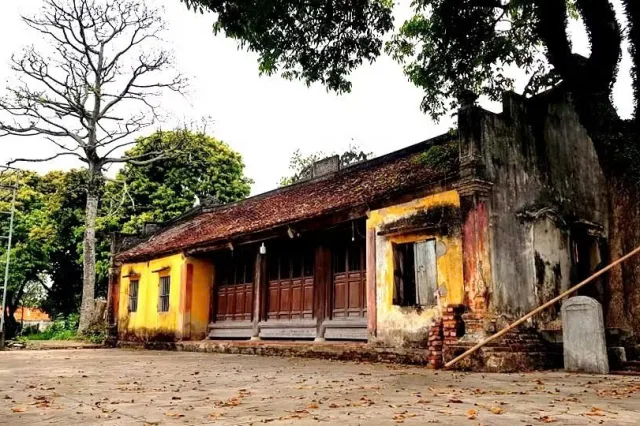


Tên gọi và vị trí địa lý
Đình Dưỡng Thái thuộc cụm di tích đình – chùa Dưỡng Thái nằm trên thôn Dưỡng Thái xã Phúc Thành, huyện Kim Thành, tỉnh Hải Dương, nay là thị trấn Phú Thái, TP. Hrai Phòng. có đường Quốc lộ 5A chạy qua, là tuyến đường Hà Nội- Hải Phòng nơi giao lưu kinh tế – văn hoá của cả nước đã tạo nên một vị trí chiến lược quan trọng của huyện Kim Thành khi trước.
Lịch sử và nhân vật
Đình Dưỡng Thái xã Phúc Thành là nơi thờ Thành Hoàng Nguyễn Thuỵ Hường (còn gọi Đức Thánh Cả) và ba tướng sĩ của ông có công với nước với dân đánh giặc ngoại xâm nhà Tống ở thế kỷ XI.
Ở thế kỷ XI đất nước ta đang bị giặc ngoại xâm đe doạ, đi đến đâu chúng cũng tàn phá cướp bóc, giết người đến đó. Trước cảnh đất nước bị lâm nguy, nhà Lý đã sai sứ giả đi tìm người tài giỏi để cứu nước, cứu dân. Nguyễn Thuỵ Hường thấy trước tình cảnh của đất nước bị dày xéo, ông đã tập hợp binh sĩ nghe theo chiếu truyền của sứ giả vào yết kiến nhà vua xin đi dẹp giặc. Nhà vua mừng rỡ và giao cho ông một đạo quân ra trận. Quân sĩ của ông đi đến đâu lũ giặc bỏ chạy đến đó. Trên đường tiến công truy quét quân Tống rút chạy phía Đông Bắc (Đông Triều) đến thôn Dưỡng Thái thì trời tối, quân sĩ của ông cũng thấm mệt. Ông ra lệnh cho quân sĩ hạ trại nghỉ ngơi. Đêm đó vào ngày 5 -10 âm lịch, ông mộng thấy trời đã phù hộ cho ông đánh giặc Tống không còn một tên sống sót về nước. Sáng hôm sau ông mang chuyện này kể lại với các binh sĩ của ông, các tướng sĩ của ông mừng lắm liền sắp lễ khấn trời đất, thần linh, thuỷ thần linh ứng cho giấc mộng của ông. Quả nhiên giấc mộng đã linh ứng, ông cùng các tướng sĩ của mình đã đánh một trận quyết liệt, làm cho lũ giặc Tống bại trận, không còn một mảnh giáp, một lưỡi gươm, tay không, chân đạp lên nhau chạy về nước. Chính lúc reo hò mừng thắng lợi, ông bị tên giặc bắn lén bị thương, các tướng sĩ đã tìm cách cứu chữa đưa ông về thôn Dưỡng Thái điều trị. Vì vết thương quá nặng, ông mất tại đó vào ngày 15-10 âm lịch tại khu đất nay xây dựng chùa Cả. Theo truyền thuyết kể lại, sau khi ông mất dân làng lập tờ sớ trình vua xin phong sắc cho ông. Vua đã cử ba tướng sĩ về xem xét và cũng mất tại đây.
Vua thấy làm lạ và ban truyền cho dân Dưỡng Thái lập đền thờ ông để tưởng nhớ người có công với nước với dân và cứ ngày 15-10 âm lịch hàng năm mở hội tưởng niệm ông, đồng thời phong sắc cho ông “Dương cảnh thành hoàng, tham mưu tán lý, thông minh thần vũ, hiển ứng thần uy, Hùng thuỳ hằng tế, Linh phù đại vương, chức phong dực bảo trung hưng, gio tăng đoan phúc Linh phù tôn thần”. Và ban cho bức hoành phi với bốn chữ vàng: “Ngọc – Chúc – Thái – Bình”
Tương truyền đình được xây dựng vào cuối thời Lê Trung Hưng. Đến năm 1890, do tranh chấp đất đai giữa hai làng Dưỡng Thái và Quỳnh Khê, nhân dân thôn Dưỡng Thái đã chuyển chùa về phía tây cách đình 300m. Trong những năm kháng chiến chống thực dân Pháp, chùa là căn cứ hoạt động của Việt Minh. Năm 1941, nhạc sĩ Đỗ Nhuận, cán bộ cách mạng Việt Minh từ Hải Phòng về Kim Thành làm hương sư ở Dưỡng Thái. Trong quá trình hoạt động ở đây, đồng chí đã liên lạc được với cơ sở cách mạng ở Kim Thành. Năm 1943, chùa Cả chínhlà nơi cất giấu và chuyển vũ khí lên ga Đồng Dù (Hưng Yên) phục vụ chophong trào cách mạng. Hòa bình lập lại, năm 1958, nhân dân xã Phúc Thành đã vinh dự đón Thủ tướng Phạm Văn Đồng về thăm. Tại thôn Dưỡng Thái, Thủ tướng đã biểu dương nhân dân địa phương vì đã có thành tích thâm canh lúa giỏi nhất huyện, đồng thời căn dặn nhân dân cần tiếp tục phát huy truyền thống tốt đẹp của quê hương, cần bảo vệ và gìn giữ những di tích lịch sử của dân tộc.
Kiến trúc cảnh quan
Đình Dưỡng Thái nằm trên một khoảnh đất rất rộng, cao ráo. Phía trước đình nay còn đó cây đa cổ thụ dễ đã hàng trăm tuổi. Con sông Kinh Môn ở ngay phía trước mặt, tạo nên cảnh quan thanh bình, thoáng đãng, mát mẻ. Sông Kinh Môn xưa có tên là sông Vận Lương (tương truyền sở dĩ có tên như vậy vì dưới thời Trần, Trần Liễu đã chuyển lương thực để chuẩn bị đánh giặc trên dòng sông Bạch Đằng)
Đình hiện còn xây dựng vào năm 1884, căn cứ trên dòng chữ ghi trên thượng lương: “Hoàng triều Kiến Phúc nguyên niên tuế thứ giáp thân niên bát nguyệt sơ thập cát nhật lương thời thụ trụ thượng lương”. Kiến trúc chữ Đinh (丁) gồm đại bái 3 gian 2 dĩ và hậu cung 3 gian.
Bên cạnh giá trị lịch sử, đình và chùa Dưỡng Thái còn lưu giữ nhiều nét kiến trúc tiêu biểu của vùng đồng bằng châu thổ sông Hồng. Đình được xây dựng theo kiểu chữ Đinh, gồm tiền đường 3 gian 2 dĩ và hậu cung 3 gian, tuy phần hậu cung nay đã bị phá hủy từ lâu. Công trình dài 18,8m, rộng 11,8m, mái lợp ngói mũi, bốn góc đao cong mềm mại. Dưới các đầu đao còn đắp hình nghê bằng đất nung mang phong cách thời Hậu Lê. Hệ thống vì kèo được kết cấu theo kiểu “con chồng đấu sen”, một dạng kiến trúc truyền thống phổ biến trong các công trình tín ngưỡng Bắc Bộ. Theo lời kể của các bậc cao niên trong làng, trước đây đình còn lưu giữ nhiều đồ tế tự quý, nhưng do chiến tranh và sự tàn phá của thời gian nên số lượng di vật hiện còn không nhiều.
Hiện vật
Cụm di tích Đình Chùa Dưỡng Thái còn giữ được nhiều cổ vật. Tại đình ngoài ba tượng của ba vị tướng, trên cùng có đặt ngai của Đức Thánh Cả. Tượng Đức thánh cả được thờ tại Chùa Cả, nơi ông qua đời sau cuộc chiến. Tại chùa Cả, bên nhiều bức tượng thờ chư Phật như các chùa theo phật phái Trúc Lâm, trong điện thờ gian giữa, tượng Đức thánh Cả Nguyễn Thụy Hường được đặt trang trọng trong khám thờ sơn son thếp vàng, được chạm khắc rất đẹp. Chính việc thiết đặt tượng của các vị thành hoàng làng như vậy đã tạo cho lễ hội Đình Dưỡng Thái nhiều sắc thái riêng trong lễ thức và tế rước.
Lễ hội
Tại Đình, lễ hội được tiến hành từ 7 đến 9 tháng 3 âm lịch. Chiều ngày 7 làng làm lễ cáo yết, có đội tế thuê từ nơi khác về. Làng chia cho 4 giáp chuẩn bị lễ vật dâng thánh. Lệ xưa các giáp đều chọn người tế đám hàng năm. Người được giao đến lượt tế đám phải lo nuôi vỗ một con lợn cỡ 50 Kg (được tôn làm Ông Lợn) với những quy định khá ngặt nghèo về việc nuôi vỗ, kiêng kỵ. Sau khi được mổ, “ông lợn” được cạo lông thật sạch sao cho da thật trơn, nhẵn. Mỡ lá lấy ra đem phủ khắp thân đặt lên bàn sơn son thếp vàng trang trọng rước về đình để làm lễ dâng thánh. Người làm tế đám ngoài việc lo lễ vật tế thần còn phải sắm sửa lễ nghi như lo một bàn xôi để tế thần, lo hương đăng cả năm. Chi phí ngoài xôi thịt của ông tế đám, gà rượu, bánh dày, bánh mật, hoa đăng… gọi theo các phe giáp sửa lễ.
Tại đình, sau lễ tế các chân kiệu lên vai 3 cỗ kiệu đặt tượng 3 vị thần thành hoàng (những vị đã mất tại làng khi thực hiện lệnh vua về xem xét ghi công trạng Nguyễn Thụy Hường), riêng cỗ bát cống, trên đặt cỗ ngai của Đức thánh cả. Đoàn rước cung kính đi tới chùa Cả, làm lễ nghinh thần đưa tượng Đức thánh Cả lên kiệu bát cống rước về đình làm lễ yên vị.
Trưa ngày mồng 8, lễ mộc dục, bao sái đồ thờ. Các lễ thức tế, lễ, dâng hương trong ngày mồng 8 được coi là các lễ trọng, quan lại, kỳ mục, dân đinh trong làng kính cẩn lễ bái theo thứ vị được giới hào mục quy định. Ngày 9 tháng 3, làng làm lễ tế giã và lễ rước đức thánh cả lại được tiến hành theo trình tự ngược lại: các đức thành hoàng đưa Ngài từ đình về chùa. Xong xuôi, rước tượng ba vị thành hoàng về đình làm lễ yên vị.
Trong ba ngày ấy, lễ hội được tổ chức trọng thể tại Đình Cả. Song hành với các lễ nghi, phần hội cũng hết sức phong phú. Nam thanh nữ tú hào hởi chơi đu, cầu thùm, vật cầu, vật sới, chọi gà, bịt mắt bắt dê… Các đêm vào đám, làng mời chèo gánh, tuồng pho, các giáp thi nhau hát đối, hát trống quân. Tiếng trống chèo, tiếng thì thùng nhịp hát trống quân rộn rã một vùng, người dân hả hê vui hội dù cuộc sống chưa được dư dật, quan nhiêu kỳ mục trong làng còn cưỡi lên đầu lên cổ dân đen. Lễ hội làm cho người cùng đinh tạm quên kiếp đói nghèo, hà hiếp đời thường, ngẩng mặt lên trời xanh ngưỡng vọng thánh thần thỏa nỗi tâm linh. Lễ hội làng Dưỡng Thái cuốn hút khách thập phương cả một giải đất dài tổng Bất Nạo, Thanh Lâm xưa.
Xếp hạng
Cụm di tích đình chùa Phúc Thái được xếp hạng di tích lịch sử cấp Quốc gia theo Quyết định: Số 1568 QĐ/BT ngày 20 tháng 4 năm 1995 của Bộ Trưởng Bộ Văn hoá Thông tin.
Tài liệu tham khảo
- Viện khoa học xã hội Việt Nam, 1991, Di tích lịch sử văn hóa Việt Nam,Nxb.Khoa học xã hội.
- Hồ sơ di tích xếp hạng và tài liệu kiểm kê di tích Đình Chùa Dưỡng Thái, Phúc Thành, Kim Thành- Bảo tàng Hải Dương.
Ngôn ngữ khác
Tiếng Anh
Duong Thai Communal House and Pagoda Complex (Phu Thai, Hai Phong)
Name and Geographical Location
Duong Thai Communal House and Pagoda are located in Duong Thai hamlet, Phuc Thanh commune, Kim Thanh district, Hai Duong province, now belonging to Phu Thai township, Hai Phong City. National Highway 5A passes through the area, forming the important Hanoi–Hai Phong route, a major corridor for economic and cultural exchange throughout the country. This location once gave Kim Thanh district a particularly strategic position.
History and Historical Figures
Duong Thai Communal House in Phuc Thanh commune is dedicated to the village tutelary deity Nguyen Thuy Huong (also known as Duc Thanh Ca) and his three generals, who rendered meritorious service to the nation and the people in resisting the Song invaders during the 11th century.
In the 11th century, the country faced threats from foreign invaders. Wherever the enemy went, they plundered, destroyed property, and killed civilians. Faced with national danger, the Ly Dynasty dispatched royal envoys to seek talented individuals capable of saving the country and protecting the people. Witnessing the devastation inflicted upon the land, Nguyen Thuy Huong gathered troops and responded to the royal summons, requesting permission to suppress the invaders. The king, greatly pleased, entrusted him with an army.
Wherever his troops advanced, the enemy fled. During the pursuit of the retreating Song forces toward the northeastern region (Dong Trieu), the army arrived at Duong Thai hamlet at nightfall. Exhausted after continuous campaigning, the troops established camp there. That night, on the fifth day of the tenth lunar month, Nguyen Thuy Huong dreamed that Heaven had granted him victory and that not a single Song soldier would survive to return home.
The next morning, he recounted the dream to his soldiers and generals. Overjoyed, they prepared offerings and prayed to Heaven, Earth, the spirits, and the water deities for the fulfillment of the omen. The dream indeed proved prophetic. Nguyen Thuy Huong and his generals launched a decisive battle that utterly defeated the Song army, leaving them without armor or weapons as they fled home in chaos.
At the very moment of celebrating victory, Nguyen Thuy Huong was struck by a hidden enemy arrow. His generals attempted to save him and brought him back to Duong Thai hamlet for treatment. However, due to the severity of his wounds, he died there on the fifteenth day of the tenth lunar month, at the site where Chua Ca now stands.
According to local legend, after his death the villagers submitted a petition to the king requesting an imperial title for him. The king sent three generals to investigate the matter, and they too died at the same location. Astonished by these events, the king ordered the people of Duong Thai to establish a temple in his memory and to hold an annual festival on the fifteenth day of the tenth lunar month in commemoration of his contributions to the nation and the people.
The king also granted him the title:
“Duong Canh Thanh Hoang, Tham Muu Tan Ly, Thong Minh Than Vu, Hien Ung Than Uy, Hung Thuy Hang Te, Linh Phu Dai Vuong, Chuc Phong Duc Bao Trung Hung, Giao Tang Doan Phuc Linh Phu Ton Than.”
In addition, the king bestowed a horizontal lacquered board inscribed with four gilded characters:
“Ngoc – Chuc – Thai – Binh”
Phuc Thai Pagoda, formally named Canh Linh Tu and commonly known as Chua Oi, occupies a spacious site with approximately three mau of traditional Northern Vietnamese land area. The pagoda faces south and is surrounded by gardens filled with perennial fruit trees such as longan, coconut, lychee, and jackfruit, creating a tranquil Buddhist landscape. The pagoda follows the Truc Lam Zen tradition. Behind the three-bay upper sanctuary are shrines dedicated to Duc Thanh Ca, his three generals, and Duc Ong.
According to oral tradition, the communal house was originally constructed during the late Le Trung Hung period. In 1890, due to a land dispute between Duong Thai and Quynh Khe villages, the people of Duong Thai relocated the pagoda approximately 300 meters west of the communal house.
During the resistance war against the French colonial forces, the pagoda served as a Viet Minh revolutionary base. In 1941, musician Do Nhuan, a Viet Minh revolutionary cadre from Hai Phong, came to Kim Thanh and worked as a village teacher in Duong Thai. During his activities there, he established contact with revolutionary cells in Kim Thanh district. In 1943, Chua Ca became a site for storing and transporting weapons to Dong Du railway station in Hung Yen province in support of the revolutionary movement.
After peace was restored, in 1958 the people of Phuc Thanh commune had the honor of welcoming Prime Minister Pham Van Dong on an official visit. During his visit to Duong Thai hamlet, the Prime Minister praised the villagers for achieving the district’s highest rice cultivation productivity and encouraged them to continue preserving the fine traditions of their homeland and protecting the nation’s historical relics.
Architectural and Landscape Features
In addition to their historical value, Duong Thai Communal House and Pagoda preserve many characteristic architectural features of the Red River Delta.
The communal house follows the traditional “chu Dinh” layout, consisting of a three-bay front hall with two side compartments and a three-bay rear sanctuary, although the sanctuary section has long since been destroyed. The structure measures 18.8 meters in length and 11.8 meters in width. The roof is covered with traditional curved tiles, with gracefully curved corners. Beneath the roof corners are terracotta nghe figures in the artistic style of the Later Le period. The timber framework employs the “con chong dau sen” structural system, a traditional architectural form commonly found in Northern Vietnamese religious buildings. According to village elders, the communal house once preserved numerous valuable ritual objects, though many were lost through war and the passage of time.
Chua Ca occupies a compound of approximately one hectare. Its three-entrance gate was constructed in 1993 in the “tam son” style. The pagoda includes a six-bay front hall, whose timber framework also follows the “con chong dau sen” style, with traditional tiled roofing. The entire structure measures 13.8 meters in length and approximately 12 meters in width including the rear sanctuary.
The worship space is carefully organized. On the western side of the front hall is the Tam Bao altar, whose uppermost row contains three statues of the Buddhas of the Three Times, each approximately 0.62 meters high. The pagoda still preserves many Buddhist statues of artistic and religious value.
In the central chamber of the upper sanctuary, the statue of Duc Thanh Ca Nguyen Thuy Huong is enshrined within a gilded lacquered shrine elaborately carved with motifs of “two dragons flanking the moon,” phoenixes, and intricate floral vines. The two adjacent chambers behind the front hall are dedicated to the Mother Goddesses, whose statues are also placed within separate shrines.
In 2008, Venerable Thich Thanh Ngoc became abbot of the pagoda. Together with local authorities, he mobilized local residents to transfer two mau of rice fields in order to expand the pagoda grounds. He also cooperated with local officials in preparing a comprehensive development plan for the site. Currently, the ancestral worship hall with 18 bays and an area of 500 square meters, a nine-bay guesthouse of 270 square meters, and a nine-bay monks’ residence of 270 square meters are under rapid construction, with a total investment of approximately five billion VND.
Artifacts
The Duong Thai Communal House and Pagoda Complex still preserves numerous antiquities. Inside the communal house, besides the statues of the three generals, the throne of Duc Thanh Ca is placed at the highest position. The statue of Duc Thanh Ca himself is worshipped at Chua Ca, the place where he died following the battle.
Within Chua Ca, alongside many Buddhist statues characteristic of Truc Lam Buddhist pagodas, the statue of Duc Thanh Ca Nguyen Thuy Huong occupies a solemn place in the central sanctuary, enshrined within an elaborately carved and gilded lacquer shrine. The arrangement of the village tutelary deities’ statues in this manner gives the Duong Thai festival its own distinctive ritual character, particularly in the ceremonial processions and sacrificial rites.
Festival
At the communal house, the annual festival takes place from the seventh to the ninth days of the third lunar month.
On the afternoon of the seventh day, the village conducts the opening announcement ceremony, often inviting a professional ritual team from another locality. The village is divided into four hamlets, each responsible for preparing offerings for the tutelary deity.
According to old custom, each hamlet annually selected a representative responsible for the sacrificial rites. The chosen individual had to raise and fatten a pig weighing approximately fifty kilograms, reverently referred to as “Ong Lon,” under strict ritual regulations and taboos. After slaughtering, the pig was carefully cleaned so that its skin became smooth and spotless. Leaf fat was spread over the body, which was then placed upon a gilded lacquered table and ceremonially carried to the communal house as an offering to the deity.
In addition to preparing sacrificial offerings, the ritual representative was also responsible for ritual arrangements, including sticky rice trays for offerings and incense supplies for the entire year. Expenses for sticky rice, pork, chicken, wine, round glutinous rice cakes, mật cakes, lanterns, and other ritual items were collectively organized by the village hamlets.
Following the sacrificial ceremony, bearers carry three palanquins containing statues of the three tutelary deities—those generals who died in the village while carrying out the king’s order to investigate Nguyen Thuy Huong’s merits. The principal palanquin bears the throne of Duc Thanh Ca. The solemn procession proceeds to Chua Ca, where a welcoming ritual is performed before placing the statue of Duc Thanh Ca onto the principal palanquin and escorting it back to the communal house for the enthronement ceremony.
At noon on the eighth day, the moc duc ritual and cleansing of sacred objects are performed. The sacrificial rites, offerings, and incense ceremonies conducted on this day are considered the most important. Village officials, elders, and adult male villagers worship according to the ceremonial hierarchy prescribed by the village notables.
On the ninth day of the third lunar month, the farewell sacrifice is held. The procession escorting Duc Thanh Ca back to the pagoda follows the reverse order: the tutelary deities ceremonially accompany him from the communal house to the pagoda. Afterwards, the statues of the three tutelary deities are returned to the communal house for the final enthronement rite.
Throughout these three days, the festival is held on a grand scale at Dinh Ca. Alongside the rituals, the festive activities are equally vibrant. Young men and women enthusiastically participate in traditional games such as bamboo swings, cau thum, wrestling, cockfighting, and blindfolded goat-catching.
During the festival nights, the village invites traveling cheo opera troupes and tuong performers. The village hamlets compete in antiphonal singing and trong quan singing. The sounds of drums, singing, and festive music fill the surrounding countryside. Even though ordinary villagers often endured poverty and oppression in everyday life, the festival allowed them to temporarily forget hardship and raise their eyes toward the heavens in reverence to the sacred spirits.
The Duong Thai village festival attracted visitors from across the former Bat Nao and Thanh Lam regions.
Classification
The Phuc Thai Communal House and Pagoda Complex was recognized as a National Historical Relic under Decision No. 1568 QD/BT dated April 20, 1995, issued by the Minister of Culture and Information.
References
- Viện khoa học xã hội Việt Nam, 1991, Di tích lịch sử văn hóa Việt Nam, Nxb. Khoa học xã hội.
- Hồ sơ di tích xếp hạng và tài liệu kiểm kê di tích Đình Chùa Dưỡng Thái, Phúc Thành, Kim Thành- Bảo tàng Hải Dương.
Tiếng Pháp
Le complexe de la maison communale et de la pagode Duong Thai (Phu Thai, Hai Phong)
Nom et situation géographique
La maison communale et la pagode Duong Thai se situent dans le hameau de Duong Thai, commune de Phuc Thanh, district de Kim Thanh, province de Hai Duong, aujourd’hui bourg de Phu Thai, ville de Hai Phong. La Route nationale 5A traverse cette région ; cet axe reliant Hanoi et Hai Phong, lieu d’échanges économiques et culturels à l’échelle nationale, a autrefois conféré au district de Kim Thanh une position stratégique importante.
Histoire et personnages historiques
La maison communale de Duong Thai, commune de Phuc Thanh, est consacrée au genie tutélaire Nguyen Thuy Huong (également appelé Duc Thanh Ca) ainsi qu’à trois de ses généraux, qui rendirent de grands services au pays et au peuple en combattant les envahisseurs Song au XIe siècle.
Au XIe siècle, notre pays était menacé par les envahisseurs étrangers ; partout où ils passaient, ils détruisaient, pillaient et massacraient la population. Face au danger pesant sur la nation, la dynastie Ly envoya des messagers à la recherche de personnes talentueuses capables de sauver le pays et le peuple. Constatant les souffrances du pays ravagé par les ennemis, Nguyen Thuy Huong rassembla des soldats et répondit à l’appel royal transmis par les envoyés afin de solliciter du roi l’autorisation de combattre les envahisseurs. Le roi, réjoui, lui confia une armée pour partir au combat. Partout où passaient ses troupes, les ennemis prenaient la fuite.
Alors qu’il poursuivait les troupes Song en retraite vers le Nord-Est (Dong Trieu), il arriva au hameau de Duong Thai à la tombée de la nuit. Ses soldats étaient épuisés ; il ordonna donc l’installation du camp pour la nuit. Cette nuit-là, le 5 du 10e mois lunaire, il rêva que le ciel lui accordait sa protection et qu’aucun soldat Song ne retournerait vivant dans son pays. Le lendemain matin, il raconta ce rêve à ses soldats. Très heureux, ses officiers préparèrent des offrandes et prièrent le ciel, les divinités et les esprits des eaux afin que le rêve se réalise.
Effectivement, le rêve se révéla prophétique. Lui-même et ses généraux remportèrent une bataille décisive qui anéantit les troupes Song ; les ennemis s’enfuirent sans armures ni armes, se piétinant les uns les autres dans leur fuite vers leur pays. Cependant, au moment même où l’armée célébrait la victoire, il fut blessé par une flèche tirée en traître par un ennemi. Ses généraux tentèrent de le soigner et le ramenèrent au hameau de Duong Thai pour y être traité. Mais ses blessures étaient trop graves et il mourut le 15 du 10e mois lunaire à l’endroit où fut plus tard édifiée la pagode Ca.
Selon la tradition, après sa mort, les habitants du village adressèrent une requête au roi afin qu’il lui accorde un titre honorifique. Le roi envoya alors trois généraux pour enquêter, mais ceux-ci moururent également sur place. Trouvant cela extraordinaire, le roi ordonna aux habitants de Duong Thai d’élever un sanctuaire en mémoire de cet homme méritant envers le pays et le peuple, et d’organiser chaque année, le 15 du 10e mois lunaire, une fête commémorative en son honneur. Il lui conféra également le titre de : « Duong canh thanh hoang, tham muu tan ly, thong minh than vu, hien ung than uy, Hung thuy hang te, Linh phu dai vuong, chuc phong duc bao trung hung, giao tang doan phuc Linh phu ton than ».
Le roi offrit aussi une plaque horizontale portant quatre caractères dorés : « Ngoc – Chuc – Thai – Binh ».
La pagode Phuc Thai, dont le nom en caractères chinois est Canh Linh tu, est communément appelée pagode Oi. La pagode Ca actuelle occupe un vaste terrain avec un jardin d’environ trois mẫu du Nord du Vietnam. Orientée vers le sud, elle est entourée d’un paysage harmonieux planté d’arbres fruitiers pérennes tels que longaniers, cocotiers, litchis et jacquiers, dont la verdure permanente renforce la sérénité du lieu sacré bouddhique.
La pagode est dédiée au bouddhisme de l’école Truc Lam. Les trois travées du sanctuaire supérieur situées à l’arrière servent au culte du genie tutélaire Duc Thanh Ca, de ses trois généraux ainsi que de Duc Ong.
Selon la tradition, la maison communale fut construite à la fin de la période Le Trung Hung. En 1890, à la suite d’un conflit foncier entre les villages de Duong Thai et Quynh Khe, les habitants de Duong Thai déplacèrent la pagode à environ 300 mètres à l’ouest de la maison communale.
Durant la guerre de résistance contre les colonialistes français, la pagode servit de base d’activités au Viet Minh. En 1941, le musicien Do Nhuan, cadre révolutionnaire du Viet Minh, vint de Hai Phong à Kim Thanh pour enseigner dans le village de Duong Thai. Au cours de ses activités sur place, il établit des contacts avec les réseaux révolutionnaires de Kim Thanh. En 1943, la pagode Ca servit de cache d’armes et de point de transit vers la gare de Dong Du (Hung Yen) pour soutenir le mouvement révolutionnaire.
Après le rétablissement de la paix, en 1958, les habitants de la commune de Phuc Thanh eurent l’honneur d’accueillir le Premier ministre Pham Van Dong. Lors de sa visite au hameau de Duong Thai, celui-ci félicita la population locale pour avoir obtenu les meilleurs résultats agricoles du district en riziculture intensive, tout en les exhortant à préserver les traditions de leur terre natale ainsi que les monuments historiques de la nation.
Architecture et paysage
Outre leur valeur historique, la maison communale et la pagode de Duong Thai conservent de nombreux traits architecturaux caractéristiques de la plaine du delta du Fleuve Rouge.
La maison communale est construite selon un plan en forme de caractère « Dinh », comprenant une salle antérieure de trois travées et deux ailes latérales, ainsi qu’un sanctuaire postérieur de trois travées, aujourd’hui détruit depuis longtemps. L’édifice mesure 18,8 mètres de long sur 11,8 mètres de large. La toiture est couverte de tuiles traditionnelles à extrémité arrondie, avec quatre angles recourbés avec élégance. Sous les extrémités du toit figurent des sculptures de nghe en terre cuite, caractéristiques du style de l’époque Hau Le. La charpente est réalisée selon la technique traditionnelle dite « con chong dau sen », fréquente dans les édifices cultuels du Nord du Vietnam. Selon les anciens du village, la maison communale conservait autrefois de nombreux objets rituels précieux, mais les guerres et le temps en ont considérablement réduit le nombre.
La pagode Ca se situe sur un terrain d’environ un hectare. Son portail à trois entrées fut construit en 1993 dans le style tam son. La pagode comprend six travées de salle antérieure ; la charpente frontale est également construite selon le système « con chong dau sen », avec une toiture de tuiles traditionnelles. L’ensemble mesure 13,8 mètres de long et environ 12 mètres de large, sanctuaire postérieur compris.
L’espace cultuel est clairement organisé : à l’ouest de la salle antérieure se trouve l’autel des Trois Joyaux bouddhiques, dont la rangée supérieure accueille trois statues des Bouddhas du Passe, du Present et du Futur, chacune haute d’environ 0,62 mètre. La pagode conserve encore de nombreuses statues bouddhiques de grande valeur artistique et spirituelle.
Au centre du sanctuaire supérieur se trouve l’autel de Duc Thanh Ca, installé dans une niche laquée rouge et dorée. La partie supérieure est décorée du motif « deux dragons adorant la lune », tandis que la partie inférieure présente des phénix et des motifs végétaux finement sculptés. Les deux travées latérales du sanctuaire supérieur, situées derrière la salle antérieure, sont consacrées au culte des Deesses Meres ; les statues y sont également installées dans des niches distinctes.
En 2008, le moine Thich Thanh Ngoc devint supérieur de la pagode. Avec les autorités locales, il encouragea la population à céder deux mẫu de rizières afin d’agrandir l’espace de la pagode. Il participa également à l’élaboration du plan d’aménagement du site. Actuellement, un bâtiment du culte des ancêtres de 18 travées d’une superficie de 500 m², une maison d’accueil de 9 travées de 270 m² et un logement monastique de 9 travées de 270 m² sont en cours de construction. Le coût total du projet s’élève à environ 5 milliards de dongs.
Objets anciens
Le complexe de la maison communale et de la pagode de Duong Thai conserve encore de nombreux objets anciens. Dans la maison communale, outre les trois statues des généraux, le trône de Duc Thanh Ca est placé au-dessus. Sa statue est vénérée à la pagode Ca, lieu où il mourut après la bataille.
À la pagode Ca, parmi les nombreuses statues bouddhiques caractéristiques des pagodes de l’école Truc Lam, la statue de Duc Thanh Ca Nguyen Thuy Huong occupe une place d’honneur dans une niche laquée rouge et dorée finement sculptée. Cette disposition particulière des statues des genies tutélaires confère à la fête de la maison communale de Duong Thai une identité propre dans ses rites processionnels et cérémoniels.
Fête traditionnelle
À la maison communale, la fête se déroule du 7 au 9 du 3e mois lunaire. Dans l’après-midi du 7, le village organise la cérémonie d’annonce rituelle, avec une équipe de cérémonie invitée d’une autre localité. Le village répartit entre les quatre giap la préparation des offrandes destinées aux divinités.
Selon l’ancienne coutume, chaque giap choisissait chaque année un officiant chargé des rites. Celui-ci devait élever un porc d’environ 50 kg — honoré sous le nom de « Ong Lon » — en respectant de strictes règles d’élevage et de purification rituelle. Après l’abattage, l’animal était soigneusement nettoyé afin que sa peau soit parfaitement lisse et brillante. La graisse était ensuite étalée sur tout le corps avant que celui-ci ne soit placé sur une table laquée et dorée puis porté en procession jusqu’à la maison communale pour être offert aux divinités.
Outre les offrandes, l’officiant devait préparer les rites, notamment un plateau de riz gluant destiné aux cérémonies ainsi que les bâtonnets d’encens et les lampes pour toute l’année. Les autres dépenses — viande, alcool, gâteaux de riz gluant, gâteaux au sucre, lanternes, etc. — étaient prises en charge collectivement par les différents giap.
Après les cérémonies, les porteurs soulèvent trois palanquins transportant les statues des trois genies tutélaires — ceux qui moururent dans le village alors qu’ils exécutaient l’ordre royal de venir reconnaître les mérites de Nguyen Thuy Huong. Le grand palanquin d’honneur porte quant à lui le trône de Duc Thanh Ca. La procession se rend ensuite solennellement à la pagode Ca afin d’y accomplir le rite d’accueil de la divinité et de ramener la statue de Duc Thanh Ca vers la maison communale pour la cérémonie d’installation rituelle.
À midi, le 8 du 3e mois lunaire, a lieu le rite de purification des objets cultuels. Les cérémonies d’offrandes et d’encens de cette journée sont considérées comme les plus importantes ; les notables et les habitants du village y participent selon un ordre hiérarchique traditionnel.
Le 9 du 3e mois lunaire se déroule la cérémonie d’adieu et la procession de retour de Duc Thanh Ca vers la pagode, selon l’ordre inverse de l’aller. Ensuite, les statues des trois genies tutélaires sont ramenées à la maison communale pour la cérémonie finale d’installation.
Pendant ces trois jours, la fête est célébrée avec solennité à la maison communale Ca. Parallèlement aux rites religieux, les activités festives sont particulièrement variées : balançoires, jeux de balle, lutte traditionnelle, combats de coqs, jeux de capture à l’aveugle, etc. Les soirs de fête, le village invite des troupes de cheo et de théâtre classique ; les différents giap rivalisent de chants alternés et de chants « trong quan ». Les sons des tambours et des chants animent toute la région. Malgré une vie encore difficile et l’oppression des notables locaux, les habitants trouvent dans la fête un moment d’oubli des souffrances quotidiennes et une élévation spirituelle tournée vers les divinités. La fête du village de Duong Thai attirait autrefois des visiteurs venus de toute l’ancienne région de Bat Nao et Thanh Lam.
Classement patrimonial
Le complexe de la maison communale et de la pagode Phuc Thai a été classé monument historique national par la Décision n° 1568 QD/BT du 20 avril 1995 du ministre de la Culture et de l’Information.
Bibliographie
- Viện khoa học xã hội Việt Nam,1991, Di tích lịch sử văn hóa Việt Nam, Nxb. Khoa học xã hội.
- Hồ sơ di tích xếp hạng và tài liệu kiểm kê di tích Đình Chùa Dưỡng Thái, Phúc Thành, Kim Thành – Bảo tàng Hải Dương.Top of FormBottom of Form
Tiếng Trung
养泰亭寺遗迹群(富泰,海防)
名称与地理位置
养泰亭—寺位于海阳省锦城县福成社养泰村,今属海防市富泰镇。国道5A线贯穿其间,此路为河内—海防的重要交通干线,是全国经济与文化交流的重要通道,因此在历史上使锦城县具有重要的战略地位。
历史与人物
福成社养泰亭供奉城隍阮瑞香(Nguyen Thuy Huong,亦称“大圣”)及其三位部将,他们于十一世纪抗击宋朝侵略、保国安民有功。
十一世纪时,越南正遭受外敌侵扰,敌军所到之处烧杀掳掠,百姓生灵涂炭。面对国家危难,李朝派遣使者四处寻访贤才,以救国救民。阮瑞香眼见山河破碎,遂集结兵士响应朝廷诏令,入朝觐见国王,请命出征讨敌。国王大喜,授其兵权。其军队所至,敌军望风而逃。
在追击向东北方向(东潮)撤退的宋军途中,行至养泰村时天色已晚,士兵亦疲惫不堪,阮瑞香遂命军队驻营休整。当夜,即农历十月初五,他梦见上天保佑自己大破宋军,使敌军无一人生还返国。翌晨,他将梦境告知诸将士,众人十分欣喜,遂设礼祭告天地与水神,祈求神灵应验其梦。果然,其梦大验。阮瑞香率众与宋军展开激战,大败敌军,使其丢盔弃甲、狼狈逃回本国。
正当全军欢庆凯旋之际,阮瑞香却遭敌军暗箭所伤。众将士竭力救治,并将其送回养泰村疗养。然而因伤势过重,他最终于农历十月十五日在今大寺所在地去世。传说其逝后,村民上疏朝廷,请求敕封。国王遂派遣三位将士前来查验,不料三人亦在此地去世。
国王认为此事神异,遂下令养泰百姓建庙奉祀,以纪念其护国安民之功,并规定每年农历十月十五举行祭会纪念。同时敕封其神号为:
“扬境城隍、参谋赞理、聪明神武、显应神威、雄垂恒济、灵扶大王、职封翼保中兴、饶增端福灵扶尊神”。
并赐金字横匾四字: “玉祝太平”。
福泰寺,字“景灵寺”,俗称“Oi寺”。大寺现址占地广阔,寺园面积达三亩北部圻地。寺坐北朝南,园中遍植龙眼、椰子、荔枝、菠萝蜜等多年生果树,四季常青,掩映古寺,更增佛门幽静之境。寺院供奉佛教竹林禅派诸佛,后部上殿三间则供奉城隍“大圣”及其三位部将,并设有德翁神位。
相传,该亭建于后黎中兴时期末年。至1890年,由于养泰与琼溪两村发生土地纠纷,养泰村民遂将寺院迁往亭西三百米处。抗法战争时期,寺院曾为越盟活动根据地。1941年,音乐家杜润(Do Nhuan)以越盟革命干部身份自海防赴锦城,在养泰担任乡师,并由此与锦城革命组织建立联系。1943年,大寺更成为秘密储藏及转运武器至同都车站(兴安省)的地点,以支援革命运动。
和平恢复后,1958年,福成社人民荣幸迎接政府总理范文同(Pham Van Dong)来访。总理在养泰村表彰当地人民精于水稻深耕、成绩居全县之首,并勉励人民继续发扬家乡优良传统,保护与保存民族历史遗迹。
建筑景观
除历史价值外,养泰亭与寺还保存了许多红河三角洲地区典型建筑特色。
养泰亭采用“丁”字形布局,由三间两厢前堂与三间后宫组成,虽后宫部分早已毁坏。建筑长18.8米、宽11.8米,屋顶覆鱼鳞瓦,四角飞檐柔美上翘。檐角下方饰有后黎时期风格的陶制猊兽。梁架结构采用“重梁斗拱莲花式”,为北部信仰建筑常见传统形式。据村中长者回忆,昔日亭内尚保存大量珍贵祭器,惟因战乱与岁月侵蚀,现存遗物已不多。
大寺坐落于约一公顷范围内。三关门建于1993年,采用“三山式”结构。寺院前堂六间,梁架亦为“重梁斗拱莲花式”,屋面覆鱼鳞瓦。整体建筑长13.8米,连同后宫宽约12米。
寺内祭祀空间布局分明:前堂西侧供奉三宝,最上层安置三世佛像,每尊高约0.62米。寺中至今仍保存多尊具有艺术与信仰价值的佛像。上殿中央供奉“大圣”阮瑞香,其像安置于朱漆贴金神龛内,上雕“双龙朝月”,下雕凤凰及缠枝花叶纹饰,工艺精美。上殿两侧后方则供奉圣母诸像,亦各置独立神龛。
2008年,释清玉法师(Thich Thanh Ngoc)来到寺院主持。法师与地方政府共同发动民众让出两亩农田,以扩建寺院空间,并共同制定寺院规划。目前,十八间祖堂(面积500平方米)、九间客舍(面积270平方米)及九间僧房(面积270平方米)等建筑正加紧施工,总投资约五十亿越盾。
文物
养泰亭寺遗迹群至今仍保存众多古物。亭内除供奉三位将军塑像外,最上方还安置“大圣”神座。大圣阮瑞香之像则供奉于大寺,即其战后逝世之地。
在大寺中,除竹林禅派寺院常见佛像外,上殿中央还庄严供奉阮瑞香塑像,安置于朱漆贴金神龛内,雕刻极为精美。此种将村社城隍神像设于佛寺之中的格局,使养泰亭会在祭仪与迎神礼俗方面形成独特风格。
节会
亭会于农历三月初七至初九举行。初七下午举行“告谒礼”,并邀请外地祭礼队前来主持。村中四甲分别准备供圣祭品。旧例中,各甲每年轮流选派“祭主”。被选中者须提前饲养一头约五十公斤重的猪,尊称“翁猪”,并严格遵守各种禁忌。宰杀后,须将猪毛刮净,使猪皮光滑洁净,再以板油覆盖全身,安置于朱漆贴金供桌之上,隆重抬往亭内献圣。
祭主除负责祭神供品外,还需准备糯米饭、香灯等全年祭仪用品。其余鸡酒、糍粑、蜜饼、花灯等费用,则由各甲共同承担。
祭礼结束后,抬轿者肩扛三座神轿,分别供奉三位城隍神(即奉王命前来查验阮瑞香功绩而卒于村中的三位将士);而八抬大轿上则安置“大圣”神座。迎神队伍恭敬前往大寺,举行迎神仪式,将“大圣”神像迎上八抬轿,再迎回亭中安座。
三月初八中午举行“沐浴礼”与擦拭祭器仪式。当天的祭礼、上香等均属大礼,乡绅、耆老与村民依照既定尊卑秩序恭谨行礼。三月初九则举行送神礼,将“大圣”自亭中迎回寺院,随后再将三位城隍神像迎回亭中安座。
节会期间,除隆重礼仪外,娱乐活动亦极为丰富。青年男女踊跃参加秋千、过桥、夺球、摔跤、斗鸡、蒙眼捉羊等游戏。夜间则邀请戏班演出嘲剧与传统戏曲,各甲竞唱对歌与军鼓歌。锣鼓喧天,歌声四起,热闹非凡。节会不仅吸引本地民众,也吸引昔日不闹总、青林地区广大民众与四方香客。
等级认定
福泰亭寺遗迹群依据1995年4月20日文化信息部第1568/QĐ-BT号决定,被列为国家级历史遗迹。
参考资料
- Viện khoa học xã hội Việt Nam, 1991, Di tích lịch sử văn hóa Việt Nam, Nxb. Khoa học xã hội.
- Hồ sơ di tích xếp hạng và tài liệu kiểm kê di tích Đình Chùa Dưỡng Thái, Phúc Thành, Kim Thành- Bảo tàng Hải Dương.