

Tên gọi và vị trí địa lý
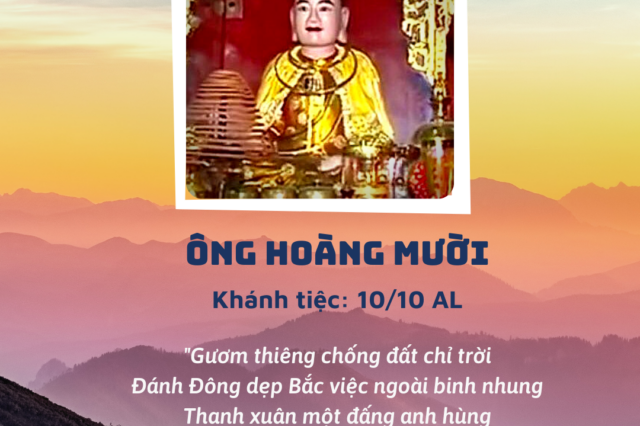
Đền Củi (xã Xuân Hồng, huyện Nghi Xuân, tỉnh Hà Tĩnh) có tên là Khu Độc linh từ là ngôi đền nổi tiếng thờ Đạo Mẫu Tứ Phủ, vị thần được thờ chính là Ông Hoàng Mười.
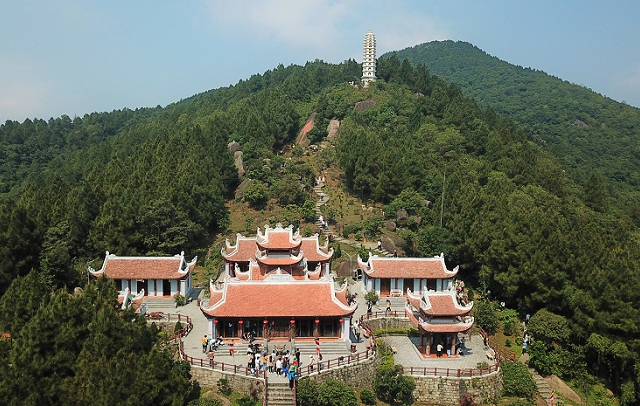
Từ quốc lộ 1, men theo chân núi Ngũ Mã khoảng 300m, rồi xuôi theo bờ sông vài chục mét là đến đền Củi. Đây chính là nơi dãy Hồng Lĩnh vươn vào dòng sông Lam. Đền tọa lạc trên núi Khu Độc thuộc Ngũ Mã hướng về phương Bắc, tựa lưng vào núi nhìn xuống sông Lam. Các tòa điện cao dần theo thế núi uy nghiêm, đường bệ dưới bóng nhiều cây cối cổ thụ. Trước đền, sông nước mênh mang tạo nên không gian kiến trúc huyền ảo, linh thiêng.
Lịch sử và nhân vật
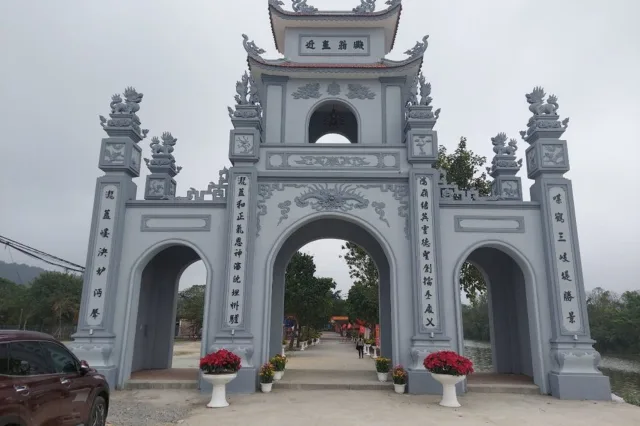
Đền Củi được tạo dựng từ thời Lê. Qua vài lần tôn tạo nhưng đền vẫn giữ được nét xưa thần bí, hài hòa với cảnh quan sông núi. Tam quan của đền đặt liền bến sông, cao 2 tầng, đường nét tinh xảo và mềm mại uyển chuyển của đôi rồng chầu mặt trăng. Mặt trước Tam quan có câu đối:
Lam giang hiển hách tự thiên thu
Ngũ Mã anh linh chung tú khí”.(1)
Phía trong Tam quan là hồ bán nguyệt ở sân thấp nhất của đền, vòng qua hồ qua 7 bậc thềm đến sân trên, bước thêm 5 bậc thềm nữa là tới đền. Đền Củi được xây dựng theo kiểu chữ “Tam”, gồm ba tòa nhà, mỗi tòa ba gian. Các tòa thống nhất liên kết với nhau và bố trí thành các cung thờ. Thờ Tam tòa Thánh Mẫu, tiếp đến là Ngũ vị Tôn Ông, sau đó là cung Hoàng Mười, rồi cung Trần Triều.
Ở cung thờ Ông Hoàng Mười có hai bức đại tự “Mẫu Đức Chiếu ảnh” và “Huyền Từ Bố Chững”, cùng câu đối:
Quá giả hóa tồn giả thần vị liệt Nam bang tứ bất
Quốc hữu từ gia hữu danh miếu cao thiên bản lục kỳ.
dịch:
Cái đã qua là hóa, cái còn lại là thần, nước Nam có bốn vị bất tử
Nước có đền, nhà có miếu, trời cao vốn có lục kỳ.
Mặt tiền Hạ điện của ngôi đền có hai tầng mái, trông bề thế nhưng vẫn có nét thanh thoát. Phần giữa hai tầng mái có đề: “Linh từ Thánh Mẫu”. Trước đền và mặt bên của hàng cột hiên có khắc các câu đối ca ngợi vẻ đẹp của ngôi đền.
Xưa nay, người ta truyền tụng đền thiêng, mọi người đến cầu nguyện thường được Ông linh ứng phù hộ. Quanh năm, không riêng người Nghệ – Tĩnh mà muôn phương khách về đây vãn cảnh hành lễ. Hội đền được tổ chức vào ngày 10 tháng 8 âm lịch. Ngôi đền cổ và phong cảnh nên thơ tạo cho du khách những giờ phút thảnh thơi, tinh tại hoặc chìm đắm trong văn chầu và không khí lễ hội truyền thống linh thiêng.
Chú thích
Tham khảo
- Nxb Văn hoá – Thông tin (2013), Tín ngưỡng thờ Mẫu và hầu đồng.
__________________________
Các ngôn ngữ khác
1. English
Name and Location
Den Cui (Khu Doc Linh Tu), located in Xuan Hong Commune, Nghi Xuan District, Ha Tinh Province, is one of the most sacred temples of the Dao Mau Tu Phu (Four Palaces Mother Goddess worship). The principal deity worshipped here is Ong Hoang Muoi.
From National Highway No. 1, following the foothills of Ngu Ma Mountain for about 300 meters and then walking a few dozen meters along the riverbank, one reaches Den Cui. This is precisely where the Hong Linh Mountain range extends into the Lam River. The temple stands on Khu Doc Mountain, part of the Ngu Ma range, facing north, leaning against the mountain and overlooking the Lam River. The sanctuaries rise gradually along the mountain slope, majestic yet harmonious under the shade of ancient trees. In front of the temple, the vast river surface and tranquil water create a mystical and sacred landscape.
History and Worshiped Figures
Den Cui was originally built during the Le Dynasty. Despite several restorations, the temple has retained its ancient and mysterious charm, blending harmoniously with the surrounding mountains and rivers.
The Three-entrance Gate (Tam Quan) stands beside the river landing, built in two tiers. Its lines are delicate and flowing, with two dragons gracefully flanking a moon disk. On the front façade, the temple bears the couplet:
“Lam giang hien hach tu thien thu,
Ngu Ma anh linh chung tu khi.”
Inside the gate lies a crescent-shaped pond, forming the lowest courtyard of the complex. Crossing the pond and ascending seven stone steps, visitors reach the upper courtyard, and after five more steps, the main sanctuary.
The temple follows a “Tam” (Three) layout, consisting of three main halls, each with three compartments, all interconnected and harmoniously arranged into shrines:
-
The Tam Toa Thanh Mau (Three Mother Goddesses),
-
The Ngu Vi Ton Ong (Five Male Deities),
-
The Hoang Muoi Hall,
-
And the Tran Trieu Hall (Tran Dynasty Shrine).
In the Hoang Muoi Hall, there are two great horizontal boards inscribed “Mau Duc Chieu Anh” and “Huyen Tu Bo Chung,” accompanied by the couplet:
“Qua gia hoa ton gia than vi liet Nam bang tu bat,
Quoc huu tu gia huu danh, mieu cao thien ban luc ky.”
Which may be translated as:
“The past transforms into spirit, the remaining becomes divine; the South honors four immortals.
The nation has temples, families have ancestral halls, for heaven itself preserves six marvels.”
The Lower Sanctuary façade has two-tiered roofs, majestic yet refined. Between the roofs is the inscription “Linh Tu Thanh Mau.” On the columns and beams, couplets praising the beauty of the temple are carved.
For generations, Den Cui has been famed for its sacred power; those who come to pray are believed to receive divine blessings from Ong Hoang Muoi. Visitors arrive year-round, not only from the Nghe – Tinh region but from all parts of the country. The annual temple festival is held on the 10th day of the 8th lunar month, when pilgrims gather to admire the ancient sanctuary and immerse themselves in the sacred and poetic atmosphere of ritual chants and festivities.
2. Feancais
Dénomination et situation
Le Temple Cui (Khu Doc Linh Tu), situé dans la commune de Xuan Hong, district de Nghi Xuan, province de Ha Tinh, est l’un des sanctuaires les plus célèbres du culte de la Déesse-Mère des Quatre Palais (Dao Mau Tu Phu). La divinité principale vénérée est Ong Hoang Muoi.
Depuis la route nationale n°1, on longe le pied du mont Ngu Ma sur environ 300 mètres, puis on suit la berge du fleuve sur quelques dizaines de mètres pour atteindre le temple. L’édifice se trouve à l’endroit où la chaîne de Hong Linh s’avance dans le fleuve Lam. Il est construit sur le mont Khu Doc, appartenant au massif de Ngu Ma, orienté vers le nord, adossé à la montagne et dominant le fleuve. Les bâtiments, s’élevant selon la pente, paraissent majestueux sous l’ombre des arbres séculaires. Devant le temple, l’étendue d’eau forme un paysage sacré et harmonieux.
Histoire et divinités
Le Temple Cui fut édifié sous la dynastie des Lê. Malgré plusieurs restaurations, il conserve son allure antique et mystérieuse, en parfaite harmonie avec la nature environnante.
Le portique à trois entrées (Tam Quan), bâti sur deux niveaux au bord du fleuve, se distingue par ses lignes élégantes et ses dragons encadrant un disque lunaire. Sur la façade, on peut lire le distique :
“Lam giang hien hach tu thien thu,
Ngu Ma anh linh chung tu khi.”
Derrière le portique, un bassin en demi-lune occupe la cour inférieure. Après sept marches de pierre, on atteint la cour supérieure, puis cinq autres marches mènent au sanctuaire principal.
Le temple adopte une disposition en trois parties (“Tam”), comprenant trois bâtiments à trois travées chacun, reliés entre eux :
- le sanctuaire des Trois Déesses-Mères (Tam Toa Thanh Mau),
- celui des Cinq Seigneurs (Ngu Vi Ton Ong),
- la salle de Hoang Muoi,
- et la salle Tran Trieu dédiée aux génies de la dynastie Trân.
Dans la salle de Hoang Muoi, deux grandes inscriptions “Mau Duc Chieu Anh” et “Huyen Tu Bo Chung” accompagnent le distique :
“Ce qui est passé devient esprit, ce qui demeure devient divin ;
Le pays du Sud compte quatre immortels.
Le royaume possède ses temples, les familles leurs sanctuaires,
Car le ciel conserve les six merveilles.”
La façade du bâtiment inférieur (Ha Dien), à double toiture, impose par sa grandeur sans perdre en légèreté. Entre les deux toits figure l’inscription “Linh Tu Thanh Mau”. Les colonnes et les linteaux sont ornés de vers célébrant la beauté du temple.
Depuis des siècles, la réputation de la sacralité du Temple Cui s’est transmise : on y vient prier pour obtenir la protection d’Ong Hoang Muoi. Chaque année, au 10ᵉ jour du 8ᵉ mois lunaire, s’y déroule la fête du temple, attirant pèlerins et visiteurs venus admirer ce haut lieu du culte, entre ferveur et poésie.
3. 中文(繁體)
名稱與地理位置
槁廟(位於河靜省宜春縣春紅社),名為區獨靈祠,是越南四府母道信仰中著名的廟宇之一,主祀神祇為黃十公。
從一號國道出發,沿五馬山山腳約行三百公尺,再順著河岸行走數十公尺,即可到達槁廟。這裡正是鴻嶺山脈伸入藍江之處。廟宇坐落於區獨山上,屬五馬山系,朝北而建,背靠青山,俯瞰藍江。各殿依山勢而起,層層疊建,巍峨壯麗,古樹參天。廟前江水浩渺,波光瀲灩,構成一幅靈氣氤氳、神秘莊嚴的景致。
歷史與人物
槁廟建於黎朝時期。歷經數次修繕,仍保留古樸神秘之風貌,與山水景觀融為一體。廟之三門緊臨河岸,為兩層樓閣式建築,線條精巧,雕飾一對雙龍戲月。三門正面懸掛一副對聯:
藍江顯赫自千秋,
五馬英靈鍾秀氣。
進入三門後,最低的庭院中有一座半月形池塘。繞過池塘,登上七級台階至上庭,再登五級台階即可抵達主殿。槁廟採「三」字形格局建築,由三座主殿構成,每殿三間,互相連結,形成多層次的祭祀空間。主祀三座聖母殿,次為五位尊翁殿,再後為黃十殿,最後為陳朝殿。
黃十殿中懸掛兩塊大匾:「母德照影」與「玄慈布證」,並刻有對聯:
過者化,存者神,南邦四不滅;
國有祠,家有廟,天高本六奇。
(譯意:已逝者化為靈,存者成為神,南國有四位不朽聖靈;國有祠堂,家有廟宇,天高自有六奇。)
下殿正面為雙層屋頂,雄偉而不失典雅。兩層屋頂間題刻「靈祠聖母」四字。廟前與廊柱之側皆刻有對聯,讚頌廟宇之秀麗與靈氣。
自古以來,民間傳頌槁廟靈驗非常,凡誠心祈禱者皆蒙黃十公庇佑。香火鼎盛,不僅乂靜地區居民前來,四方信眾亦絡繹不絕。廟會於農曆八月初十舉行。節日期間,香客雲集,焚香禮佛,鼓樂齊鳴,氣氛莊嚴熱烈。古廟靈氣與山水詩意交融,使遊人心神寧靜,沉浸於神聖莊嚴之祭典與傳統樂舞之中。