

Tên gọi và vị trí địa lý
Đền Y Sơn (hay còn gọi là đền Ia) tọa lạc phía đông dưới chân núi Y Sơn, cách thị trấn Thắng, trung tâm huyện lỵ Hiệp Hòa 7 km về phía tây thuộc xã Hòa Sơn huyện Hiệp Hòa tỉnh Bắc Giang. Sau tháng 7 năm 2025 thì thuộc địa phận xã Hợp Thịnh tỉnh Bắc Ninh.
Lịch sử và nhân vật
Đền Y Sơn thờ đức thánh Hùng Linh Công, người anh hùng dân tộc có công với dân với nước, được nhân dân địa phương phụng thờ. Theo Ngọc Phả Quốc Lục về Y Sơn linh tích do quan Hàn Lâm Viện đông các đại học sỹ Nguyễn Bính phụng soạn vào niên hiệu Hồng Phúc nguyên niên năm (1572) đời vua Lê Anh Tông thì vào thời Hùng Vương thứ VI (Vua Hùng Huy Vương) có quan trị sự, phụ đạo xứ Kinh Bắc tên là Hùng Nhạc dòng dõi Hùng Vương, vợ họ Cao (Huý Tiên) người Hải Dương. Ông đã ngoài 60 tuổi, bà đã ngoài 40 tuổi mà vẫn chưa sinh con trai. Nhân ngày đầu xuân ông, bà đi thăm mộ tổ ở Châu Lạng (Lạng Sơn) đi đến vùng núi Y Sơn thì trời sầm tối, ông bà thấy một ngôi chùa nhỏ (Y Sơn tự) là Y Sơn tây tự ngày nay. Ông, bà và đoàn tuỳ tùng vào chùa nghỉ và cầu phúc, cầu tự, sau đó quan bà Cao Tiên Phu Nhân vào nghỉ trọ tại nhà người Man cạnh Chùa. Đêm ấy xảy ra thần mộng về nhà quan bà Cao Tiên Phu Nhân mang thai và sinh ra một người con trai vào ngày 12/10 năm Đinh Hợi, được đặt tên là Hùng Linh Công. Hùng Linh Công khôi ngô tuấn tú, năm 17 tuổi văn võ song toàn, đức Vua nghe tin đã triệu về kinh đô để thi kén hiển tài, Hùng Linh Công tỏ ra xuất sắc, được đức Vua giao chức bộ thống.
Khi có giặc lang thú: Hổ, Báo phá hại dân lành, đức Vua giao cho Hùng Linh Công 500 binh mã cầm quân đi dẹp loạn. Người đã dẹp tan và bắt những con mãnh thú đầu đàn mang về nuôi, thuần hoá để sử dụng. Khi giặc Ân xâm lược nước ta đức Vua giao cho Hùng Linh Công 3 vạn quân và phong chức Nhạc phủ thống lĩnh tướng quân. Cầm quân dẹp giặc, khi đi qua vùng núi Y Sơn có tuyển 213 thanh niên trai tráng địa phương vào lính. Hùng Linh Công cùng với Đức Thánh Gióng đánh một trận quyết chiến đã đánh tan quân giặc. Giặc tan đất nước thái bình. Hùng Linh Công trở về vùng núi Y Sơn thấy nơi đây được dòng sông Như Nguyệt (Sông Cầu) bao quanh. Non xanh nước biếc sơn thuỷ hữu tình. Người đã đóng bản doanh tại đây dưỡng binh và giúp dân trừ dịch bệnh, côn trùng phá hại, chăm lo việc nông tang. Sau đó Hùng Linh Công hoá thánh vào ngày 08/8 Âm lịch. Hôm ấy trời quang mây tạnh bỗng mây đen ùn ùn kéo đến, mưa gió nổi lên, sấm chớp liên hồi, bỗng có 3 tiếng sét dân chúng thấy từ trên đỉnh núi có một người mình mặc giáp trụ, tay cầm thanh kim đao cưỡi con Hổ đen theo mây bay lên trời. Hùng Linh Công biến mất. Tạnh mưa dân làng lên đỉnh núi thấy cây trầm cổ thụ bị héo khô dân lấy làm điểm lạ, cảm kích trước câu chuyện thần mộng Y Sơn nên lập đền thờ.
Kiến trúc cảnh quan
Đền Y Sơn được xây dựng ở phía đông dưới chân núi Y Sơn, trong thế đất lưng tựa sơn, mặt hướng đông. Hai bên đền có hai dông núi chạy dài như tay ngai bao bọc, tạo nên địa thế kín đáo, bề thế và hài hoà với tự nhiên. Bao quanh khu vực đền từ xưa vốn có nhiều cây cổ thụ toả bóng, phía núi và các dông núi là rừng thông, bạch đàn xanh tốt, góp phần tạo nên không gian thanh tĩnh và linh thiêng cho di tích.
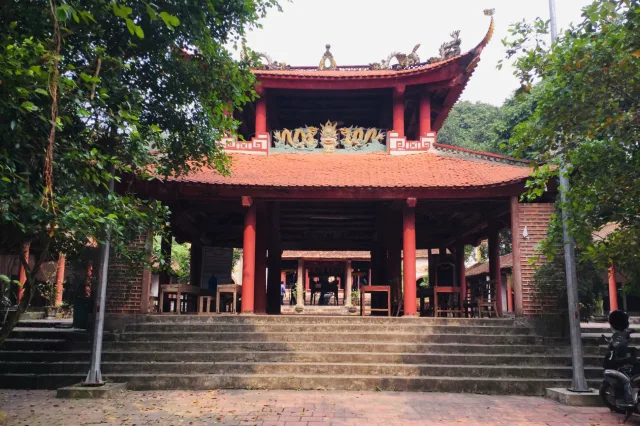
Tổng thể kiến trúc đền được bố trí theo trục chính từ ngoài vào trong, gồm: toà Tiền tế (05 gian 02 dĩ), toà Hậu điện (05 gian 02 dĩ), nhà cầu (01 gian) nối với toà Hậu cung (03 gian). Phía trước có toà Phương đình hai tầng tám mái (03 gian), hai bên là hai dải vũ, mỗi dải gồm 10 gian. Các công trình được sắp xếp cân đối, liên kết chặt chẽ với nhau, vừa đáp ứng chức năng thờ tự vừa phục vụ sinh hoạt lễ hội truyền thống.
Toà Tiền tế, Hậu điện và Hậu cung đều được dựng bằng kết cấu gỗ theo lối kẻ chuyền con chồng, mang đặc trưng kiến trúc truyền thống vùng đồng bằng Bắc Bộ. Toà Phương đình trước đây đã bị hư hỏng, đến năm 2003 được trùng tu bằng kết cấu xi măng cốt thép nhưng vẫn giữ hình thức kiến trúc cũ. Sự kết hợp giữa hệ thống công trình và cảnh quan tự nhiên đã tạo nên tổng thể không gian kiến trúc hài hoà, tôn nghiêm và hoàn chỉnh.
Về công năng sử dụng, toà Hậu cung hiện là nơi an vị tượng Đức Thánh Hùng Linh Công cùng bia đá “Y Sơn linh tích”. Nhà cầu giữ vai trò liên kết giữa Hậu cung và Hậu điện; Hậu điện là nơi bài trí các đồ thờ tự. Toà Tiền tế là không gian chính để dâng hương, hành lễ, bốn góc đặt tượng voi đá và ngựa đá nhằm tăng vẻ uy nghi cho di tích. Toà Phương đình là nơi hội họp, tiếp khách trong các dịp lễ hội, còn hai dải vũ phục vụ nhu cầu nghỉ ngơi và sinh hoạt.
Ngoài khu đền chính dưới chân núi, trên đỉnh núi Y Sơn còn có đền Thượng gồm 03 gian 04 mái và 01 gian Hậu điện. Công trình được trùng tu năm 2009 bằng bê tông cốt thép, tiếp tục giữ vai trò là điểm thờ tự quan trọng gắn với không gian tâm linh của toàn bộ khu di tích.
Hiện vật
Đến Y Sơn hiện nay còn lưu giữ được những hiện vật thờ tự quý hiếm như: Bia đá, ngọc phả quốc lục (Y Sơn Linh Tích), tượng đức thánh Hùng Linh Công, mũ Vua ban, lồng mũ, quạt Vua ban nan bằng ngà voi, ngựa thờ bằng gỗ, lư hương bằng kim loại từ thế kỷ thứ XV. Voi, ngựa tạc bằng đá muối, hoành phi câu đối gỗ cổ và các đạo sắc phong của các triều đại.
Bia đá Y Sơn linh tích khắc hai mặt bằng chữ Hán ghi sự tích, công lao của Đức thánh Hùng Linh Công.
Các đạo sắc phong, của Đức Vua Hùng Vương thứ VI sau khi Hùng Linh Công hoá thánh, nội dung (Y Sơn Linh Tích Đại Vương) cũng như sắc phong của triều Vua Đinh Tiên Hoàng, nội dung (Vạn Cổ Phúc Thần) hiện nay không còn nữa. 21 đạo sắc phong còn lưu giữ được ở đền của 13 triều đại từ niên hiệu Vĩnh Thọ tam niên năm Canh Thìn (1660) đến niên hiệu Khải Định thập niên năm ất Sửu (1925) gồm: Triều Hậu Lê 12, Triều Tây Sơn 01, Triều Nguyễn 8.
Lễ hội
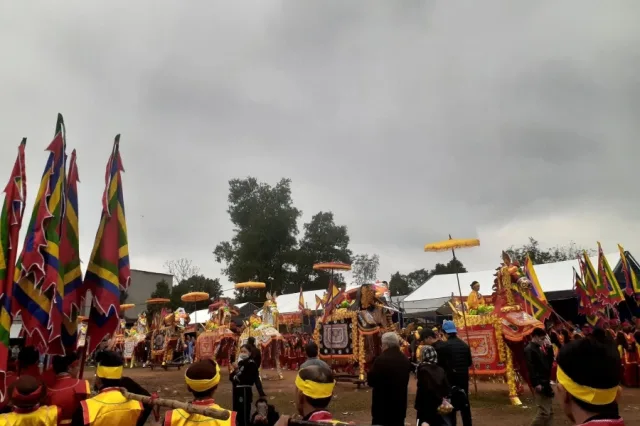
Theo lệ, cứ 3 năm lễ hội lại được tổ chức với quy mô lớn (diễn ra trong 3 ngày 15, 16, 17 tháng Giêng) với nhiều phong tục, nghi lễ độc đáo, mang nét riêng đặc trưng chỉ có ở Y Sơn.
Nghi lễ trong 3 ngày được sắp đặt khá chặt chẽ:
– Ngày 15: tất cả các giáp rước kiệu, có cờ quạt, chiêng trống tập trung về đền – nơi thờ thánh Hung Linh Công. Sau khi làm lễ tại đền, tất cả lại rước sang chùa cùng hai cỗ ngựa thần bằng gỗ ( một hồng, một bạch đặt trên giá gỗ có bánh xe. Lễ rước ngựa thần mở đầu ngày hội rất đông vui. Khách trẩy hội đi theo đoàn rước kiệu tiếp nối dài từ đền sang chùa, vượt qua núi Yên Ngựa. Khi đoàn rước tới chùa, ngựa thần được đặt vào vị trí có bệ đứng trang nghiêm, rồi rước nồi hương xuống nhà hội và rước chuối dò vào chùa đề làm lễ. Một cây chuối được chọn theo tiêu chuẩn quy định để cắm những cây dò. Đó là một thanh tre bánh tẻ, dài hai gióng, vót sao chụm lại ở một đầu như bông hoa ( giống như cây dò ở đền Sóc Sơn nhưng để trằng không nhuộm đỏ ). Bên bông hoa dò còn nhuộm một ré lúa sai bông mẩy hạt. Mỗi giáp làm 10 cây dò như vậy. Sáu mươi cây dò ( 6 giáp ) cắm vào thân cây chuối rồi rước vào chùa gọi là rước dò. Bông hoa dò và ré lúa tượng trưng cho lòng thành cầu trì khấn phật mưa thuận gió hoà, cho cây trái mùa màng đơm hoa kết quả. Khi tế lễ xong, những bông hoa dò đó phân phát về các giáp để biếu các cụ thất – bát – cửu thập niên. Tiếp sau là lễ: “ cuốn cờ đập đất ”. Tất cả các quan viên và trai đồ các giáp mang theo cờ quạt, chiêng trống, mặc áo, quấn khăn, gon quần theo nghi thức truyền thống, kéo quân đến một khoảng đấtt rộng chừng gần một mẫu ( đã được chuẩn bị sẵn ) do một ông quan viên điều khiển theo hiệu trống. Đoàn quân đi theo hình vành chảo, cuốn 3 vòng. Vừa đi vừa nổi chiêng trống rồm rộ. Sau kéo thành hàng dài rồi gấp lại cắt thành chữ tâm đứng thành ba hàng, dàn đều cờ trống. Theo nhịp trống và tiếng hò của quan viên điều khiển, đoàn quân làm những động tác như: đứng nghiêm, ngồi xuống, hạ cờ xuống, vác cờ lên, quay phải, quay trái…có tới mấy chục động tác ăn nhịp với tiếng trống. Tiếp theo là lễ “kéo chữ ” tức xếp chữ. ở đây người ta thường xếp các chữ: nhân, tâm, đức bằng chữ Hán.
– Ngày 16: tướng và quản tượng lên voi, xe vào chùa lễ Phật. Trên bành 5 cỗ voi có 5 nam quản tượng và 5 nữ tướng. Cách lễ là lễ rún ( như đã kể trên ). Tiếp theo lại diễn lễ “ cuốn cờ đập đất ” và “ kéo chữ ”.
– Ngày 17: là ngày vui nhất, náo nức nhất, cũng là ngày cuối của hội. Khoảng ban mai hôm ấy, tất cả tướng và quản đều lên voi, ngựa. Trước khi vào chùa làm lễ, 5 quản tượng và 5 nữ tướng phải qua 3 vòng khám. Đây là giờ phút rất trang nghiêm, đòi hỏi các tướng và quản phải thể hiện đúng “ sắc vụ tinh hoa, y mạo đoan nghiêm”. Đoàn khám tướng, quản có 6 kiệu, đi 3 vòng qua hàng voi ngựa các giáp. Khi kiệu rước và ngựa thần đi qua hàng các tướng và quản, mắt phải nhìn thẳng không được chớp. Nét mặt tươi cười, ngồi thẳng tư thế đường bệ. Việc khám do giáp đăng cai phụ trách được tiến hành nghiêm túc và chính xác. Qua 3 vòng khám, tướng và quản nào đạt tiêu chuẩn thì được thưởng, khiếm khuyết thì phải phạt. Nghi thức lễ là lễ rún. Đây là buổi lễ long trọng nhất, vui nhất. Khi nhìn các nữ tướng và nam quản tượng trong bộ trang phục lễ hội truyền thống, trong tư thế lễ rún mới thấy rất kỳ công, nhưng thao tác nhịp nhàng, uyển chuyển, vừa cung kính, vừa đẹp mắt.
Xếp hạng
Cùng với chùa Y Sơn, đền Y Sơn được xếp hạng di tích lịch sử văn hóa cấp quốc gia năm 2019.
Tài liệu tham khảo
- Du lịch Băc Giang, 2014, Lễ hội Y Sơn. Truy cập tại: https://dulichbacgiang.gov.vn/kham-pha/le-hoi/le-hoi-y-son-61.html
- Khánh Hòa, 2025, Đền Y Sơn: Điểm du lịch văn hóa tâm linh hấp dẫn, Truy cập tại: https://hopthinh.bacninh.gov.vn/news/-/details/155033/-en-y-son-iem-du-lich-van-hoa-tam-linh-hap-dan-20999305
Ngôn ngữ khác
Tiếng Anh
Y Son Temple (Hop Thinh, Bac Ninh)
Name and Geographical Location
Y Son Temple (also known as Ia Temple) is located on the eastern side at the foot of Y Son Mountain, approximately 7 kilometers west of Thang Town, the administrative center of Hiep Hoa District. The temple belongs to Hoa Son Commune, Hiep Hoa District, formerly in Bac Giang Province. After July 2025, the area came under the administration of Hop Thinh Commune, Bac Ninh Province.
History and Historical Figure
Y Son Temple is dedicated to Saint Hung Linh Cong, a national hero revered by the local people for his merits toward the country and the community. According to the Ngoc Pha Quoc Luc concerning the sacred traces of Y Son, compiled by Nguyen Binh, an Academician of the Hanlin Academy during the first year of the Hong Phuc reign (Nham Than year), the story dates back to the reign of the Sixth Hung King (King Hung Huy).
At that time, an official named Hung Nhac, a descendant of the Hung Kings and administrator of the Kinh Bac region, together with his wife Cao Tien Phu Nhan from Hai Duong, had reached old age without having a son. During an early spring pilgrimage to visit their ancestral graves in Chau Lang (Lang Son), they arrived at Y Son Mountain as night fell. There they discovered a small temple known today as Y Son Tay Tu Pagoda. The couple and their entourage stayed there to pray for blessings and offspring.
That night, Cao Tien Phu Nhan experienced a divine dream and later became pregnant. On the twelfth day of the tenth lunar month in the year of Dinh Hoi, she gave birth to a son named Hung Linh Cong. Handsome and exceptionally talented, Hung Linh Cong mastered both literary and martial arts by the age of seventeen. Upon hearing of his abilities, the king summoned him to the capital for a talent examination. Impressed by his excellence, the king appointed him Commander of the Royal Forces.
When wild beasts such as tigers and leopards terrorized the population, the king entrusted Hung Linh Cong with five hundred soldiers to suppress them. He successfully subdued the beasts and even domesticated the leading animals for later use.
During the invasion of the An enemy forces, the king appointed Hung Linh Cong as Supreme Commander of the Mountain Prefecture Army and placed thirty thousand troops under his command. Passing through the Y Son region, he recruited 213 local young men into the army. Together with Saint Giong, he fought decisive battles and defeated the invaders, restoring peace to the nation.
After the victory, Hung Linh Cong returned to Y Son Mountain, attracted by the beautiful landscape encircled by the Nhu Nguyet River (now the Cau River). He established a military camp there, trained troops, cured diseases, protected crops from pests, and helped the local people develop agriculture.
Hung Linh Cong later ascended to sainthood on the eighth day of the eighth lunar month. According to legend, although the sky had been clear, dark clouds suddenly gathered, thunder roared continuously, and after three great lightning strikes, the people witnessed a warrior clad in armor, holding a golden saber and riding a black tiger ascending into the heavens among the clouds. After the storm ceased, villagers climbed the mountain and discovered that an ancient agarwood tree had withered. Deeply moved by the sacred events associated with Y Son, they established a temple in his honor.
Architectural Landscape
Y Son Temple was constructed on the eastern side at the foot of Y Son Mountain, with its back leaning against the mountain and its front facing east. Two long mountain ridges flank the temple like protective armrests, creating a secluded yet majestic setting harmoniously integrated with nature. The area surrounding the temple has long been shaded by ancient trees, while the mountain slopes and ridges are covered with thriving pine and eucalyptus forests, contributing to the tranquil and sacred atmosphere of the site.
The temple complex is arranged along a central axis extending inward from the entrance, consisting of the Front Hall (Tien Te, five compartments with two side chambers), the Rear Hall (Hau Dien, five compartments with two side chambers), a connecting passage hall, and the Inner Sanctuary (Hau Cung, three compartments). In front stands a two-story octagonal-roofed pavilion (Phuong Dinh, three compartments), flanked on both sides by auxiliary buildings, each containing ten compartments. The structures are symmetrically arranged and closely connected, serving both ritual worship and traditional festival activities.
The Front Hall, Rear Hall, and Inner Sanctuary were all constructed with timber frameworks in the traditional ke chuyen con chong style characteristic of the Northern Vietnamese delta. The Front Pavilion had deteriorated over time and was restored in 2003 using reinforced concrete while preserving its original architectural form. The integration between architectural structures and the natural landscape creates a harmonious, solemn, and complete sacred complex.
Functionally, the Inner Sanctuary houses the statue of Saint Hung Linh Cong together with the stone stele titled Y Son Linh Tich. The connecting hall links the Inner Sanctuary with the Rear Hall, while the Rear Hall displays ritual objects. The Front Hall serves as the principal ceremonial space for incense offerings and worship, with stone elephants and horses placed at its four corners to enhance the site’s dignity. The Front Pavilion functions as a gathering and reception space during festivals, while the side buildings provide accommodation and communal space.
Apart from the main temple complex at the foot of the mountain, the summit of Y Son Mountain also contains an Upper Temple consisting of three compartments with four roofs and one Rear Hall compartment. This structure was restored in 2009 using reinforced concrete and continues to play an important role within the sacred landscape of the entire complex.
Artifacts
Y Son Temple still preserves many valuable ritual artifacts, including stone steles, the Ngoc Pha Quoc Luc (Y Son Linh Tich), statues of Saint Hung Linh Cong, royal ceremonial hats, hat cases, ivory-framed royal fans, wooden ritual horses, and fifteenth-century metal incense burners. Stone-carved elephants and horses, ancient wooden horizontal lacquered boards and parallel sentences, as well as royal ordination decrees from various dynasties, are also preserved.
The Y Son Linh Tich stone stele is inscribed on both sides in Chinese characters, recording the life and merits of Saint Hung Linh Cong.
The original royal decrees granted by the Sixth Hung King after Hung Linh Cong’s ascension, conferring the title “Y Son Linh Tich Dai Vuong,” as well as decrees from the reign of Emperor Dinh Tien Hoang granting the title “Van Co Phuc Than,” are no longer extant. However, the temple still preserves twenty-one royal decrees issued under thirteen dynasties, dating from the third year of the Vinh Tho reign (Canh Thin year, 1660) to the tenth year of the Khai Dinh reign (At Suu year, 1925), including twelve from the Later Le Dynasty, one from the Tay Son Dynasty, and eight from the Nguyen Dynasty.
Festival
According to tradition, the Y Son Festival is held on a grand scale every three years during the fifteenth, sixteenth, and seventeenth days of the first lunar month. The festival preserves many unique customs and rituals found only in Y Son.
The ceremonies during the three festival days are carefully organized:
Day 15: All village divisions carry palanquins, flags, drums, and gongs in procession to the temple dedicated to Saint Hung Linh Cong. After worship ceremonies, the procession continues to the pagoda together with two sacred wooden horses, one red and one white, mounted on wheeled platforms. The sacred horse procession marks the joyful opening of the festival. Participants follow the long procession from the temple to the pagoda across Yen Ngua Mountain. Upon arrival, the sacred horses are ceremonially placed on pedestals, incense burners are transferred to the communal hall, and the “banana and ritual rod procession” begins. Ritual rods made from carefully selected bamboo symbolize prayers for favorable weather and abundant harvests. After the ceremonies, these ritual flowers are distributed to elderly villagers. Another important rite called “rolling flags and striking the ground” follows, involving military-style formations, drum signals, and symbolic movements. The day concludes with the ritual of arranging Chinese characters such as Nhan (benevolence), Tam (heart), and Duc (virtue).
Day 16: Female generals and elephant keepers ride elephants and carts to the pagoda to worship the Buddha. Five elephants carry five male mahouts and five female generals. Ceremonies continue with ritual bows, followed again by the “rolling flags and striking the ground” and character-forming performances.
Day 17: This is the most exciting and significant day of the festival. At dawn, all generals and elephant keepers mount elephants and horses. Before entering the pagoda, the participants undergo three rounds of ceremonial inspection requiring dignified appearance and proper conduct. Six palanquins circle the elephant and horse formations three times. During the inspection, participants must maintain perfect composure and posture. Those who meet ceremonial standards receive rewards, while those with shortcomings are penalized. The principal ritual performed is the “run bow,” regarded as the most solemn and visually impressive ceremony of the festival. The synchronized and graceful movements of the female generals and elephant keepers in traditional festival attire demonstrate remarkable discipline, reverence, and aesthetic beauty.
References
- Du lịch Băc Giang, 2014, Lễ hội Y Sơn. Truy cập tại: https://dulichbacgiang.gov.vn/kham-pha/le-hoi/le-hoi-y-son-61.html
- Khánh Hòa, 2025, Đền Y Sơn: Điểm du lịch văn hóa tâm linh hấp dẫn, Truy cập tại: https://hopthinh.bacninh.gov.vn/news/-/details/155033/-en-y-son-iem-du-lich-van-hoa-tam-linh-hap-dan-20999305
Tiếng Pháp
Temple de Y Sơn (Hợp Thịnh, Bắc Ninh)
Nom et situation géographique
Le temple de Y Sơn (également appelé temple Ia) est situé à l’est, au pied du mont Y Sơn, à environ 7 km à l’ouest du bourg de Thắng, centre administratif du district de Hiệp Hòa, dans la commune de Hòa Sơn, district de Hiệp Hòa, province de Bắc Giang. Depuis juillet 2025, le site relève administrativement de la commune de Hợp Thịnh, province de Bắc Ninh.
Histoire et personnage vénéré
Le temple de Y Sơn est consacré au Saint Đức Hùng Linh Công, héros national ayant rendu de grands services au peuple et au pays, vénéré par la population locale. Selon le Ngọc Phả Quốc Lục relatif aux vestiges sacrés de Y Sơn, compilé par le lettré Nguyễn Bính de l’Académie Han-Lâm sous la première année de l’ère Hồng Phúc, sous le règne du sixième Roi Hùng (Hùng Huy), vivait un administrateur et gouverneur de la région de Kinh Bắc nommé Hùng Nhạc, descendant de la lignée des Rois Hùng. Son épouse, de la famille Cao, nommée Tiên, était originaire de Hải Dương.
Bien qu’âgé de plus de soixante ans et son épouse de plus de quarante ans, le couple n’avait toujours pas de fils. Un jour du début du printemps, alors qu’ils se rendaient au tombeau ancestral à Châu Lạng (Lạng Sơn), ils arrivèrent dans la région du mont Y Sơn à la tombée de la nuit. Ils aperçurent un petit temple bouddhique appelé Y Sơn Tự, correspondant aujourd’hui à Y Sơn Tây Tự. Le couple et sa suite y passèrent la nuit et prièrent pour obtenir bénédiction et descendance. Madame Cao Tiên Phu Nhân fut ensuite hébergée dans une maison d’un habitant montagnard près du temple.
Cette nuit-là, elle eut un songe divin et tomba enceinte. Elle donna naissance à un fils le 12 du dixième mois de l’année Đinh Hợi, auquel fut donné le nom de Hùng Linh Công. Beau et remarquable, il maîtrisait à dix-sept ans aussi bien les lettres que les arts martiaux. Informé de ses talents, le roi le convoqua à la capitale afin de sélectionner les hommes de mérite. Hùng Linh Công se distingua brillamment et reçut le commandement des troupes royales.
Lorsque des bêtes féroces — tigres et léopards — ravagèrent les populations, le roi lui confia cinq cents soldats pour rétablir l’ordre. Il vainquit les animaux sauvages et captura les chefs des bêtes afin de les apprivoiser et les utiliser. Plus tard, lors de l’invasion des Ân, le roi lui remit trente mille soldats et le titre de Général commandant du Palais Nhạc. En traversant la région du mont Y Sơn, il recruta 213 jeunes hommes locaux dans son armée. Aux côtés du Saint Gióng, Hùng Linh Công mena une bataille décisive qui écrasa les envahisseurs.
Après la paix retrouvée, Hùng Linh Công retourna dans la région de Y Sơn, séduite par les paysages où le fleuve Như Nguyệt (aujourd’hui rivière Cầu) entoure montagnes et vallées verdoyantes. Il y établit son quartier général, entraîna les troupes et aida la population à lutter contre les épidémies et les insectes nuisibles tout en développant l’agriculture et la sériciculture.
Le huitième jour du huitième mois lunaire, Hùng Linh Công fut divinisé. Ce jour-là, alors que le ciel était clair, de sombres nuages apparurent soudain, accompagnés d’orage et d’éclairs. Trois coups de tonnerre retentirent, et les habitants virent surgir du sommet de la montagne un homme en armure, tenant un sabre d’or et chevauchant un tigre noir qui s’éleva vers le ciel parmi les nuées. Après la pluie, les villageois découvrirent qu’un ancien arbre d’agar avait subitement séché. Profondément impressionnés par ce miracle et le songe sacré de Y Sơn, ils édifièrent un temple en son honneur.
Architecture et paysage
Le temple de Y Sơn a été construit à l’est, au pied du mont Y Sơn, selon une implantation traditionnelle adossée à la montagne et tournée vers l’est. Deux chaînes montagneuses latérales s’étendent de part et d’autre comme des accoudoirs protégeant l’ensemble, créant un site à la fois majestueux, discret et harmonieux avec la nature. Depuis des siècles, de grands arbres centenaires ombragent les environs, tandis que les collines et montagnes voisines sont couvertes de pins et d’eucalyptus verdoyants, renforçant le caractère paisible et sacré du lieu.
L’ensemble architectural suit un axe principal allant de l’extérieur vers l’intérieur et comprend : le pavillon Tiền tế (cinq travées et deux annexes), le pavillon Hậu điện (cinq travées et deux annexes), une galerie de liaison d’une travée reliant le Hậu điện au sanctuaire Hậu cung (trois travées). À l’avant se dresse un pavillon Phương đình à deux étages et huit toitures (trois travées), flanqué de deux longues galeries latérales de dix travées chacune. Les bâtiments sont disposés de manière équilibrée et cohérente, répondant à la fois aux besoins du culte et aux activités des fêtes traditionnelles.
Les pavillons Tiền tế, Hậu điện et Hậu cung sont construits en charpente de bois selon la technique traditionnelle kẻ chuyền con chồng, typique de l’architecture du delta du Nord du Viêt Nam. Le pavillon Phương đình, autrefois détérioré, fut restauré en 2003 en béton armé tout en conservant son apparence ancienne. L’association harmonieuse des bâtiments et du paysage naturel forme un ensemble architectural complet, solennel et équilibré.
Le sanctuaire Hậu cung abrite aujourd’hui la statue du Saint Hùng Linh Công ainsi que la stèle de pierre intitulée Y Sơn linh tích. La galerie de liaison relie le Hậu cung au Hậu điện, où sont disposés les objets cultuels. Le Tiền tế constitue l’espace principal des cérémonies d’encens et des rites, ses quatre angles étant ornés de statues d’éléphants et de chevaux en pierre accentuant la majesté du monument. Le pavillon Phương đình sert aux réunions et à l’accueil des visiteurs durant les fêtes, tandis que les galeries latérales sont destinées au repos et aux activités communautaires.
Outre le sanctuaire principal situé au pied de la montagne, un temple supérieur se trouve au sommet du mont Y Sơn. Il comprend trois travées à quatre toitures ainsi qu’un pavillon Hậu điện. Restauré en 2009 en béton armé, il demeure un lieu de culte important au sein de l’ensemble spirituel du site.
Objets et vestiges
Le temple de Y Sơn conserve encore aujourd’hui de précieux objets cultuels : stèles de pierre, généalogies sacrées (Ngọc phả quốc lục – Y Sơn Linh Tích), statue du Saint Hùng Linh Công, couronne offerte par le roi, coffret à couronne, éventail royal à monture en ivoire, cheval cultuel en bois, brûle-parfum métallique datant du XVe siècle, statues d’éléphants et de chevaux sculptées en pierre saline, panneaux parallèles en bois ancien ainsi que plusieurs édits royaux de différentes dynasties.
La stèle Y Sơn linh tích, gravée sur ses deux faces en caractères chinois, relate la vie et les mérites du Saint Hùng Linh Công.
Les premiers édits royaux accordés par le sixième Roi Hùng après la divinisation de Hùng Linh Công, portant le titre de Y Sơn Linh Tích Đại Vương, ainsi que ceux de la dynastie Đinh Tiên Hoàng lui conférant le titre de Vạn Cổ Phúc Thần, ont aujourd’hui disparu. Le temple conserve cependant vingt-et-un édits datant de treize dynasties différentes, depuis la troisième année de l’ère Vĩnh Thọ (1660) jusqu’à la dixième année de l’ère Khải Định (1925), dont douze de la dynastie des Lê postérieurs, un de la dynastie Tây Sơn et huit de la dynastie Nguyễn.
Fête traditionnelle
Selon la tradition, une grande fête est organisée tous les trois ans pendant trois jours, les 15, 16 et 17 du premier mois lunaire. Elle se distingue par de nombreuses coutumes et cérémonies propres à Y Sơn.
Les rituels sont organisés avec rigueur durant les trois journées :
Le 15e jour
Tous les quartiers du village apportent leurs palanquins processionnels accompagnés de drapeaux, gongs et tambours vers le temple consacré au Saint Hùng Linh Công. Après les rites au temple, la procession se dirige vers la pagode avec deux chevaux sacrés en bois — l’un rouge, l’autre blanc — installés sur des supports à roues. Cette procession des chevaux sacrés ouvre les festivités dans une ambiance particulièrement animée.
Les participants suivent le cortège depuis le temple jusqu’à la pagode en franchissant le mont Yên Ngựa. Arrivés à destination, les chevaux sacrés sont placés sur leurs socles cérémoniels, puis l’on procède au transport de l’encens et à la procession des dò vers la pagode. Les dò sont de fines tiges de bambou ornées en forme de fleur et accompagnées d’un épi de riz, symbolisant les prières pour de bonnes récoltes et un climat favorable. Chaque quartier prépare dix dò, soit soixante au total.
Après les rites, ces fleurs symboliques sont distribuées aux anciens du village âgés de soixante-dix à quatre-vingt-dix ans. Vient ensuite la cérémonie dite « enrouler les drapeaux et frapper la terre », où les participants exécutent des mouvements collectifs au rythme des tambours. Enfin a lieu la cérémonie du « tracé des caractères », consistant à former en caractères chinois les mots nhân (humanité), tâm (cœur) et đức (vertu).
Le 16e jour
Les commandants et gardiens d’éléphants montent sur les éléphants et les chars pour se rendre à la pagode rendre hommage au Bouddha. Cinq gardiens masculins et cinq femmes officiantes prennent place sur les éléphants cérémoniels. Les rites comprennent notamment la cérémonie dite lễ rún. Les cérémonies du « drapeau » et du « tracé des caractères » sont ensuite répétées.
Le 17e jour
Le dernier jour est aussi le plus animé et le plus solennel. Dès l’aube, commandants et gardiens montent sur les éléphants et chevaux. Avant d’entrer dans la pagode, les cinq gardiens et les cinq femmes officiantes doivent subir trois inspections rituelles exigeant maintien digne, tenue correcte et attitude exemplaire.
Le cortège d’inspection comprend six palanquins effectuant trois passages devant les rangées d’éléphants et de chevaux. Lors du passage des chevaux sacrés, les officiants doivent garder le regard fixe, sans cligner des yeux, afficher un visage serein et maintenir une posture noble. Les personnes jugées exemplaires sont récompensées, tandis que les fautes sont sanctionnées.
La cérémonie principale demeure le lễ rún, considéré comme le moment le plus solennel et le plus joyeux de toute la fête. Les costumes traditionnels des femmes officiantes et des gardiens d’éléphants, associés à leurs mouvements harmonieux et respectueux, témoignent d’un savoir-faire cérémoniel particulièrement élaboré.
Documents de référence
- Du lịch Băc Giang, 2014, Lễ hội Y Sơn. Truy cập tại: https://dulichbacgiang.gov.vn/kham-pha/le-hoi/le-hoi-y-son-61.html
- Khánh Hòa, 2025, Đền Y Sơn: Điểm du lịch văn hóa tâm linh hấp dẫn, Truy cập tại: https://hopthinh.bacninh.gov.vn/news/-/details/155033/-en-y-son-iem-du-lich-van-hoa-tam-linh-hap-dan-20999305
Tiếng Trung
夷山祠(合盛,北宁)
名称与地理位置
夷山祠(又称 Ia 祠)坐落于夷山山麓东侧,距离协和县治胜镇以西约七公里,原属北江省协和县和山社。自2025年7月行政区划调整后,现属北宁省合盛社辖地。
历史与人物
夷山祠供奉雄灵公圣神,为有功于民于国的民族英雄,历来受到当地百姓崇祀。根据《国录玉谱·夷山灵迹》记载,此书由翰林院东阁大学士阮秉于洪福元年壬申撰修。
相传在第六代雄王(雄晖王)时期,京北地方有一位治事辅导官名雄岳,乃雄王后裔,其妻高氏(讳仙)为海阳人。雄岳年逾六旬,高夫人亦年过四十,仍未得子。某年新春之初,夫妇前往谅州(今谅山)祭扫祖墓,途经夷山时天色忽暗,遂见一小寺可供歇息,即今夷山西寺。夫妇及随从入寺祈福求嗣,其后高仙夫人借宿于寺旁蛮民之家。
当夜,高夫人梦感神应,遂怀孕,并于丁亥年十月十二日诞下一子,取名雄灵公。雄灵公容貌俊伟,十七岁时已文武兼备。国王闻其贤能,召入京师考试选才,雄灵公表现卓越,遂受封部统之职。
后有猛兽虎豹为患,残害百姓,国王命雄灵公率五百兵马前往平乱。雄灵公不仅平定兽患,还将首领猛兽擒回驯养,以供驱使。
及至殷贼入侵我国,国王又授雄灵公三万兵马,封“岳府统领将军”。率军出征途中,经过夷山地区时,又招募当地二百一十三名壮丁从军。雄灵公与扶董天王(圣童董)共同决战,大败殷军,国家遂复太平。
战后,雄灵公返回夷山,见此地有如月江(今球江)环绕,山青水秀,风景清丽,遂于此驻营养兵,并为民除疫灭虫,教导农桑。
后来,雄灵公于农历八月初八化圣升天。当日原本天朗气清,忽然乌云翻涌,狂风暴雨骤起,雷电交加。忽闻三声霹雳,百姓见山巅之上有一神人身披甲胄,手执金刀,骑黑虎乘云升天,雄灵公遂隐没不见。雨止之后,村民登山,只见古沉香树忽然枯萎,众人视为灵异之兆,感念其神梦与功德,遂建祠奉祀。
建筑与景观
夷山祠建于夷山东麓,依山而建,坐西朝东。两侧山岭绵延,如扶手环抱,形成幽静而庄严的天然格局。自古以来,祠周多古木参天;山间与岭脉之间遍布松林与白千层树林,使整个遗迹空间更显清幽肃穆。
整座祠宇沿中轴线由外至内布局,包括:前祭殿(五间二厦)、后殿(五间二厦)、连接后宫的一间渡屋,以及后宫(三间)。前方建有两层八檐方亭(三间),左右各设十间廊庑。诸建筑布局均衡、衔接紧密,既满足祭祀需求,也兼顾传统节庆活动之用。
前祭殿、后殿及后宫皆采用木结构“架传重梁”式建筑,为北部平原传统建筑风格之典型。方亭原已损坏,于2003年重修,改用钢筋混凝土结构,但仍保留旧有形制。建筑群与自然山水相结合,构成完整而庄严的宗教空间。
功能方面,后宫现安奉雄灵公圣像及《夷山灵迹》石碑;渡屋连接后宫与后殿;后殿陈设祭器;前祭殿则为主祭与焚香空间,四角置石象与石马,以增威仪。方亭为节庆集会与迎宾之所,两侧廊庑供休息与活动使用。
除山下主祠外,夷山山顶尚有上祠,包括三间四檐正殿及一间后殿。该建筑于2009年以钢筋混凝土重修,至今仍是整个遗迹群重要的祭祀场所。
文物
夷山祠现仍保存多件珍贵祭祀文物,如石碑、《国录玉谱·夷山灵迹》、雄灵公圣像、御赐王冠、冠笼、象牙骨御赐扇、木制神马、十五世纪金属香炉,以及石雕神象、神马、古木匾额楹联和历代敕封文书等。
《夷山灵迹》石碑双面刻汉字,记载雄灵公事迹与功德。
相传第六代雄王于雄灵公化圣后曾赐封“夷山灵迹大王”,丁先皇朝亦有“万古福神”之封号,但相关敕书已不复存在。现今祠中仍保存二十一道敕封,跨越十三个朝代,自后黎朝永寿三年庚辰(1660)至启定十年乙丑(1925),其中包括:后黎朝十二道、西山朝一道、阮朝八道。
节庆
依旧例,每三年举行一次大型庙会,于农历正月十五、十六、十七三日举行,保留许多仅见于夷山的独特习俗与仪礼。
三日祭礼安排严谨有序:
正月十五
各甲社抬神轿、执旗鼓,齐集夷山祠祭拜雄灵公。礼毕后,又护送两匹木制神马(一红一白,置于带轮木架之上)前往寺庙。迎神马仪式为庙会开端,场面极为热闹。
游人随迎轿队伍穿越鞍山而行,队列绵延不绝。至寺后,神马安置于庄严台座之上,继而举行迎香炉与“迎竹花”入寺礼。所谓“竹花”,乃选取合规格香蕉树,再插入削制成花状之竹枝,并缀以丰穗稻穗,象征祈求风调雨顺、五谷丰登。每甲制作十枝,共六十枝插于蕉树之上,称为“迎花”。祭礼结束后,竹花分赠七十、八十、九十高龄长者,以示敬老。
随后举行“卷旗拍地”仪式。各甲官员与壮丁执旗鼓列阵,在广场上依鼓令行军,队形时而环绕,时而列阵成“心”字,并配合鼓声完成数十种动作。其后再举行“排字”仪式,以汉字排列“仁”“心”“德”等字形。
正月十六
将领与象兵骑象乘车赴寺礼佛。五头大象上坐五名男象兵与五位女将。礼仪形式为“蹲礼”。随后继续举行“卷旗拍地”与“排字”仪式。
正月十七
此日最为热闹隆重,亦为庙会最后一天。清晨,诸将与象兵皆骑象乘马赴寺。入寺前,五位象兵与五位女将须经过三轮检阅。检阅极为庄严,要求参与者仪容端肃、神采焕发。
检阅队伍乘六座轿子,绕行象马队列三周。神轿与神马经过时,将领与象兵必须目不斜视,不得眨眼,并保持端庄笑容与威严坐姿。凡符合标准者予以奖赏,有失礼者则受惩罚。
其主要礼仪仍为“蹲礼”。观者可见女将与男象兵身着传统礼服,动作整齐协调,既庄重恭敬,又富观赏之美。
参考资料
- Du lịch Băc Giang, 2014, Lễ hội Y Sơn. Truy cập tại: https://dulichbacgiang.gov.vn/kham-pha/le-hoi/le-hoi-y-son-61.html
- Khánh Hòa, 2025, Đền Y Sơn: Điểm du lịch văn hóa tâm linh hấp dẫn, Truy cập tại: https://hopthinh.bacninh.gov.vn/news/-/details/155033/-en-y-son-iem-du-lich-van-hoa-tam-linh-hap-dan-2099930