

Khái quát về lễ hội
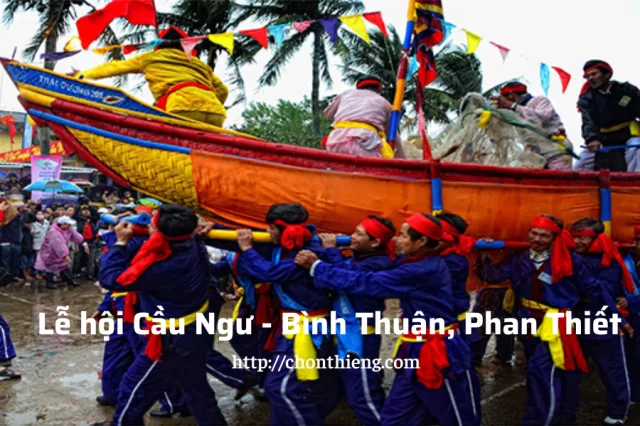
Lễ hội Cầu ngư ở Phan Thiết là một trong những lễ hội truyền thống tiêu biểu và đặc sắc nhất của cư dân ven biển Bình Thuận. Lễ hội gắn liền với tín ngưỡng thờ cá Ông (cá Voi, Ông Nam Hải) – vị thần được ngư dân tin rằng luôn che chở, cứu giúp con người giữa biển khơi đầy sóng gió. Đây không chỉ là một hoạt động tín ngưỡng dân gian mà còn là không gian sinh hoạt văn hóa cộng đồng mang đậm sắc thái văn hóa biển của cư dân miền Trung và Nam Bộ.
Lễ hội mang đặc điểm riêng biệt bởi các nghi lễ được tổ chức cả trên bờ lẫn ngoài biển. Trong suốt thời gian diễn ra lễ hội, hàng loạt nghi thức tín ngưỡng, lễ tế, diễn xướng dân gian và trò chơi cộng đồng được tổ chức liên tục, tạo nên không khí linh thiêng nhưng cũng vô cùng sôi động. Lễ hội vừa phản ánh đời sống tâm linh của ngư dân, vừa thể hiện sự gắn bó mật thiết giữa con người với biển cả.
Tại Phan Thiết, lễ hội thường diễn ra ở vạn Thủy Tú từ ngày 19 đến 22 tháng Sáu âm lịch hằng năm. Ngoài ra, nhiều địa phương ven biển khác của Bình Thuận như Phú Quý, Tuy Phong, La Gi hay các vạn chài ở Phan Thiết cũng đều tổ chức lễ hội Cầu ngư với quy mô khác nhau. Mỗi nơi có tập tục riêng nhưng nhìn chung đều hướng tới mục đích cầu cho “biển yên sóng lặng, mưa thuận gió hòa, đa ngư đắc lợi”, ngư dân ra khơi bình an và đánh bắt được nhiều tôm cá.
Lễ hội Cầu ngư còn được xem là một hình thái sinh hoạt văn hóa cộng đồng đặc biệt. Đây là nơi tích tụ và bảo tồn nhiều loại hình nghệ thuật dân gian truyền thống như hát bội, hò bá trạo, nhạc lễ, các nghi thức cúng tế cổ truyền và phong tục của cư dân biển. Không gian lễ hội góp phần củng cố tinh thần cố kết cộng đồng giữa những người làm nghề biển, tạo nên sự tương trợ và đoàn kết trong đời sống lao động.
Năm 2019, Lễ hội Cầu ngư ở vạn Thủy Tú, thành phố Phan Thiết đã được Bộ Văn hóa, Thể thao và Du lịch đưa vào Danh mục di sản văn hóa phi vật thể quốc gia. Đây là sự ghi nhận giá trị văn hóa, lịch sử và tín ngưỡng đặc sắc của lễ hội đối với đời sống cộng đồng cư dân ven biển Bình Thuận.
Nguồn gốc và tín ngưỡng thờ cá Ông
Lễ hội Cầu ngư bắt nguồn từ tín ngưỡng thờ cá Ông – một tín ngưỡng dân gian lâu đời của cư dân ven biển miền Trung và Nam Bộ. Theo quan niệm của ngư dân, cá voi là loài vật linh thiêng thường xuất hiện để cứu giúp tàu thuyền gặp nạn trên biển. Trong điều kiện xưa kia, phương tiện đi biển còn thô sơ, mỗi chuyến ra khơi luôn tiềm ẩn nhiều hiểm nguy bởi giông bão và sóng dữ, vì vậy hình ảnh cá Ông cứu người dần trở thành niềm tin tâm linh sâu sắc của cư dân biển.
Ngư dân không gọi cá voi bằng tên thông thường mà kính cẩn gọi là “cá Ông”, “Ông Nam Hải” hay “Thần Nam Hải”. Họ tin rằng cá Ông là vị thần hộ mệnh của người đi biển, luôn lắng nghe lời cầu nguyện và che chở cho ngư dân vượt qua hiểm nguy. Khi có cá Ông dạt vào bờ chết, người dân tổ chức tang lễ rất trang trọng, thực hiện nghi thức mai táng và đưa xương cốt vào thờ trong lăng vạn.
Từ niềm tin đó, hệ thống lăng vạn thờ cá Ông được hình thành khắp các làng chài ven biển. Ở Bình Thuận, nơi nào có làng ngư thì nơi đó thường có lăng thờ cá Ông cùng những hoạt động tín ngưỡng liên quan đến nghề biển. Theo khảo sát của Bảo tàng Bình Thuận, toàn tỉnh từng có hơn 40 vạn thờ cá voi cùng hàng chục nghĩa địa mai táng cá Ông.
Người dân ven biển còn lưu truyền nhiều huyền thoại về cá Ông. Trong dân gian có chuyện kể rằng cá Ông từng cứu Nguyễn Ánh trong thời gian bôn tẩu ngoài biển. Sau khi lên ngôi, vua Gia Long đã sắc phong cho cá Ông với danh hiệu “Nam hải cự tộc ngọc lân Thượng đẳng Thần”. Các vua triều Nguyễn sau đó tiếp tục ban sắc phong cho cá Ông và các vị thủy thần, từ đó tín ngưỡng thờ cá Ông ngày càng phát triển mạnh mẽ.
Đối với cư dân biển Bình Thuận, việc thờ cá Ông không chỉ là niềm tin tâm linh mà còn là chỗ dựa tinh thần trong đời sống lao động nhiều hiểm nguy. Chính tín ngưỡng ấy đã hình thành nên lễ hội Cầu ngư cùng hàng loạt nghi thức văn hóa dân gian đặc sắc tồn tại suốt hàng trăm năm.
Vạn Thủy Tú – trung tâm tín ngưỡng Cầu ngư ở Phan Thiết
Vạn Thủy Tú nằm tại phường Đức Thắng, thành phố Phan Thiết, được xây dựng vào năm 1762 dưới thời chúa Nguyễn. Đây là ngôi vạn ra đời sớm nhất và có quy mô lớn nhất ở Bình Thuận, đồng thời được xem là “vạn gốc” của tín ngưỡng thờ cá Ông trong khu vực.
Vạn Thủy Tú không chỉ là nơi thờ phụng cá Ông mà còn là trung tâm sinh hoạt văn hóa tâm linh của cư dân biển Phan Thiết. Tại đây thờ cá Ông, các vị hải thần, Thủy tổ nghề biển cùng các bậc Tiền hiền có công khai phá và lập làng.
Hiện nay, vạn còn lưu giữ gần như nguyên vẹn hơn 100 bộ xương cá Ông với niên đại hàng trăm năm. Đặc biệt nổi bật là bộ xương cá voi lớn nhất Việt Nam được phục dựng nguyên trạng và trưng bày trong khuôn viên vạn từ năm 2003. Bộ xương này dài khoảng 22m, nặng khoảng 64 tấn và được xác lập kỷ lục Việt Nam vào năm 2005.
Hằng năm tại vạn Thủy Tú diễn ra ba kỳ lễ hội chính gồm lễ hội Cầu ngư đầu mùa, lễ hội Cầu ngư chính mùa và lễ hội Cầu ngư mãn mùa. Trong đó, lễ hội chính mùa từ ngày 19 đến 22 tháng Sáu âm lịch là lớn nhất, thể hiện đầy đủ các nghi thức và giá trị văn hóa đặc trưng của cư dân miền biển Bình Thuận.
Phần lễ trong lễ hội Cầu ngư
Nghi lễ Nghệ sắc
Nghi lễ Nghệ sắc được xem là nghi thức mở đầu của lễ hội Cầu ngư chính mùa. Lễ diễn ra vào sáng sớm ngày 19 tháng Sáu âm lịch tại chính điện vạn Thủy Tú với sự tham gia của Ban nghi lễ, đội nhạc lễ, các vị hào lão và đông đảo cư dân địa phương.
Trong nghi lễ này, Chánh bái, Bồi bái và Trưởng vạn thực hiện việc khấn báo với Ông Nam Hải để xin phép thỉnh các sắc phong của triều Nguyễn xuống các khám thờ. Các hộp đựng sắc phong được mở ra rất cẩn trọng rồi đặt lên các khám thờ tương ứng với từng vị thần linh. Nghi lễ mang ý nghĩa thông báo lễ hội chính thức bắt đầu và kính mời các vị thần về chứng giám.
Lễ cung nghinh Ông Sanh Thủy lục
Đây là nghi lễ quan trọng và quy mô nhất trong lễ hội Cầu ngư. Nội dung chính của nghi lễ là tổ chức đoàn thuyền ra khơi để cung nghinh Thần Nam Hải từ biển về vạn dự lễ.
Đoàn lễ gồm Ban nghi lễ, đội nhạc lễ, đội chèo bả trạo, các nhà sư cùng đông đảo ngư dân địa phương. Các thuyền lễ được trang trí cờ quạt, hương án, chiêng trống rất rực rỡ. Đoàn đi bộ từ vạn xuống bến cảng rồi xuống thuyền ra khơi. Khi ra đến vùng biển cách bờ khoảng 2 – 3km, đoàn thuyền dừng lại để tiến hành nghi lễ cung nghinh. Chánh bái dâng hương, đọc văn tế cầu thỉnh Ông Nam Hải về chứng giám và phù hộ cho ngư dân có mùa cá bội thu, tránh tai nạn rủi ro trên biển.
Trong suốt nghi lễ, đội chèo bả trạo vừa hát vừa diễn xướng mái chèo theo các làn điệu dân gian truyền thống. Những câu hò, điệu hát vang lên giữa biển tạo nên không khí linh thiêng nhưng cũng rất sôi động và xúc động.
Sau khi hoàn tất nghi lễ ngoài biển, đoàn thuyền quay trở về vạn. Khi vào đến cổng chính, đội bả trạo quỳ chèo, hát múa để cung thỉnh Ông vào chính điện. Đây là nghi thức được xem là điểm nhấn nổi bật nhất của lễ hội Cầu ngư.
Các nghi lễ khác
Ngoài lễ Nghệ sắc và lễ cung nghinh Ông Sanh Thủy lục, lễ hội Cầu ngư còn có nhiều nghi thức quan trọng khác như:
- Lễ thỉnh chư vị Thủy thần và Tiền hiền.
- Lễ thỉnh Thập điện và cầu siêu cho chư vị hương linh.
- Lễ phóng sanh chim cá.
- Lễ phóng đăng trên biển.
- Lễ khai xá thuyền rồng.
- Lễ khai đàn chẩn tế âm linh.
- Lễ thả thuyền rồng trên biển.
- Lễ chánh tế thần Nam Hải.
- Lễ tế Tiền hiền.
- Lễ nghệ sắc hồi đình hoàn mãn.
Trong đó, nghi lễ chánh tế thần Nam Hải được xem là thời khắc thiêng liêng nhất của lễ hội. Ngư dân tin rằng lễ tế càng trang nghiêm thì thần Nam Hải càng phù hộ cho dân làng được bình an và làm ăn thuận lợi.
Phần hội trong lễ hội Cầu ngư
Chèo bả trạo – linh hồn của lễ hội
Chèo bả trạo là loại hình nghệ thuật diễn xướng dân gian đặc trưng gắn liền với lễ hội Cầu ngư và được xem là “linh hồn” của lễ hội. Đây không chỉ là hoạt động biểu diễn nghệ thuật mà còn mang ý nghĩa nghi lễ tín ngưỡng sâu sắc trong tục thờ cá Ông. Các thành viên đội bả trạo hóa thân thành những người chèo thuyền với các vai trò như tổng lái, tổng mũi, tổng chèo. Họ vừa hát vừa thực hiện các động tác chèo thuyền nhịp nhàng theo tiếng hò và nhạc lễ, tái hiện cảnh ngư dân vượt sóng ra khơi. Nội dung diễn xướng thường kể về những chuyến biển đầy gian nan, ca ngợi công đức cứu nhân độ thế của cá Ông và thể hiện khát vọng về cuộc sống bình yên, no đủ. Qua những câu hò và điệu hát, người xem có thể cảm nhận được tình yêu biển cả, tinh thần lạc quan và ý chí bám biển của cư dân miền biển Bình Thuận. Theo khảo sát của Bảo tàng Bình Thuận, hiện nay toàn tỉnh vẫn còn nhiều đội chèo bả trạo hoạt động với hàng chục bổn chèo cổ truyền được lưu giữ qua nhiều thế hệ.
Hát bội và các trò chơi dân gian
Bên cạnh chèo bả trạo, lễ hội còn có các hoạt động nghệ thuật dân gian như hát bội, hát bài chòi và nhiều trò chơi cộng đồng đặc trưng của cư dân biển. Các cuộc đua thuyền truyền thống tái hiện tinh thần đoàn kết và ý chí chinh phục biển cả của ngư dân. Ngoài ra còn có kéo co, lắc thúng, nhảy bao bố, bịt mắt bắt dê cùng nhiều trò chơi dân gian khác thu hút đông đảo người dân và du khách tham gia. Không khí phần hội diễn ra náo nhiệt cả trên bờ lẫn ngoài biển, góp phần tạo nên sức hấp dẫn riêng biệt cho lễ hội Cầu ngư Phan Thiết.
Giá trị văn hóa của lễ hội Cầu ngư
Lễ hội Cầu ngư là không gian hội tụ đậm đặc các yếu tố văn hóa biển của cư dân Bình Thuận. Lễ hội phản ánh mối quan hệ gắn bó giữa con người với biển cả, thể hiện cách cư dân biển ứng xử với tự nhiên và gửi gắm niềm tin vào thần linh để vượt qua những bất trắc trong cuộc sống lao động.
Lễ hội còn là nơi lưu giữ nhiều loại hình di sản văn hóa dân gian như nhạc lễ, nghi thức tế lễ cổ truyền, chèo bả trạo, hát bội và các phong tục làng biển. Những giá trị ấy được truyền từ thế hệ này sang thế hệ khác, góp phần bảo tồn bản sắc văn hóa truyền thống của cộng đồng ngư dân.
Không chỉ mang ý nghĩa tín ngưỡng, lễ hội còn có vai trò cố kết cộng đồng rất lớn. Đây là dịp để những người làm nghề biển gặp gỡ, chia sẻ kinh nghiệm, giúp đỡ nhau trong cuộc sống và củng cố tinh thần đoàn kết giữa các làng chài. Lễ hội cũng góp phần giáo dục truyền thống, lòng biết ơn biển cả, ý thức hướng về cội nguồn và tinh thần tương thân tương ái trong cộng đồng cư dân ven biển.
Bảo tồn và phát huy lễ hội Cầu ngư
Nhằm bảo tồn và phát huy giá trị văn hóa của lễ hội, tỉnh Bình Thuận đã phê duyệt Đề án Bảo tồn và phát huy Lễ hội Cầu ngư ở vạn Thủy Tú. Đề án hướng tới việc duy trì các nghi lễ truyền thống, phục dựng nghi thức nghinh Ông ngoài biển và quảng bá lễ hội phục vụ phát triển du lịch văn hóa địa phương.
Từ năm 2022, lễ hội được tổ chức với quy mô lớn hơn, kết hợp cùng các hoạt động trong Năm Du lịch quốc gia nhằm thu hút du khách trong và ngoài nước. Công tác tuyên truyền, quảng bá về tín ngưỡng thờ cá Ông và lễ hội Cầu ngư cũng được chú trọng hơn.
Tuy nhiên, lễ hội hiện vẫn đứng trước nguy cơ mai một do số lượng người am hiểu nghi lễ truyền thống ngày càng ít, nhiều nghi thức cổ không còn được duy trì đầy đủ như trước. Vì vậy, việc bảo tồn lễ hội không chỉ nhằm giữ gìn một loại hình tín ngưỡng dân gian mà còn là bảo vệ bản sắc văn hóa biển của cư dân Bình Thuận trong bối cảnh hiện đại hóa ngày nay.
Tài liệu tham khảo
- Nguyễn Thụy An (Biên soạn), 2015, Lễ hội Việt Nam, Nxb Thanh niên.
- Bình Thuận phê duyệt Đề án Bảo tồn và phát huy Lễ hội Cầu ngư, trang bvhttdl.gov.vn, ngày 10/9/2021 .
- Dương Anh, Lễ hội Cầu ngư ở Vạn Thủy Tú, Cục Di sản văn hóa.
- Lễ hội Cầu ngư (Bình Thuận) là Di sản văn hóa phi vật thể quốc gia, Báo điện tử Chính phủ, ngày 03/01/2020.
- Lễ hội Cầu Ngư Phan Thiết lễ hội đặc sắc và quy mô nhất, trang sgtourism.vn, ngày 30/10/2024.
- Nguyễn Xuân Lý, Ngư dân Bình Thuận với Lễ hội Cầu ngư, Báo Lâm Đồng, ngày 01/09/2023.
Ngôn ngữ khác
Tiếng Anh (English)
Overview of the Cau Ngu (Whale Worship) Festival
The Cau Ngu Festival in Phan Thiet is one of the most representative and distinctive traditional festivals of the coastal communities of Binh Thuan Province. The festival is closely associated with the worship of Ca Ong (the Whale, also known as Ong Nam Hai or the South Sea Whale Deity), a sacred being believed by fishermen to protect and rescue people amidst the dangers of the sea. More than a folk religious practice, the festival serves as a communal cultural space that embodies the maritime traditions of the coastal populations of Central and Southern Vietnam.
A unique feature of the festival is that its rituals are conducted both on land and at sea. Throughout the celebration, a wide range of religious ceremonies, sacrificial rites, folk performances, and communal games are organized continuously, creating an atmosphere that is both sacred and lively. The festival reflects the spiritual life of fishermen while demonstrating the intimate relationship between human beings and the sea.
In Phan Thiet, the festival is typically held at Van Thuy Tu from the 19th to the 22nd day of the sixth lunar month each year. Other coastal localities in Binh Thuan Province, including Phu Quy Island, Tuy Phong, La Gi, and various fishing communities in Phan Thiet, also organize Cau Ngu Festivals on different scales. Although local customs vary, all share the common purpose of praying for calm seas, favorable weather, abundant catches, safe voyages, and prosperous livelihoods.
The Cau Ngu Festival is also regarded as a unique form of communal cultural life. It preserves and promotes numerous traditional folk arts, including classical opera (hat boi), ba trao chanting performances, ceremonial music, traditional sacrificial rites, and customs of fishing communities. The festival strengthens social cohesion among fishermen and fosters mutual support and solidarity within maritime communities.
In 2019, the Cau Ngu Festival at Van Thuy Tu in Phan Thiet City was inscribed on Vietnam’s National List of Intangible Cultural Heritage by the Ministry of Culture, Sports and Tourism, recognizing its outstanding cultural, historical, and religious significance to the coastal communities of Binh Thuan.
Origins and the Whale Worship Belief
The Cau Ngu Festival originates from the whale worship tradition, a long-standing folk belief practiced by coastal communities in Central and Southern Vietnam. According to fishermen’s beliefs, whales are sacred creatures that frequently rescue boats and sailors in distress at sea.
In the past, when maritime technology was rudimentary and every fishing trip involved considerable risks from storms and rough seas, stories of whales saving people became deeply embedded in the spiritual consciousness of coastal residents.
Fishermen rarely refer to whales by their ordinary name. Instead, they respectfully address them as “Ca Ong” (Grandfather Whale), “Ong Nam Hai,” or “Than Nam Hai” (South Sea Deity). They believe that whales serve as guardian spirits of seafarers, listening to prayers and protecting fishermen from danger.
When a whale washes ashore and dies, local communities conduct elaborate funeral rites, bury the remains with great respect, and later transfer the bones to communal whale temples for worship.
This belief led to the establishment of numerous whale temples (lang van) throughout coastal fishing villages. In Binh Thuan Province, nearly every fishing community maintains a whale temple and related maritime religious practices. Surveys conducted by the Binh Thuan Museum indicate that the province once had more than forty whale worship temples and dozens of whale burial grounds.
Many legends concerning whales continue to circulate among coastal communities. One popular story recounts how a whale rescued Nguyen Anh during his years of exile at sea. After ascending the throne as Emperor Gia Long, he is said to have conferred upon the whale the title:
“Nam Hai Cu Toc Ngoc Lan Thuong Dang Than”
(High-ranking Divine Whale of the South Sea).
Subsequent Nguyen emperors continued to grant royal titles to whales and other sea deities, contributing to the widespread development of whale worship throughout Vietnam’s coastal regions.
For the fishermen of Binh Thuan, whale worship serves not only as a spiritual belief but also as an important source of psychological support in a livelihood constantly exposed to danger. From this belief emerged the Cau Ngu Festival and its rich system of folk rituals that have endured for centuries.
Van Thuy Tu – The Center of Whale Worship in Phan Thiet
Located in Duc Thang Ward, Phan Thiet City, Van Thuy Tu was established in 1762 during the Nguyen Lords period. It is the oldest and largest whale temple in Binh Thuan Province and is widely regarded as the original center of whale worship in the region.
Van Thuy Tu functions not only as a place for whale worship but also as a spiritual and cultural center for the fishing communities of Phan Thiet. The temple is dedicated to Ca Ong, various sea deities, the founders of maritime occupations, and village pioneers who contributed to the establishment of local communities.
Today, the temple preserves more than one hundred whale skeletons dating back several centuries. Most notably, it houses the largest restored whale skeleton in Vietnam, displayed since 2003. Approximately 22 meters long and weighing around 64 tons, the skeleton was recognized as a Vietnamese record in 2005.
Each year, Van Thuy Tu hosts three major Cau Ngu ceremonies: the beginning-of-season festival, the main-season festival, and the end-of-season festival. Among these, the principal festival held from the 19th to the 22nd day of the sixth lunar month is the largest and most comprehensive expression of the maritime cultural traditions of Binh Thuan.
Ritual Components of the Festival
The Nghe Sac Ceremony
The Nghe Sac Ceremony marks the official opening of the main Cau Ngu Festival. It takes place in the early morning of the nineteenth day of the sixth lunar month within the main sanctuary of Van Thuy Tu and involves ritual officials, ceremonial musicians, village elders, and local residents.
During the ceremony, the chief officiant, assistant officiants, and the head of the fishing guild respectfully inform Ong Nam Hai of the festival’s commencement and request permission to bring out the royal decrees bestowed by the Nguyen Dynasty. The decree chests are carefully opened, and the documents are placed on altars dedicated to the respective deities.
The ceremony signifies the official beginning of the festival and invites the deities to witness and bless the proceedings.
The Procession to Invite Ong from the Sea
This is the most important and spectacular ritual of the festival. Its central purpose is to organize a ceremonial flotilla that sails offshore to invite Ong Nam Hai from the sea back to the temple.
The procession includes ritual officials, ceremonial musicians, the ba trao performance troupe, Buddhist monks, and large numbers of fishermen. The ceremonial boats are elaborately decorated with flags, altars, drums, and gongs.
Participants first march from the temple to the harbor before boarding the vessels and heading out to sea.
At a point approximately two to three kilometers offshore, the boats stop and the invitation ritual begins. The chief officiant offers incense and recites prayers requesting Ong Nam Hai to attend the festival and bless fishermen with abundant catches, safety, and protection from maritime accidents.
Throughout the ceremony, the ba trao troupe performs songs and choreographed rowing movements according to traditional folk melodies. The chants echo across the sea, creating an atmosphere that is simultaneously solemn, emotional, and vibrant.
After completing the ritual, the flotilla returns to Van Thuy Tu. Upon reaching the temple gate, the performers kneel while rowing symbolically and continue singing and dancing to escort Ong into the main sanctuary. This ceremony is widely regarded as the highlight of the entire festival.
Other Rituals
In addition to the Nghe Sac Ceremony and the sea procession, the festival includes numerous other important rituals:
Ceremony inviting sea deities and village founders.
Ceremony inviting the Ten Courts of the Underworld and praying for wandering souls.
Releasing birds and fish.
Floating lantern ceremony at sea.
Opening ceremony for the dragon boat.
Ritual altar-opening ceremony for the salvation of wandering spirits.
Releasing the ceremonial dragon boat onto the sea.
Main sacrificial ceremony dedicated to the South Sea Deity.
Ceremony honoring village founders.
Closing ceremony and return of the royal decrees.
Among these, the principal sacrificial ceremony to Ong Nam Hai is considered the most sacred moment of the festival. Fishermen believe that the more solemn and respectful the ritual, the greater the blessings and protection bestowed upon the community.
Festive Activities
Ba Trao Performance – The Soul of the Festival
Ba trao is a distinctive folk performance closely associated with the Cau Ngu Festival and is often described as its “soul.” It is both a performing art and a ritual expression deeply rooted in whale worship traditions.
Performers assume the roles of sailors, including the helmsman, bow leader, and rowers. While singing, they execute synchronized rowing movements accompanied by chants and ceremonial music, recreating scenes of fishermen navigating the sea.
The performance often narrates challenging fishing voyages, praises the benevolent deeds of Ong Nam Hai, and expresses aspirations for peace and prosperity. Through the chants and melodies, audiences gain insight into the fishermen’s love of the sea, optimism, and determination to maintain their maritime way of life.
According to surveys by the Binh Thuan Museum, many ba trao troupes remain active today, preserving dozens of traditional performance repertoires passed down through generations.
Classical Opera and Folk Games
In addition to ba trao performances, the festival features traditional theatrical arts such as hat boi (classical opera) and bai choi singing, as well as numerous communal games associated with fishing communities.
Traditional boat races symbolize fishermen’s solidarity and determination to conquer the sea. Other popular activities include tug-of-war competitions, basket-boat balancing contests, sack races, blindfolded goat-catching games, and various folk games that attract large numbers of residents and visitors.
The festive atmosphere extends across both land and sea, contributing to the unique appeal of the Phan Thiet Cau Ngu Festival.
Cultural Significance of the Cau Ngu Festival
The Cau Ngu Festival serves as a concentrated expression of the maritime culture of Binh Thuan’s coastal communities. It reflects the close relationship between humans and the sea, illustrating how coastal residents interact with nature and place their faith in spiritual forces to overcome life’s uncertainties.
The festival also preserves numerous forms of intangible cultural heritage, including ceremonial music, traditional sacrificial rites, ba trao performances, classical opera, and fishing village customs. These traditions have been transmitted from generation to generation, helping to safeguard the cultural identity of fishing communities.
Beyond its religious significance, the festival plays an important role in strengthening social cohesion. It provides an opportunity for fishermen to meet, exchange experiences, support one another, and reinforce solidarity among coastal villages.
The festival also promotes respect for tradition, gratitude toward the sea, awareness of cultural roots, and mutual assistance within the community.
Preservation and Promotion of the Cau Ngu Festival
To preserve and promote the cultural values of the festival, Binh Thuan Province has approved a program dedicated to safeguarding and enhancing the Cau Ngu Festival at Van Thuy Tu. The initiative focuses on maintaining traditional rituals, restoring the sea procession ceremony, and promoting the festival as part of local cultural tourism development.
Since 2022, the festival has been organized on a larger scale and incorporated into activities associated with Vietnam’s National Tourism Year to attract both domestic and international visitors. Efforts to promote awareness of whale worship beliefs and the Cau Ngu Festival have also been strengthened.
Nevertheless, the festival faces challenges associated with modernization. The number of people possessing detailed knowledge of traditional rituals is gradually declining, and some ancient practices are no longer fully maintained.
Therefore, preserving the Cau Ngu Festival is not merely about safeguarding a form of folk belief; it is also about protecting the maritime cultural identity of the coastal communities of Binh Thuan in the contemporary era.
References
- Nguyễn Thụy An (Biên soạn), 2015, Lễ hội Việt Nam, Nxb Thanh niên.
- Bình Thuận phê duyệt Đề án Bảo tồn và phát huy Lễ hội Cầu ngư, trang bvhttdl.gov.vn, ngày 10/9/2021 .
- Dương Anh, Lễ hội Cầu ngư ở Vạn Thủy Tú, Cục Di sản văn hóa.
- Lễ hội Cầu ngư (Bình Thuận) là Di sản văn hóa phi vật thể quốc gia, Báo điện tử Chính phủ, ngày 03/01/2020.
- Lễ hội Cầu Ngư Phan Thiết lễ hội đặc sắc và quy mô nhất, trang sgtourism.vn, ngày 30/10/2024.
- Nguyễn Xuân Lý, Ngư dân Bình Thuận với Lễ hội Cầu ngư, Báo Lâm Đồng, ngày 01/09/2023.
Tiếng Trung (中文)
节庆概述
潘切迎鲸祭海节(Lễ hội Cầu ngư)是越南平顺省沿海居民最具代表性和最富特色的传统节庆之一。该节庆与“鲸鱼崇拜信仰”密切相关。当地渔民相信,鲸鱼(越南人尊称为“鲸翁”、“南海翁”)是守护海上渔民的神灵,在惊涛骇浪中常常显灵救助遇险船只和渔民。
因此,迎鲸祭海节不仅是一种民间信仰活动,更是一种具有浓厚海洋文化特色的社区文化活动空间,充分体现了中部和南部沿海居民的生活方式与精神世界。
该节庆最独特之处在于,其仪式活动同时在陆地与海上进行。节日期间,祭祀仪式、民间表演、传统戏曲和群众娱乐活动连续举行,形成庄严神圣而又热闹非凡的节庆氛围。节庆既反映了渔民的精神信仰,也展现了人与海洋之间密不可分的关系。
在潘切市,迎鲸祭海节通常于每年农历六月十九日至二十二日在水秀万渔村(Vạn Thủy Tú)举行。此外,平顺省沿海地区如富贵岛(Phú Quý)、绥丰县(Tuy Phong)、拉夷市(La Gi)以及潘切周边渔村,也都会举办不同规模的迎鲸祭海活动。
虽然各地习俗略有差异,但共同目标都是祈求:
风平浪静;
风调雨顺;
渔获丰收;
出海平安;
满载而归。
迎鲸祭海节还是一种特殊的社区文化形态。这里汇聚并保存着众多传统民间艺术形式,如:
戏剧唱腔(Hát bội);
把桡号子(Hò bá trạo);
礼乐演奏;
古老祭祀仪式;
渔村传统习俗。
这些活动有助于增强渔民之间的团结互助精神,维系海洋社区的凝聚力。
2019年,潘切市水秀万渔村迎鲸祭海节被越南文化、体育与旅游部列入国家级非物质文化遗产名录,充分肯定了其历史价值、文化价值与信仰价值。
起源与鲸翁信仰
迎鲸祭海节源于越南中部和南部沿海地区悠久的鲸鱼崇拜信仰。
渔民认为鲸鱼是一种神圣生灵,经常在海上救助遇险船只。过去航海工具十分简陋,每一次出海都面临风暴和巨浪的威胁,因此鲸鱼救人的故事逐渐演变成深植人心的海洋信仰。
渔民从不直呼“鲸鱼”,而恭敬地称其为:
鲸翁(Cá Ông);
南海翁(Ông Nam Hải);
南海神(Thần Nam Hải)。
他们相信鲸翁是海上渔民的守护神,能够倾听祈愿并保佑出海平安。
当有鲸鱼搁浅死亡时,当地居民会以极高规格举行葬礼,为其安葬,并将骨骸供奉于鲸翁庙(Lăng Vạn)之中。
正因如此,沿海各地逐渐形成了供奉鲸翁的“万渔庙”体系。
据平顺省博物馆调查,全省曾有:
40多座鲸翁庙;
数十处鲸翁墓地。
民间还流传许多有关鲸翁的传说。
其中最著名的是:阮福映(后来的嘉隆帝)在海上逃亡期间曾受到鲸鱼搭救。登基后,嘉隆帝因此敕封鲸翁为:
“南海巨族玉鳞上等神”
此后阮朝历代皇帝不断赐予封号,使鲸翁信仰更加兴盛。
对于平顺沿海居民而言,鲸翁信仰不仅是一种宗教崇拜,更是危险海上生活的重要精神支柱。
正是在这种信仰基础上,迎鲸祭海节及其丰富多彩的传统文化仪式得以形成并延续数百年。
水秀万渔村——潘切迎鲸信仰中心
水秀万渔村位于潘切市德胜坊(Phường Đức Thắng),始建于1762年阮主时期。
这里不仅是平顺省历史最悠久、规模最大的万渔庙,也被视为当地鲸翁信仰的发源地。
庙内供奉:
鲸翁;
海神;
渔业始祖;
开村立业的先贤。
如今,水秀万渔村仍完整保存着:
一百多具鲸鱼骨骸。
其中最著名的是:
越南最大鲸鱼骨架标本。
该骨架于2003年完成复原展示:
长约22米;
重约64吨;
并于2005年被列入越南纪录大全。
每年水秀万渔村都会举办三次主要祭典:
开渔祭;
正季迎鲸祭;
收渔祭。
其中农历六月十九日至二十二日举行的正季迎鲸祭规模最大,也最完整地保留了平顺沿海文化特色。
节庆仪式部分
迎诏仪式(Nghệ sắc)
迎诏仪式是正季迎鲸祭的开端。
仪式于农历六月十九日清晨在水秀万渔村正殿举行。
参加者包括:
礼仪委员会;
礼乐队;
长老代表;
当地居民。
主祭官向南海神报告并请求开启阮朝御赐神敕。
装有敕封文书的盒子被谨慎开启,并供奉于相应神位之前。
这一仪式象征节庆正式开始,同时邀请诸神降临见证。
海上迎神仪式(Cung nghinh Ông Sanh Thủy lục)
这是整个迎鲸祭规模最大、最重要的仪式。
仪式内容为:
出海迎请南海神返回庙宇参加祭典。
队伍包括:
礼仪团;
礼乐队;
把桡队;
僧侣;
众多渔民。
彩旗、供桌、锣鼓将祭船装饰得庄严华丽。
队伍从万渔庙步行至码头,再乘船驶向外海。
当船队航行至距离海岸约2至3公里海域时停船举行祭礼。
主祭官焚香诵祭文,请求南海神:
保佑渔业丰收;
出海平安;
远离海难。
整个过程中,把桡队一边划桨一边吟唱传统海洋号子。
悠扬的歌声回荡于海天之间,营造出庄严而感人的氛围。
仪式结束后,船队返回岸边。
抵达庙门时,把桡队跪地划桨、载歌载舞,恭迎神灵进入正殿。
这一场景被公认为整个迎鲸祭最精彩、最具代表性的环节。
其他重要仪式
除上述仪式外,还包括:
恭请海神与先贤;
恭请十殿冥王及超度亡灵;
放生鸟鱼;
海上放灯;
龙舟开光;
开坛施食;
海上放龙舟;
南海神正祭;
先贤祭;
送神归位仪式。
其中:
南海神正祭
被认为是整个节庆最神圣的时刻。
渔民相信祭典越隆重,南海神赐予的福泽就越丰厚。
节庆娱乐活动
把桡表演——节庆的灵魂
把桡(Hò bá trạo)是迎鲸祭最具代表性的民间表演艺术,被誉为:
“迎鲸祭的灵魂”。
表演者扮演船员角色:
船长;
船头手;
划桨手。
他们边唱边舞,通过整齐划一的划桨动作,再现渔民搏击风浪、出海捕鱼的场景。
演出内容多讲述:
艰辛的海上生活;
鲸翁救难济世的功德;
渔民对幸福生活的向往。
透过这些歌谣,人们能够感受到平顺渔民:
对海洋的热爱;
乐观精神;
坚韧不拔的意志。
目前平顺省仍保存着多个传统把桡队和数十套古老唱本。
戏剧与民间游戏
除把桡表演外,节庆期间还会举办:
传统戏剧(Hát bội);
排棋歌(Bài Chòi);
龙舟竞渡;
拔河比赛;
摇圆筐比赛;
袋鼠跳;
蒙眼捉羊等民间游戏。
热闹的活动同时在海上和岸上展开,形成迎鲸祭独特而迷人的节庆景观。
文化价值
迎鲸祭海节是平顺海洋文化最集中的展示空间。
它反映了:
人与海洋的关系;
海洋居民适应自然的智慧;
对神灵庇佑的精神寄托。
节庆还保存了大量民间文化遗产:
礼乐;
古典祭祀仪式;
把桡表演;
传统戏剧;
渔村习俗。
这些文化财富通过代代相传得以保存。
此外,迎鲸祭还是加强社区凝聚力的重要平台。
渔民借此机会:
交流经验;
互帮互助;
巩固团结。
同时也发挥着传承传统文化、培养感恩海洋精神以及弘扬互助友爱价值观的重要作用。
保护与传承
为了保护和弘扬迎鲸祭文化,平顺省已批准实施《水秀万渔村迎鲸祭保护与发展计划》。
计划重点包括:
保护传统祭仪;
恢复海上迎神仪式;
推广文化旅游资源。
自2022年以来,迎鲸祭规模不断扩大,并与国家旅游年活动相结合,吸引越来越多国内外游客参与。
与此同时,当地也加强了对鲸翁信仰和迎鲸祭文化的宣传推广。
不过,由于熟悉传统仪式的老人逐渐减少,一些古老仪式已面临失传风险。
因此,保护迎鲸祭不仅是在保存一种民间信仰,更是在守护平顺沿海居民珍贵的海洋文化遗产。
参考资料
- Nguyễn Thụy An (Biên soạn), 2015, Lễ hội Việt Nam, Nxb Thanh niên.
- Bình Thuận phê duyệt Đề án Bảo tồn và phát huy Lễ hội Cầu ngư, trang bvhttdl.gov.vn, ngày 10/9/2021 .
- Dương Anh, Lễ hội Cầu ngư ở Vạn Thủy Tú, Cục Di sản văn hóa.
- Lễ hội Cầu ngư (Bình Thuận) là Di sản văn hóa phi vật thể quốc gia, Báo điện tử Chính phủ, ngày 03/01/2020.
- Lễ hội Cầu Ngư Phan Thiết lễ hội đặc sắc và quy mô nhất, trang sgtourism.vn, ngày 30/10/2024.
- Nguyễn Xuân Lý, Ngư dân Bình Thuận với Lễ hội Cầu ngư, Báo Lâm Đồng, ngày 01/09/2023.
Tiếng Pháp (Français’)
Apercu general du festival
Le festival Cau Ngu de Phan Thiet est l’une des fetes traditionnelles les plus representatives et les plus originales des communautes de pecheurs du littoral de la province de Binh Thuan. Il est etroitement lie au culte de Ca Ong (la baleine, appelee egalement Ong Nam Hai), divinite protectrice que les pecheurs considerent comme leur sauveur et leur gardien au milieu des dangers de la mer.
Ce festival ne constitue pas seulement une pratique religieuse populaire, mais egalement un espace culturel communautaire illustrant parfaitement la civilisation maritime des habitants du Centre et du Sud du Viet Nam.
Les ceremonies se deroulent a la fois sur terre et en mer. Pendant toute la duree des festivites, de nombreux rites religieux, ceremonies de culte, spectacles folkloriques et jeux communautaires sont organises, creant une atmosphere a la fois sacree et animee. Le festival exprime la vie spirituelle des pecheurs ainsi que les liens profonds qui unissent l’homme a la mer.
A Phan Thiet, le festival se tient generalement au Van Thuy Tu du 19 au 22 du sixieme mois lunaire. D’autres localites cotieres de Binh Thuan, telles que Phu Quy, Tuy Phong, La Gi ou divers villages de pecheurs de Phan Thiet, organisent egalement leurs propres celebrations du Cau Ngu. Malgre certaines variantes locales, toutes poursuivent le meme objectif : prier pour une mer calme, des vents favorables, des prises abondantes et la securite des pecheurs.
Le festival constitue egalement un espace privilegie de conservation des arts populaires traditionnels tels que le hat boi (opera classique vietnamien), le ho ba trao, la musique rituelle et de nombreux rites ancestraux des communautes maritimes. Il contribue ainsi a renforcer la cohesion sociale et l’entraide entre les habitants vivant de la peche.
En 2019, le festival Cau Ngu du Van Thuy Tu, a Phan Thiet, a ete inscrit sur la Liste nationale du patrimoine culturel immateriel du Viet Nam.
Origine et culte de Ca Ong
Le festival trouve son origine dans le culte de la baleine, tradition ancienne des populations cotieres du Centre et du Sud du pays.
Selon les croyances populaires, les baleines apparaissent frequemment pour sauver les embarcations en difficulte. A une epoque ou les moyens de navigation etaient rudimentaires, chaque sortie en mer comportait de grands risques. Les recits de sauvetage attribues aux baleines ont progressivement donne naissance a une profonde foi populaire.
Les pecheurs evitent de prononcer le mot « baleine » et l’appellent respectueusement « Ca Ong », « Ong Nam Hai » ou « Than Nam Hai ». Ils la considerent comme la protectrice des marins. Lorsqu’une baleine s’echoue morte sur le rivage, elle recoit des funerailles solennelles et ses ossements sont conserves dans les sanctuaires de pecheurs.
Cette croyance a favorise l’apparition de nombreux sanctuaires consacres a Ca Ong dans les villages de peche. Selon les etudes du Musee de Binh Thuan, la province comptait autrefois plus de quarante sanctuaires dedies aux baleines ainsi que de nombreux lieux d’inhumation de celles-ci.
La tradition populaire raconte egalement que Ca Ong aurait sauve Nguyen Anh durant sa fuite en mer. Une fois devenu empereur Gia Long, celui-ci lui accorda le titre honorifique de « Nam Hai Cu Toc Ngoc Lan Thuong Dang Than ». Les souverains Nguyen poursuivirent ensuite cette pratique en accordant plusieurs decrets honorifiques aux baleines et aux divinites maritimes.
Pour les pecheurs de Binh Thuan, le culte de Ca Ong constitue autant un soutien spirituel qu’une protection symbolique face aux dangers de la mer. C’est de cette croyance qu’est ne le festival Cau Ngu.
Van Thuy Tu : centre du culte de Ca Ong a Phan Thiet
Le Van Thuy Tu est situe dans le quartier Duc Thang, a Phan Thiet. Construit en 1762 sous les seigneurs Nguyen, il est considere comme le plus ancien et le plus important sanctuaire de ce type dans la province.
Le site est dedie a Ca Ong, aux divinites maritimes, aux ancetres des metiers de la mer ainsi qu’aux pionniers ayant contribue au developpement de la region.
Il conserve aujourd’hui plus d’une centaine de squelettes de baleines. Le plus remarquable est le plus grand squelette de baleine expose au Viet Nam, long d’environ 22 metres et pesant pres de 64 tonnes. Il a ete restaure puis presente au public en 2003 avant d’obtenir un record national en 2005.
Chaque annee, trois grandes fetes y sont celebrees : le festival de debut de saison, le festival principal et le festival de fin de saison. Celui du 19 au 22 du sixieme mois lunaire demeure le plus important.
Les ceremonies religieuses
La ceremonie Nghe Sac
Cette ceremonie marque l’ouverture officielle du festival. Organisee a l’aube du 19e jour du sixieme mois lunaire, elle reunit les responsables du culte, les musiciens rituels, les anciens du village et de nombreux habitants.
Les responsables demandent alors la permission a Ong Nam Hai de sortir les decrets imperiaux conserves dans le sanctuaire afin de les exposer sur les autels pendant toute la duree du festival.
La ceremonie de procession d’Ong Sanh Thuy Luc
Il s’agit du rite le plus important et le plus spectaculaire du festival.
Une flottille ceremonielle quitte le port pour aller accueillir symboliquement le dieu Nam Hai en mer et l’inviter a rejoindre le sanctuaire.
Le cortege comprend les officiants, les musiciens, les equipes de ho ba trao, des moines et de nombreux pecheurs. Les embarcations sont richement decorees de drapeaux, d’encensoirs et de tambours.
A plusieurs kilometres au large, les bateaux s’arretent pour effectuer les prieres et les offrandes. Les officiants demandent au dieu d’accorder des prises abondantes, la securite en mer et la prosperite a la communaute.
Durant toute la ceremonie, les equipes de ho ba trao chantent et executent des mouvements symboliques de rame, creant une atmosphere a la fois emouvante et sacree.
Autres ceremonies
Le festival comprend egalement :
La procession des divinites maritimes et des ancetres fondateurs ;
Les ceremonies de prieres pour les ames des defunts ;
Le lacher d’oiseaux et de poissons ;
Le lacher de lanternes sur la mer ;
L’ouverture du bateau-dragon rituel ;
Les ceremonies de charite pour les ames errantes ;
Le sacrifice principal en l’honneur de Nam Hai ;
Le culte des ancetres fondateurs ;
La ceremonie finale de cloture.
La fete populaire
Le ho ba trao : l’ame du festival
Le ho ba trao constitue l’expression artistique la plus caracteristique du festival Cau Ngu.
Les participants incarnent symboliquement les rameurs d’un bateau. Ils chantent tout en reproduisant les gestes de navigation. Les textes racontent les difficultes de la vie en mer, glorifient les bienfaits de Ca Ong et expriment les aspirations des pecheurs a une existence paisible et prospere.
Cette pratique permet de transmettre la memoire culturelle des communautes maritimes de generation en generation.
Le hat boi et les jeux populaires
Outre le ho ba trao, le festival accueille egalement des representations de hat boi, de bai choi ainsi que de nombreux jeux traditionnels.
Les courses de bateaux, les competitions de tir a la corde, les jeux de paniers ronds flottants, les courses en sac et d’autres activites attirent un grand nombre de participants et de visiteurs.
L’ambiance festive anime aussi bien les espaces terrestres que maritimes.
Valeurs culturelles
Le festival Cau Ngu constitue une synthese remarquable de la culture maritime de Binh Thuan. Il illustre la relation etroite entre les habitants et la mer, tout en exprimant leur facon de comprendre la nature et de faire face aux incertitudes de la vie.
Il preserve egalement un riche patrimoine culturel immateriel comprenant la musique rituelle, les ceremonies traditionnelles, le ho ba trao, le hat boi et de nombreuses coutumes ancestrales.
Le festival joue aussi un role important dans le renforcement des liens communautaires, favorisant les echanges, l’entraide et la solidarite entre les pecheurs.
Conservation et valorisation
Afin de proteger et de promouvoir ce patrimoine, la province de Binh Thuan a adopte un programme de conservation du festival Cau Ngu du Van Thuy Tu.
Ce programme vise notamment a maintenir les rites traditionnels, restaurer les ceremonies maritimes et developper le tourisme culturel.
Depuis 2022, le festival est organise a une echelle plus importante et associe a diverses activites touristiques nationales. Cependant, plusieurs traditions anciennes demeurent menacees par la diminution du nombre de detenteurs des savoirs rituels.
La sauvegarde du festival ne consiste donc pas seulement a conserver une croyance populaire, mais egalement a proteger l’identite culturelle maritime des habitants de Binh Thuan dans le contexte de la modernisation actuelle.
References
- Nguyễn Thụy An (Biên soạn), 2015, Lễ hội Việt Nam, Nxb Thanh niên.
- Bình Thuận phê duyệt Đề án Bảo tồn và phát huy Lễ hội Cầu ngư, trang bvhttdl.gov.vn, ngày 10/9/2021 .
- Dương Anh, Lễ hội Cầu ngư ở Vạn Thủy Tú, Cục Di sản văn hóa.
- Lễ hội Cầu ngư (Bình Thuận) là Di sản văn hóa phi vật thể quốc gia, Báo điện tử Chính phủ, ngày 03/01/2020.
- Lễ hội Cầu Ngư Phan Thiết lễ hội đặc sắc và quy mô nhất, trang sgtourism.vn, ngày 30/10/2024.
- Nguyễn Xuân Lý, Ngư dân Bình Thuận với Lễ hội Cầu ngư, Báo Lâm Đồng, ngày 01/09/2023.