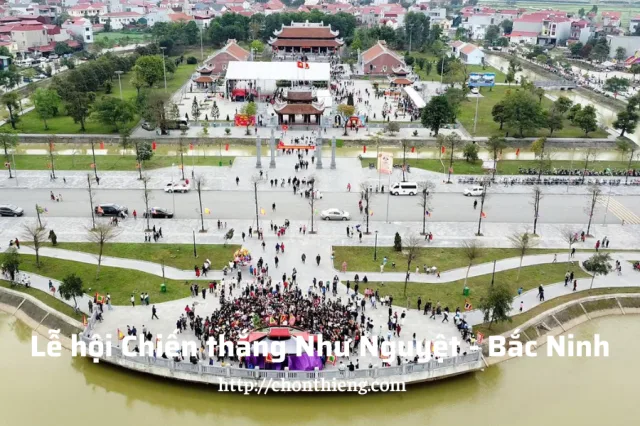


Khái quát về lễ hội
Lễ hội Chiến thắng Như Nguyệt là lễ hội lịch sử lớn gắn với chiến thắng oai hùng của quân dân Đại Việt dưới sự chỉ huy của Lý Thường Kiệt trong cuộc kháng chiến chống quân Tống năm 1077 trên phòng tuyến sông Như Nguyệt, tức sông Cầu ngày nay. Đây là một trong những chiến thắng tiêu biểu nhất trong lịch sử chống ngoại xâm của dân tộc Việt Nam, thường được đặt ngang hàng với các chiến thắng lớn như chiến thắng Bạch Đằng, chiến thắng Chi Lăng – Xương Giang, chiến thắng Ngọc Hồi – Đống Đa hay chiến thắng Điện Biên Phủ.
Lễ hội không chỉ là dịp tưởng nhớ công lao của các bậc tiền nhân đã có công dựng nước và giữ nước, mà còn góp phần giáo dục truyền thống yêu nước, tinh thần đoàn kết cộng đồng, đạo lý “uống nước nhớ nguồn”, đồng thời bảo tồn và phát huy các giá trị văn hóa lịch sử của vùng đất Kinh Bắc.
Các hoạt động lễ hội chủ yếu diễn ra tại đền thờ Thái úy Lý Thường Kiệt thuộc xã Tam Giang, bên dòng sông Cầu lịch sử – nơi từng diễn ra trận quyết chiến chiến lược giữa quân dân Đại Việt và quân xâm lược nhà Tống.
Quá trình hình thành và phục dựng lễ hội
Vào năm 1977, nhân dịp kỷ niệm 920 năm chiến thắng Như Nguyệt, mặc dù là năm tròn có ý nghĩa lớn nhưng do điều kiện kinh tế – xã hội còn nhiều khó khăn nên việc tổ chức lễ hội chưa thể diễn ra tương xứng với tầm vóc lịch sử của chiến thắng. Tuy nhiên, với sự nỗ lực của địa phương, huyện Yên Phong đã phối hợp cùng ngành văn hóa tỉnh Bắc Ninh tổ chức hội thảo khoa học với chủ đề “Phát huy các giá trị di tích lịch sử văn hóa trên phòng tuyến Như Nguyệt”.
Tại hội thảo này, nhiều nhà nghiên cứu đã đề xuất cần xây dựng một lễ hội chiến thắng Như Nguyệt có quy mô quốc gia, định kỳ tổ chức 5 năm một lần nhằm tôn vinh giá trị lịch sử của chiến công năm 1077.
Đến năm 2002, lễ hội chính thức được phục dựng với quy mô lớn nhân kỷ niệm 925 năm chiến thắng Như Nguyệt (1077 – 2002). Đây được xem là dấu mốc quan trọng, bởi sau nhiều năm, chiến thắng Như Nguyệt mới được tái hiện trong một không gian lễ hội vừa mang tính dân gian truyền thống, vừa có nghi lễ trang trọng của Nhà nước.
Lễ hội năm 2002 được đánh giá là có quy mô hoành tráng, kết hợp hài hòa giữa yếu tố lịch sử, văn hóa, giáo dục và đời sống tâm linh cộng đồng. Không khí lễ hội tưng bừng đã thu hút đông đảo nhân dân và du khách thập phương về hành hương, tưởng niệm và tham gia các hoạt động văn hóa truyền thống.
Ý nghĩa lịch sử và văn hóa
Việc tổ chức Lễ hội Chiến thắng Như Nguyệt là dịp để nhân dân cùng ôn lại truyền thống dựng nước và giữ nước vẻ vang của dân tộc dưới triều đại nhà Lý – thời kỳ được xem là giai đoạn phát triển rực rỡ của quốc gia Đại Việt sau gần một nghìn năm Bắc thuộc. Đây không chỉ là hoạt động tưởng niệm một chiến công hiển hách trong lịch sử dân tộc, mà còn mang nhiều ý nghĩa văn hóa, lịch sử và tinh thần sâu sắc. Thông qua lễ hội, nhân dân tưởng nhớ công lao to lớn của Lý Thường Kiệt cùng các tướng sĩ Đại Việt đã anh dũng chiến đấu bảo vệ non sông đất nước. Đồng thời, lễ hội góp phần khơi dậy lòng yêu nước, niềm tự hào dân tộc, củng cố tinh thần đoàn kết cộng đồng và phát huy sức mạnh cố kết của nhân dân. Đây cũng là dịp để bảo tồn và phát huy các loại hình văn hóa dân gian truyền thống đặc sắc của vùng Kinh Bắc như quan họ, bơi chải, đấu vật, trò chơi dân gian và các nghi lễ cổ truyền. Đặc biệt, lễ hội còn có ý nghĩa giáo dục thế hệ trẻ về lịch sử dân tộc, truyền thống chống ngoại xâm và ý thức trách nhiệm đối với quê hương, đất nước. Bên cạnh đó, nhân dân tham dự lễ hội cũng gửi gắm những ước vọng tốt đẹp về cuộc sống bình yên, mưa thuận gió hòa, mùa màng tươi tốt, nhà nhà no ấm, người người mạnh khỏe, hạnh phúc.
Công tác tổ chức lễ hội
Trước ngày khai hội khoảng một tháng, Ban tổ chức lễ hội đã được thành lập với sự tham gia của nhiều cơ quan, ban ngành của huyện và tỉnh nhằm chuẩn bị chu đáo cho các hoạt động diễn ra trong lễ hội. Ban tổ chức được phân công thành nhiều tiểu ban chuyên trách như tiểu ban nội dung, ban nghi lễ, ban tuyên truyền và trang trí, ban văn nghệ, ban an ninh trật tự, ban lễ tân cùng ban tổ chức các trò chơi dân gian và hoạt động thể thao. Mỗi bộ phận đảm nhận một nhiệm vụ riêng, phối hợp chặt chẽ với nhau để bảo đảm công tác tổ chức được tiến hành khoa học, đồng bộ và hiệu quả. Nhờ sự chuẩn bị kỹ lưỡng và cách phân công hợp lý đó, lễ hội được diễn ra quy củ, trang trọng nhưng vẫn giữ được không khí vui tươi, sôi động, thu hút đông đảo nhân dân và du khách tham gia.
Các hoạt động đặc sắc của lễ hội hiện nay
Những năm gần đây, Lễ hội Chiến thắng Như Nguyệt tiếp tục được duy trì và mở rộng với quy mô ngày càng lớn, trở thành một trong những lễ hội lịch sử tiêu biểu của vùng Kinh Bắc. Lễ hội diễn ra trong ba ngày từ ngày 16–18 tháng 2 âm lịch tại khu vực Đền thờ Thái úy Lý Thường Kiệt và dọc bờ sông Như Nguyệt với nhiều hoạt động văn hóa, tín ngưỡng và dân gian đặc sắc, thu hút đông đảo nhân dân cùng du khách thập phương tham dự.
Mở đầu lễ hội là nghi thức rước sắc và dâng hương được tổ chức trang trọng nhằm tưởng nhớ công lao của Lý Thường Kiệt cùng các tướng sĩ Đại Việt đã lập nên chiến thắng vang dội trên phòng tuyến sông Như Nguyệt năm 1077. Đoàn rước với cờ lọng, kiệu lễ, đội nhạc bát âm và những người mặc trang phục truyền thống tạo nên không khí linh thiêng, cổ kính. Trong tiếng trống hội vang rền, người dân thành kính dâng hương cầu mong quốc thái dân an, mưa thuận gió hòa và cuộc sống bình yên, no ấm.
Một trong những hoạt động mang đậm bản sắc văn hóa Kinh Bắc là hát quan họ trên thuyền diễn ra ngay trên dòng sông Cầu thơ mộng. Những liền anh, liền chị trong trang phục truyền thống ngồi trên thuyền hát đối đáp các làn điệu quan họ cổ ngọt ngào, sâu lắng, tạo nên không gian văn hóa vừa trữ tình vừa đậm chất dân gian vùng Bắc Ninh. Bên cạnh đó, khu vực lễ hội còn tổ chức trưng bày các sản phẩm OCOP, giới thiệu sản vật địa phương và các nghề thủ công truyền thống nhằm quảng bá văn hóa, du lịch và đời sống của người dân Yên Phong nói riêng, Bắc Ninh nói chung.
Ngoài phần lễ, phần hội cũng diễn ra vô cùng sôi động với nhiều hoạt động hấp dẫn như đấu vật truyền thống, biểu diễn múa rối nước, ca trù, chèo, hát văn, cải lương và nhiều trò chơi dân gian. Các tiết mục nghệ thuật dân gian được biểu diễn bởi các nghệ nhân và câu lạc bộ văn hóa trong vùng đã góp phần tái hiện không gian sinh hoạt văn hóa truyền thống đặc sắc của vùng Kinh Bắc.
Điểm nhấn nổi bật nhất của lễ hội là hội thi bơi chải trên sông Như Nguyệt. Đây là hoạt động thu hút đông đảo người dân và du khách nhất trong suốt thời gian diễn ra lễ hội. Các đội bơi đến từ nhiều địa phương của Bắc Ninh và Bắc Giang cùng tranh tài trong không khí sôi động với tiếng trống thúc dồn dập và tiếng reo hò cổ vũ vang dội khắp đôi bờ sông. Mỗi thuyền chải có 24 tay chèo thi đấu theo thể thức lượt đi – lượt về. Trong suốt cuộc đua, các tay chèo phải phối hợp nhịp nhàng, giữ đều nhịp mái chèo và đặc biệt phải có kỹ thuật quay đầu thuyền thật nhanh, chính xác để giành lợi thế. Những màn tăng tốc quyết liệt trên mặt sông đã tạo nên không khí hào hứng, tái hiện phần nào khí thế thủy chiến hào hùng của cha ông trên dòng sông lịch sử năm xưa.
Không khí lễ hội thể hiện rõ tinh thần đoàn kết cộng đồng của cư dân vùng Kinh Bắc. Người dân hai bên bờ sông cùng hòa mình vào ngày hội trong niềm tự hào về truyền thống lịch sử quê hương. Dù là người địa phương hay du khách phương xa, tất cả đều cảm nhận được sự gắn bó cộng đồng, tình yêu quê hương đất nước và niềm tự hào về chiến thắng Như Nguyệt – một bản hùng ca bất diệt trong lịch sử dân tộc Việt Nam.
Kết luận
Lễ hội Chiến thắng Như Nguyệt là một trong những lễ hội lịch sử tiêu biểu của vùng Kinh Bắc và của cả dân tộc Việt Nam. Việc phục dựng và phát triển lễ hội không chỉ góp phần bảo tồn di sản văn hóa mà còn khẳng định giá trị trường tồn của chiến thắng Như Nguyệt trong lịch sử chống ngoại xâm của dân tộc.
Qua lễ hội, hào khí thời Lý tiếp tục được khơi dậy mạnh mẽ trong đời sống hiện đại, trở thành nguồn động lực tinh thần to lớn để giáo dục truyền thống yêu nước, củng cố bản sắc văn hóa và tăng cường sự gắn kết cộng đồng hôm nay.
Tài liệu tham khảo
- Hải Hà, Về Bắc Ninh tham dự Lễ hội Chiến thắng Như Nguyệt, Báo Thanh tra, ngày 17/03/2025.
- Thư Vũ, Sôi động cuộc thi bơi chải tại Lễ hội chiến thắng Như Nguyệt 2026, VOV Online, ngày 05/04/2026.
- Trần Đình Luyện (Chủ biên), 2003, Lễ hội Bắc Ninh, Sở Văn hóa Thông tin Bắc Ninh.
Ngôn ngữ khác
Tiếng Anh (English)
Overview of the Festival
The Nhu Nguyet Victory Festival is a major historical festival associated with the glorious victory of Dai Viet forces and people under the command of Ly Thuong Kiet during the resistance war against the Song Dynasty in 1077 on the Nhu Nguyet River defensive line, known today as the Cau River. This victory is regarded as one of the most significant military triumphs in Vietnamese history and is often ranked alongside such landmark victories as the Bach Dang Victory, the Chi Lang – Xuong Giang Victory, the Ngoc Hoi – Dong Da Victory, and the Dien Bien Phu Victory.
The festival is not only an occasion to commemorate the contributions of the ancestors who helped build and defend the nation, but also serves to educate younger generations about patriotism, community solidarity, and the moral principle of gratitude toward preceding generations. At the same time, it contributes to preserving and promoting the historical and cultural values of the Kinh Bac region.
Most festival activities take place at the Temple of Grand Preceptor Ly Thuong Kiet (Den tho Thai uy Ly Thuong Kiet) in Tam Giang Commune, situated on the banks of the historic Cau River, where the decisive strategic battle between Dai Viet forces and the invading Song army once occurred.
Formation and Revival of the Festival
In 1977, on the occasion of the 900th anniversary of the Nhu Nguyet Victory, although the anniversary held great historical significance, the difficult socio-economic conditions of the period prevented the organization of a festival commensurate with the magnitude of the victory. Nevertheless, through local efforts, Yen Phong District cooperated with the Bac Ninh provincial cultural sector to organize a scientific conference entitled “Promoting the Values of Historical and Cultural Sites on the Nhu Nguyet Defensive Line.”
At this conference, many scholars proposed the establishment of a national-scale Nhu Nguyet Victory Festival to be held every five years in order to honor the historical significance of the victory achieved in 1077.
In 2002, the festival was officially revived on a large scale to commemorate the 925th anniversary of the Nhu Nguyet Victory (1077–2002). This event marked an important milestone, as it represented the first large-scale reenactment of the Nhu Nguyet Victory after many years within a festival space that combined traditional folk elements with formal state ceremonies.
The 2002 festival was widely regarded as a grand event that harmoniously integrated historical, cultural, educational, and spiritual dimensions. Its festive atmosphere attracted large numbers of local residents and pilgrims from across the country who came to pay tribute, offer commemorations, and participate in traditional cultural activities.
Historical and Cultural Significance
The organization of the Nhu Nguyet Victory Festival provides an opportunity for people to reflect upon the glorious tradition of nation-building and national defense under the Ly Dynasty, a period widely regarded as one of the most prosperous eras in the history of Dai Viet following nearly a thousand years of Chinese domination.
The festival is not merely a commemoration of a remarkable military achievement but also carries profound historical, cultural, and spiritual significance. Through the festival, participants honor the immense contributions of Ly Thuong Kiet and the Dai Viet generals and soldiers who courageously defended the country against foreign invasion.
At the same time, the festival helps foster patriotism, strengthen national pride, reinforce community solidarity, and promote collective social cohesion. It also contributes to the preservation and promotion of traditional folk cultural forms characteristic of the Kinh Bac region, including Quan Ho folk singing, traditional boat racing, wrestling competitions, folk games, and ancient ritual practices.
Particularly important is the festival’s educational role in teaching younger generations about national history, the tradition of resisting foreign aggression, and the responsibilities that citizens bear toward their homeland and nation.
In addition, festival participants express their aspirations for peace, favorable weather, abundant harvests, prosperity, good health, and happiness for all.
Festival Organization
Approximately one month before the opening of the festival, the Organizing Committee of the Nhu Nguyet Victory Festival is established with the participation of various district- and provincial-level agencies to ensure thorough preparation for all festival activities.
The committee is divided into specialized subcommittees, including those responsible for content development, ritual organization, publicity and decoration, artistic performances, security and public order, reception, folk games, and sporting events. Each unit undertakes specific responsibilities while coordinating closely with the others to ensure that the festival is organized in a scientific, systematic, and effective manner.
Thanks to careful preparation and well-structured management, the festival is conducted in a dignified and orderly fashion while still maintaining a lively and festive atmosphere that attracts large numbers of residents and visitors.
Contemporary Festival Activities
In recent years, the Nhu Nguyet Victory Festival has continued to be maintained and expanded, becoming one of the most representative historical festivals of the Kinh Bac region. In 2025, the festival was held over three days, from 15 to 17 March (corresponding to the 16th–18th days of the Second Lunar Month), in the area surrounding the Temple of Grand Preceptor Ly Thuong Kiet and along the banks of the Nhu Nguyet River. The event featured numerous cultural, religious, and folk activities that attracted large numbers of local residents and visitors.
The festival opens with the Procession of Imperial Decrees and the Incense Offering Ceremony, conducted with great solemnity to commemorate Ly Thuong Kiet and the Dai Viet generals and soldiers who secured the celebrated victory on the Nhu Nguyet defensive line in 1077. The procession, featuring ceremonial flags, parasols, ritual palanquins, an Eight-Sound Ensemble, and participants dressed in traditional costumes, creates a sacred and ancient atmosphere. Amid the resounding sounds of festival drums, participants respectfully offer incense while praying for national prosperity, favorable weather, peace, and abundance.
One of the most distinctive cultural activities of the Kinh Bac region is Quan Ho singing performed on boats along the picturesque Cau River. Male and female Quan Ho singers, dressed in traditional costumes, perform antiphonal folk songs featuring sweet and profound melodies. This activity creates a cultural space that is both lyrical and deeply rooted in the folk traditions of Bac Ninh.
The festival grounds also host exhibitions of OCOP products, displays of local specialties, and presentations of traditional handicrafts, contributing to the promotion of local culture, tourism, and the livelihoods of the people of Yen Phong District and Bac Ninh Province.
Beyond the ritual component, the festive section of the festival is equally vibrant, featuring a wide range of activities such as traditional wrestling, water puppetry performances, ca tru singing, cheo theatre, hat van ritual singing, cai luong reformed theatre, and numerous folk games. These performances, presented by local artisans and cultural clubs, help recreate the rich traditional cultural life of the Kinh Bac region.
The most prominent highlight of the festival is the traditional boat racing competition on the Nhu Nguyet River. This event attracts the largest number of participants and spectators throughout the festival. Racing teams from various localities in Bac Ninh and Bac Giang Provinces compete amid an energetic atmosphere marked by the rapid beating of drums and enthusiastic cheering from both riverbanks.
Each racing boat is crewed by twenty-four rowers who compete in a round-trip format. Throughout the race, the rowers must coordinate their movements precisely, maintain a consistent rowing rhythm, and demonstrate exceptional skill in executing fast and accurate turns in order to gain a competitive advantage. The intense bursts of speed across the river create a thrilling spectacle while evoking the heroic spirit of the naval warfare that once took place on this historic waterway.
The festival atmosphere vividly reflects the strong sense of community solidarity among the people of the Kinh Bac region. Residents from both sides of the river participate enthusiastically in the celebrations, united by their pride in their local historical traditions. Whether local inhabitants or visitors from distant regions, all participants experience a profound sense of communal connection, love for the homeland, and pride in the Nhu Nguyet Victory—an enduring epic in the history of the Vietnamese nation.
Conclusion
The Nhu Nguyet Victory Festival is one of the most representative historical festivals of the Kinh Bac region and of Vietnam as a whole. The revival and continued development of the festival not only contribute to the preservation of cultural heritage but also reaffirm the enduring significance of the Nhu Nguyet Victory in the nation’s long history of resistance against foreign aggression.
Through the festival, the heroic spirit of the Ly Dynasty continues to be powerfully rekindled in contemporary society, serving as an important source of inspiration for educating future generations about patriotism, strengthening cultural identity, and fostering community cohesion.
References
- Hải Hà, Về Bắc Ninh tham dự Lễ hội Chiến thắng Như Nguyệt, Báo Thanh tra, ngày 17/03/2025.
- Thư Vũ, Sôi động cuộc thi bơi chải tại Lễ hội chiến thắng Như Nguyệt 2026, VOV Online, ngày 05/04/2026.
- Trần Đình Luyện (Chủ biên), 2003, Lễ hội Bắc Ninh, Sở Văn hóa Thông tin Bắc Ninh.
Tiếng Trung (中文)
如月大捷节庆概述
如月大捷节庆(Le hoi Chien thang Nhu Nguyet)是一项纪念大越国(Dai Viet)军民在太尉李常杰(Ly Thuong Kiet)统率下,于1077年抗击宋朝(Tong)侵略战争中取得辉煌胜利的重要历史性节庆活动。此次著名战役发生于如月江(Nhu Nguyet),即今天的求河(Song Cau)防线之上,是越南民族抗击外来侵略历史上最具代表性的胜利之一,常与白藤江大捷(Bach Dang)、支棱—昌江大捷(Chi Lang – Xuong Giang)、玉回—栋多大捷(Ngoc Hoi – Dong Da)以及奠边府大捷(Dien Bien Phu)并列为越南历史上最辉煌的军事胜利。
这一节庆不仅是缅怀历代先贤建国、卫国功绩的重要时刻,同时也是弘扬爱国主义精神、增强社区凝聚力、传承“饮水思源”传统美德的重要载体,并对保护和弘扬京北地区(Kinh Bac)历史文化遗产具有重要意义。
节庆活动主要在太尉李常杰祠(Den tho Thai uy Ly Thuong Kiet)举行。该祠位于三江社(Tam Giang)境内,坐落于历史悠久的求河畔,这里正是1077年大越军民与宋军展开战略决战的重要战场。
节庆的形成与复兴过程
1977年,适逢如月大捷920周年纪念。虽然这一纪念年份具有重大历史意义,但由于当时社会经济条件仍较为困难,因此未能举办与这一伟大战役历史地位相匹配的大型节庆活动。
然而,在地方政府和文化部门的努力下,安丰县(Yen Phong)联合北宁省(Bac Ninh)文化部门举办了题为《发挥如月防线历史文化遗迹价值》的学术研讨会。
在此次研讨会上,众多专家学者提出,应建立具有国家级规模的如月大捷纪念节庆,并每五年举办一次,以彰显1077年伟大战役的历史价值和民族意义。
至2002年,为纪念如月大捷925周年(1077—2002),节庆正式恢复举办并扩大规模。这被视为一个重要历史节点,因为历经多年之后,如月大捷首次以兼具传统民间节庆特色和国家纪念仪式性质的形式重新呈现在公众面前。
2002年的节庆活动规模宏大,成功融合了历史、文化、教育以及社区精神生活等多重元素。热烈而庄重的节庆氛围吸引了大量民众和各地游客前来朝拜、缅怀先烈并参与传统文化活动。
历史与文化意义
举办如月大捷节庆,是人民共同回顾李朝(Ly)时期建国与卫国光辉历史的重要契机。李朝被视为大越国家在摆脱近千年北属时期之后走向繁荣发展的重要历史阶段。
这一节庆不仅是纪念民族历史上一场辉煌胜利的活动,同时也蕴含着深刻的历史、文化与精神价值。
通过节庆活动,人们缅怀李常杰及大越将士为保卫国家独立和领土完整所作出的卓越贡献。同时,节庆也有助于激发爱国情怀、增强民族自豪感、巩固社区团结,并进一步发挥人民群众的凝聚力量。
此外,节庆还是保护和弘扬京北地区传统民间文化的重要平台。例如北宁官贺民歌(Quan ho)、赛艇活动、传统摔跤、民间游戏以及各类古老祭祀仪式等,都在节庆期间得到集中展示与传承。
尤其值得注意的是,该节庆还具有重要的教育功能。通过各种纪念活动,年轻一代能够更加深入地了解民族历史、抗击外来侵略的传统以及自己对家乡和国家应承担的责任。
与此同时,参与节庆的人们也寄托着对未来生活的美好愿望,希望国家太平安定、风调雨顺、五谷丰登、家家富足、人人健康幸福。
节庆组织工作
在节庆开幕前约一个月,如月大捷节庆组织委员会便正式成立。委员会由县级和省级多个机关单位共同组成,负责统筹筹备各项活动。
组织委员会下设多个专业工作小组,包括内容组、礼仪组、宣传与布置组、文艺组、安全秩序组、接待组以及民间游戏和体育活动组织组等。
各工作组分工明确、密切配合,确保节庆活动能够科学、有序、高效地开展。
正是由于前期准备充分、组织周密,整个节庆既保持了庄严肃穆的纪念性质,又充满欢乐热烈的节日氛围,吸引了众多群众和游客积极参与。
当代节庆的特色活动
近年来,如月大捷节庆不断得到传承与发展,规模日益扩大,已成为京北地区最具代表性的历史文化节庆之一。
2025年,节庆于3月15日至17日(即农历二月十六日至十八日)举行,活动地点包括太尉李常杰祠及如月江两岸区域。节庆期间举办了丰富多彩的文化、信仰和民俗活动,吸引大量群众与各地游客参加。
节庆首先举行迎诰仪式与上香祭礼,以纪念李常杰及大越将士于1077年如月江防线上取得的伟大胜利。
迎诰队伍由彩旗、华盖、祭轿、八音乐队以及身着传统服饰的民众组成,场面庄严肃穆,古韵浓厚。在激昂的节庆鼓声中,人们虔诚上香,祈愿国泰民安、风调雨顺、生活安康富足。
最具京北文化特色的活动之一,是在求河上举行的船上官贺民歌演唱。
身着传统服饰的“连兄”“连姐”(Quan ho艺人)乘坐彩船,在河面上对唱悠扬婉转的古老官贺曲调。优美的歌声与秀丽的河景交相辉映,营造出充满诗意而又富有浓厚民俗特色的文化空间。
与此同时,节庆现场还举办OCOP特色产品展示活动,介绍地方特产和传统手工艺,以推广安丰县及北宁省的文化、旅游资源和地方生活特色。
除了祭祀活动之外,节庆娱乐部分同样精彩纷呈,包括传统摔跤、水上木偶戏、歌筹(Ca tru)、嘲剧(Cheo)、唱文(Hat van)、改良戏(Cai luong)以及众多民间游戏。
这些由当地民间艺人和文化俱乐部带来的表演,生动再现了京北地区丰富多彩的传统文化生活。
如月江赛艇大会
整个节庆最引人瞩目的活动,当属如月江赛艇比赛。
这是节庆期间最受群众和游客欢迎的项目。来自北宁省和北江省(Bac Giang)多个地区的赛艇队齐聚一堂,在震耳欲聋的鼓声和观众热烈的呐喊助威声中展开激烈角逐。
每艘赛艇配备24名桨手,比赛采取往返竞速方式进行。
比赛过程中,所有桨手必须保持高度默契,统一划桨节奏,尤其在转向时需要迅速而精准地完成船体调头,以争取领先优势。
赛艇在江面上奋勇争先的场景,不仅激动人心,也在一定程度上重现了1077年如月江水战时期大越军民英勇抗敌的壮阔气势。
社区精神与民族自豪感
节庆期间所展现出的热烈氛围,充分体现了京北地区居民强烈的社区凝聚力。
江河两岸的群众共同参与这一盛会,表达对家乡历史传统的自豪之情。无论是当地居民还是远道而来的游客,都能够感受到深厚的乡土情感、浓烈的爱国精神以及对如月大捷这一民族英雄史诗的崇高敬意。
结论
如月大捷节庆不仅是京北地区的重要历史文化节庆,也是越南民族最具代表性的历史纪念活动之一。
节庆的恢复与发展,不仅有助于保护和传承民族文化遗产,更进一步彰显了如月大捷在越南民族抗击外来侵略历史中的永恒价值。
通过这一节庆活动,李朝时期所形成的民族豪气与爱国精神在现代社会中得以持续传承,并成为弘扬爱国主义传统、增强文化认同、巩固社区团结的重要精神力量。
参考文献
- Hải Hà, Về Bắc Ninh tham dự Lễ hội Chiến thắng Như Nguyệt, Báo Thanh tra, ngày 17/03/2025.
- Thư Vũ, Sôi động cuộc thi bơi chải tại Lễ hội chiến thắng Như Nguyệt 2026, VOV Online, ngày 05/04/2026.
- Trần Đình Luyện (Chủ biên), 2003, Lễ hội Bắc Ninh, Sở Văn hóa Thông tin Bắc Ninh.
Tiếng Pháp (Français’)
Aperçu de la fête de la Victoire de Nhu Nguyet
La fête de la Victoire de Nhu Nguyet est une grande célébration historique associée à la victoire éclatante remportée par les armées et le peuple du Dai Viet sous le commandement de Ly Thuong Kiet lors de la guerre de résistance contre la dynastie Song en 1077 sur la ligne défensive de Nhu Nguyet, correspondant aujourd’hui au fleuve Cau.
Cette victoire est considérée comme l’un des plus grands exploits militaires de l’histoire vietnamienne dans la lutte contre les invasions étrangères. Elle est souvent placée au même rang que les grandes victoires de Bach Dang, Chi Lang – Xuong Giang, Ngoc Hoi – Dong Da ou encore Dien Bien Phu.
La fête constitue non seulement une occasion de rendre hommage aux ancêtres qui ont contribué à la fondation et à la défense du pays, mais elle participe également à la transmission du patriotisme, au renforcement de la solidarité communautaire, à la valorisation de la morale traditionnelle fondée sur la reconnaissance envers les générations précédentes, ainsi qu’à la préservation et à la promotion du patrimoine historique et culturel de la région de Kinh Bac.
Les principales activités de la fête se déroulent au Temple du Grand Précepteur Ly Thuong Kiet (Den tho Thai uy Ly Thuong Kiet), situé dans la commune de Tam Giang, sur les rives du fleuve Cau historique, lieu où se déroula l’affrontement décisif entre les forces du Dai Viet et les armées de la dynastie Song.
La formation et la restauration de la fête
En 1977, à l’occasion du 900e anniversaire de la victoire de Nhu Nguyet, malgré l’importance symbolique de cette commémoration, les conditions économiques et sociales demeuraient encore difficiles, empêchant l’organisation d’une célébration à la mesure de l’événement historique.
Grâce aux efforts des autorités locales, le district de Yen Phong collabora toutefois avec le secteur culturel de la province de Bac Ninh afin d’organiser un colloque scientifique intitulé :
« Valorisation des vestiges historiques et culturels de la ligne défensive de Nhu Nguyet ».
Lors de cette rencontre, de nombreux chercheurs proposèrent la création d’une fête nationale consacrée à la victoire de Nhu Nguyet, organisée tous les cinq ans afin d’honorer la portée historique de la campagne militaire de 1077.
En 2002, la fête fut officiellement restaurée à grande échelle à l’occasion du 925e anniversaire de la victoire de Nhu Nguyet (1077–2002).
Cette date constitue une étape importante, car elle marque la première reconstitution d’envergure de la victoire dans un cadre associant traditions populaires et cérémonial officiel de l’État.
L’édition de 2002 fut unanimement saluée pour son ampleur remarquable, son équilibre entre dimensions historique, culturelle, éducative et spirituelle, ainsi que pour sa capacité à attirer un grand nombre d’habitants et de visiteurs venus participer aux cérémonies commémoratives et aux activités traditionnelles.
Signification historique et culturelle
L’organisation de la fête de la Victoire de Nhu Nguyet offre à la population l’occasion de raviver le souvenir de la glorieuse tradition vietnamienne de construction et de défense de la nation sous la dynastie Ly, période considérée comme l’un des âges d’or du Dai Viet après près d’un millénaire de domination étrangère.
La fête ne constitue pas seulement la commémoration d’une victoire militaire exceptionnelle ; elle possède également une profonde portée culturelle, historique et spirituelle.
À travers les cérémonies, la population rend hommage à Ly Thuong Kiet et aux soldats du Dai Viet qui combattirent héroïquement pour défendre l’indépendance nationale.
La célébration contribue également à renforcer le patriotisme, la fierté nationale, la solidarité communautaire et la cohésion sociale.
Elle joue par ailleurs un rôle essentiel dans la sauvegarde et la valorisation de nombreuses formes de patrimoine culturel traditionnel de la région de Kinh Bac, telles que le chant Quan Ho, les courses de bateaux boi chai, la lutte traditionnelle, les jeux populaires et les cérémonies anciennes.
La fête possède également une importante fonction éducative en transmettant aux jeunes générations la mémoire historique du peuple vietnamien, la tradition de résistance aux invasions étrangères et le sens des responsabilités envers la patrie.
Enfin, les participants expriment leurs aspirations à une vie paisible, à des conditions climatiques favorables, à de bonnes récoltes, à la prospérité des familles ainsi qu’à la santé et au bonheur de tous.
Organisation de la fête
Environ un mois avant l’ouverture des célébrations, le comité d’organisation de la fête de la Victoire de Nhu Nguyet est constitué avec la participation de nombreux organismes administratifs du district et de la province.
Cette structure est divisée en plusieurs sous-comités spécialisés : comité du contenu, comité des cérémonies, comité de communication et de décoration, comité artistique, comité de sécurité et d’ordre public, comité d’accueil ainsi que comité chargé des jeux populaires et des activités sportives.
Chaque groupe reçoit des missions précises et travaille en étroite coordination avec les autres afin de garantir une organisation efficace, cohérente et méthodique.
Grâce à cette préparation minutieuse et à cette répartition rigoureuse des responsabilités, la fête se déroule dans un cadre à la fois solennel, ordonné et convivial, attirant un large public.
Les activités remarquables de la fête aujourd’hui
Ces dernières années, la fête de la Victoire de Nhu Nguyet a continué à se développer et à gagner en importance, devenant l’une des principales fêtes historiques de la région de Kinh Bac.
En 2025, elle s’est déroulée pendant trois jours, du 15 au 17 mars (correspondant aux 16–18 du deuxième mois lunaire), dans l’enceinte du Temple du Grand Précepteur Ly Thuong Kiet et le long des rives du fleuve Nhu Nguyet.
De nombreuses activités culturelles, religieuses et populaires y ont attiré un grand nombre de visiteurs venus de toutes les régions.
Les cérémonies s’ouvrent par la procession des ordonnances sacrées et l’offrande d’encens, organisées avec solennité afin d’honorer la mémoire de Ly Thuong Kiet et des combattants du Dai Viet qui remportèrent la célèbre victoire de 1077 sur la ligne défensive du fleuve Nhu Nguyet.
Le cortège, composé de bannières, de parasols d’honneur, de palanquins rituels, d’un orchestre Bat Am et de participants vêtus de costumes traditionnels, crée une atmosphère empreinte de sacralité et de grandeur historique.
Au son des tambours de fête, les habitants présentent leurs offrandes d’encens en formulant des vœux de paix, de prospérité et d’harmonie.
L’une des activités les plus représentatives de l’identité culturelle de Kinh Bac est le chant Quan Ho interprété sur des embarcations naviguant sur les eaux paisibles du fleuve Cau.
Les chanteurs et chanteuses traditionnels, vêtus des costumes caractéristiques de la région, exécutent des chants alternés du répertoire ancien du Quan Ho, créant un espace culturel à la fois poétique, raffiné et profondément populaire.
Parallèlement, des expositions consacrées aux produits OCOP, aux spécialités locales et aux métiers artisanaux traditionnels permettent de promouvoir la culture, le tourisme et le mode de vie des habitants de Yen Phong et de la province de Bac Ninh.
Outre les cérémonies officielles, la partie festive se caractérise par de nombreuses manifestations populaires : lutte traditionnelle, spectacles de marionnettes sur l’eau, représentations de ca tru, de cheo, de hat van, de cai luong ainsi que divers jeux traditionnels.
Les prestations proposées par les artisans et les associations culturelles locales contribuent à recréer l’atmosphère caractéristique de la vie culturelle traditionnelle de Kinh Bac.
L’événement le plus spectaculaire demeure toutefois la compétition de bateaux boi chai organisée sur le fleuve Nhu Nguyet.
Cette activité attire le plus grand nombre de spectateurs tout au long de la fête.
Des équipes venues de différentes localités des provinces de Bac Ninh et Bac Giang s’affrontent dans une ambiance particulièrement animée, rythmée par les battements rapides des tambours et les encouragements enthousiastes de la foule massée sur les deux rives.
Chaque embarcation compte vingt-quatre rameurs qui s’affrontent selon un système d’aller-retour.
Durant toute la course, les participants doivent maintenir une parfaite synchronisation, conserver un rythme régulier et surtout maîtriser l’art délicat du demi-tour rapide afin de prendre l’avantage sur leurs concurrents.
Les accélérations spectaculaires observées sur le fleuve recréent symboliquement l’atmosphère des combats navals héroïques qui se déroulèrent autrefois sur ce cours d’eau historique.
L’ambiance générale de la fête reflète clairement l’esprit de solidarité des habitants de Kinh Bac.
Les populations vivant sur les deux rives du fleuve participent ensemble aux célébrations dans un même sentiment de fierté envers leur patrimoine historique.
Qu’ils soient habitants de la région ou visiteurs venus de loin, tous ressentent la force des liens communautaires, l’attachement à la patrie et la fierté inspirée par la victoire de Nhu Nguyet, véritable épopée immortelle de l’histoire vietnamienne.
Conclusion
La fête de la Victoire de Nhu Nguyet constitue l’une des plus importantes célébrations historiques de la région de Kinh Bac et du Vietnam dans son ensemble.
Sa restauration et son développement contribuent non seulement à la préservation du patrimoine culturel, mais aussi à l’affirmation de la valeur durable de la victoire de Nhu Nguyet dans l’histoire vietnamienne de la résistance aux invasions étrangères.
À travers cette fête, l’esprit héroïque de l’époque Ly continue d’inspirer la société contemporaine et demeure une source majeure d’énergie morale pour l’éducation patriotique, le renforcement de l’identité culturelle et la consolidation de la cohésion communautaire.
Références bibliographiques
- Hải Hà, Về Bắc Ninh tham dự Lễ hội Chiến thắng Như Nguyệt, Báo Thanh tra, ngày 17/03/2025.
- Thư Vũ, Sôi động cuộc thi bơi chải tại Lễ hội chiến thắng Như Nguyệt 2026, VOV Online, ngày 05/04/2026.
- Trần Đình Luyện (Chủ biên), 2003, Lễ hội Bắc Ninh, Sở Văn hóa Thông tin Bắc Ninh.