

Tên gọi và vị trí địa lý
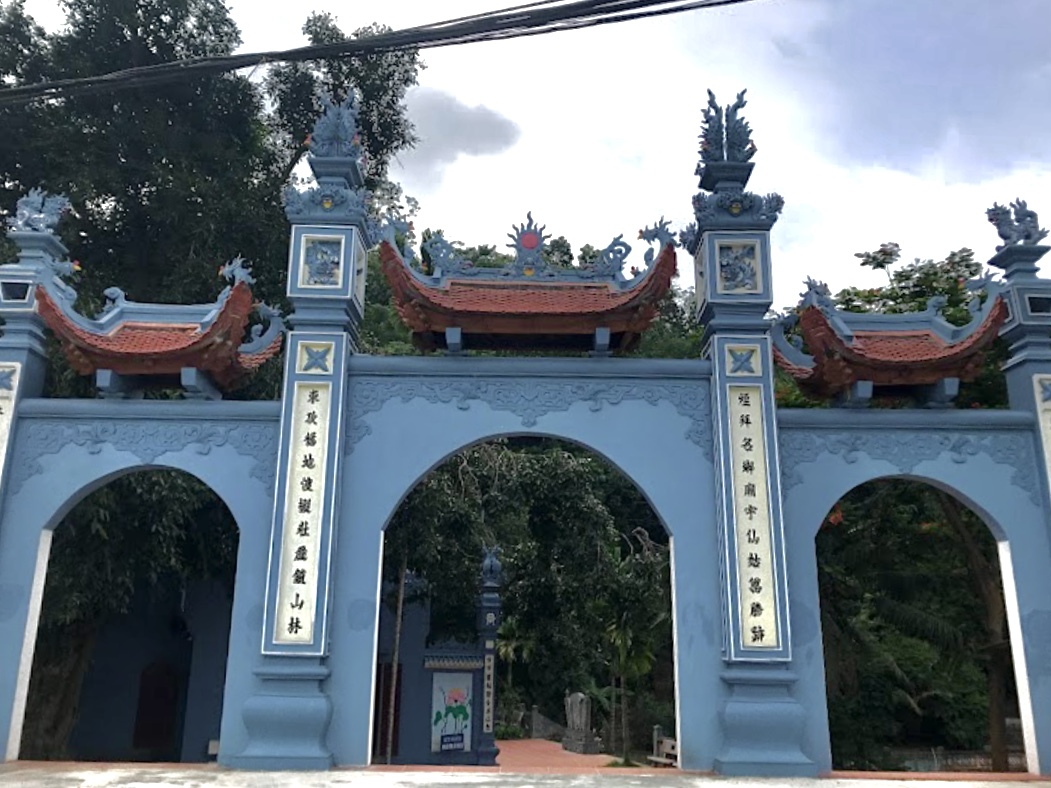
Đền Đông Cuông có tên gọi khác là đền Chầu đệ nhị Thượng Ngàn; ngôn từ dân gian trước đây định danh “Đền Đông”, “Đền Mẫu Đông”; khánh tự và sở văn ghi rõ “Đông Quang linh từ”.
Đền thuộc địa phận thôn Bến Đền, xã Đông Cuông, huyện Văn Yên, tỉnh Yên Bái. Cách trung tâm tỉnh lỵ Yên Bái về phía Tây Bắc 52km, cách huyện lỵ Văn Yên 18 km về phía Tây Bắc và cách ga Trái Hút 4km về phía Tây Nam.
Lược sử
Đền có từ lâu đời, qua sử sách thư tịch được biết Đền có muộn nhất vào đời Lê, được phát triển từ một Miếu cổ (thuộc trung tâm trại Quy Hóa thời Trần). Trong Kiến Văn Tiểu Lục, mục “Linh tích” thời hậu Lê, cụ Lê Quý Đôn có ghi chép về ngôi Đền Đông Cuông này.
“Văn Châu, một người thuyền hộ xã Kính Chủ, huyện Thanh Ba (nay thuộc địa phận Lâm Thao – Phú Thọ) là học trò Hiệu như Nguyễn Đình Kính. Giữa niên hiệu Bảo Thái (1720 – 1729) đi buôn ở Đông Quang (nay thuộc huyện Văn Yên, tỉnh Yên Bái). Bến sông này có miếu thờ Đông Quang Công Chúa vẫn nổi tiếng anh linh. Tục truyền Công Chúa là vợ Đại vương miếu Ngọc Tháp, huyện Sơn Vi (sau đổi là huyện Lâm Thao). Một hôm trời đã tối, Văn Châu thấy một người từ trong miếu Đông Quang đi ra đến chỗ thuyền đỗ, gọi tên mình và bảo rằng: “Khi thuyền nhà ngươi trở về qua miếu Ngọc Tháp, phiền nhà ngươi nói giúp là kính tạ Đại vương, Chúa bà đã sinh con trai rồi, gửi lời về báo để Đại vương biết.” Nói xong liền biến mất. Đường thủy mà thuyền buồm đi từ Đông Quang đến Ngọc Tháp phải ba, bốn ngày, thế mà ngày hôm ấy, Văn Châu bắt đầu đi từ sáng sớm mà đến giờ Thân đã tới Ngọc Tháp (chỗ này núi đá mọc nhô ra bến sông như hình ruột ốc, miếu ở trên núi, bên cạnh miếu có chùa Lăng Nghiêm). Văn Châu theo lời thầy dặn, đứng ở đầu thuyền nói lại, rồi đi.“”(1)
Đền Đông Cuông sơ khởi là Miếu thờ Đông Quang công chúa do các dòng họ Hà, Hoàng là người Tày Khao sáng lập và thay nhau đảm lãnh công vụ chính quyền, đồng thời là nơi làm việc của Thổ Tù, chức dịch, phiên quan và đảm chức năng “Đinh Trạm” chuyển tống đạt công văn hai chiều giữa triều đình trung ương và cơ sở. Thời Trần tổng dinh Quy Hóa – Hà Bổng và ông Từ (Ngọc Tháp – Quang Sơn) lên trấn giữ biên ải. Hiện nay, trước là Đình, nay là Đền dòng họ Hà quán xuyến bởi tổ phụ của dòng họ Hà là Hà Văn đã từng lãnh đạo địa phương đánh giặc Nguyên – Mông thời Trần. Sử chép tháng 2 năm Đinh Hợi (1287) vua Nguyên – Mông lấy 7 vạn quân, 500 chiến thuyền, 6.000 quân Vân Nam và 1 vạn 5.000 quân ở 4 châu ngoài bể và sai thái tử Thoát Hoan làm đại nguyên soái; A Bát Xích làm Tả Thừa; A Lỗ Xích làm bình trương chính sự; Ô Mã Nhi làm chính sự đem tất cả hơn 30 vạn quân sang tiến đánh nước Nam.
Trước tình thế đó, Thái thượng hoàng Trần Thánh Tông và vua Trần Nhân Tông đã sắc phong Hưng Đạo Vương Trần Quốc Tuấn làm quốc công tiết chế chỉ huy toàn bộ quân dân Đại Việt kháng chiến chống quân xâm lược Nguyên – Mông. Đạo quân Nguyên – Mông do Nạt Tốc Lạt Đinh chỉ huy chạy ngược theo sông Lô về Vân Nam, khi chạy qua địa phận Phù Ninh (nay là huyện Phong Châu tỉnh Phú Thọ) chúng bị quân dân địa phương do anh em Hà Đặc, Hà Chương đã rút quân lên đánh tận căn cứ núi Chỉ (thuộc tỉnh Phú Thọ), từ trên núi đưa dân binh xông vào đồn quân tiên phong của giặc, tập kích bất ngờ bằng nhiều mưu lược quân sự. Hà Đặc sai người dùng tre đan thành những hình người to lớn cho mặc áo quần như người thật rồi cứ tối thì dẫn ra dẫn vào. Ông lại sai người dùi thủng thân các cây to rồi cắm vào đấy những mũi tên thật lớn, quân giặc trông thấy tưởng rằng đang gặp những người khổng lồ có sức mạnh phi thường bắn thủng cả những cây cổ thụ, hoảng loạn mà không dám đánh.
Quân của Hà Đặc, Hà Chương đuổi giặc tới tận A Lạp thì bị đạo quân đi sau của giặc chặn đánh, Hà Đặc anh dũng hy sinh, Hà Chương bị bắt. Nhân đêm tối lúc sơ hở Hà Chương đã lấy cờ xí và y phục quân giặc trốn về, đem dâng lên triều đình xin dùng cờ và y phục giả làm quân giặc tới doanh trại của chúng, giặc bị tập kích bất ngờ không kịp đề phòng bị quân của Hà Chương đánh từ trong ra. Quân Nguyên – Mông tan vỡ thiệt hại nặng, số sống sót rút chạy về Vân Nam.
Chiến thắng quân Nguyên – Mông lần thứ 2 là một chiến thắng hiển hách, địa danh tiêu biểu Hàm Tử, Chương Dương, Tây Kết, Cự Đà sẽ mãi còn ghi trong sử sách. Những đóng góp của nhân dân các dân tộc miền núi phía Bắc dưới sự chỉ huy của các thủ lĩnh lỗi lạc: Hà Đặc, Hà Chương thể hiện sức mạnh đoàn kết dân tộc.
Theo gia phả của dòng họ Hà “vốn gốc người Tày Khao thuộc dòng Hà Đặc, Hà Chương thời Trần. Nay tụ cư tại An Bồi – Kiến Xương, Thái Bình: Hà Khâm và Hà Chương là hai anh em, khi đánh giặc Hà Chương hăng hái truy kích địch tới vùng Yên Bái đã hy sinh tại đó. Ông được phong hầu là “Bình Nguyên thượng tướng trung dũng hầu””. Tại làng An Bồi còn có một nhà thờ tổ có hai câu đối:
“Thác Nhược tận trung lưu vạn đại
Hải môn chí dũng kỷ thiên thu”.
Tại Ghềnh Ngai, xã Tân Hợp đối diện với Đền còn ban câu đối đá mục còn lưu lại 3 chữ di âm lưu. Các cụ cao niên tại xã Châu Quế Hạ truyền miệng lại: Hà Chương trong cuộc kháng chiến chống quân Nguyên – Mông đã đuổi quân Nguyên từ Phú Thọ theo đường sông Hồng lên Yên Bái, tới Châu Quế Thổ (tức Châu Quế Hạ ngày nay), Hà Chương chiêu mộ thêm thổ binh địa phương tiếp tục truy kích địch, đóng bè mây mang ra cắm chốt tại cửa ngòi Thác Nhược. Sau một tuần quân địch lọt vào trận địa mai phục, quân ta từ mọi hướng xông ra phá tan quân địch, trong lúc quyết chiến Hà Chương bị thương nặng và hy sinh, đã được đưa sang sông chôn cất tại cửa thác Nhược Sơn. Hậu duệ của ông đã rước hồn về thờ tại Đền Đông Cuông, các đời vua Lê, Nguyễn nối tiếp gia phong Đền Đông Cuông nơi thờ tự các thủ lĩnh là Đền Thần Vệ Quốc tại xã Tân Lĩnh, huyện Lục Yên, Yên Bái. Qua 5 lần khai quật, giải mã phát hiện nơi đây là một trung tâm phật giáo thời nhà Trần sau khi thắng trận khải hoàn được xây dựng, phải chăng đây là kế sách của nhà Trần nhằm bảo vệ miền biên viễn của Tổ quốc.
(Theo mục cổ tích Trấn Hưng Hóa) sau bị tử trận và được dân làng lập miếu thờ bên ghềnh ngai (thuộc thôn Ghềnh Ngai bên bờ trái thuộc xã Tân Hợp, huyện Văn Yên), vợ ông là Lê Thị và con trai ông là Hoàng Báo khi mất cũng được dân làng thờ bên Ghềnh Ngai và ít lâu sau, ban thờ mẹ và con được di chuyển sang đình cả Đông Cuông (nơi Đền Đông Cuông ngày nay).
Kể từ khi di dời, đình được mở rộng và cải đổi trở thành Đền cụ Lê Quý Đôn thời Hậu Lê đã có ký lục. Sách Đại nam nhất thống chí có định danh là “Đền Thần Vệ Quốc” gọi theo sắc phong. Sự biến cuộc khởi nghĩa Giáp Dần (1913-1914), năm 1914 nghĩa quân Mán quần trắng, Mán đại bản và người Tày, người Nùng tỉnh Yên Bái tổ chức tập hợp lực lượng và nổi dậy năm Giáp Dần tấn công các đồn của Pháp trên địa bàn tỉnh Yên Bái và Lao Cai. Cùng thời gian này, công nhân hỏa xa và thương gia Việt Kiều tại tỉnh Vân Nam – Trung Quốc hưởng ứng lời kêu gọi của Phan Bội Châu và những người Việt Nam quang phục hội, lập hội ái hữu và hội yêu nước ở hải ngoại, bí mật ủng hộ phong trào đấu tranh chống Pháp ở trong nước. Một số đồn binh của Pháp dọc biên giới Việt Trung, địa phận Lao Cai bị nghĩa quân tấn công.
Cuộc nổi dậy thất bại. Do thiếu tổ chức đúng đắn. Chính quyền thống trị Pháp thiết lập, tòa án quân sự đặc biệt trong thời kỳ chiến tranh… xét xử những chiến sỹ yêu nước, hầu hết bị kết tội tử hình, chung thân hoặc khổ sai lưu đày, một số bị hành quyết lén lút. Nghĩa quân bị sát hại 67 chiến sỹ (Yên Bái 39; Phú Thọ 28).
Trong số 39 người bị bắn ở thị xã Yên Bái hiện biết có 5 người được thờ ở Đền Đông Cuông (đều là dân tộc Tày).
- Hoàng Văn Cầm – Lý trưởng;
- Hoàng Văn Thuận (em ruột ông Cầm) – Chánh tổng Đông Cuông;
- Lương Đình Thân – Phó tổng Đông Cuông;
- Hà Văn Nới – Thầy mo Đông Cuông;
- Hà Đình Quang – Cai Bao (vì con tên là Bao);(2)
Một lần nữa nhân dân toàn Tổng Đông Cuông góp sức, của, đón thợ Hà Đông, Nam Định lên đúc tượng đồng và phong vua mẫu, vua con (đúc tượng Hà Chương thờ tại nơi Mộ Ông ở Thác Nhược xã Châu Quế Hạ được xếp hạng Di tích cấp Quốc gia năm 2006). Tục gọi là Đền Thác Nhược. Như vậy thời Lê hình thành đền Mẫu Đông Cuông “Mẫu Đệ Nhị Thượng Ngàn”.
- Năm 1924, bà Lái Lộc một nhà buôn lâm sản bỏ tiền riêng xây gạch cho đền Mẫu và sửa miếu Đức Ông bằng gỗ lim.
- Năm 1978-1979 nổ ra chiến tranh biên giới phía bắc, Đền dỡ đi để xóa mục tiêu, đồ thờ được thủ từ Hà Văn Giấy cất giữ cẩn thận.
- Năm 1982 tình hình tạm yên. Hội người cao tuổi ở thôn Bến Đền đã dựng lại trên nền đền cũ bằng vật liệu tranh tre, nứa lá.
- Năm 1995, Ủy ban nhân dân tỉnh Yên Bái ra quyết định cho phép nhân dân xã Đông Cuông, huyện Văn Yên “xây dựng lại ngôi Đền Đông Cuông đúng trên nền ngôi Đền cũ và cũng đã được sự đồng ý của Cục Bảo tồn – Bảo tàng (nay là Cục Di sản Văn hóa) để nhân dân các dân tộc Tây Bắc tôn kính, thờ cúng các vị nhân thần có công trấn ải giữ nước phía Bắc, là điểm giáo dục lịch sử rất có giá trị ở nơi miếu biên niên”.
- Năm 2000, Sở Văn hóa Thông tin, Bảo tàng tỉnh Yên Bái (nay là Sở Văn hóa, Thể thao và Du lịch tỉnh Yên Bái) lập hồ sơ trình tỉnh xếp hạng Di tích lịch sử – văn hóa cấp tỉnh có diện tích trên 17.600 m2.
Đền Đông Cuông khó định danh nhân vật thờ chính cũng chỉ vì tồn tại khá lâu đời (bên cây Đa ngót 800 năm tuổi) và ít điểm thờ tự cho nên nhiều thế kỷ đi đôi với phối thờ nhiều nhân vật nhân thần và nhiên thần có công dựng, giữ nước ở phía Bắc.
Có thể nói đền Đông Cuông hiện còn nguyên giá trị chinh biến của nó. “Đền Thần Vệ Quốc” xin lấy chữ “Thần” để giải thích Thần ở đây là thần dân, xin lấy bản Tuyên ngôn Độc lập của Lý Thường Kiệt. Khi có chinh biến thì giặc ngoại xâm… “chúng bay sẽ bị đánh tơi bời”. Ấy là đoàn kết các dân tộc, là sức mạnh mà cổ nhân đã chọn đặt tên cho ngôi đền “Đền Thần Vệ Quốc” là vậy.
Kiến trúc
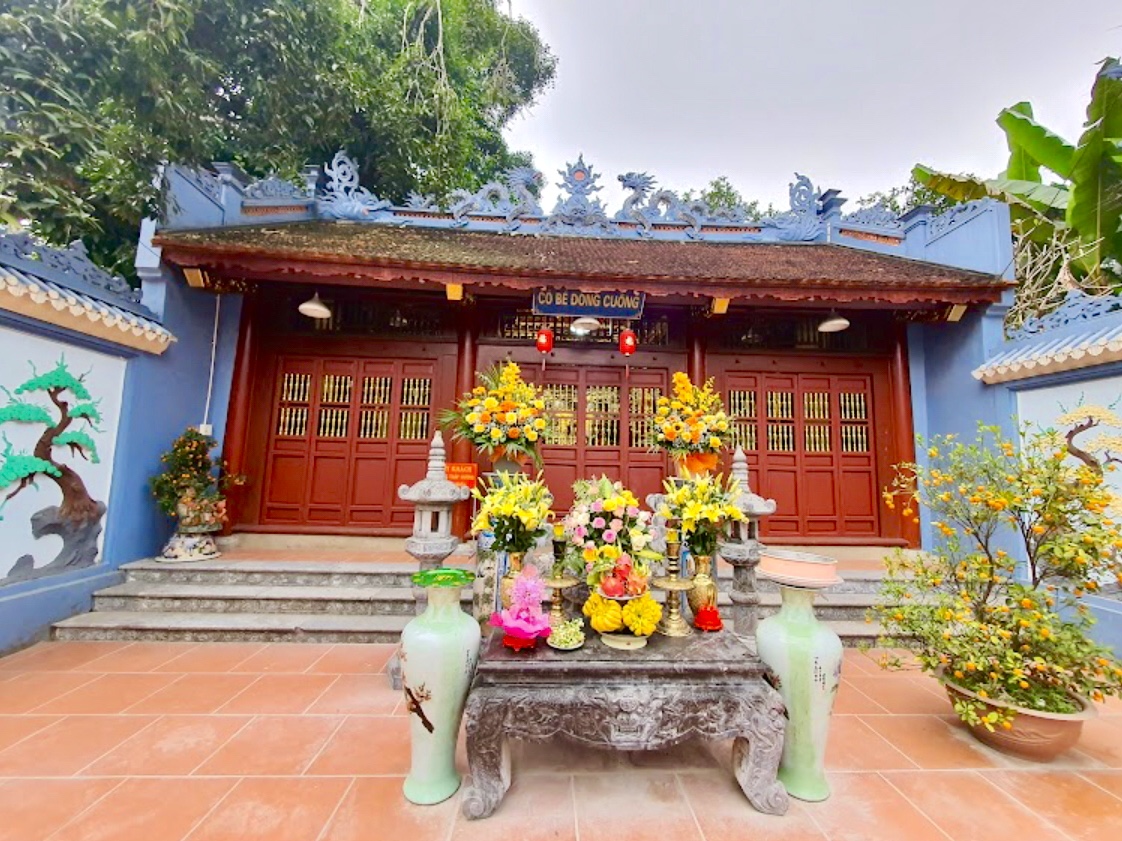
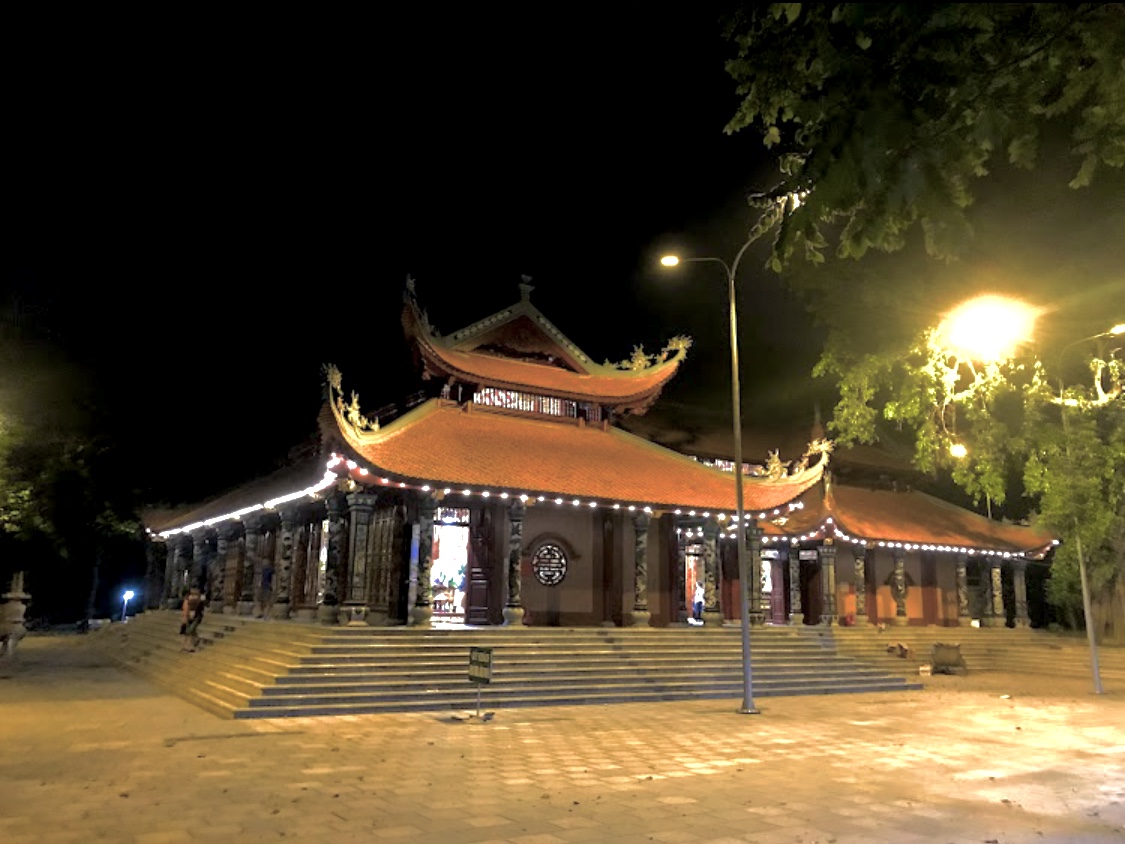
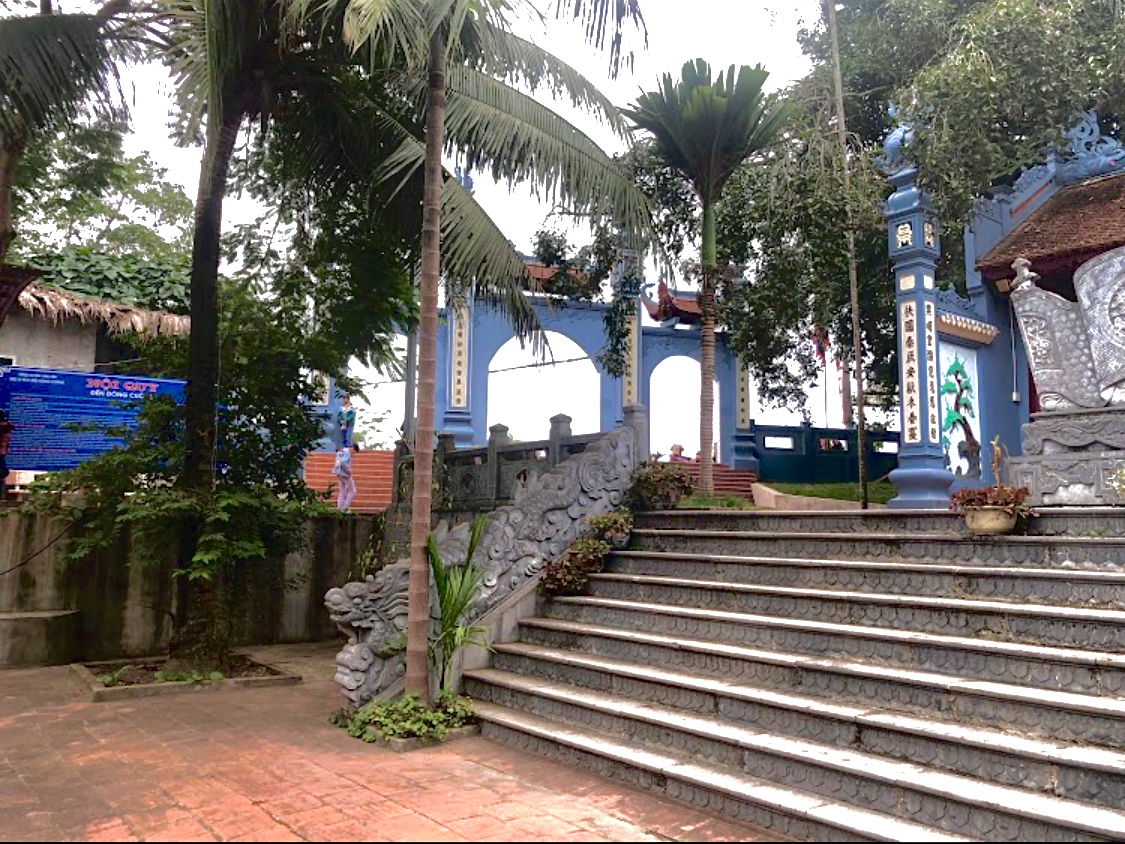
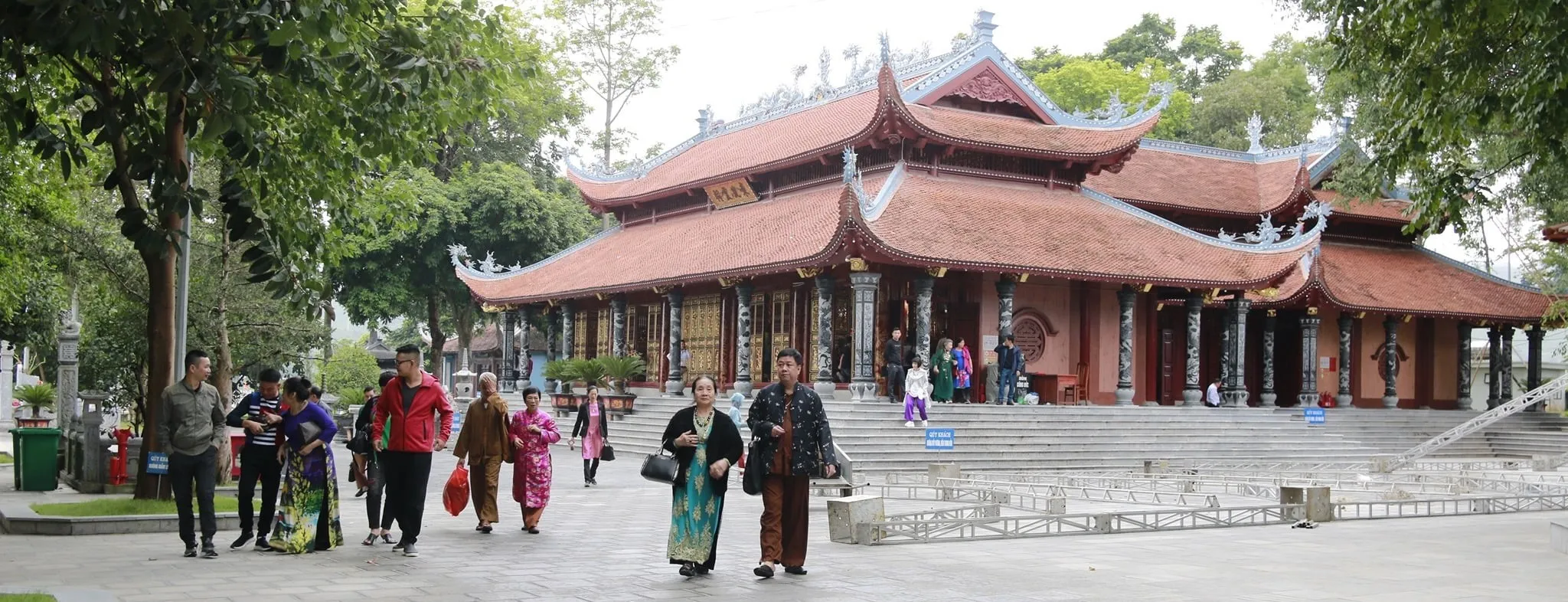
Đền Đông Cuông được xây dựng trên một thế đất rộng. Tọa sát bên đôi bờ sông hồng, xung quanh là đồng ruộng và núi rừng bao bọc, không giống những ngôi đền khác trường tồn giữa chốn phồn hoa, cửa nhà san sát mà Đền Đông Cuông “Đông Quang” đã được người xưa chọn phương cắm hướng ngay cấp sa bồi của thế đất vùng “Thượng lưu châu thổ sông Hồng”. Thế đất binh sự – phên dậu nhưng không xa lìa thế nhân, chốn này tĩnh tại nhưng không hề âm u hiu quạnh. Vì vậy ngôi đền ấy mãi mãi sáng trong như đúng tên gọi “Đông Quang” cổ nhân đã đặt. Vậy nên từ xa đã khiến du khách nhận ngay được bóng dáng cây Đa khoảng 800 tuổi cạnh ngôi đền tuy cổ mà không cũ, tuy hiện đại mà mang tính dân tộc cao.
Kết cấu kiến trúc
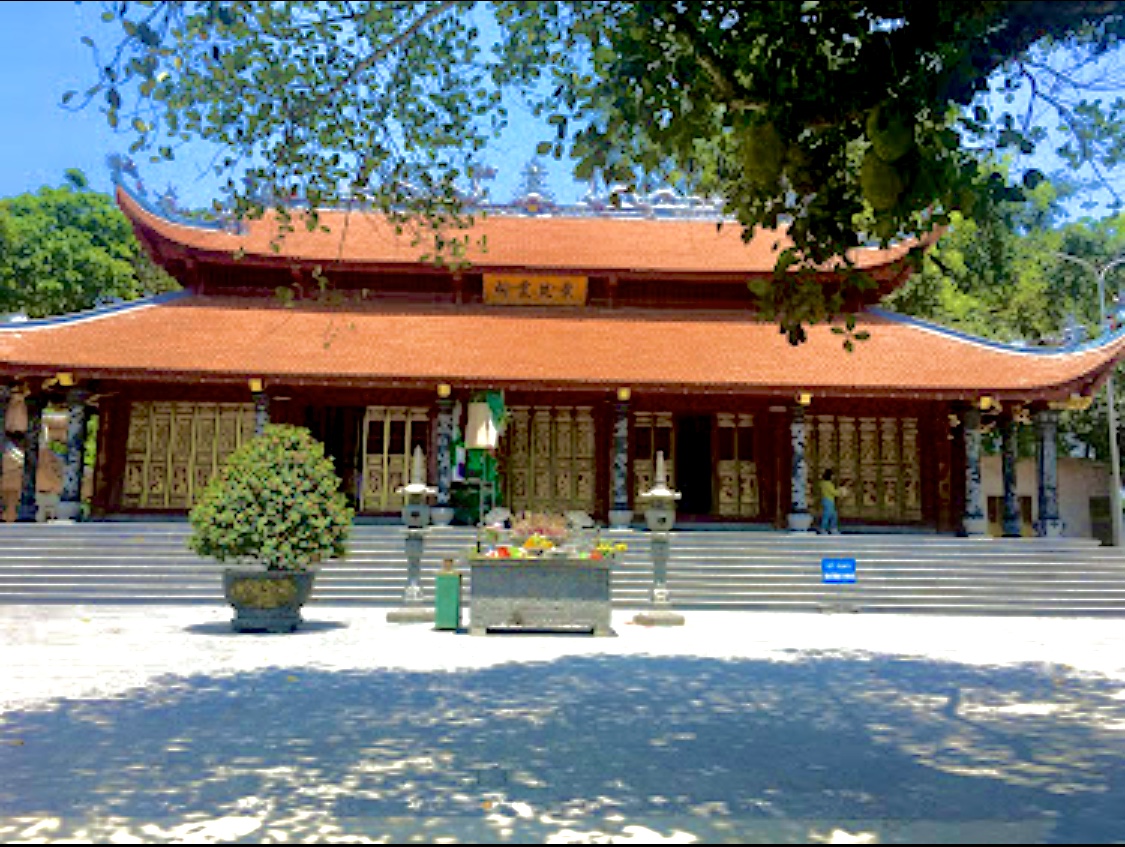
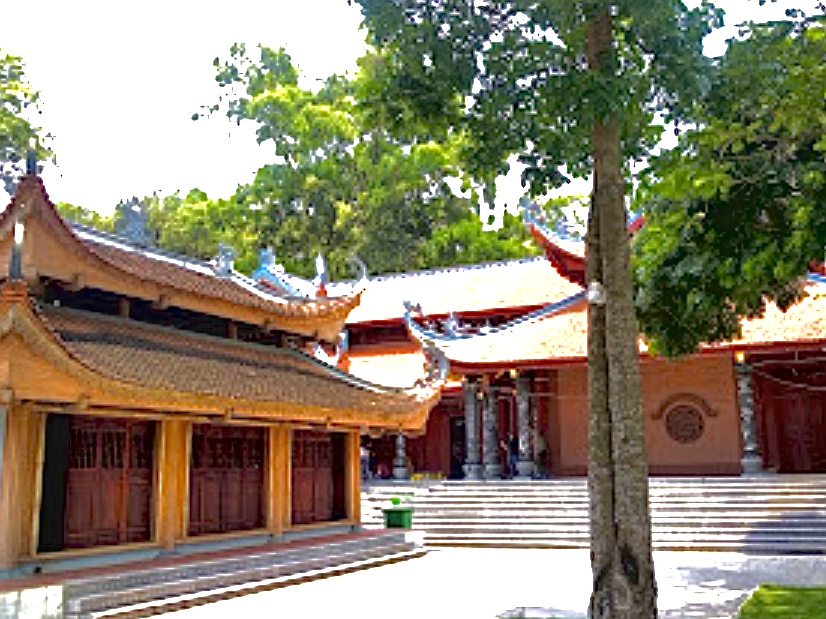
Theo dân tộc Tày Khao gọi là đình Đông Cuông với chức năng thờ Mẫu và vị Đại Vương, người Tày cho là Thành hoàng làng là chính, không kiêm nhiệm nhiều chức năng khác và không tập trung thể hiện mỹ thuật. Trang hoàng lộng lẫy, mà chỉ là những vân mây, sóng nước, điểm xuyến đôi hình hoa lá hoa dây. Đền Đuông Cuông có kết cấu hình chữ đinh gồm hai tòa đại bái và hậu cung cấm.
Tòa đại bái
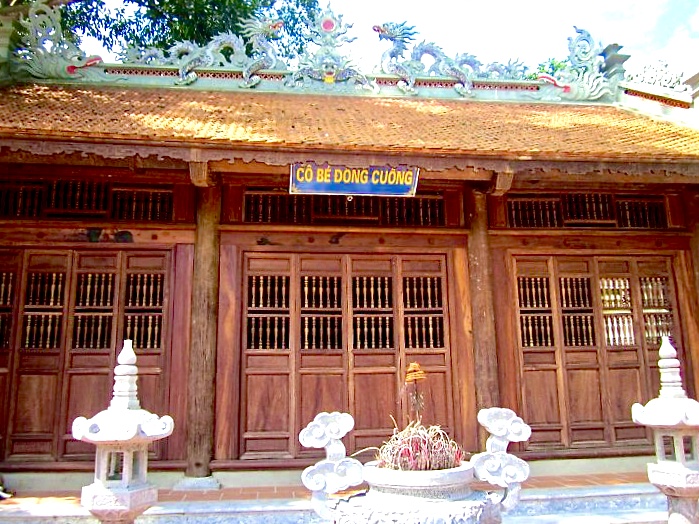
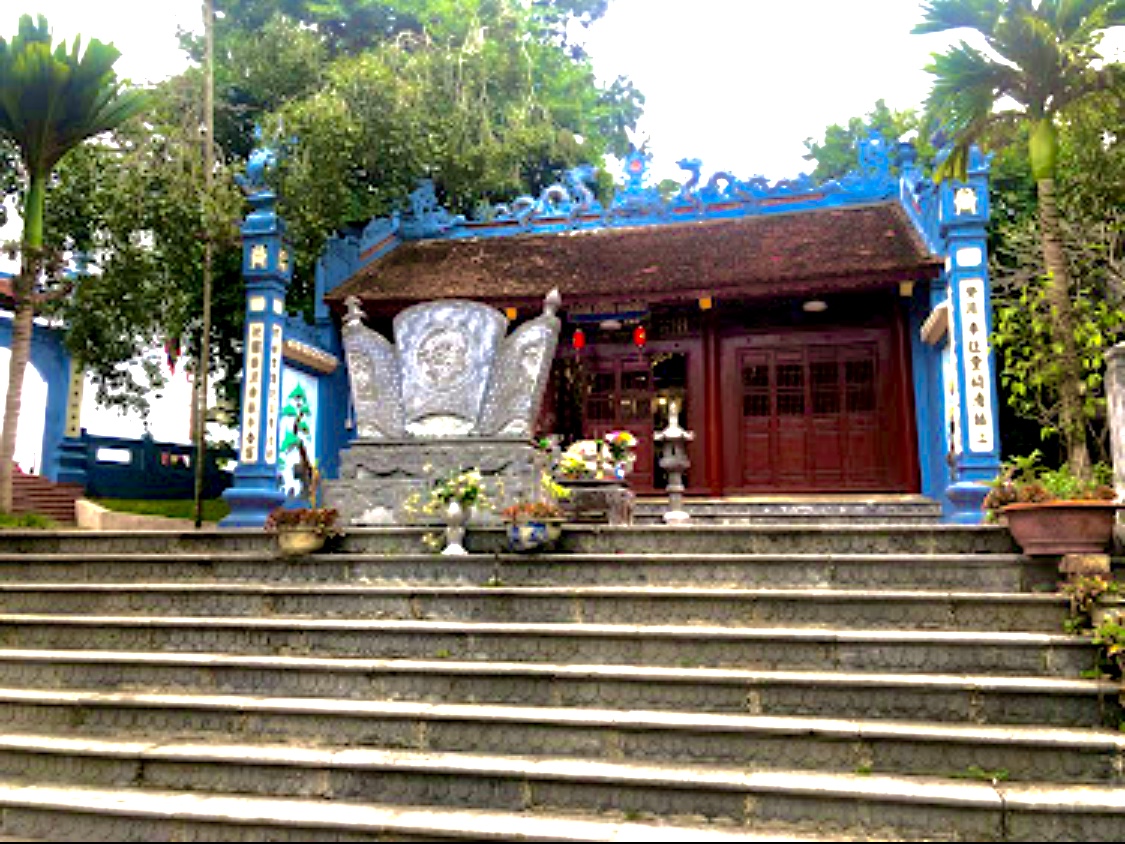
Trước sự ngưỡng mộ của chính quyền địa phương và toàn thể nhân dân xa gần. Tòa đại bái mới được xây dựng trên nền móng cũ (1995-2002) gồm 3 gian 2 trái làm kiểu quá giang gối đầu, tường cao 5m, nền lát gạch hoa, mái giằng hoành gỗ, cột xi măng giả gỗ cốt thép, toàn mái lợp ngói vẩy Hương Canh… vôi ve nhã nhặn, có diện tích sử dụng 270,5m2, Tam quan cửa thoáng – 10 cửa sổ 02 cửa hậu.
Tòa hậu cung cấm
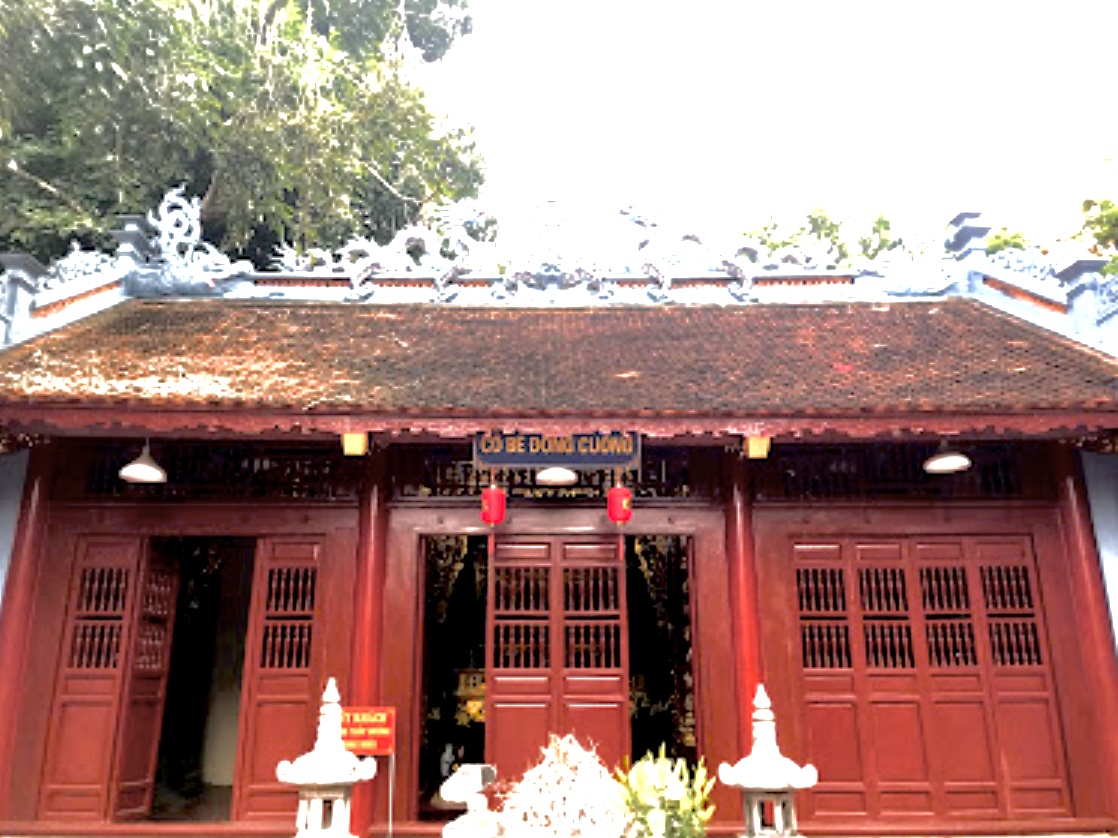
Gồm một gian trên thượng cung, sàn cách mặt nền 1,8m là nơi đặt hai pho tượng, tượng Mẫu và tượng cao quan Đại Vương người Tày Khao ở đây gọi là Quang Hoàng Báo được nối liền với gian giữa của tòa đại bái có tổng diện tích 42m2 dựng kiểu mái xiên đổ xi măng lợp ngói mũi hài Hương Canh – chịu lực ở tường.
Qua bố trí kết cấu khung và ở tòa cung cấm là dạng đình ở trên mang dáng dấp kiến trúc của thời Nguyễn với lối sử dụng cổ truyền có hiệu quả. Đây là nét điển hình nghệ thuật kiến trúc cổ dân gian mà tới hôm nay dù xây dựng có công nghệ kỹ thuật hiện đại song vẫn ứng dụng kiểu hệ thống cổ truyền này, chỉ có điều biến dạng vị trí đi với một tên gọi khác “con sơn” mà ta thường bắt gặp.
Hiện vật
Toà hậu cung cấm
Do sự biến thiên của lịch sử, ngôi đền cổ xưa không còn nguyên vẹn về nhân vật thờ cúng như hình thức.
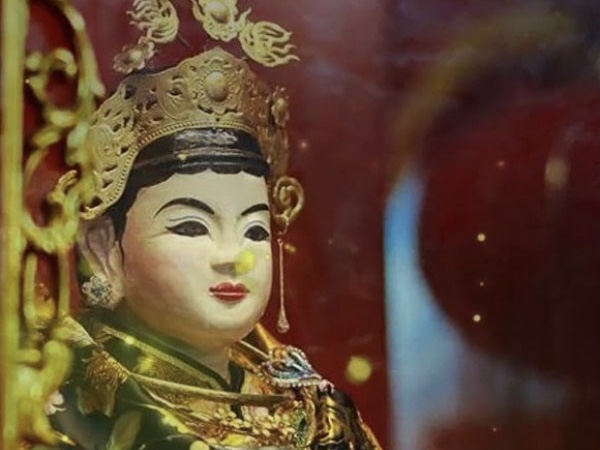
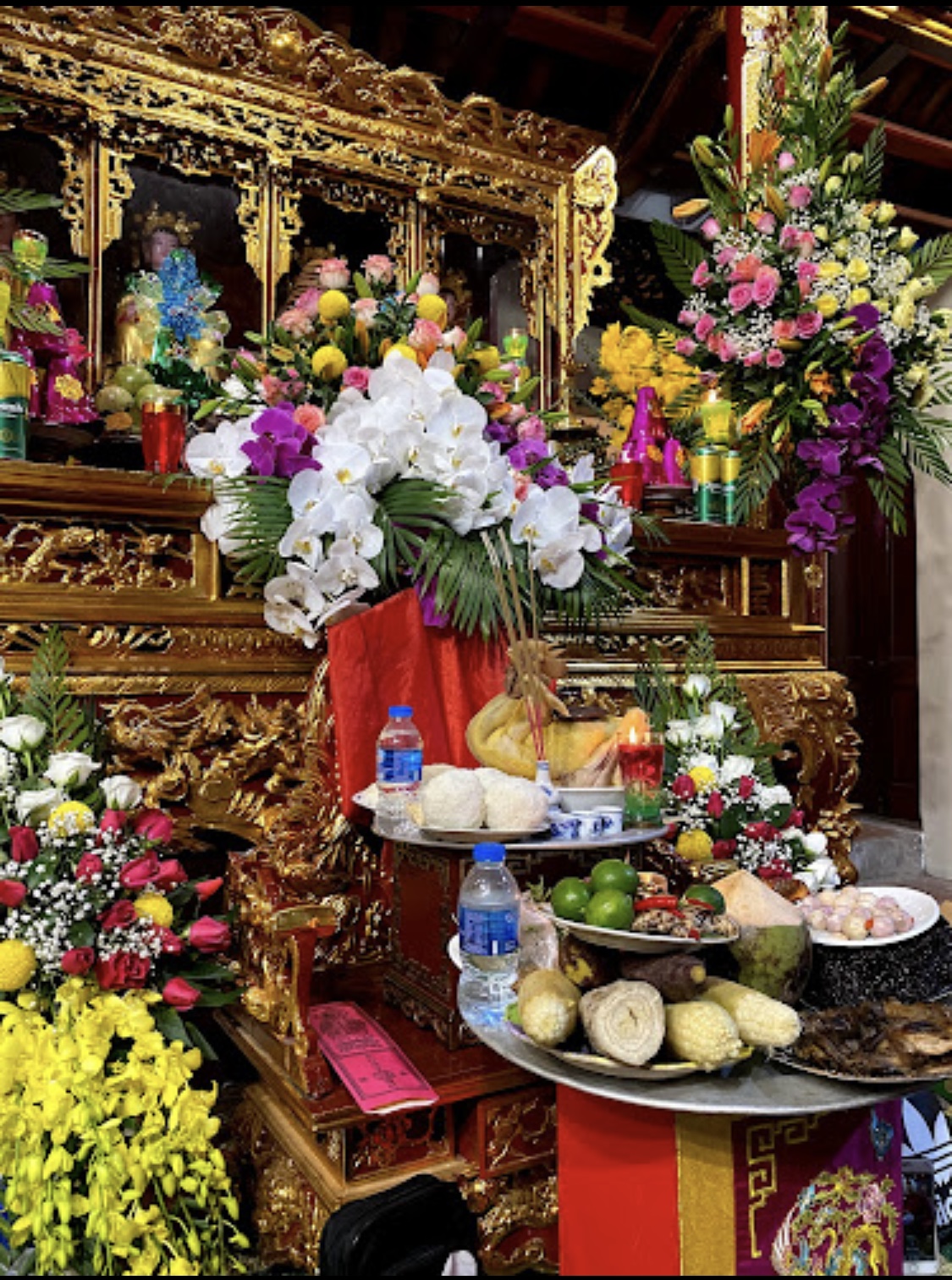
Tòa hậu cung còn bảo lưu hai pho tượng đồng cỡ lớn, một pho tượng mẫu, một pho là quan Hoàng Báo. Tuy mỗi pho tượng có một sự tích kích cỡ khác nhau. Song đều được tạo dáng hài hòa (đường sơn viết thiếp bên ngoài ăn nhập với nội dung bên trong của từng pho tượng bài trí theo thể thức nam tả – nữ hữu).
Nói đến Mẫu chúng ra tự hiểu giản đơn là người mẹ, song là người mẹ của vũ trụ, của toàn thể nhân loại, là tối thượng thần chi phối đến tư duy của toàn thể nhân loại. Trong đó có người Việt nói chung và người Tày Khao nói riêng, Mẫu là một lực lượng siêu đẳng là hiện thân của một sự kính trọng, là nguồn của cải vô biên, là linh hồn của vũ trụ, từ mẹ mà muôn vật nảy sinh – muôn loài tồn tại.
Tượng Mẫu
Mình cao 0,75m đầu đội mũ nhài dát vàng mặt nguyệt, môi son, dải mũ trùm tận chấm vai, tai to chảy, mình khoác áo vàng hoặc xanh hoặc đỏ (theo tứ mùa) cổ cao 3 ngấn, đeo vòng hạt, tay đặt nhẹ lên đùi (một tay úp một tay ngửa quay vào hướng bụng, miếng thoáng mỉm cười phúc hậu).
Ngai đặt tượng Mẫu: Tượng Mẫu được đặt trên một ngai rộng 0.88m, dài 1m gồm 3 tầng.
Phần bệ ngai: Ở chính chạm nổi hổ phù, miệng càm chữ Thọ, có hai mắt sáng, sừng và tai dô ra, được trang trí rồng lượn vân mây xoắn, chạm bong thủng hình rồng, có vây uốn lượn, chân cuộn đao thẳng vút lên, đầu có bờm tóc hắt ngược về phía sau:
Phần thân ngai: Chính giữa chạm nổi hình rồng, lưng cõng chữ Thọ, đầu ngoảnh về phía sau, bốn chân ở thế phi nhanh, phía trên có trạm nổi hình hổ phù, miệng há rộng, đuôi ngheo, sừng nai, tai thú, trán kiểu lạc đà, chầu hai bên hổ phù là rồng đang vờn trong những áng mây.
Phần tay ngai: Tứ thân ngai vươn ra tới đầu rồng dài 0.60m, đầu rồng vươn ra xa, miệng há rộng ngậm viên ngọc quý, đôi mắt lồi đen trắng dữ tợn, hai bên thành ngai có 6 con tiện thắt tròn trạm nổi hình rồng bay lên, toàn thân sơn son thiếp vàng.
Đây là lô ngai khá đẹp, trạm trổ tinh vi, trau chuốt tạo vẻ chắc chắn nhưng duyên dáng, thanh thoát.
Tượng quan Hoàng Báo
Pho tượng cao 0,75m (bài trí nam tả, nữ hữu trong cung cấm) toàn ngai trạm trổ tương tự ngai tọa của Mẫu có phần nhỏ hơn một chút về số đo, hai bên được bố trí hai thanh kiếm vỏ trạm nổi rồng. Tượng mình khoác áo vàng (khi mở hội) ngày thường mặc áo chàm xanh, trang trí trên lụa hình chữ Thọ vân mây trên dải lụa, tư thế ngồi thiền, đầu tọa khăn xếp, lúc thì đội mũ cánh chuồn (khi mở hội), hai tai to chảy, hai tay đặt nhẹ lên đùi, một tay úp, một tay ngửa chỉ về hướng bụng, miệng hơi mỉm cười nhân từ phúc hậu. Tượng được tạo dáng nhân từ đôn hậu, song cũng toát lên dáng hình cương trực hiển ứng linh thiêng của vị quan Hoàng báo nơi đất phên dậu mà người đời vẫn truyền tụng rằng:
“Đằng trước có án lư hương
Đằng sau lại có hai rồng vắt ngang
Hai thanh đoản kiếm rõ ràng
Đất vàng văn võ song toàn chẳng sai”
Tòa Đại Bái
Không gian tòa Tiền đường được bố trí 4 ban phủ tòa thờ:
- Tòa ngũ vị Tiên Ông
- Ban Trần triều
- Phủ Sơn trang
- Tòa công đồng chúa
Bộ bát bửu (8 vật quý gồm):
- Quả cầu to
- Cái bút
- Cái quạt hình quả vả
- Ống sáo
- Giỏ hoa
- Thanh kiếm
- Cái phất trần
- Bàn cờ
Những thứ quý trên đây gắn với quan niệm nho học: Lãng hoa biểu hiện hạnh phúc; ống sáo, quạt quả vả biểu hiện phong lưu; hòm sắc bút lông biểu hiện học thức, phất trần dũng khí – đạo đức, mỗi thứ bát bửu được tạo mảng, trạm bong, nổi, thủng, đẹp. Về điêu khắc tốt bền về chất liệu đặt trên một cán dài, sơn son thiếp vàng, cắm vào hai cái giá đặt hai bên, trước ban thờ ngũ vị Tiên Ông.
Ban thờ ngũ vị tiên ông
Lịch sử cho hay: Tại tổng Đông Cuông có 114 nghĩa quân tham gia vào cuộc khởi nghĩa năm Giáp Dần (1913-1914) trong đó có 5 vị thủ lĩnh người Tày Khao đã lập được chiến công trong hai năm, chống thực dân Pháp xâm lược. Cuộc khởi nghĩa tuy thất bại (do tự phát – non trẻ) và ít nhiều mang màu sắc mê tín vài thủ lĩnh đa số là thầy mo. Song một mặt giải tỏa được chính sách chia rẽ hiềm khích lẫn nhau trong cộng đồng người dân tộc và tạo nên sự đoàn kết chống kẻ thù chung, một lòng yêu quê hương nương rẫy ruộng vườn. Nhân dân người Tày Khao nơi đây trân trọng sự hy sinh ấy, 5 vị có nhiều công trạng đã tôn thành Ngũ Vị Tiên Ông và tạc tượng tôn thờ, đặt trong đền và coi đền là đình của họ (đình Đông Cuông). Giáo sư Trần Lâm Biền và Trần Quốc Vượng cũng gọi như vậy, và đặt cùng đền với quan Thống Chế Đại vương. Đến Đông Cuông cũng gọi là đình của người Tày Khao và thờ cả Ngũ Vị Tiên Ông của người Tày.
Tượng 5 vị Tiên Ông cao 0,62m đều nhau, đầu đội mũ cánh chuồn, sơn son dát vàng, tai to, mặt đỏ, râu dài, diện mạo oai linh, dáng hình võ tướng, hai tay năm vị ở tư thế khác nhau, tượng ngồi, áo tạc liền tượng, chân đi giày cong, tượng được tạo dáng như khi xưa, đương suy nghĩ thảo bàn cách lược binh sự, cũng như chọn đường để điều khiển nghĩa quân phá thế giặc cường.
Tượng ngũ vị Tiên Ông được thể hiện khá trọn vẹn chân dung các vị thủ lĩnh dũng cảm, đó chính là hình ảnh thu nhỏ về cuộc khởi nghĩa Dao – Tày trong hai năm trước khi Đảng ra đời, đó chính là cơ sở tinh thần đoàn kết tham gia cách mạng, giải phóng quê hương sau này mà sử sách còn lưu truyền là thế.
Ban Trần triều (thờ vọng)
Với sự ngưỡng mộ, để tỏ lòng biết ơn vị tướng Trần Hưng Đạo có công trạng và tài thao lược trận mạc đã nhập tượng về thờ tại đền, tượng Trần Hưng Đạo khá to uy nghi, khuôn mặt phúc hậu song cũng toát lên vị tướng tài ba thao lược. Tượng cao 0,90 m, đầu đội mũ cánh chuồn, sơn đỏ thiếp vàng, khoác áo vàng chân đi hài cong tả hữu hai bên là hai công chúa ngồi chầu (là hai người con gái của Hưng Đạo Vương và cũng được tạc tượng khá đẹp).
Phủ sơn trang
Với 12 pho tượng được tạc khác nhau chau chuốt, tỉ mỉ xuất hiện gần đây, khi chợ búa buôn bán phát triển, với quan niệm rừng vàng, buôn bán kiếm ra tiền nên Mẫu Thượng được tách ra thành một ban thờ trang trọng. Trong đó pho tượng nhị vị Thánh Mẫu sơn trang được đặt ở bệ cao nhất (0,90m) miệng cười phúc hậu và 11 pho tượng đứng chầu xung quanh theo kiểu tam cấp.
Tòa công đồng chúa
Theo quan niệm của người Tày Khao ở đây, khi tòa sơn trang phát triển tách Mẫu – Tiên cô đệ nhất còn gọi là đệ nhị Vương Cô. Pho tượng đứng khá đẹp trạm trổ tinh vi, mềm mại. Tượng cao 0,60m đầu đội mũ nhài, dát vàng, cổ đeo tràng hạt.
Đại Tự (4 bức)
Bốn bức Đại Tự dài 1m30, rộng 0,50m, ở 4 cạnh được kẻ thành và trạm nổi thiếp vàng hình rồng, nền gốm hoa cúc, trạm nổi nhành mai quả lựu trên nền sơn đen thiếp vàng khắc ghi các chữ:
- Một bức ghi: Thiên phối Đức Mẫu
- Một bức ghi: Văn ảnh Đức Thánh
- Một bức ghi: Thiên Thừa Thuận Nái
- Một bức ghi: Hương Thiên Xuất Hệ
Được bố trí trang hoàng tại không gian tiền đường.
Di vật
Khánh đồng
Chiều ngang rộng nhất 0,60m, hai đầu vút cong, chỗ móc treo có điểm hoa thị, toàn thân hình trăng khuyết, ở dưới nổi núm lồi để đánh ngân khánh đồng, có các đao lửa tỏa quanh núm lồi. Ở cạnh núm khánh có khắc ghi chữ Hán, tên hiệu của vị thần được thờ, vành khuyết là đường gờ tạo hình song chỉ khúc mềm mại. Đây là chiếc khánh nặng 7,5kg, dát mỏng kỹ thuật độc đáo được thiện trị thứ tư (tức thời vua Nguyễn hiển Tổ ban tặng năm 1844).
Chuông đồng
Chuông đồng có độ vang lớn, ngân dài với độ cao 0.90 m đáy, đỉnh chóp hai rồng chầu mặt nguyệt đồng thời làm nơi móc treo, và được trang trí 4 núm lồi ở thân để đánh, họa tiết hoa văn trang trí hoa dây, nặng 80kg niên hiệu Duy Tân 1909. Ngoài ra còn 6 chiếc, chiếc nặng nhất là 200 kg.
Hòm sắc: Hòm sắc bằng gỗ sơn son dài 0,69m, rộng 15 cm. Trong hòm sắc có ống sắc dài 0.60 m, trên thân chạm nổi (Long, Ly, Quy, Phượng), trong ống sắc ấy có 4 đạo sắc của triều đại Nguyễn gia phong.
4 đạo sắc phong gồm:
- Một sắc Tự Đức (rộng 0.57 m, dài 1.45 m) năm 1880.
- Một sắc Đồng Khánh phong (rộng 0.56 m, dài 1.45 m) năm 1886.
- Một sắc Duy Tân phong (rộng 0.58 m, dài 1.45 m) năm 1909.
- Một sắc Khải Định phong (rộng 0.58 m, dài 1.50m) năm 1924.
4 số đạo sắc trên đây chỉ là số lẻ. Trước đây có khá nhiều, do mải miết chiến tranh binh hỏa triền miên, thiên nhiên hủy hoại, phân tán và bị mất. Đều có nội dung Gia Phong Thượng đẳng thần của các triều đại cho Đền Đông Cuông. Tại Đền Đông Cuông, ngoài những hiện vật được thống kê ở trên còn có khá nhiều khay đài thờ, hiện vật giấy, gốm sứ, đao kiếm, hạc đồng…
Đền tuy tọa ở nơi heo hút, nhưng ấm hơi người. Các triều đại đều phong tặng sắc quý cho Đông Cuông những ơn sâu, nghĩa cả, ý đẹp điều lành để cứu độ toàn dân, nên đã xuất hiện khá sớm Đền Thần Vệ Quốc và cần nguồn của cải vô biên nên đã thêm cả Mẫu. Một ngôi đền thiêng để thiên cổ trường tồn ngàn năm bất hủ, mang lại tiếng thơm ấy là sức đoàn kết dân tộc, tạo nên sức mạnh phi thường được nên thành Thần Vệ Quốc là vậy. Đền tọa ở nơi địa thế đẹp, khí tốt tụ về bãi bồi vạn niên của xứ Hưng Hóa khi xưa, cũng bắt đầu từ ngôi đền thiêng ấy mà tả hữu hai bên mạch đất đều có thần ngự, thường xuyên có khí tốt đón gió lành thổi đến, vì thế Đền Thần Vệ Quốc nơi đây không đâu sánh được.
Phong tục lễ hội
Hàng năm, ngoài tuần rằm mùng một, tứ thời bát tiết Đền Đông Cuông có 2 Lễ chính, ngày Mão tháng Giêng, ngày Mão tháng Chín mổ trâu đen.
Ba năm một lần lễ hội lớn.
Thỉnh mời dương trần và linh hồn âm gian các xã tả, hữu ngạn sông Hồng trong phạm vi đường kính 70km. Dòng họ Hà và thân chủ các liệt sỹ (khởi nghĩa Giáp Dần, chống Pháp) thờ trong Đền.
“Ban tế” người Kinh đến hướng dẫn nghi thức tế. Tín nữ ở dưới xuôi (đặc biệt là thành phố Yên Bái và Phú Thọ) lên hỗ trợ trang trí kiệu và các lễ quy.
Cũng bằng tiếng Tày pha lẫn tiếng Kinh, thầy mo đến khấn thỉnh chư tôn “láng giềng”
“Bắc chí khe cài
Hạ lưu đã ngang
Đông chí pù rằm
Tây giáp nặm cái”
Tại Lễ lớn thỉnh mời chư thần xa từ Bảo Hà tới Phú Thọ, Đông từ sông Chảy Lục Yên, Tây từ Thượng Bằng La Đồng Khê, Phù Nham, Phong Dụ… thỉnh tôn thần 12 ngọn núi, 12 ngọn sông, “18 nước chư hầu” và vua tổ Hùng Vương. Tế Nam theo thể chế cung đình.
Nhờ người ngoài xã biết tế làm chủ tế và đông xướng tây xướng, bản thân tham gia theo sự hướng dẫn bạn tế là người Tày Khao song nhiều khi xem lẫn tục người Kinh am hiểu thế tự.
Khai mạc lễ tế sớm trước tiết rước kiệu: 6-8 giờ sáng.
Lễ phẩm chính: Trâu trắng mổ nguyên con (có bài tế tiếng Tày Khao kèm theo).
Không có tế nữ.
Diễn biến rước kiệu: Được triển khai ngay sau giờ tế cho đến giờ Ngọ.
Rước kiệu ở miếu hạ khe Tràm, Cầu Có và miếu giáp thượng đồi Pu Loòng xóm bên. Rước kiệu mẫu (mẹ) từ đền qua sông sang Miếu Đức Ông (Ghềnh Ngai – thuộc xã Tân Hợp, Văn Yên) thăm Đức Ông. Kiệu “Báo” (con) đi tiếp sau kiệu mẹ, hai kiệu báo sái thanh khiết, trang trí đẹp, lúc kiệu đi đông đảo tín nữ Kinh – Tày, Dao bao quanh kiệu khấn chúc hai mẹ con Mẫu “thăm Đức Ông” mừng vui trọn vẹn trống dong cờ mở bát âm tấu nhạc. Bốn thiếu nhi Tày thắt lưng đỏ cầm cờ múa đi trước, thiếu nhi ngoài cuộc được già làng động viên reo hò khích lệ. Một thuyền đinh lớn hoặc một bè lớn túc trực dưới sông đón kiệu. Đến mép nước, kiệu vua con ở lại bên bờ, chỉ kiệu mẫu xuống thuyền cùng 11 người sang Ghềnh Ngai. Toán người gồm thủ đạo mo Đền, chùm hội tín nữ, người cầm lọng che kiệu… tới mản đá Ghềnh và vách đá để kiệu ở dưới thuyền, thổ đạo o, và các thành viên lên mảnh đá Ghềnh thắp hương khấn tiếng Tày xen lẫn tiếng Kinh. Đại để (nhân ngày… bản dân đệ tử trăm họ chúng con rước mẫu sang với Đức Ông… vậy mong Ngài… sau đó xin âm dương bằng hai đồng tiền kẽm để nài Đức Ông chấp nhận rồi xuống thuyền trở về). Lễ diễn ra hơn nửa giờ, tới bờ kiệu mẫu khiêng khỏi thuyền cùng kiệu con rước vào đền, bốn trẻ trai chay người Tày vẫn đi trước múa cờ mừng, những đám trẻ ngoài không được hò reo nữa.
Đồng bào Tày Đông Cuông và các vùng lân cận quan niệm đây là lễ cưới lại “của Mẫu với Đức Ông” mà hậu duệ họ Hà phải tổ chức (Lễ nghi rước kiệu sang Ghềnh Ngai năm 1941. Tích “Lễ cưới lại” được cụ Sầm Văn Tiện – nguyên chủ tịch UBND xã rồi sau đó là Bí thư xã tường thuật và cho biết đã lưu truyền từ rất lâu đời. Cũng tích này được mo đình làng Bục, nay là xã An Thịnh và nhiều bà con ở xã Ngòi A thừa nhận. Các điệu múa dân tộc được diễn ra lúc kiệu được cử hành rước từ đền ra bờ sông (để sang Ghềnh Ngai) múa đàn tính và nhạc chuông chùm đệm cơ bản là do bà con người Tày đảm nhiệm.
Hát chèo (chèo mới gắn với hội nơi đây) diễn tích Lưu Bình Dương Lễ, chúc mừng, chúc đàn anh chức dịch và toàn dân thu hoạch lúa tốt gia súc đầy chuồng bình an mạnh khỏe, phường chèo dưới xuôi đảm lĩnh nhận tiết mục này. Hội diễn ra sôi động cả vùng văn nghệ dân gian dân tộc thiểu số, đa số hòa quyện vào nhau phong phú đầm ấm, đoàn kết tưởng nhớ người có công “Đền Thần Vệ Quốc” trong tập (thượng hạ, mục cổ tích trấn Hưng Hóa; bản dịch của nhà xuất bản viện Sử học) cũng hòa chung với nội dung của lễ hội này.
Trong ngày hội mở đối với Phú Thọ, Yên Bái, Lào Cai có câu ca:
“Thứ nhất là Hội Đền Hùng
Thứ nhì là Hội Đông Cuông”
Như trên trình bày nhân dân trong vùng gần xa dự hội đủ màu sắc dân tộc Kinh, Tày, Dao, Nùng… muôn màu sắc phục chật cứng như nêm, tiếng chuông, tiếng khánh, tiếng trống lẫn tiếng hát then, hát cọi, khèn bè, tiếng reo hò, kéo co, ném còn thắng cuộc, cờ bay trước gió, khiến cho cả vùng trở lên tưng bừng náo nhiệt, cuối hội nam nữ các bản làng xã tổ chức hát giã hội chia tay hẹn hò hội xuân tới gặp lại.
Những năm gần đây, đền Đông Cuông là điểm nhấn tâm linh tín ngưỡng của đông đảo nhân dân và du khách thập phương trong hành trình du lịch văn hoá tâm linh, nhớ về nguồn cội. Mỗi năm có tới hàng trăm ngàn lượt du khách từ khắp các tỉnh thành trong nước hành hương tìm về đền Mẫu Đệ Nhị Thượng Ngàn dâng hương kính Mẫu, vãn cảnh đền và cầu nguyện cho Quốc thái dân an, cầu lộc, cầu tài, cầu bình an trong cuộc sống.
Trong Di sản Thực hành Tín ngưỡng thờ Mẫu Tam phủ nói chung và thờ Mẫu Thượng Ngàn tại đền Mẫu Đông Cuông nói riêng có một nghi lễ hết sức đặc biệt, đó là nghi lễ chầu văn – hầu đồng, một nghi thức tín ngưỡng thực hành tiêu biểu nhất của đạo Mẫu. Hàng năm, cứ Xuân Thu nhị kỳ, vào đầu năm bắt đầu từ tháng Giêng đến tháng 3 Âm lịch và cuối năm vào từ tháng 8 đến hết tháng 12 Âm, các thanh đồng trên mọi miền đất nước thường về đền Đông Cuông để lễ Mẫu và “bắc ghế hầu Thánh”.
Xếp hạng
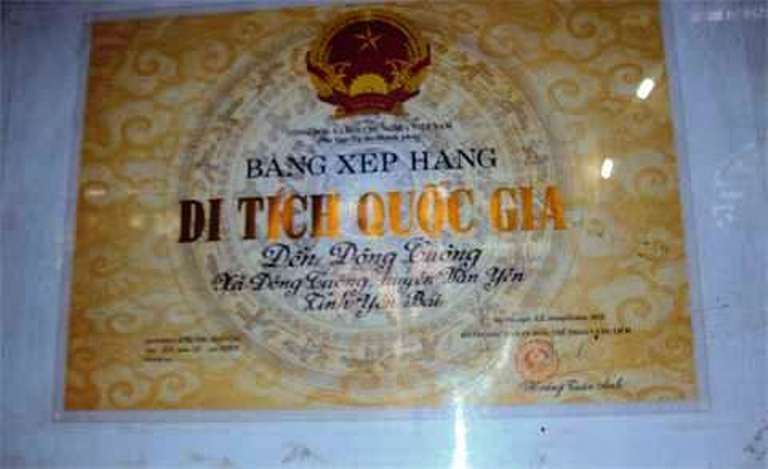
Quyết định số 296/QĐ-BVHTTDL ngày 22 tháng 01 năm 2009 của Bộ Văn hóa, Thể thao và Du lịch công nhận đền Đông Cuông, xã Đông Cuông, huyện Văn Yên, tỉnh Yên Bái là Di tích lịch sử – văn hóa cấp quốc gia.
Chú thích
- Nxb Văn Hoá Thông Tin 2007 – Viện Sử Học, Kiến Văn Tiểu Lục, mục Linh tích, tr. 512
- Theo Tài liệu do Bảo tàng tỉnh Yên Bái sưu tầm năm 1994.
Tham khảo:
- Cổng thông tin điện tử tỉnh Yên Bái, Di tích Đền Đông Cuông, huyện Văn Yên, tỉnh Yên Bái.
- Lịch sử huyền bí Việt Nam, Sự tích đền Đền Đông Cuông.
- Nxb Văn Hoá Thông Tin 2007 – Viện Sử Học, Kiến Văn Tiểu Lục.
__________________________
Các ngôn ngữ khác
1. English
Name and Geographical Location
Dong Cuong Temple, also known as the Temple of the Second Princess of the Highlands, was formerly referred to in folk language as “Den Dong” or “Den Mau Dong.” The temple’s inscription and official documents clearly record its name as “Dong Quang Linh Tu.”
The temple is located in Ben Den Hamlet, Dong Cuong Commune, Van Yen District, Yen Bai Province. It lies about 52 kilometers northwest of Yen Bai City, 18 kilometers northwest of Van Yen Town, and 4 kilometers southwest of Trai Hut Railway Station.
Historical Overview
Dong Cuong Temple has existed for centuries. Historical documents indicate that the temple dates back at least to the Le Dynasty, developing from an ancient shrine located in the center of Quy Hoa outpost during the Tran period. In Kien Van Tieu Luc, in the section “Sacred Traces,” written during the Later Le Dynasty, Le Quy Don recorded information about this temple.
“Van Chau, a boatman from Kinh Chu Commune, Thanh Ba District (now part of Lam Thao, Phu Tho Province), was a student of the scholar Nguyen Dinh Kinh. During the Bao Thai reign (1720–1729), he traveled for trade to Dong Quang (now within Van Yen District, Yen Bai Province). At the river wharf stood a shrine dedicated to Princess Dong Quang, famous for her spiritual power. It was said that the Princess was the wife of the Great Lord worshiped at Ngoc Thap Temple, Son Vi District (later renamed Lam Thao).
One evening, Van Chau saw a woman emerge from the Dong Quang shrine and call his name, saying: ‘When your boat returns past Ngoc Thap Temple, please tell the Great Lord that the Lady has given birth to a son and sends her respects.’ Then she vanished. Though the boat journey from Dong Quang to Ngoc Thap usually took three or four days, that day Van Chau departed at dawn and by noon had reached Ngoc Thap — a place where the rocky mountain juts out into the river like a snail shell, with the temple on the hill beside Lang Nghiem Pagoda. Following his teacher’s instruction, Van Chau stood at the prow of his boat, relayed the message, and continued on his way.” (1)
Originally, Dong Cuong Temple was a shrine dedicated to Princess Dong Quang, established by the Ha and Hoang clans of the Tay Khao ethnic group, who alternately held local administrative positions. It also served as an office for local chiefs, interpreters, and officials, functioning as a “Dinh Tram”—a post station transmitting royal documents between the central court and local authorities.
During the Tran Dynasty, the Quy Hoa garrison under Ha Bong and Tu (of Ngoc Thap–Quang Son) guarded the northern frontier. What was once the communal house of the Ha clan later became their family temple. The clan’s patriarch, Ha Van, had led local troops in resisting the Yuan–Mongol invasion. Historical accounts record that in February, the Year of Dinh Hoi (1287), the Yuan–Mongol army invaded Dai Viet with 70,000 troops, 500 warships, 6,000 Yunnan soldiers, and 15,000 soldiers from four coastal prefectures. The Crown Prince Thoat Hoan served as Grand Commander, with A Bat Xich, A Lo Xich, and O Ma Nhi as his lieutenants, leading an invasion force of over 300,000 men.
In response, Senior Emperor Tran Thanh Tong and King Tran Nhan Tong appointed Grand Prince Hung Dao Tran Quoc Tuan as Commander-in-Chief of all Dai Viet forces. One Yuan detachment under Nat Toc Lat Dinh retreated along the Lo River toward Yunnan, passing through Phu Ninh (present-day Phong Chau, Phu Tho Province), where it was ambushed by local forces led by the brothers Ha Dac and Ha Chuong. From Chi Mountain, they directed a daring night assault using ingenious tactics. Ha Dac had large human figures woven from bamboo and dressed them in clothes to resemble giants, marching them back and forth at night to intimidate the enemy. He also ordered holes drilled into massive trees to insert giant arrows, making the invaders believe supernatural warriors capable of piercing trunks were defending the land. The frightened Mongols dared not advance.
The brothers pursued the enemy to A Lap, where Ha Dac was slain and Ha Chuong captured. Under cover of night, Ha Chuong escaped, disguising himself in enemy banners and uniforms. He presented these to the royal court and proposed a counterattack: using the enemy’s banners to infiltrate their camp. The ruse succeeded; the Mongol forces were taken by surprise and crushed. The survivors fled in disorder back to Yunnan.
This second victory against the Yuan–Mongol invasion was glorious. The names Ham Tu, Chuong Duong, Tay Ket, and Cu Da remain immortal in the annals of Vietnamese history. The contributions of ethnic minorities in the northern highlands, under leaders like Ha Dac and Ha Chuong, embodied the unity and valor of the Vietnamese people.
According to the Ha clan genealogy, their ancestors were Tay Khao people descended from Ha Dac and Ha Chuong of the Tran period. Some later settled in An Boi Village, Kien Xuong District, Thai Binh Province. Ha Kham and Ha Chuong were brothers; Ha Chuong, while pursuing the enemy in Yen Bai, was killed in battle and posthumously granted the title “Binh Nguyen Thuong Tuong Trung Dung Hau” (Marquis of Courage and Loyalty). At An Boi Village, an ancestral hall still bears a pair of parallel sentences:
“Thac Nhuoc tan trung luu van dai,
Hai mon chi dung ky thien thu.”
(At Thac Nhuoc, loyalty flows for ten thousand generations;
At Hai Mon, valor shines for a thousand autumns.)
At Ghenh Ngai, Tan Hop Commune, opposite the temple, there remain fragments of an old stone couplet inscribed with the words “Di am luu” (“Memory preserved”). Elders of Chau Que Ha Commune recount that during the resistance against the Mongols, Ha Chuong pursued them from Phu Tho up the Red River to Yen Bai, reaching Chau Que Tho (present-day Chau Que Ha), where he rallied local highland warriors and set up an ambush at Thac Nhuoc Stream. After a week, the enemy fleet entered the trap. From all directions, Vietnamese forces attacked and destroyed them. Ha Chuong was gravely wounded and died heroically. His remains were buried at the foot of Thac Nhuoc Mountain. Later generations enshrined his spirit at Dong Cuong Temple, which during the Le and Nguyen dynasties was honored as “Den Than Ve Quoc” (Temple of the National Protector God) in Tan Linh Commune, Luc Yen District, Yen Bai Province. Archaeological surveys suggest that this site was once a Buddhist center of the Tran era, built after victory to safeguard the northern frontier.
According to the Legends of Tran Hung Hoa Prefecture, after Ha Chuong’s death, villagers erected a shrine at Ghenh Ngai (in Tan Hop Commune, Van Yen District). His wife, Le Thi, and their son, Hoang Bao, were later worshiped there as well. In time, their altar was moved to the Great Communal House of Dong Cuong, the precursor to the present temple.
Following the relocation, the communal house was expanded and renovated into a temple. By the Later Le period, as recorded by Le Quy Don, it had become an established shrine. The Dai Nam Nhat Thong Chi officially recognized it as “Den Than Ve Quoc”, a temple dedicated to the National Protector Deity.
During the Giap Dan uprising (1913–1914), the Man people in white garments, along with Tay and Nung groups from Yen Bai and Lao Cai, rose in rebellion, attacking French garrisons. At the same time, Vietnamese expatriates and traders in Yunnan, China, inspired by Phan Boi Chau and the Vietnam Restoration League, secretly formed patriotic associations abroad to support the struggle against French colonial rule. Several French outposts along the Vietnam–China border were assaulted by the insurgents.
The uprising, however, failed due to lack of coordination. The French authorities convened a special military court, sentencing most revolutionaries to death, life imprisonment, or forced exile. Some were executed secretly. A total of 67 insurgents were killed—39 in Yen Bai and 28 in Phu Tho.
Among those executed in Yen Bai, five martyrs of the Tay ethnic group are now enshrined at Dong Cuong Temple:
- Hoang Van Cam – Village chief
- Hoang Van Thuan – Chief of Dong Cuong Canton, brother of Cam
- Luong Dinh Than – Deputy Canton Chief
- Ha Van Noi – Shaman of Dong Cuong
- Ha Dinh Quang – Local officer nicknamed “Cai Bao,” after his son Bao (2)
Once again, the people of Dong Cuong Canton contributed labor and funds, inviting craftsmen from Ha Dong and Nam Dinh to cast bronze statues of the Mother Goddess and her son—and of Ha Chuong, whose tomb at Thac Nhuoc, Chau Que Ha Commune, was recognized as a National Historical Site in 2006. This shrine, known as Thac Nhuoc Temple, thus became the spiritual foundation of Dong Cuong Mother Temple, dedicated to the Second Princess of the Highlands.
In 1924, a merchant woman named Lai Loc financed the reconstruction of the Mother Goddess Temple with brick and renovated the Duc Ong Shrine using ironwood.
During the 1978–1979 Sino-Vietnamese border war, the temple was dismantled to avoid military targeting, and the guardian monk Ha Van Giay carefully preserved the sacred objects.
In 1982, after peace returned, the Elders’ Association of Ben Den Hamlet rebuilt the temple on its old foundation using simple bamboo and thatch.
In 1995, the People’s Committee of Yen Bai Province approved the reconstruction of Dong Cuong Temple on its original site, with consent from the Department of Cultural Heritage, affirming it as a spiritual and historical monument honoring local heroes who guarded the northern borders of the nation.
In 2000, the Department of Culture and Information and Yen Bai Museum completed the dossier to classify the temple as a provincial-level historical and cultural site, covering an area of over 17,600 square meters.
Today, it remains difficult to identify a single principal deity worshiped at Dong Cuong Temple, owing to its ancient origins (marked by an 800-year-old banyan tree) and the long-standing custom of co-worshiping various historical and natural spirits associated with national defense and mountain guardianship.
It can be said that Dong Cuong Temple still preserves its original martial spirit. Known as the “Temple of the National Protector God,” its sacred name evokes the divine defense of the nation—echoing the patriotic declaration of Ly Thuong Kiet, who once proclaimed, “Those invaders shall be annihilated.” The temple thus symbolizes the unity of all peoples and the enduring strength of the Vietnamese spirit.
Architecture
Dong Cuong Temple stands on a broad site by the banks of the Red River, surrounded by fields and forested hills. Unlike many temples embedded within bustling urban quarters, Dong Quang—the temple’s ancient name—was oriented by the forebears on newly accreted alluvial ground in the upper reaches of the Red River delta. Martial in its siting—as a frontier palisade—yet not removed from human settlement, the place is tranquil without being forlorn. True to its name “Dong Quang” (“Eastern Radiance”), the temple has long shone as a clear landmark; from afar, visitors can already recognize the silhouette of an approximately 800-year-old banyan tree standing beside a sanctuary that is traditional yet not archaic, modern in make yet deeply national in character.
- Architectural Structure
Among the Tay Khao people, the site is known as the Dong Cuong Communal House, whose primary function is to venerate the Mother Goddess and the Great Lord (regarded locally as the village tutelary deity) rather than to accumulate multiple functions or lavish decoration. Ornament is restrained—cloud scrolls, waves, and a few floral tendrils. Dong Cuong Temple follows a ding-shaped (T-plan) layout, comprising two principal bodies: the Great Hall and the Inner Sanctuary.
- Great Hall
Out of the admiration and support of local authorities and people from near and far, the Great Hall was rebuilt on the old foundations (1995–2002) with three bays and two lean-tos, using the through-purlin system. The walls are 5 m high; the floor is paved with encaustic tiles; the roof frame uses timber purlins and tie-beams; the columns are reinforced-concrete with faux-wood finish; the roof is clad in Huong Canh fish-scale tiles; the lime-wash is sober and elegant. The usable area is 270.5 m². The Triple Gate (Tam Quan) is airy; there are 10 windows and 2 rear doors.
- Inner Sanctuary
The sanctuary consists of one upper chamber whose floor is elevated 1.8 m above the Great Hall, housing two large bronze images—the Mother Goddess and Quan Hoang Bao (the Great Lord, as known to the local Tay Khao). It is connected to the central bay of the Great Hall; total area 42 m²; single-slope reinforced concrete roof clad with Huong Canh “shoe-tip” tiles, with load borne by the walls.
From the frame arrangement and the sanctuary’s plan, the complex preserves the Nguyen-period vernacular vocabulary executed with effective traditional practice. This is a representative example of folk wooden architecture whose structural logic continues to be applied even in modern builds—what we often encounter today under the familiar name “con son” (bracket-arm) though positions and details may vary.
Artifacts
- Inner Sanctuary (restricted space)
Due to historical vicissitudes, the original array of cult figures has not survived intact. The sanctuary preserves two large bronze statues: one of the Mother Goddess, the other of Quan Hoang Bao. Though differing in narrative and size, both are modeled with harmonious proportion; the exterior polychromy and gilding accord with each figure’s iconography, arranged by the traditional rule “male on the left, female on the right.”
- The Mother Goddess Statue
Approx. 0.75 m high; wears a gold-gilded nhai-type crown with moon disc, vermilion lips; the crown ribbons fall to the shoulders; large pendent ears; robe in gold, green, or red (seasonal), triple-furrow neck, beaded necklace. Hands rest lightly on the thighs—one palm down, one palm up toward the abdomen; the face bears a gentle, benevolent smile.
Throne of the Mother Goddess. The image is enthroned on a three-tiered dais (W 0.88 m × L 1.00 m).
- Pedestal: Central tiger-mask (ho phu) in relief with shou (longevity) script at the mouth; bright eyes; protruding horns and ears; surrounded by coiling dragons and cloud scrolls, with pierced openwork—scaled bodies, up-thrust talons, swept-back manes.
- Body of the throne: A relief dragon carrying the shou on its back, looking rearward, legs in a galloping posture. Above is another tiger-mask with gaping mouth, stag-like horns, bestial ears, camel-style brow; on both sides, dragons cavort amidst clouds.
- Arm-rests: Each dragon-head arm extends about 0.60 m; the jaws hold a precious pearl; bold black-and-white bulging eyes. Six turned balusters on each side; relief ascending dragons; vermilion lacquer and gilding overall.
The set is refined—intricate carving, careful finishing—solid yet elegant.
- Statue of Quan Hoang Bao
Approx. 0.75 m high; displayed per the rule male-left / female-right within the sanctuary. The throne resembles the Mother’s but slightly smaller; two carved sword scabbards with dragons flank the seat. The figure wears a gold robe during festivals (normally a blue-indigo garment with shou and cloud motifs on silk), sits in meditative posture, head with folded turban or butterfly-wing official cap (festival days), large pendent ears; hands placed lightly on the thighs—one palm down, one palm up toward the abdomen; a mild, benevolent smile. The visage conveys kindness and rectitude, resonant with local memory of the frontier lord:
“Before him stands the incense burner;
Behind, two dragons arch across.
Two short swords lie clear to see—
In this golden land, civil and martial virtues are complete.”
- Great Hall
The Front Hall contains four principal altars:
-
- Altar of the Five Immortal Elders (Ngu Vi Tien Ong)
- Tran Dynasty Altar (Ban Tran Trieu, commemorative)
- Mountain Shrine Altar (Phu Son Trang)
- Court of Princesses Altar (Toa Cong Dong Chua)
The Eight Treasures (Bat Buu) displayed before the Altar of the Five Immortal Elders include:
- A great sphere
- A brush
- A fig-leaf–shaped fan
- A flute
- A flower basket
- A sword
- A fly whis k (phat tran)
- A chessboard
In Neo-Confucian symbolism: the flower basket signifies happiness; the flute and fig-leaf fan signify elegance; the document chest and brush signify learning; the fly whisk signifies courage and moral discipline. Each treasure is carved in mass, relief, and openwork; durable materials; mounted on long staffs; vermilion lacquer with gilding; paired on two stands before the elders’ altar.
- Altar of the Five Immortal Elders
Local history records 114 insurgents from Dong Cuong Canton in the Giap Dan (1913–1914) uprising, among them five Tay Khao leaders who distinguished themselves in two years of struggle against the French. Though the movement failed (spontaneous, embryonic, and tinged with folk-religious elements as many leaders were shamans), it dispelled inter-ethnic estrangement, forged unity, and expressed love for homeland. To honor their sacrifice, the Tay Khao community exalted the five meritorious leaders as Ngu Vi Tien Ong, carved their images, and enshrined them—regarding the temple as their communal house. Scholars Tran Lam Bien and Tran Quoc Vuong also used this designation, placing their cult alongside that of the Grand Marshal Great Lord. Thus Dong Cuong is still called the communal house of the Tay Khao, venerating both the Five Immortal Elders and the Great Lord.
The five statues (each 0.62 m high) wear butterfly-wing official caps, vermilion lacquer and gold, large ears, ruddy faces, long beards—martial in bearing. Each pair of hands assumes a distinct gesture; seated pose; robes carved in one with the body; curled shoes. The modeling suggests strategic deliberation—planning tactics and routes to direct popular forces against a powerful foe.
These images faithfully render the leaders’ likenesses and stand as miniatures of the Tay–Dao uprising on the eve of the Party’s birth, an enduring spiritual foundation of unity for later revolutionary endeavors.
- Tran Dynasty Altar
Out of reverence and gratitude for Tran Hung Dao’s military genius, a large majestic statue of the national hero was brought for worship: 0.90 m high; butterfly-wing cap, red-and-gold finish; gold robe; curled shoes. To the left and right sit two princesses (daughters of Hung Dao Vuong), skillfully carved.
- Mountain Shrine
A set of twelve newly crafted statues, painstakingly detailed, reflects a later period when market trade flourished; with the notion of “mountainous gold” and prosperity through commerce, the Mother of the Highlands was accorded a separate, dignified altar. The Two-fold Mother of the Mountain Shrine occupies the highest plinth (0.90 m) with a benevolent smile, attended by eleven standing figures on three ascending levels.
- Court of Princesses
In local Tay Khao understanding, as the Mountain Shrine expanded, Mother – First Fairy Maiden (also called Second Princess) was separated for special veneration. The standing statue is elegant and finely carved; 0.60 m high; nhai-type crown with gilding; a beaded necklace.
- Large Inscription Plaques (Dai Tu, four pieces)
Four plaques (L 1.30 m × W 0.50 m), framed on all sides; relief-carved dragons, chrysanthemum ground, plum sprays and pomegranates on black lacquer with gold. Inscriptions read:
- Thien Phoi Duc Mau
- Van Anh Duc Thanh
- Thien Thua Thuan Nai
- Huong Thien Xuat He
Arranged as principal adornments in the Front Hall.
Relics
- Bronze Bell-Disk (Khanh Dong)
Max width 0.60 m; both ends tipped upward; suspension point with rosette; crescent body; central boss for striking, radiating flame motifs; adjacent Chinese characters record the deity’s title; crescent rim with double fillet in soft undulations. Weight 7.5 kg, thinly beaten—an exquisite technique. Bestowed in the fourth year of Thien Tri (i.e., 1844, reign of Nguyen Hien To).
- Bronze Bells
A principal bell with long, resonant tone: H 0.90 m, crown finial of two dragons flanking a moon disc (also the suspension ring); four bosses for striking on the body; floral scrolls; weight 80 kg; inscribed Duy Tan era, 1909. There are six bells in all, the heaviest 200 kg.
Edict Chest (Hom Sac). Vermilion-lacquered wood (L 0.69 m × W 0.15 m). Inside lies a scroll-tube (L 0.60 m) carved in relief with dragon, unicorn, tortoise, phoenix. The tube preserves four royal investiture edicts from the Nguyen Dynasty:
- Tu Duc, 1880 (W 0.57 m × L 1.45 m)
- Dong Khanh, 1886 (W 0.56 m × L 1.45 m)
- Duy Tan, 1909 (W 0.58 m × L 1.45 m)
- Khai Dinh, 1924 (W 0.58 m × L 1.50 m)
These four are but a remnant; formerly there were many, lost to war, disaster, and dispersal. All concern investiture as Upper-rank Deity granted to Dong Cuong Temple. Beyond the items listed, the temple keeps numerous altar trays, paper artifacts, ceramics, swords, bronze cranes, etc.
Though located in a secluded area, the temple is warmed by human devotion. Across dynasties, precious edicts conferred blessings on Dong Cuong, for the salvation of the people; thus the Temple of the National Protector God arose early, and—answering the community’s wish for boundless abundance—the Mother cult was added. The sacred temple has endured for ages, its renown born of national solidarity and extraordinary collective strength—hence the title Than Ve Quoc. Situated in auspicious terrain, on perennial alluvia of old Hung Hoa, the site is flanked by guardian nodes on both sides; propitious breaths gather with the winds—no other Temple of the National Protector God can compare.
Festivals and Rituals
Annually, besides the monthly observances on the 1st and 15th lunar days and seasonal rites, Dong Cuong Temple holds two principal sacrifices: on the Cat day (Mao) of the first lunar month and the Cat day (Mao) of the ninth lunar month, featuring the black-buffalo sacrifice.
A major festival is celebrated once every three years.
Invitations are extended to the living and ancestral spirits across communes on both banks of the Red River within a 70 km radius, to the Ha clan and the families of martyrs (from the Giap Dan uprising and the anti-French struggle) enshrined at the temple.
A Kinh Vietnamese “ritual board” directs the court-style rite; female devotees from the lowlands—especially Yen Bai City and Phu Tho—assist with palanquins and offerings.
In Tay mixed with Kinh, the shaman (thay mo) invites neighboring tutelary spirits:
“North reaches the khe cai,
South meets the broad flow;
East abuts the full mountain,
West borders the great waters.”
For the Grand Festival, invitations extend from Bao Ha to Phu Tho; east from the Chay River (Luc Yen); west from Thuong Bang La, Dong Khe, Phu Nham, Phong Du, etc.; to the deities of the twelve mountains and twelve rivers, the “eighteen vassal realms,” and the Hung Kings. Male-line rites follow court protocol.
A ritual master from outside the commune serves as chief officiant and call-and-response cantor; the community follows under his guidance—mainly Tay Khao, though sometimes mingled with Kinh custom.
Timing. The sacrifice opens early, before the palanquin procession: 6–8 a.m.
Principal offering. A white buffalo, sacrificed whole (with a Tay Khao liturgy).
No female officiants in the sacrifice.
Procession. Immediately after the rite until midday.
The palanquins proceed to the Lower Shrine at Khe Tram, Cau Co, and the Upper Shrine near Pu Loong hill (neighboring hamlet). The Mother’s palanquin crosses the river from the temple to visit Duc Ong Shrine (Ghenh Ngai, Tan Hop Commune, Van Yen). The “Bao” (son) palanquin follows. Both are purified and richly adorned. As they move, Kinh, Tay, Dao women surround the palanquins, praying for a joyful reunion of Mother and Duc Ong; flags fly; drums and the eight-tone ensemble resound. Four Tay boys with red sashes dance with flags at the head, and other children cheer. A large boat or bamboo raft awaits at the river. At the water’s edge, the son’s palanquin remains ashore; only the Mother’s boards with 11 attendants for Ghenh Ngai. The shaman and attendants ascend the rocky ledge; the palanquin stays below on the boat; they offer incense in Tay with Kinh phrases, petitioning Duc Ong and casting two coins for assent; then return. The rite lasts over half an hour. Back at the bank, both palanquins are borne to the temple; the four Tay boys again dance with flags, but other children no longer cheer.
The Tay of Dong Cuong and neighboring areas regard this as the “re-wedding of the Mother and Duc Ong,” a duty of the Ha clan. The 1941 palanquin crossing is remembered; the tradition was narrated by Sam Van Tien (former commune chairman, later party secretary) as long-standing. The shamans of Buc Village communal house (now An Thinh Commune) and many in Ngoi A also affirm it. Folk Tay dances, tinh lute, and chime-cluster music accompany the procession—chiefly performed by Tay villagers.
New Cheo theatre items (adopted locally) dramatize Luu Binh – Duong Le, offer congratulations to notables and people for bountiful harvests and healthy livestock; a lowland troupe undertakes this program. The festival becomes a vibrant confluence of ethnic folk arts—Kinh, Tay, Dao, Nung—with bells, khanh gongs, drums, then and coi songs, ken be pipes, cheers, tug-of-war, nem con ball-throwing, flags in the wind. At the close, youths of the villages sing farewell duets, pledging to meet again in the spring.
A regional verse celebrates the event in Phu Tho, Yen Bai, Lao Cai:
“Foremost is the Festival of Den Hung;
Second is the Festival of Dong Cuong.”
In recent years, Dong Cuong Temple has become a focal point of spiritual–cultural tourism. Hundreds of thousands of pilgrims nationwide visit annually to honor the Second Princess of the Highlands, enjoy the scenery, and pray for national peace and people’s well-being, for fortune, prosperity, and safety.
Within the Intangible Heritage of the Mother Goddess of the Three Palaces, and specifically the Mother of the Highlands at Dong Cuong, a particularly distinctive rite is chầu văn – hầu đồng (spirit mediumship with sung liturgy), the most emblematic practice of the Mother Goddess religion. Each year, twice in season—spring (from lunar January to March) and autumn–winter (from lunar August through December)—mediums from across the country return to Dong Cuong to worship the Mother and “set the trance seat” for the Holy Spirits.
Classification
Decision No. 296/QĐ-BVHTTDL, dated January 22, 2009, of the Ministry of Culture, Sports and Tourism, recognizes Dong Cuong Temple, Dong Cuong Commune, Van Yen District, Yen Bai Province, as a National Historical and Cultural Site.