

Tên gọi và vị trí địa lý
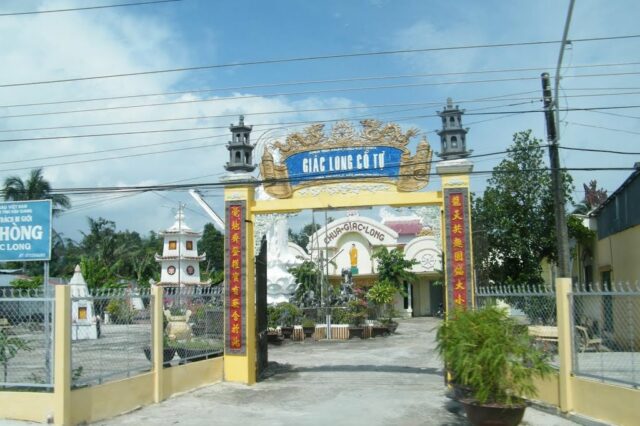
Chùa Giác Long Tự là một trong những ngôi chùa nổi tiếng tại Hậu Giang, nằm tại 3355 Hùng Vương, phường Ngã Bảy, tỉnh Hậu Giang. Tuy nằm tại tuyến đường đông đúc nhưng ngôi chùa vẫn giữ được trang nghiêm và thanh tịnh vốn có.
Chùa nằm ở vị trí thuận lợi, gần các tuyến đường giao thông chính, thuận tiện cho du khách và phật tử đến tham quan và hành hương.
Lịch sử và nhân vật
Chùa Giác Long được xây dựng vào giữa thế kỷ XX, là một trong những ngôi chùa nổi bật tại miền Tây Nam Bộ. Chùa được sáng lập bởi các vị hòa thượng và phật tử địa phương, nhằm phục vụ nhu cầu tâm linh của người dân nơi đây. Trong suốt quá trình hình thành và phát triển, chùa đã đóng vai trò quan trọng trong việc gìn giữ và phát huy văn hóa Phật giáo tại khu vực.
Kiến trúc cảnh quan
Chùa Giác Long có kiến trúc đặc trưng của phong cách chùa miền Nam, với mái ngói cong và nhiều họa tiết chạm khắc tinh xảo. Ngôi chùa được xây dựng theo phong cách kiến trúc cổ, mang nét tương đồng với các ngôi chùa Trung Hoa xưa (1). Bên ngoài cổng lớn, nổi bật là hình điêu khắc “lưỡng long chầu nguyệt” (2), biểu tượng thể hiện sự cân bằng âm dương trong vũ trụ. Hình ảnh con rồng từ lâu đã được sử dụng để trang trí các di tích văn hóa, vì rồng không chỉ là biểu tượng cao quý của nguồn gốc dân tộc Việt Nam mà còn được coi là vị thần mang lại sức sống mạnh mẽ và mùa màng bội thu. Ban đầu, chùa không có cổng tam quan; cổng tam quan hiện nay chỉ được xây dựng vào năm 1955.
Trong chính điện bày trí theo kiểu “tiên bái Phật, hậu bái Tổ” (3). Sừng sững giữa ngôi chùa là bức tượng Quan Âm Bồ Tát được đúc bằng cẩm thạch trắng, thể hiện sự tôn kính của người dân đối với thần linh. Phía trước chính điện thờ các tượng A Di Đà, Thích Ca, Di Lặc, có bộ tượng Thập Bát La hán, bộ tượng Thập Điện Diêm Vương, tượng Tổ Bồ Đề Đạt Ma và tượng Long Vương.
Với những vườn cây xanh tươi, không khí trong lành, khi đến chùa ngoài cúng viếng Phật, khách thập phương còn có thể tìm được cảm giác tĩnh lặng, thư thái sau những ngày xô bồ, mưu sinh với công việc đời thường.
Không chỉ là nơi thờ phụng, chùa còn có những khu vườn cây xanh mát, tạo ra không gian trong lành, giúp du khách đến đây không chỉ cúng viếng Phật mà còn tìm thấy sự tĩnh lặng, thư thái sau những ngày bận rộn, lo toan trong cuộc sống.
Hiện vật
Chùa Giác Long lưu giữ nhiều hiện vật quý giá, bao gồm các bức tượng Phật, thánh tích và nhiều đồ thờ cúng khác. Những hiện vật này không chỉ có giá trị về mặt tôn giáo mà còn mang giá trị lịch sử và văn hóa cao, phản ánh đời sống tâm linh của người dân nơi đây. Trong đó phải kể đến tượng phật Quan Âm Bồ Tát được đúc bằng cẩm thạch trắng, bức tượng đứng sừng sững ở giữa chùa, thể hiện sự tôn kính của phật tử đối với Phật. Phía trong của chùa cũng có thờ nhiều tượng Phật Tổ và các vị Thần Tiên.
Sự kiện và lễ hội
Chùa Giác Long thường tổ chức nhiều sự kiện và lễ hội lớn trong năm, đặc biệt là các lễ hội Phật đản, Vu Lan, và các ngày vía của các vị thần. Những ngày lễ lớn này, chùa sẽ tổ chức nhiều hoạt động kỉ niệm, dâng hoa, thu hút rất nhiều khách du lịch và người dân địa phương đến tham gia.
Chú thích
(1) Kiến trúc chùa Trung Hoa xưa thường nổi bật với bố cục đối xứng, tạo sự hài hòa và cân bằng giữa trời và đất. Cổng tam quan là yếu tố quan trọng, gồm ba lối đi, tượng trưng cho ba phương diện giải thoát trong Phật giáo. Các công trình trong chùa được bố trí theo trục dọc, với mức độ thiêng liêng tăng dần khi tiến sâu. Mái chùa có đầu đao cong vút, mang ý nghĩa bảo vệ và che chở, thường được trang trí bằng hình lưỡng long chầu nguyệt, biểu tượng của sự cân bằng âm dương trong vũ trụ.
(2) “Lưỡng long chầu nguyệt”: Là hình ảnh hai con rồng đối xứng nhau cùng chầu vào mặt trăng ở giữa. Đây là biểu tượng phổ biến trong kiến trúc chùa chiền và các di tích văn hóa Á Đông, tượng trưng cho sự cân bằng âm dương, sức mạnh và quyền lực. Rồng trong văn hóa phương Đông cũng là biểu tượng của quyền uy, sự bảo hộ và mùa màng bội thu.
(3) “Tiên bái Phật, hậu bái Tổ”: Đây là nguyên tắc bài trí trong các ngôi chùa Phật giáo, thể hiện thứ tự tôn kính. Trước tiên, người ta thờ Phật, đại diện cho niềm tin tôn giáo và sự cứu rỗi, sau đó là thờ tổ sư, tức các vị khai sáng tông phái, biểu thị sự biết ơn và tôn trọng những người đã dẫn dắt con đường tu hành.
Tham khảo
- Khám phá top 6 ngôi ngôi chùa nổi tiếng ở Hậu Giang, website: https://www.vietfuntravel.com.vn/blog/kham-pha-top-cac-ngoi-chua-noi-tieng-o-hau-giang.html
-
Hồng Anh (2020), Chùa Giác Long Cổ Tự – Hậu Giang, Bồ Đề Đạo Tràng.
Các ngôn ngữ khác
- Tiếng Anh (English)
Name and Geographical Location
Giac Long Tu Pagoda, one of the famous pagodas in Hau Giang, is located at 3355 Hung Vuong Street, Nga Bay Ward, Hau Giang Province. Despite being on a busy road, the pagoda maintains its inherent solemnity and tranquility.
The pagoda’s favorable location near major transportation routes makes it convenient for tourists and Buddhists to visit and make pilgrimages.
History and People
Giac Long Pagoda was built in the mid-20th century and is one of the most prominent pagodas in the Southwestern region. It was founded by local venerables and Buddhists to serve the spiritual needs of the community. Throughout its history, the pagoda has played a crucial role in preserving and promoting Buddhist culture in the area.
Architecture and Landscape
Giac Long Pagoda features the characteristic architectural style of Southern pagodas, with curved tiled roofs and intricate carvings. The pagoda was built in an ancient architectural style, showing similarities to traditional Chinese pagodas (1). Outside the main gate, the “two dragons worshipping the moon” carving (2) stands out, symbolizing the balance of Yin and Yang in the universe. The image of the dragon has long been used to decorate cultural relics, as the dragon is not only a noble symbol of the Vietnamese people’s origin but is also considered a deity that brings strong vitality and abundant harvests. Initially, the pagoda did not have a tam quan gate; the current tam quan gate was only built in 1955.
The main hall’s layout follows the principle of “worshipping Buddha first, then the Patriarchs” (3). Dominating the center of the pagoda is a statue of Bodhisattva Avalokiteshvara cast in white marble, which represents the people’s reverence for the deities. In front of the main hall, there are statues of Amitabha, Shakyamuni, and Maitreya. The hall also houses a group of statues of the Eighteen Arhats, a group of statues of the Ten Kings of Hell, a statue of Patriarch Bodhidharma, and a statue of the Dragon King.
With its lush green gardens and fresh air, visitors to the pagoda can find a sense of peace and relaxation after days of the hustle and bustle of daily life.
Artifacts
Giac Long Pagoda preserves many valuable artifacts, including statues of Buddha, sacred relics, and various other ritual objects. These artifacts hold not only religious value but also high historical and cultural significance, reflecting the spiritual life of the local people. Among them, the statue of Bodhisattva Avalokiteshvara, cast in white marble, stands tall in the center of the pagoda, symbolizing the devotion of Buddhists to the Buddha. The inner sanctum also houses many statues of the Founder of Buddhism and other deities.
Events and Festivals
Giac Long Pagoda often organizes several major events and festivals throughout the year, especially Buddha’s Birthday, the Vu Lan Festival, and the feast days of various deities. On these important occasions, the pagoda holds numerous commemorative activities and flower offerings, attracting many tourists and local residents.
Notes
(1) The architecture of ancient Chinese pagodas is often distinguished by a symmetrical layout, creating harmony and balance between heaven and earth. The tam quan gate is a key element, consisting of three passages symbolizing the three aspects of liberation in Buddhism. The structures within the pagoda are arranged along a central axis, with the level of sanctity increasing as one moves deeper inside. The pagoda’s roof has upturned eaves, symbolizing protection and shelter, and is often decorated with the “two dragons worshipping the moon” motif, a symbol of Yin-Yang balance in the universe.
(2) “Luong long chau nguyet” (Two dragons worshipping the moon): This image depicts two symmetrical dragons paying homage to the moon in the center. It is a popular symbol in the architecture of pagodas and cultural relics in East Asia, representing Yin-Yang balance, power, and authority. The dragon in Eastern culture also symbolizes power, protection, and abundant harvests.
(3) “Tien bai Phat, hau bai To” (Worshipping Buddha first, then the Patriarchs): This is a principle of arrangement in Buddhist pagodas, showing the order of reverence. Firstly, people worship the Buddha, representing their religious faith and salvation. Afterwards, they worship the founding patriarchs of the sect, which expresses gratitude and respect for those who guided the path of practice.
References
-
Kham pha top 6 ngoi chua noi tieng o Hau Giang (Discover the top 6 famous pagodas in Hau Giang), website: https://www.vietfuntravel.com.vn/blog/kham-pha-top-cac-ngoi-chua-noi-tieng-o-hau-giang.html
-
Hong Anh (2020), Chua Giac Long Co Tu – Hau Giang (Giac Long Ancient Pagoda – Hau Giang), Bo De Dao Trang.
2. Tiếng Trung (Chinese)
名称和地理位置
觉龙寺是后江省的著名寺庙之一,位于后江省后江市雄王街3355号。尽管地处繁忙路段,寺庙依然保持着原有的庄严与清净。 寺庙地理位置优越,靠近主要交通干道,方便游客和信众前来参观和朝拜。
历史与人物
觉龙寺建于20世纪中叶,是越南西南部地区(Southeastern Vietnam)的著名寺庙之一。该寺由当地僧人和佛教信众共同创建,以满足当地民众的精神需求。在形成和发展的过程中,寺庙在维护和弘扬该地区的佛教文化方面发挥了重要作用。
建筑景观
觉龙寺的建筑风格具有典型的南部寺庙特色,采用弯曲的瓦屋顶和许多精美的雕刻图案。寺庙的建筑风格古朴,与中国古代寺庙的风格相似(1)。在大门外,最引人注目的是“双龙戏珠”的雕塑(2),这一象征体现了宇宙中的阴阳平衡。在越南文化中,龙不仅是民族起源的崇高象征,也被视为带来强大生命力和丰收的神祇,因此其形象长期以来被用于装饰文化遗迹。最初,寺庙没有三关门(tam quan),现有的三关门是1955年才建造的。
在大雄宝殿内,供奉遵循“先拜佛,后拜祖”的原则(3)。寺庙中央矗立着一尊用白色大理石雕刻的观音菩萨像,表达了民众对神灵的崇敬。大殿前方供奉着阿弥陀佛、释迦牟尼佛和弥勒佛,还有十八罗汉、十殿阎罗、菩提达摩祖师以及龙王等塑像。
寺庙内草木繁茂,空气清新。除了礼佛,来此地的信众还可以在喧嚣的日常工作和生活中,寻得一份宁静和放松。
文物
觉龙寺珍藏着许多珍贵文物,包括佛像、圣物和各种供品。这些文物不仅具有宗教价值,还承载着重要的历史和文化意义,反映了当地人民的精神生活。其中最著名的是寺庙中央用白色大理石雕刻的观音菩萨像,它高高矗立,表达了信众对佛陀的崇敬。寺内还供奉着许多佛祖和神仙塑像。
事件与节庆
觉龙寺全年举办多场重大活动和节庆,尤其是佛诞节、盂兰盆节以及众神诞辰日。在这些重要的节日里,寺庙会组织纪念活动和献花仪式,吸引了众多游客和当地民众前来参与。
注释
(1) 中国古代寺庙建筑通常以对称布局为特色,旨在实现天地之间的和谐与平衡。三关门(tam quan)是重要元素,由三个入口组成,象征着佛教中的三种解脱法门。寺内建筑沿纵轴线布局,神圣程度随深入而递增。寺庙屋顶的飞檐高高翘起,象征着保护和庇佑,并常以“双龙戏珠”图案装饰,象征宇宙的阴阳平衡。
(2) “双龙戏珠”:指两条龙呈对称状,共同围绕着中间的月亮(或火焰宝珠)。这是东亚寺庙建筑和文化遗迹中常见的象征,代表阴阳平衡、力量和权威。在东方文化中,龙也是权势、庇护和丰收的象征。
(3) “先拜佛,后拜祖”:这是佛教寺庙的供奉原则,体现了敬拜的顺序。首先供奉佛陀,代表宗教信仰和救赎;其次供奉祖师,即宗派的创始人,表达对引领修行之路者的感激和尊敬。
参考文献
-
《探寻后江省六大著名寺庙》,网站:https://www.vietfuntravel.com.vn/blog/kham-pha-top-cac-ngoi-chua-noi-tieng-o-hau-giang.html
-
红英 (2020),《觉龙古寺-后江》,菩提道场。
3. Tiếng Pháp (French)
Nom et situation géographique
La Pagode de Giac Long Tu est l’une des pagodes les plus célèbres de Hau Giang, située au 3355 Hung Vuong, quartier Nga Bay, province de Hau Giang. Bien qu’elle se trouve le long d’une route très fréquentée, la pagode a su préserver son atmosphère de solennité et de sérénité.
La pagode bénéficie d’une position stratégique, proche des axes de communication majeurs, ce qui la rend facilement accessible aux visiteurs et aux bouddhistes qui viennent se recueillir.
Histoire et personnages
La Pagode de Giac Long a été construite au milieu du XXe siècle, et est l’une des pagodes emblématiques du Sud-Ouest du Vietnam. Elle a été fondée par des bonzes et des bouddhistes locaux pour répondre aux besoins spirituels des habitants de la région. Tout au long de son histoire, la pagode a joué un rôle crucial dans la préservation et la promotion de la culture bouddhiste locale.
Architecture et paysage
La Pagode de Giac Long présente un style architectural caractéristique des pagodes du Sud du Vietnam, avec des toits aux tuiles incurvées et de nombreuses sculptures élaborées. Elle est construite dans un style architectural ancien, qui partage des similitudes avec les temples chinois d’antan (1). Sur le grand portail, on remarque la sculpture de “luong long chau nguyet” (2), un symbole de l’équilibre du Yin et du Yang dans l’univers. Le dragon a longtemps été utilisé pour décorer les monuments culturels, car il est non seulement un symbole de l’origine noble du peuple vietnamien, mais il est également considéré comme une divinité qui apporte une vitalité puissante et d’abondantes récoltes. Initialement, la pagode n’avait pas de portail à trois entrées (tam quan); le portail actuel n’a été construit qu’en 1955.
À l’intérieur du sanctuaire principal, l’agencement suit le principe de “tien bai Phat, hau bai To” (3), c’est-à-dire que l’on adore d’abord Bouddha, puis les ancêtres. Au centre du temple trône une statue de la Bodhisattva Quan Am, sculptée dans du marbre blanc, exprimant la vénération du peuple envers la divinité. Devant le sanctuaire principal sont exposées les statues d’Amitabha, de Sakyamuni et de Maitreya. On y trouve également un ensemble de statues des Dix-huit Arhats, un ensemble des Dix Rois de l’Enfer, une statue du Patriarche Bo De Dat Ma et une statue du Roi Dragon.
Avec ses jardins luxuriants et son air pur, les visiteurs qui viennent à la pagode peuvent non seulement rendre hommage à Bouddha, mais aussi trouver un sentiment de paix et de sérénité après leurs journées mouvementées et le stress du quotidien.
En plus d’être un lieu de culte, la pagode possède des jardins verdoyants qui créent un environnement paisible, permettant aux visiteurs de trouver la tranquillité et la détente après le rythme effréné de la vie quotidienne.
Objets sacrés
La Pagode de Giac Long conserve de nombreux objets précieux, notamment des statues de Bouddha, des reliques sacrées et d’autres objets de culte. Ces objets ont non seulement une valeur religieuse, mais aussi une grande valeur historique et culturelle, reflétant la vie spirituelle des habitants. Parmi eux, il faut mentionner la statue de la Bodhisattva Quan Am en marbre blanc, qui se dresse majestueusement au centre de la pagode, témoignant de la vénération des bouddhistes envers Bouddha. L’intérieur de la pagode abrite également de nombreuses statues du Bouddha originel et d’autres divinités et immortels.
Événements et festivals
La Pagode de Giac Long organise régulièrement de grands événements et festivals tout au long de l’année, notamment les fêtes du Bouddha Dan (anniversaire de Bouddha), de Vu Lan et les commémorations des saints. Lors de ces grandes fêtes, la pagode met en place de nombreuses activités commémoratives et des offrandes florales, attirant un grand nombre de touristes et d’habitants locaux.
Notes
(1) L’architecture des temples chinois anciens se distingue souvent par une disposition symétrique, créant une harmonie et un équilibre entre le ciel et la terre. Le portail à trois entrées (tam quan) est un élément important, avec trois passages qui symbolisent les trois portes de la libération dans le bouddhisme. Les structures du temple sont agencées le long d’un axe longitudinal, le degré de sacralité augmentant au fur et à mesure que l’on s’enfonce dans le temple. Les toits des pagodes ont des coins en forme de cimeterre, symbolisant la protection, et sont souvent décorés de dragons faisant face à la lune (luong long chau nguyet), un symbole de l’équilibre du Yin et du Yang dans l’univers.
(2) “Luong long chau nguyet” : Il s’agit de l’image de deux dragons symétriques qui convergent vers la lune au centre. C’est un symbole très répandu dans l’architecture des pagodes et des monuments culturels d’Asie de l’Est, représentant l’équilibre du Yin et du Yang, la force et le pouvoir. Dans la culture orientale, le dragon est également un symbole d’autorité, de protection et de récoltes abondantes.
(3) “Tien bai Phat, hau bai To” : C’est un principe d’agencement dans les pagodes bouddhistes qui reflète l’ordre de vénération. On adore d’abord Bouddha, qui représente la foi religieuse et le salut, puis les maîtres patriarches, qui sont les fondateurs de la lignée, ce qui exprime la gratitude et le respect envers ceux qui ont ouvert la voie de la pratique spirituelle.
Références
-
Kham pha top 6 ngoi chua noi tieng o Hau Giang (Découvrez le top 6 des célèbres pagodes à Hau Giang), site web : https://www.vietfuntravel.com.vn/blog/kham-pha-top-cac-ngoi-chua-noi-tieng-o-hau-giang.html
-
Hong Anh (2020), Chua Giac Long Co Tu – Hau Giang, Bo De Dao Trang.