

Thời gian
Lễ hội Bổ Đà diễn ra 2 lần trong năm, 16 – 18 tháng Hai và 12 tháng Chín âm lịch
Lịch sử hình thành
Theo Bắc Ninh toàn tỉnh địa dư chí, núi Bổ Đà là ngọn núi nổi bật nhất huyện Việt Yên, kéo dài từ Thái Nguyên qua Yên Thế. Giữa quần thể núi liên tiếp, núi Bổ Đà nổi lên vừa cao vừa rộng, với đỉnh cao nhất là núi Phượng Hoàng; các ngọn thấp hơn gồm Yên Ngự và Kim Quy. Trên núi có chùa Tam Giáo và miếu Thạch Tướng Quân.
Căn cứ vào tư liệu và di vật còn lại, chùa Bổ Đà được khởi dựng từ thời Lý (thế kỷ XI) và trùng tu lớn vào thời Lê Trung Hưng dưới triều Lê Dụ Tông (1705–1728). Trong kháng chiến Việt – Tống (1077), khu vực chùa từng là nơi đóng quân của quân Tống trước khi bị Lý Thường Kiệt đánh bại tại phòng tuyến Như Nguyệt.
Năm 1723, ông Phạm Kim Hưng về đây tu hành, trùng tu chính điện và mở rộng chùa, truyền bá tư tưởng Tam giáo (Phật – Nho – Lão). Đến thời Cảnh Hưng (1740–1786), Hòa thượng Ngô Tính Ánh tiếp tục xây dựng chùa Tứ Ân, am Tam Đức và chùa Quán Âm, hình thành trung tâm Phật giáo lớn. Các thế hệ kế tiếp, như Hòa thượng Chiếu Không và Phả Thuần, tiếp tục mở rộng, hoàn thiện quần thể hơn 100 gian vào thế kỷ XIX.
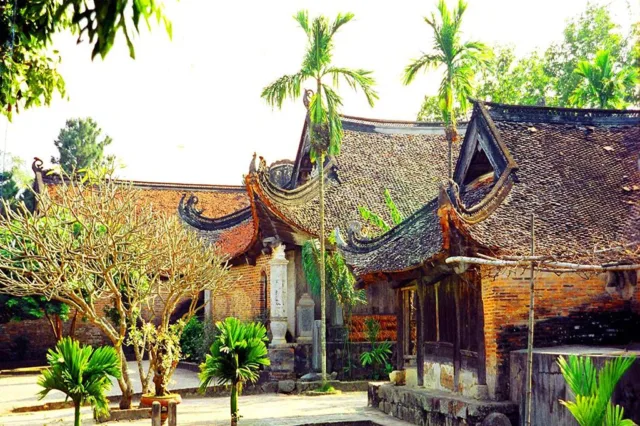
Trải qua nhiều biến động, chùa vẫn giữ được kiến trúc cổ kính. Trong kháng chiến chống Pháp và Mỹ, nơi đây từng là căn cứ cách mạng và địa điểm huấn luyện trinh sát theo đề nghị của Đại tướng Võ Nguyên Giáp.
Chùa Bổ Đà được công nhận là Di tích Kiến trúc – Nghệ thuật cấp quốc gia năm 1992, được trùng tu toàn diện năm 2007, và đến năm 2016 được xếp hạng Di tích quốc gia đặc biệt.
Lễ hội
Trước ngày hội chính, từ ngày 16 tháng Hai, các tiểu ban trong làng bắt đầu triển khai công việc theo nhiệm vụ được giao. Họ tổ chức tổng vệ sinh toàn bộ khu vực diễn ra lễ hội, làm lễ mộc dục để mở cửa chùa, đình, đền, lau dọn đồ thờ tự, treo cờ hội, cờ Phật pháp và cờ ngũ sắc. Đồng thời, các nhóm phụ trách nhân lực cho phần tế lễ, nấu cỗ, chuẩn bị đồ cúng, rước kiệu và tổ chức trò chơi dân gian cũng được phân công cụ thể. Trong mỗi gia đình, con cháu đều làm cỗ chay, cỗ mặn, gói bánh để cúng tổ tiên, thần Phật và mời khách về dự hội. Mỗi nhà còn đóng góp một phần kinh phí chung cho lễ cúng của làng. Các lễ vật dâng Phật được chuẩn bị rất công phu, thể hiện lòng thành kính, gồm hoa quả, bánh kẹo, trầu cau, xôi oản, bánh chưng, bánh dày, bánh khảo…
Sáng ngày 18 tháng Hai, lễ chính diễn ra tại chùa Bổ Đà. Từ sớm, sư thầy làm lễ cúng Phật, sau đó các thôn tập trung ngoài cổng chùa để rước kiệu và lễ vật vào trong. Đoàn rước gồm hai kiệu của thôn Thượng Lát và Hạ Lát, mang theo đầy đủ lễ vật như xôi oản, trầu cau, rượu, hương hoa… Đi đầu là đội cờ hội, đội trống, đội chấp kích; tiếp đến là kiệu được tám người khiêng, hai bên có lọng che. Người trong đoàn mặc áo nâu đỏ hoặc vàng, quần trắng, thắt đai, chân quấn xà cạp. Theo sau là các đoàn thể, các cụ cao niên, ban tế trong trang phục truyền thống, và nhóm các cụ bà dâng hương. Người tham gia rước phải là những gia đình đủ đầy, không có tang trong năm, các cụ bà thường là người đã quy y tại chùa.
Khi lễ vật được rước vào chùa, sư trụ trì sắp đặt lên ban Tam Bảo và các ban thờ. Các cụ cao niên làm lễ tế, cầu quốc thái dân an, mưa thuận gió hòa, cuộc sống no ấm. Người dự lễ đứng hai hàng hai bên, tay cầm hương và đọc kinh Phật. Sau khi cúng xong, nhà chùa mời mọi người ở lại dùng cơm chay. Lễ vật dâng cúng được chia lại, một phần để tại chùa, phần còn lại chia cho dân làng lấy lộc.
Ngoài lễ chính vào tháng Hai, hội Bổ Đà còn có lễ rước vào ngày 12 tháng Chín – ngày hóa của Thạch Linh thần tướng, người có công đánh giặc và hóa tại đỉnh núi Phượng Hoàng. Nhân dân lập đền thờ Ngài trên đỉnh núi, hướng về sông Cầu, xung quanh là các ngọn núi Kim Sơn, Bàn Cờ và Con Voi. Trong ngày này, dân làng cũng chuẩn bị lễ vật như xôi gà, thịt lợn, bánh chưng, hoa quả… để dâng cúng.
Sáng ngày 12 tháng Chín, tại đình Thượng Lát, trống chiêng nổi lên báo hiệu giờ rước. Ông chủ tế mặc áo đỏ, đội mũ mấn đọc văn tế, khấn mời các vị Thành hoàng. Đoàn rước gồm nhiều đội: rước cờ hội, múa lân, đội dâng lễ, đội nhạc và đội khiêng kiệu Thánh sơn son thếp vàng. Kiệu được tám trai làng khiêng, có lọng tàn che. Theo sau là các cụ trong ban tế và dân làng. Đoàn đi theo nhịp sênh tiền đến đền Thượng làm lễ tế Thành hoàng.
Tại đền, mọi vật dụng hành lễ được sắp đặt trang nghiêm. Khi đến giờ lành, chiêng trống nổi lên, đội tế thực hiện nghi thức dâng hương, đọc chúc văn rồi hóa văn tế. Sau đó, dân làng vào lễ Thánh và đoàn rước quay trở về đình Thượng Lát, kết thúc buổi lễ trang trọng, đậm đà bản sắc truyền thống.
Trò chơi trong lễ hội
Lễ hội Bổ Đà còn tổ chức nhiều trò chơi dân gian như: bịt mắt đập niêu, cờ tướng, cờ người,… Hiện nay, Ban Tổ chức còn đưa một số môn thể thao vào để thi đấu trong dịp lễ hội như: bóng chuyền, vật cổ truyền… Đặc biệt, huyện Việt Yên và tỉnh Bắc Giang còn đưa Hội thi hát Dân ca Quan họ vào chương trình hoạt động của lễ hội, thu hút được đông đảo tầng lớp nhân dân tham gia.
Tài liệu tham khảo
- Đào Ngọc Sơn, 2004, Chùa Bổ Đà – Tứ Ân trong lịch sử Phật giáo xứ Kinh Bắc, Nguyệt san Giác Ngộ, các số 101, 102 và 103.
- Nguyễn Hữu Tự, 1992, Chùa Bổ Đà – một trung tâm Phật giáo thời Lê, trong Những phát hiện mới về Khảo cổ học năm 1991, Nxb. Khoa học xã hội, Hà Nội.
- Nguyễn Hữu Tự, Trần Văn Lạng , 1993, Phải chăng chùa Phật Đà, hương Cát Ly thời Lý là chùa Bổ Đà, làng Lát, xã Tiên Sơn (Việt Yên), trong Những phát hiện mới về Khảo cổ học năm 1992, Nxb. Khoa học xã hội, Hà Nội.
- Bùi Thị Thắm, 2011, Di tích chùa Bổ Đà trong phát triển du lịch văn hóa tỉnh Bắc Giang, Khóa luận tốt nghiệp, trường Đại học Văn Hóa Hà Nội.
Ngôn ngữ khác
Tiếng anh
Boda Pagoda Festival – Van Ha Ward, Bac Ninh Province
Time
The Boda Festival takes place twice a year, from the 16th to the 18th of the Second Lunar Month, and on the 12th of the Ninth Lunar Month.
Historical Formation
According to Bac Ninh Toan Tinh Dia Du Chi, Boda Mountain is the most prominent mountain in Viet Yen District, stretching from Thai Nguyen through Yen The. Amid the chain of continuous mountains, Boda stands out for both its height and width, with its highest peak being Phoenix Mountain (Phuong Hoang). Other peaks include Yen Ngu and Kim Quy. On the mountain lie Tam Giao Pagoda and Thach Tuong Quan Temple.
Based on surviving documents and relics, Boda Pagoda was first built during the Ly Dynasty (11th century) and underwent major restoration during the Le Trung Hung period under King Le Du Tong (1705–1728). During the Viet–Song War (1077), the pagoda area served as a camp site for Song troops before they were defeated by Ly Thuong Kiet at the Nhu Nguyet Defensive Line.
In 1723, Pham Kim Hung came to practice Buddhism here, restored the main hall, expanded the pagoda, and spread the philosophy of the Three Teachings (Buddhism – Confucianism – Daoism). During the Canh Hung era (1740–1786), Venerable Ngo Tinh Anh continued to construct Tu An Pagoda, Tam Duc Hermitage, and Quan Am Pagoda, forming a major Buddhist center. Later generations, such as Venerable Chieu Khong and Pha Thuan, continued to expand the complex to more than 100 compartments in the 19th century.
Despite historical upheavals, the pagoda has preserved its ancient architecture. During the resistance wars against the French and Americans, it served as a revolutionary base and a reconnaissance training site at the request of General Vo Nguyen Giap.
Boda Pagoda was recognized as a National Architectural and Artistic Monument in 1992, underwent major restoration in 2007, and was designated a Special National Relic in 2016.
The Festival
Before the main festival day, beginning on the 16th of the Second Lunar Month, village committees start preparing their assigned tasks. They clean the entire festival area, conduct the moc duc ritual to open the pagoda, communal house, and temple, clean worship objects, and hang festival flags, Buddhist flags, and five-color flags. Groups responsible for manpower, cooking, preparing offerings, palanquin processions, and folk games also receive their detailed assignments. In each household, descendants prepare vegetarian and meat offerings and wrap cakes to worship ancestors and deities, and to welcome guests. Each family contributes a portion of funds to support the village offerings. The offerings presented to the Buddha are carefully prepared—fruits, cakes, betel and areca, sticky rice, oan cakes, banh chung, banh day, banh khao, etc.
On the morning of the 18th of the Second Lunar Month, the main ceremony takes place at Boda Pagoda. At dawn, the monks perform the Buddhist ritual. Afterwards, village groups gather at the pagoda gate to carry palanquins and offerings inside. The procession includes two palanquins from Thuong Lat and Ha Lat Villages, carrying full offerings such as sticky rice, oan cakes, betel and areca, wine, and flowers. Leading the procession are the flag team, drum team, and ceremonial weapon bearers, followed by the palanquin carried by eight men, with canopies on both sides. Participants wear red-brown or yellow traditional tunics, white trousers, belts, and leg wrappings. Behind them are village associations, elders, ceremonial masters in traditional attire, and women offering incense. Those participating must come from families with prosperity, without mourning in the year; elderly women are usually those who have taken refuge at the pagoda.
When the offerings are brought inside, the abbot arranges them on the Three Jewels Altar and other altars. The elders perform the ritual, praying for national peace, good weather, and prosperous life. Attendees stand in two rows, holding incense and chanting sutras. After the ceremony, the pagoda invites everyone to stay for a vegetarian meal. The offerings are divided: some remain at the pagoda, and the rest are shared with villagers as blessings.
Apart from the main festival in the Second Lunar Month, the Boda Festival also includes a procession on the 12th of the Ninth Lunar Month—the day when Thach Linh General ascended to the heavens. He was credited with fighting invaders and passed away at the peak of Phoenix Mountain. Locals built a temple dedicated to him on the mountaintop, facing Cau River and surrounded by Kim Son, Ban Co, and Con Voi Mountains. On this day, villagers also prepare offerings such as sticky rice with chicken, pork, banh chung, and fruits.
On the morning of the 12th, at Thuong Lat Communal House, drums and gongs sound to announce the procession. The chief celebrant, dressed in a red ceremonial robe and hat, reads the ritual text to invite the tutelary deities. The procession includes many teams: flag bearers, lion dancers, offering bearers, musicians, and the palanquin team carrying the gilded sacred palanquin. Eight young men carry the palanquin under ceremonial canopies. Behind them follow ceremonial elders and villagers. The procession moves in rhythm with sanh tien castanets to Thuong Temple for the worship ceremony.
At the temple, all ritual objects are arranged solemnly. At the auspicious hour, gongs and drums resound, the ceremonial team offers incense, reads the ritual text, and then burns it. Villagers then worship the deity before the procession returns to Thuong Lat Communal House, marking the end of a dignified and tradition-rich ceremony.
Festival Games
The Boda Festival features many folk games such as blindfolded pot breaking, Chinese chess (co tuong), human chess, and more. Today, the Organizing Committee also includes several sports competitions in the festival program, including volleyball and traditional wrestling. Notably, Viet Yen District and Bac Giang Province have integrated the Quan Ho Folk Singing Contest into the festival, attracting large numbers of participants.
References
- Đào Ngọc Sơn, 2004, Chùa Bổ Đà – Tứ Ân trong lịch sử Phật giáo xứ Kinh Bắc, Nguyệt san Giác Ngộ, các số 101, 102 và 103.
- Nguyễn Hữu Tự, 1992, Chùa Bổ Đà – một trung tâm Phật giáo thời Lê, trong Những phát hiện mới về Khảo cổ học năm 1991, Nxb. Khoa học xã hội, Hà Nội.
- Nguyễn Hữu Tự, Trần Văn Lạng , 1993, Phải chăng chùa Phật Đà, hương Cát Ly thời Lý là chùa Bổ Đà, làng Lát, xã Tiên Sơn (Việt Yên), trong Những phát hiện mới về Khảo cổ học năm 1992, Nxb. Khoa học xã hội, Hà Nội.
- Bùi Thị Thắm, 2011, Di tích chùa Bổ Đà trong phát triển du lịch văn hóa tỉnh Bắc Giang, Khóa luận tốt nghiệp, trường Đại học Văn Hóa Hà Nội.
Tiếng Pháp
Fête de la pagode Boda – quartier Van Ha, province de Bac Ninh
Période
La fête de Boda a lieu deux fois par an : du 16 au 18 du deuxième mois lunaire, et le 12 du neuvième mois lunaire.
Historique de formation
Selon le Bac Ninh Toan Tinh Dia Du Chi, la montagne Boda est la plus remarquable du district de Viet Yen, s’étendant de Thai Nguyen à travers Yen The. Au milieu d’une chaîne de montagnes continues, le mont Boda se distingue par sa hauteur et son ampleur, avec pour sommet le plus élevé le mont Phuong Hoang (Phenix). Les autres sommets comprennent Yen Ngu et Kim Quy. Sur ces hauteurs se trouvent la pagode Tam Giao et le temple Thach Tuong Quan.
Selon les documents et vestiges conservés, la pagode Boda fut édifiée à l’époque des Ly (XIᵉ siècle) et reconstruite de manière importante durant la période Le Trung Hung, sous le règne de Le Du Tong (1705–1728). Lors de la guerre Viet–Song (1077), la zone de la pagode servit de campement aux troupes Song avant leur défaite face à Ly Thuong Kiet sur la ligne défensive de Nhu Nguyet.
En 1723, Pham Kim Hung se retira dans ce lieu pour pratiquer le bouddhisme ; il restaura le sanctuaire principal, agrandit la pagode et diffusa la pensée des Trois Doctrines (bouddhisme – confucianisme – taoïsme). Sous l’ère Canh Hung (1740–1786), le vénérable Ngo Tinh Anh continua la construction de la pagode Tu An, de l’ermitage Tam Duc et de la pagode Quan Am, formant un important centre bouddhique. Les générations ultérieures, telles que les vénérables Chieu Khong et Pha Thuan, poursuivirent l’extension du complexe pour atteindre plus de 100 compartiments au XIXᵉ siècle.
Malgré de nombreux bouleversements historiques, la pagode a conservé son architecture ancienne. Durant les résistances contre les Français et les Américains, elle servit de base révolutionnaire et de centre d’entraînement du renseignement, à la demande du général Vo Nguyen Giap.
La pagode Boda fut classée Monument national d’architecture et d’art en 1992, entièrement restaurée en 2007, puis reconnue comme Site national spécial en 2016.
La fête
Avant le jour principal de la fête, dès le 16 du deuxième mois lunaire, les comités villageois commencent à exécuter leurs tâches assignées. Ils nettoient toute la zone du festival, réalisent le rituel moc duc pour ouvrir la pagode, la maison communale et le temple, nettoient les objets de culte et hissent les drapeaux du festival, les drapeaux bouddhiques et les drapeaux pentacolores. Les groupes chargés des ressources humaines, de la préparation des repas, des offrandes, des processions de palanquin et des jeux populaires reçoivent leurs missions détaillées. Dans chaque famille, les descendants préparent des plats végétariens et non-végétariens, confectionnent des gâteaux pour honorer les ancêtres et les divinités, et pour accueillir les invités. Chaque foyer contribue également à un fonds commun pour les offrandes collectives. Les offrandes destinées au Bouddha sont préparées avec grand soin : fruits, gâteaux, bétel et noix d’arec, riz gluant, gâteaux oan, banh chung, banh day, banh khao, etc.
Le matin du 18 du deuxième mois lunaire, la cérémonie principale se déroule à la pagode Boda. Dès l’aube, les moines accomplissent le rituel bouddhique. Ensuite, les hameaux se rassemblent à la porte de la pagode pour porter les palanquins et les offrandes à l’intérieur. Le cortège comprend deux palanquins des hameaux Thuong Lat et Ha Lat, transportant des offrandes telles que riz gluant, gâteaux oan, bétel et noix d’arec, alcool, fleurs, etc. En tête marchent l’équipe porte-drapeaux, la troupe de tambours et les porteurs d’armes cérémonielles, suivis des palanquins portés par huit hommes et abrités de parasols. Les participants portent des tuniques traditionnelles rouges-brunes ou jaunes, pantalons blancs, ceintures et bandes molletières. À l’arrière se trouvent les associations villageoises, les anciens, les maîtres des rites en tenue traditionnelle, et les femmes offrant l’encens. Les participants doivent appartenir à des familles prospères et non endeuillées pendant l’année ; les femmes âgées sont généralement celles ayant pris refuge bouddhique à la pagode.
Lorsque les offrandes sont apportées à l’intérieur, l’abbé les dispose sur l’autel des Trois Joyaux et les autres autels. Les anciens accomplissent la cérémonie, priant pour la paix nationale, des conditions climatiques favorables et une vie prospère. Les fidèles se tiennent en deux rangs, tenant de l’encens et récitant des sutras. Après la cérémonie, le monastère invite chacun à partager un repas végétarien. Les offrandes sont ensuite réparties : une partie reste à la pagode, le reste est distribué aux villageois comme bénédiction.
Outre la fête principale du deuxième mois lunaire, la fête de Boda comprend également une procession le 12 du neuvième mois lunaire — jour de l’ascension du général Thach Linh, qui avait contribué à repousser les envahisseurs et mourut au sommet du mont Phuong Hoang. Les habitants ont érigé un temple en son honneur au sommet, orienté vers la rivière Cau et entouré des monts Kim Son, Ban Co et Con Voi. Ce jour-là, les villageois préparent aussi des offrandes telles que riz gluant au poulet, porc, banh chung, fruits, etc.
Le matin du 12, à la maison communale de Thuong Lat, les tambours et gongs résonnent pour annoncer la procession. Le maître de cérémonie, vêtu d’une robe rouge et d’un bonnet cérémoniel, récite les textes rituels pour inviter les génies tutélaires. Le cortège comprend plusieurs groupes : porte-drapeaux, danse du lion, porteurs d’offrandes, musiciens et porteurs du palanquin sacré doré. Le palanquin est porté par huit jeunes hommes, accompagné de parasols. Derrière eux marchent les anciens du comité rituel et les villageois. Le cortège avance au rythme des castagnettes sanh tien jusqu’au temple Thuong où se tient la cérémonie.
Au temple, tous les objets rituels sont disposés avec solennité. À l’heure propice, gongs et tambours retentissent, l’équipe rituelle offre l’encens, lit le texte de prière puis le brûle. Les villageois viennent ensuite rendre hommage au génie avant que le cortège ne revienne à la maison communale de Thuong Lat, clôturant la cérémonie dans une atmosphère digne et empreinte de tradition.
Jeux du festival
La fête de Boda propose de nombreux jeux populaires tels que frapper la jarre les yeux bandés, jeu d’échecs chinois (co tuong), échecs humains, etc. Aujourd’hui, le comité d’organisation inclut également plusieurs compétitions sportives dans le programme du festival, telles que le volley-ball et la lutte traditionnelle. En particulier, le district de Viet Yen et la province de Bac Giang ont intégré le concours de chant folklorique Quan ho dans les activités de la fête, attirant un grand nombre de participants.
Références
- Đào Ngọc Sơn, 2004, Chùa Bổ Đà – Tứ Ân trong lịch sử Phật giáo xứ Kinh Bắc, Nguyệt san Giác Ngộ, các số 101, 102 và 103.
- Nguyễn Hữu Tự, 1992, Chùa Bổ Đà – một trung tâm Phật giáo thời Lê, trong Những phát hiện mới về Khảo cổ học năm 1991, Nxb. Khoa học xã hội, Hà Nội.
- Nguyễn Hữu Tự, Trần Văn Lạng , 1993, Phải chăng chùa Phật Đà, hương Cát Ly thời Lý là chùa Bổ Đà, làng Lát, xã Tiên Sơn (Việt Yên), trong Những phát hiện mới về Khảo cổ học năm 1992, Nxb. Khoa học xã hội, Hà Nội.
- Bùi Thị Thắm, 2011, Di tích chùa Bổ Đà trong phát triển du lịch văn hóa tỉnh Bắc Giang, Khóa luận tốt nghiệp, trường Đại học Văn Hóa Hà Nội
Tiếng Trung
补沱寺庙会 – 北宁省云河坊
时间
补沱庙会一年举行两次:农历二月十六日至十八日,及农历九月十二日。
形成历史
据《北宁全省地舆志》记载,补沱山是越安县最显著的山峰,自太原延伸至安世。在连绵群山之间,补沱山因高大宽广而最为突出,最高峰为凤凰山,其次为宴御山与金龟山。山上曾建有三教寺与石将军庙。
依据现存文献与遗物,补沱寺始建于李朝(十一世纪),在黎中兴时期(黎裕宗 1705–1728 年)进行大规模重修。越—宋战争(1077 年)期间,此区域曾为宋军驻扎地,后被(Ly Thuong Kiet)李常杰击败于如月防线。
1723 年,(Pham Kim Hung)范金兴来到此处修行,重修正殿、扩建寺院,并弘扬三教思想(佛–儒–道)。景兴年间(1740–1786),(Ngo Tinh Anh)吴性映继续建造四恩寺、三德庵与观音寺,形成大型佛教中心。其后诸代高僧,如(Chieu Khong)昭空、(Pha Thuan)法纯,继续扩建,使寺院至十九世纪拥有逾百间建筑。
历经战乱,寺院仍保留古朴风貌。在抗法、抗美时期,此地曾为革命根据地,并依(Vo Nguyen Giap)武元甲大将之建议成为侦察训练所。
补沱寺于 1992 年被认定为国家级建筑—艺术遗迹,2007 年全面修缮,2016 年列入国家特别遗迹。
庙会
前期准备
自农历二月十六日起,村内各小组依职责展开准备。他们清扫整个庙会区域,举行沐浴神像(木浴)仪式以开启寺、 đình、庙,清理供具,并悬挂会旗、佛旗与五色旗。同时,负责祭礼、炊事、供品、抬轿及组织民俗活动的人员也分别就位。每家每户准备素食、荤食与节令糕点以祭祖、敬佛,并款待来客;亦按规定为村祭贡献经费。供佛之礼极为精致,包括水果、糖点、槟榔、蒸糕、拜糕、粽子、糯团、考饼等。
正会(二月十八日)
十八日清晨,补沱寺举行正祭。僧人率先礼佛,各村落于寺门外集合,准备抬轿与入庙献供。队伍包括上辣村与下辣村两顶轿,承载蒸糕、拜糕、槟榔酒水与花供等。最前是会旗队、鼓队、执仪队;随后为由八人抬轿的神轿,轿侧有罗伞遮护。参与者身着棕红或黄色长衫、白裤、束带与绑腿。其后为各社会团体、长者、传统礼生与拈香老妇。参加者须为一年内无丧的家庭,老妇多为寺院受戒之信众。
入寺后,住持将供品陈列于三宝殿及诸坛。长者行大祭,祈国泰民安、风调雨顺、生活丰足。参礼者分列两侧,手执清香,诵佛经。祭毕,寺方设素斋宴请大众。供品一部分留于寺内,其余分赠村民取吉兆。
九月十二日祭
除二月大祭外,补沱庙会另于九月十二日举行迎轿仪式——纪念殁于凤凰山巅、曾有功平寇的石灵神将。村民于山顶建祠,面向沼江(Sông Cầu),其周围为金山、盘棋山与象山。此日,村民亦备蒸鸡饭、猪肉、粽子、水果等供品。
十二日早晨,上辣村 đình内锣鼓齐鸣,宣告迎轿开始。主祭着红袍、戴冕首,诵祭文,敬请城隍。队伍由会旗队、舞狮队、供品队、乐队及抬金漆圣轿之队组成。轿由八名壮丁抬举,伞盖随行。随后为祭组长老与村民。队伍依“铛钱”(sênh tiền)节奏前往上祠进行祭礼。
到达后,礼器整肃陈设。良辰至,锣鼓震响,祭组奉香、读祝文并焚祭文。其后村民入祠行礼,队伍再回上辣村 đình,圆满结束此场庄严而充满传统韵味的祭祀。
庙会活动
补沱庙会设有多种民俗游戏,如:蒙眼击罐、象棋、真人棋等。近年,主办方亦加入体育竞赛,如排球、传统摔跤。越安县与北江省还将民歌《官贺》比赛纳入庙会活动中,吸引各阶层群众踊跃参与。
参考文献
- Đào Ngọc Sơn, 2004, Chùa Bổ Đà – Tứ Ân trong lịch sử Phật giáo xứ Kinh Bắc, Nguyệt san Giác Ngộ, các số 101, 102 và 103.
- Nguyễn Hữu Tự, 1992, Chùa Bổ Đà – một trung tâm Phật giáo thời Lê, trong Những phát hiện mới về Khảo cổ học năm 1991, Nxb. Khoa học xã hội, Hà Nội.
- Nguyễn Hữu Tự, Trần Văn Lạng , 1993, Phải chăng chùa Phật Đà, hương Cát Ly thời Lý là chùa Bổ Đà, làng Lát, xã Tiên Sơn (Việt Yên), trong Những phát hiện mới về Khảo cổ học năm 1992, Nxb. Khoa học xã hội, Hà Nội.
- Bùi Thị Thắm, 2011, Di tích chùa Bổ Đà trong phát triển du lịch văn hóa tỉnh Bắc Giang, Khóa luận tốt nghiệp, trường Đại học Văn Hóa Hà Nội.