

Thân thế
Lý Thái Tông (chữ Hán: 李太宗), tên húy là Lý Phật Mã (李佛瑪), còn được biết đến với tên gọi khác là Lý Đức Chính (李德政), là trưởng nam của vua Lý Thái Tổ, vị vua khai sáng triều Lý. Ông sinh ngày 26 tháng 6 năm Canh Tý, niên hiệu Ứng Thiên thứ 7 đời nhà Tiền Lê, tức 29 tháng 7 năm 1000 dương lịch, tại kinh đô Hoa Lư, nay thuộc tỉnh Ninh Bình. Theo Đại Việt sử ký toàn thư, thân mẫu của Lý Phật Mã được ghi là:
“Hoàng hậu họ Lê, sinh vua vào ngày 26 tháng 6 năm Canh Tý, niên hiệu Ứng Thiên thứ 7, tại phủ Trường Yên.”[1]
Căn cứ vào các tư liệu dân gian, thần tích và ngọc phả tại khu vực Cố đô Hoa Lư, nhiều nhà nghiên cứu hiện đại xác định mẹ của Lý Phật Mã là Công chúa Lê Thị Phất Ngân, con gái của vua Lê Đại Hành và Hoàng hậu Dương Vân Nga. Nếu đúng như vậy, ông là cháu ngoại của cả vua Lê Đại Hành lẫn Hoàng hậu Dương Vân Nga, người từng đứng ở vị trí trung tâm của hai triều đại lớn: Đinh và Lê.
Sử sách cũng ghi lại rằng, vào thời điểm ông chào đời, ở phủ Trường Yên xuất hiện hiện tượng kỳ lạ: một con trâu trong dân gian bỗng nhiên tự rụng sừng cũ và mọc sừng mới. Chủ trâu lấy làm lo sợ, cho là điềm xấu. Nhưng một người am tường thiên tượng đi qua cười mà rằng:
“Đó là điềm thay đổi mới, đâu có can hệ gì đến nhà ngươi.”[2]
Tương truyền, khi mới sinh, Lý Phật Mã có bảy nốt ruồi sau gáy hợp thành hình chòm sao Thất tinh (sao Bắc Đẩu), một trong những điềm linh ứng thường thấy trong các truyền thuyết về bậc đế vương.
Thuở thiếu thời, ông đã bộc lộ khí chất phi phàm. Khi chơi đùa với bọn trẻ trong làng, ông thường tổ chức theo nghi vệ, sai khiến chúng dàn hầu hai bên như hộ giá thiên tử. Lý Thái Tổ thấy vậy lấy làm thích thú, nói đùa:
“Con nhà tướng thì nên học việc binh, chứ đâu cần kẻ rước người hầu?”[3] Cậu bé Phật Mã thẳng thắn đáp lời: “Người hầu kẻ rước thì có gì là lạ với con nhà tướng? Nếu đã lạ, thì sao ngôi vị không giữ mãi trong tay họ Đinh, lại về tay họ Lê? Tất cả đều là do mệnh trời.”[4]
Lý Công Uẩn nghe xong kinh ngạc và thầm yêu quý hơn, xem con như người có căn khí đế vương.
Bối cảnh lịch sử
Được lập làm Đông cung Thái tử
Năm 1012, khi vừa 13 tuổi, Lý Phật Mã được Lý Thái Tổ phong lập làm Đông cung Thái tử, đồng thời ban tước hiệu Khai Thiên vương (開天王) mang hàm ý người mở đầu một vận mệnh mới cho thiên hạ. Thái tử được lập phủ ở ngoài nội cung nhằm tạo điều kiện tiếp xúc thường xuyên với giới quan lại và dân chúng, qua đó rèn luyện kỹ năng quản trị và tích lũy kinh nghiệm chính sự ngay từ tuổi thiếu niên. Trong thời gian làm Thái tử, ông nhiều lần được giao quyền thống lĩnh binh mã, trực tiếp tham gia các chiến dịch quân sự lớn, thể hiện rõ năng lực thao lược và phẩm chất chỉ huy của một minh quân tương lai.
Năm 1019, ông được trao trọng trách Nguyên soái, dẫn đại quân tiến đánh Chiêm Thành. Khi đoàn thuyền vượt biển đến núi Long Tỵ, tương truyền rồng vàng hiện ra trên thuyền ngự, Thái tử bước tới đón lấy thì rồng tan biến. Người đương thời coi đó là điềm linh ứng, biểu thị thiên mệnh trao vào tay vị Thái tử.
Năm 1023, ông cầm quân tiến đánh Phong Châu, một vùng đất còn nhiều biến động.
Năm 1025, tiếp tục được phái đi dẹp loạn tại Diễn Châu, lập được chiến công vang dội, được Lý Thái Tổ hết lòng khen ngợi và tin tưởng.
Năm 1027, ông chỉ huy chiến dịch trấn áp châu Thất Nguyên (nay thuộc Lạng Sơn), vùng biên viễn phía bắc. Trong cùng năm đó, một sự kiện kỳ lạ được sử sách ghi lại: ông ban áo ngự cho đạo sĩ Trần Tuệ Long tại Nam Đế quán. Trong đêm, ánh sáng vàng rực tỏa khắp nơi, Tuệ Long kinh hãi tỉnh dậy thì thấy rồng vàng hiện trên mắc áo. Người đời xem đó là dấu hiệu thiên tử tương lai đã ứng vận.
Danh tiếng của Thái tử Lý Phật Mã lan rộng khắp kinh thành. Ông được đánh giá là bậc nhân từ, sáng suốt, có trí lược sâu rộng, sớm am hiểu cả văn trị lẫn võ công. Về mặt học thuật và kỹ nghệ, ông tinh thông lục nghệ (lễ, nhạc, xạ, ngự, thư, số), không môn nào không nắm vững, cho thấy tư chất vượt trội và bản lĩnh vương giả từ thuở thiếu thời.
Biến loạn Tam vương (1028)
Ngay sau khi Lý Thái Tổ băng hà vào năm Mậu Thìn 1028, khi tang lễ của Tiên đế còn chưa hoàn tất, triều đình Đại Cồ Việt rúng động bởi biến loạn chính trị nghiêm trọng. Ba hoàng tử là Vũ Đức vương, Dực Thánh vương và Đông Chinh vương đã liên kết đem quân vây đánh kinh thành Thăng Long, với mưu đồ cướp ngôi của Thái tử Lý Phật Mã. Trước tình hình đó, một số đại thần đứng đầu là Lý Nhân Nghĩa xin Thái tử cho phép xuất quân quyết chiến để bảo vệ chính thống. Trong cuộc đối đầu căng thẳng ngay trước kinh thành, tướng Vũ vệ quân Lê Phụng Hiểu đã có hành động quyết liệt mang tính bước ngoặt: ông tuốt gươm chỉ thẳng vào Vũ Đức vương và quát lớn: “Các người dòm ngó ngôi cao, khi dễ tự quân, trên quên ơn tiên đế, dưới trái nghĩa tôi con, vậy Phụng Hiểu xin dâng nhát gươm này!”[5] Nói đoạn, ông lập tức xông vào trận tiền chém chết Vũ Đức vương. Hành động quả cảm ấy khiến quân của các vương hoảng loạn, tháo chạy, còn Dực Thánh vương và Đông Chinh vương cũng buộc phải lẩn trốn khỏi kinh thành. Chưa dừng lại, trong cùng năm đó, Khai Quốc vương, đang trấn giữ phủ Trường Yên (Hoa Lư), nghe tin Vũ Đức vương tử trận liền bất mãn và nổi dậy, dựa vào địa thế hiểm trở để chiếm giữ thành cũ. Vua mới là Lý Thái Tông lập tức thân chinh đem quân về phía nam dẹp loạn. Khi đại quân tiến sát Trường Yên, Khai Quốc vương không chống nổi, phải mở cửa thành đầu hàng.
Vua Thái Tông ban chiếu nghiêm cấm binh sĩ cướp bóc của dân, kẻ vi phạm sẽ bị xử chém, khiến quân đội giữ được kỷ luật tuyệt đối. Dân chúng trong thành cảm kích, tự nguyện mang trâu rượu ra dâng đầy đường. Trước sự hồi tâm của Khai Quốc vương, Lý Thái Tông khoan dung tha tội và phục lại tước vị như cũ, thể hiện đức độ và chính sách nhân hòa.
Sau khi bình định nội loạn, ngày mồng Một tháng Tư năm 1028 (tức ngày Kỷ Hợi), Thái tử Lý Phật Mã chính thức đăng cơ, lấy niên hiệu là Thiên Thành (天成), kế thừa sự nghiệp của tiên đế, mở ra một giai đoạn phát triển mới cho Đại Cồ Việt. Về sau, Dực Thánh vương và Đông Chinh vương cũng trở về xin hàng, được Lý Thái Tông tha tội và phục chức, thể hiện tinh thần “lấy tình thân nhiếp chính sự”. Từ biến cố này, Lý Thái Tông rút ra bài học lớn về việc giữ gìn trật tự triều đình, và thiết lập lễ thề hằng năm tại đền Đồng Cổ (làng Yên Thái, Thăng Long). Trong lễ thề, các quan văn võ đều phải tuyên xưng lời thề trung quân ái quốc: “Làm con phải hiếu, làm tôi phải trung, ai bất hiếu bất trung, xin quỷ thần làm tội.”[6] Quan nào không tham dự hoặc trốn tránh, sẽ bị phạt 50 trượng, thể hiện tính nghiêm minh và đạo lý trị quốc vững bền.
Sự nghiệp trị quốc
Cải cách luật pháp và hành chính: Ban hành Hình thư
Lý Thái Tông là vị minh quân không chỉ nổi bật trên chiến trường mà còn hết lòng với việc chấn chỉnh pháp luật và hoàn thiện thể chế cai trị. Ngay từ những năm đầu triều, ông đã chủ trương sửa đổi luật lệ, điều chỉnh các hình phạt và quy định rõ cách tra xét, xử án. Ông quy định rõ: Nếu có kẻ đột nhập tư gia vào ban đêm để gian dâm với vợ cả hay vợ lẽ của người khác, chủ nhà nếu đánh chết tại chỗ sẽ không bị kết tội. Đồng thời, thiết lập nguyên tắc khoan dung đối với người già yếu (từ 70 tuổi trở lên), trẻ nhỏ (10 – 15 tuổi), người ốm yếu, và thân tộc của hoàng đế từ hàng Đại công trở lên: nếu phạm tội thông thường có thể chuộc tội bằng tiền, nhưng nếu phạm tội thập ác thì không được miễn giảm.
Về quản lý thuế khóa, triều đình cho phép người thu thuế được nhận thêm một phần gọi là “hoành đầu” (tức 1 phần trên 10), như là thù lao hợp pháp. Tuy nhiên, nếu thu vượt mức cho phép sẽ bị xử tội ăn trộm. Trăm họ nếu tố cáo thành công người thu thuế gian lận thì được miễn phú dịch cả nhà trong ba năm. Ở kinh thành, người tố cáo còn được thưởng bằng hiện vật. Đặc biệt, nếu có sự thông đồng giữa người thu thuế với quản giáp hay chủ đô, thì cả ba bên đều bị xử tội như nhau, dù sự việc đã xảy ra từ lâu nhưng có người tố giác vẫn bị truy cứu.
Đỉnh cao trong sự nghiệp lập pháp của Thái Tông là việc ban hành bộ luật Hình thư vào năm 1042 được coi là bộ luật thành văn đầu tiên của Việt Nam. Trước đó, luật pháp rối ren, quan lại áp luật máy móc, nhiều người dân bị oan sai. Cảm thông trước cảnh đó, nhà vua sai Trung thư tỉnh san định luật lệnh, phân loại, biên chế thành điều khoản mạch lạc, giúp dân dễ hiểu, quan dễ thi hành. Khi bộ Hình thư hoàn thành, ông ban chiếu phổ biến toàn quốc, đánh dấu một bước tiến vượt bậc về mặt lập pháp. Nhân sự kiện này, ông đổi niên hiệu thành Minh Đạo và cho đúc tiền Minh Đạo, thể hiện tinh thần cải cách triệt để.
Năm 1043, ông lại ban chiếu quy định: kẻ đem bán hoàng nam làm gia nô thì bị đánh 100 trượng, thích 20 chữ vào mặt; nếu chưa bán nhưng đã bị sai khiến thì thích 10 chữ; người mua sẽ bị giảm nhẹ một bậc hình phạt. Ngoài ra, quân sĩ đào ngũ quá một năm sẽ bị đánh 100 trượng, thích 50 chữ vào mặt; nếu trở lại quân ngũ thì được tha. Còn kẻ không theo giá xa giá (không theo hộ giá vua) cũng bị xử trượng và thích mặt.
Quan tâm quốc kế dân sinh
Dù phải đối phó với nhiều cuộc binh biến và chiến dịch quân sự, Lý Thái Tông vẫn là vị vua có tinh thần chăm lo đến quốc kế dân sinh, đặc biệt là đời sống nông nghiệp. Mỗi khi quốc gia gặp năm đói kém hoặc sau những lần chinh chiến, ông đều ban chiếu giảm thuế cho dân từ hai đến ba năm, thể hiện lòng nhân từ và ý thức trị quốc an dân.
Tháng 2 năm 1038, ông thân hành ra tận cửa biển Bồ Hải để cử hành lễ Tịch điền, nghi lễ tượng trưng cho sự đề cao nông nghiệp. Sau khi tế cáo Thần Nông, đích thân nhà vua xuống ruộng cày ba luống, bất chấp lời can ngăn của các quan. Khi được khuyên rằng việc ấy là của nông phu, nhà vua đáp: “Trẫm không tự cày cấy thì lấy gì có xôi cúng, lại lấy gì cho thiên hạ noi theo?”[7] Cử chỉ ấy vừa mang tính tượng trưng, vừa thể hiện ý chí khuyến nông, lấy nông nghiệp làm gốc cho quốc gia thịnh trị.
Năm 1040, Lý Thái Tông ra lệnh đem toàn bộ gấm vóc nhập khẩu từ Tống còn lại trong cung ra phân phát, may áo ban thưởng cho các quan lại từ ngũ phẩm trở lên. Cùng lúc đó, ông khuyến khích cung nữ học dệt, chuyển sang tự sản xuất hàng dệt trong nước, giảm lệ thuộc vào hàng ngoại. Từ đó, gấm vóc trong cung đều là sản phẩm nội chế, góp phần khuyến khích thủ công nghiệp trong nước phát triển.
Chinh phạt
- Dẹp loạn họ Nùng ở biên cương phía bắc
Đầu thế kỷ XI, vùng Quảng Nguyên (nay thuộc Lạng Sơn, Cao Bằng) nhiều lần xảy ra biến loạn do các tù trưởng họ Nùng cát cứ. Năm 1038, Nùng Tồn Phúc khởi binh, tự xưng là Chiêu Thành Hoàng đế, lập vợ là A Nùng làm Minh Đức hoàng hậu, đặt quốc hiệu là Trường Sinh. Cuộc nổi loạn bị Lý Thái Tông thân chinh dẹp yên vào tháng 2 năm 1039, bắt sống Tồn Phúc và con trai là Nùng Trí Thông, xử tử tại kinh đô. A Nùng và con út là Nùng Trí Cao kịp thời đào thoát.
Năm 1041, Nùng Trí Cao quay lại chiếm châu Thảng Do, lập nước Đại Lịch. Tuy nhiên, sau khi bị bắt, Lý Thái Tông vì thương tình nên không xử tử mà lại phong Trí Cao làm châu mục Quảng Nguyên, sau thăng lên Thái bảo, thể hiện chính sách vừa mềm dẻo vừa bao dung. Tuy nhiên, lòng nhân ấy không hóa giải được dã tâm. Trí Cao liên tục nổi dậy (năm 1048, 1052), thậm chí xưng đế hiệu là Nhân Huệ Hoàng đế, lập quốc hiệu Đại Nam, tấn công sang cả lãnh thổ nhà Tống. Trận đánh lớn năm 1052 gây chấn động phương Bắc: Trí Cao công phá nhiều châu trấn như Ung, Quý, Đằng, Quảng Châu, gây thương vong hàng nghìn người. Triều Tống hoảng sợ, phải cử tướng Địch Thanh đánh dẹp. Lý Thái Tông từng gửi biểu xin phối hợp xuất binh, song bị triều Tống từ chối. Sau nhiều lần thất bại, Trí Cao cầu cứu Đại Việt nhưng không thành. Cuối cùng, ông bị người nước Đại Lý bắt, chém đầu, nộp cho nhà Tống, gia quyến bị tru di, dòng họ Nùng tuyệt diệt.
Sử thần Lê Văn Hưu bình luận: “Thái Tông đã từng tha tội cho Trí Cao, lại phong cho chức cao tước trọng, như thế là thưởng phạt không nghiêm. Cuối cùng gây họa lớn, phải đem quân đánh dẹp, há chẳng khác gì thả hổ rồi mới đi bắt? Đó là cái lỗi của nhà vua lấy lòng nhân nhỏ mà quên đại nghĩa làm vua.”[8]
- Chinh phạt Chiêm Thành
Sau hơn 15 năm trị vì, nhận thấy Chiêm Thành không thông sứ, thường quấy nhiễu vùng biển phía nam, năm 1044, Lý Thái Tông quyết định mở chiến dịch đánh Chiêm. Quân Đại Việt vượt biển, giao chiến tại sông Ngũ Bồ. Quân Chiêm đại bại, vua Sạ Đẩu (Jaya Simhavarman II) bị tướng Quách Gia Di sát hại, đem đầu xin hàng. Quân Lý bắt được hơn 5.000 tù binh và 30 voi chiến. Nhà vua sau đó tiến binh đến kinh đô Phật Thệ (nay thuộc Thừa Thiên – Huế), bắt được vương phi Mỵ Ê cùng cung nữ. Mỵ Ê tự vẫn giữ tiết, được nhà vua khen ngợi và truy phong làm Hiệp Chính Hựu Thiện phu nhân. Trở về Thăng Long, Thái Tông làm lễ cáo thắng trận, ban thưởng quân sĩ, đồng thời ban chiếu tha mạng cho tù binh, cho họ định cư ở các vùng đất từ Vĩnh Khang đến Đăng Châu, đặt tên làng theo nguyên danh xứ Chiêm Thành. Đây là chính sách khôn khéo, vừa nhân đạo vừa khai hoang lấn biển.
Ngoài các cuộc chiến lớn kể trên, Lý Thái Tông còn nhiều lần thân chinh và sai tướng đánh dẹp trong nước và trấn áp các thế lực cát cứ: Năm 1034, đánh châu Ái để ổn định khu vực Thanh Hóa. Năm 1048, sai tướng Phùng Trí Năng đem quân đánh Ai Lao, bắt được nhiều dân cư và gia súc.
Tư tưởng – Tôn giáo
Lý Thái Tông là vị minh quân thấm nhuần tư tưởng Phật giáo và dành một niềm tin sâu sắc cho đạo Phật, coi đó là điểm tựa tinh thần cho việc trị quốc và an dân. Sự sùng mộ của ông đối với nhà Phật không chỉ thể hiện qua các chính sách độ tăng, dựng chùa, thỉnh kinh, mà còn được kết tinh trong một công trình kiến trúc đặc sắc, biểu tượng tín ngưỡng và mỹ học Phật giáo thời Lý.
Tương truyền rằng vào năm 1049, trong một đêm mộng lành, vua nằm mộng thấy Phật bà Quan Âm ngự trên tòa sen, tay dắt nhà vua bước lên đài sen ấy. Tỉnh dậy, vua thuật lại điềm lành cho triều thần và cho rằng đó là phúc điềm từ trời. Để ghi nhớ điềm mộng thiêng liêng ấy, ông sai dựng một cột đá lớn, đặt tòa sen ở trên, mô phỏng cảnh giới Phật như trong giấc mơ. Công trình ấy về sau trở thành ngôi chùa có tên là Diên Hựu, mang ý nghĩa “kéo dài sự tốt lành”.
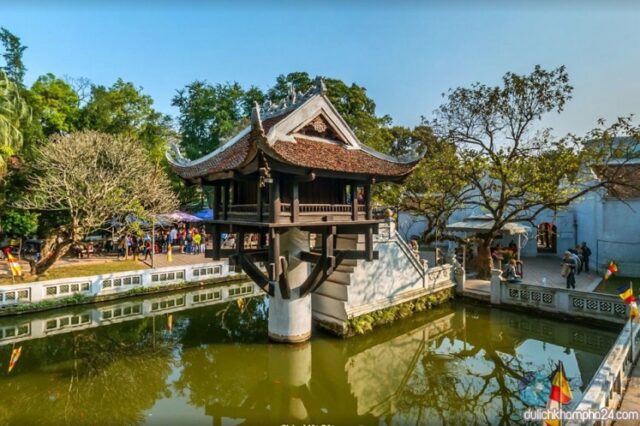
Chùa Diên Hựu được khởi công vào tháng Mười năm Kỷ Sửu (1049), niên hiệu Thiên Cảm Thánh Vũ nguyên niên, tọa lạc giữa hồ Linh Chiểu. Với kiến trúc độc đáo, một ngôi chùa nhỏ bằng gỗ dựng trên một cột đá hình trụ giữa hồ sen, chùa được ví như đóa sen vươn nở giữa lòng nước, biểu tượng cho sự thanh tịnh và lòng từ bi trong Phật đạo.
Hằng năm, vào mùng 8 tháng Tư âm lịch, vua Thái Tông đều thân hành đến chùa làm lễ Tắm Phật, một nghi lễ quan trọng trong Phật giáo kỷ niệm ngày đản sinh của Đức Thích Ca Mâu Ni. Cùng với vua là chư tăng và hàng ngàn người dân khắp kinh thành Thăng Long quy tụ về dự hội. Sau lễ tắm Phật là nghi thức phóng sinh, nhà vua từ trên đài cao trước chùa thả một chú chim bay lên trời, rồi muôn dân cùng tung chim theo trong tiếng trống chiêng rộn rã và tiếng reo vui tưng bừng của một ngày lễ lớn.
Chùa Một Cột không chỉ là công trình kiến trúc đặc sắc của mỹ thuật thời Lý, mà còn là biểu hiện tiêu biểu cho tinh thần hộ pháp, quy ngưỡng đạo Phật của triều đình. Đó cũng là minh chứng sinh động cho quan điểm trị quốc kết hợp giữa pháp trị và đức trị, đặt đạo đức, tín ngưỡng và lòng nhân từ lên hàng đầu trong tư duy chính trị của Lý Thái Tông.
Gia quyến
Cha: Vua Lý Thái Tổ.
Mẹ: Linh Hiển Hoàng hậu – Lê Thị Phất Ngân, con gái vua Lê Đại Hành và Hoàng hậu Dương Vân Nga.
Hậu Cung có tổng 8 vị hoàng hậu nhưng một số vị không rõ tên
- Linh Cảm Hoàng hậu họ Mai thị
- Vương hoàng hậu
- Đinh hoàng hậu
- Thiên Cảm hoàng hậu họ Dương
- Đào phi
Hậu duệ: Lý Thái Tông có hai người con trai trước đó đều yểu mệnh, Nhật Tôn là con trai thứ 3.
- Hoàng thái tử Lý Nhật Tôn, mẹ là Linh Cảm Hoàng hậu.
- Phụng Càn vương Lý Nhật Trung, năm 1035 được sắc phong.
- Bình Dương công chúa, năm 1029 gả cho châu mục Lạng châu là Thân Thiệu Thái.
- Trường Ninh công chúa, tháng 8 năm 1036 gả cho châu mục Thượng Oai là Hà Thiện Lãm.
- Kim Thành công chúa, tháng 3 năm 1036 gả cho châu mục Phong châu là Lê Thuận Tông.
Cuối đời – thờ phụng
Tháng 7 năm Giáp Ngọ (1054), niên hiệu Sùng Hưng Đại Bảo thứ sáu, theo chiếu dụ của Hoàng đế, Hoàng thái tử Lý Nhật Tôn được trao quyền tham dự triều chính, trực tiếp lắng nghe và giải quyết các công việc đại sự của quốc gia. Đây là dấu hiệu rõ ràng cho thấy Thái Tông Hoàng đế đã chuẩn bị cho việc kế vị một cách chu đáo, theo đúng quy củ. Đến tháng 9 năm ấy, vào ngày Mậu Dần, sức khỏe nhà vua suy giảm rõ rệt, không còn đủ sức điều hành triều chính thường nhật. Sang mùa đông, vào ngày mồng Một tháng Mười âm lịch, tức ngày 3 tháng 11 năm 1054 dương lịch, Lý Thái Tông băng hà tại điện Trường Xuân, sau 27 năm trị vì, thọ 54 tuổi. Sau khi Hoàng đế băng, Hoàng thái tử Lý Nhật Tôn được quần thần tôn lập, kế thừa ngai vàng, tức Hoàng đế Lý Thánh Tông. Vua Lý Thái Tông được truy tôn miếu hiệu là Thái Tông, tuy nhiên thụy hiệu cụ thể không được ghi lại trong các sách sử hiện còn.
Vua Lý Thái Tông được thờ cùng các vị vua triều Lý tại Đền Đô, thành phố Từ Sơn, tỉnh Bắc Ninh. Đây là một trong những ngôi đền lớn và quan trọng nhất thờ các vua nhà Lý. Ngoài ra, nhiều địa điểm khác cũng lưu giữ dấu tích và tôn thờ Lý Thái Tông, đặc biệt là ở vùng Cố đô Hoa Lư (Ninh Bình), nơi ông đã sống suốt thời niên thiếu. Một số di tích tiêu biểu gồm:
- Chùa Duyên Ninh: Nằm trong thành Tây Hoa Lư, được truyền tụng là nơi sinh ra Lý Thái Tông.
- Hang Thầy Bói: Gần cầu Đông, là nơi ở của người từng đoán điềm lành khi vua chào đời.
- Động Am Tiên: Thờ chung Lý Thái Tổ, Lý Thái Tông và Hoàng hậu Lê Thị Phất Ngân, mẹ của Lý Thái Tông.
- Chùa Dầu: Do chính Lý Thái Tông cho xây để các hoàng thân nhà Lý tu hành.
Tại khu vực cửa Thần Phù (Ninh Bình), nơi từng là phòng tuyến quân sự quan trọng, có nhiều đền, đình cũng phối thờ Lý Thái Tông cùng vua Lê Đại Hành, ông ngoại của ông. Một số nơi tiêu biểu như:
- Đình Quảng Công
- Đình Từ Đường
- Đền Thượng Ngọc Lâm
- Đền vua Lê Đại Hành (ở các xã Yên Thái, Yên Lâm, Lai Thành).
Những nơi này không chỉ thờ vua mà còn là địa điểm gắn với các hoạt động quân sự, văn hóa và tín ngưỡng của triều Lý – Tiền Lê. Việc thờ phụng Lý Thái Tông tại nhiều nơi như vậy thể hiện lòng biết ơn và sự kính trọng của nhân dân với một vị vua có công lớn trong việc giữ yên bờ cõi và phát triển đất nước.
Nhận định và đánh giá
Lý Thái Tông, vị vua thứ hai của triều Lý, là hình mẫu tiêu biểu cho một nhà quân chủ vẹn toàn: cứng rắn trong chính sự, khoan hậu trong đối nhân, và linh hoạt giữa thực tế trị nước với ảnh hưởng sâu đậm của Phật giáo đương thời. Theo Đại Việt sử ký toàn thư, ông là người “trầm mặc, cơ trí, biết trước mọi việc”, văn võ song toàn, được ví với Hán Quang Vũ của Trung Hoa. Công nghiệp quân sự sánh với Đường Thái Tông, nhưng tác phong đôi khi bị phê phán là còn nặng về biểu thị uy quyền.[9]
Tuy nhiên, sự nghiệp trị quốc gần ba thập kỷ dưới thời ông không chỉ dừng ở những trận chinh phạt, mà còn in đậm dấu ấn cải cách. Bộ Hình thư ra đời năm 1042 là nền móng đầu tiên của luật pháp Việt Nam có hệ thống. Hành vi ban thưởng, xét tội đều có cân nhắc, không tùy tiện, không lệ thuộc hoàn toàn vào cảm tính của người cầm quyền, điều hiếm thấy ở các triều đại sơ khai. Lý Thái Tông nhiều phen dẹp loạn trong ngoài: từ loạn Tam vương trong triều, binh biến của các châu mục ở biên thùy, đến những xung đột với Chiêm Thành, Ai Lao, và nổi bật nhất là chuỗi sự kiện liên quan đến họ Nùng. Với những trường hợp phản loạn, ông xử lý mềm mỏng, nhiều khi khoan hồng đến mức bị giới sử quan Nho giáo như Ngô Sĩ Liên chê trách là “mê thuyết từ ái của đạo Phật”. Dẫu vậy, cách đối xử ấy lại được học giả hiện đại Lê Văn Siêu nhìn nhận là sự dụng tâm sâu sắc – “nhu thắng cương”, vừa chế ngự lòng người, vừa hóa giải hiểm họa lâu dài.[10]
Trên phương diện văn hóa – tư tưởng, ông là người sùng Phật và biết lấy đạo lý từ bi làm điểm tựa cho vương quyền. Việc xây dựng chùa Một Cột (Diên Hựu tự) không chỉ là công trình mang dấu ấn cá nhân của nhà vua, mà còn thể hiện tinh thần hướng thượng, kết hợp tâm linh và chính trị một cách hài hòa.
27 năm trị quốc, Lý Thái Tông để lại cho hậu thế một quốc gia có kỷ cương, có biên cương ổn định, có lòng dân quy thuận. Nếu Lý Thái Tổ là người đặt nền móng cho một triều đại thịnh trị, thì chính Lý Thái Tông là người đã đúc vững nền móng ấy bằng hành động và thể chế.
Chú thích
[1] Lê Văn Hưu, Phan Phu Tiên, Ngô Sĩ Liên…, Đại Việt sử ký toàn thư, Nxb Khoa học Xã hội, 1993, tr. 90, bản ebook.
[2] Lê Văn Hưu, Phan Phu Tiên, Ngô Sĩ Liên…, Sđd, tr. 90.
[3] Lê Văn Hưu, Phan Phu Tiên, Ngô Sĩ Liên…, Sđd, tr. 90.
[4] Lê Văn Hưu, Phan Phu Tiên, Ngô Sĩ Liên…, Sđd, tr. 90 – 91.
[5] Lê Văn Hưu, Phan Phu Tiên, Ngô Sĩ Liên…, Sđd, tr. 87.
[6] Lê Văn Hưu, Phan Phu Tiên, Ngô Sĩ Liên…, Sđd, tr. 89.
[7] Lê Văn Hưu, Phan Phu Tiên, Ngô Sĩ Liên…, sđd, tr. 95.
[8] Lê Văn Hưu, Phan Phu Tiên, Ngô Sĩ Liên…, sđd, tr. 100.
[9] Lê Văn Hưu, Phan Phu Tiên, Ngô Sĩ Liên…, Sđd, tr. 90.
[10] Lê Văn Siêu, Việt Nam văn minh sử, Nxb Thanh Niên, 2004, tr. 132-133.
Tài liệu tham khảo
- Quỳnh Cư, Đỗ Đức Hùng (2001), Các triều đại Việt Nam, Nxb Thanh Niên.
- Lê Văn Hưu, Phan Phu Tiên, Ngô Sĩ Liên… (1993), Đại Việt sử ký toàn thư, Nxb Khoa học Xã hội.
- GS Vũ Ngọc Khánh (2003), Tám vị vua triều Lý, Nxb Văn hóa Thông tin.
- Trần Trọng Kim (1943), Việt Nam sử lược, Nhà in Bắc Thành.
- Lê Văn Siêu (2004), Việt Nam văn minh sử, Nxb Thanh Niên.
______________
Ngôn ngữ khác
Tiếng Anh (English)
Origins
Ly Thai Tong (Chinese characters: 李太宗), personal name Ly Phat Ma (李佛瑪), also known by the name Ly Duc Chinh (李德政), was the eldest son of King Ly Thai To, the founder of the Ly dynasty. He was born on the 26th day of the 6th lunar month of the year Canh Ty, the 7th year of the Ung Thien reign era under the Earlier Le, i.e., July 29, 1000 (solar calendar), in the capital Hoa Lu, now in Ninh Binh province. According to the Dai Viet Su Ky Toan Thu, Ly Phat Ma’s mother is recorded as:
“The empress surnamed Le bore the king on the 26th day of the 6th month of the year Canh Ty, the 7th year of the Ung Thien reign era, at Truong Yen Prefecture.”[1]
Based on folk materials, sacred biographies, and genealogical records in the area of the Ancient Capital of Hoa Lu, many modern researchers identify Ly Phat Ma’s mother as Princess Le Thi Phat Ngan, daughter of King Le Dai Hanh and Empress Duong Van Nga. If so, he was the maternal grandson of both King Le Dai Hanh and Empress Duong Van Nga, who had stood at the center of two great dynasties: Dinh and Le.
The chronicles also note that at the time of his birth, a strange phenomenon occurred in Truong Yen Prefecture: a buffalo among the populace suddenly shed its old horns and grew new ones. The owner was fearful and took it as a bad omen. But a passerby versed in celestial signs laughed and said:
“That is a sign of renewal—what has it to do with you?”[2]
Tradition has it that, when newly born, Ly Phat Ma had seven moles on the nape of his neck forming the shape of the Seven Stars (the Big Dipper), one of the auspicious portents often found in legends about emperors.
In his youth he displayed an extraordinary bearing. When playing with village children, he often organized them in formal array, ordering them to stand on either side like attendants to the Son of Heaven. Seeing this, Ly Thai To was amused and joked:
“The son of a general ought to learn the arts of war—what need is there for bearers and attendants?”[3]
The boy Phat Ma answered forthrightly: “What is so strange about bearers and attendants for a general’s son? If it is so strange, why did the throne not remain forever in the hands of the Dinh, but pass to the Le? All is due to Heaven’s mandate.”[4]
Hearing this, Ly Cong Uan was astonished and cherished him all the more, regarding his son as one endowed with imperial destiny.
Historical Context
Invested as Crown Prince
In 1012, at just 13 years old, Ly Phat Ma was invested by Ly Thai To as Crown Prince of the Eastern Palace and was simultaneously given the title Khai Thien vuong (開天王, “Opener of Heaven”), implying the one to inaugurate a new mandate for the realm. The Crown Prince set up his residence outside the inner palace to facilitate frequent contact with officials and commoners alike, thereby training in governance and accumulating experience in state affairs from a young age. During his time as Crown Prince, he was repeatedly entrusted with command of troops, directly taking part in major military campaigns and clearly displaying the strategic acumen and leadership qualities of a future enlightened monarch.
In 1019, he was appointed Grand Marshal and led a great army against Champa. When the fleet crossed the sea to Mount Long Ty, it is said a golden dragon appeared upon the royal barge; when the Crown Prince stepped forward to receive it, the dragon vanished. People of the time regarded this as an omen of Heaven’s mandate placed in the Crown Prince’s hands.
In 1023, he led forces against Phong Chau, a region still rife with unrest.
In 1025, he was again dispatched to suppress revolt in Dien Chau, achieving resounding success and earning the wholehearted praise and trust of Ly Thai To.
In 1027, he commanded a campaign to pacify That Nguyen Chau (now in Lang Son) on the northern frontier. That same year, a curious event recorded in the chronicles occurred: he bestowed a royal robe upon the Daoist Tran Tue Long at the Nam De temple. In the night a brilliant golden light shone everywhere; Tue Long awoke in fright to see a golden dragon upon the robe’s hanger. People took this as a sign that the future Son of Heaven’s destiny had manifested.
The Crown Prince Ly Phat Ma’s renown spread throughout the capital. He was regarded as benevolent and lucid, with profound strategic vision, early mastering both civil governance and military arts. In learning and skills he was adept in the six classical arts—rites, music, archery, charioteering (horsemanship), calligraphy, and calculation—with mastery in each, evidencing superior aptitude and royal bearing from youth.
The Three Princes’ Rebellion (1028)
Immediately after Ly Thai To passed away in the year Mau Thin (1028), while the late emperor’s funeral rites were not yet completed, the court of Dai Co Viet was shaken by grave political turmoil. Three princes—Prince Vu Duc, Prince Duc Thanh, and Prince Dong Chinh—joined forces to besiege the capital Thang Long, intending to wrest the throne from Crown Prince Ly Phat Ma. In response, several grandees led by Ly Nhan Nghia requested the Crown Prince’s permission to lead the army in a decisive battle to uphold legitimacy. In the tense confrontation before the capital, Le Phung Hieu, general of the Martial Guard, took a pivotal, resolute action: he bared his sword, pointed straight at Prince Vu Duc, and shouted:
“You covet the highest seat and slight your sovereign; above, you forget the late emperor’s favor; below, you betray the righteousness between ruler and subject—therefore Phung Hieu offers this stroke of the sword!”[5]
He then charged into the fray and cut down Prince Vu Duc. That courageous deed threw the princes’ troops into panic; they fled in disorder, and Prince Duc Thanh and Prince Dong Chinh were forced to slip away from the capital. Not stopping there, later that same year, Prince Khai Quoc—then garrisoning Truong Yen (Hoa Lu)—upon hearing of Prince Vu Duc’s death in battle, grew resentful and rose up, taking advantage of the rugged terrain to hold the old citadel. The new king, Ly Thai Tong, immediately led troops south in person to suppress the revolt. When the royal army drew near Truong Yen, Prince Khai Quoc could not hold out and opened the gates to surrender.
King Thai Tong issued an edict strictly forbidding soldiers from looting the people; violators would be beheaded, and thus discipline was absolute. The townspeople, moved, voluntarily brought buffalo and wine to present along the roads. Seeing Prince Khai Quoc’s change of heart, Ly Thai Tong magnanimously pardoned him and restored his former title, exemplifying virtue and a policy of concord.
After pacifying the internal turmoil, on the first day of the fourth lunar month of 1028 (the day Ky Hoi), Crown Prince Ly Phat Ma formally ascended the throne, adopting the reign title Thien Thanh (天成, “Heavenly Accomplishment”), continuing the late emperor’s work and opening a new phase of development for Dai Co Viet. Thereafter, Prince Duc Thanh and Prince Dong Chinh also returned to sue for pardon; Ly Thai Tong forgave them and restored their posts, manifesting a spirit of “governing by familial affection.” From this episode, Ly Thai Tong drew a major lesson in maintaining court order and established an annual oath ceremony at the Dong Co Temple (Yen Thai village, Thang Long). At the ceremony, all civil and military officials had to proclaim an oath of loyalty and patriotism: “As children we must be filial; as subjects we must be loyal. Whoever is unfilial or disloyal, may the spirits punish him.”[6] Any official who failed to attend or who shirked it would be punished with fifty strokes—an expression of strictness and enduring principles of governance.
Statecraft
Legal and Administrative Reforms: Promulgation of the Hinh thu
Ly Thai Tong was an enlightened ruler distinguished not only on the battlefield but also in rectifying the law and perfecting the system of rule. From the early years of his reign he advocated revising statutes, adjusting punishments, and stipulating clear procedures for investigation and adjudication. He decreed, for example: if anyone broke into a private residence at night to commit adultery with a man’s principal wife or concubine, the householder would not be guilty if he killed the intruder on the spot. He also established principles of leniency toward the elderly (70 and above), children (10–15), the sickly, and members of the imperial clan from the rank of Great Duke upward: if they committed ordinary offenses, they could redeem punishment with money; but if they committed the Ten Abominations, no mitigation would be allowed.
In tax administration, the court permitted tax collectors to take an additional portion called hoanh dau (one part out of ten) as a lawful fee. However, collecting beyond the permitted level would be punished as theft. If commoners successfully denounced a tax collector for fraud, the entire household would be exempt from taxes and corvée for three years; in the capital, informants also received rewards in kind. Notably, if there was collusion between a tax collector and a ward head (quan giap) or district chief (chu do), all three parties would receive the same penalty; even if the matter had occurred long ago, denunciation would still trigger prosecution.
The pinnacle of Thai Tong’s legislative career was the promulgation in 1042 of the Hinh thu, regarded as Vietnam’s first written code. Previously, the law was chaotic; officials applied statutes mechanically, and many people suffered wrongful judgments. Moved by this situation, the king ordered the Central Secretariat to revise the laws and commands, classify them, and compile them into coherent articles so the people could understand and officials could enforce them. When the Hinh thu was completed, he issued an edict for its nationwide promulgation, marking a major leap in legislation. On this occasion he changed the reign title to Minh Dao and minted Minh Dao coins, reflecting a thoroughgoing reformist spirit.
In 1043 he further decreed: anyone who sold royal males (hoang nam, i.e., youths of royal service age) as household slaves would be beaten 100 strokes and tattooed with 20 characters on the face; if the sale had not yet occurred but forced service had already been imposed, the tattoo would be 10 characters; the buyer’s penalty would be reduced one degree. In addition, soldiers who deserted for more than a year would receive 100 strokes and be tattooed with 50 characters on the face; if they returned to the ranks, they would be pardoned. Those who failed to accompany the royal carriage on procession (khong theo ho gia vua) would also be beaten and tattooed.
Concern for the People’s Livelihood
Though he had to contend with numerous mutinies and campaigns, Ly Thai Tong cared deeply for national livelihood, especially agriculture. Whenever the realm suffered famine years or after campaigns, he issued edicts reducing taxes for the people for two to three years, showing benevolence and a mindset of pacifying and caring for the populace.
In the second lunar month of 1038, he personally went to the Bo Hai estuary to conduct the Tich dien (Ploughing) ceremony, symbolically exalting agriculture. After offering rites to the Divine Farmer, the king himself went down to the fields to plough three furrows, despite ministers’ remonstrance. When told that such work was for peasants, the king replied: “If I do not plough myself, with what rice shall we make offerings? And by what example shall the world be guided?”[7] This gesture was both symbolic and a firm statement encouraging agriculture as the root of a prosperous state.
In 1040, Ly Thai Tong ordered all brocades imported from the Song and remaining in the palace to be distributed and made into robes to reward officials of the fifth rank and above. At the same time, he encouraged palace women to learn weaving, shifting to domestic production of textiles and reducing reliance on imports. Thereafter, palace brocades were all domestically made, helping to stimulate development of native crafts.
Campaigns
Suppressing the Nong Clan on the Northern Frontier
In the early 11th century, the Quang Nguyen region (now Lang Son and Cao Bang) repeatedly saw unrest due to the feudal lords of the Nong clan. In 1038, Nong Ton Phuc rose in revolt, proclaiming himself Emperor Chieu Thanh, making his wife A Nong Empress Minh Duc, and naming the state Truong Sinh. The rebellion was suppressed in person by Ly Thai Tong in the second lunar month of 1039; Ton Phuc and his son Nong Tri Thong were captured and executed in the capital. A Nong and the youngest son, Nong Tri Cao, escaped in time.
In 1041, Nong Tri Cao returned to seize Thang Do Chau and founded the state of Dai Lich. However, after his capture Ly Thai Tong, moved by compassion, did not execute him but appointed him prefect of Quang Nguyen and later promoted him to Grand Protector—an embodiment of a policy both flexible and magnanimous. Yet this kindness did not quell his ambition. Tri Cao repeatedly rebelled (in 1048 and 1052), even styling himself Emperor Nhan Hue, naming his state Dai Nam, and attacking into Song territory. The major campaign of 1052 shocked the north: Tri Cao stormed many prefectures such as Yong (Ung), Gui (Quy), Teng (Dang), and Guangzhou, causing thousands of casualties. The Song court, alarmed, had to dispatch the general Di Qing to suppress him. Ly Thai Tong once sent a memorial seeking joint operations, but the Song refused. After repeated defeats, Tri Cao sought aid from Dai Viet in vain. In the end he was captured and beheaded by the state of Dali and his head presented to the Song; his family was exterminated and the Nong line extinguished.
Historian Le Van Huu commented: “Thai Tong once pardoned Tri Cao and further granted him high office and rank—this was reward and punishment lacking severity. In the end it brought great calamity, requiring the army to suppress it—was this not like releasing a tiger only to hunt it later? This was the king’s fault in clinging to small kindness while forgetting the great righteousness of kingship.”[8]
Campaigns against Champa
After more than fifteen years on the throne, noting that Champa failed to send envoys and often troubled the southern sea frontier, in 1044 Ly Thai Tong resolved to launch a campaign. The Dai Viet forces crossed the sea and fought at the Ngu Bo River. Champa suffered a crushing defeat; its king Sa Dau (Jaya Simhavarman II) was killed by General Quach Gia Di, who brought his head to sue for surrender. Ly forces captured more than 5,000 prisoners and 30 war elephants. The king then advanced to the capital Phat The (in present-day Thua Thien–Hue) and captured Queen My E along with palace women. My E took her own life to preserve chastity; the king praised her and posthumously honored her as Lady Hiep Chinh Huu Thien. Returning to Thang Long, Thai Tong offered thanks for victory, rewarded the troops, and issued an edict sparing the prisoners’ lives, allowing them to settle in regions from Vinh Khang to Dang Chau, naming villages after their original Cham toponyms. This was a shrewd policy—both humane and conducive to reclamation and coastal development.
Beyond these major wars, Ly Thai Tong repeatedly campaigned personally or sent generals to quell unrest within the realm and suppress separatist forces: in 1034, striking Ai Chau to stabilize the Thanh Hoa area; in 1048, sending General Phung Tri Nang to attack Ai Lao, capturing many inhabitants and livestock.
Thought and Religion
Ly Thai Tong was an enlightened ruler deeply imbued with Buddhist thought, placing profound faith in Buddhism as a spiritual foundation for governance and the pacification of the people. His devotion to Buddhism was shown not only through ordination policies, temple construction, and the requesting of scriptures, but also crystallized in a distinctive architectural work that became a symbol of the Ly-period Buddhist faith and aesthetics.
Tradition holds that in 1049, on an auspicious night, the king dreamed of the Bodhisattva Avalokitesvara seated upon a lotus throne, taking the king by the hand and leading him onto the lotus dais. On waking, he recounted the vision to his courtiers and deemed it a heavenly blessing. To commemorate this sacred dream, he ordered the erection of a great stone pillar with a lotus throne set atop it, modeling the Buddhist realm seen in the dream. That structure later became the pagoda named Dien Huu, meaning “prolonging blessedness.”
Dien Huu Pagoda was begun in the tenth lunar month of the year Ky Suu (1049), the first year of the Thien Cam Thanh Vu reign era, located in the middle of Linh Chieu Lake. With its unique design—a small wooden shrine built upon a single stone pillar rising from a lotus pond—the pagoda was likened to a lotus blossom emerging from the water, symbolizing purity and compassion in the Buddhist Way.
Each year, on the eighth day of the fourth lunar month, King Thai Tong personally went to the pagoda to perform the Buddha Bathing ceremony, an important Buddhist rite commemorating the birth of Sakyamuni. Monks and thousands of townspeople of Thang Long gathered for the festival. After the rite came the releasing of living creatures: from a high platform before the pagoda the king released a bird into the sky, and the people released their birds in unison amid drums and gongs and jubilant shouts befitting a great holy day.
The One Pillar Pagoda was not only a distinctive work of Ly-period art and architecture but also a quintessential expression of the court’s protection of the Dharma and devotion to Buddhism. It stands as vivid testimony to a philosophy of rule that combined law and virtue, placing morality, faith, and compassion at the forefront of Ly Thai Tong’s political thought.
Family
Father: King Ly Thai To.
Mother: Empress Linh Cam — Le Thi Phat Ngan, daughter of King Le Dai Hanh and Empress Duong Van Nga.
There were a total of eight empresses/consorts in the harem, though some are unnamed:
Empress Linh Cam of the Mai clan
Empress Vuong
Empress Dinh
Empress Thien Cam of the Duong clan
Consort Dao
Issue: Ly Thai Tong had two sons earlier who died young; Nhat Ton was the third son.
Crown Prince Ly Nhat Ton, mother: Empress Linh Cam.
Prince Phung Can Ly Nhat Trung, invested in 1035.
Princess Binh Duong, married in 1029 to Than Thieu Thai, prefect of Lang Chau.
Princess Truong Ninh, married in the eighth lunar month of 1036 to Ha Thien Lam, prefect of Thuong Oai.
Princess Kim Thanh, married in the third lunar month of 1036 to Le Thuan Tong, prefect of Phong Chau.
Final Years and Veneration
In the seventh lunar month of the year Giap Ngo (1054), the sixth year of the Sung Hung Dai Bao era, by imperial edict Crown Prince Ly Nhat Ton was granted authority to participate in governance, directly hearing and deciding the realm’s great affairs. This clearly showed that Emperor Thai Tong had carefully prepared the succession in due order. In the ninth lunar month, on the day Mau Dan, the king’s health deteriorated noticeably and he could no longer conduct daily governance. In winter, on the first day of the tenth lunar month—that is, November 3, 1054 (solar calendar)—Ly Thai Tong passed away in the Truong Xuan Hall, after 27 years on the throne, at the age of 54. After the emperor’s passing, Crown Prince Ly Nhat Ton was acclaimed by the ministers and ascended the throne as Emperor Ly Thanh Tong. King Ly Thai Tong was granted the temple name Thai Tong; however, his exact posthumous title is not recorded in surviving histories.
King Ly Thai Tong is venerated together with other Ly kings at Do Temple in Tu Son city, Bac Ninh province—one of the largest and most important temples dedicated to the Ly monarchs. In addition, many other places preserve traces of and worship Ly Thai Tong, especially in the Ancient Capital region of Hoa Lu (Ninh Binh), where he lived throughout his childhood. Representative sites include:
Duyen Ninh Pagoda: within the western citadel of Hoa Lu, traditionally said to be Ly Thai Tong’s birthplace.
Hang Thay Boi (“Fortune-Teller’s Cave”): near Dong Bridge, the dwelling of the man who foretold the auspicious sign at the king’s birth.
Am Tien Cave: jointly venerating Ly Thai To, Ly Thai Tong, and Empress Le Thi Phat Ngan, Ly Thai Tong’s mother.
Dau Pagoda: built by Ly Thai Tong himself for Ly princes to pursue religious cultivation.
In the Than Phu estuary area (Ninh Binh), once a key military line of defense, many temples and communal houses also jointly worship Ly Thai Tong along with King Le Dai Hanh, his maternal grandfather. Notable examples include:
Quang Cong Communal House
Tu Duong Communal House
Thuong Ngoc Lam Temple
King Le Dai Hanh Temple (in the communes of Yen Thai, Yen Lam, and Lai Thanh)
These places are not only sites of royal worship but are also associated with the Ly–Earlier Le dynasties’ military, cultural, and religious activities. The widespread veneration of Ly Thai Tong reflects the people’s gratitude and respect for a king who greatly contributed to securing the borders and developing the country.
Assessments
Ly Thai Tong, the second king of the Ly dynasty, is a representative model of a consummate monarch: firm in statecraft, generous in human dealings, and agile in balancing practical governance with the deep influence of contemporary Buddhism. According to the Dai Viet Su Ky Toan Thu, he was “reticent, resourceful, foreknowing,” accomplished in both civil and military arts, likened to China’s Emperor Guangwu of Han. His military exploits rivaled those of Tang Taizong, though his demeanor was at times criticized as overly demonstrative of authority.[9]
Nevertheless, nearly three decades of rule under him were marked not merely by campaigns but by lasting reforms. The Hinh thu of 1042 laid the first systematic foundation of Vietnamese law. Rewards and punishments were considered and balanced, neither arbitrary nor wholly subject to a ruler’s feelings—rare among early dynasties. Ly Thai Tong repeatedly quelled turmoil within and without: from the Three Princes’ revolt at court, to mutinies by frontier prefects, to conflicts with Champa and Ai Lao, and most notably the series of events involving the Nong clan. With rebels he often proceeded with leniency—so much so that Confucian historiographers like Ngo Si Lien faulted him for being “bewitched by Buddhism’s doctrine of compassion.” Even so, modern scholar Le Van Sieu viewed such conduct as deeply calculated—“softness overcoming hardness”—both mastering people’s hearts and defusing long-term perils.[10]
In culture and thought, he revered Buddhism and anchored royal authority in the ethic of compassion. The construction of the One Pillar Pagoda (Dien Huu Temple) was not only a personal hallmark of the king but also a manifestation of aspiration toward the sublime, harmonizing spirituality and politics.
Across 27 years of rule, Ly Thai Tong bequeathed to posterity a nation with order, secure frontiers, and popular allegiance. If Ly Thai To laid the foundations of a flourishing dynasty, it was Ly Thai Tong who solidified them through action and institutions.
Notes
[1] Lê Văn Hưu, Phan Phu Tiên, Ngô Sĩ Liên…, Đại Việt sử ký toàn thư, Nxb Khoa học Xã hội, 1993, tr. 90, bản ebook.
[2] Lê Văn Hưu, Phan Phu Tiên, Ngô Sĩ Liên…, Sđd, tr. 90.
[3] Lê Văn Hưu, Phan Phu Tiên, Ngô Sĩ Liên…, Sđd, tr. 90.
[4] Lê Văn Hưu, Phan Phu Tiên, Ngô Sĩ Liên…, Sđd, tr. 90 – 91.
[5] Lê Văn Hưu, Phan Phu Tiên, Ngô Sĩ Liên…, Sđd, tr. 87.
[6] Lê Văn Hưu, Phan Phu Tiên, Ngô Sĩ Liên…, Sđd, tr. 89.
[7] Lê Văn Hưu, Phan Phu Tiên, Ngô Sĩ Liên…, sđd, tr. 95.
[8] Lê Văn Hưu, Phan Phu Tiên, Ngô Sĩ Liên…, sđd, tr. 100.
[9] Lê Văn Hưu, Phan Phu Tiên, Ngô Sĩ Liên…, Sđd, tr. 90.
[10] Lê Văn Siêu, Việt Nam văn minh sử, Nxb Thanh Niên, 2004, tr. 132-133.
References
- Quỳnh Cư, Đỗ Đức Hùng (2001), Các triều đại Việt Nam, Nxb Thanh Niên.
- Lê Văn Hưu, Phan Phu Tiên, Ngô Sĩ Liên… (1993), Đại Việt sử ký toàn thư, Nxb Khoa học Xã hội.
- GS Vũ Ngọc Khánh (2003), Tám vị vua triều Lý, Nxb Văn hóa Thông tin.
- Trần Trọng Kim (1943), Việt Nam sử lược, Nhà in Bắc Thành.
- Lê Văn Siêu (2004), Việt Nam văn minh sử, Nxb Thanh Niên.
_______________________
Tiếng Pháp (français’)
Origines
Ly Thai Tong (caractères chinois : 李太宗), nom personnel Ly Phat Ma (李佛瑪), également connu sous le nom Ly Duc Chinh (李德政), était le fils aîné du roi Ly Thai To, fondateur de la dynastie Ly. Il naquit le 26e jour du 6e mois lunaire de l’année Canh Ty, 7e année de l’ère Ung Thien sous les Premiers Le, soit le 29 juillet 1000 (calendrier solaire), dans la capitale Hoa Lu, aujourd’hui province de Ninh Binh. Selon le Dai Viet Su Ky Toan Thu, la mère de Ly Phat Ma est consignée ainsi :
« L’impératrice de nom de famille Le enfanta le roi le 26e jour du 6e mois de l’année Canh Ty, 7e année de l’ère Ung Thien, au département de Truong Yen. »[1]
Sur la base des traditions populaires, des légendes sacrées et des ngoc pha conservés dans la région de l’Ancienne Capitale de Hoa Lu, de nombreux chercheurs modernes identifient la mère de Ly Phat Ma comme la princesse Le Thi Phat Ngan, fille du roi Le Dai Hanh et de l’impératrice Duong Van Nga. Si cela est exact, il était le petit-fils maternel à la fois du roi Le Dai Hanh et de l’impératrice Duong Van Nga, cette dernière ayant occupé une position centrale dans deux grandes dynasties : Dinh et Le.
Les chroniques rapportent aussi qu’au moment de sa naissance, un phénomène étrange se produisit à Truong Yen : un buffle perdit soudainement ses anciennes cornes et en fit pousser de nouvelles. Le propriétaire, effrayé, y vit un mauvais présage. Mais un passant versé en signes célestes se mit à rire et dit :
« C’est un signe de renouveau ; qu’a-t-il à voir avec toi ? »[2]
La tradition veut que, dès la naissance, Ly Phat Ma porta sept grains de beauté à la nuque formant la constellation des Sept Étoiles (la Grande Ourse), l’un des présages fastes courants dans les légendes d’empereurs.
Dans son enfance, il manifesta un caractère hors du commun. En jouant avec les enfants du village, il les rangeait souvent selon un cérémonial, les faisant se tenir des deux côtés comme escorte de l’empereur. Voyant cela, Ly Thai To, amusé, plaisanta :
« Fils de général, on doit apprendre l’art de la guerre ; à quoi bon les porteurs et les huissiers ? »[3]
Le jeune Phat Ma répondit franchement : « Qu’y a-t-il d’étrange à ce que le fils d’un général ait des porteurs ? Si c’est si étrange, pourquoi le trône ne serait-il pas resté à jamais chez les Dinh, au lieu de passer aux Le ? Tout dépend du mandat céleste. »[4]
A ces mots, Ly Cong Uan fut stupéfait et l’aima d’autant plus, voyant en son fils un homme de destinée impériale.
Contexte historique
Établi prince héritier (Dong Cung)
En 1012, à seulement 13 ans, Ly Phat Ma fut établi prince héritier (Dong Cung Thai tu) par Ly Thai To, et reçut en même temps le titre de Khai Thien vuong (開天王, « celui qui ouvre un nouveau destin pour l’empire »). Le prince héritier installa sa résidence hors du palais intérieur afin de rester en contact fréquent avec les mandarins et le peuple, s’exerçant ainsi très tôt à l’art de gouverner et accumulant l’expérience des affaires de l’État. Durant cette période, il reçut à plusieurs reprises le commandement des troupes, prit part directement à de grandes campagnes et fit preuve d’une claire maîtrise stratégique et des qualités de commandement d’un futur souverain éclairé.
En 1019, il fut nommé grand maréchal et mena une grande armée contre Champa. Lorsque la flotte traversa la mer vers le mont Long Ty, on dit qu’un dragon d’or apparut sur la barge royale ; lorsque le prince s’avança pour l’accueillir, le dragon se dissipa. Les contemporains y virent un présage : le mandat céleste remis au prince héritier.
En 1023, il conduisit une campagne contre Phong Chau, région encore agitée.
En 1025, il fut de nouveau envoyé réprimer une révolte à Dien Chau, y remporta un éclatant succès, et gagna la haute estime et la confiance de Ly Thai To.
En 1027, il dirigea l’opération de pacification de That Nguyen (aujourd’hui Lang Son), à la frontière nord. La même année, un événement curieux est rapporté : il offrit une robe impériale au taoïste Tran Tue Long au temple Nam De. Dans la nuit, une lueur d’or irradiant partout le réveilla en sursaut : un dragon d’or se tenait sur le porte-robe. On y vit le signe que la destinée du futur Fils du Ciel était à l’œuvre.
La renommée du prince héritier Ly Phat Ma se répandit dans la capitale. On le jugea bienveillant et clairvoyant, doté d’une vaste vision, sachant très tôt allier gouvernement civil et arts militaires. Sur le plan des arts et des savoirs, il maîtrisait les six arts classiques (rites, musique, tir à l’arc, attelage/équitation, calligraphie, calcul), sans faiblesse, témoignant dès l’enfance d’aptitudes supérieures et d’une étoffe royale.
La rébellion des Trois Princes (1028)
Aussitôt après la mort de Ly Thai To en l’an Mau Thin (1028), alors que les funérailles n’étaient pas terminées, la cour de Dai Co Viet fut ébranlée par un grave trouble politique. Trois princes — Vu Duc, Duc Thanh et Dong Chinh — s’allièrent pour assiéger la capitale Thang Long, avec l’intention d’arracher le trône au prince héritier Ly Phat Ma. Face à la situation, plusieurs grands, conduits par Ly Nhan Nghia, demandèrent l’autorisation de sortir l’armée pour une bataille décisive au nom de la légitimité. Lors de l’affrontement tendu devant la capitale, Le Phung Hieu, général de la Garde martiale, accomplit un acte résolu et décisif : l’épée nue pointée vers le prince Vu Duc, il tonna :
« Vous convoitez le faîte et méprisez votre souverain ; en haut vous oubliez la grâce du défunt empereur, en bas vous trahissez la justice entre prince et sujet — Phung Hieu offre donc ce coup d’épée ! »[5]
Aussitôt, il se rua et abattit le prince Vu Duc. Cet acte fit paniquer les troupes des princes, qui se débandèrent ; Duc Thanh et Dong Chinh durent s’éclipser de la capitale. La même année, le prince Khai Quoc, qui tenait la garnison de Truong Yen (Hoa Lu), apprenant la mort de Vu Duc, s’indigna et se souleva, profitant du relief escarpé pour tenir l’ancienne citadelle. Le nouveau roi, Ly Thai Tong, marcha aussitôt en personne vers le sud pour réprimer la révolte. A l’approche de l’armée royale, le prince Khai Quoc, incapable de tenir, ouvrit les portes et se rendit.
Le roi Thai Tong proclama un édit interdisant strictement aux soldats de piller la population, sous peine de décapitation ; la discipline fut ainsi absolue. Les habitants, touchés, apportèrent d’eux-mêmes buffles et vin en offrande le long des routes. Constatant le repentir du prince Khai Quoc, Ly Thai Tong le gracia avec magnanimité et lui restitua son titre, montrant vertu et politique de concorde.
Après le rétablissement de l’ordre, le premier jour du 4e mois lunaire de 1028 (jour Ky Hoi), le prince héritier Ly Phat Ma monta formellement sur le trône, prit le nom d’ère Thien Thanh (天成, « Accomplissement céleste »), poursuivant l’œuvre du défunt empereur et ouvrant une nouvelle phase de développement pour Dai Co Viet. Plus tard, Duc Thanh et Dong Chinh revinrent demander grâce ; Ly Thai Tong les pardonna et les rétablit, manifestant l’esprit de « gouverner par l’affection familiale ». Tirant la leçon de l’événement, Ly Thai Tong instaura un serment annuel au temple Dong Co (village Yen Thai, Thang Long). Lors de la cérémonie, tous les civils et militaires devaient prononcer le serment de loyauté et de patriotisme : « Enfants, soyez filiaux ; sujets, soyez loyaux ; qui manque à la piété filiale ou à la loyauté, que les esprits le punissent. »[6] Quiconque manquait à s’y présenter encourait 50 coups : signe de rigueur et de principes durables de gouvernement.
Gouvernement du royaume
Réformes juridiques et administratives : promulgation du Hinh thu
Ly Thai Tong fut un souverain éclairé, remarquable non seulement sur le champ de bataille, mais aussi dans la rectification des lois et l’achèvement des institutions. Dès le début du règne, il prôna la révision des statuts, l’ajustement des peines, et la définition de procédures claires d’enquête et de jugement. Il prescrivit par exemple que, si quelqu’un s’introduisait de nuit dans une maison pour commettre l’adultère avec l’épouse principale ou une concubine, le maître de maison ne serait pas coupable s’il tuait l’intrus sur-le-champ. Il établit aussi des principes de clémence pour les vieillards (70 ans et plus), les enfants (10–15 ans), les malades, et les parents de l’empereur à partir du rang de Grand Duc : pour des délits ordinaires, possibilité de rachat en argent ; mais pour les « dix abominations », aucune remise.
Dans la fiscalité, les percepteurs pouvaient recevoir une part additionnelle dite hoanh dau (un dixième) comme rémunération légale. Tout dépassement était puni comme vol. Si des gens du peuple dénonçaient avec succès un percepteur fraudeur, toute leur maisonnée était exemptée d’impôts et de corvées durant trois ans ; dans la capitale, le dénonciateur recevait en outre une récompense en nature. Notamment, en cas de collusion entre percepteur, chef de quartier (quan giap) et chef de district (chu do), les trois étaient punis de la même peine ; même si les faits étaient anciens, la dénonciation entraînait poursuite.
Le sommet de l’œuvre législative de Thai Tong fut la promulgation, en 1042, du Hinh thu, considéré comme le premier code écrit du Vietnam. Auparavant, les lois étaient confuses ; les mandarins appliquaient mécaniquement, causant maints jugements iniques. Ému par cet état, le roi ordonna au Secrétariat central de revoir lois et ordonnances, de les classer et de les compiler en articles cohérents, pour que le peuple comprenne et que les agents puissent les exécuter. A l’achèvement du Hinh thu, il en ordonna la diffusion dans tout le pays, marquant un saut législatif. A cette occasion, il changea l’ère en Minh Dao et fit frapper des monnaies Minh Dao, signe d’un esprit réformateur résolu.
En 1043, il édicta encore : qui vendrait des hoang nam (jeunes en âge de service) comme esclaves domestiques serait frappé de 100 coups et tatoué de 20 caractères au visage ; si la vente n’avait pas eu lieu mais que la mise au service forcée avait commencé, 10 caractères ; l’acheteur verrait sa peine atténuée d’un degré. Par ailleurs, les soldats déserteurs depuis plus d’un an recevaient 100 coups et 50 caractères tatoués ; s’ils retournaient aux rangs, ils étaient graciés. Ceux qui n’accompagnaient pas la voiture impériale lors des sorties étaient également battus et tatoués.
Souci du peuple et de l’agriculture
Malgré rébellions et campagnes, Ly Thai Tong se montra attentif aux moyens d’existence, spécialement à l’agriculture. Aux années de disette ou au retour des guerres, il proclamait des réductions d’impôts de deux à trois ans, marquant bienveillance et volonté d’apaiser le peuple.
Au 2e mois de 1038, il se rendit en personne à l’estuaire de Bo Hai pour célébrer le rituel du Tich dien (premier labour), symbole de l’exaltation de l’agriculture. Après le sacrifice à Shen Nong, il descendit lui-même dans le champ pour tracer trois sillons, malgré les remontrances. On lui dit que c’était l’affaire des paysans ; il répondit : « Si moi-même je ne laboure pas, avec quel riz offrira-t-on ? Et quel exemple donnera-t-on à l’empire ? »[7] Geste à la fois symbolique et ferme encouragement à prendre l’agriculture pour base de la prospérité.
En 1040, Ly Thai Tong ordonna de distribuer toutes les soieries importées des Song et encore stockées au palais, pour en faire des habits de récompense aux mandarins du 5e rang et au-dessus. Dans le même temps, il encouragea les femmes du palais à apprendre le tissage, passant à la production domestique et réduisant la dépendance aux importations. Dès lors, les brocards du palais furent de fabrication locale, stimulant l’artisanat national.
Campagnes
Répression du clan Nong à la frontière nord
Au début du XIe siècle, la région de Quang Nguyen (actuelles Lang Son, Cao Bang) connut à maintes reprises des troubles dus aux chefs féodaux du clan Nong. En 1038, Nong Ton Phuc se révolta, se proclama empereur Chieu Thanh, donna à son épouse A Nong le titre d’impératrice Minh Duc, et nomma son État Truong Sinh. La révolte fut réprimée par Ly Thai Tong en personne au 2e mois de 1039 ; Ton Phuc et son fils Nong Tri Thong furent capturés et exécutés à la capitale. A Nong et son plus jeune fils, Nong Tri Cao, parvinrent à s’enfuir.
En 1041, Nong Tri Cao revint, s’empara de Thang Do et fonda l’État Dai Lich. Capturé, il ne fut pas exécuté : par compassion, Ly Thai Tong le nomma préfet de Quang Nguyen, puis l’éleva au rang de Grand Protecteur — politique à la fois souple et magnanime. Mais cette mansuétude n’éteignit pas l’ambition : Tri Cao se révolta à nouveau (1048, 1052), allant jusqu’à se proclamer empereur Nhan Hue, donner à son État le nom Dai Nam, et attaquer jusque sur le territoire des Song. La grande campagne de 1052 fit sensation au Nord : Tri Cao enleva plusieurs préfectures comme Ung, Gui, Dang, Guangzhou, causant des milliers de victimes. Les Song, alarmés, durent dépêcher le général Di Qing. Ly Thai Tong envoya un mémoire proposant une action conjointe, que les Song refusèrent. Après plusieurs revers, Tri Cao sollicita l’aide de Dai Viet en vain. Finalement, il fut capturé et décapité par l’État de Dali, sa tête offerte aux Song ; sa famille fut exterminée, la lignée Nong anéantie.
L’historien Le Van Huu commenta : « Thai Tong avait jadis gracié Tri Cao et lui avait de surcroît conféré hautes charges et dignités : c’était une récompense et une punition sans rigueur. Au bout du compte, cela causa un grand mal et il fallut mobiliser l’armée ; n’est-ce pas comme relâcher un tigre pour devoir ensuite le chasser ? C’est la faute du roi, qui, pour une petite bonté, oublia la grande justice royale. »[8]
Campagnes contre Champa
Après plus de quinze ans de règne, constatant que Champa n’envoyait plus d’ambassadeurs et troublait la façade maritime du Sud, Ly Thai Tong décida, en 1044, de lancer une campagne. L’armée de Dai Viet traversa la mer et livra bataille sur la rivière Ngu Bo. Les Cham furent écrasés ; leur roi Sa Dau (Jaya Simhavarman II) fut tué par le général Quach Gia Di, qui apporta sa tête en reddition. Les Ly capturèrent plus de 5 000 prisonniers et 30 éléphants de guerre. Le roi poussa alors jusqu’à la capitale Phat The (actuelle Thua Thien–Hue), où il fit prisonnière la reine My E avec des dames de palais. My E se donna la mort pour garder sa chasteté ; le roi la loua et la fit consacrer à titre posthume Hiệp Chinh Huu Thien phu nhan. De retour à Thang Long, Thai Tong accomplit le rite d’action de grâces, récompensa l’armée, et émit un édit de grâce pour les captifs, leur permettant de s’établir des régions de Vinh Khang à Dang Chau, en nommant les villages d’après les toponymes cham d’origine. Politique habile, à la fois humanitaire et propice au défrichement et à la mise en valeur du littoral.
Outre ces grandes guerres, Ly Thai Tong mena encore plusieurs actions, en personne ou par généraux, pour pacifier l’intérieur et contenir les forces particularistes : en 1034, frapper la préfecture d’Ai afin de stabiliser Thanh Hoa ; en 1048, envoyer le général Phung Tri Nang contre Ai Lao, capturant de nombreux habitants et troupeaux.
Pensée et religion
Ly Thai Tong fut un souverain profondément imprégné de pensée bouddhique, portant une foi vive au bouddhisme comme appui spirituel du gouvernement et de l’apaisement du peuple. Sa dévotion ne se manifesta pas seulement par l’ordination, la construction de temples et la demande de textes canoniques, mais se cristallisa aussi dans une œuvre architecturale singulière, symbole de la foi et de l’esthétique bouddhiques des Ly.
La tradition raconte qu’en 1049, au cours d’un songe faste, le roi vit la bodhisattva Avalokitesvara assise sur un trône de lotus, le prenant par la main pour le guider sur l’estrade de lotus. Réveillé, il conta le présage aux courtisans et y vit une bénédiction céleste. Pour en conserver mémoire, il ordonna d’élever une grande colonne de pierre, surmontée d’un trône de lotus, à l’image du royaume bouddhique entrevu en rêve. L’édifice devint ensuite la pagode nommée Dien Huu, signifiant « prolonger le bonheur ».
La pagode Dien Huu fut commencée au 10e mois de l’année Ky Suu (1049), première année de l’ère Thien Cam Thanh Vu, au milieu du lac Linh Chieu. Avec son architecture unique — un petit sanctuaire de bois dressé sur une seule colonne de pierre au milieu d’un étang de lotus —, elle fut comparée à une fleur de lotus surgissant de l’eau, symbole de pureté et de compassion dans la Voie du Bouddha.
Chaque année, au 8e jour du 4e mois lunaire, le roi Thai Tong se rendait en personne à la pagode pour le rituel du Bain du Bouddha, grande fête célébrant la naissance de Sakyamuni. Moines et milliers d’habitants de Thang Long s’y rassemblaient. Après le rituel venait la cérémonie de « libération des êtres vivants » : depuis l’estrade devant la pagode, le roi lâchait un oiseau vers le ciel, et la foule en lâchait à l’unisson, au son des tambours et des gongs, dans l’allégresse d’un grand jour sacré.
La Pagode à Pilier Unique n’est pas seulement une œuvre d’art et d’architecture de l’époque Ly ; elle exprime aussi l’esprit de protection du Dharma et la ferveur bouddhique de la cour. Témoin vivant d’une politique alliant loi et vertu, elle place morale, foi et compassion au cœur de la pensée politique de Ly Thai Tong.
Famille
Père : le roi Ly Thai To.
Mère : l’impératrice Linh Cam — Le Thi Phat Ngan, fille du roi Le Dai Hanh et de l’impératrice Duong Van Nga.
Le harem comptait au total huit impératrices/épouses, dont certaines non nommées :
Impératrice Linh Cam, de la famille Mai
Impératrice Vuong
Impératrice Dinh
Impératrice Thien Cam, de la famille Duong
Concubine Dao
Descendance : Ly Thai Tong eut deux fils aînés morts en bas âge ; Nhat Ton était le troisième fils.
Prince héritier Ly Nhat Ton, de l’impératrice Linh Cam.
Prince Phung Can Ly Nhat Trung, titré en 1035.
Princesse Binh Duong, mariée en 1029 à Than Thieu Thai, préfet de Lang Chau.
Princesse Truong Ninh, mariée au 8e mois de 1036 à Ha Thien Lam, préfet de Thuong Oai.
Princesse Kim Thanh, mariée au 3e mois de 1036 à Le Thuan Tong, préfet de Phong Chau.
Fin de règne — culte
Au 7e mois de l’an Giap Ngo (1054), 6e année de l’ère Sung Hung Dai Bao, par édit impérial, le prince héritier Ly Nhat Ton reçut pouvoir de participer au gouvernement, entendant et décidant directement les grandes affaires de l’État — signe clair de la préparation soignée de la succession par l’empereur Thai Tong. Au 9e mois, jour Mau Dan, la santé du roi déclina nettement ; il ne put plus diriger les affaires quotidiennes. En hiver, le 1er jour du 10e mois lunaire — soit le 3 novembre 1054 (calendrier solaire) —, Ly Thai Tong s’éteignit au pavillon Truong Xuan, après 27 ans de règne, à l’âge de 54 ans. Après son décès, le prince héritier Ly Nhat Ton fut proclamé par les ministres et monta sur le trône sous le nom d’empereur Ly Thanh Tong. Ly Thai Tong reçut le nom de temple Thai Tong ; toutefois, son titre posthume précis n’est pas conservé dans les histoires parvenues.
Ly Thai Tong est vénéré avec les autres rois Ly au temple Do, ville de Tu Son, province de Bac Ninh, l’un des plus grands et importants temples dédiés aux souverains Ly. De nombreux autres lieux gardent ses traces et le vénèrent, surtout dans l’Ancienne Capitale de Hoa Lu (Ninh Binh), où il vécut toute son enfance. Lieux remarquables :
Pagode Duyen Ninh : dans la citadelle ouest de Hoa Lu, tenue pour le lieu de naissance de Ly Thai Tong.
Grotte Hang Thay Boi (« grotte du devin ») : près du pont Dong, demeure de celui qui interpréta le bon présage à la naissance du roi.
Grotte Am Tien : vénère ensemble Ly Thai To, Ly Thai Tong et l’impératrice Le Thi Phat Ngan, mère de Ly Thai Tong.
Pagode Dau : construite par Ly Thai Tong pour la retraite religieuse des princes Ly.
Dans la zone de l’estuaire Than Phu (Ninh Binh), ancienne ligne de défense importante, nombre de temples et maisons communales associent le culte de Ly Thai Tong à celui du roi Le Dai Hanh, son grand-père maternel. Parmi les lieux notables :
Maison communale Quang Cong
Maison communale Tu Duong
Temple Thuong Ngoc Lam
Temple du roi Le Dai Hanh (dans les communes de Yen Thai, Yen Lam, Lai Thanh)
Ces lieux ne sont pas seulement des sanctuaires royaux ; ils sont liés aux activités militaires, culturelles et religieuses des dynasties Ly – Premiers Le. Le culte répandu de Ly Thai Tong exprime la gratitude et le respect du peuple envers un roi qui assura la sécurité des frontières et développa le pays.
Jugements et appréciations
Ly Thai Tong, deuxième souverain de la dynastie Ly, offre le modèle d’un monarque accompli : ferme dans le gouvernement, humain dans les relations, et agile à concilier la pratique du pouvoir avec l’influence profonde du bouddhisme de son temps. Selon le Dai Viet Su Ky Toan Thu, il était « taciturne, ingénieux, prévoyant », accompli aux lettres et aux armes, comparé à l’empereur Guangwu des Han. Sa gloire militaire rivalisa avec celle de Tang Taizong, bien que son maintien ait parfois été critiqué comme trop démonstratif d’autorité.[9]
Cependant, près de trois décennies de règne ne se résumèrent pas aux campagnes : elles laissèrent l’empreinte des réformes. Le Hinh thu de 1042 posa la première base systématique du droit vietnamien. Récompenses et peines y étaient pesées, non arbitraires ni livrées à l’humeur du souverain — rareté chez les dynasties naissantes. Ly Thai Tong réprima à maintes reprises troubles internes et externes : de la révolte des Trois Princes, aux mutineries des chefs de marche, aux conflits avec Champa et Ai Lao, et surtout la série d’événements touchant le clan Nong. Avec les rebelles, il usa souvent de clémence — au point que des historiographes confucéens comme Ngo Si Lien lui reprochèrent d’être « ensorcelé par la doctrine bouddhique de compassion ». Pourtant, l’érudit moderne Le Van Sieu y vit une politique réfléchie — « la douceur vainc la dureté » —, qui maîtrise les cœurs et désamorce les périls durables.[10]
Sur le plan culturel et doctrinal, il vénérait le bouddhisme et fondait l’autorité royale sur l’éthique de compassion. La construction de la Pagode à Pilier Unique (temple Dien Huu) ne fut pas seulement une marque personnelle du roi, mais l’expression d’une aspiration spirituelle, harmonisant religion et politique.
En 27 ans de règne, Ly Thai Tong laissa à la postérité un pays ordonné, des frontières stables, et l’adhésion du peuple. Si Ly Thai To posa les fondations d’une dynastie florissante, Ly Thai Tong en assura la solidité par l’action et les institutions.
Notes
[1] Lê Văn Hưu, Phan Phu Tiên, Ngô Sĩ Liên…, Đại Việt sử ký toàn thư, Nxb Khoa học Xã hội, 1993, tr. 90, bản ebook.
[2] Lê Văn Hưu, Phan Phu Tiên, Ngô Sĩ Liên…, Sđd, tr. 90.
[3] Lê Văn Hưu, Phan Phu Tiên, Ngô Sĩ Liên…, Sđd, tr. 90.
[4] Lê Văn Hưu, Phan Phu Tiên, Ngô Sĩ Liên…, Sđd, tr. 90 – 91.
[5] Lê Văn Hưu, Phan Phu Tiên, Ngô Sĩ Liên…, Sđd, tr. 87.
[6] Lê Văn Hưu, Phan Phu Tiên, Ngô Sĩ Liên…, Sđd, tr. 89.
[7] Lê Văn Hưu, Phan Phu Tiên, Ngô Sĩ Liên…, sđd, tr. 95.
[8] Lê Văn Hưu, Phan Phu Tiên, Ngô Sĩ Liên…, sđd, tr. 100.
[9] Lê Văn Hưu, Phan Phu Tiên, Ngô Sĩ Liên…, Sđd, tr. 90.
[10] Lê Văn Siêu, Việt Nam văn minh sử, Nxb Thanh Niên, 2004, tr. 132-133.
References
- Quỳnh Cư, Đỗ Đức Hùng (2001), Các triều đại Việt Nam, Nxb Thanh Niên.
- Lê Văn Hưu, Phan Phu Tiên, Ngô Sĩ Liên… (1993), Đại Việt sử ký toàn thư, Nxb Khoa học Xã hội.
- GS Vũ Ngọc Khánh (2003), Tám vị vua triều Lý, Nxb Văn hóa Thông tin.
- Trần Trọng Kim (1943), Việt Nam sử lược, Nhà in Bắc Thành.
- Lê Văn Siêu (2004), Việt Nam văn minh sử, Nxb Thanh Niên.
_______________________
Tiếng Trung (中文)
身世
李太宗(汉字:李太宗),名讳李佛瑪(李佛瑪),又称李德政(李德政),是李太祖皇帝的长子,李朝的第二位皇帝。
他生于前黎朝應天七年庚子六月二十六日,即公历1000年7月29日,地点在都城華閭(今属寧平省)。根据《大越史記全書》记载:
「皇后黎氏,于庚子年六月二十六日,應天七年,生皇子于長安府。」[1]
根据民间传说、神迹及古代玉谱,现代不少学者认定李佛瑪之母为公主黎氏佛银,即黎大行皇帝与楊雲娥皇后的女儿。若此说属实,则他乃黎大行皇帝与楊雲娥皇后的外孙。而楊雲娥曾位居丁、黎两朝的核心地位。
史籍亦记载,他出生之时,長安府出现异象:一头水牛忽然自行脱落旧角,又重新长出新角。牛主人心中惊惧,以为是不祥之兆。然而一位懂得天象之人路过,笑曰:
「此乃革新之兆,与汝无关。」[2]
相传李佛瑪初生时,后颈有七颗痣,形如北斗七星,这是历来帝王传说中的祥瑞。
少时,他已显现非凡气质。与村中孩童嬉戏时,他常常命令众童分列两侧,宛若天子出巡。李太祖见而喜,戏言曰:
「将门子弟当习兵事,何必学侍从随从?」[3]
小佛瑪答曰:
「将门子弟有侍从随行何足为奇?若言奇,何以帝位不长留于丁氏,而转归于黎氏?此皆天命所归。」[4]
李公蕴闻之惊异,自此更宠爱之,视其有帝王之资。
历史背景
立为东宫太子
1012年,年仅十三岁的李佛瑪被立为东宫太子,并赐号「開天王」,寓意开创天下新命运。太子另建东宫,居于外宫,以便经常接触官吏与百姓,从少年时期便历练治国之才。其间,他多次被委以统兵,亲自参加大规模军事行动,展现出卓越谋略与将帅之能。
1019年,他被任为元帅,率大军征讨占城。船队至龍蟄山时,传说金龙现于御舟,太子上前迎接,龙随即消失。时人皆视为天命所归之兆。
1023年,他率军讨伐风州。
1025年,他奉命平定演州叛乱,功勋显赫,获李太祖称赞。
1027年,他出兵镇压北方边境的失原州(今谅山),同年又有异事:太子赐御衣于南帝观道士陈慧隆,夜间金光四射,慧隆惊醒,见金龙盘绕于衣袖。世人皆视为帝运在身之象。
太子李佛瑪声名远扬,被誉为仁慈聪慧,智谋深远,文武兼备。学艺方面,他精通六艺(礼、乐、射、御、书、数),无所不通,自幼展现王者之才。
三王之乱(1028年)
1028年,李太祖驾崩,丧礼未毕,朝廷即陷动荡。三位皇子——武德王、翼圣王、东征王,合兵围攻昇龍城,企图篡夺太子李佛瑪的皇位。
危急时,大臣李仁义率众请求太子出兵护卫正统。城下对峙,武卫将军黎奉晓拔剑直指武德王,怒斥曰:
「尔等窥觎帝位,轻慢主君,上忘先帝之恩,下负臣子之义,奉晓愿代天行道!」[5]
言毕,跃马奋击,当场斩杀武德王。其余二王军心惶恐,溃败而逃。翼圣王、东征王亦仓皇出走。
同年,镇守长安府的开国王闻武德王被杀,心怀不满,遂据险叛乱。新帝李太宗亲征南下,军临长安,开国王不敌,开城请降。
太宗严令军中不得扰民,违者斩首。军纪严明,百姓感戴,携牛酒迎军。李太宗宽宥开国王,复其爵位,以示仁德。
平定内乱后,1028年四月初一(己亥日),李佛瑪正式即位,改元「天成」,继承先帝大业。其后翼圣王、东征王归降,亦蒙赦免复职。李太宗因此设立铜鼓誓盟:每年在昇龍延泰村铜鼓庙,文武百官须齐声誓曰:
「为人子当孝,为人臣当忠;若不孝不忠,愿鬼神诛之。」[6]
缺席或逃避者,杖五十,以示严明。
治国事业
法律与行政改革:颁行《刑书》
李太宗不仅以军事闻名,更重视整饬法制。初年即整顿刑律,调整刑罚,明确审讯裁判之规。规定:若夜间窃入人家奸淫主人妻妾,主人当场击杀者无罪。又规定对七十岁以上老人、十至十五岁儿童、病弱者及皇亲国戚(自大公以上),普通罪行可赎金免刑,但「十恶」不赦。
税收方面,允许收税人取十分之一作为「横头」酬劳,若超额即以盗论处。百姓若成功告发,则全家三年免税徭役,京师则另赏实物。若收税人与区长、乡主勾结,三者同罪,即便事久仍可追究。
1042年,李太宗颁行《刑书》,被视为越南第一部成文法典。此前律令紊乱,冤狱频生。太宗命中书省修订律令,分类编条,简明易懂。完成后颁布全国,开立立法先河。因之改元「明道」,并铸行明道钱,以示彻底改革之意。
1043年,颁诏:贩卖皇男为奴者杖一百,面刺二十字;未售而已役使者刺十字;买者从轻论。逃兵逾一年者杖一百,面刺五十字;若归军则赦。凡不随驾护卫者,亦杖刑并面刺。
关心国计民生
虽屡涉战事,李太宗仍勤于抚恤百姓,尤重农业。每遇饥荒或战后,常减税二至三年。
1038年二月,亲临渤海口行「籍田礼」,祭祀神农后,亲耕三犁。群臣谏止曰:此农夫之事。帝曰:
「朕不亲耕,何以有饭供祀?又何以示天下?」[7]
此举既象征,又勉励以农立国。
1040年,命将宫中所存宋锦全部分赐五品以上官员,且令宫女学织,从此宫中用布皆国产,促进手工业。
军事
平定北境侬氏叛乱
十一世纪初,廣源(今谅山、高平)侬氏割据。1038年侬存福起兵,自称昭成皇帝,立妻阿侬为明德皇后,国号长生。1039年二月,李太宗亲征,生擒侬存福与其子侬智聪,斩于京师。阿侬与幼子侬智高逃逸。
1041年,侬智高再起,占据赏由州,建国大历。被擒后,李太宗念其年幼,释而任广源州牧,后升太保,示宽容。但侬智高屡叛(1048、1052),自称仁惠皇帝,国号大南,攻宋境,焚掠邕、桂、藤、广州等,杀伤甚众。宋惶恐,命狄青征讨。李太宗曾上表请共击之,宋拒绝。智高败后奔大理,被捕斩首。其族尽灭。
史臣黎文休评曰:
「太宗既赦智高,又授高官厚爵,是赏罚不严。卒致祸患,如纵虎而后捕,此小仁而忘大义之过也。」[8]
南征占城
即位十余年后,占城久不通使,且扰乱南海。1044年,李太宗决征之。大军海行,战于五浦江,占兵大败。其王娑斗(占婆阇耶·僧伐摩二世)为将郭家彝所斩,献首请降。获俘五千余人,战象三十。
军至佛逝(今承天顺化),获王妃媚娥及宫女。媚娥投水自尽,以守贞节。帝嘉其义,追封「协正祐善夫人」。
凯旋后,帝祭告,赏军,赦俘,使居永康至登州,村名仍用占名。此既仁政,亦开拓之策。
1034年,他亦征讨爱州,以安定清化。1048年,命将冯智能击哀牢,获俘民畜甚多。
思想与宗教
李太宗深信佛教,视之为治国安民之依。其虔诚体现于度僧、建寺、请经,尤以建筑独特的延祐寺(即一柱寺)为象征。
1049年,据传帝梦观音菩萨引登莲台。醒后谓群臣,此天赐祥瑞。遂命建石柱,置莲台于上,如梦境所见,名曰「延祐」,意为延续福祚。
延祐寺建于1049年十月,坐落灵沼湖中,以一石柱承木殿,若水中莲开,象征清净慈悲。
每年四月初八,帝亲临行浴佛大典,僧众与万民聚会,放生仪式隆重。帝先释鸟于空,万民随之,鼓乐喧腾,场面盛大。
一柱寺不仅为李朝艺术之杰作,更为护法与佛教信仰的象征,体现法治与德治并重的治国理念。
家族
父:李太祖皇帝。
母:灵显皇后黎氏佛银,黎大行皇帝与楊雲娥皇后之女。
后宫有八位皇后(部分不详):
灵感皇后(梅氏)
王皇后
丁皇后
天感皇后(楊氏)
桃妃
子嗣:李太宗前二子早夭,第三子为日尊。
皇太子李日尊(灵感皇后所生)
奉乾王李日中(1035年封)
平阳公主(1029年嫁朗州牧申紹泰)
长宁公主(1036年八月嫁上崴州牧河善览)
金城公主(1036年三月嫁风州牧黎顺宗)
晚年与祀奉
1054年七月,崇兴大宝六年,帝命皇太子李日尊参政。九月戊寅日,帝病笃。冬十月初一(公历1054年11月3日),崩于长春殿,享年五十四,统治二十七年。
皇太子即位,是为李圣宗。追尊庙号太宗,谥号不详。
李太宗与诸李朝帝王同祀于北宁省慈山市都庙。另在古都華閭(寧平)及其周边多处祠庙供奉:
延宁寺(华閭西城,相传为李太宗出生地)
占师洞(东桥附近,传说为占卜吉兆之处)
岩仙洞(祀李太祖、李太宗及皇后黎氏佛银)
油寺(李太宗所建,以供宗亲修行)
在寧平神符口防线一带,亦有多处庙宇与黎大行并祀:
广公 đình
祠堂 đình
上玉林庙
黎大行庙(延泰、延林、来成等地)
这些地方不仅为宗庙祀奉,亦为军事、文化与信仰之遗迹。
评价
李太宗为李朝第二帝,堪称完备君主:政事果断,待人宽厚,能融现实治国与佛教思想。《大越史記全書》谓其「沉默机智,知事先机」,文武兼备,比之汉光武帝。武功媲美唐太宗,然其威仪亦有过度张扬之讥。[9]
其二十七年统治不仅以征伐见长,更以改革著称。1042年颁《刑书》,开越南系统法典之先。赏罚有度,不以人主喜怒为转移,在初期王朝殊为难得。李太宗多次平叛内外:自宫廷三王之乱,边疆州牧叛变,以至占城、哀牢,尤以侬氏事件为显。其处置多宽厚,甚至被儒家史官如吴士连批评「惑于佛教慈悲之说」。然现代学者黎文超认为此乃深谋远虑,「以柔克刚」,既安人心,亦解长患。[10]
文化思想上,他笃信佛法,以慈悲为治国根本。一柱寺的修建,不仅为其个人信仰象征,更为李朝结合宗教与政治的体现。
李太宗在位二十七年,留给后世的是一个有法度、有边疆安定、民心归附的国家。若李太祖为奠基者,则李太宗便是加固根基者。
注释
[1] Lê Văn Hưu, Phan Phu Tiên, Ngô Sĩ Liên…, Đại Việt sử ký toàn thư, Nxb Khoa học Xã hội, 1993, tr. 90, bản ebook.
[2] Lê Văn Hưu, Phan Phu Tiên, Ngô Sĩ Liên…, Sđd, tr. 90.
[3] Lê Văn Hưu, Phan Phu Tiên, Ngô Sĩ Liên…, Sđd, tr. 90.
[4] Lê Văn Hưu, Phan Phu Tiên, Ngô Sĩ Liên…, Sđd, tr. 90 – 91.
[5] Lê Văn Hưu, Phan Phu Tiên, Ngô Sĩ Liên…, Sđd, tr. 87.
[6] Lê Văn Hưu, Phan Phu Tiên, Ngô Sĩ Liên…, Sđd, tr. 89.
[7] Lê Văn Hưu, Phan Phu Tiên, Ngô Sĩ Liên…, sđd, tr. 95.
[8] Lê Văn Hưu, Phan Phu Tiên, Ngô Sĩ Liên…, sđd, tr. 100.
[9] Lê Văn Hưu, Phan Phu Tiên, Ngô Sĩ Liên…, Sđd, tr. 90.
[10] Lê Văn Siêu, Việt Nam văn minh sử, Nxb Thanh Niên, 2004, tr. 132-133.
参考文献
- Quỳnh Cư, Đỗ Đức Hùng (2001), Các triều đại Việt Nam, Nxb Thanh Niên.
- Lê Văn Hưu, Phan Phu Tiên, Ngô Sĩ Liên… (1993), Đại Việt sử ký toàn thư, Nxb Khoa học Xã hội.
- GS Vũ Ngọc Khánh (2003), Tám vị vua triều Lý, Nxb Văn hóa Thông tin.
- Trần Trọng Kim (1943), Việt Nam sử lược, Nhà in Bắc Thành.
- Lê Văn Siêu (2004), Việt Nam văn minh sử, Nxb Thanh Niên.