

Khái quát về hội
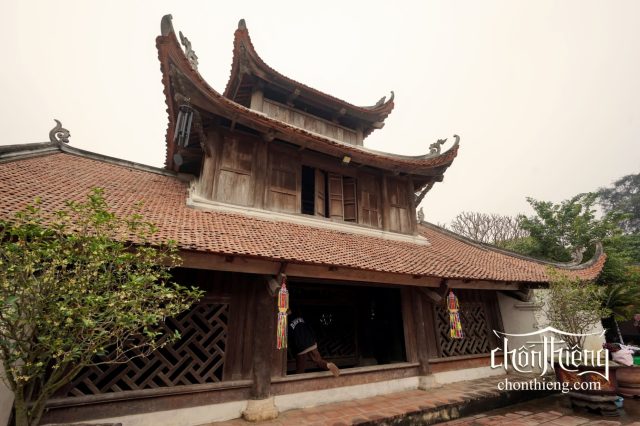
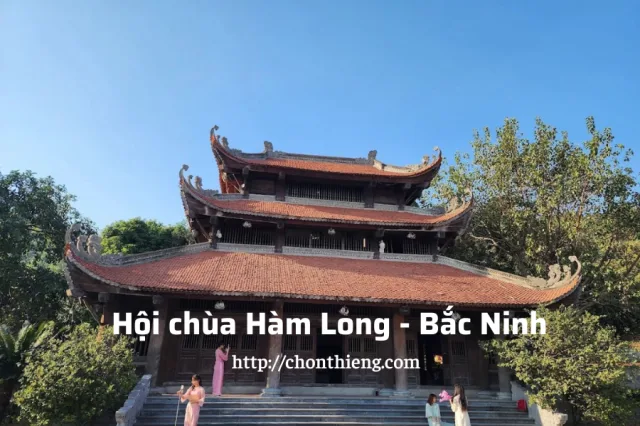
Chùa Hàm Long (tức Long Hạm tự), nay thuộc xã Nam Sơn, huyện Quế Võ, tỉnh Bắc Ninh, là một trong những danh lam cổ tự nổi tiếng của vùng Kinh Bắc. Chùa tọa lạc trên lưng chừng núi Lãm Sơn, trong thế núi hình tay ngai, xung quanh cây cối xanh tốt, tạo nên không gian vừa linh thiêng vừa thơ mộng. Bên phải chùa là Chùa Dạm, bên trái là Chùa Bảo Quang với quần thể tháp cổ nổi tiếng nên còn gọi là chùa Bách Tháp.
Trong hệ thống chùa tháp của vùng Kinh Bắc, chùa Hàm Long được xem là một thắng tích đặc biệt. Hội chùa Hàm Long được tổ chức hằng năm vào ngày rằm tháng hai âm lịch, là một trong những lễ hội Phật giáo lớn của vùng đồng bằng Bắc Bộ, thu hút đông đảo tăng ni, Phật tử và du khách thập phương về tham dự.
Lịch sử hình thành
Lễ hội chùa Hàm Long gắn liền với lịch sử hình thành và phát triển của Chùa Hàm Long – một danh lam cổ tự nổi tiếng của xứ Kinh Bắc. Theo các tư liệu văn bia và sách cổ, chùa có từ rất sớm, được cho là xuất hiện từ thời Quốc sư Nguyễn Minh Không. Trải qua nhiều thế kỷ, chùa không chỉ là trung tâm Phật giáo linh thiêng mà còn là nơi sinh hoạt tín ngưỡng quan trọng của nhân dân vùng Kinh Bắc.
Đến thế kỷ XVIII, chùa Hàm Long được tu bổ và mở rộng quy mô lớn dưới sự hưng công của Hòa thượng Trịnh Thập, người được xem là vị tổ thứ nhất của chùa. Ông vốn xuất thân trong dòng họ Trịnh quyền quý nhưng từ bỏ cuộc sống giàu sang để xuất gia tu hành, từng tu học ở nhiều ngôi chùa nổi tiếng như Chùa Long Động, Chùa Liên Phái và Chùa Phật Tích trước khi về trụ trì tại chùa Hàm Long.
Tương truyền, vào mùa hè năm 1728, hòa thượng Trịnh Thập đã viết tác phẩm “Cứu sinh thập nguyện” bằng máu để cầu nguyện cứu độ chúng sinh. Sau khi viên tịch vào ngày rằm tháng Hai năm 1733, ngài được nhân dân và Phật tử vô cùng kính ngưỡng. Xá lợi của ngài được thờ tại chùa Hàm Long và chùa Liên Phái. Từ đó, ngày rằm tháng Hai âm lịch hằng năm trở thành ngày lễ chính của chùa để tưởng niệm vị tổ Cứu sinh và tổ chức các nghi lễ Phật giáo trọng thể.
Dần dần, lễ hội chùa Hàm Long trở thành một lễ hội Phật giáo lớn của vùng Kinh Bắc và đồng bằng Bắc Bộ. Vào dịp này, đông đảo tăng ni, Phật tử và du khách thập phương về chùa dâng hương, tụng kinh, lễ Phật, tưởng nhớ công đức của vị tổ chùa, đồng thời cầu phúc, cầu bình an và mong được tiêu trừ tai ương, bệnh tật.
Trải qua chiến tranh và biến động lịch sử, chùa Hàm Long từng bị hư hại nặng nề. Từ sau năm 1976, với sự quan tâm của chính quyền địa phương, Giáo hội Phật giáo cùng nhân dân và Phật tử, di tích dần được khôi phục và tôn tạo. Cùng với quá trình phục hồi đó, lễ hội chùa Hàm Long cũng được duy trì và ngày càng phát triển, trở thành một sinh hoạt văn hóa – tín ngưỡng quan trọng của nhân dân Bắc Ninh nói riêng và vùng Bắc Bộ nói chung.
Nhân vật thờ tự
Chùa Hàm Long là nơi thờ Phật và tưởng niệm các vị tổ sư có công với nhà chùa, đặc biệt là hòa thượng Trịnh Thập – vị tổ Cứu sinh nổi tiếng của chùa Hàm Long.
Trong tâm thức dân gian và Phật giáo địa phương, hòa thượng Trịnh Thập là biểu tượng của lòng từ bi cứu độ chúng sinh. Vì vậy, mỗi dịp lễ hội, nhân dân và Phật tử đều thành kính dâng hương tưởng niệm công đức của ngài.
Ngoài ra, chùa còn lưu giữ nhiều pho tượng Phật cổ quý giá như tượng Ma Da phu nhân, A Nan, Ca Diếp, Thế Tôn… phản ánh giá trị nghệ thuật và tín ngưỡng Phật giáo lâu đời của vùng Kinh Bắc.
Phần lễ
Phần lễ của hội chùa Hàm Long mang đậm màu sắc Phật giáo truyền thống và được tổ chức trang nghiêm. Ngay từ sáng sớm ngày rằm tháng hai âm lịch, tăng ni, Phật tử cùng nhân dân địa phương tổ chức lễ dâng hương, lễ Phật và lễ tưởng niệm tổ Cứu sinh.
Các nghi thức tụng kinh, niệm Phật, giảng đạo được tiến hành tại khu tam bảo và nhà tổ. Nhiều Phật tử còn đi quanh tháp Cứu sinh để tụng niệm, cầu an và cầu phúc cho gia đình. Không gian lễ hội vì thế luôn mang vẻ thanh tịnh, linh thiêng và thành kính. Ban đêm, các cụ cao niên và nhà chùa thường kể lại công hạnh của tổ sư, nhắc nhở con cháu về truyền thống đạo đức, lòng từ bi và tinh thần hướng thiện trong đời sống.
Phần hội
Bên cạnh phần lễ trang nghiêm, phần hội của hội chùa Hàm Long cũng rất phong phú và sôi nổi với nhiều hoạt động văn hóa dân gian truyền thống.
Trong những ngày hội, nhân dân tổ chức các trò chơi như đu tiên, cờ người, chọi gà, bóng chuyền cùng nhiều hoạt động giao lưu cộng đồng khác. Ngoài ra còn có các chương trình hát chèo, biểu diễn nghệ thuật dân gian và nghệ thuật hiện đại phục vụ nhân dân và du khách thập phương.
Không khí lễ hội vừa linh thiêng vừa náo nhiệt, phản ánh đời sống văn hóa phong phú của cư dân vùng Kinh Bắc và góp phần gìn giữ những giá trị văn hóa truyền thống lâu đời.
Giá trị văn hóa
Hội chùa Hàm Long không chỉ là một lễ hội Phật giáo mà còn là không gian văn hóa tâm linh đặc sắc của vùng Kinh Bắc. Lễ hội góp phần bảo tồn các nghi lễ Phật giáo truyền thống, duy trì sinh hoạt văn hóa cộng đồng và giáo dục tinh thần hướng thiện cho các thế hệ.
Mỗi độ xuân về, du khách đến với chùa Hàm Long không chỉ để lễ Phật, cầu bình an mà còn để thưởng ngoạn cảnh sắc núi non, tham quan hệ thống chùa tháp cổ kính và cảm nhận chiều sâu văn hóa – lịch sử của vùng đất Bắc Ninh giàu truyền thống.
Tài liệu tham khảo
- Trần Đình Luyện (Chủ biên), 2003, Lễ hội Bắc Ninh, Sở Văn hóa thông tin Bắc Ninh.
- Chùa Hàm Long, Wikipedia.
- Nguyễn Mỹ, Thực hư ngôi chùa “nhốt trùng” lớn nhất Việt Nam?, Báo Pháp luật, ngày 07/06/2020.
Ngôn ngữ khác
Tiếng Anh (English)
Overview of the Festival
Ham Long Pagoda (also known as Long Ham Tu), now located in Nam Son Commune, Que Vo District, Bac Ninh Province, is one of the most renowned ancient pagodas of the Kinh Bac region. The pagoda stands halfway up Lam Son Mountain, nestled within a landscape resembling a royal throne, surrounded by lush greenery that creates an atmosphere both sacred and picturesque. To the right lies Dam Pagoda, while to the left is Bao Quang Pagoda, famous for its complex of ancient towers and therefore also known as the “Pagoda of One Hundred Towers” (Bach Thap Pagoda).
Within the pagoda and tower system of Kinh Bac, Ham Long Pagoda is regarded as a particularly remarkable site. An ancient stele inscription once praised it:
“Ham Long Pagoda is a marvel of our Kinh Bac region. The Luc Dau River and Lam Son Mountain surround it, while the sacred configuration of the Four Divine Creatures embraces it…”
The Ham Long Pagoda Festival is held annually on the 15th day of the second lunar month. It is one of the major Buddhist festivals in the Red River Delta, attracting large numbers of monks, nuns, Buddhist devotees, and pilgrims from across the country.
Historical Development
The Ham Long Pagoda Festival is closely associated with the history and development of Ham Long Pagoda, a renowned ancient Buddhist site of Kinh Bac. According to stone inscriptions and historical records, the pagoda dates back to an early period and is believed to have originated during the time of the eminent monk National Master Nguyen Minh Khong.
Over the centuries, the pagoda became not only an important Buddhist center but also a significant religious institution for the people of Kinh Bac.
In the eighteenth century, Ham Long Pagoda underwent extensive renovation and expansion under the leadership of Venerable Trinh Thap, regarded as the first patriarch of the pagoda. Born into the noble Trinh family, he renounced a life of wealth and privilege to become a Buddhist monk. Before serving as abbot of Ham Long Pagoda, he studied and practiced at several famous temples, including Long Dong Pagoda, Lien Phai Pagoda, and Phat Tich Pagoda.
According to tradition, during the summer of 1728, Venerable Trinh Thap composed the work Cuu Sinh Thap Nguyen (Ten Vows for the Salvation of Sentient Beings) using his own blood as an act of devotion and compassion for all living beings. After his passing on the fifteenth day of the second lunar month in 1733, he became deeply revered by both the Buddhist community and local people. His relics were enshrined at both Ham Long Pagoda and Lien Phai Pagoda.
Since then, the fifteenth day of the second lunar month has become the principal festival day of the pagoda, dedicated to commemorating the “Patriarch of Salvation” and conducting important Buddhist ceremonies.
Gradually, the Ham Long Pagoda Festival evolved into one of the largest Buddhist festivals in Kinh Bac and the northern plains of Vietnam. During the festival, numerous monks, nuns, devotees, and pilgrims come to the pagoda to offer incense, chant sutras, worship the Buddha, honor the patriarch’s merits, pray for blessings and peace, and seek protection from misfortune and illness.
Despite suffering severe damage during periods of war and historical upheaval, Ham Long Pagoda has gradually been restored since 1976 through the efforts of local authorities, the Buddhist Sangha, and the community of devotees. Alongside this restoration, the festival has continued to flourish and remains an important cultural and religious event for the people of Bac Ninh and northern Vietnam.
Objects of Worship
Ham Long Pagoda is dedicated to the worship of the Buddha and the commemoration of the patriarchs who contributed to the temple’s development, particularly Venerable Trinh Thap, the renowned “Patriarch of Salvation” of Ham Long Pagoda.
In local Buddhist belief and folk consciousness, Venerable Trinh Thap symbolizes boundless compassion and the salvation of sentient beings. Therefore, during each festival, local residents and Buddhist devotees respectfully offer incense in remembrance of his contributions.
The pagoda also preserves many valuable ancient Buddhist statues, including images of Queen Maya, Ananda, Mahākāśyapa, and Shakyamuni Buddha, reflecting the rich artistic heritage and long-standing Buddhist traditions of the Kinh Bac region.
Rituals
The ritual section of the Ham Long Pagoda Festival is deeply rooted in traditional Buddhist practices and is conducted with great solemnity.
From the early morning of the fifteenth day of the second lunar month, monks, nuns, devotees, and local residents gather to perform incense-offering ceremonies, Buddhist worship, and memorial rites dedicated to the Patriarch of Salvation.
Sutra chanting, Buddha recitation, and Dharma teachings take place within the Main Hall (Tam Bao) and the Patriarch Hall. Many devotees also circumambulate the Salvation Stupa while reciting prayers for peace, health, and blessings for their families.
As a result, the festival atmosphere remains serene, sacred, and deeply reverential.
At night, village elders and members of the monastic community often recount the virtuous deeds and teachings of the patriarch, encouraging younger generations to uphold moral values, compassion, and a commitment to virtuous living.
Festive Activities
In addition to the solemn rituals, the festive section of the Ham Long Pagoda Festival is lively and diverse, featuring many traditional folk cultural activities.
During the festival, local residents organize games and competitions such as:
Swinging contests (đu tiên)
Human chess
Cockfighting
Volleyball matches
Various community exchange activities
There are also performances of Cheo folk opera, traditional folk arts, and modern cultural programs for local residents and visitors.
The festival atmosphere is both sacred and vibrant, reflecting the rich cultural life of the Kinh Bac people while helping preserve long-standing traditional values.
Cultural Significance
The Ham Long Pagoda Festival is not only a Buddhist celebration but also an important spiritual and cultural event of the Kinh Bac region.
The festival contributes to preserving traditional Buddhist rituals, sustaining community cultural activities, and promoting ethical values and spiritual cultivation among future generations.
Every spring, visitors come to Ham Long Pagoda not only to worship the Buddha and pray for peace and blessings but also to admire the beautiful mountain scenery, explore the ancient pagoda and tower complex, and experience the profound historical and cultural heritage of Bac Ninh, a land renowned for its rich traditions.
References
- Trần Đình Luyện (Chủ biên), 2003, Lễ hội Bắc Ninh, Sở Văn hóa thông tin Bắc Ninh.
- Chùa Hàm Long, Wikipedia.
- Nguyễn Mỹ, Thực hư ngôi chùa “nhốt trùng” lớn nhất Việt Nam?, Báo Pháp luật, ngày 07/06/2020.
Tiếng Trung (中文)
概述
涵龙寺(又称龙舰寺,Long Hạm Tự)现位于越南北宁省桂武县南山乡,是京北地区著名的古刹之一。寺庙坐落于岚山半山腰,依山势而建,形如龙椅,四周林木葱郁,环境清幽,既庄严神圣又风景秀丽。寺右侧为览寺(Dạm寺),左侧为宝光寺(Bảo Quang寺),因拥有著名的古塔群,又被称为“百塔寺”。
在京北地区的寺塔体系中,涵龙寺被视为一处独特的名胜古迹。古碑文曾赞誉道:
“涵龙寺乃我京北之一大奇观。六头江环绕,岚山拱卫,四灵之势环抱其间……”
涵龙寺会每年于农历二月十五举行,是北部平原地区规模较大的佛教节庆之一,吸引众多僧尼、佛教信众及四方游客前来参加。
形成历史
涵龙寺会与涵龙寺的发展历史密切相关。根据碑文和古籍记载,该寺历史悠久,相传始建于国师阮明空(Nguyễn Minh Không)时代。数百年来,寺庙不仅是神圣的佛教中心,也是京北地区重要的民间信仰活动场所。
十八世纪时,在郑拾和尚(Trịnh Thập)的主持下,涵龙寺进行了大规模扩建和修缮。郑拾和尚被尊为涵龙寺第一代祖师。他出身于显赫的郑氏家族,却舍弃荣华富贵出家修行,曾先后在龙洞寺、莲派寺、佛迹寺等著名寺院修学,后回到涵龙寺担任住持。
相传1728年夏天,郑拾和尚以自身鲜血书写《救生十愿》,发愿救度众生。1733年农历二月十五圆寂后,深受百姓和佛教徒敬仰。其舍利分别供奉于涵龙寺和莲派寺。从此,每年农历二月十五成为寺院的重要纪念日,以缅怀救生祖师并举行隆重佛教法会。
随着时间推移,涵龙寺会逐渐发展成为京北及北部平原地区重要的佛教节庆。届时,大量僧尼、佛教徒和游客前来进香礼佛、诵经祈福,缅怀祖师功德,同时祈求平安吉祥、消灾除病。
历经战争与历史变迁,涵龙寺曾遭受严重破坏。1976年以后,在地方政府、越南佛教教会以及广大信众的共同努力下,寺院逐步得到修复与重建。伴随着古寺的复兴,涵龙寺会也得以延续并不断发展,成为北宁省乃至整个越北地区重要的文化信仰活动。
祭祀对象
涵龙寺主要供奉佛陀以及历代对寺院有重要贡献的祖师,尤其是著名的救生祖师郑拾和尚。
在当地民间信仰和佛教传统中,郑拾和尚被视为慈悲济世、普度众生的象征。因此,每逢庙会期间,信众都会虔诚焚香,追思其功德。
此外,寺内还保存着众多珍贵的古代佛像,如摩耶夫人像、阿难尊者像、迦叶尊者像、释迦世尊像等,体现了京北地区悠久的佛教艺术与信仰传统。
祭祀部分
涵龙寺会的祭祀活动充满传统佛教色彩,仪式庄严肃穆。
农历二月十五清晨,僧众、佛教徒及当地民众便开始举行上香礼佛和纪念救生祖师的法会。
诵经、念佛、讲经等活动在三宝殿和祖师堂举行。许多信众还会绕行救生塔诵经祈福,为家人祈求平安与福报。因此,整个节庆空间始终洋溢着宁静、神圣和虔敬的氛围。
夜间,寺院及当地长者还会向后辈讲述祖师生平事迹和修行功德,教导人们弘扬道德传统、慈悲精神以及向善的人生态度。
娱乐活动部分
除了庄严的宗教仪式外,涵龙寺会的娱乐活动同样丰富多彩。
节日期间,人们举办秋千比赛、真人象棋、斗鸡、排球比赛以及各种社区交流活动。此外,还有传统嘲剧(Chèo)、民间艺术表演以及现代文艺演出,为当地群众和四方游客提供丰富的文化娱乐活动。
整个节庆既庄严神圣,又热闹欢腾,充分展现了京北地区居民丰富多彩的文化生活,同时也有助于保护和传承悠久的传统文化价值。
文化价值
涵龙寺会不仅是一项佛教节庆活动,更是京北地区极具特色的精神文化空间。
节庆活动有助于保护传统佛教仪式、维系社区文化生活,并向后代传播向善修德的价值观念。
每逢春季,游客来到涵龙寺,不仅是为了礼佛祈福、祈求平安,也为了欣赏秀美的山川景色,参观古老的寺塔建筑群,感受北宁这片历史文化名地深厚的文化底蕴与历史积淀。
参考资料
- Trần Đình Luyện (Chủ biên), 2003, Lễ hội Bắc Ninh, Sở Văn hóa thông tin Bắc Ninh.
- Chùa Hàm Long, Wikipedia.
- Nguyễn Mỹ, Thực hư ngôi chùa “nhốt trùng” lớn nhất Việt Nam?, Báo Pháp luật, ngày 07/06/2020.
Tiếng Pháp (Français’)
aperçu de la fête
La pagode Hàm Long (également appelée Long Hạm Tự), située aujourd’hui dans la commune de Nam Sơn, district de Quế Võ, province de Bắc Ninh, est l’un des temples bouddhiques anciens les plus renommés de la région de Kinh Bắc. La pagode est construite à flanc du mont Lãm Sơn, dans une configuration montagneuse évoquant un trône impérial. Entourée d’une végétation luxuriante, elle offre un paysage à la fois sacré et poétique. À droite se trouve la pagode Dạm, tandis qu’à gauche s’élève la pagode Bảo Quang avec son célèbre ensemble de tours anciennes, ce qui lui vaut également le nom de « pagode aux cent tours ».
Parmi les nombreuses pagodes et tours de la région de Kinh Bắc, la pagode Hàm Long est considérée comme un site exceptionnel. Une ancienne stèle la décrit ainsi :
« La pagode Hàm Long est l’une des merveilles de Kinh Bắc. Les eaux du fleuve Lục Đầu et les monts Lãm Sơn l’entourent, tandis que les quatre animaux sacrés protègent son emplacement… »
La fête de la pagode Hàm Long est célébrée chaque année le quinzième jour du deuxième mois lunaire. Elle constitue l’une des plus importantes fêtes bouddhiques de la plaine du Nord du Viêt Nam et attire de nombreux moines, fidèles bouddhistes et pèlerins venus de toutes les régions.
histoire de la formation
La fête de la pagode Hàm Long est étroitement liée à l’histoire de ce temple ancien, l’un des sanctuaires bouddhiques les plus prestigieux de Kinh Bắc. D’après les inscriptions anciennes et les ouvrages historiques, la pagode remonterait à une époque très ancienne et serait liée au maître bouddhiste Nguyễn Minh Không. Au fil des siècles, elle est devenue non seulement un centre spirituel majeur du bouddhisme, mais aussi un lieu essentiel de la vie religieuse de la population locale.
Au XVIIIe siècle, la pagode fut considérablement agrandie et restaurée sous l’impulsion du vénérable Trịnh Thập, considéré comme le premier patriarche du temple. Issu de la puissante famille Trịnh, il abandonna une vie privilégiée pour entrer dans les ordres. Avant de devenir abbé de Hàm Long, il étudia dans plusieurs grands centres bouddhiques, notamment les pagodes Long Động, Liên Phái et Phật Tích.
Selon la tradition, durant l’été 1728, le vénérable Trịnh Thập rédigea avec son propre sang l’ouvrage intitulé « Cứu sinh thập nguyện » (« Les dix vœux pour le salut des êtres »), destiné à prier pour le salut de tous les êtres vivants. Après son décès, survenu le quinzième jour du deuxième mois lunaire de l’année 1733, il fut profondément vénéré par les fidèles et la population. Ses reliques furent conservées à la pagode Hàm Long ainsi qu’à la pagode Liên Phái. Depuis lors, le quinzième jour du deuxième mois lunaire est devenu la principale célébration du temple en son honneur.
Peu à peu, cette fête est devenue l’une des plus importantes célébrations bouddhiques de Kinh Bắc et de toute la région du Nord. Chaque année, moines, fidèles et pèlerins s’y rendent pour brûler de l’encens, réciter des sutras, rendre hommage au Bouddha et au patriarche du temple, tout en priant pour la paix, le bonheur et la protection contre les malheurs et les maladies.
Au cours de son histoire, la pagode a subi de graves dommages en raison des guerres et des bouleversements historiques. Après 1976, grâce au soutien des autorités locales, de la Sangha bouddhique et des fidèles, le site a progressivement été restauré et mis en valeur. Avec cette renaissance, la fête de la pagode Hàm Long a également retrouvé son importance et constitue aujourd’hui un événement culturel et spirituel majeur de la province de Bắc Ninh et du Nord du pays.
personnages vénérés
La pagode Hàm Long est consacrée au culte du Bouddha ainsi qu’à la mémoire des patriarches qui ont contribué à son développement, en particulier le vénérable Trịnh Thập, célèbre patriarche du Salut des êtres.
Dans la tradition populaire et bouddhique locale, Trịnh Thập symbolise la compassion et le dévouement au salut de tous les êtres. C’est pourquoi, à chaque édition de la fête, les habitants et les fidèles lui rendent un hommage respectueux à travers des offrandes d’encens et des cérémonies commémoratives.
La pagode conserve également de nombreuses statues bouddhiques anciennes de grande valeur, représentant notamment Māyā, Ānanda, Mahākāśyapa et le Bouddha lui-même. Ces œuvres témoignent de l’ancienneté et de la richesse de la tradition bouddhique de Kinh Bắc.
partie rituelle
La partie cérémonielle de la fête est profondément marquée par la tradition bouddhique et se déroule dans une atmosphère de grande solennité. Dès l’aube du quinzième jour du deuxième mois lunaire, moines, fidèles et habitants participent aux cérémonies d’offrande d’encens, aux prières devant le Bouddha et aux hommages rendus au patriarche du Salut des êtres.
Les récitations de sutras, les invocations bouddhiques et les enseignements religieux ont lieu dans le sanctuaire principal ainsi que dans la maison des patriarches. De nombreux fidèles effectuent également des circumambulations autour de la tour du Salut des êtres en récitant des prières pour la paix et le bonheur de leur famille. L’ensemble de la fête est ainsi empreint d’un profond sentiment de sérénité, de sacralité et de dévotion.
Le soir, les anciens du village et les religieux racontent la vie exemplaire du patriarche, transmettant aux jeunes générations les valeurs de compassion, de moralité et d’élévation spirituelle.
partie festive
À côté des cérémonies religieuses, la partie festive de la fête de la pagode Hàm Long est particulièrement riche et animée grâce à de nombreuses activités culturelles traditionnelles.
Pendant les journées de fête, les habitants organisent divers jeux populaires tels que les balançoires géantes, les échecs humains, les combats de coqs, les tournois de volley-ball ainsi que d’autres activités communautaires.
Des représentations de théâtre chèo, des spectacles d’arts populaires et des programmes artistiques contemporains sont également proposés aux habitants et aux visiteurs.
L’atmosphère de la fête est à la fois sacrée et joyeuse. Elle reflète la richesse de la culture traditionnelle de Kinh Bắc et contribue à préserver un patrimoine culturel transmis depuis de nombreuses générations.
valeur culturelle
La fête de la pagode Hàm Long n’est pas seulement une célébration bouddhique ; elle constitue également un espace culturel et spirituel emblématique de la région de Kinh Bắc. Elle contribue à la préservation des rituels bouddhiques traditionnels, au maintien de la vie culturelle communautaire et à la transmission des valeurs morales et spirituelles aux générations futures.
Chaque printemps, les visiteurs se rendent à la pagode Hàm Long non seulement pour prier le Bouddha et demander paix et prospérité, mais aussi pour admirer les paysages montagneux, découvrir les anciennes pagodes et tours de la région et apprécier la profondeur historique et culturelle de la province de Bắc Ninh, terre riche en traditions.
bibliographie
- Trần Đình Luyện (Chủ biên), 2003, Lễ hội Bắc Ninh, Sở Văn hóa thông tin Bắc Ninh.
- Chùa Hàm Long, Wikipedia.
- Nguyễn Mỹ, Thực hư ngôi chùa “nhốt trùng” lớn nhất Việt Nam?, Báo Pháp luật, ngày 07/06/2020.